NEW YORK (AP) — Stock markets are rallying worldwide Monday, and oil prices are easing after the United States and Iran reached a tentative deal to extend their ceasefire and reopen the Strait of Hormuz to get the global flow of crude going again.
The S&P 500 rose 1.7% on hopes that this time, the announcement of an Iran-U.S. agreement will mean a long-term fix to a conflict that has worsened inflation around the world. The Dow Jones Industrial Average was up 673 points, or 1.2%, as of 11:15 a.m. Eastern time, and the Nasdaq composite was 2.7% higher.
Click to Gallery
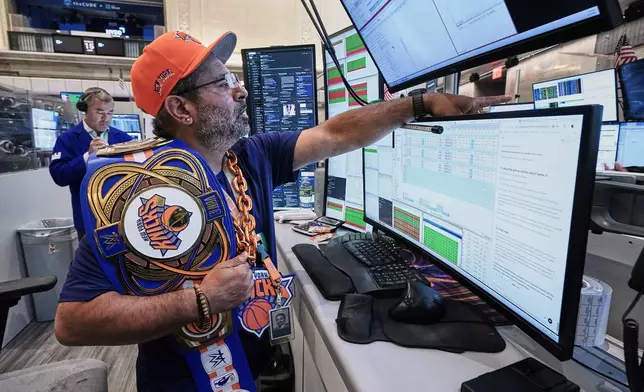
Options trader, and New York Knicks fan Ousama Fayek works on the floor of the New York Stock Exchange, Monday, June 15, 2026. (AP Photo/Richard Drew)
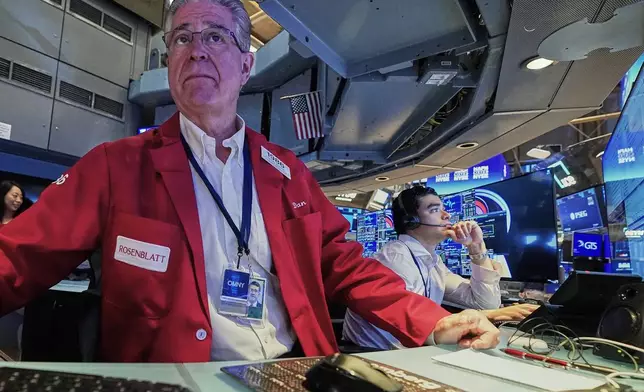
Trader Daniel Kryger, left, works on the floor of the New York Stock Exchange, Monday, June 15, 2026. (AP Photo/Richard Drew)
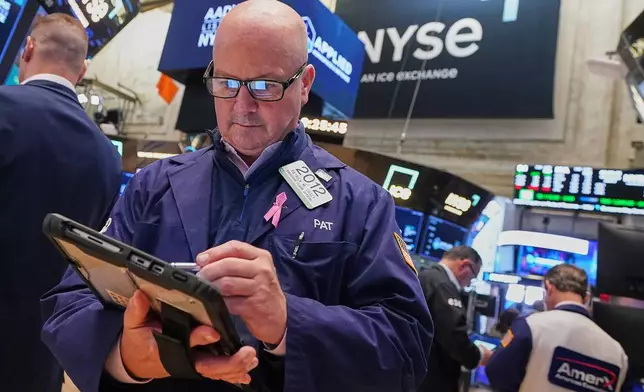
Trader Patrick Casey works on the floor of the New York Stock Exchange, Wednesday, June 3, 2026. (AP Photo/Richard Drew)
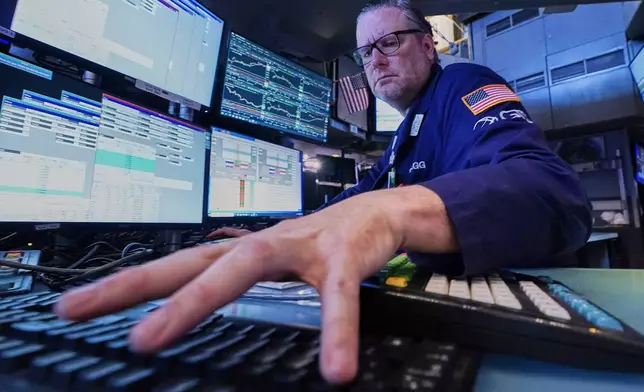
Specialist Gregg Maloney works at his post on the floor of the New York Stock Exchange, Monday, June 1, 2026. (AP Photo/Richard Drew)
Currency traders watch monitors at the foreign exchange dealing room of the Hana Bank headquarters in Seoul, South Korea, Friday, June 12, 2026. (AP Photo/Ahn Young-joon)
A dealer walks past a screen showing the Korea Composite Stock Price Index (KOSPI) at a dealing room of Hana Bank in Seoul, South Korea, Thursday, June 11, 2026. (AP Photo/Lee Jin-man)
Stocks got a lift after the price for a barrel of Brent crude oil fell 4.7% to $83.25, back to where it was in early March. While that’s still higher than its price of roughly $70 from before the war more than three months ago, it’s lower than the $100 plus it cost just a few weeks ago. The hope is that lower oil prices will take pressure off households and businesses, which have had to pay higher prices for everything from food to fuel to fertilizer because of the war with Iran.
Iran confirmed the agreement but signaled its implementation would not start until it’s signed, which Pakistan said would happen Friday in Switzerland. Broader negotiations on issues like Iran’s nuclear program are expected to continue over the next 60 days. That leaves opportunity for hiccups that could derail the agreement. And even if the deal does reopen the Strait of Hormuz, it will take months for the energy industry to get back to full speed.
For now, though, relief swept through financial markets worldwide.
On Wall Street, stocks of companies with big fuel bills were instant winners. United Airlines flew 5.2% higher, American Airlines climbed 3.5% and cruise operator Carnival rose 4.2%.
Stocks of companies enmeshed in the artificial-intelligence industry also jumped. These stocks have yo-yoed sharply in recent weeks, going from roaring to records to suddenly turning lower. The big concern is whether such stocks shot too high, too fast because of AI mania, and their careening moves have sometimes reversed direction by the hour.
Micron Technology rallied 9.4%, and Advanced Micro Devices rose 7.5%. Nvidia’s climb of 3% was the strongest force pushing the S&P 500 upward because the AI chip company is Wall Street’s most valuable company, giving it more weight on the index than any other.
SpaceX, Elon Musk’s rocket company that also owns the AI company xAI, rose 7.9% in its second day of trading on Wall Street. Its successful debut on the Nasdaq suggested plenty of demand still exists among investors for AI. The market has given SpaceX a total value of more than $2.1 trillion, making it bigger than Exxon Mobil, Bank of America and Coca-Cola combined.
In the bond market, Treasury yields eased on hopes that lower oil prices will remove pressure on central banks worldwide to raise interest rates.
The yield on the 10-year Treasury eased to 4.45% from 4.48% late Friday.
Europe’s central bank last week became the first major one in the world to raise interest rates to combat high inflation. High interest rates can keep a lid on inflation, but they also slow economies and undercut prices for all kinds of investments, including stocks and cryptocurrencies. They hit investments seen as the most expensive in particular, and some critics are calling the AI industry a bubble where investment inflated too far.
The Fed will announce its latest decision on interest rates later this week, which will be the first under its new chair, Kevin Warsh. President Donald Trump nominated Warsh to the position, and Trump has been loudly calling for lower interest rates.
But traders see it as a near certainty that the Fed will leave its main interest rate steady after its two-day meeting ends Wednesday. Traders had been raising bets that the Fed may actually have to raise interest rates this year because of how high inflation has gotten and how solid the U.S. job market remains.
But the tentative deal between the United States and Iran means traders are now betting on only a 56% chance of a hike this year, down from 71% a week ago, according to data from CME Group.
Elsewhere on Wall Street, Roku fell 0.6% after the company announced that Fox Corp. is buying the streaming pioneer in a cash-and-stock deal valued at approximately $22 billion.
Roku's stock had already soared 20% Friday, when early media reports emerged about a deal, which will give Fox access to the Roku channel, first-party data and more than 100 million global streaming households. Fox's stock fell 16.1%.
In stock markets abroad, indexes climbed in Asia and Europe. Japan’s Nikkei 225 jumped 5% for one of the world’s biggest gains and finished at a record.
“This is great news,” said Takashi Hiroki, chief strategist at Monex. “Buying by foreign investors is leading the market with expectations of easing tensions around the situation in the Middle East.”
South Korea’s Kospi surged even more, 5.2%, thanks in part to continued rallies for AI winners like Samsung Electronics.
London's FTSE 100 was an outlier and slipped 0.4%.
AP Business Writers Matt Ott and Elaine Kurtenbach and Senior Producer Mayuko Ono contributed to this report.
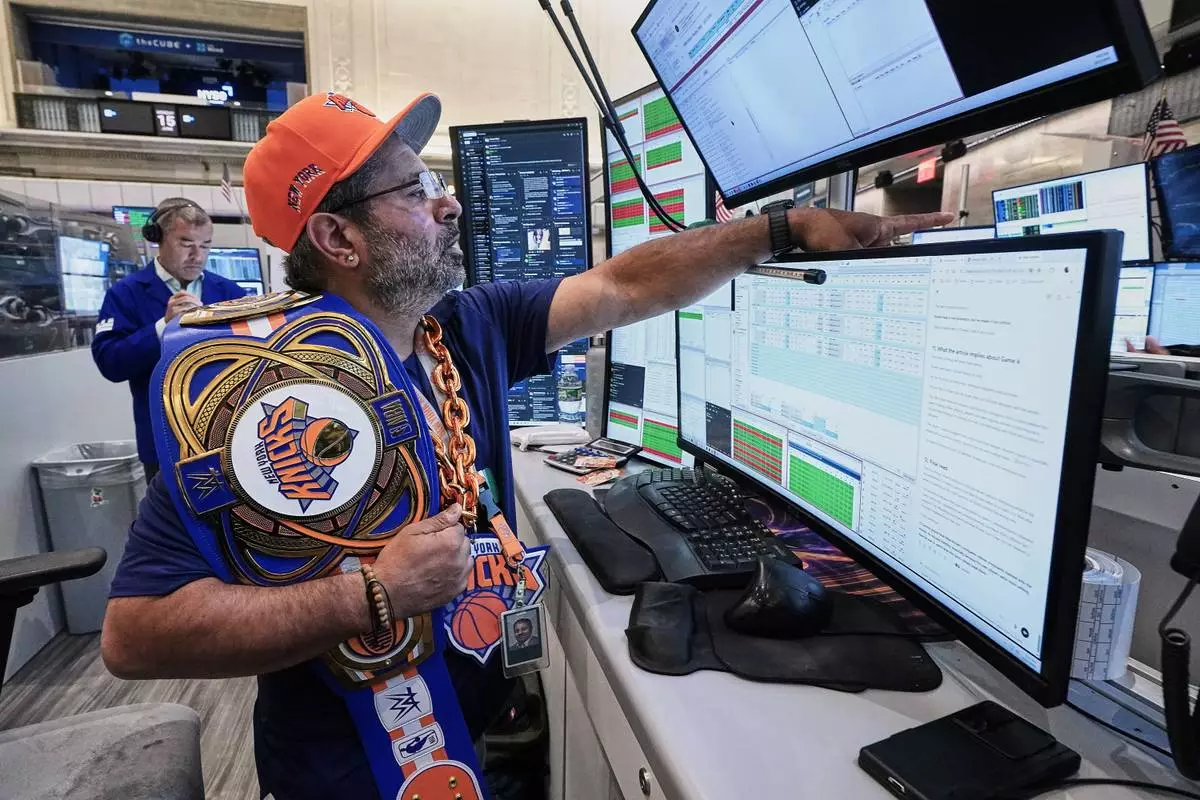
Options trader, and New York Knicks fan Ousama Fayek works on the floor of the New York Stock Exchange, Monday, June 15, 2026. (AP Photo/Richard Drew)
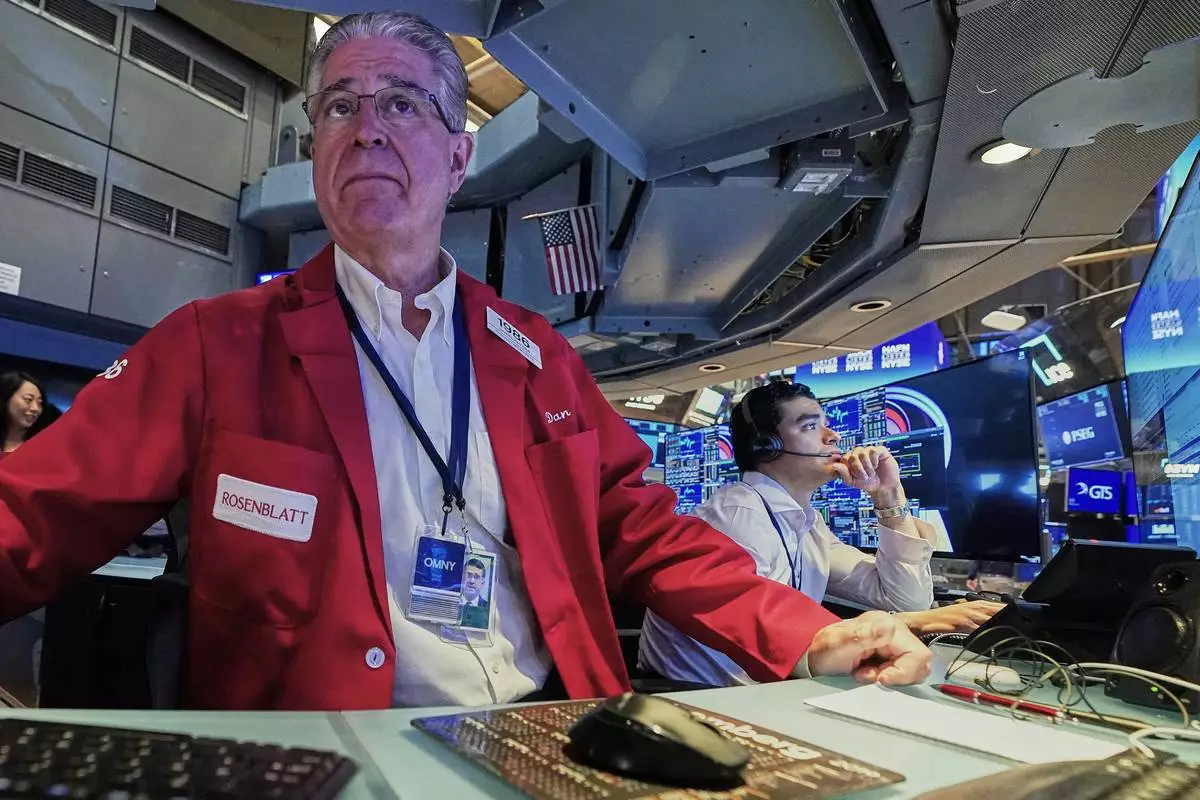
Trader Daniel Kryger, left, works on the floor of the New York Stock Exchange, Monday, June 15, 2026. (AP Photo/Richard Drew)
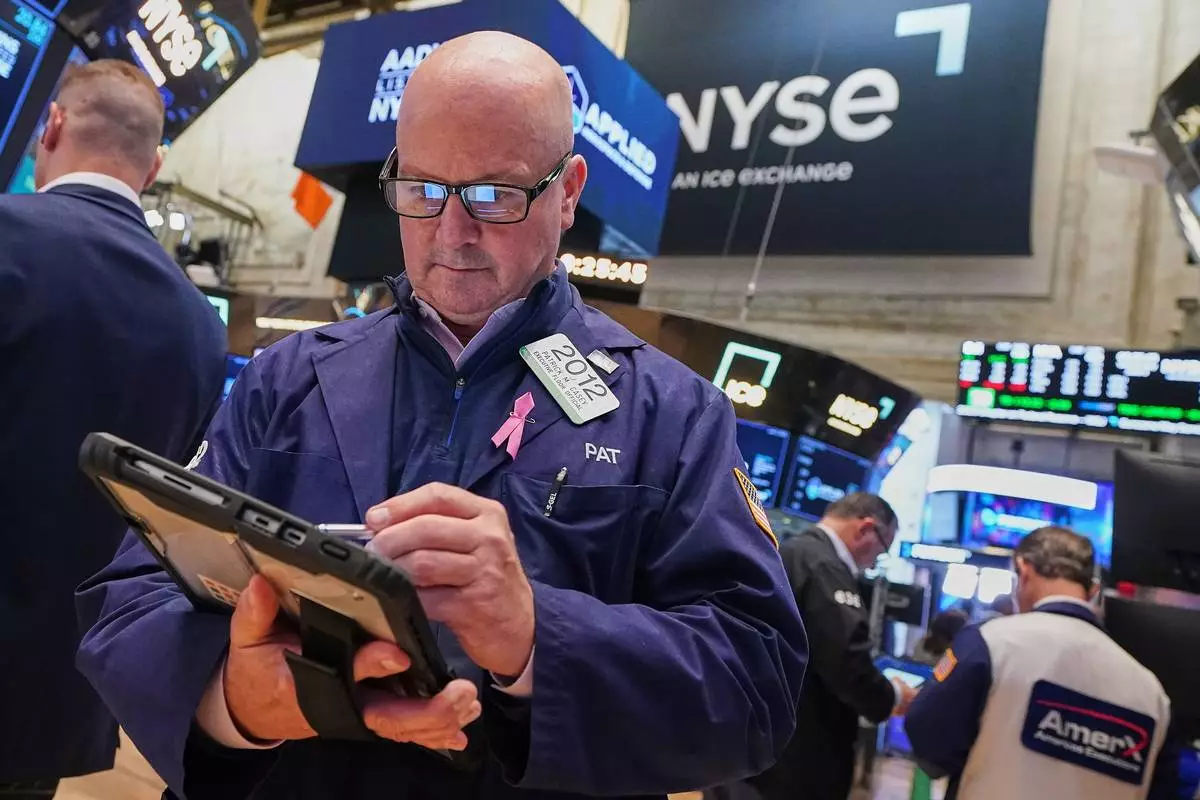
Trader Patrick Casey works on the floor of the New York Stock Exchange, Wednesday, June 3, 2026. (AP Photo/Richard Drew)
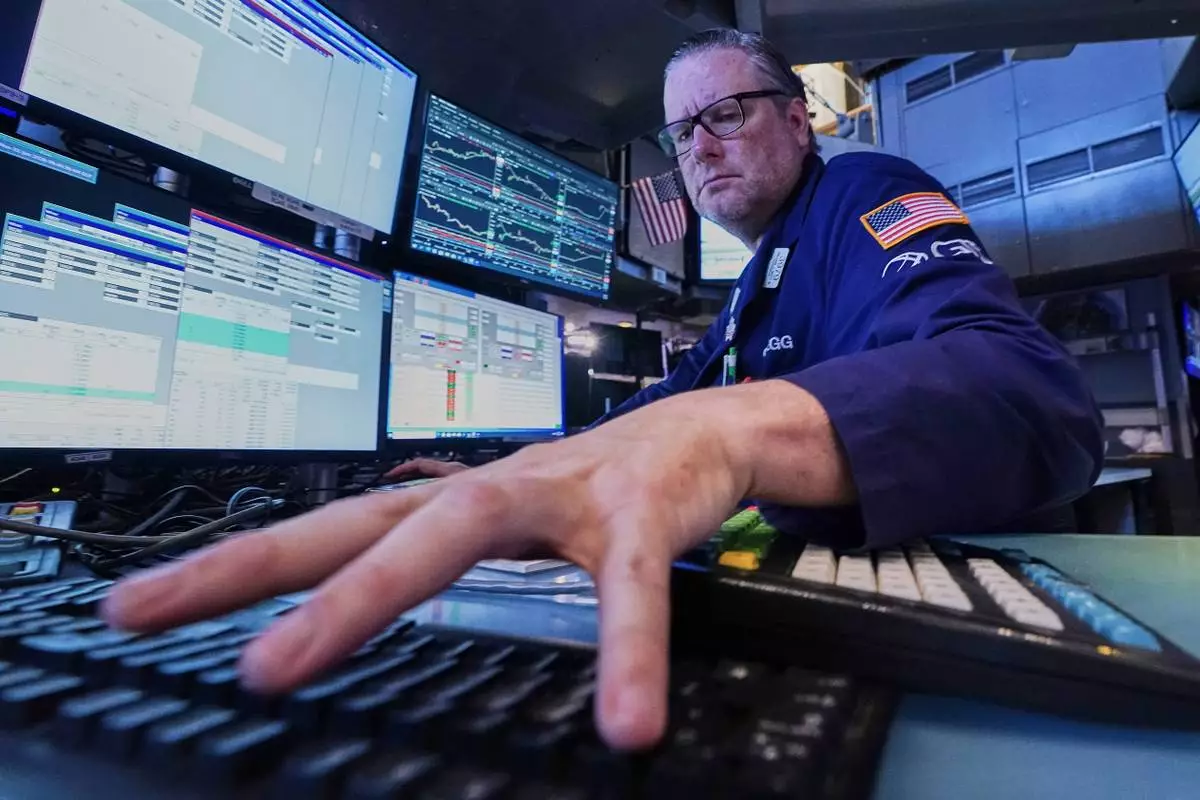
Specialist Gregg Maloney works at his post on the floor of the New York Stock Exchange, Monday, June 1, 2026. (AP Photo/Richard Drew)

Currency traders watch monitors at the foreign exchange dealing room of the Hana Bank headquarters in Seoul, South Korea, Friday, June 12, 2026. (AP Photo/Ahn Young-joon)

A dealer walks past a screen showing the Korea Composite Stock Price Index (KOSPI) at a dealing room of Hana Bank in Seoul, South Korea, Thursday, June 11, 2026. (AP Photo/Lee Jin-man)
ISLAMABAD (AP) — Iran and the United States are trumpeting their tentative agreement aimed at ending their war as a victory. But so far there is no word on what’s actually in it.
The Memorandum of Understanding, brokered mainly by Pakistan, starts with the simultaneous lifting of Iran’s closure of the Strait of Hormuz and the U.S. blockade of Iran’s ports, according to Pakistani officials. The two sides will then enter 60 days of negotiations over Iran’s nuclear program and the potential lifting of sanctions, they told the AP, speaking on condition of anonymity because the text is being kept confidential.
That would leave the adversaries more or less where they where they were 3 ½ months ago — before Israel and the U.S. on Feb. 28 launched their war on Iran, which has left thousands dead across the region, triggered a global energy crisis and shook the American economy with an inflation surge.
Much remains unknown, including whether the deal says anything about Iran’s missile program or support for its regional allies like Lebanon’s Hezbollah, two issues that the U.S. and Israel cited to justify the war. Another major question is how it addresses Lebanon: Israel and Hezbollah are not parties to the deal, and their fighting could blow up the arrangement.
Here’s what to know:
Once the deal is signed — expected on Friday — the Strait of Hormuz will reopen and the U.S. will lift its blockade, U.S. President Donald Trump said. The announcement triggered a drop in oil prices and a surge in stock markets. Trump said Iran would not charge a toll for passage of ships — a demand made by Tehran — suggesting that the deal restores the prewar status quo.
Iran’s closure on the strait, through which around a fifth of the world’s oil supplies must pass to reach markets, proved perhaps its strongest weapon. It drove up fuel prices, made food and other basics like fertilizer more expensive well beyond the region and helped push inflation in the U.S. up to 4% ahead of midterm elections later this year.
The U.S. blockade, imposed after an initial ceasefire was reached on April 7, cut off the billions Iran earned from oil exports and further crippled an economy that was hit hard by the war.
The 60-day period of negotiations can be extended if there is progress, Iranian Foreign Minister Abbas Araghchi said Friday. What is not known is whether the new agreement puts the two sides any closer than they were in negotiations months ago, when the U.S. and Israel launched their surprise attack on Iran.
The U.S. and Israel fear Iran’s nuclear program could lead to an atomic weapon, a main reason their leaders cited for going to war. Tehran has insisted its nuclear efforts are for peaceful purposes.
Central to U.S. demands is the removal or dilution of Tehran’s highly enriched uranium. Iran in the past resisted U.S. terms over the stockpile, and a major question will be whether the text of the agreement explicitly commits Iran to getting rid of it. Iran developed the stockpile after Trump in 2018 unilaterally pulled out of the 2015 deal that had put limits on Iran’s nuclear program.
Iran has demanded the lifting of international sanctions and unfreezing of billions of dollars in assets, moves vital to resuscitating its economy. The Pakistani officials said the deal outlines a phased process for easing sanctions and releasing frozen assets, tied to progress in the talks.
The Trump administration has said its aims in the war were to “obliterate” Iran's missile arsenal and “sever its support” for proxies around the region, as well “annihilate its navy” and ensure Iran never acquires a nuclear weapon.
The seven weeks of U.S.-Israeli bombardment are believed to have heavily damaged Iran’s missile arsenal and production facilities as well as other parts of its military. How heavily is not known, and Iran has continued to fire missiles and carry out drone strikes. Few analysts think Iran cannot rebuild its capabilities.
Iran’s ties with its allies — Hezbollah in Lebanon, the Houthis in Yemen and Shiite militias in Iraq — appear strong as ever. There has been no indication that the deal addresses either the missile program or support for proxies, though a final text when it emerges could show otherwise.
The air campaign also inflicted heavy damage on Iran’s economy. Nevertheless, Iran’s leadership has emerged from the war seemingly bolder.
It survived the most serious attempt ever by Israel and the United States to topple the Islamic Republic, with their thundering opening volleys of the war that killed Iran’s supreme leader and much of the top political and military echelons.
Iran demonstrated its ability to retaliate against the global economy by shutting down the strait and by hitting U.S. Arab allies in the Gulf. The effectiveness of that weapon boosted Iran’s confidence that Trump won’t return to the military option.
The potential obstacle to the agreement is Lebanon, where any spiral in the conflict has the potential to drag in Iran.
Iran has insisted that any deal must also include a ceasefire in Lebanon. After the agreement was announced, the first Israeli response came from its defense minister, Israel Katz, who said Israel won’t withdraw from the large swath of southern Lebanon seized over the past months.
Hezbollah in a statement Monday praised the deal and said it was committed to resisting Israel “until full withdrawal is achieved.”
Israeli Prime Minister Benjamin Netanyahu boasted of unprecedented “shoulder to shoulder” cooperation with the U.S. at the outset of the war, launched in a joint operation between the two close allies.
But since then, Trump and Netanyahu have been at odds — with the president eager to end a war that is deeply unpopular with the American public and Netanyahu wanting to press ahead to realize his more ambitious goals.
Netanyahu was largely sidelined during the ceasefire talks and appears to have lost support among members of the Republican Party. The emerging ceasefire has also come under heavy criticism in Israel, both from opposition leaders and even members of his governing coalition.
That could bode poorly for the veteran Israeli leader, who faces reelection this fall.
Keath reported from Cairo. Associated Press writers Josef Federman in Jerusalem, Sam Mednick in Tel Aviv, Israel, and Will Weissert in Washington contributed to this report.
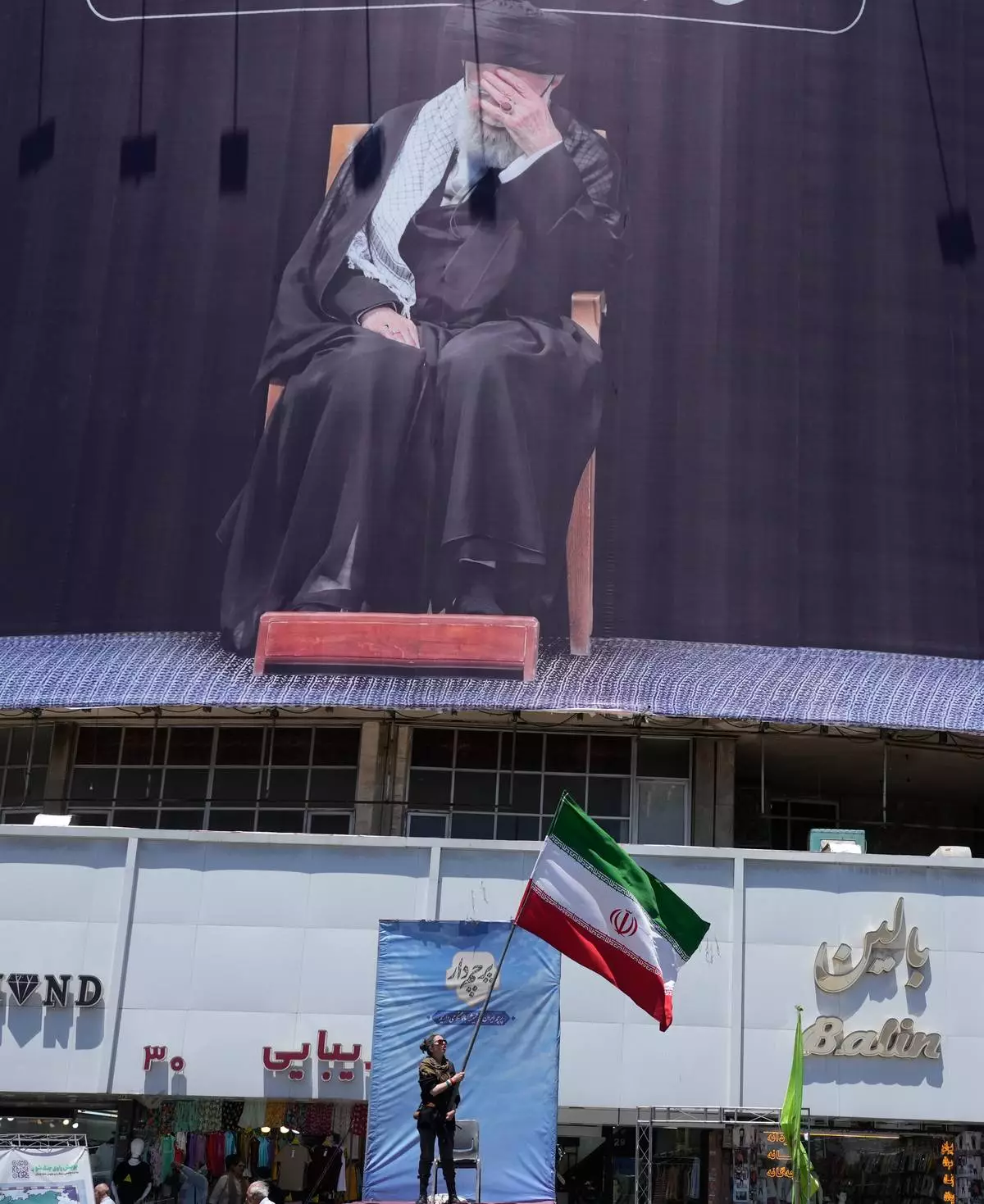
A woman waves an Iranian flag during a pro-government campaign under a portrait of the slain Supreme Leader Ayatollah Ali Khamenei, who was killed in U.S. and Israeli strikes on Feb. 28, in downtown Tehran, Iran, Monday, June 15, 2026. (AP Photo/Vahid Salemi)
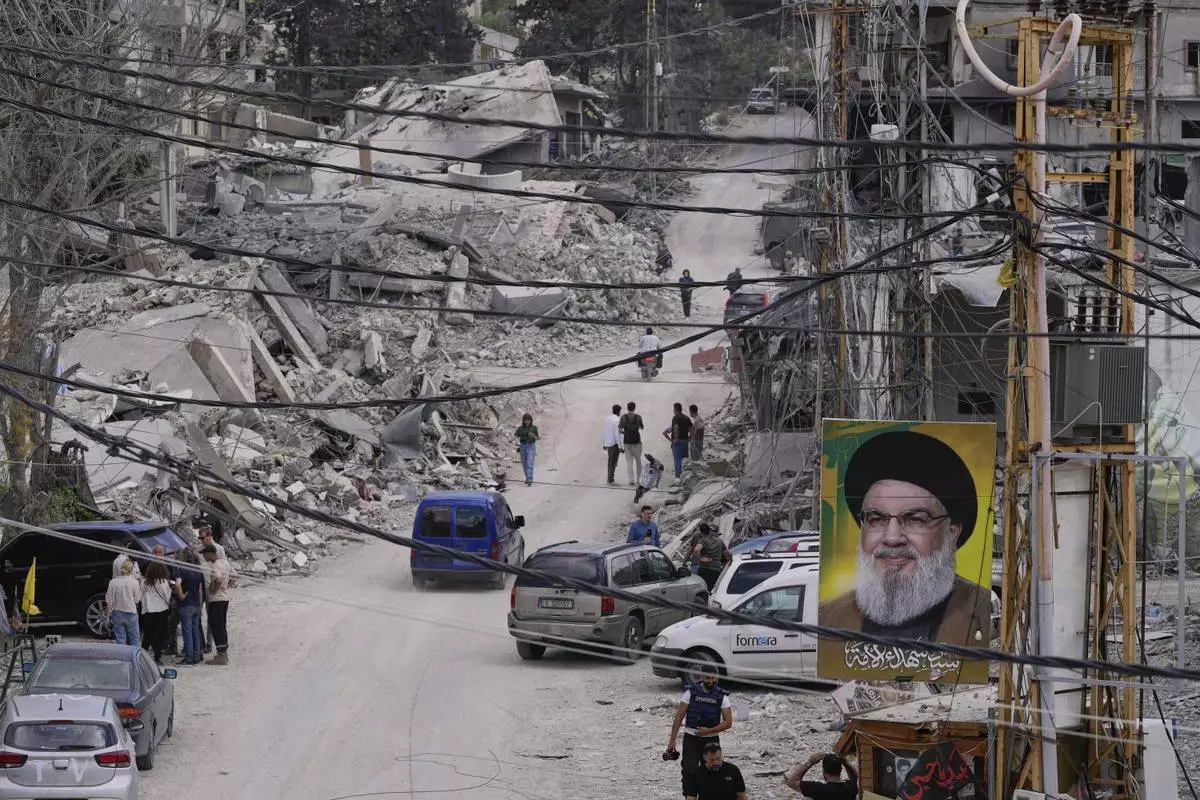
People who return to their village following the announcement of an initial ceasefire agreement between the United States and Iran, gather with journalists at a destroyed street in Beer al-Salassel, south Lebanon, Monday, June 15, 2026. (AP Photo/Mohammed Zaatari)
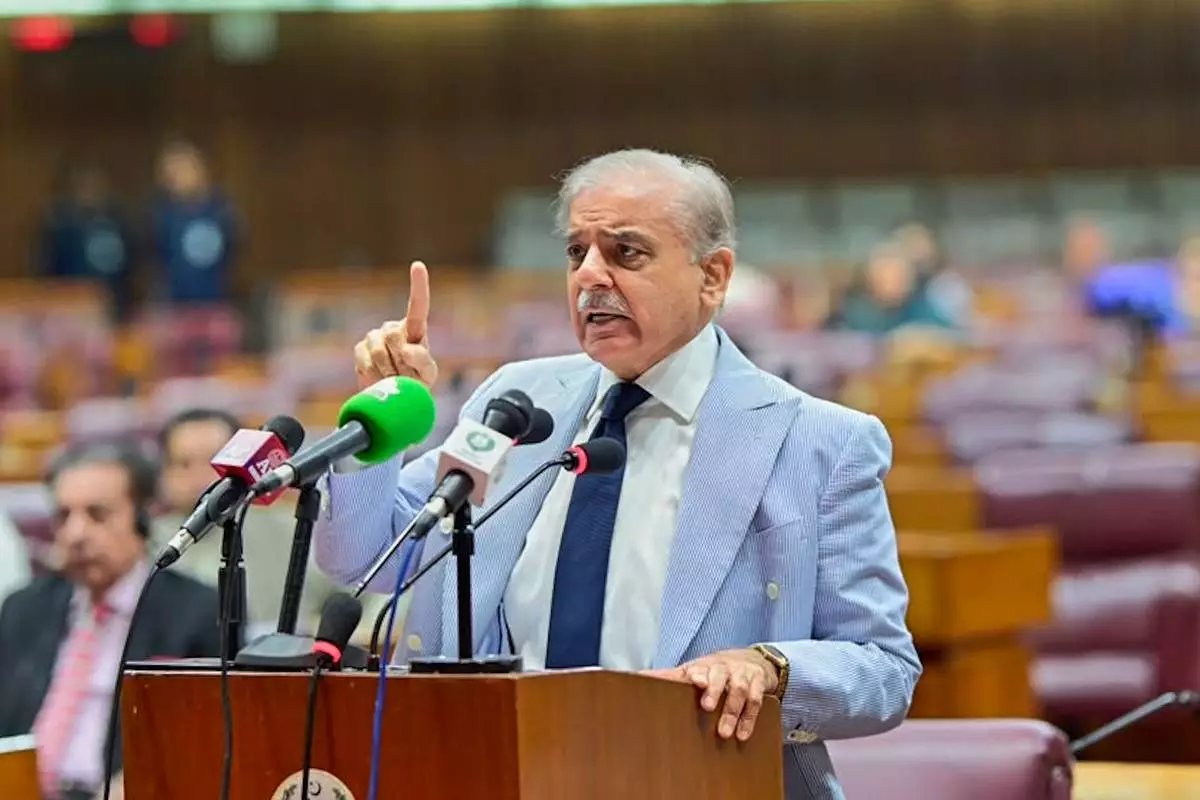
In this photo released by the Pakistan Prime Minister Office, Prime Minister Shehbaz Sharif speaks on the U.S.'s conflict with Iran, during a assembly session in the parliament in Islamabad, Pakistan, Monday, June 15, 2026. (Pakistan Prime Minister Office via AP)
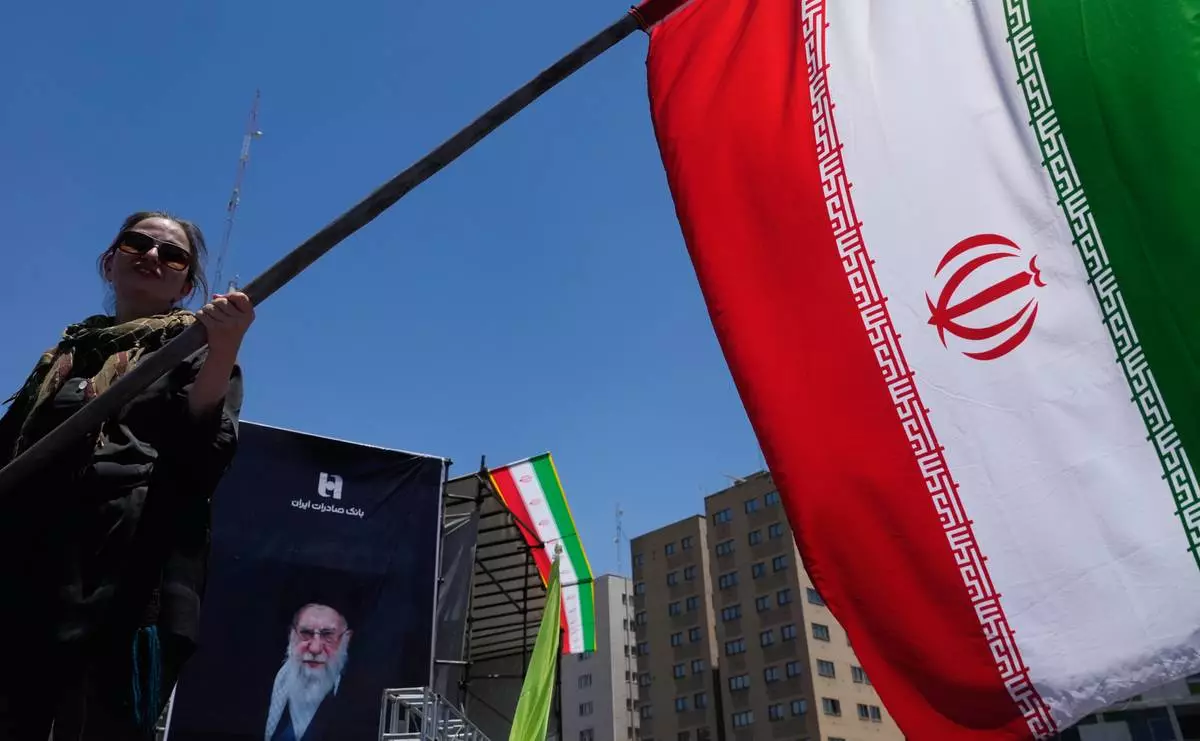
A woman waves an Iranian flag during a pro-government campaign as a portrait of the slain Supreme Leader Ayatollah Ali Khamenei, who was killed in U.S. and Israeli strikes on Feb. 28, is displayed at rear, in downtown Tehran, Iran, Monday, June 15, 2026. (AP Photo/Vahid Salemi)
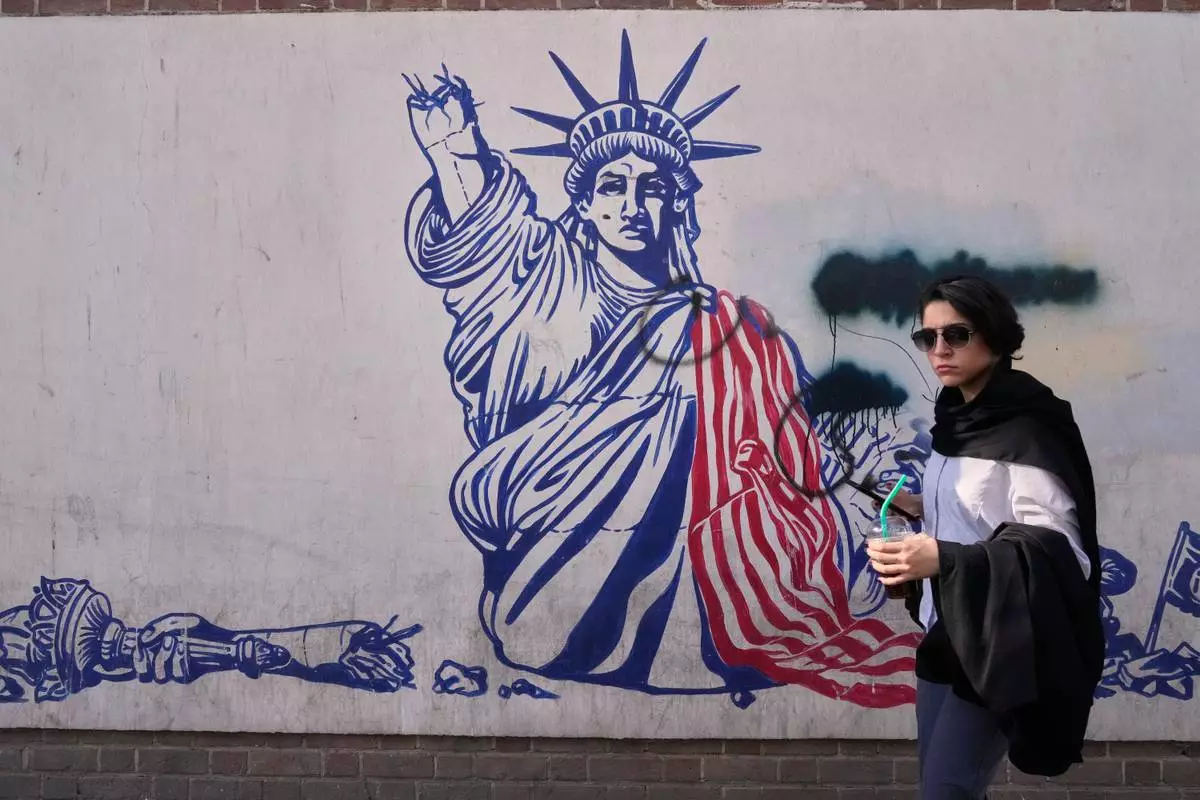
A woman walks past an anti-American mural on the wall of the former U.S. Embassy, now a museum, in Tehran, Iran, Friday, June 12, 2026. (AP Photo/Vahid Salemi)