Three property owners fined nearly $230,000 in total for not complying with statutory orders
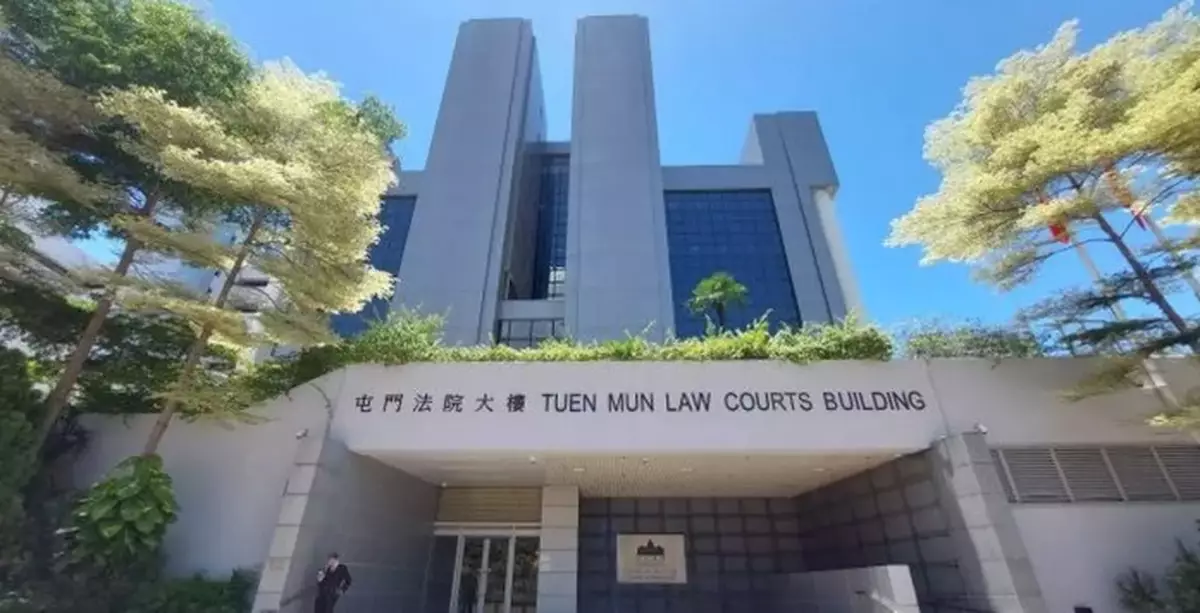
Three owners were convicted and fined $225,320 in total at the Tuen Mun Magistrates' Courts last Friday (June 12) for failing to comply with statutory orders issued under the Buildings Ordinance (BO) (Cap. 123).
Tuen Mun Magistrates' Courts, Tuen Mun Law Courts Building
The first case involved an unauthorised structure with an area of about 32 square metres on the roof of a village house on a lot at D.D. 115, Yuen Long. Since the Lands Department would not issue a certificate of exemption for the unauthorised building works (UBWs) and the UBWs were carried out without prior approval and consent from the Buildings Department (BD), a removal order was served on the owner under section 24(1) of the BO. Failing to comply with the removal order, the owner was prosecuted by the BD and was convicted and fined $102,600 in total, of which $62,600 was the fine for the number of days that the offence continued.
The second case involved alteration of two adjoining units into mini-storage units in an industrial building on San On Street, Tuen Mun. As the alteration and addition works obstructed the means of escape and means of access for firefighting and rescue, contravening the Building (Planning) Regulations, two removal orders and two repair orders were served on the two owners under section 24(1) and section 26 of the BO. Failing to comply with the statutory orders, the owners were prosecuted by the BD and were convicted and fined $122,720 in total, of which $62,720 was the fine for the number of days that the offence continued.
A spokesman for the BD said today (June 15), "UBWs, including the unauthorised alterations causing obstruction to the means of escape and means of access for firefighting and rescue, or affecting the fire-resisting construction of a building, may lead to serious consequences. Owners must comply with removal orders without delay. The BD will continue to take enforcement action against owners who fail to comply with removal orders and repair orders, including instigation of prosecution, to ensure building and public safety."
Failure to comply with a removal order without reasonable excuse is a serious offence under the BO. The maximum penalty upon conviction is a fine of $200,000 and one year's imprisonment, and a further fine of up to $20,000 for each day that the offence continues. Moreover, failure to comply with a repair order without reasonable excuse is also a serious offence. The maximum penalty upon conviction is a fine of level 5 ($50,000 at present) and one year's imprisonment, and a further fine of up to $5,000 for each day that the offence continues.

Buildings Department, Photo source: reference image
EDB announces Blueprint for Digital Education Development in Primary and Secondary Schools
The Education Bureau (EDB) today (June 17) announced the Blueprint for Digital Education Development in Primary and Secondary Schools compiled by the Curriculum Development Council (CDC), which provides a clear guiding direction and implementation strategies for promoting the digital transformation of education in primary and secondary schools across Hong Kong in the future. It aims to enhance students' digital literacy and equip the younger generation to seize the opportunities and meet the challenges of the digital era.
In line with the recommendations of the Steering Committee on Strategic Development of Digital Education, the Blueprint proposes "Four Key Focuses, Ten Strategies", driving forward along four key development directions, namely, "nurturing talent with both digital literacy and humanistic qualities", "strengthening teacher training to drive digital transformation of education", "optimising infrastructure to build smart campuses", and "promoting cross-sector collaboration to co-create a digital education ecosystem".
The Blueprint focuses on AI education, providing clear guidelines for the school sector across comprehensive dimensions such as overall school planning, teacher training, student development, infrastructure optimisation, as well as exchange and collaboration. Grounded in the four key development directions, the Blueprint proposes 10 strategies with the relevant recommendations outlined below:
(I) Nurturing talent with both digital literacy and humanistic qualities
- Formulate the AI Literacy Learning Framework for Primary and Secondary Schools to systematically cultivate students' knowledge, skills and proper values related to digital technology
- Strengthen mathematics, science and technology education to enhance students' innovation and technology (I&T) capabilities (to launch the Information Technology and I&T Curriculum Framework for Primary Schools in 2026/27 school year, etc)
- Integrate learning elements related to digital education into the primary and secondary curricula organically, promote the "AI+Curriculum", and issue the Guide to Using AI in Teaching in Primary and Secondary Schools
(II) Strengthening teacher training to drive digital transformation of education
- Formulate teacher professional training requirements for digital education (to complete a minimum of 30 hours of training related to digital education within each three-year cycle of the Continuing Professional Development)
- Provide tiered, diversified professional development activities in digital education to strengthen schools' professional capacity to lead change and pedagogical innovation (to offer more than 50 000 training places each year)
(III) Optimising infrastructure to build smart campuses
- Promote the development of smart campuses and actively explore how AI can assist schools in handling administrative work, to reduce workload, enhance capacity, and improve school governance and efficiency
- Leverage the enhanced School Development and Accountability Framework to drive school improvement and enable schools to refine their implementation of digital education
- Strengthen support services, provide resource support, and build a comprehensive platform for digital education learning resources (to set aside $2 billion in the Quality Education Fund for support)
(IV) Promoting cross-sector collaboration to co-create a digital education ecosystem
- Promote home-school co-operation to co-cultivate proper values and good attitudes in students
- Bring together various stakeholders, including professional bodies, to jointly build a digital education ecosystem for primary and secondary schools (including exchanges and co-operation with the Mainland and internationally)
The EDB today also disbursed a one-off grant of $500,000 to all publicly funded schools to launch a three-year AI for Empowering Learning and Teaching Funding Programme, to plan school-based AI-empowered education measures and organise AI teacher training courses covering various levels, providing comprehensive support for schools to implement digital education. Schools should incorporate digital education into school development plans and/or school annual plans in the next school year (2026/2027) with reference to the Blueprint and relevant curriculum documents and formulate school-based implementation strategies.
The Secretary for Education, Dr Choi Yuk-lin, said, "The EDB welcomes the Blueprint compiled by the CDC, which aligns closely with the EDB's strategic planning to connect with the National 15th Five-Year Plan and the trend of 'AI + Education'. The Blueprint, in conjunction with measures such as the AI for Empowering Learning and Teaching Funding Programme, will enable Hong Kong's education to stay at the forefront of the times with a dynamic and forward-looking mindset. The restructuring of education in the digital age is a systemic transformation. We are not only focusing on hardware upgrades, but also actively promoting a deep shift in teaching and learning paradigms and comprehensively implementing AI education for students.
"The EDB will study the strategies and measures proposed in the Blueprint and looks forward to continuing to work hand in hand with the school sector and relevant stakeholders to help students make good use of technology to realise their dreams, jointly writing a new chapter in Hong Kong's school education and making a contribution to building China into a leading country in education and cultivating future talent."
The Blueprint for Digital Education Development in Primary and Secondary Schools and the Supplements have been uploaded to the EDB's website (www.edb.gov.hk/en/DEBP) for schools, teachers, and public viewing.

EDB announces Blueprint for Digital Education Development in Primary and Secondary Schools Source: HKSAR Government Press Releases

EDB announces Blueprint for Digital Education Development in Primary and Secondary Schools Source: HKSAR Government Press Releases

EDB announces Blueprint for Digital Education Development in Primary and Secondary Schools Source: HKSAR Government Press Releases