REDWOOD CITY, Calif.--(BUSINESS WIRE)--Jun 15, 2026--
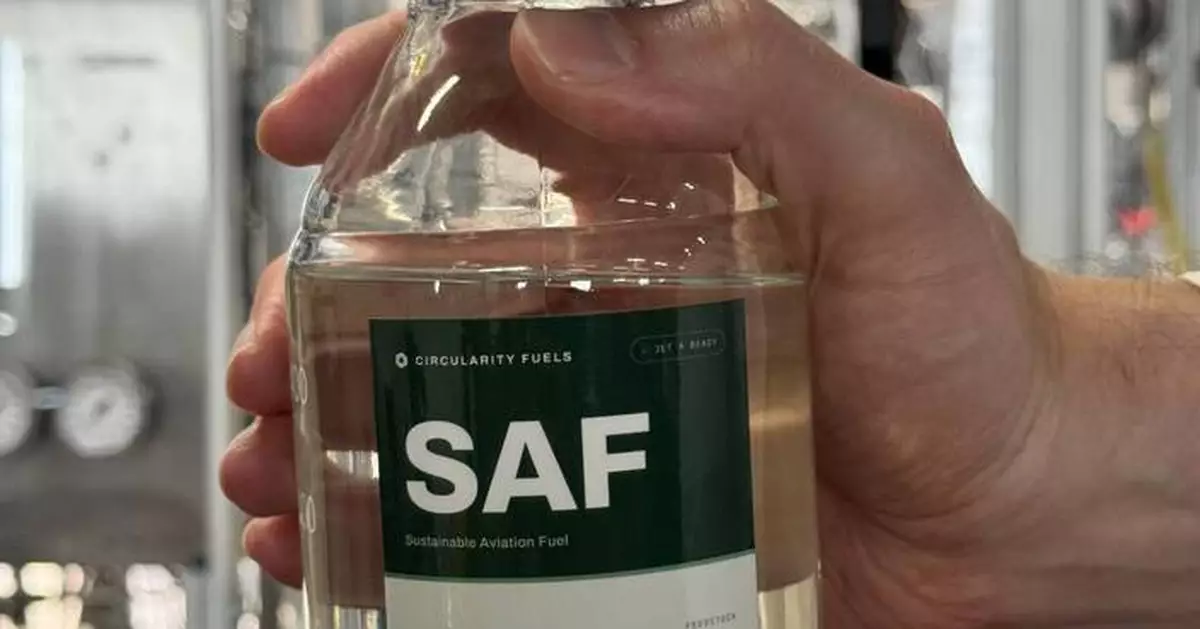
Circularity Fuels today announced it has completed the world’s first end-to-end conversion of raw agricultural biogas into sustainable aviation fuel (SAF).
This press release features multimedia. View the full release here: https://www.businesswire.com/news/home/20260615483254/en/
Over a six-month pilot run on biogas drawn straight from a California dairy farm’s manure digester, Circularity produced drop-in jet fuel meeting ASTM D7566 Annex A1 specifications. The pilot puts commercial SAF within reach at <$100,000 per barrel-per-day of installed capacity at commercial scale, about one-fifth the capital cost of SAF plants currently under construction in Europe. The reduction in plant cost will make Circularity’s biogas-derived SAF cost-competitive with fossil jet fuel.
Jet fuel supply has come under growing pressure. International geopolitics has destabilized crude oil markets, and prices for airlines and fliers keep climbing. SAF offers a domestically produced alternative, but today’s global SAF production still meets less than 1% of demand. SAF production today is dominated by used cooking oil, which suffers from limited scale and doesn’t mitigate energy security risks given the majority of used cooking oil is imported from China. Advanced SAF proponents have touted e-Fuels as the solution, but rising power prices make power-to-liquid approaches economically challenging.
Agricultural biogas is one of the lowest-cost feedstocks available for SAF because almost all of it goes to waste. The world’s waste biogas resource is also vast, large enough to supply the entire global jet fuel market. The pilot host, a dairy of more than 5,000 head near Madera, California, currently vents nearly all of its biogas to the atmosphere despite sitting in the heart of the country’s largest dairy region. Circularity’s system lets operators like this one monetize that methane on-site, without the cost of removing carbon dioxide.
Over thousands of operating hours, Circularity’s two-reactor system ran on raw biogas (about 65% methane and 35% CO₂) drawn straight from the dairy’s digester and produced finished jet fuel. The stack pairs the electrified Ouro bi-reforming reactor with the compact Aion Fischer-Tropsch synthesis reactor. Both are modular, low-cost, skid-mounted reactors, so the system is sized for the small, distributed scales at which biogas is actually produced.
Closing the Loop from Dairy Waste to Jet Fuel
The pilot is the first to convert raw biogas into ASTM D7566 Annex A1 (FT-SPK) jet fuel using a fully integrated, modular system. The Ouro reactor achieved more than 98% methane conversion and more than 90% CO₂ conversion in a single electrified step. The high CO₂ content of biogas has historically been the main barrier to economical conversion. The resulting fuel can be blended up to 50% with conventional Jet-A for use in commercial aircraft today. Internal life-cycle modeling based on California’s regulatory framework puts the fuel’s carbon intensity at -350.7 gCO₂e/MJ, firmly net carbon-negative.
The negative score comes from the feedstock: producing the fuel consumes methane that the dairy would otherwise vent to the atmosphere, where it is a far more potent greenhouse gas than CO₂. The avoided methane outweighs all emissions from producing and burning the fuel, making each gallon climate-equivalent to removing roughly 100 pounds of CO₂e from the atmosphere.
“The hard part of this industry was never designing a theoretical plant that could make SAF. It was proving you could do it continuously, from real biogas, at a cost that pencils,” said Dr. Stephen Beaton, Founder and CEO of Circularity Fuels. “We’ve now done that. The full stack works end-to-end on real feedstock from a real dairy farm, and the economics put commercial SAF from dairy waste within reach of fossil jet fuel.”
“For two decades, we’ve watched dairies flare or vent biogas because the only off-take options required millions in cleanup equipment and a pipeline next door,” said Craig Hartman of Hartman Engineering, a long-standing developer of agricultural biogas projects. “Circularity is the first team I’ve seen take raw biogas straight from a digester and turn it into finished jet fuel on-site. That changes the conversation for every dairy operator we work with.”
Using biogas as the feedstock lets Circularity sell its jet fuel at fossil parity even from a first-of-a-kind commercial plant. The fuel qualifies for federal and state biofuel incentives, including the EPA’s Renewable Fuel Standard and California’s carbon-negative LCFS pathway. Those are the same programs that allowed renewable natural gas, ethanol, and biodiesel to scale, and they give SAF from biogas the same path to commercial volumes.
With the integrated technology stack now validated in the field, Circularity Fuels is preparing for its first commercial-scale deployment. The company expects to break ground on its first commercial site in 2027, targeting agricultural biogas resources across the United States, Latin America, and Europe.
About Circularity Fuels
Circularity Fuels is a Redwood City, California-based renewable fuels company working to decarbonize hard-to-abate sectors by turning waste streams into drop-in synthetic fuels, starting with aviation and long-haul trucking. The company’s modular, skid-mounted systems pair its electrified Ouro reforming reactor with its compact Aion Fischer-Tropsch synthesis reactor to produce SAF directly at the feedstock source. Founded by Dr. Stephen Beaton, former Lab Chief of the U.S. Air Force Petroleum Office, Circularity came out of DCVC’s incubator program and is backed by $8 million in seed funding along with awards from ARPA-E, the National Science Foundation, and the California Energy Commission. Learn more at www.circularityfuels.com.
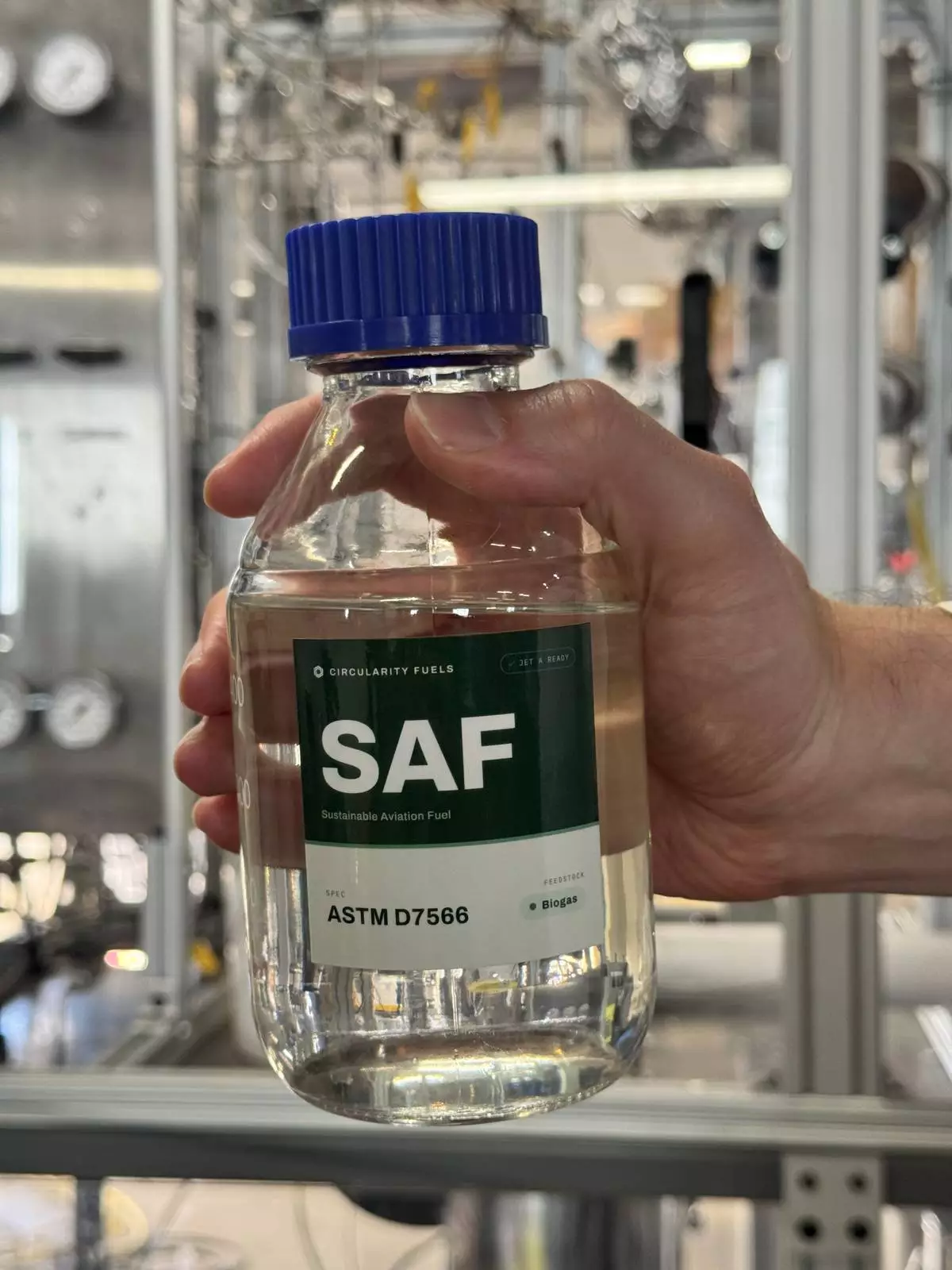
A sample of the world's first sustainable aviation fuel (SAF) made from cow-manure biogas. California startup Circularity Fuels says its modular system can produce SAF at roughly one-fifth the capital cost of plants currently under construction in Europe. Circularity's technology is expected to create a new revenue stream for dairy farmers, whose biogas today goes largely to waste, while also reducing the carbon footprint of air transportation. Courtesy Circularity Fuels.