MISSISSAUGA, Ontario--(BUSINESS WIRE)--Jun 15, 2026--
From capturing life's biggest moments to staying connected with work, family, and friends, smartphones have become an essential part of everyday life. That's why Samsung Electronics Canada is making it easier than ever for Galaxy users to protect the devices they depend on with the expansion of Samsung Care+ and the introduction of a new monthly payment option.
This press release features multimedia. View the full release here: https://www.businesswire.com/news/home/20260615054435/en/
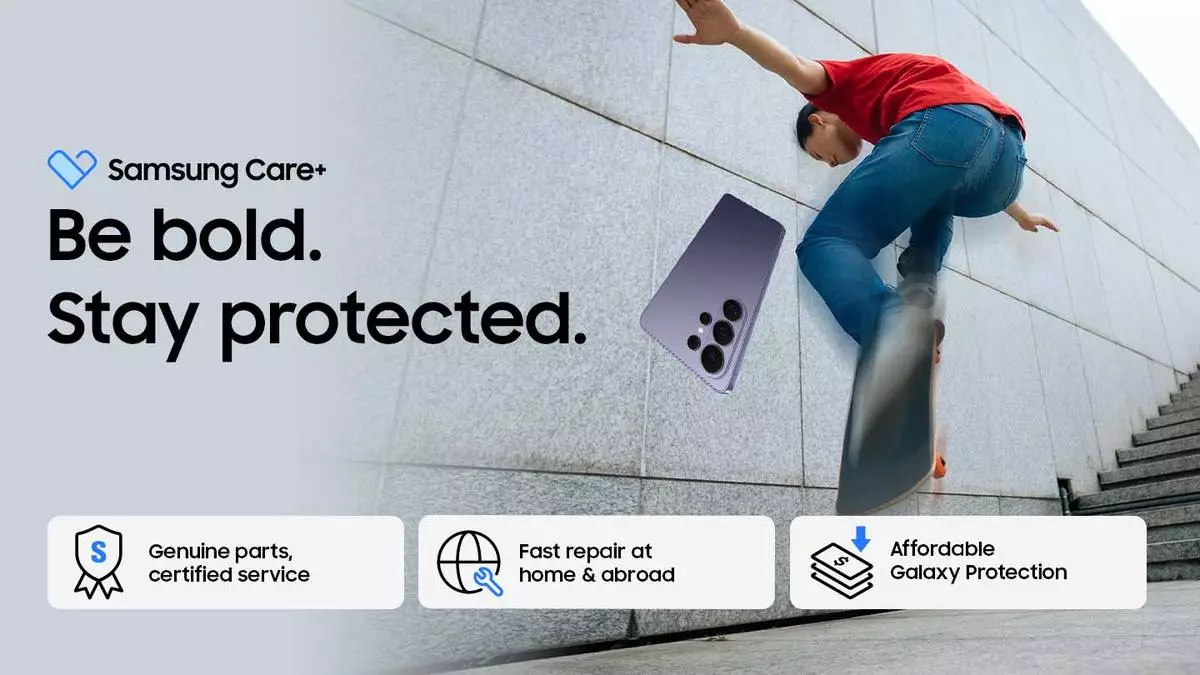
Designed to provide peace of mind beyond the standard manufacturer warranty, Samsung Care+ helps users stay protected through the unexpected moments that can happen throughout the life of a device. Whether it's an accidental drop, liquid damage, mechanical malfunction, or battery replacement 1, Samsung Care+ helps ensure users can get back to what matters most with minimal disruption.
"Today's smartphones are more than just devices. They're central hubs for how people communicate, create, work, and capture life's important moments," said Raj Doshi, Head of Mobile at Samsung Electronics Canada. "With the introduction of our new monthly Samsung Care+ plan, we're providing Galaxy users with even greater flexibility to access the protection and support they need, while helping ensure they can enjoy their devices with confidence."
Samsung Care+ combines comprehensive protection with expert support, giving customers access to Samsung-certified technicians who use genuine Samsung parts for repairs. Users can also take advantage of convenient service options, including same-day walk-in repairs at select locations and mail-in repair services, helping them get back up and running quickly.
Beginning June 15, Samsung Care+ will also introduce enhanced protection features, including loss or theft coverage 2 and unlimited repairs, offering Galaxy users an even greater level of reassurance. Whether commuting to work, travelling abroad, attending a special event, or simply navigating everyday life, customers can feel confident knowing their device, and the memories, connections, and experiences stored on it, is protected.
To provide even more flexibility, Samsung Canada is introducing a new month-to-month Samsung Care+ payment plan. 3 In addition to existing 12 and 24-month plan options, eligible Galaxy users will now be able to enroll in a month-to-month Samsung Care+ plan, making it easier than ever to access device protection that fits their needs.
The new offering reflects Samsung's continued commitment to delivering a seamless ownership experience, helping customers get the most out of their Galaxy devices long after purchase.
Samsung Care+ can be purchased with your new Galaxy device or, for residents of Canada (excluding Quebec), within 60 days of device purchase (or within 30 days of purchase for residents of Quebec) through Samsung.com/ca or at participating Samsung Experience Stores.
For more information, visit the Samsung Care+ page: https://www.samsung.com/ca/offer/samsung-care-plus./
Samsung Canada Expands Samsung Care+ with New Monthly Payment Option
WARSAW, Poland (AP) — Germany and Poland are set to sign a new defense agreement on Wednesday, putting aside their complicated past to strengthen European military cooperation amid heightened tensions with Russia and growing uncertainty over U.S. engagement in Europe.
Relations between the two neighbors in recent years have become more pragmatic in the wake of Russia’s full‑scale war on Ukraine in 2022 and the coming to power of a liberal government in Poland in 2023.
As the U.S. weighs a partial drawdown of its military presence in Europe, Poland is keen to ensure that major European allies take a greater role in defending the continent’s eastern flank.
Germany seeks partners as it moves to revitalize its military, the Bundeswehr, after decades of neglect, with ambitions to build the strongest conventional army on NATO’s European side — an effort that will make it a central pillar of European defense in the years ahead.
Poland’s importance as a logistics hub for Ukraine, alongside its growing economy and heavy defense investment, has made it a compelling partner for Germany and other core European countries.
“Poland started building a strong army much earlier than other countries in Western Europe,” Cezary Tomczyk, the Polish deputy defense minister, told The Associated Press. “So we are ahead when it comes to capabilities.”
“We definitely don't accept that any agreements about this part of Europe are made without Poland,” he said.
“We Germans need a strong Poland as an equal partner,” German Chancellor Friedrich Merz said in Berlin after meeting with liberal Polish Prime Minister Donald Tusk in December. “This is in our fundamental interest.”
The defense agreement is to include plans for protecting the Baltic Sea region and details about cooperation on military mobility and infrastructure, cyber defense and new technologies.
The two countries are irreversibly tied by NATO’s defense plans, which give Germany a key role in the defense of the Baltic region, together with Poland and other countries in the central and eastern European region, said Justyna Gotkowska, deputy director of the Warsaw-based think tank Center for Eastern Studies.
“Germany is largely responsible for the defense of the Baltic states and without cooperation with Poland, that will not happen,” Gotkowska said.
The Baltic countries are often referred to as the most likely target for Russia if it were to attack NATO territory in the future.
Tomczyk, the deputy defense minister, said German soldiers, among others, would help further develop Poland’s Eastern Shield, a system of enhanced fortifications the country has been building on its borders with Belarus and Russia since 2024.
The agreement is expected to reaffirm the mutual defense obligations set out in NATO and European Union treaties, to which both countries are parties.
However, unlike bilateral treaties each has signed with France and the United Kingdom in recent years, the Polish-German agreement is inter-ministerial, focused on the practical aspects of military cooperation and does not include political mutual defense declarations that the bilateral treaties do.
When asked in June by Polish Radio Trojka why Poland is not signing a similar treaty with Germany, Polish Foreign Minister Radosław Sikorski said that President Karol Nawrocki, who came to power with the support of the national-conservative Law and Justice party, would never agree to that.
“Hell would break loose here” if a German-Polish treaty was signed, Sikorski said.
When Law and Justice was in power, the government demanded $1.3 trillion in reparations from Germany because of its World War II occupation of Poland — a demand Berlin has rejected.
The topic is likely to resurface ahead of next year's general election, and Tusk will seek to avoid appearing soft or serving Berlin's interests. Tusk himself has demanded that Germany move faster to compensate surviving victims of the occupation.
On Tuesday, Polish far-right leader Robert Bąkiewicz and several companions from a movement opposing immigration were briefly detained in Berlin after attempting to stage a demonstration in front of a monument to Polish victims of World War II, holding a large cross.
Despite Poland's rising importance in Europe's security architecture, Germany has preferred to make major decisions on Ukraine or Iran with only France and the U.K, leaving Warsaw aside.
On June 7, leaders of the three Western European countries hosted Ukrainian President Volodymyr Zelenskyy in London to discuss the role they might play in potential peace negotiations with Russia.
Tusk said at a news conference in Warsaw after the London meeting that he told Merz Poland should be part of the discussion about the future of Ukraine and the region. “Any arrangements made without our participation will not be respected or binding for us,” Tusk said.
Rolf Nikel, a former German ambassador to Poland and vice president of the German Council on Foreign Relations, said Poland's role and significance within Europe and NATO have grown.
“So Poland must be taken more seriously today and, above all, must be respected more than we have seen in the past,” Nikel said.
Gotkowska, from the Center for Eastern Studies, said that Germany needs to recognize that its economy has stagnated while Poland's economy and military strength have risen.
“The balance of power has changed in Europe in recent years," Gotkowska said.
Associated Press writers Kirsten Grieshaber and Kerstin Sopke in Berlin contributed to this report.
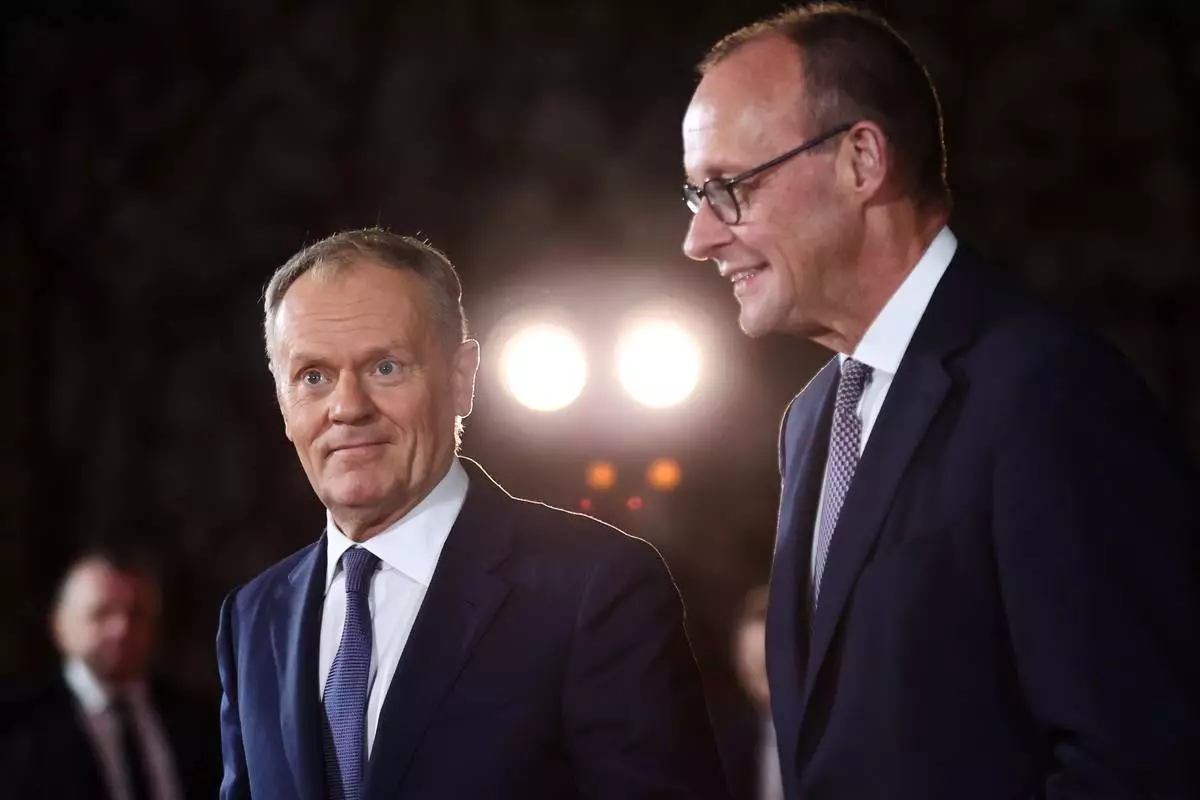
FILE - German Chancellor Friedrich Merz welcomes Polish Prime Minister Donald Tusk at the Chancellery in Berlin on Dec. 15, 2025. (AP Photo/Maryam Majd, File)