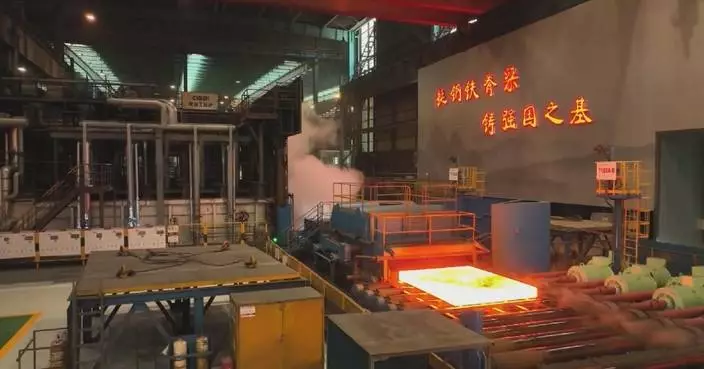
A boom in logistics network construction across China is driving growth in manufacturing and shipping, from refrigerated trucks to giant car carriers, while cutting costs and expanding global trade reach.
In the cold-chain sector, demand is rising fast.
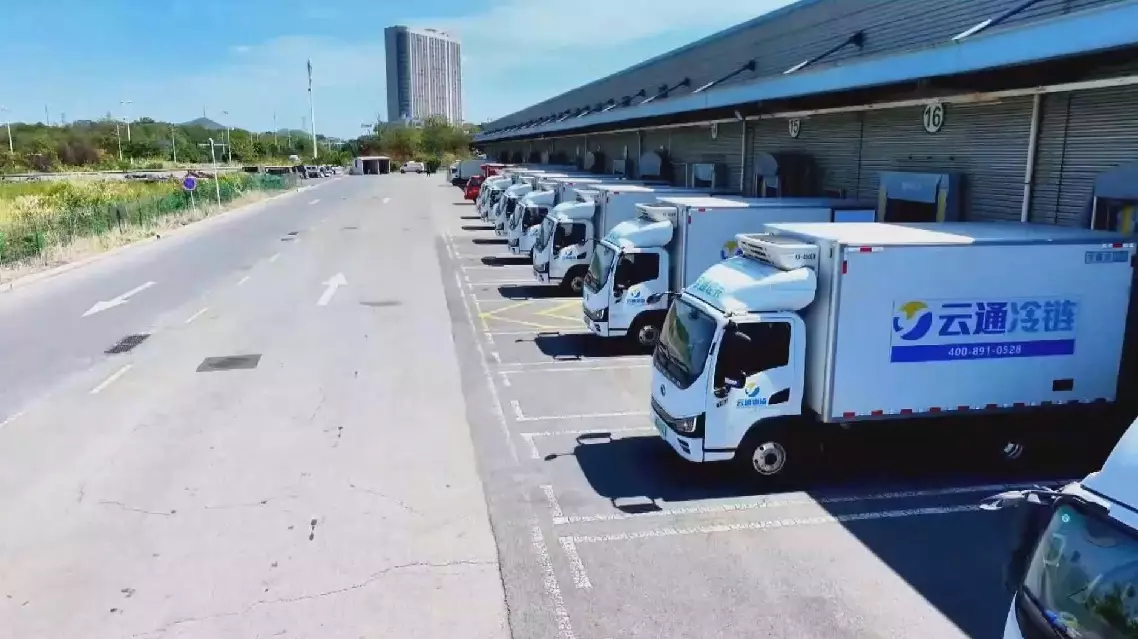
At a refrigerated truck plant in Zhengzhou City, central China's Henan Province, business is booming. A batch of new energy vehicles has been delivered recently, and the factory is racing to keep up with demand.
"From January to May, our orders rose 76 percent from the same period in 2025. Our current orders have already filled our schedule through October," said Wang Qian, technical director of Yutong Commercial Vehicle Co., Ltd. To meet higher long-distance cold-chain demands, the company has improved vehicle range by 20 percent and added a digital platform for real-time monitoring of performance, energy use and temperature.
"We are trying to develop new energy refrigerated truck products with stronger adaptability to support the rapid growth of our logistics network," said Wang.
The rapid expansion of the logistics web is also benefiting cold-chain service providers.
Leveraging the extensive network, Huading Cold Chain Storage and Distribution Technology Co., Ltd. has built 62 warehouse and distribution centers across the country, expanding its business reach to Ngari Prefecture, southwest China's Xizang Autonomous Region and Ili Kazak Autonomous Prefecture in northwest China's Xinjiang Uygur Autonomous Region.
"Economic development cannot happen without an efficient and low-cost logistics network, especially for cold-chain. It allows food to travel from the factory to consumers in the shortest possible time. The denser the network, the faster our delivery and the lower our costs," said Wang Jun, head of the company.
"Our orders have increased fivefold compared with three years ago. We have already had 146,000 trunk and branch lines. As our warehouse and distribution centers and cargo volume grow, the number of routes will likely reach hundreds of thousands in the future," he said.
On the shipping side, demand for maritime logistics is surging as well.
In Nansha District, south China's Guangdong Province, shipyard orders have been booked through 2030. A car carrier with a capacity of 10,800 vehicles is nearing completion at the shipyard, and its builder has 14 such vessels on order.
"It has 14 decks for vehicle transport, five of which can be freely adjusted in height according to the characteristics of the vehicles to meet transport needs," said Lin Jiuyue, project manager of Guangzhou Shipyard International Co., Ltd. under China State Shipbuilding Corporation Limited.
These vessels will serve global auto trade.
After delivery, they will operate on international routes from South Korea through Shanghai to Southeast Asia, North America and Europe, taking on the task of exporting Asian cars to the world.
Beyond car carriers, over 95 percent of the shipyard's orders are international.
Located on Longxue Island of Nansha District, the shipyard has an integrated logistics system of ports, railways and highways, creating a cluster of shipbuilding, port operations, logistics and trade.
A complete supply chain and smooth logistics network allow for faster, more efficient deliveries.
"With Nansha District serving as a hub, our raw materials, equipment, and even the engineers we need arrive very quickly. On average, each of our ships is now delivered about four to five months ahead of schedule," said Li Tao, marketing director of Guangzhou Shipyard International Co., Ltd. under China State Shipbuilding Corporation Limited.
Border inspection procedures have also been streamlined to speed up deliveries. "We have deeply integrated border inspection procedures including crew declaration and exit inspection. The overall clearance time has been reduced by 30 percent compared with traditional models, enabling China-made ships to complete export delivery more quickly," said Liu Huijun, instructor of the 2nd duty team under Nansha District Border Inspection Station.
China's logistics boom drives growth across manufacturing, shipping