The Chinese mainland's acclaimed film "Dear You" will be released in Malaysia, Singapore, Brunei, as well as China's Hong Kong and Macao Special Administrative Regions on Thursday.
Since its Chinese mainland release on April 30, the Chaoshan (Teochew)-dialect film has struck a deep chord with audiences via its tender emotional portrayal and heartfelt core storyline, grossing over 1.7 billion yuan (about 251 million U.S. dollars) at the box office to date.
The low-budget film, featuring a largely unknown cast, centers on the tradition of "qiaopi," letters and remittances sent home by earlier generations of overseas Chinese in the 19th and 20th centuries, which serves as the emotional thread linking the film's central characters.
For generations, people from the Chaoshan region in today's Guangdong and Fujian provinces left for Southeast Asia to escape war, poverty, and natural disasters in search of better fortunes. Between 1864 and 1911, nearly three million people departed the region, according to local customs records.
A special screening of the hit film was held in Kuala Lumpur, Malaysia, on Monday, moving many viewers to tears.
"The qiaopi culture truly carries the longing of many people living far from home. For people in the past, communication wasn't as convenient as it is now. All their longing and emotions for family were expressed in these letters. In just a few lines, there were deep feelings for their homeland and families. I was deeply touched. So, the qiaopi culture is indeed a very precious collective memory," said Chiew Choon Man, Deputy Minister of Tourism, Arts and Culture of Malaysia.
"Halfway through the movie, I couldn't help but shed tears. That's why this movie is so popular. Because it uses very simple filming techniques, yet it can deeply touch our hearts," said Lim Kah Hoe, curator of the Malaysian Chinese Museum.
"The film 'Dear You' will hit more than 100 cinemas across East and West Malaysia, with more than 500 screenings. It's worth watching, a very touching film," said Choon Kang Chiah, executive director of Mega Films Distribution, a leading independent movie distributor in Malaysia.
In 1979, qiaopi services were placed under the unified management of the Bank of China. In 2013, UNESCO added the Qiaopi archives to its Memory of the World Register.

Chinese hit film "Dear You" to be released in several ASEAN countries
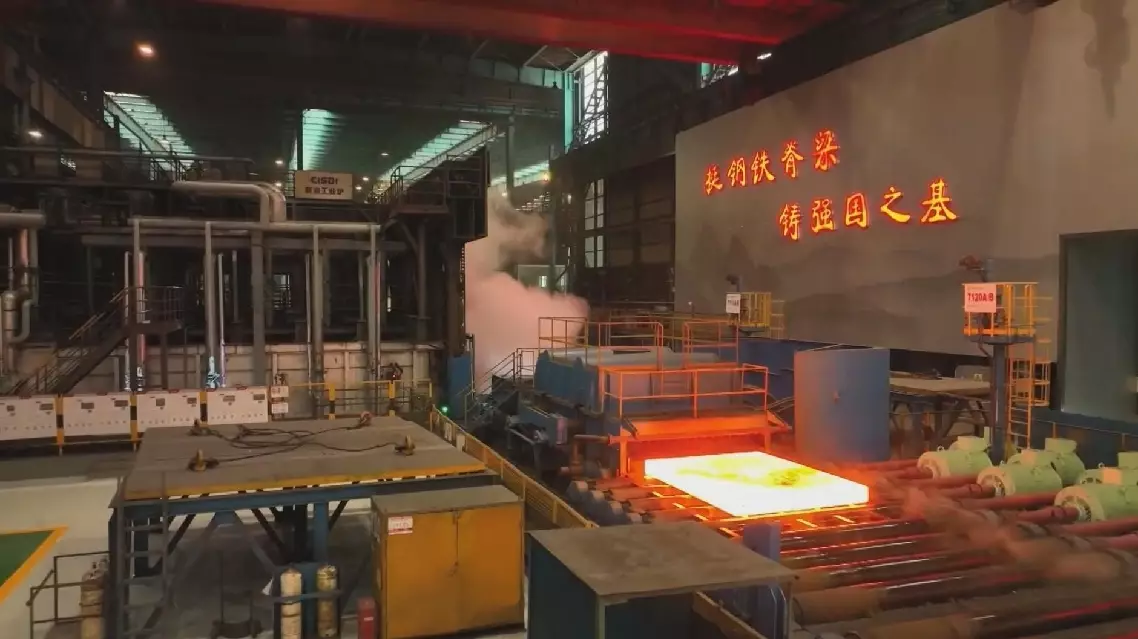
The resilience of China's bulk commodity market is coming into sharper focus as market expectations improve and industry operations hold steady, despite global economic and geopolitical headwinds, the China Federation of Logistics and Purchasing (CFLP) said in a report released on Tuesday.
Against a backdrop of mounting macroeconomic headwinds, intensifying external shocks, and persistent market fragmentation, China's bulk commodity market has distinguished itself through rising trade resilience and accelerated capacity building -- the defining features of its performance through 2025 and into 2026, according to the report.
Industry experts said that the global economy is undergoing its most profound restructuring in decades. Geopolitical friction, wild market swings, and other intertwined factors have thrust the bulk commodity sector into uncharted waters. Yet China possesses the world's largest demand market for bulk commodities, a complete manufacturing system, a robust port and logistics network, and increasingly sophisticated futures and financial markets -- all of which form a solid foundation for weathering external shocks.
Despite unprecedented economic uncertainties, the report said, China's goods trade maintained strong resilience in 2025, with imports of major bulk commodities staying at elevated levels. Crude oil, iron ore, soybeans, and other key varieties continued to register large import volumes, underscoring the country's enduring capacity to absorb global supplies.
In May, China's bulk commodity price index stood at 132.5, up 0.3 percent month-on-month -- marking the third consecutive monthly increase and providing clear evidence that market expectations are steadily rebounding and the sector is improving on a stable footing.
Looking further ahead, the report said that competition in global commodity will increasingly play out across four interconnected arenas: data, carbon, finance, and regulatory frameworks.
"Going forward, China's bulk commodity sector must translate its scale advantage into greater influence over global resource allocation, and steer its trade and business models toward integrated supply chain services that cover the entire industrial chain. That means connecting the full loop of digitalization, logistics, capital flow, and billing, while raising the industry's level of specialization and compliance," said He Hui, vice president of the CFLP.
China's bulk commodity market stays resilient amid external headwinds: report