The war in Iran lasted for more than 100 days until the two sides electronically signed on Monday a memorandum of understanding aimed at ending the conflict.
The conflict started on the last day of February, when the United States and Israel launched joint military strikes against Iran, killing the country's then-Supreme Leader, Ali Khamenei.
In the days that followed, Lebanon's Hezbollah joined the conflict, launching rockets and drones toward Israel in retaliation for Khamenei's killing.
By March 8, Iran's new Supreme Leader was chosen - Mojtaba Khamenei, son of the slain leader.
One month later, Washington and Tehran agreed to a two-week ceasefire.
However, peace talks in Pakistan collapsed just four days later, prompting the United States to announce a shipping blockade on Iranian ports.
Since then, negotiations have remained stalled for months, punctuated by sporadic clashes across the region.
On June 8, a U.S. military helicopter was shot down, triggering a new wave of mutual retaliatory strikes.
Just three days after that, Iran moved to close the strategic Strait of Hormuz.
On June 15, the United States and Iran finally reached a memorandum of understanding to extend the ceasefire by 60 days for negotiations, with a formal signing in Switzerland on Friday.
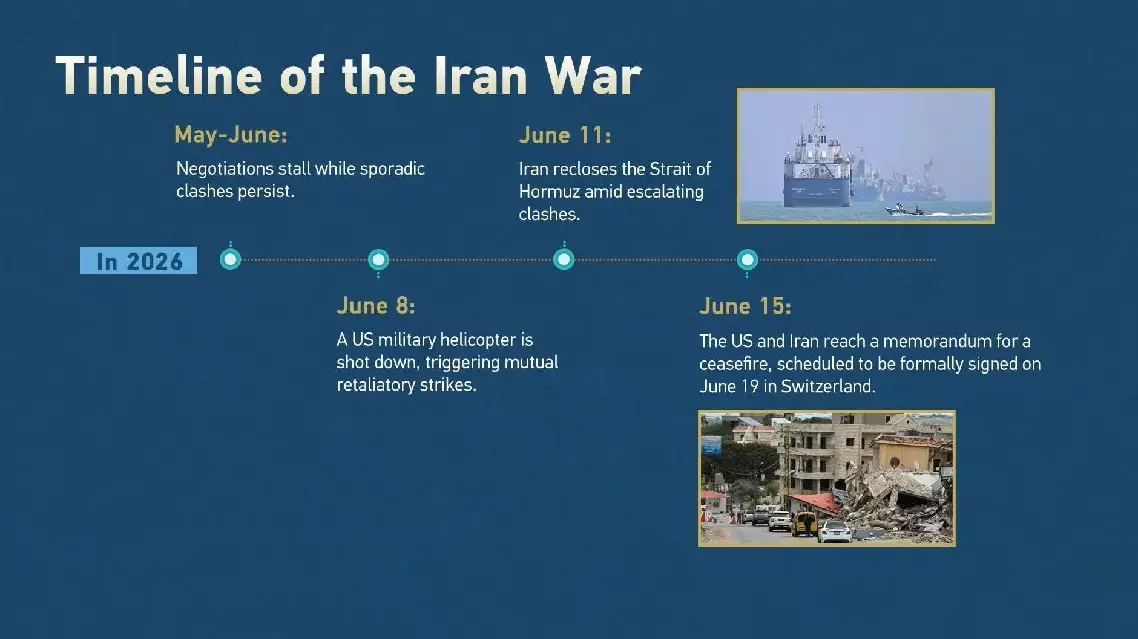
Timeline: US-Iran conflict, negotiations since start of war