MOMBASA, Kenya (AP) — African and Commonwealth nations called Tuesday for a swift implementation of a landmark treaty protecting the high seas, warning that despite record commitments to marine conservation, much of the world’s ocean protection still exists only on paper.
The call to action was issued at the 11th Our Ocean Conference in Mombasa, the first time an African nation has hosted the major annual event, which focuses on addressing critical ocean issues, including climate change, biodiversity and pollution.
Hundreds of delegates from Africa, the United States, the European Union, and climate-vulnerable Caribbean and Pacific island nations are taking part in the conference, where leaders have sought to position Africa as a driving force in global ocean governance.
Former U.S. Secretary of State John Kerry said in his opening remarks at the Commonwealth Ocean Ministers’ Roundtable that the High Seas Treaty, which came into effect in January after ratification by 60 countries, marked a historic turning point by creating, for the first time, a legal mechanism to establish protected areas in international waters.
But he warned that progress remained too slow.
“We have 10% of the ocean under protection this year,” Kerry said. “That is worth marking. But only 3% is highly or fully protected, and the rest of the protections are, unfortunately, just lines on a map.”
Kerry said that industrial fishing fleets continue to exploit the oceans, with some vessels operating thousands of miles from home and using massive nets that indiscriminately catch marine life.
“Ratify it if you haven’t, and move immediately to implementation,” he urged countries, noting that key decisions on the future of the treaty will be taken next year.
The treaty, formally known as the Agreement on Biodiversity Beyond National Jurisdiction, aims to help countries achieve a global target of protecting 30% of the world’s land and oceans by 2030.
The Kenyan Cabinet secretary of maritime affairs, Hassan Joho, said that governments must now shift from promises to tangible action.
“The purpose of this roundtable is not to restate ambition, but to convert such pledges into measurable results for our communities, our economies and our oceans,” Joho said.
Joho noted that since 2014, the One Ocean Conference has generated more than 2,900 pledges worth more than $169 billion. The challenge, he said, is to turn them into effective management of marine ecosystems.
The Commonwealth’s 56 member states collectively account for 36% of the world’s ocean jurisdiction and nearly half of its coral reefs, giving the bloc a unique responsibility in protecting marine resources.
Africa, meanwhile, is increasingly setting itself as a leader in ocean conservation.
Kerry praised African countries for championing transboundary marine protection and pointed to commitments by eight Gulf of Guinea nations to sustainably manage all of their waters by 2030.
“A region long described as a victim of ocean exploitation is now choosing to lead instead,” he said.
The East African nation has adopted integrated coastal management plans, expanded marine protected areas and stepped up efforts to combat illegal, unreported and unregulated fishing. Its 640-kilometer (400-mile) coastline and vast exclusive economic zone support fisheries, tourism and other sectors that sustain millions of livelihoods.
As negotiations continue in Mombasa, delegates say the coming months will be critical in determining whether the new treaty becomes a transformative tool for ocean conservation or another set of international promises that fail to materialize.
This story has corrected the dateline to Mombasa, not Nairobi.
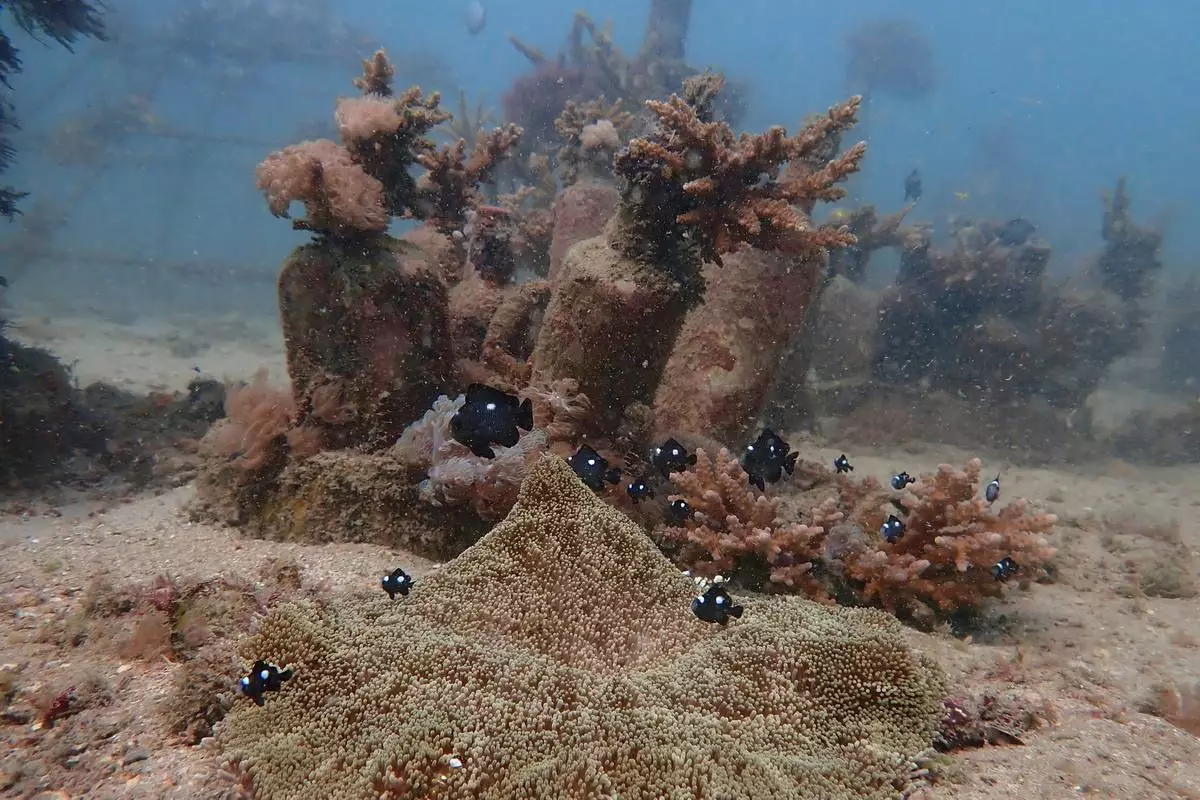
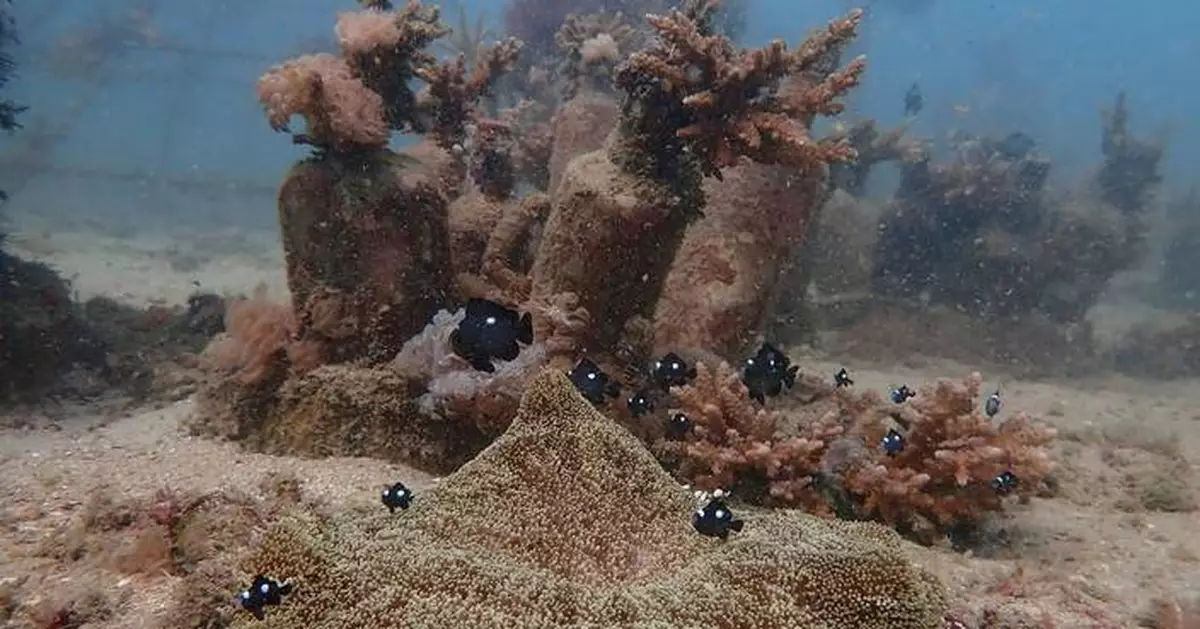
FILE - Fish swim near coral on the ocean bed near Shimoni, Kenya, June 13, 2022. (AP Photo/Brian Inganga, File)
FLAGSTAFF, Ariz. (AP) — More rain and thunderstorms were possible Monday at the Grand Canyon following a major flash flood that left one person dead and about 15 others missing or unaccounted for, with scores of visitors evacuated and the only water pipeline for tourists and residents destroyed.
Emergency water restrictions that began Monday prevented tourists from staying overnight at lodges and hotels within the park. Year-round residents were asked to conserve water.
A flood watch was in effect. Visiting the Grand Canyon — a crown jewel of the national park system — can be particularly dangerous in the summer because of the risk of flash flooding that accompanies the monsoon, or rainy season. Clear days can give way quickly to thunderstorms and downpours.
“With deep monsoonal moisture in place and already saturated soils in some locations, an elevated risk of flash flooding will be in place through Monday,” the National Weather Service said early Monday.
The body of a 46-year-old man was recovered Sunday evening near Crystal Rapids along the Colorado River, the National Park Service said without providing additional details.
The flooding Saturday in Bright Angel Creek, which flows into the river, led to more than 60 people being airlifted from the depths of the canyon. The park service asked anyone with details about hikers or campers still unaccounted for to get in touch. The Arizona Department of Public Safety helped with additional evacuations Sunday.
“These measures are crucial for ensuring the safety and sustainability of water resources,” the park said in a statement.
Parth Desai was hiking through a narrow passage in Bright Angel Canyon with fellow physicians and a park ranger when heavy rain started falling Saturday.
“We saw the creek flood, waterfalls coming up out of nowhere, boulders, mud, landslides happening everywhere,” he said.
Later, as they made their way toward Phantom Ranch, a colleague shouted “Up, Up, Up, Up!” as a 4-foot (1-meter) debris wall headed toward them and they ran up into a patch of cacti, he said. They were rescued by helicopter late Saturday after making it to the Phantom Ranch area, he said.
Torrents of water wiped out footbridges over the creek and altered the landscape, widening the creek bed and extending an existing river rapid or creating a new one. The flood was a major blow to an enduring effort to modernize the pipeline that serves 6 million visitors a year and roughly 1,600 residents of Grand Canyon Village.
“Heaven help us if the whole thing down there at the bottom has to be reconstructed,” said Jack Schmidt, director of the Center for Colorado River Studies at Utah State University. “Where are they going to get the money?”
Halting overnight stays at the park because of a lack of water is rare, although the pipeline frequently has failed over the years. While the Grand Canyon has large storage tanks for potable water on the South Rim, they won’t be refilled while the pipeline is out of service.
A $208 million rehabilitation of the pipeline and upgrades to the associated water delivery system started in 2023, with the park service calling it a crucial investment to ensure the park can meet the needs of residents and visitors. The project was expected to be completed next year.
Stengle reported from Dallas. Jeffrey Collins in Columbia, South Carolina, Holly Ramer in Concord, New Hampshire, and Christopher Weber in Los Angeles also contributed.
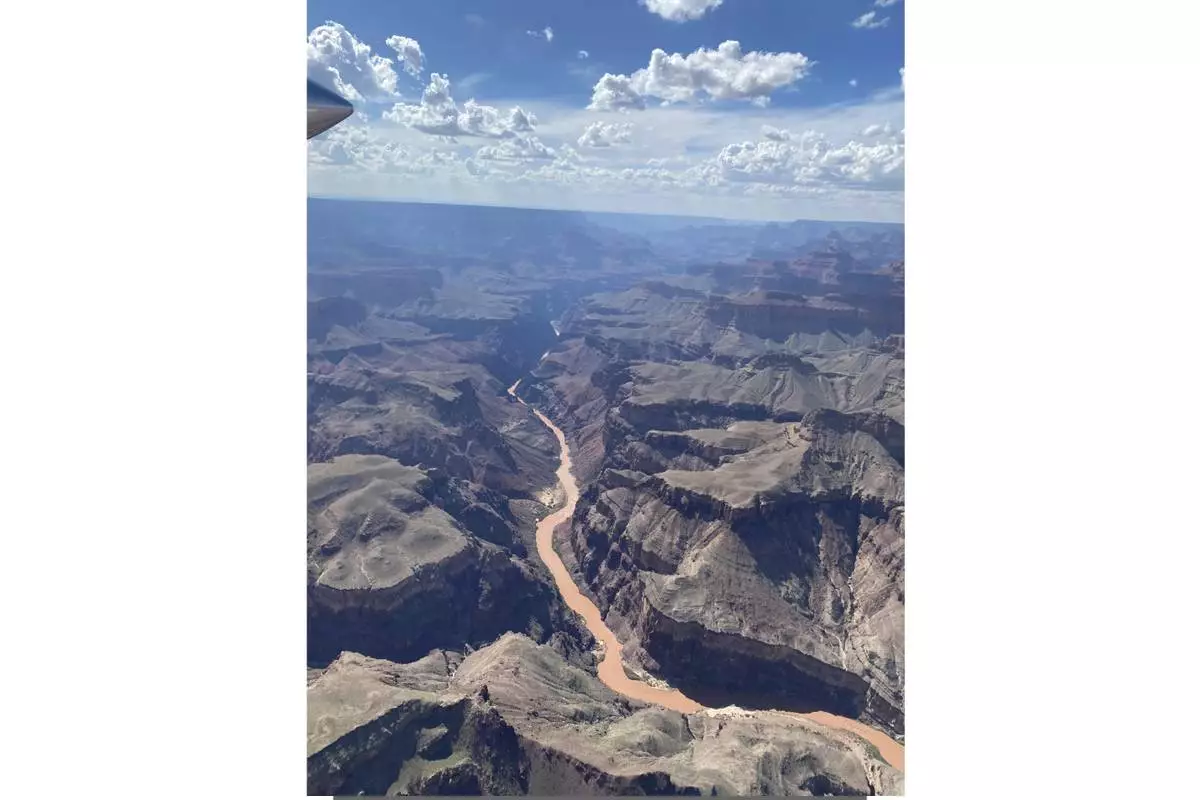
This photo shows Grand Canyon National Park in northern Arizona on Sunday, Aug. 30, 2026, after it was hit by heavy flooding a day earlier. (Craig Sanderson via AP)
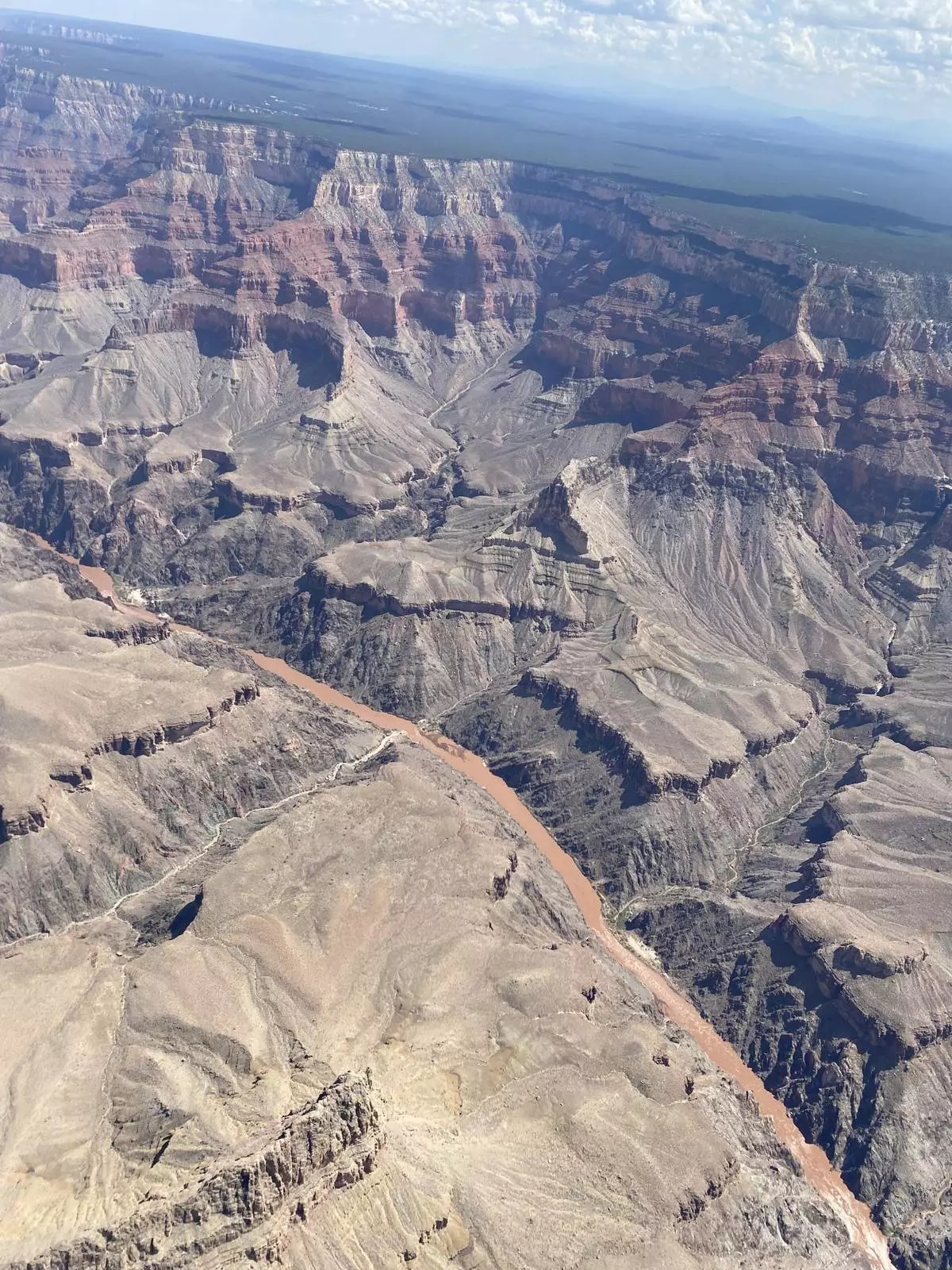
This photo shows Grand Canyon National Park in northern Arizona on Sunday, Aug. 30, 2026, after it was hit by heavy flooding a day earlier. (Craig Sanderson via AP)
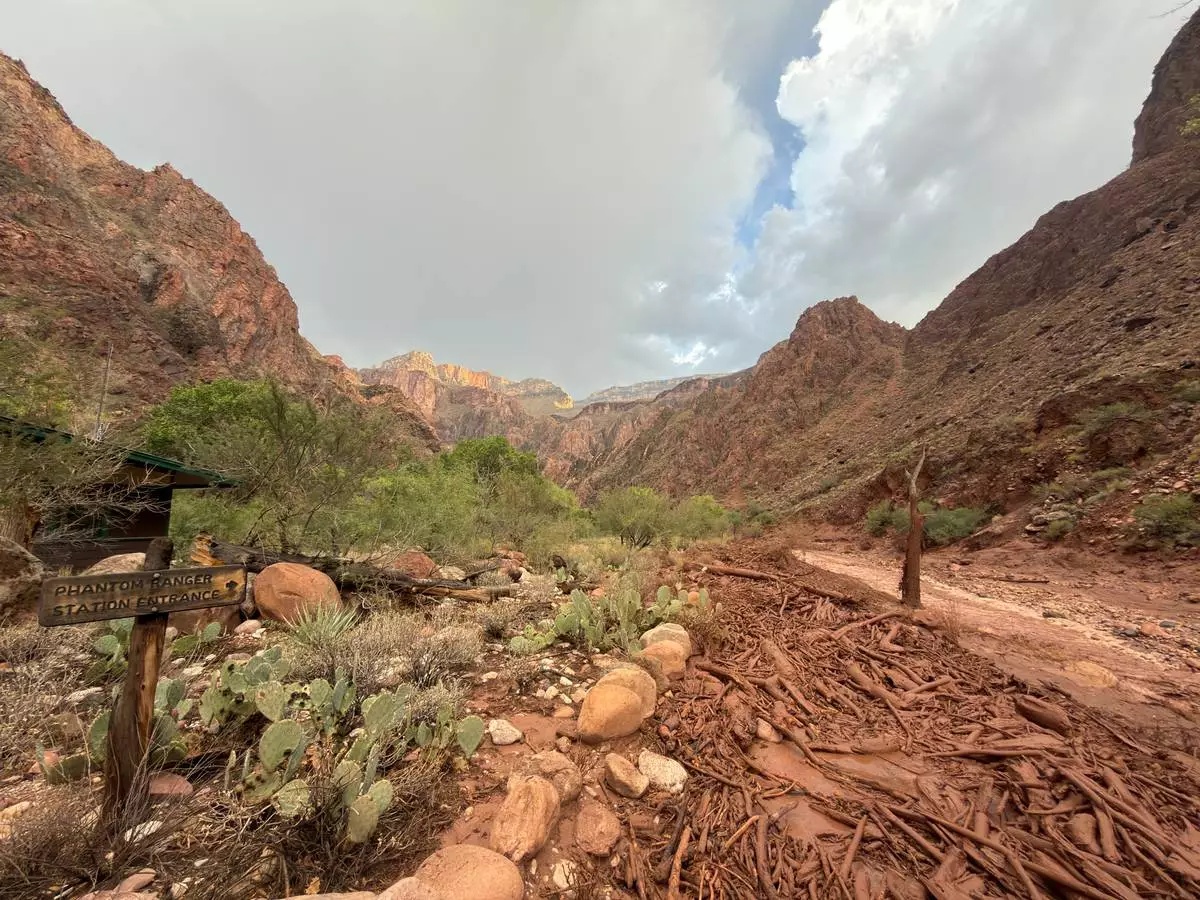
Bright Angel Creek near the Phantom Ranger Station in the Grand Canyon, Arizona, is seen after flash flooding from storms, Saturday, Aug. 29, 2026. (Parth Desai via AP)