SEATTLE--(BUSINESS WIRE)--Jun 17, 2026--
Vedana Therapeutics (“Vedana”), a biotechnology company developing next-generation therapies for migraine prevention, today emerged from stealth with $46 million in Series A financing. The financing was co-led by Westlake BioPartners and Canaan Partners, with participation from Dawn Biopharma and Alexandria Venture Investments. Vedana’s executive team, board, and advisors include leaders who discovered and developed multiple migraine therapies, including approved calcitonin gene-related peptide (CGRP) antibodies and the emerging pituitary adenylate cyclase-activating polypeptide (PACAP) drug class.
This press release features multimedia. View the full release here: https://www.businesswire.com/news/home/20260617177215/en/
Proceeds from the financing will be used to advance Vedana’s portfolio of internally discovered, potentially best-in-class, subcutaneously delivered antibodies targeting clinically validated pathways for migraine prevention.
“First-generation CGRP therapies were a major step forward in the treatment of migraine, but most patients are still not adequately controlled,” said Anurag Agarwal, Ph.D., co-founder and chief executive officer of Vedana. “We are now focused on what comes next — targeting biology beyond CGRP, like PACAP and combinations thereof, to deliver on our vision of migraine freedom for all patients.”
Approval of multiple CGRP medicines marked the launch of the first generation of specialized therapies for migraine patients. However, two-thirds of the patients are still unable to gain optimal control of their migraine. PACAP, like CGRP, plays a critical role in migraine physiology and is emerging as a complementary approach to treat patients. Based on such clinically validated biology, Vedana has built a portfolio of internally discovered subcutaneously delivered long-acting antibodies. The company’s lead program is the next-generation anti-PACAP antibody, and its second program targets both PACAP and CGRP. While targeting PACAP alone provides a novel approach beyond currently approved drugs, Vedana’s bispecific antibody targeting both PACAP and CGRP could potentially deliver additional efficacy for patients who do not achieve relief with monotherapies.
Co-founder and chief scientific officer Leon Garcia, Ph.D., added, “Vedana was founded by a team that has spent years developing antibody therapies against CGRP and PACAP, giving us deep insight into both the promise and the limitations of existing approaches. Drawing on that experience, we designed the next-generation of highly potent long half-life antibodies, targeting self-injecting options for patients in the convenience of their home.”
“Vedana’s team has an unparalleled track record and has executed efficiently in generating multiple molecules with best-in-class potential,” said Mira Chaurushiya, Ph.D., managing director at Westlake BioPartners. “As the migraine market continues to evolve, Vedana’s leadership is well positioned to identify and address patient needs.”
“The Vedana team represents the deepest concentration of migraine expertise we have seen. Importantly, they bring together the lived experiences from multiple migraine companies and medicines in large and small biotech. They are focused entirely on what the next generation of medicines needs to deliver for patients. We are proud to back them,” said Julie Grant, general partner at Canaan Partners.
Built by the Team Behind Modern Migraine Therapeutics
Vedana was built by the world’s leading migraine experts and industry leaders with decades of experience across migraine biology, antibody engineering, clinical development, and commercialization.
Vedana’s executive leadership team includes:
In addition, Vedana is supported by internationally renowned leaders in the migraine field, including:
About Vedana Therapeutics
Vedana Therapeutics is a biotechnology company developing next-generation, preventive therapies for migraine by leveraging pituitary adenylate cyclase-activating polypeptide (PACAP) biology, and highly selective combinatorial targeting of clinically validated pathways. Vedana is led by a team of world-renowned experts in migraine drug development and is advancing a portfolio of antibody-based therapies designed to address the significant unmet need in migraine treatment. Visit www.vedanatx.com for more information.

Anurag Agrawal, Ph.D., co-founder and CEO of Vedana Therapeutics
WASHINGTON (AP) — For the first time in a generation, Washingtonians woke up to a general election lineup that doesn't include Del. Eleanor Holmes Norton.
Norton, who served 18 terms as the District of Columbia’s nonvoting representative in Congress, chose not to run for reelection after mounting concerns that, at 89 years old, she was no longer capable of forcefully combating a Republican-led Congress and presidential administration constantly overriding the heavily Democratic city's leadership. Voters choose their local leaders, but Congress has final say on the laws the city passes and its budget.
Council member Robert White Jr. won the Democratic primary to replace Norton and is expected to win the general election in November. He will face Republican Denise Rosado, an immigration attorney who ran unopposed.
A D.C. native and lifelong resident, White is a lawyer and worked as Norton's legislative counsel for five years, as well as serving at the attorney general's office for the District of Columbia before winning the special election in 2016 for an at-large seat on the D.C. Council.
“Our turn will never come unless we demand it. Eleanor Holmes Norton understood that. The generations before us understood that. And before this night is over, I hope every Washingtonian understands it, too: We will not yield,” White told a cheering crowd of supporters after polls closed Tuesday.
The D.C. delegate position is a nonvoting one, but it grants the nearly 700,000 people of the district, who have no other representation in Congress, a voice through speechmaking on the House floor and bill introduction.
In Congress, Norton championed education, including securing a grant program that provided up to $10,000 annually to D.C. high school graduates to assist with out-of-state tuition. She also pushed for federal legislation that helped save the city from financial ruin.
Calls for her to step aside grew in the aftermath of a surge of federal law enforcement officers and National Guard troops into the city last year by President Donald Trump. Critics, including her former chief of staff, argued that she was diminished and no longer capable of providing the energy and presence the moment called for against Trump.
The pressure on Norton to drop out came as questions of generational change gripped the Democratic Party after President Joe Biden, also in his 80s, tried to run for reelection despite concerns about his age. He eventually dropped out and endorsed Vice President Kamala Harris as his successor, but she lost to Trump, sparking ongoing recriminations.
Before running for office, Norton was a fixture of the Civil Rights Movement. In 1963, she split her time between Yale Law School and Mississippi, where she volunteered for the Student Nonviolent Coordinating Committee. One day during the Freedom Summer, civil rights activist Medgar Evers picked her up at the Jackson airport. He was assassinated that night. Norton also helped organize and attended the 1963 March on Washington.
Norton went on to become the first woman to lead the Equal Employment Opportunity Commission, which helps enforce anti-discrimination laws in the workplace.
Political historian Matt Dallek said her credentials bring a certain gravitas and moral standing that “I think a lot of residents in the district could respond to and did respond to. It resonated with them.”
“That kind of generational moral clarity and moral gravitas that she and others brought to the political arena is being lost. That’s not to say that others can’t pick up that mantle” he said, but White will have different concerns and experiences in a city changing demographically.
White would become only the third Washington delegate to Congress since 1971, when Walter Fauntroy Jr. was elected as the nonvoting delegate. The position was created in 1970 under the District of Columbia Delegate Act.
George Derek Musgrove, associate professor of history at the University of Maryland-Baltimore County, said no candidates seeking the office have the national stature of their predecessors, “which is, for me, one of the biggest changes in the city.” Both Fauntroy and Norton, Musgrove said, “leveraged their national political contacts to do the work of the delegate.”
White made D.C. statehood and pushing back on federal interference in local affairs priorities in the campaign.
He will need to build relationships quickly, said Amanda Huron, a professor at the University of the District of Columbia who teaches courses on D.C. history and politics. It is especially critical with a Congress that intervenes in local affairs.
“One of the real challenges of governing D.C. locally is that you’ve got these people in Congress who we don’t elect so these decisions are being made at a congressional level where we don't even have any representation effectively,” Huron said.
Maurice Jackson, a historian at Georgetown University, said Norton is also a brilliant constitutional lawyer along with being a civil rights legend and EEOC trailblazer. That said, he added, change is not always a bad thing.
The question, he said, is whether White will fight for the rights of all the city’s residents and work to stop the Black population from leaving a city that is changing demographically.
When Martin Luther King Jr. died “everybody knew there would never be another King,” he said. "So there's no need to worry about whether there'll be another Norton. There are people who can step forward.”
Follow the AP's coverage of the District of Columbia at https://apnews.com/hub/district-of-columbia.
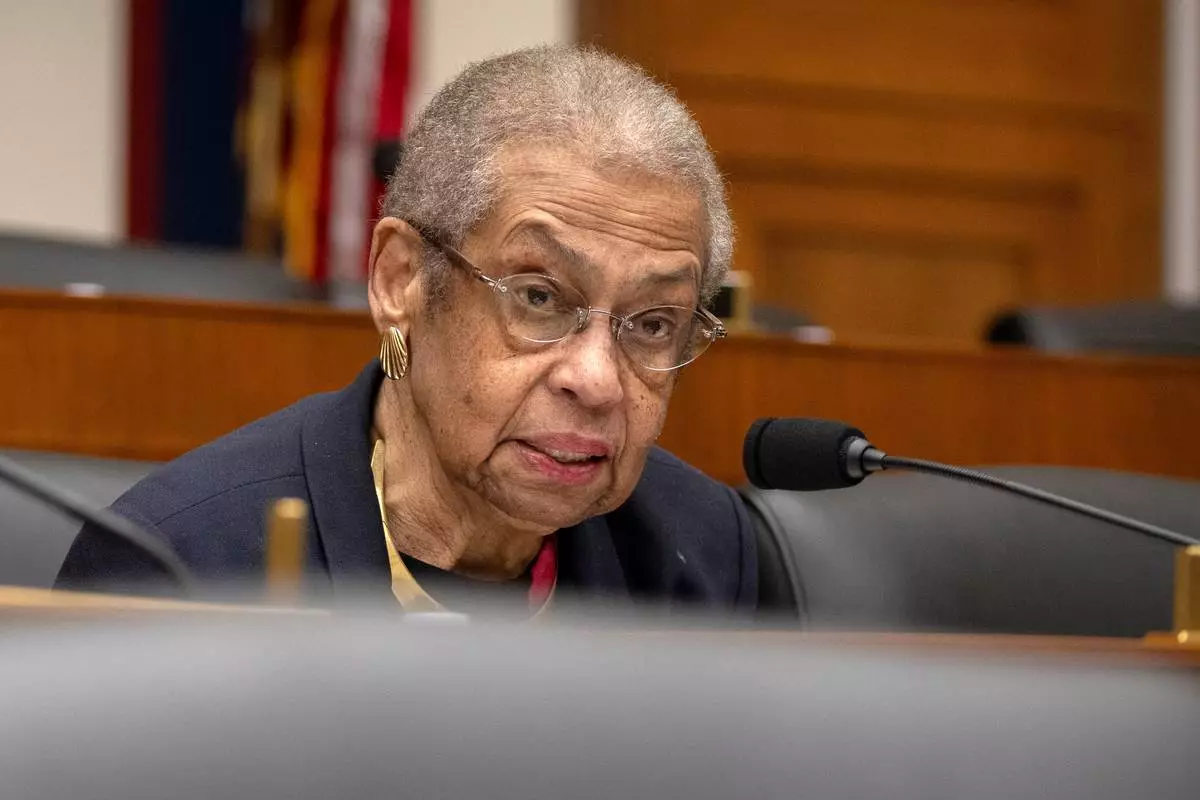
FILE - Del. Eleanor Holmes Norton, D-D.C., speaks during a hearing of the Aviation Subcommittee of the House Transportation and Infrastructure Committee on Capitol Hill, Dec. 16, 2025, in Washington. (AP Photo/Mark Schiefelbein, File)
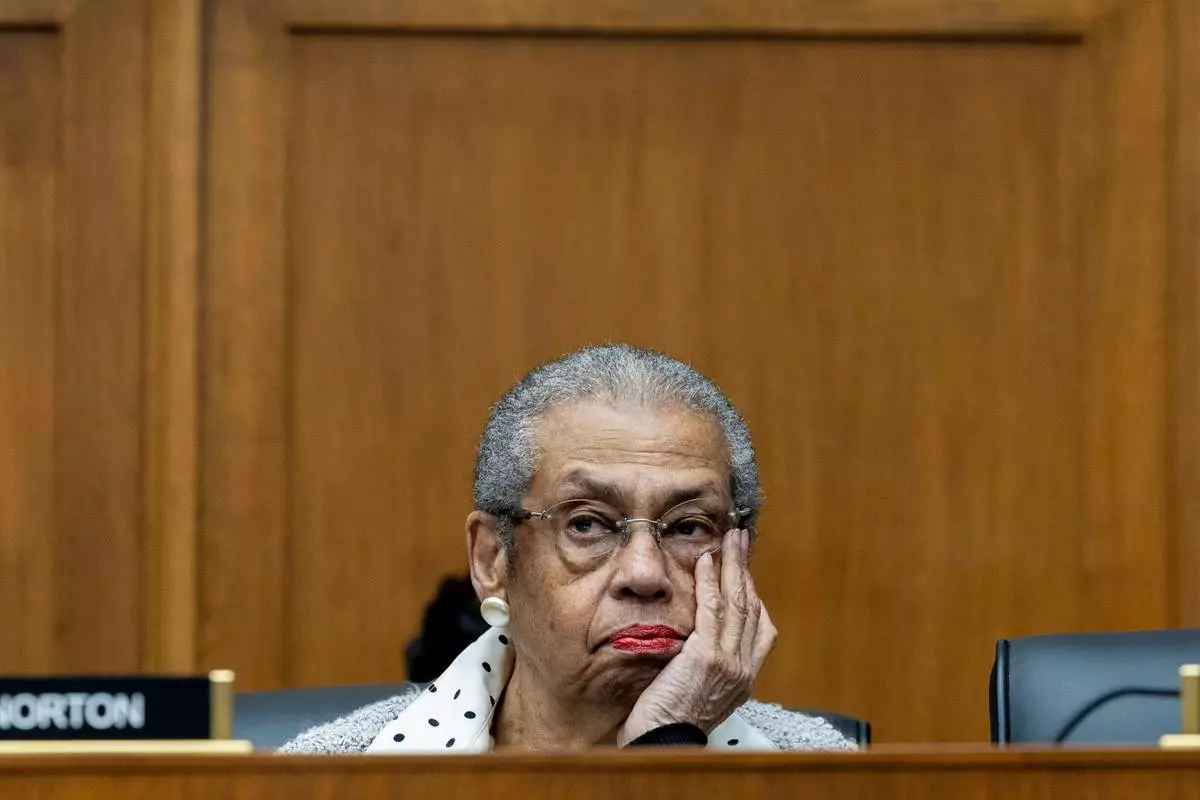
FILE - Del. Eleanor Holmes Norton, D-D.C., listens to speakers during a House Transportation and Infrastructure subcommittee hearing at the Capitol in Washington, Dec. 12, 2023. (AP Photo/Amanda Andrade-Rhoades, File)
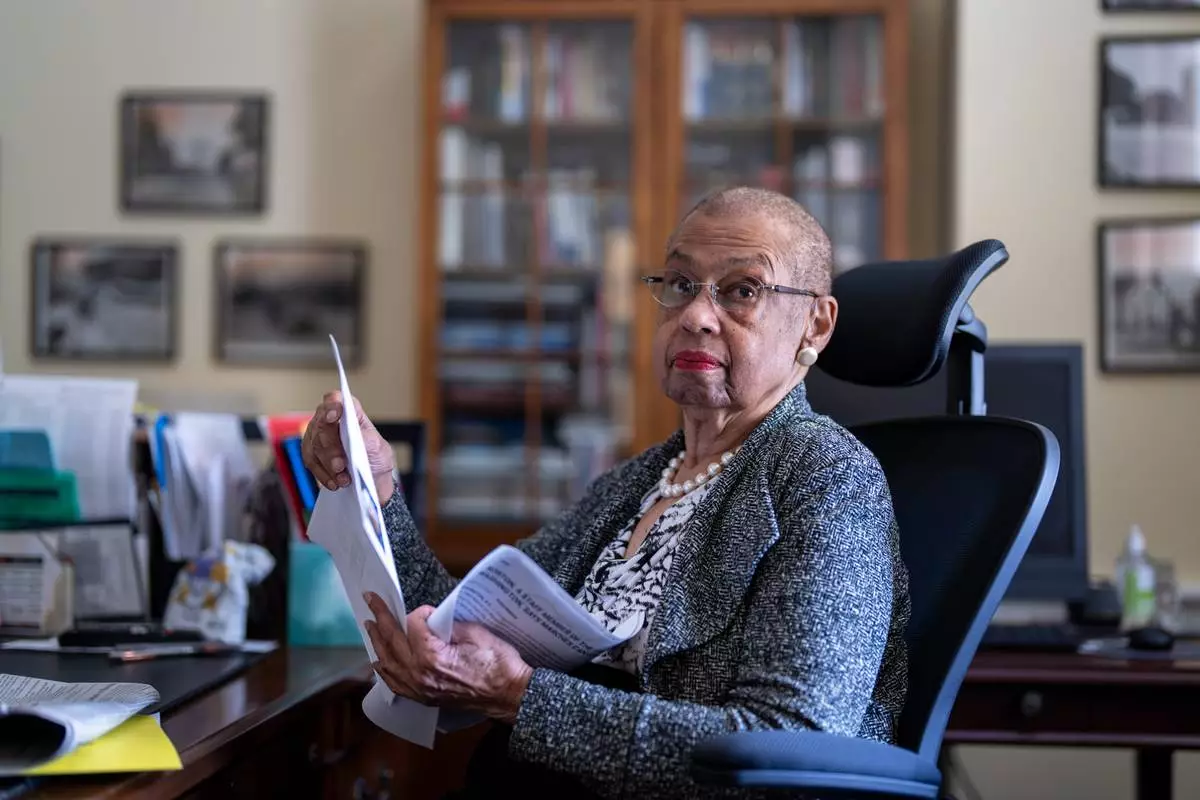
FILE - Del. Eleanor Holmes Norton, D-D.C., reflects on her time as a young civil rights activist during the 1963 March on Washington, during an Associated Press interview in her office on Capitol Hill in Washington, Aug. 9, 2023. (AP Photo/J. Scott Applewhite, File)