MIAMI (AP) — All detainees at an immigration detention center in an isolated airstrip in the Florida Everglades, known as “Alligator Alcatraz,” have been transferred to other facilities, the U.S. Department of Homeland Security said, citing concerns related to the hurricane season.
The South Florida Detention Center has been praised by President Donald Trump. But its conditions have been harshly criticized by l awyers, families and human rights groups, who have persistently denounced the mistreatment of detainees since the center opened 11 months ago, during the Atlantic hurricane season.
DHS said that all detainees at the Florida state-run facility had been transferred but did not specify how many or where they were taken. Nor did it say whether the facility would close permanently or only temporarily.
"For the safety of the illegal alien detainees, we transferred them to other facilities,” department spokesperson Lauren Bis said in an emailed statement.
The hurricane season spans six months, from June through November. The detention facility opened on July 3, 2025, one month after the start of that year’s hurricane season, which concluded without any storms making landfall in Florida. It has been operating since then.
Shortly after ICE announcement, the National Hurricane Center reported on Wednesday that the first tropical storm o f the 2026 hurricane season had formed off the Texas coast.
Detainees at the facility have talked about their difficulty accessing lawyers, and have described poor physical conditions, including worms in the food, toilets that don’t flush, flooding floors with fecal waste, and mosquitoes and other insects everywhere.
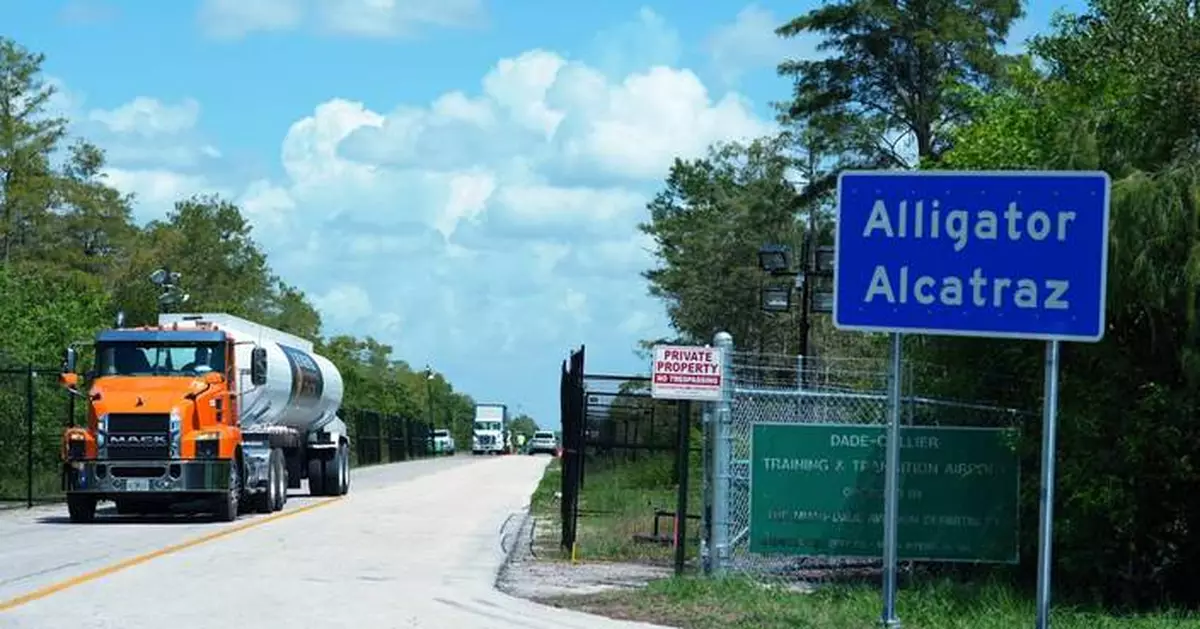
Surrounded by alligator-filled swamps in the Florida Everglades, "Alligator Alcatraz” was built by Florida Gov. Ron DeSantis’ administration in a matter of days, and Trump toured it on July 1, 2025, just two days before it was opened.
The Florida Division of Emergency Management, the main state agency responsible for its operation, did not immediately respond to an information request from The Associated Press on Wednesday.
Since the facility opened, immigration advocates said the tents were never safe or humane to hold people. Federal and state officials, nonetheless, had said that it was prepared to withstand hurricanes.
“Transferring people out of this cruel facility is an important step, but it does not erase the harm that has already been done,” said Amy Godshall, an attorney with the American Civil Liberties Union who filed a lawsuit against the state and the federal government alleging a lack of access to legal representation for detainees. “The state and federal government must permanently close this facility and commit to never detaining people there again.”
DeSantis said in May that South Florida Detention Facility always was meant to be temporary. He said the facility had processed and deported 22,000 detainees since its opening.
Immigration advocates and lawyers said the hurricane season is an excuse, not the real reason why the detainees have been transferred.
“That’s a nonsense excuse because they opened in the middle of the worst part of hurricane season last year,” said Arianne Betancourt, a community advocate at the non-governmental group The Workers Circle who has spent months connecting dozens of detainees with pro-bono attorneys.
Betancourt and other advocates and attorneys said they noticed an increase in the transfer of detainees to other facilities over the past two weeks, during which time they lost contact with dozens of detainees.
Katie Blankenship, an immigration attorney at Sanctuary of the South, said all 50 clients that she and other attorneys have been providing free advice during the past 20 days have been moved from “Alligator Alcatraz” to other facilities in South Florida, California, Arizona, Louisiana and Texas.
“They are all gone,” Blankenship said. “They have been moved and disappeared into the system and are unavailable to family or counsel, typically for a period of about a week."
She noted that she hasn’t received any official notice about the transfers, but instead found out because her clients did not appear at hearings or did not show up at calls. When she tried to find out what had happened to them, she located them using the official detainee search tool and saw that they had been transferred to other facilities, Blankenship said.
Renata Bozzetto, deputy director of the Florida Immigrant Coalition, said that even if the facility is closed, the harm will not end.
“Many of the people detained there will be transferred to other detention facilities, while their families continue to face uncertainty and hardship,’’ Bozzetto said. “When this detention camp closes, many corporations and contractors will have walked away with millions in profits, while immigrant families are left to pick up the pieces.”
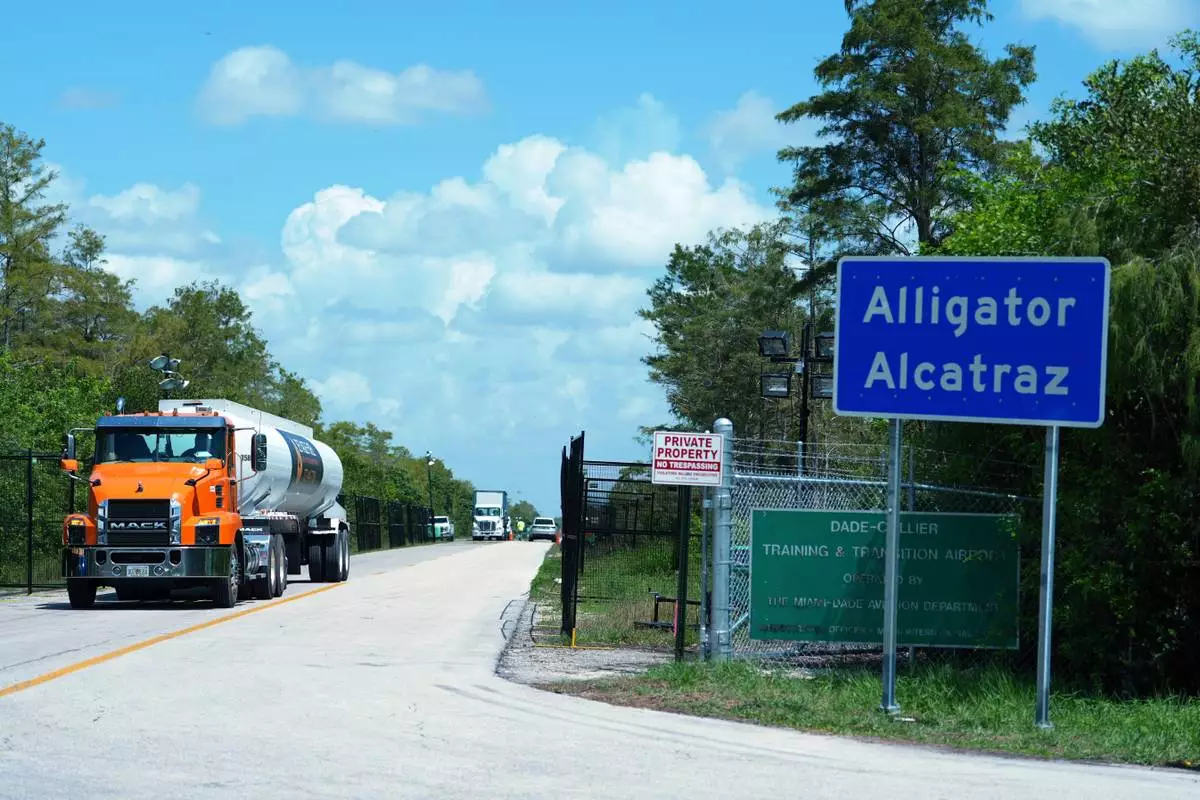
FILE - Trucks come and go from the "Alligator Alcatraz" immigration detention center in the Florida Everglades, Aug. 28, 2025, in Collier County, Fla. (AP Photo/Rebecca Blackwell, File)
WASHINGTON (AP) — President Donald Trump signed an agreement with Iran Wednesday that calls for Tehran to dilute its stockpile of highly enriched uranium and waives U.S.-backed sanctions on the country, immediately allowing Iran to sell its oil freely in a major concession from Washington, according to details released by both countries.
The initial deal to end the war takes “immediate effect” after leaders from both countries signed it, Pakistani Prime Minister Shehbaz Sharif, who helped mediate the agreement, said in a post on X.
The agreement calls for a permanent end to hostilities and starts a 60-day negotiating clock to reach a final deal on the future of Iran's nuclear program, though Trump left the door open to resume attacks. It appears to offer Iran several benefits up front while extracting little in return.
The deal has been shrouded in secrecy and confusion for days. U.S. officials refused to disclose the terms even after saying Trump and Vice President JD Vance digitally signed it over the weekend. Trump signed a physical copy on Wednesday while dining with French President Emmanuel Macron at Versailles, the palace where many historic agreements have been signed over the centuries, ending wars or territorial disputes.
The White House had planned a signing ceremony on Friday in Switzerland, but its fate is now uncertain, with conflicting information from the U.S., Iran and Pakistan.
“It’s signed,” Trump said as he left the dinner at Versailles, which followed his trip to the Group of Seven summit in France.
In a video posted online by a White House aide, Trump was seen seated at a table next to Macron signing a paper copy of the agreement. Trump then handed the document and pen to Secretary of State Marco Rubio as people in the room applauded.
“This was not easy,” Trump said right before he signed it, according to a video posted to social media by Macron.
In Tehran, a stone-faced President Masoud Pezeshkian signed the deal on behalf of Iran, according to the state-run IRNA news agency, which posted images of him holding up the deal with his signature and Trump’s.
Text of the agreement still has not been formally released. U.S. officials dictated draft language to journalists after days of secrecy, speaking on condition of anonymity. Iranian state TV later released text that largely tracked what the U.S. put out.
Much of the agreement would restore the status quo before the war, including ending hostilities, restarting talks between the U.S. and Iran over Tehran’s nuclear program, and reopening the the Strait of Hormuz, the crucial passage for the world’s oil and natural gas whose closure created a historic energy crisis.
The agreement opens the strait without tolls for two months, but does not preclude fees in the future, according to the drafts from both countries.
In return, the U.S. will move to waive, but not eliminate, some wide-ranging sanctions against Iran.
The deal also affirms a commitment to Lebanon’s territorial integrity in the face of Israel’s invasion against the Hezbollah militant group. That is one of the most delicate parts of the agreement because Israel has maintained it will continue to defend itself and to occupy vast swaths of Lebanon. Iran has said Israel must withdraw under the deal, a condition Israel has already rejected.
The U.S. and Israel went to war on Feb. 28 in part to prevent Iran from ever getting a nuclear weapon. Trump has cited various goals for the war, including at times vowing it would end Iran’s nuclear and missile programs and its support for Hezbollah and other proxy groups in the region. He also suggested it could lead to toppling the Iranian government.
The interim deal falls short of all those goals, but Trump hailed it Wednesday as “very strong.”
He also opened the door to abandoning it: “It’s a memorandum of understanding, and if I don’t like it, we’ll go back to shooting at them, dropping bombs.”
The U.S. agreement to immediately allow Iran to sell its oil freely and the offer to eventually lift all sanctions represent major concessions that go beyond the terms of Iran’s 2015 nuclear deal with world powers. Trump withdrew America from that Obama-era pact in his first term, declaring it the “worst deal ever.”
The Islamic Republic maintains that its nuclear program is peaceful.
The accord likely will draw intense opposition in Washington, and it appears to be a major setback for Israeli Prime Minister Benjamin Netanyahu, who has come under criticism at home from the media, his opponents and even some allies as details emerge.
Under the Obama-era nuclear agreement with Iran that Trump pulled out of, Iran also agreed to restrictions on its nuclear program and promised never to build an atomic weapon.
Some concessions to Iran — including the full lifting of sanctions and the release of frozen assets — would happen gradually and be linked to progress in the nuclear talks, according to officials from Pakistan, a key mediator. They outlined some of the deal’s major points on condition of anonymity because of the sensitivity of the issue.
But in the meantime, the U.S. will issue waivers to sanctions that allow Iran to sell oil freely.
The Islamic Republic's oil export revenues in 2024 were more than $46 billion. Its main buyer of oil, China, is believed to have bought at below-market prices because of its willingness to ignore the sanctions.
Granting oil waivers at the start of the 60-day talks strips the U.S. of a major point of leverage. Only at the conclusion of the overall deal in 2015 were sanctions on Iran's oil lifted.
The interim deal also opens the door to ending all sanctions Iran faces from the U.S. and at the U.N. — including those over Tehran’s weapons programs and human rights abuses — though it says the schedule for that will be worked out later. Still, that far surpasses the 2015 deal, which only lifted some sanctions in exchange for Iran drastically reducing its enrichment and stockpile of uranium.
The accord would also provide Iran with at least $300 billion to rebuild — an extraordinary figure and another major benefit for Iran. The money also appears dependent on the progress of further negotiations.
Vance has said Gulf Arab nations would invest that amount. But Gulf countries would likely be reluctant to help Iran after Iranian attacks in the war destroyed oil facilities and other sites in their territory.
Trump reiterated Wednesday that the U.S. would not contribute and said it was up to other countries if they wanted to invest.
The initial deal provides a major win for the global economy — the reopening of the Strait of Hormuz, the narrow mouth of the Persian Gulf through which a fifth of all traded oil and natural gas once passed before the war began. Since then, Iranian attacks on shipping and the threat to vessels effectively shut the strait.
The strait's closure drove up energy prices around the world and made many basics, including food, more expensive. Iran let through some vessels that paid tolls, something never done before in the strait, which has long been considered an international waterway. The U.S. later provided military support to get other tankers out, but traffic was nowhere near levels before the war.
The deal also says the U.S. will lift a blockade imposed on Iranian ports and that the strait will return to its prewar traffic levels in 30 days, while acknowledging Iranian mines may need to be destroyed.
Gambrell reported from Dubai. Magdy reported from Cairo. Catalini reported from Morrisville, Pennsylvania. Associated Press writers Aamer Madhani in Evian-les-Bains, France, Darlene Superville in Geneva, Angela Charlton in Paris and Munir Ahmed in Islamabad contributed to this story.
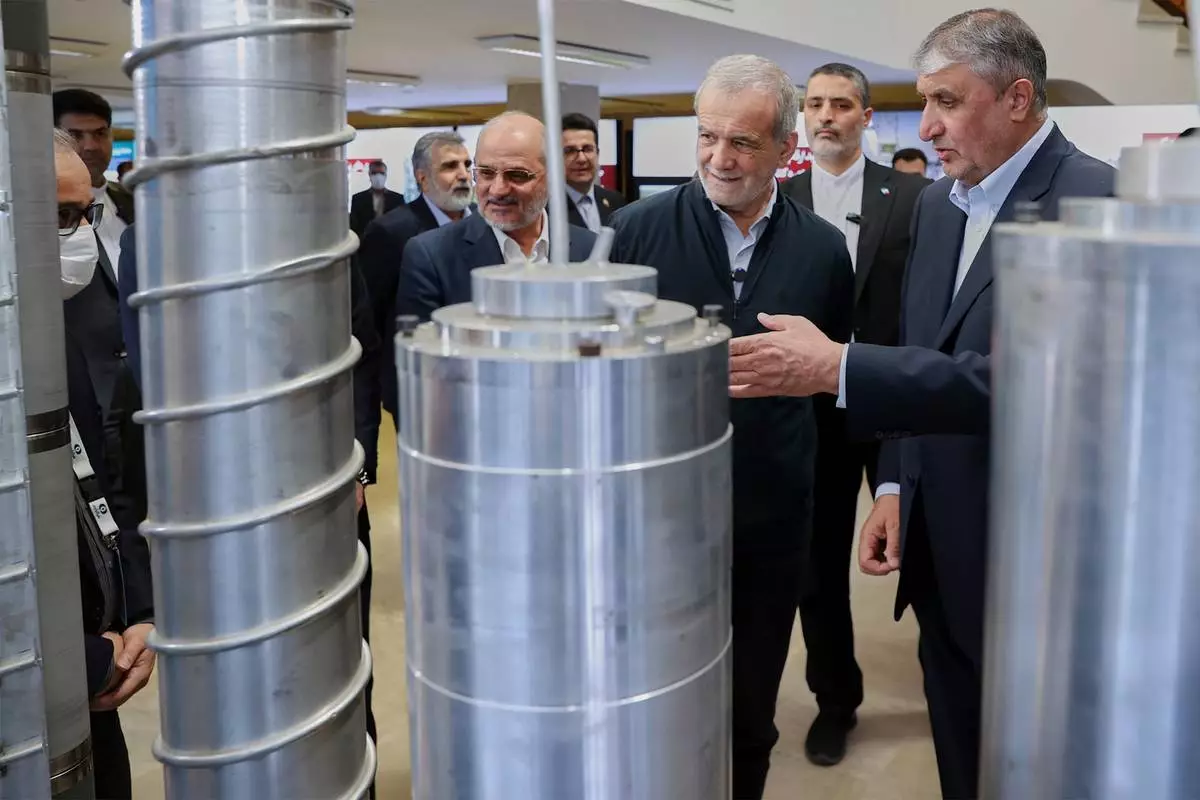
FILE - In this photo released by the Iranian Presidency Office, President Masoud Pezeshkian, second right, listens to head of Atomic Energy Organization of Iran Mohammad Eslami as he visits an exhibition of Iran's nuclear achievements, in Tehran, Iran, April 9, 2025. (Iranian Presidency Office via AP, File)
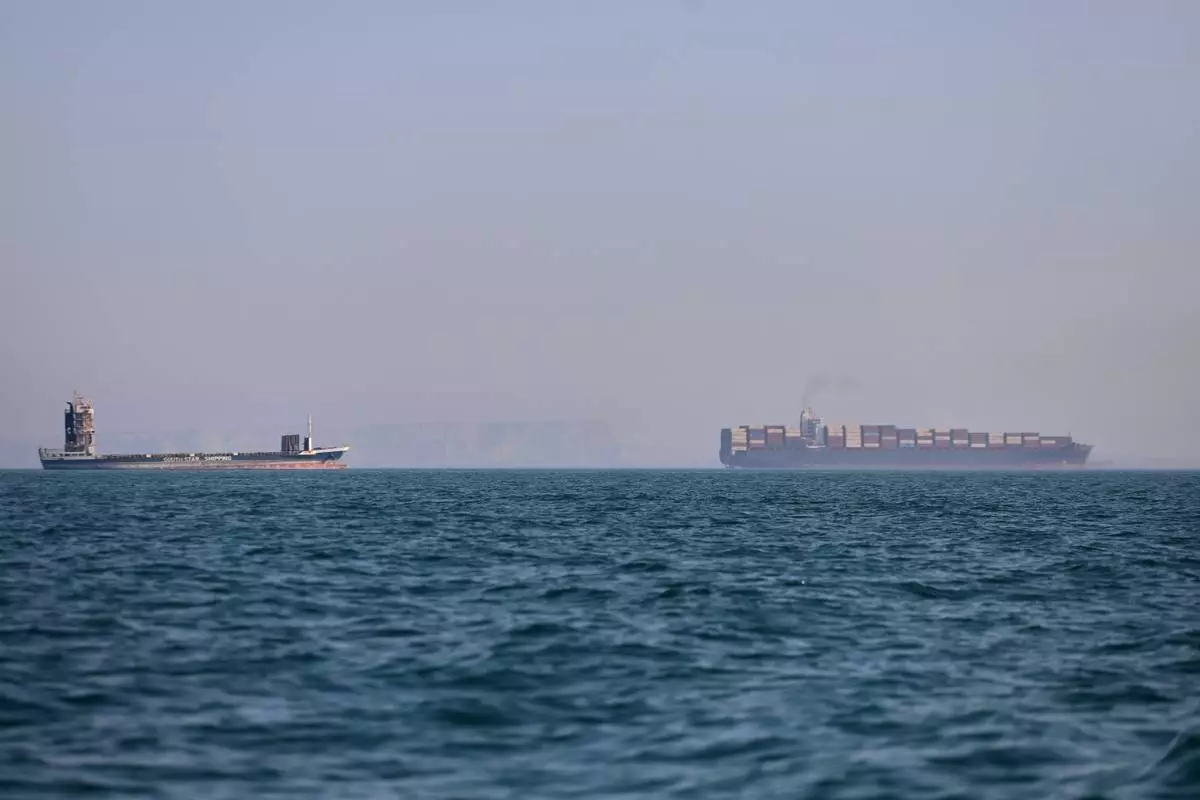
A container ship, right, and a cargo vessel are seen in the Strait of Hormuz off Bandar Abbas, Iran, Wednesday, June 17, 2026. (Amirhosein Khorgooi/ISNA via AP)

A small motorboat passes anchored vessels in the Strait of Hormuz off Bandar Abbas, Iran, Wednesday, June 17, 2026.(Amirhosein Khorgooi/ISNA via AP)
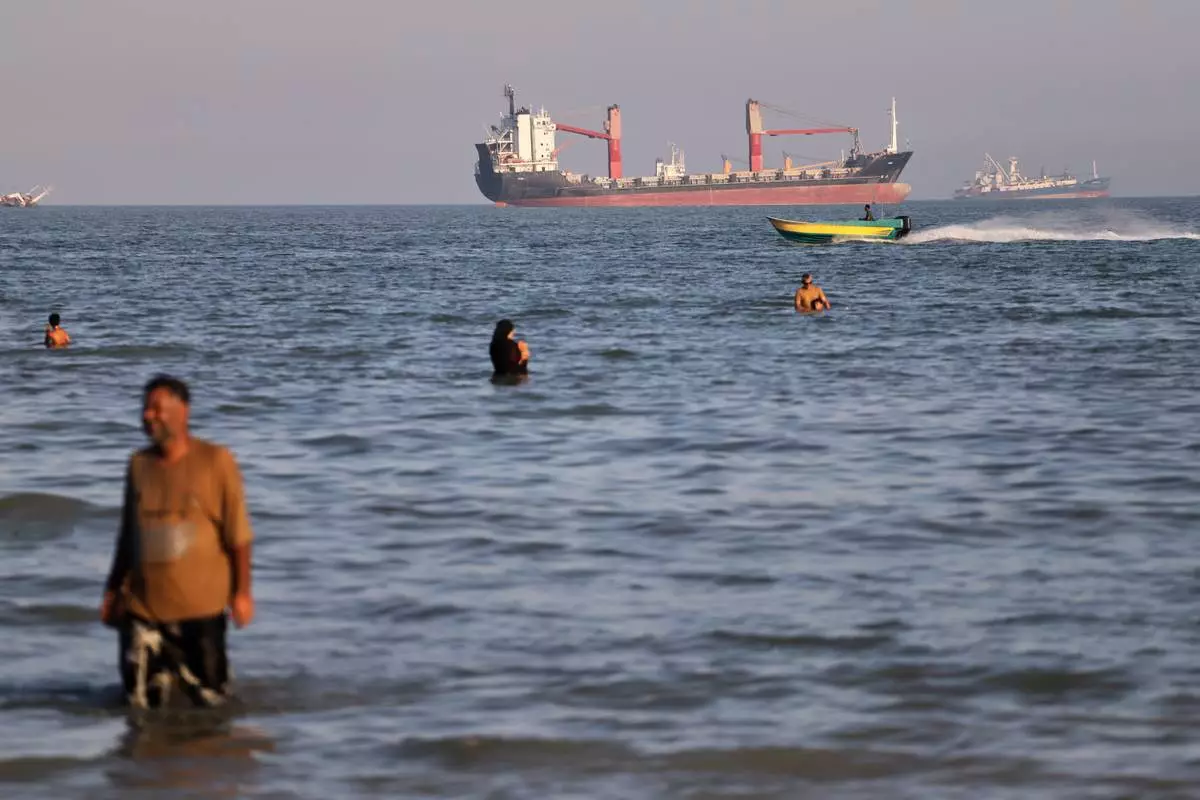
Residents swim in the waters of the Strait of Hormuz as a small motorboat passes cargo ships and other commercial vessels offshore near Bandar Abbas, Iran, Wednesday, June 17, 2026. (Amirhosein Khorgooi/ISNA via AP)
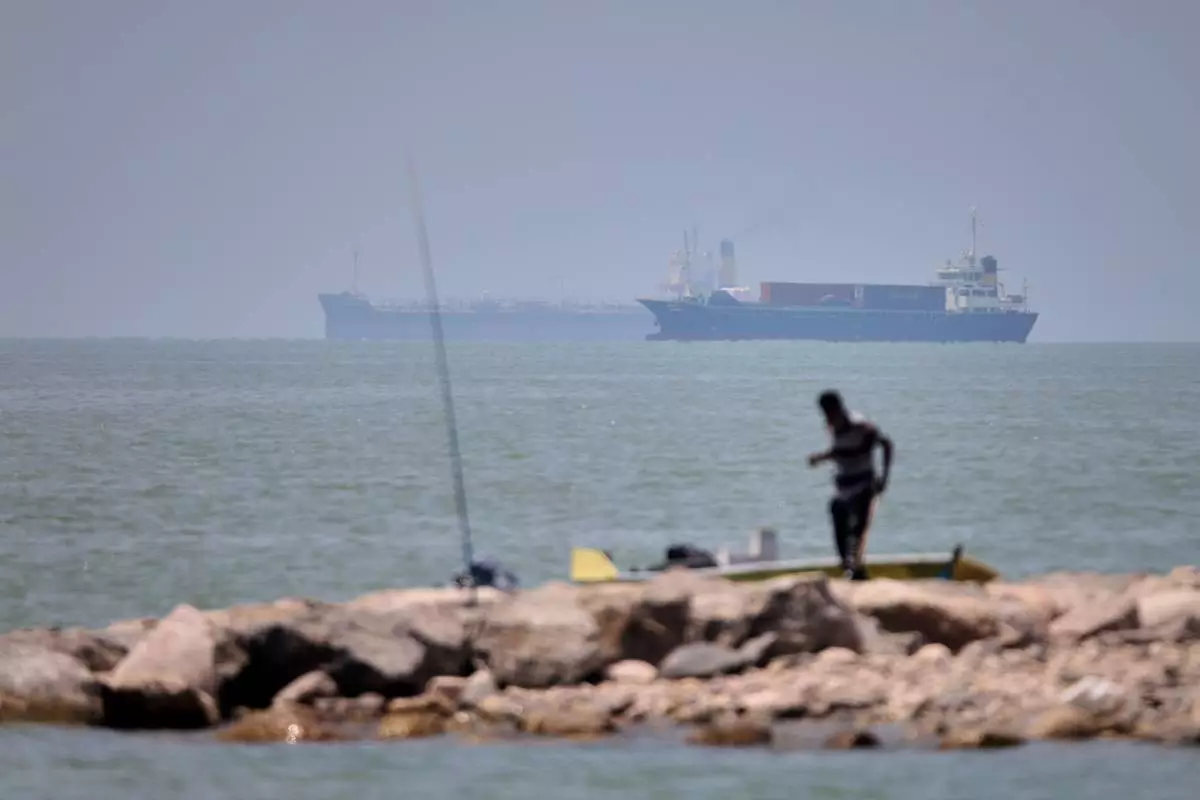
A man stands beside a fishing pole along the shore as cargo ships and commercial vessels are seen in the Strait of Hormuz off Bandar Abbas, Iran, Wednesday, June 17, 2026. (Amirhosein Khorgooi/ISNA via AP)
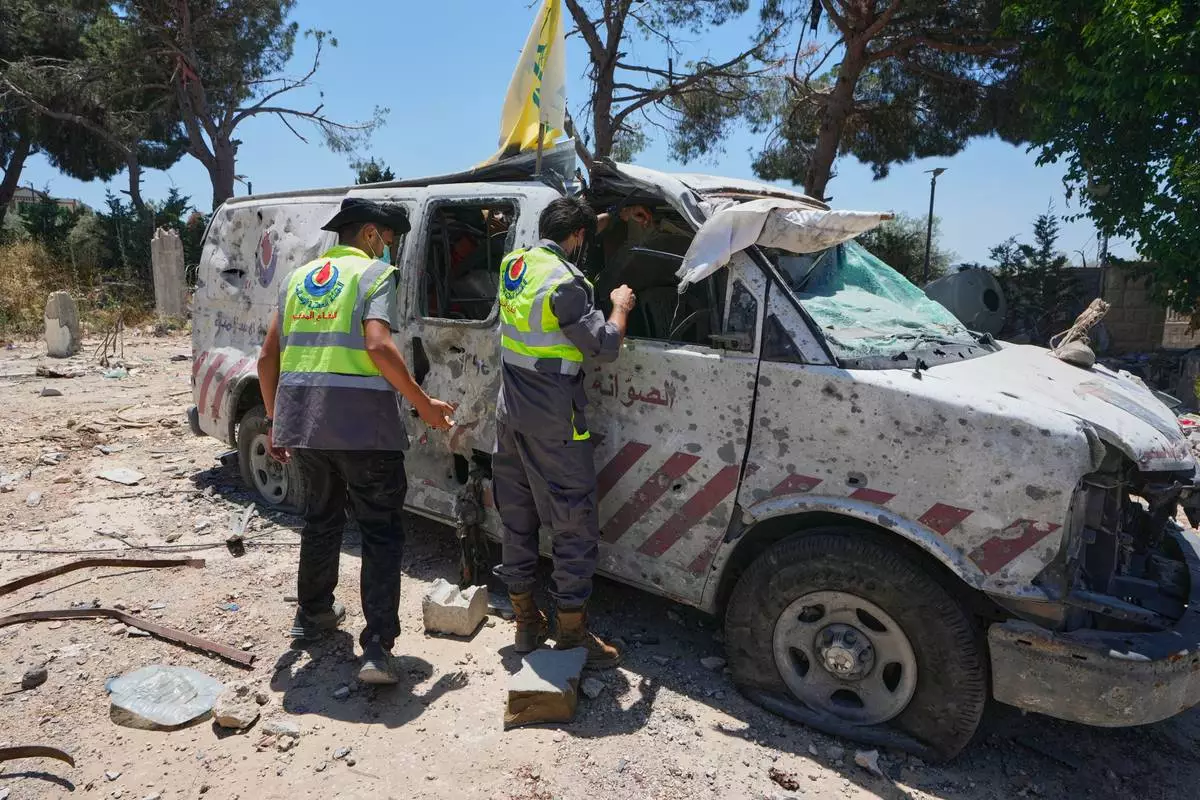
Rescue workers inspect a damaged ambulance belonging to Hezbollah's health unit that was hit in a previous Israeli airstrike in the southern village of Souaneh, Lebanon, Tuesday, June 16, 2026. (AP Photo/Mohammed Zaatari)
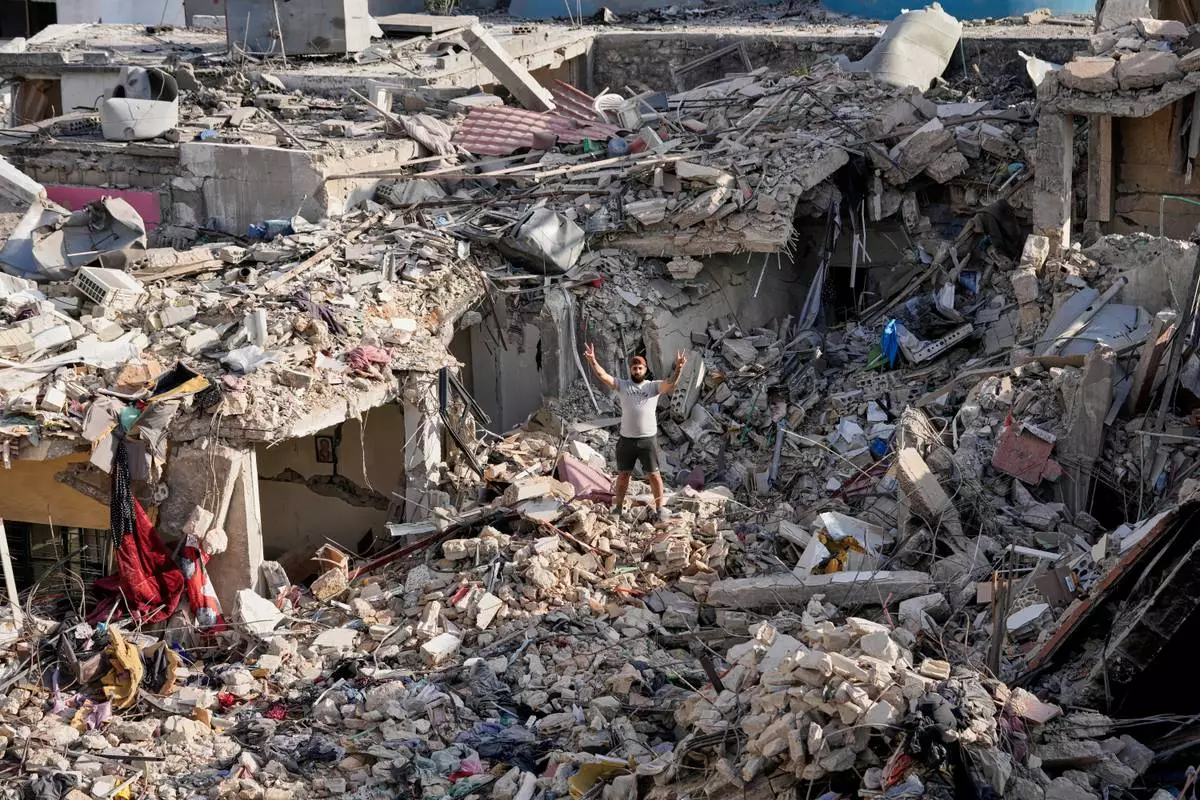
A man who returns to his village following the announcement of an initial ceasefire agreement between the United States and Iran, flashes victory sign as he stands on the rubble of his destroyed house in Nabatiyeh town, southern Lebanon, Tuesday, June 16, 2026. (AP Photo/Hussein Malla)
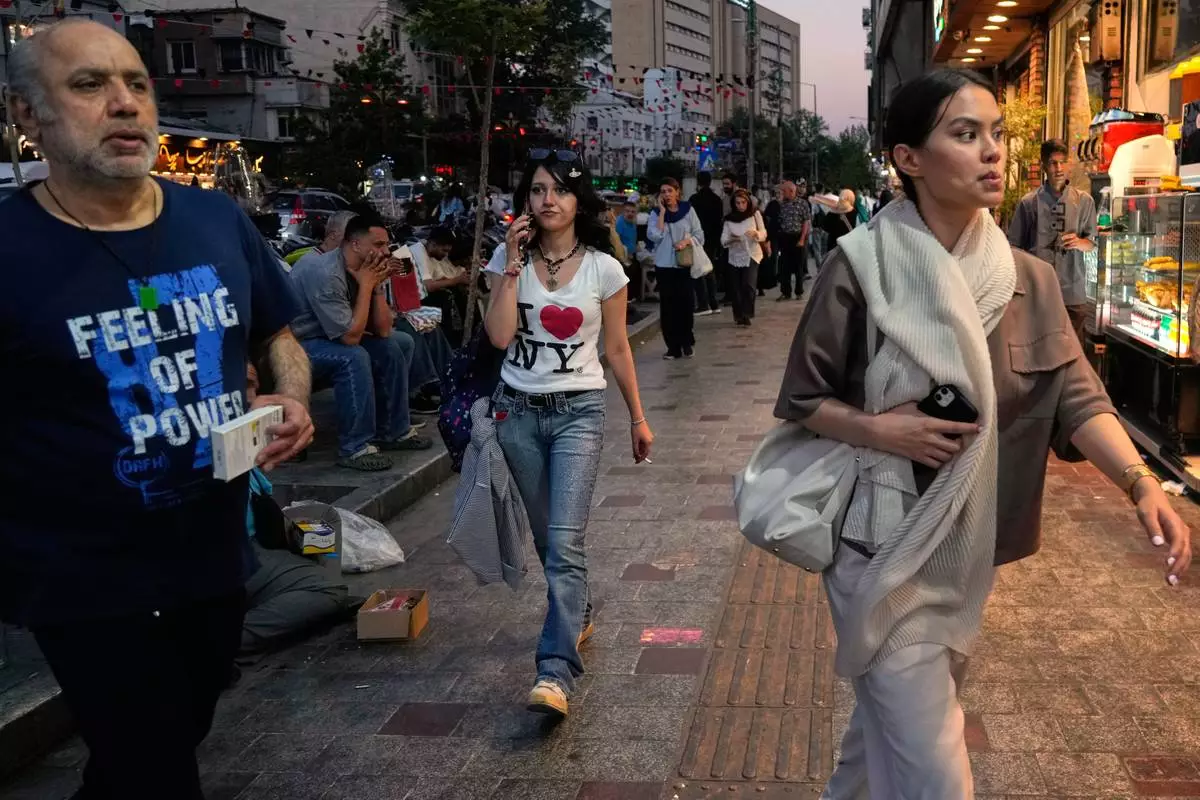
People walk along Tajrish square in northern Tehran, Monday, June 15, 2026. (AP Photo/Vahid Salemi)
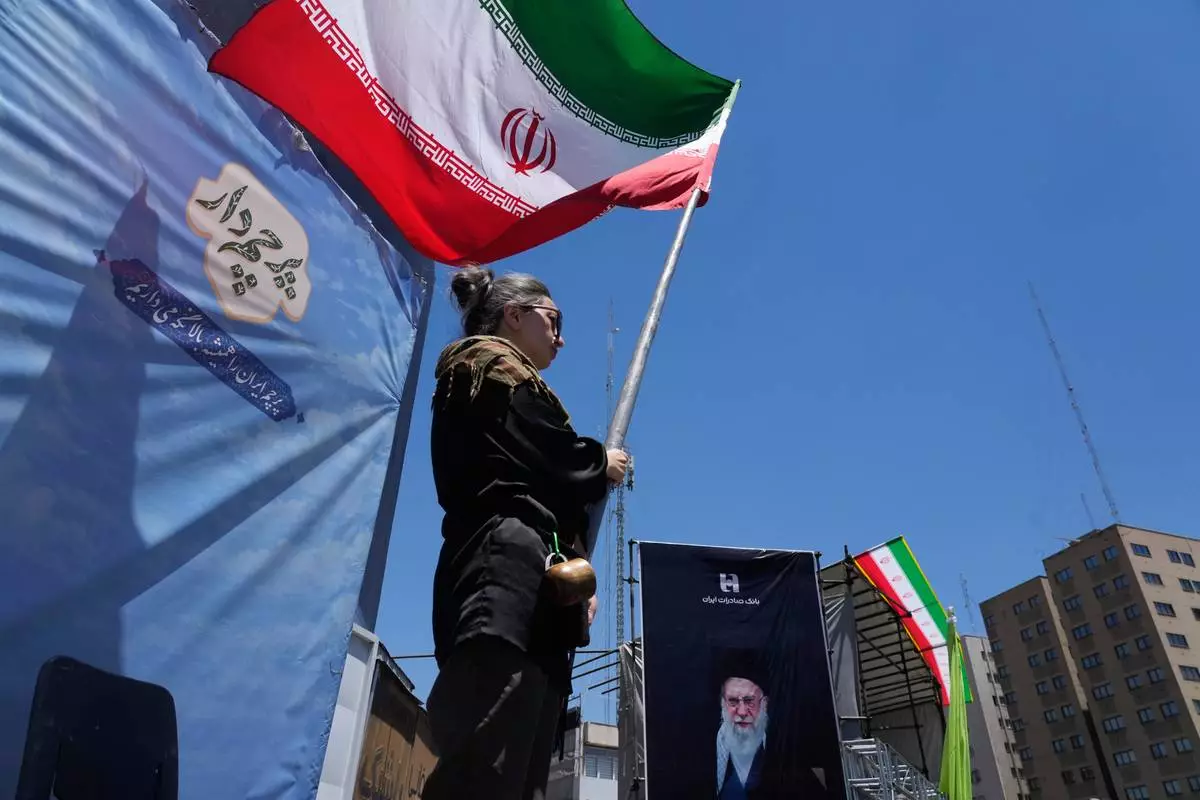
A woman waves an Iranian flag during a pro-government campaign as a portrait of the slain Supreme Leader Ayatollah Ali Khamenei, who was killed in U.S. and Israeli strikes on Feb. 28, is displayed at right, in downtown Tehran, Iran, Monday, June 15, 2026. (AP Photo/Vahid Salemi)