CHICAGO (AP) — Growing up in Brazil, Tiago Splitter used to watch Michael Jordan and the Chicago Bulls in the middle of the night.
“Hidden from my parents and at 1 a.m., watching M.J. games and rooting for the Bulls,” Splitter said with a wry grin.
That was the most successful period in franchise history. Now the Bulls are hoping to start another winning era with Splitter on the sideline.
The 41-year-old Splitter was formally introduced on Wednesday as the 25th coach in franchise history. He brings a wealth of experience that includes seven years in the NBA as a player and a challenging season as the interim coach of the Portland Trail Blazers.
The addition of Splitter is the team's most significant move since Bryson Graham took over as executive vice president of basketball operations on May 4. The 6-foot-11 Splitter emerged from a crowded field of candidates that reportedly included Minnesota Timberwolves assistant Micah Nori, Atlanta Hawks assistant Ryan Schmidt and Wes Unseld Jr., who was on Chicago's coaching staff last season.
While describing why Splitter was the choice, Graham praised the coach's competitiveness and his ability to connect with players.
“We are at the ground floor,” Graham said. “And so when you have someone that has a vision that aligns with yours, that knows how you want to play, and how to build a program, we just, I mean, we couldn’t be more excited.”
Splitter joined Chauncey Billups’ staff in Portland last June. He was elevated from assistant to interim coach when Billups was arrested in October in a federal takedown of a sprawling gambling operation. Billups has pleaded not guilty to charges of wire fraud and money laundering.
Splitter coached Portland to a 42-40 record and a five-game loss to San Antonio in the first round of the playoffs. It was the first playoff appearance and first time the Trail Blazers finished with a winning record since the 2020-21 season.
“It wasn’t an easy situation,” Splitter said. “I think, you know, as the season went to the finish, to the end, we almost forgot about it and that was the great thing. ... That was most important thing for me, just like leaving the outside noise out of the picture and focusing on basketball and by the end, you’re having like a clear goal and finish the way we finished.”
Splitter declined to discuss his departure from Portland.
“I think there’s too many things being said already and I think that’s enough,” he said. “I’m past that and I want to think about the Chicago Bulls.”
Splitter spent time with San Antonio, Atlanta and Philadelphia during his playing career. He was selected by the Spurs in the first round of the 2007 draft, and he helped the team win an NBA title in 2014.
He worked for Brooklyn for five seasons from 2018-23, first as a pro scout and then as an assistant coach. He was an assistant for Houston for one year before coaching Paris Basketball Club to a French Cup championship during the 2024-25 season.
That experience — both playing and coaching — was an appealing attribute, Graham said.
“He’s got a phenomenal story,” he said.
Splitter is replacing Billy Donovan, who resigned after six seasons. The Bulls had conversations with Donovan about returning, but he decided to step aside rather than work with a new front office.
Chicago allowed 121.5 points per game this season, ranking 28th overall in the NBA. It finished with a 31-51 record while missing the playoffs for the fourth straight year.
The Bulls pick No. 4 and No. 15 in next week's draft, and they also have plenty of salary-cap space going into free agency. But Splitter offered a diplomatic answer when asked about expectations for next season.
“I can guarantee you one thing: We’re going to compete every night,” he said. “And we’re going to have high standards with everything that we do.”
AP NBA: https://apnews.com/nba

FILE - Portland Trail Blazers interim head coach Tiago Splitter listens during introductions before an NBA basketball game against the Brooklyn Nets, March 23, 2026, in Portland, Ore. (AP Photo/Jenny Kane, File)

Chicago Bulls coach Tiago Splitter talks at his introductory press conference, June 17, 2026, in Chicago. (AP Photo/Jordan Cohen)

Chicago Bulls coach Tiago Splitter talks while Bryson Graham, the executive vice president of basketball operations, listens on Wednesday, June 17, 2026, in Chicago. (AP Photo/Jordan Cohen)
SURAT, India (AP) — For dozens of workers at a textile manufacturer on the edge of Surat, the blazing temperatures and high humidity on a recent afternoon were amplified by steam, radiating heat and chemical smells that emerged from the heavy machines that dominate nearly every inch of the low-ceilinged factory floor.
The machines, called stenters, roared like engines, boilers hissed and drum washers released clouds of steam. The sound was relentless, the air heavy.
Soni Pande, a 27-year-old worker and single mother, said fans and coolers that spray mist help, but are overpowered on the hottest days.
“The heat does make us weak. We sweat a lot. Some people feel dizzy, unwell,” said Pande, who came from Bihar state in eastern India. “There are fans and coolers, but it's still so hot inside.”
At factories around the western coastal industrial hub, employees work day and night guiding damp lengths of fabric into the metal jaws of machines that use high temperatures to dry, print, dye and finish cloth. The millions of meters of polyester cloth produced at these factories are shipped to textile companies around the world to make sarees, dresses and other affordable clothing.
Like most other parts of the country, Surat is witnessing rising day and nighttime temperatures and longer summer months in part due to climate change, and workers say the heat inside factories is unbearable at times. The problem has proved stubborn, because even when factories install cooling equipment, the effects can be limited. And faced with losses due to United States tariffs and supply disruptions caused by the Iran war, factory owners seem less willing or able to invest the thousands of dollars needed to install and maintain cooling systems.
Many factories have exhaust fans, and some have installed coolers that use water evaporation to lower temperatures while circulating fresh air from outside. Unlike air conditioners, coolers don’t require sealed rooms, making them suitable for factories with open doors.
In the factory where Pande works in the Sachin industrial area near Surat, which The Associated Press visited, coolers were placed in relatively quieter areas where workers gathered for 10 to 15 minute breaks. In another factory, a centralized air duct carried cool air across the floor from coolers placed at either end. In both cases, they provided only temporary relief and were outnumbered by the roaring textile machines.
“We sweat a lot and feel dizzy sometimes,” said Kundan Kumar, a worker from Bihar who runs a dyeing machine at Vinit Fabrics, the second factory which is located at the Palsana industrial area, near Surat.
Kumar said the conditions remain challenging despite the coolers.
“Dyeing work is tough. It is difficult, but we have to do our work,” he said, adding: “We need money to help our families, so we have to work.”
India, the world’s most populous country, is also among the most vulnerable to climate change. Every year, storms, floods and extreme heat affect millions across the country, resulting in thousands of deaths and billions of dollars lost.
A 2022 World Bank report estimates that 75% of India’s workforce, or about 380 million people, is impacted by heat, ranging from construction workers to factory employees, and those temperatures can create potentially life-threatening conditions.
India has laws and guidelines that are meant to protect workers from extreme heat, but labor unions sent a letter to the government earlier this year asking for stricter laws as well as better implementation and oversight on the ground. Another challenge is that many of the labor laws do not cover the more than 550 million informal workers — nearly 90% of India's workforce — including many of the textile workers in Surat.
Pooja Yadav, of the think tank WRI India, said humidity and heat can combine to create dangerous conditions in the Surat factories.
"In textile processing units where steam and hot water are used, indoor conditions can be worse than outside,” she said.
Inside factories, workers face a mix of hot air and chemical fumes that can trigger headaches, dehydration and fainting during shifts that can last 12 hours, she said.
“They can also develop long term issues with their lungs and kidneys,” said Yadav, who added that high heat and humidity also can cut worker efficiency.
Disruptions to shipping, materials and energy prices caused by the Iran war as well as the heavy tariffs levied by the Trump administration have hit Surat’s textile industry, reducing the ability of factory owners to invest in cooling equipment.
Surat is among the world's largest hubs for producing polyester and other synthetic fabric. The textile industry employs more than 1.4 million workers and produces an estimated 30 million meters of polyester cloth every day, according to local government statistics.
Polyester is a synthetic fabric made from a type of plastic derived from petroleum, exposing the producers to price increases caused by the Iran war. Factory managers say many workers returned to their hometowns in other parts of India after production plummeted and have refused to come back to work because of the heavy heat.
Subhash Sharma, manager of textile production at Vinit Fabrics, said they usually employ about 700 people but they are running at only 60% of their capacity due to a combination of economic pressure and labor shortages.
“In the last few years, we are seeing that the number of laborers are reducing due to increasing heat,” he said.
Installing systems that either expel hot air or bring in cool air, such as turbo ventilators and air coolers, providing adequate ventilation and better insulating machines can improve working conditions, according to WRI India.
Vinit Fabrics spent about $5,300 for installing cooling systems, Sharma said. The company has also used jute bags to insulate heat radiating machines and have made sure gutters in the floor that carry hot water remain closed.
However, Yadav said most other factories in Surat still rely on fans and that more effective cooling equipment is not common.
Yadav said that policymakers also need to think about industrial areas when coming up with heat action plans.
On the factory floor, workers like Pande, the single mother, earn $7 for 10-12 hour shifts. She said that regardless of the condition, work is not optional.
“We don’t have a choice. I must provide for three kids. Heat or not, we have to work,” she said.
Follow Sibi Arasu on X at @sibi123.
The Associated Press’ climate and environmental coverage receives financial support from multiple private foundations. AP is solely responsible for all content. Find AP’s standards for working with philanthropies, a list of supporters and funded coverage areas at AP.org.
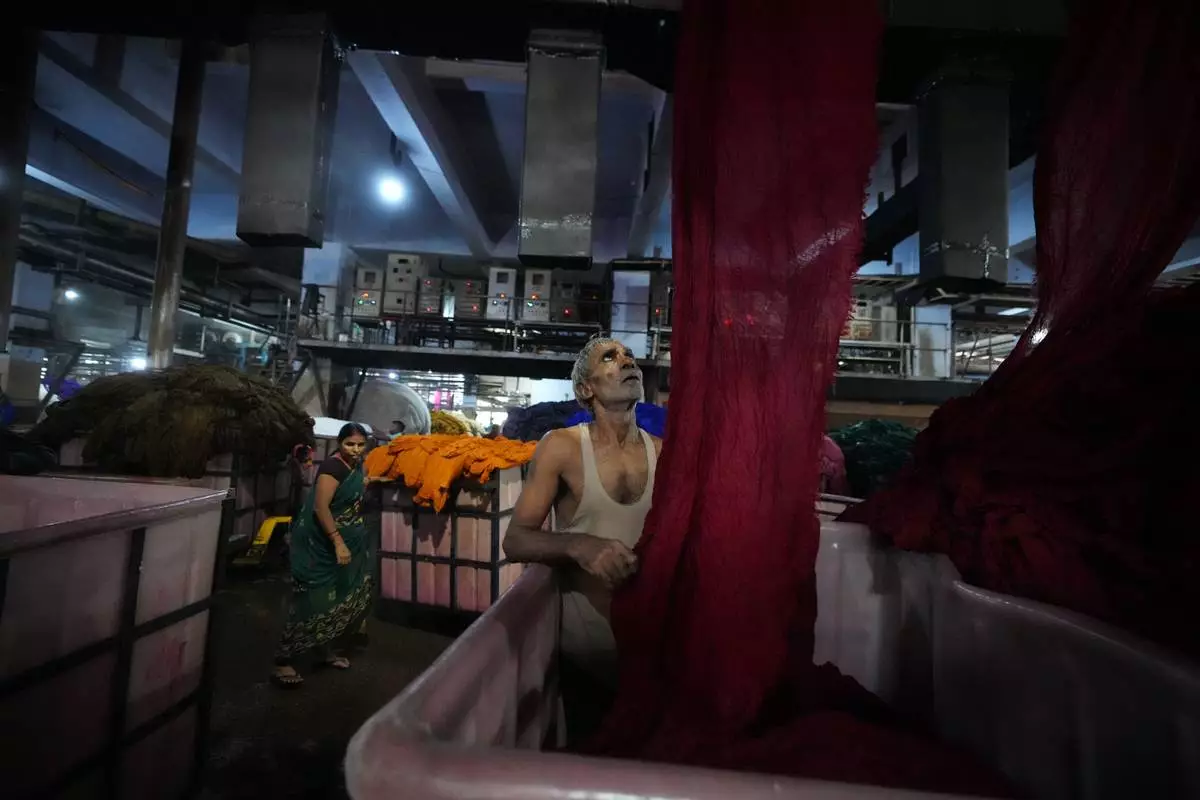
Employees work on a hot day as ventilation systems dispensing cool air across the factory are visible on the ceiling at Vinit Fabrics in Palsana near Surat, India, Tuesday, May 26, 2026. (AP Photo/Ajit Solanki)
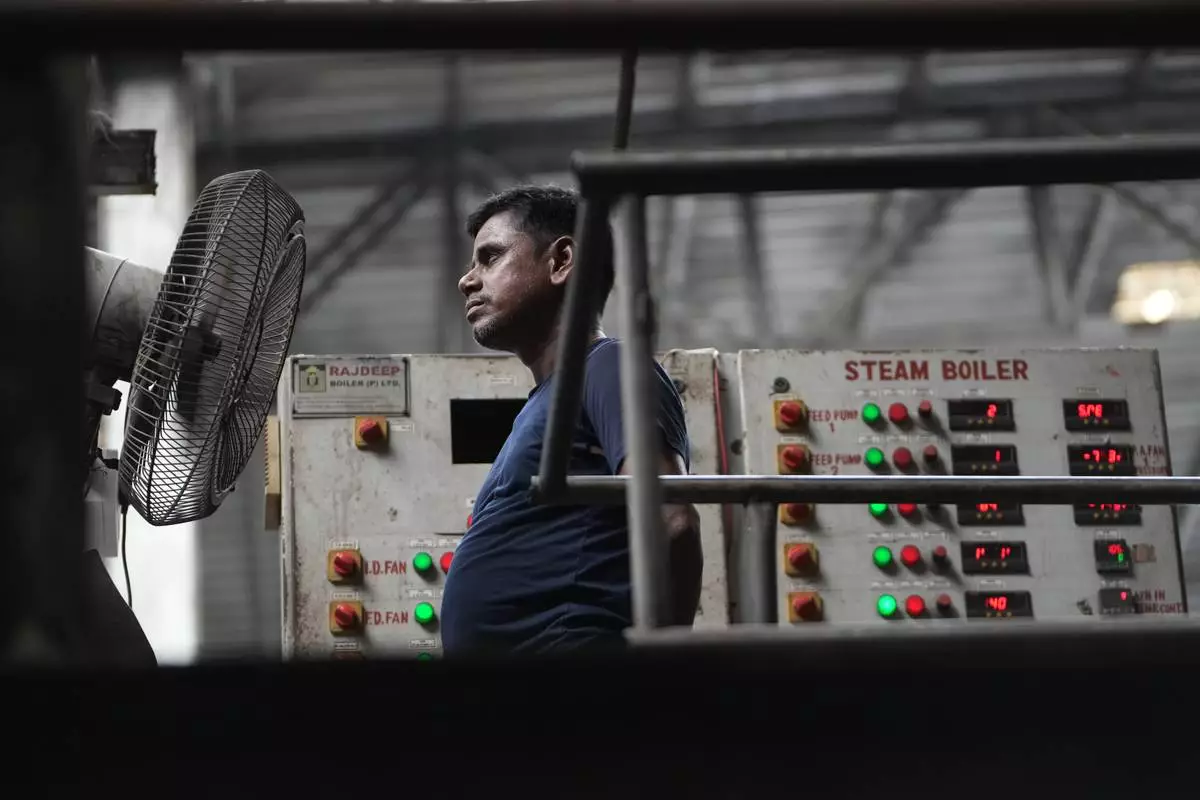
A worker stands in front of a fan on a hot day at Vinit Fabrics in Palsana near Surat, India, Tuesday, May 26, 2026. (AP Photo/Ajit Solanki)
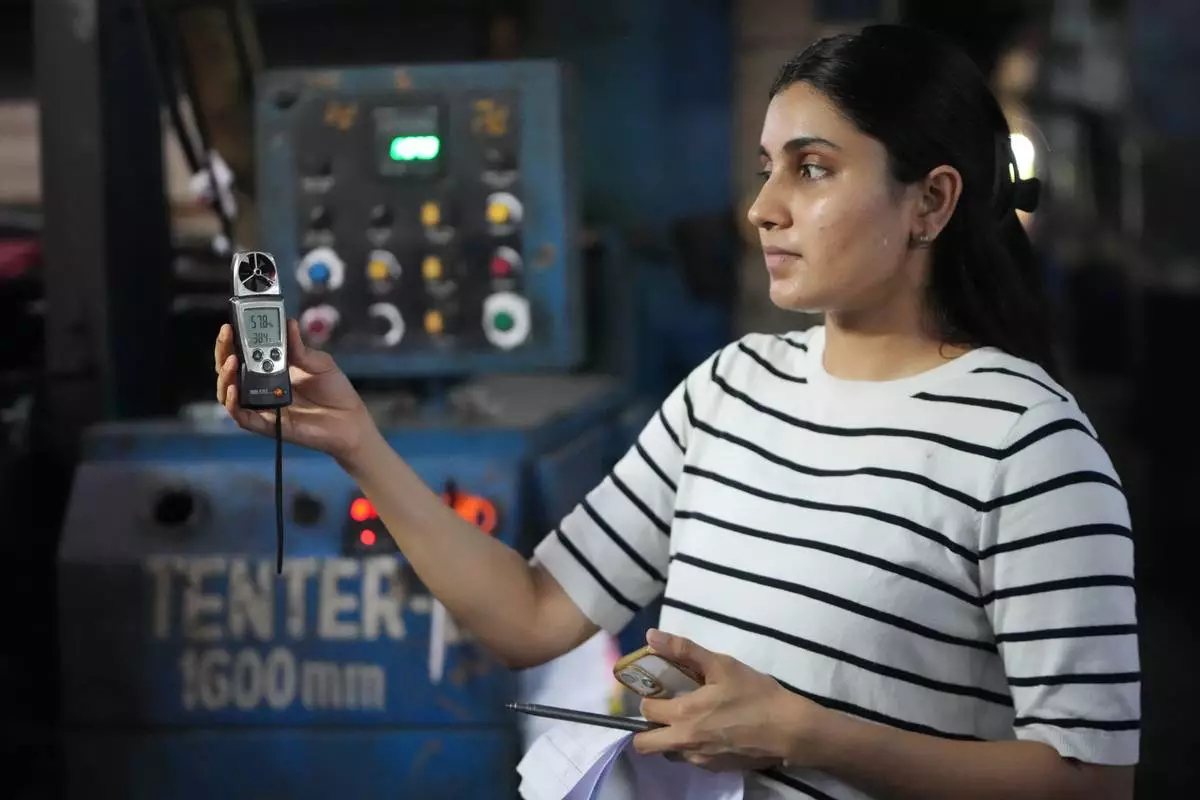
Pooja Yadav, of the think tank WRI India, shows temperature and humidity on anemometer at Vinit Fabrics in Palsana near in Surat, India, Tuesday, May 26, 2026. (AP Photo/Ajit Solanki)
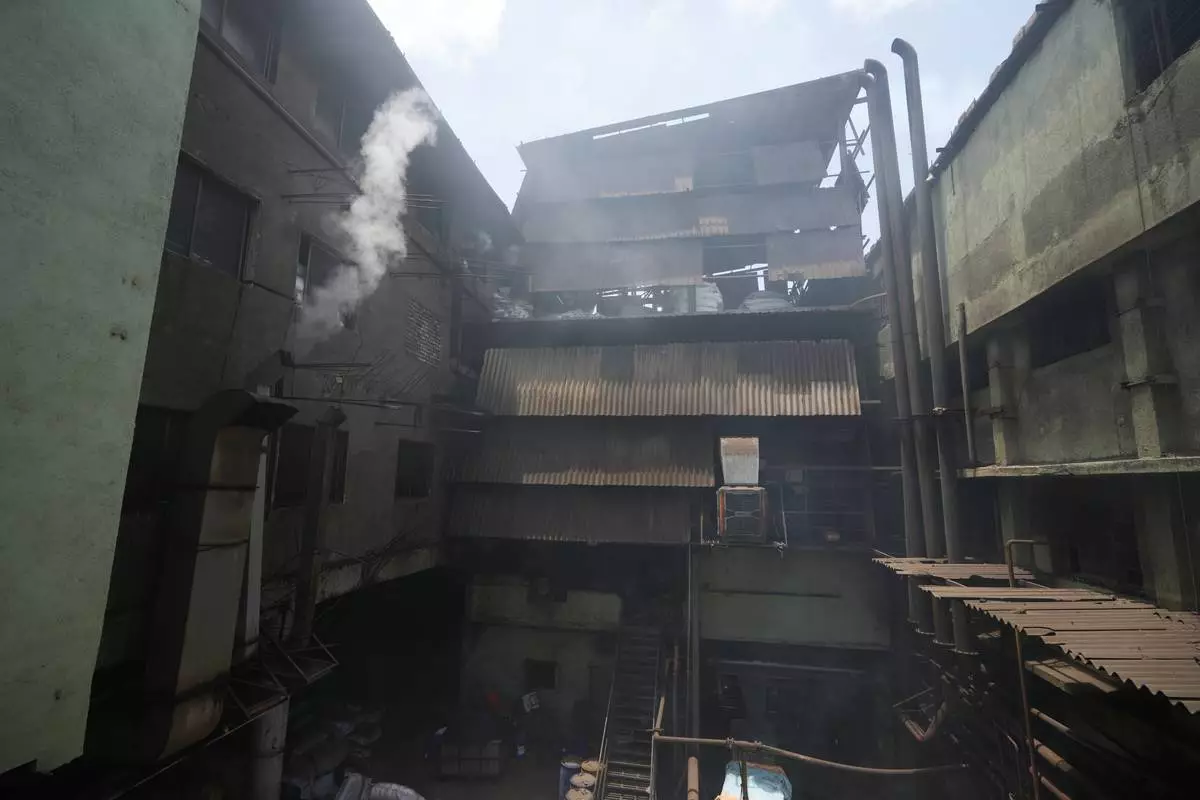
Steam comes out of a textile factory on a hot day in Sachin near Surat, India, Wednesday, May 27, 2026. (AP Photo/Ajit Solanki)
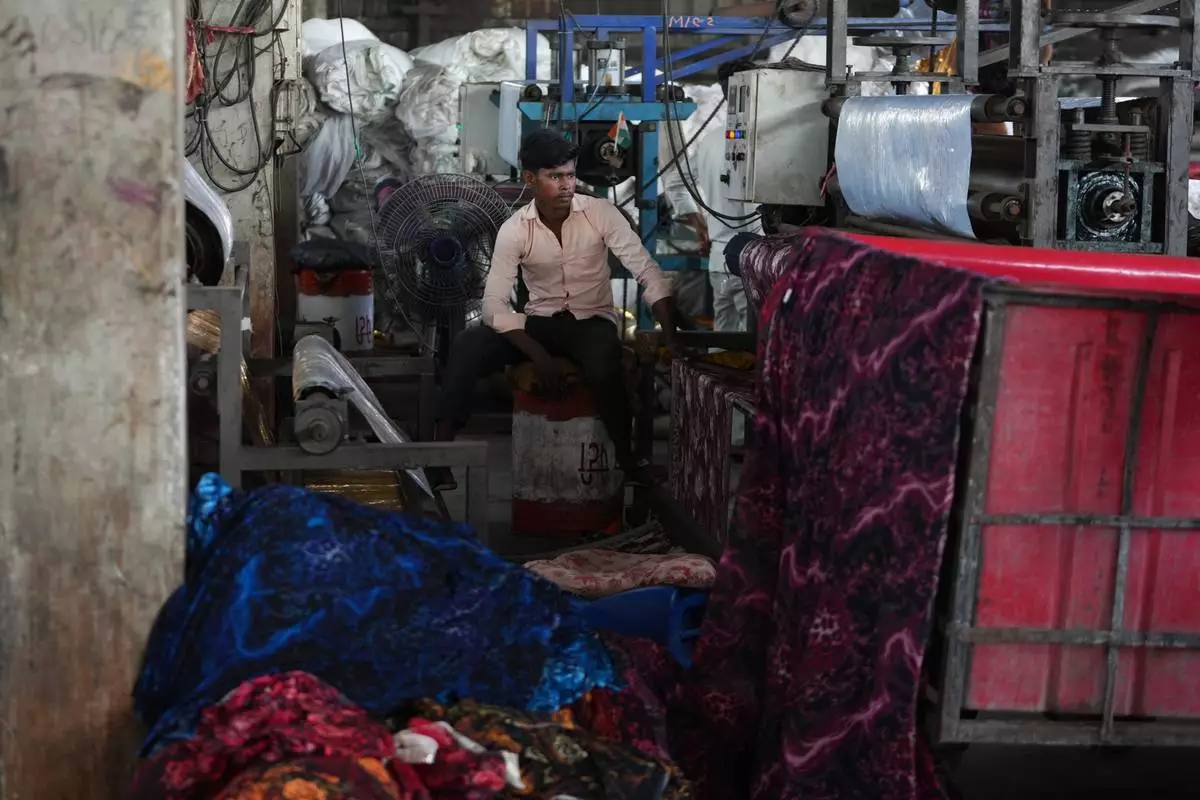
A worker sits near a fan at a textile factory on a hot day in Sachin near Surat, India, Wednesday, May 27, 2026. (AP Photo/Ajit Solanki)
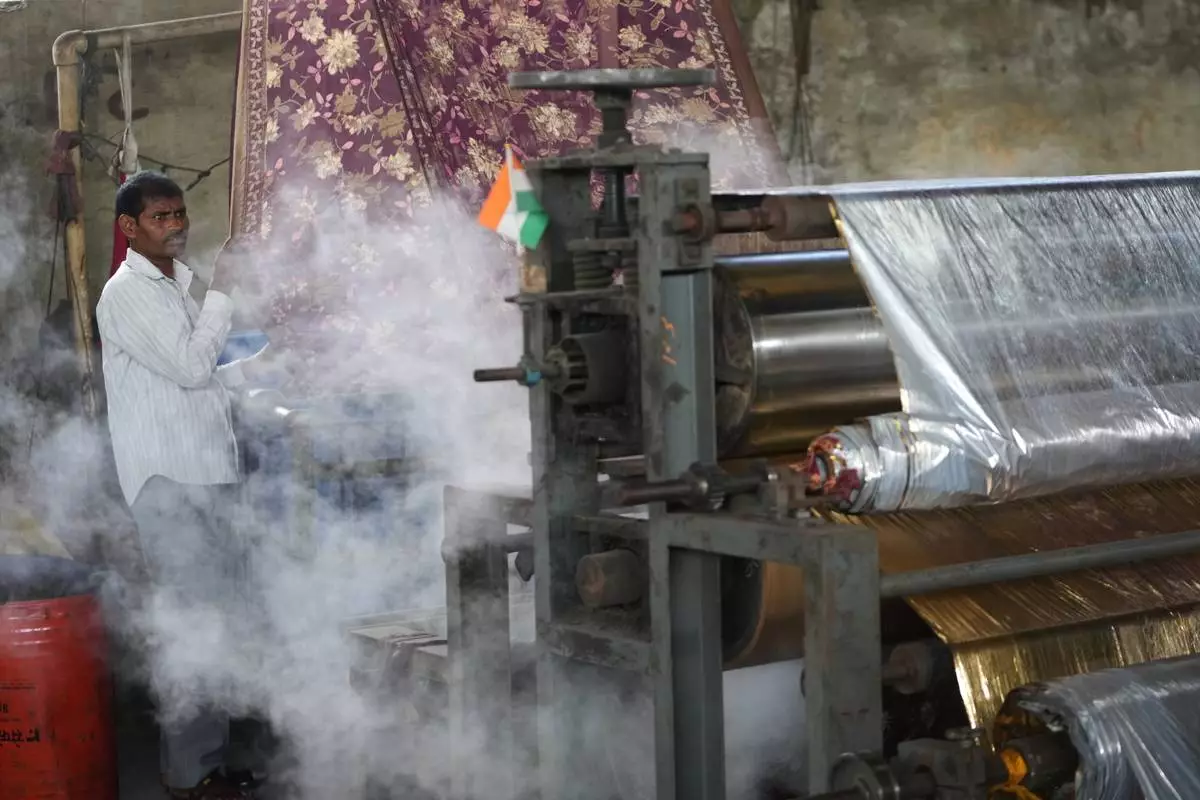
Steam comes out of a machine near a worker at a textile factory on a hot day in Sachin near Surat, India, Wednesday, May 27, 2026. (AP Photo/Ajit Solanki)
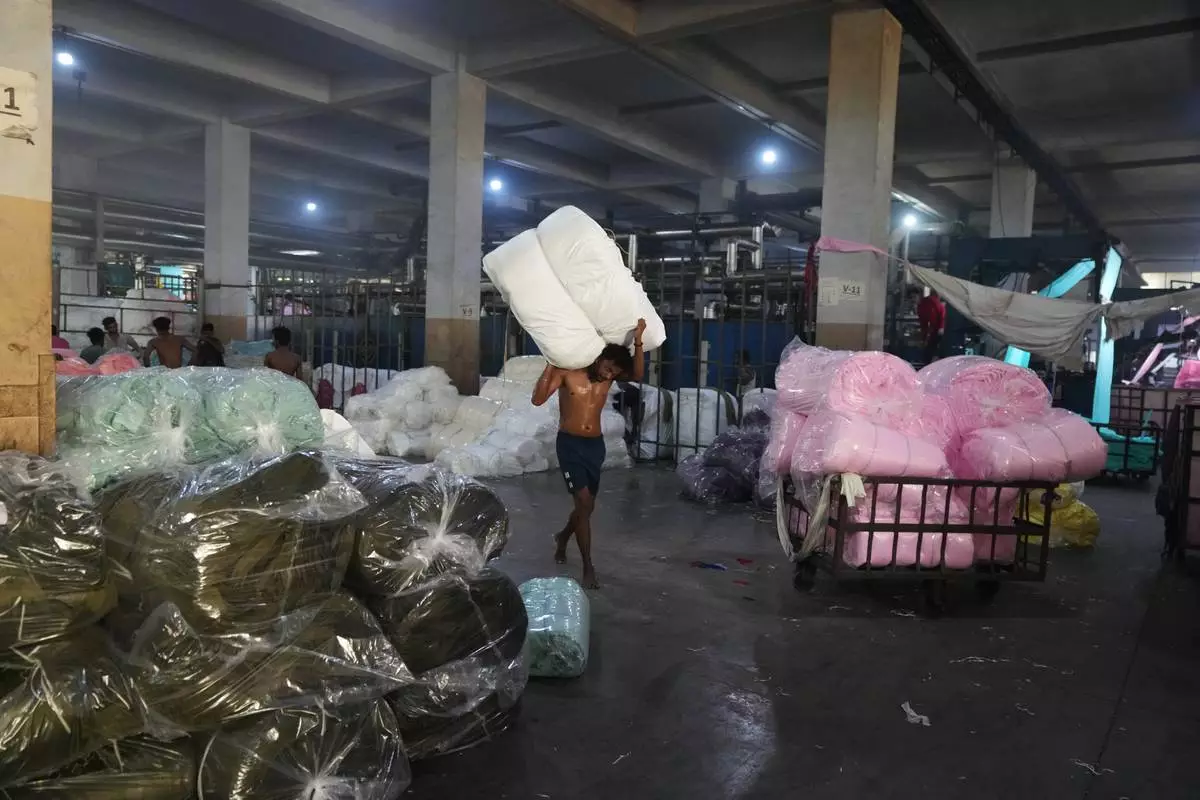
A worker carries material on a hot day at Vinit Fabrics in Palsana near Surat, India, Tuesday, May 26, 2026. (AP Photo/Ajit Solanki)
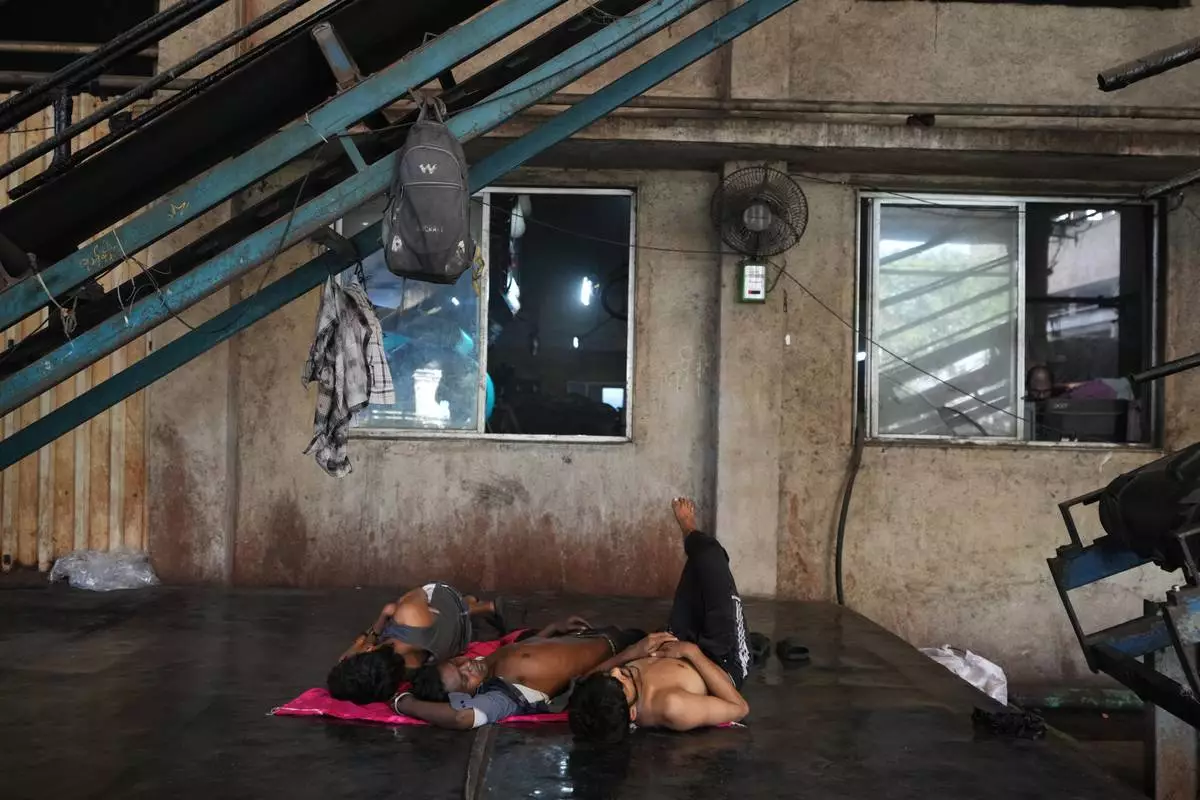
Workers rest near a fan on a hot day at Vinit Fabrics in Palsana near Surat, India, Tuesday, May 26, 2026. (AP Photo/Ajit Solanki)
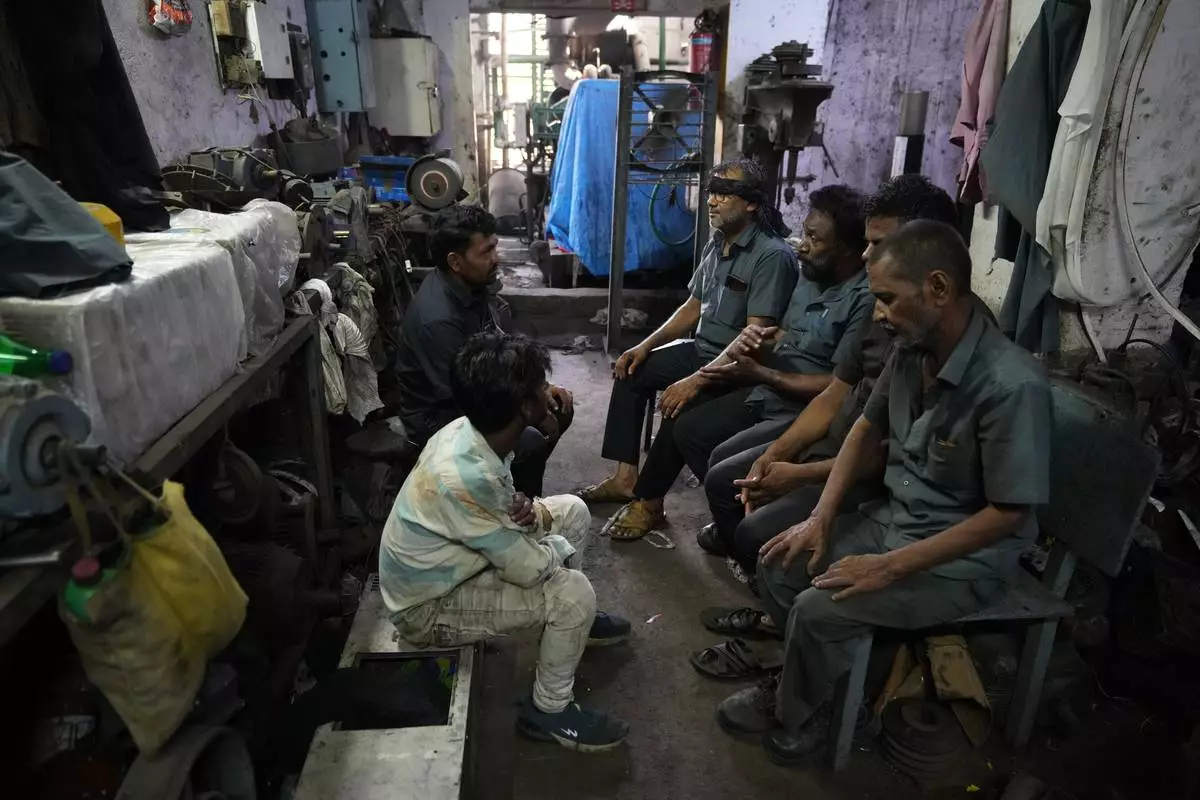
Workers sit near a fan during a break on a hot day at a textile factory in Sachin near Surat, India, Wednesday, May 27, 2026. (AP Photo/Ajit Solanki)
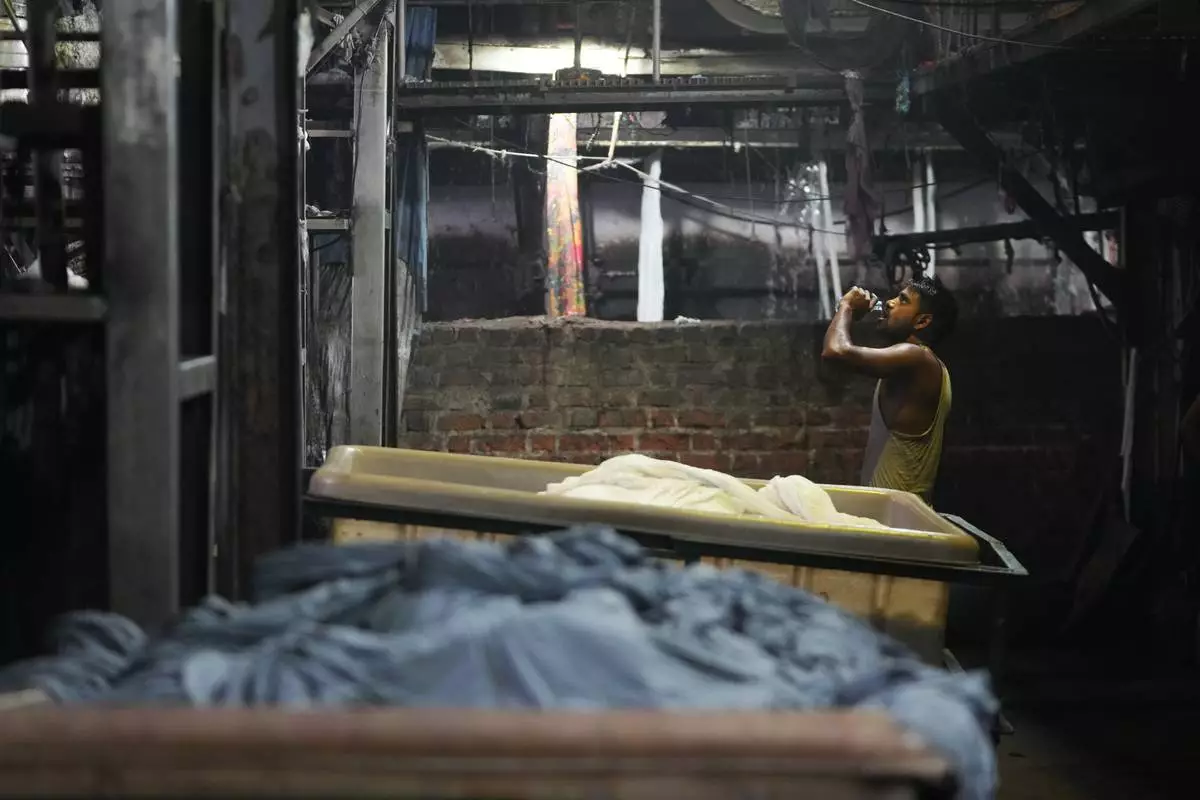
A worker drinks water at a textile factory on a hot day in Sachin near Surat, India, Wednesday, May 27, 2026. (AP Photo/Ajit Solanki)
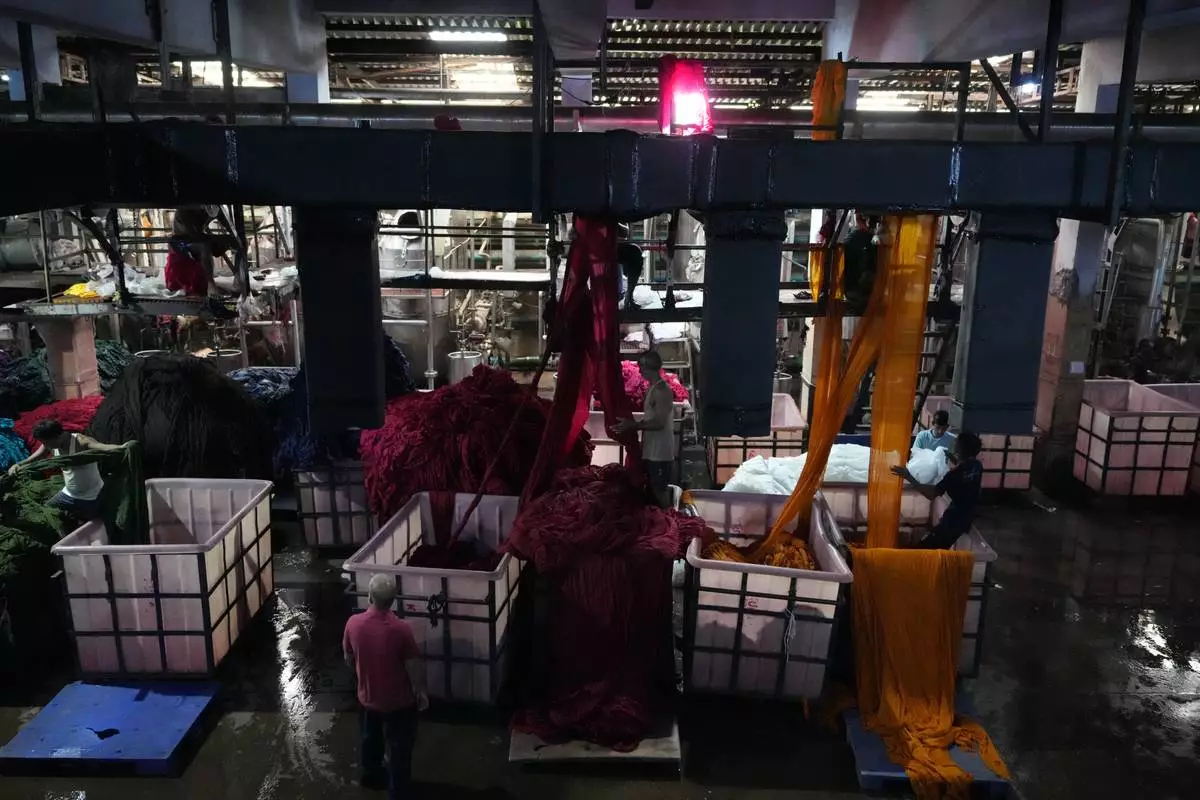
Ventilation systems dispense cool air across a factory from the ceiling at Vinit Fabrics in Palsana near Surat, India, Tuesday, May 26, 2026. (AP Photo/Ajit Solanki)
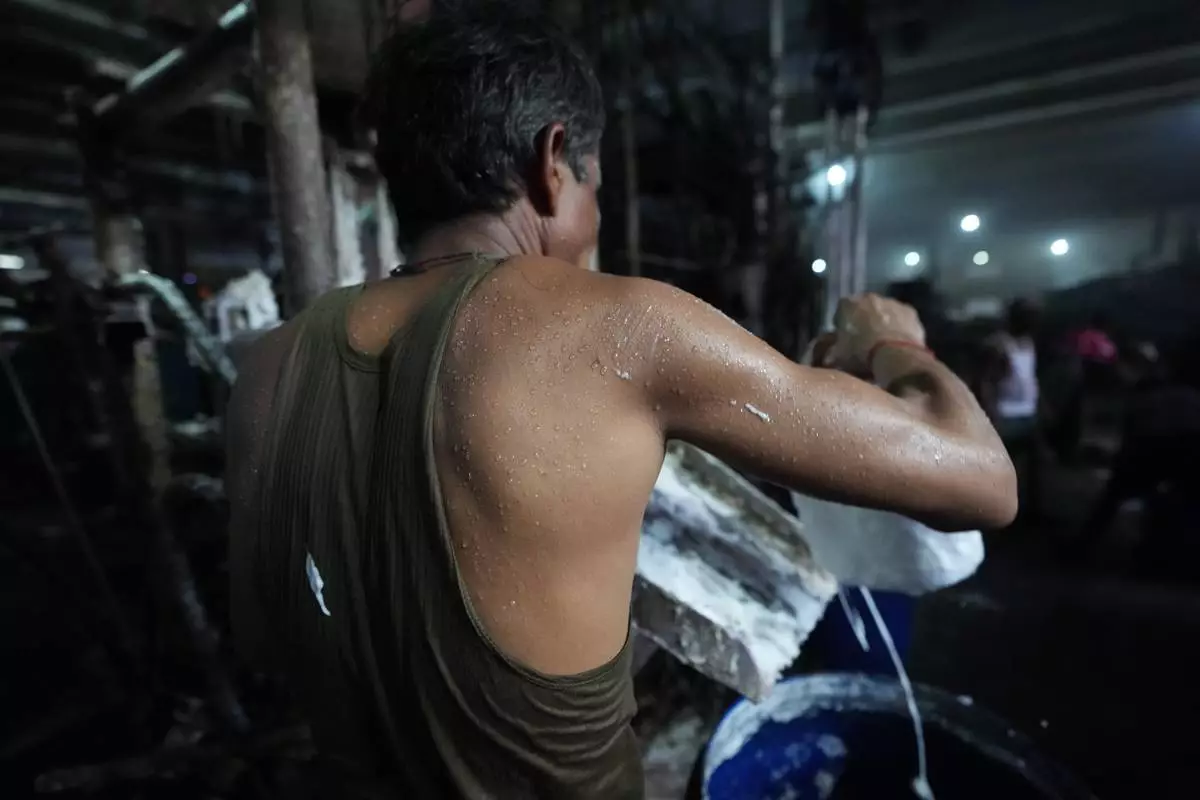
Sweat is visible on a worker on a hot day at Vinit Fabrics in Palsana near Surat, India, Tuesday, May 26, 2026. (AP Photo/Ajit Solanki)
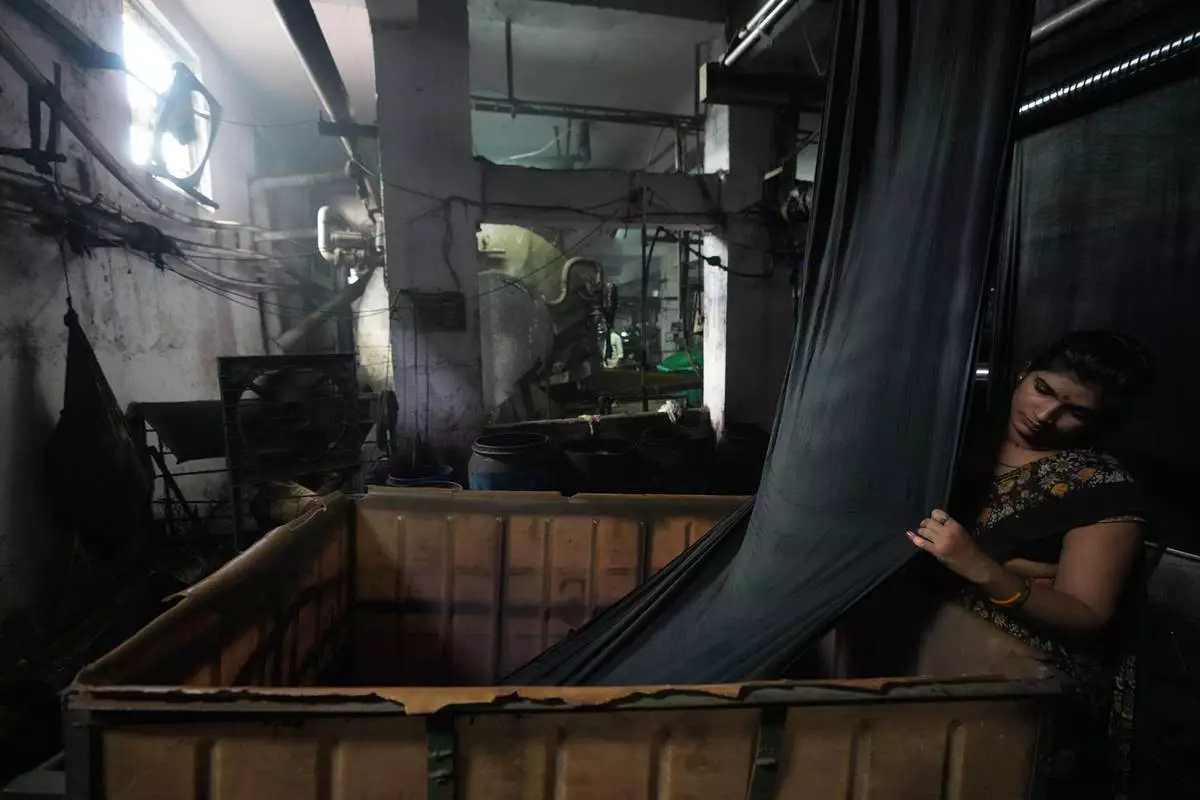
Soni Pande works at a textile factory on a hot day in Sachin near Surat, India, Wednesday, May 27, 2026. (AP Photo/Ajit Solanki)
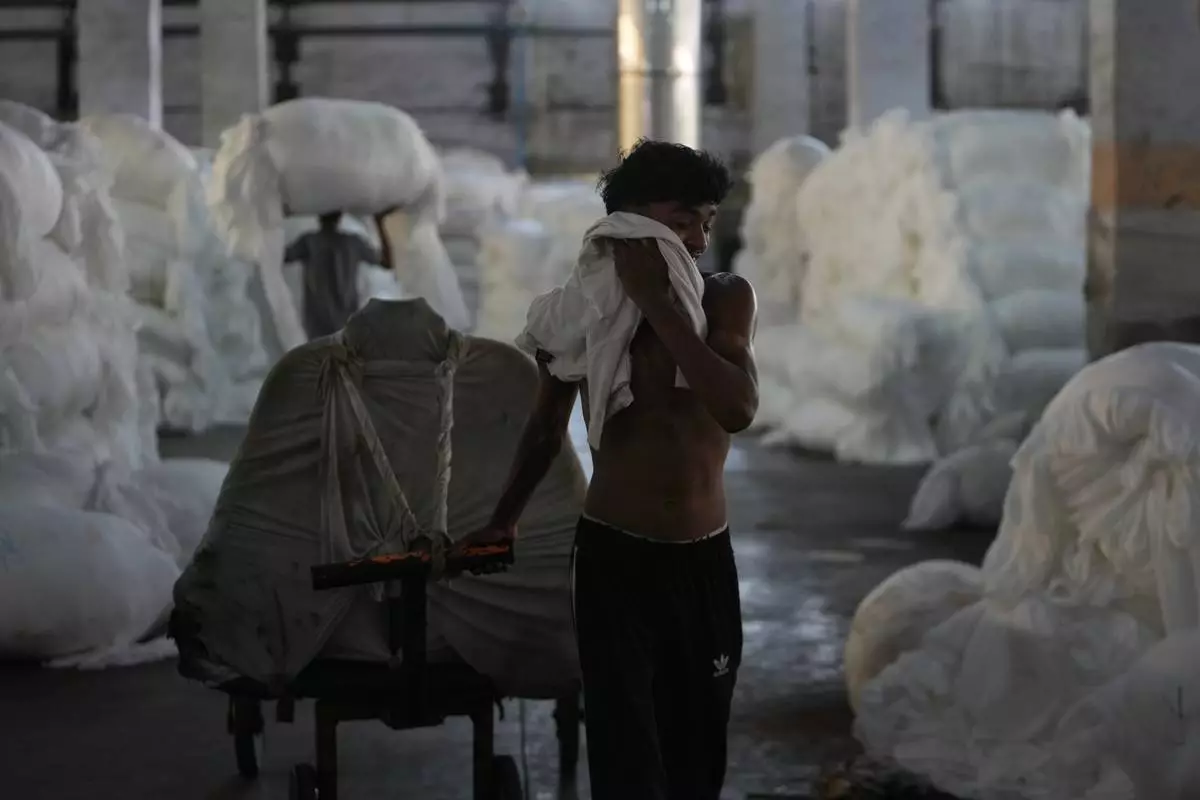
A worker wipes sweat from his face on a hot day at Vinit Fabrics in Palsana near Surat, India, Tuesday, May 26, 2026. (AP Photo/Ajit Solanki)