NEW YORK (AP) — A teenager thrown to the ground Wednesday when a Central Park carriage horse bolted away from its driver has died, according to police.
The 18-year-old was riding in the horse-drawn carriage with three other passengers when the accident happened just before 3 p.m., according to the New York Police Department. At least two passengers were sent flying out of the careening cab.
The teenager was initially hospitalized in critical condition. The other passengers refused medical treatment.
A representative for the Transport Workers Union, which represents carriage industry employees, said the driver had dismounted to take a photograph of his passengers, which they are not supposed to do.
The horse had been in the park for only six weeks, according to Alexander Kemp, the administrative vice president of the union's local chapter. He said he wants a full investigation.
“Safety in the park has been a growing concern among many, and improvements are needed to be made with respect to all vehicles, including e-bicycles, delivery vehicles, pedicabs, and horse-drawn carriages," he said in a statement.
Video showed the horse sprinting through the park as two people appeared to jump from the four-wheeled carriage. A second video shows the cab toppling over after clipping the wheels of another carriage on the park's busy loop.
It's a fraught moment for Central Park's 150-year-old horse-drawn carriage industry. The industry has long been seen as a quaint attraction that offers tourists a romantic remnant of a bygone New York, while providing hundreds of jobs to drivers, along with many farm and racing horses. But they are now facing the growing threat of a ban from opponents who say the rides are both inhumane to horses and a danger to city residents.
Wednesday's event follows several recent horse-related problems in the park, including the fatal collapse of a horse last week.
The Central Park Conservancy, the nonprofit which operates the park and came out last summer in support of banning horse-drawn carriages, said the back-to-back events should bring an end to the industry.
“A young man came to enjoy our park and lost his life,” the group said in a statement. “That is not an acceptable cost of an antiquated industry operating in the middle of one of the most heavily used public spaces in America.”
Central Park is nearly 850 acres and attracts millions of people every year.
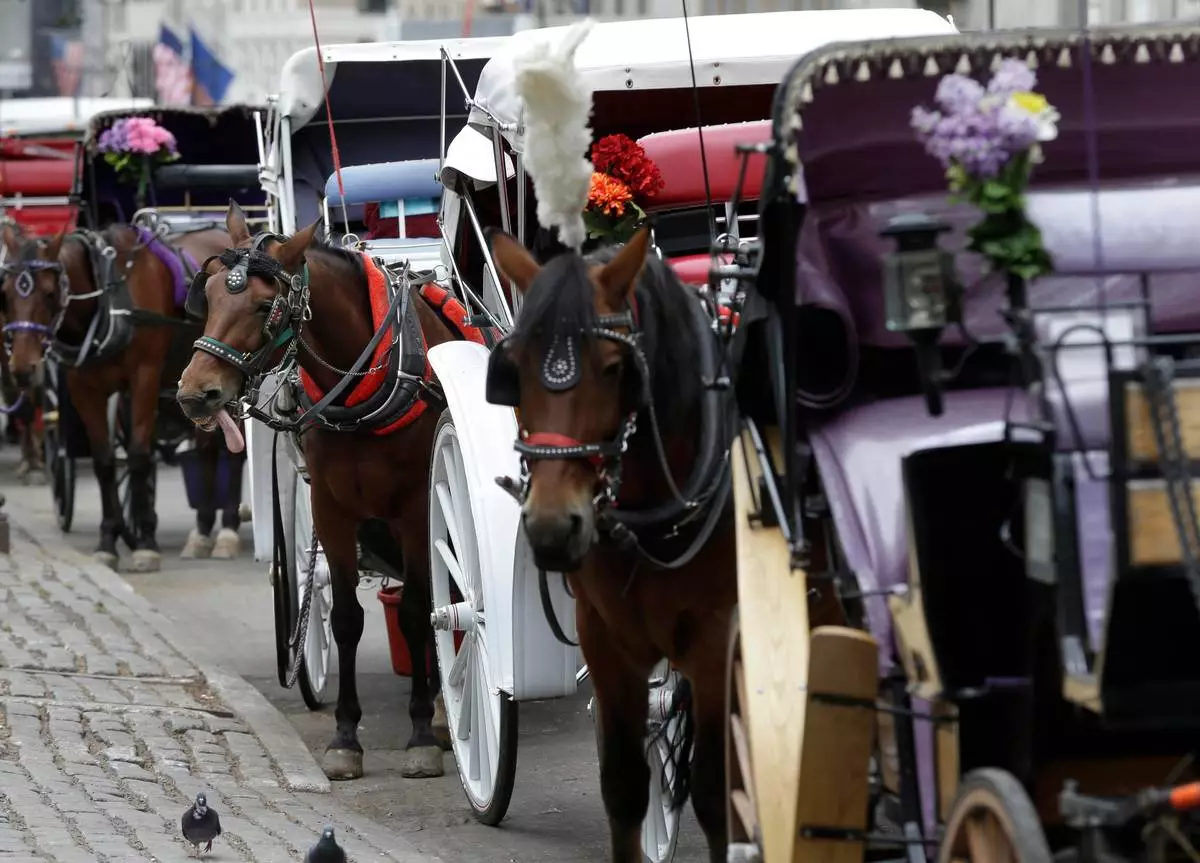
FILE - Horses and carriages wait for customers on Oct. 23, 2013, near Central Park in New York. (AP Photo/Seth Wenig, File)
TOKYO (AP) — Asian shares mostly declined Tuesday, despite a rally on Wall Street boosted by easing oil prices, as regional investors still weighed the impact from the recent joint U.S.-Japan currency intervention.
Japan's benchmark Nikkei 225 slipped 0.6% to 63,369.85, as the U.S. dollar inched up to 157.63 Japanese yen from 157.18 yen. The euro cost $1.1511, little changed from $1.1514. The dollar was trading at 160-yen levels before the intervention.
Some analysts said the effectiveness of such an intervention remains uncertain as it doesn't address the fundamental economic reasons behind the currency fluctuations, including inflation, interest rates and the relative strengths of the economies.
“A U.S.-backed operation carries far more signaling weight than Tokyo acting alone, and the pledge of further action will give speculators pause. But any U.S. contribution will probably be constrained by size,” a report by BMI, a unit of Fitch Solutions, said.
Matthew Ryan, head of market strategy at global financial services firm Ebury, noted the latest effort could have some impact because it appears to signal a real change in monetary policy rather than just a one-time defensive move.
“This is an historic and meaningful development for the yen, which materially improves confidence in our mildly bullish call for the currency,” he said.
South Korea's Kospi inched down less than 0.1% to 6,254.76. Australia's S&P/ASX 200 added 1.2% to 9,128.60. Hong Kong's Hang Seng fell 0.5% to 25,881.99, while the Shanghai Composite declined 0.2% to 3,802.61.
On Wall Street, share prices rallied Monday after easing oil prices helped calm worries that inflation could get even worse. The S&P 500 jumped 1.5% and is just 0.1% below its record set earlier this summer.
The Dow Jones Industrial Average, which measures a narrower slice of the U.S. stock market, climbed 693 points or 1.3% to an all-time high, while the Nasdaq composite leaped 2.1%.
In energy trading in Asia early Tuesday, benchmark U.S. crude gained 50 cents to $80.84 a barrel. Brent crude, the international standard, rose 63 cents to $84.40 a barrel.
A day earlier, it had dropped after U.S. President Donald Trump said over the weekend that he decided to hold off on new strikes against Iran at the urging of allies in the region.
Brent’s price careened between $72 and $102 last month as worries rose and fell over the war in Iran and when oil tankers would be allowed to freely exit the Persian Gulf again to deliver crude to customers worldwide.
The yield on the 10-year Treasury sank to 4.68% from 4.75% late Friday. It remains well above its 3.97% level from before the war with Iran.
Yuri Kageyama is on Threads: https://www.threads.com/@yurikageyama
AP Business Writer Stan Choe contributed to this report.
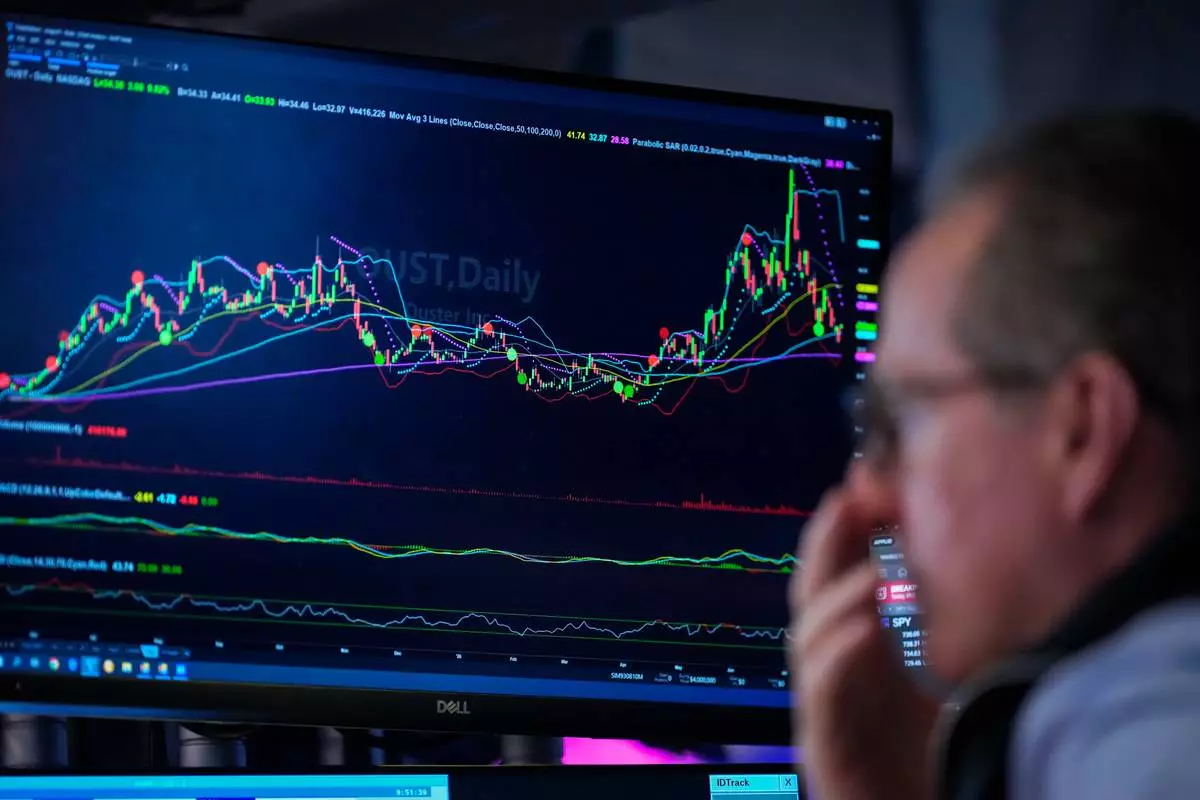
A trader works on the floor of the New York Stock Exchange, Thursday, July 30, 2026, in New York. (AP Photo/Yuki Iwamura)
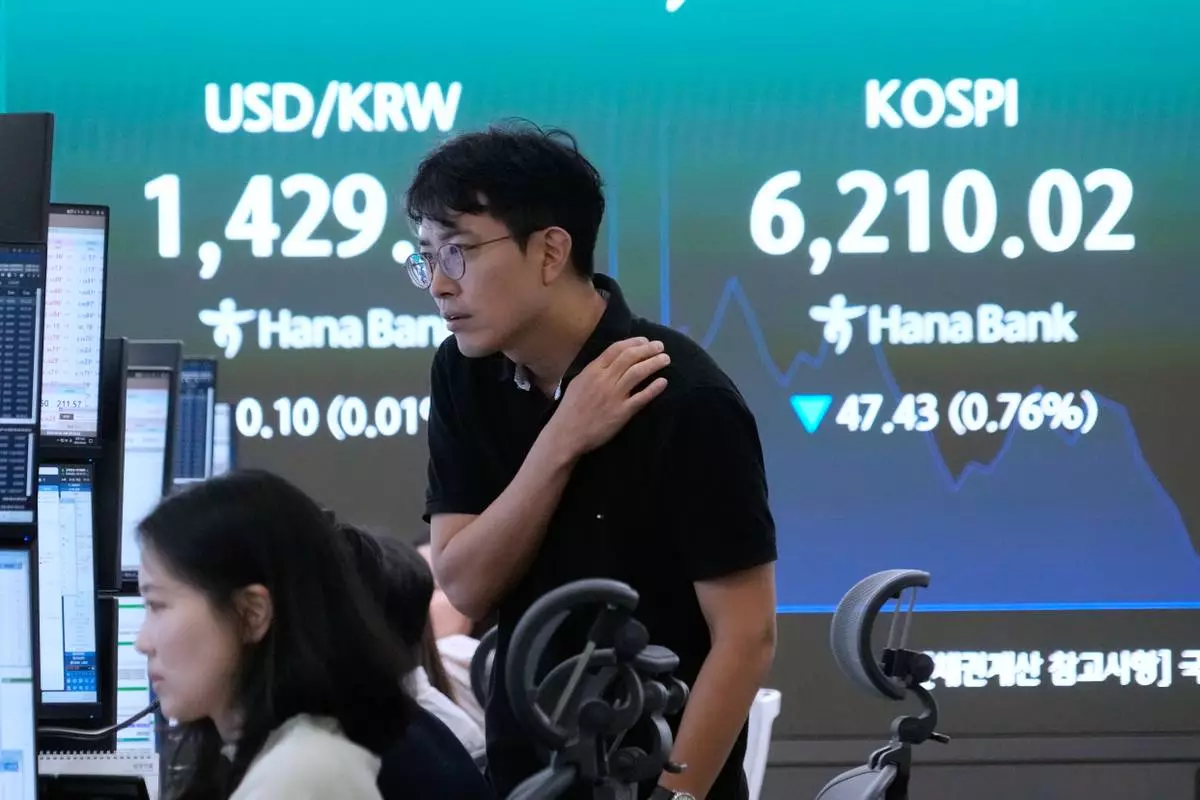
Currency traders watch monitors near a screen showing the Korea Composite Stock Price Index (KOSPI) and the foreign exchange rate between U.S. dollar and South Korean won at the foreign exchange dealing room of the Hana Bank headquarters in Seoul, South Korea, Tuesday, Aug. 4, 2026. (AP Photo/Ahn Young-joon)
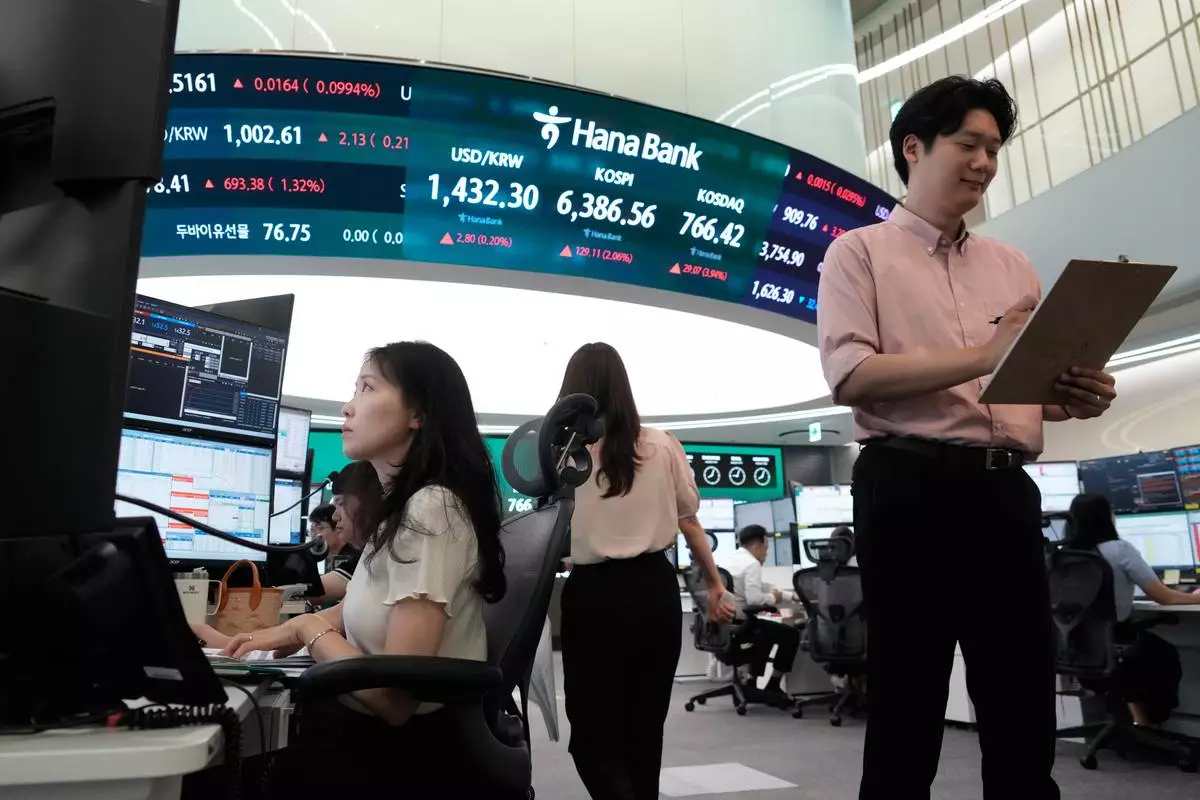
Currency traders work at the foreign exchange dealing room of the Hana Bank headquarters in Seoul, South Korea, Tuesday, Aug. 4, 2026. (AP Photo/Ahn Young-joon)