Skip to Content Facebook Feature Image

Hyundai Card Reopens Korea's Kimchi Bond Market, Expands Funding Portfolio with Dual-Currency USD-CNY Issuance

Business

Hyundai Card Reopens Korea's Kimchi Bond Market, Expands Funding Portfolio with Dual-Currency USD-CNY Issuance
Business

Business

Hyundai Card Reopens Korea's Kimchi Bond Market, Expands Funding Portfolio with Dual-Currency USD-CNY Issuance

2026-06-18 15:00 Last Updated At:15:15

Hyundai Card becomes the first Korean credit-specialized financial company to issue a dual-currency USD-CNY Kimchi bond, expanding its investor base and currency portfolio in response to changing market conditions

SEOUL, South Korea, June 18, 2026 /PRNewswire/ -- As financial market volatility continues to rise, Korean credit card companies are rethinking how to raise funds. Unlike banks, specialty finance companies in Korea do not take deposits and have traditionally relied heavily on bond issuance for funding. But with interest rate volatility and funding costs increasing, diversifying funding channels has become an increasingly important priority.

Against this backdrop, Hyundai Card, one of Korea's leading financial companies, has been expanding its funding portfolio across a wider range of instruments, including offshore public bonds, syndicated loans, asset-backed securities (ABS) and, more recently, Kimchi bonds.

On June 17, Hyundai Card announced that it became the first Korean non-bank lender to issue a dual-currency Kimchi bond, securing funds in both U.S. dollars (USD) and Chinese yuan (CNY). The bond was issued as a green bond in accordance with the Korean Green Taxonomy Guidelines, with proceeds to be used for financial services related to Hyundai Motor Group's eco-friendly mobility businesses, including electric vehicles (EVs) and fuel cell electric vehicles (FCEVs).

This issuance is a direct extension of Hyundai Card's ongoing Kimchi bond strategy this year. In January, Hyundai Card became the first Korean company in 15 years to resume public Kimchi bond issuance for the purpose of converting the proceeds into Korean won, effectively reopening a market that had remained largely dormant. Since then, companies including LG Electronics and Lotte Property & Development have also entered the Kimchi bond market, suggesting that the funding diversification trend initiated by Hyundai Card is spreading across the broader market. Hyundai Card also issued an USD 80 million Kimchi bond in February, and has now expanded the structure further by combining dollar- and yuan-denominated tranches.

The latest Kimchi bond was issued publicly across two tranches: USD 20 million and CNY 440 million, totaling approximately KRW 128.7 billion. The dollar-denominated portion was structured as a one-year note priced at 77 basis points over SOFR, the risk-free benchmark. The yuan-denominated tranche was issued as a two-year bond carrying a 2.09% coupon rate.

Through this dual-currency Kimchi bond, Hyundai Card expects to broaden its funding channels and reduce currency-specific funding risks. In particular, the inclusion of a yuan-denominated tranche is expected to help the company reach a wider base of Chinese investors, who have recently shown increasing interest in Korea's domestic bond market. It also allows Hyundai Card to tap into new investor demand beyond its existing dollar-centered foreign currency funding structure.

Kimchi bonds are foreign currency-denominated bonds issued in Korea. For Korean companies, they provide a way to raise foreign currency funding without directly accessing offshore bond markets. Following regulatory easing by Korean foreign exchange authorities aimed at easing supply-demand imbalances in the foreign exchange market and reducing depreciation pressure on the Korean won, Kimchi bonds have once again attracted attention as a tool for securing foreign currency liquidity while diversifying funding channels. Issuance has recently been increasing, particularly among Korean credit-specialized financial companies and blue-chip corporates.

The latest issuance also qualifies as a Korean green bond under the Korean Green Taxonomy Guidelines. Proceeds will be used to support financial services related to Hyundai Motor Group's eco-friendly mobility businesses, including electric vehicles and fuel cell electric vehicles. Hyundai Card has continued to use ESG bonds as part of its green financing strategy, starting with its KRW 240 billion green bond issuance in 2019, the first by a Korean credit card company. On June 11, the company also issued KRW 160 billion in green bonds.

"Amid heightened volatility in both domestic and global financial markets, the funding environment remains challenging," a Hyundai Card official said. "This dual-currency Kimchi bond issuance is expected to help us expand our investor base and diversify currency-related funding risks. The company will continue to make proactive use of various funding methods to secure stable liquidity and strengthen our funding competitiveness."

** This press release is distributed by PR Newswire through automated distribution system, for which the client assumes full responsibility. **

Hyundai Card Reopens Korea's Kimchi Bond Market, Expands Funding Portfolio with Dual-Currency USD-CNY Issuance

Hyundai Card Reopens Korea's Kimchi Bond Market, Expands Funding Portfolio with Dual-Currency USD-CNY Issuance

Scholarship Reframes Chinese Thought and the Definition of "China"

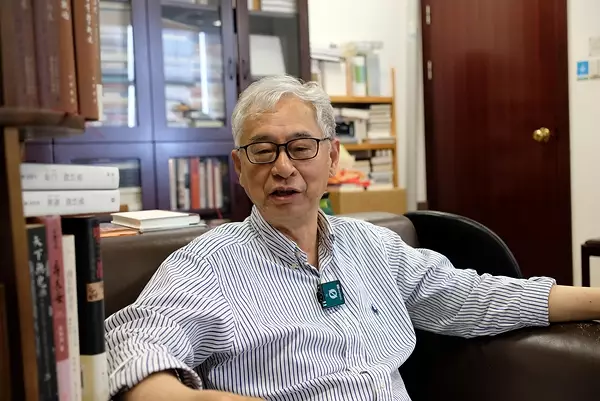
TAIPEI, June 18, 2026 /PRNewswire/ -- The 2026 Tang Prize in Sinology has been awarded to Professor Ge Zhaoguang, Distinguished Professor of Arts and Humanities at Fudan University's National Institute for Advanced Humanistic Studies and Department of History, "for his mastery of ancient Chinese thought. From his early work on Chan Buddhism, Daoism, and the history of philosophical thought, to his more recent series of studies on 'What is China,' he has consistently offered original insights and groundbreaking discoveries. His achievements have not only exerted a far-reaching influence within China but have also resonated throughout the global Chinese-speaking academic community, as well as in Japan, Korea, North America, and Europe."

Professor Ge's scholarship spans a wide range of fields, including the history of Chinese thought, religion, literature, and classical philology. He is especially renowned for his work in the history of thought, with An Intellectual History of China being the defining achievement of the first half of his academic career. In this work, Professor Ge argued that intellectual history should shift its focus from the "center" to the "margins," from the "classics" to the "ordinary," and from "elite thought" to the ideas and lived mental worlds of common people, thus opening new possibilities for dialogue between intellectual history, cultural history, and social history.

In recent years, Professor Ge has devoted considerable effort to exploring historical discourses on "China." He has successively published a trilogy of studies on "China," including Here in 'China' I Dwell: Reconstructing Historical Discourses of China for Our Time, What is China? Territory, Ethnicity, Culture, and History, and Lishi Zhongguo De Nei Yu Wai: Youguan "Zhongguo" Yu "Zhoubian" Gainian De Zaichengqing [The Inside and Outside of Historical China: A Reclarification of the Concept of "China" and its "Borders"]. Drawing extensively on traditional textual and visual materials, as well as Sinitic records of the diplomatic journey to China from Joseon, Vietnam, and other neighboring states, he examines China's complex relations with the surrounding regions through perspectives from beyond its borders, inviting renewed reflection on the relationship between "historical China" and "contemporary China." This approach has shaped new directions in historical research over the past decade and more.

Professor Ge has also conducted extensive research on Buddhism, Daoism, and Chinese popular religion, while devoting long-standing attention to Chinese literature. Refusing to be confined by modern Western disciplinary divisions, he founded the National Institute for Advanced Humanistic Studies at Fudan University, where he has worked to promote exchange across traditional fields such as literature, history, philosophy, religion, and art. With his works having been widely translated into English, Japanese, Korean, German, and French, he has reshaped international understanding of Chinese thought and culture.

About the Tang Prize

Since the advent of globalization, humanity has enjoyed unprecedented benefits from advances in civilization and science. Yet a multitude of challenges, such as climate change, the emergence of new infectious diseases, the widening wealth gap, and moral degradation, have surfaced along the way. Against this backdrop, Dr. Samuel Yin established the Tang Prize in December 2012. It consists of four award categories: Sustainable Development, Biopharmaceutical Science, Sinology, and Rule of Law. Every two years, four independent and professional selection committees, comprising many internationally renowned experts, scholars, and Nobel laureates, choose Tang Prize laureates who have made substantive contributions and generated a far-reaching impact on the world, regardless of race, nationality, gender, or religion. A cash prize of NT$50 million (approximately US$1.6 million) is allocated to each category, with NT$10 million (approximately US$320,000) of it being a grant intended for research or educational outreach programs to encourage professionals in every field to examine mankind's most urgent needs in the 21st century, and become leading forces in the sustainable development of human society through their outstanding research outcomes and active civic engagement.

** This press release is distributed by PR Newswire through automated distribution system, for which the client assumes full responsibility. **

2026 Tang Prize in Sinology Awarded to Ge Zhaoguang

2026 Tang Prize in Sinology Awarded to Ge Zhaoguang

Recommended Articles