The three-day Qingdao Multinationals Summit concluded in Qingdao City, east China's Shandong Province, on Wednesday, with 57 key projects signed during the event.
The summit, in its 7th edition this year, featured multiple activities focusing on future industries, opening-up of service sector, and international economic and trade cooperation. Among the 57 signed projects, there were 20 invested by foreign entities, nine in the field foreign trade, and 15 related to modern services.
Centered on the theme "Multinationals and China: Advancing with the 15th Five-Year Plan for Innovation and Future", the summit attracted 357 Fortune Global 500 companies and leading enterprises from 44 countries and regions.
Expanding the opening-up of the services sector dominated the discussion at this year's summit, with representatives from government, business sector, and academia engaging in in-depth exchanges on policy measures and pilot programs in this regard.
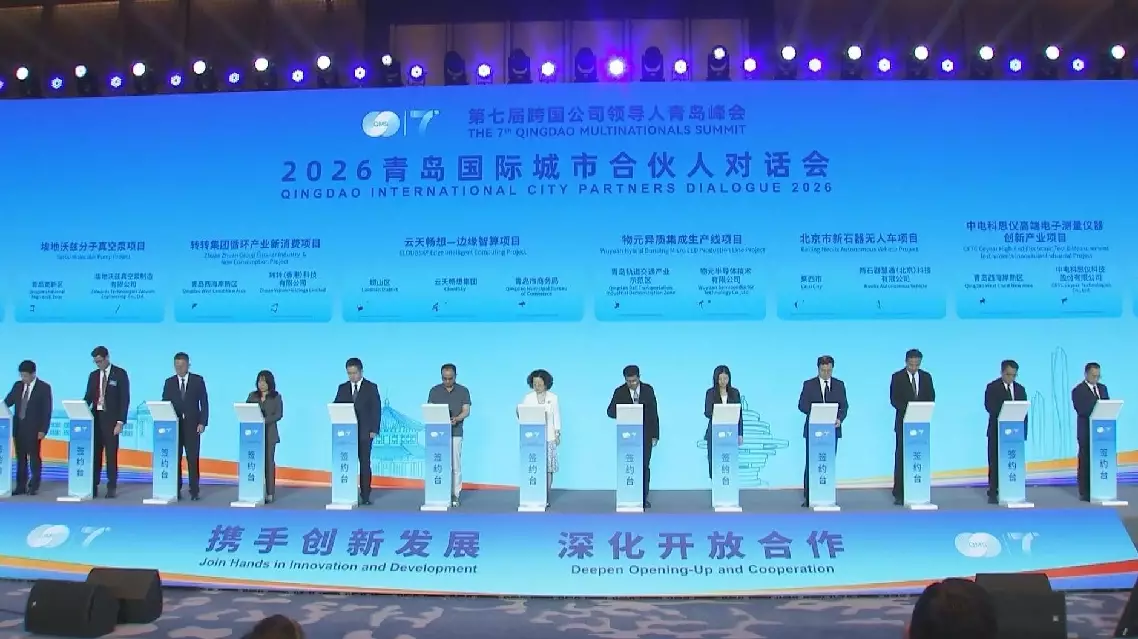
57 key projects signed at 7th Qingdao Multinationals Summit
As the global AI infrastructure build-out fuels explosive demand for computing power, optical communications companies in east China's Suzhou City are riding the wave into an unprecedented boom that spans every link of the industrial chain.
At a major chip manufacturer in Suzhou New District, an emerging high tech hub, machinery operates nonstop around the clock. With market demand climbing steadily, the company is running at full throttle to ensure timely delivery of optical communication chips.
"Downstream demand is growing at an extraordinary pace, so we're allocating more capacity to optical chips. This year, we've bolstered our research and development and production teams and are actively scaling up our facilities," said Li Shunfeng, deputy director of Suzhou Changguang Huaxin Semiconductor Laser Innovation Research Institute.
While ensuring robust shipments of mature chips, the company is also racing to upgrade its frontier technologies. Over the past year, multiple high speed optical communication chips tailored for supercomputing centers have completed process verification and are now moving into mass production and delivery, filling the supply gap for homegrown high-end optical chips.
"In the past year, we've started delivering several high-end products. Chips for 800G and even 1.6T optical modules are also gaining progress from R and D to the validation stage, and they're set to play a much bigger role in high density interconnects in the future," said Li.
The surge in orders for upstream chipmakers is creating ripple opportunities throughout the supply chain. Not far away, another manufacturer produces AI-powered inspection systems for precision optical components. Inside the factory, a fresh batch of newly assembled vision measuring machines was being rapidly packed and readied for delivery.
"Our monthly shipments are around 300 units. In the optical communications sector, demand has more than doubled," said Xu Xin, technical director of Suzhou TZTEK Technology Co., Ltd.
Optical fiber serves as the critical infrastructure linking computing power to data. In Wujiang District, a company has seen fiber optic product sales rise more than 35 percent year-on-year since January. Soaring demand for next-gen fiber products from data centers has kept their products in short supply.
"We're nearly fully booked with orders every month. We're prioritizing major clients while mapping out capacity well into the future, with production already planned through the first quarter of 2027," said Sun Wei, R and D director of Jiangsu Hengtong Optical Fiber Technology Co., Ltd.
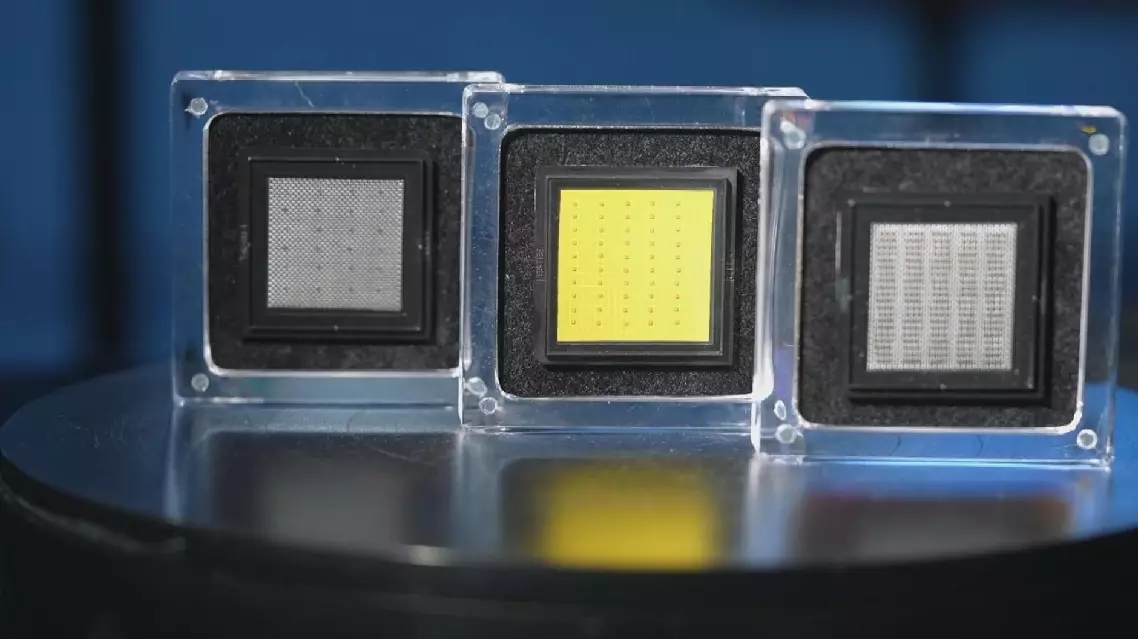
Jiangsu's optical communications sector gains momentum amid AI boom