LONDON (AP) — The Bank of England has held its main interest rate at 3.7% as the inflation pressures on the British economy have become more benign after the U.S. and Iran signed a deal to sign deal to end their war.
Thursday’s decision was widely anticipated after figures showed inflation did not rise as had been expected in May, holding steady instead at 2.8%.
Though that remains above the bank’s target of 2%, it raised hopes that the upward pressure on prices emanating from the spike in oil and gas prices after the start of the Iran war on Feb. 28 may have been less than anticipated.
Economists think rate-setters will opt against hiking rates over coming months, but only if the recent fall in energy prices is sustained. The pressure on central banks since the outbreak of hostilities in the Persian Gulf has been to raise rates. The European Central Bank hiked last week while on Wednesday, half of the policymakers at the U.S. Federal Reserve said that they could support a rate hike later this year.
Andrew Bailey, the Bank of England governor, said the recent decline in oil prices has been “encouraging” while noting they are still higher than before the war, a steer to markets that higher U.K. borrowing costs are possible.
“Whatever happens in the future, the higher energy prices of the past four months mean there’s already some inflationary pressure in the pipeline,” he said. “The Bank’s job is to make sure that doesn’t turn into sustained inflation above our 2% target.”
Two of the nine members of the Monetary Policy Committee remain concerned enough about those pipeline pressures that they voted for a quarter-point increase.
Because of the recent pullback in oil and gas prices, the bank has trimmed its forecast for inflation in the final quarter of the year to 3.25%. The hope is that inflation then starts to drop next year, freeing up the bank to cut rates, allowing mortgage lenders to offer cheaper home loans.
“If energy prices continue to moderate then the debate could once again turn again to rate cuts, but that might have to wait until next year,” said Luke Bartholomew, deputy chief economist at asset management firm Aberdeen.
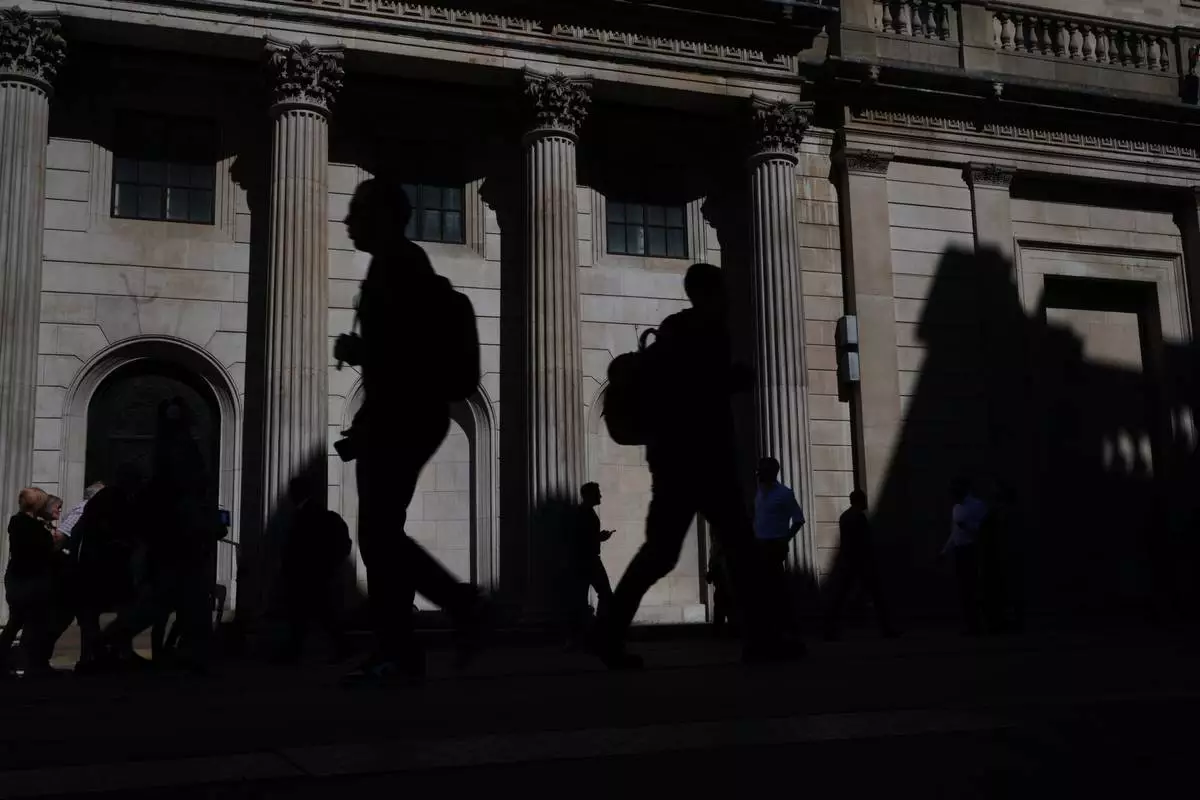
FILE -Pedestrians walk past the Bank of England in London, April 30, 2026. (AP Photo/Kirsty Wigglesworth, File)
BRUSSELS (AP) — U.S. Defense Secretary Pete Hegseth lashed out at NATO allies on Thursday, announcing a six-month Pentagon review of American forces in Europe whose outcome will depend on how fast the Europeans take responsibility for their own security.
“This will be a real review. It will be designed to ensure that NATO is moving fast and irreversibly toward Europe leading, stepping up to take primary responsibility for the defense of Europe,” he told his NATO counterparts in Brussels.
Hegseth lambasted European allies for failing to provide U.S. forces access to bases in Europe to launch attacks on Iran, calling it “shameful.”
“These allies, they put America’s sons and daughters, our sons and daughters, at risk by denying them the predictable access, basing and overflight that never should have been in question at all,” he said.
Taking the microphone at the top of the meeting, Hegseth also railed against migration and gender equality policies in Europe, in remarks reminiscent to those of Vice President JD Vance in February last year that angered many Europeans.
“Instead of tanks and fighters and air defenses, the focus has been on gender equity and climate change and defense austerity. Europe’s borders flew wide open, welfare states expanded, defense budgets cratered. Along with Europe’s belief in itself and its civilization,” Hegseth said.
Hegseth's comments largely mischaracterized European policies today. On defense, European allies and Canada have launched an unprecedented effort to boost defense spending and expand their armed forces. NATO Secretary-General Mark Rutte noted on Thursday that they spent $90 billion more on defense last year, a 20% increase over 2024. And while Europe accepted large numbers of migrants and asylum seekers more than a decade ago, most countries have tightened their borders since.
The Trump administration now wants a reboot of the 32-nation organization to turn it into a “NATO 3.0” capable of deterring any threat, Hegseth said.
Hegseth's remarks came a few weeks after the United States told its allies that it would no longer supply certain warships and aircraft if one of them comes under attack. European allies and Canada are trying to work out how to plug the gaps.
NATO’s supreme allied commander, an American, is working on backup plans to defend Europe after the U.S. signaled on June 3 that it would no longer supply an aircraft carrier and support ships, aerial refueling planes and dozens of fighter jets, among other military assets, in a crisis.
The Trump administration insists that it needs to be able to plan for two simultaneous conflicts and wants more military resources at hand should a conflict break out with China in the Indo-Pacific region.
Under NATO’s collective security guarantee – Article 5 of its founding treaty – the 32 allies pledge that an attack on one of them will be considered an attack on all. It does not oblige them to provide military support, although many likely would.
In essence, the United States is scaling back how it might help should an ally trigger Article 5. The U.S. has by far NATO’s biggest armed forces. It does not intend to withdraw its nuclear weapons in Europe, which are key to NATO’s deterrence.
To underscore that point, NATO’s Nuclear Planning Group issued its first statement in 19 years after it had assembled at Thursday’s meeting.
In the statement, it “recalled that the strategic nuclear forces of the Alliance remain the supreme guarantee of Allied security and underpin NATO’s extended deterrence architecture.”
The ministers “agreed to continue enhancing NATO’s nuclear deterrence mission by modernizing NATO’s nuclear capabilities, strengthening its nuclear planning capacity, and adapting to achieve its security interests.”

United States Defense Secretary Pete Hegseth, center right, and NATO Secretary General Mark Rutte, center left, arrive for a media conference during a meeting of NATO defense ministers at NATO headquarters in Brussels, Thursday, June 18, 2026. (AP Photo/Virginia Mayo)
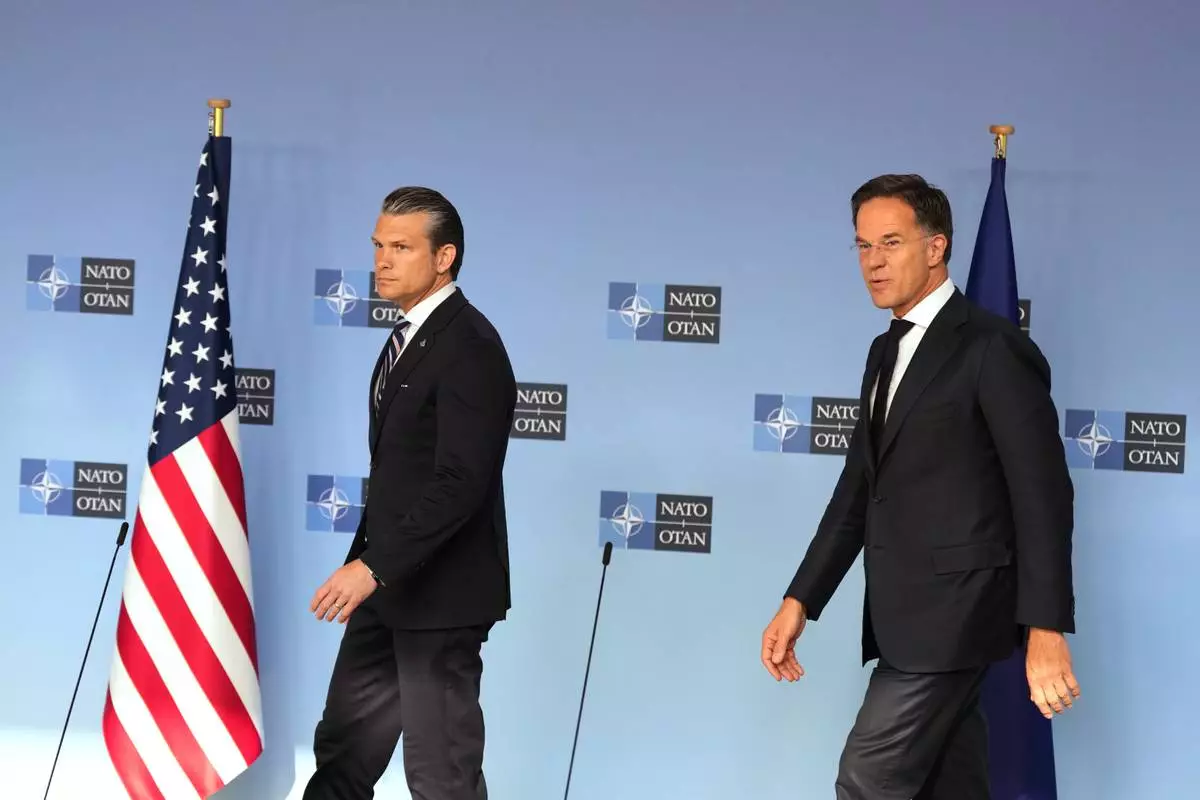
United States Defense Secretary Pete Hegseth, left, and NATO Secretary General Mark Rutte arrive for a media conference during a meeting of NATO defense ministers at NATO headquarters in Brussels, Thursday, June 18, 2026. (AP Photo/Virginia Mayo)
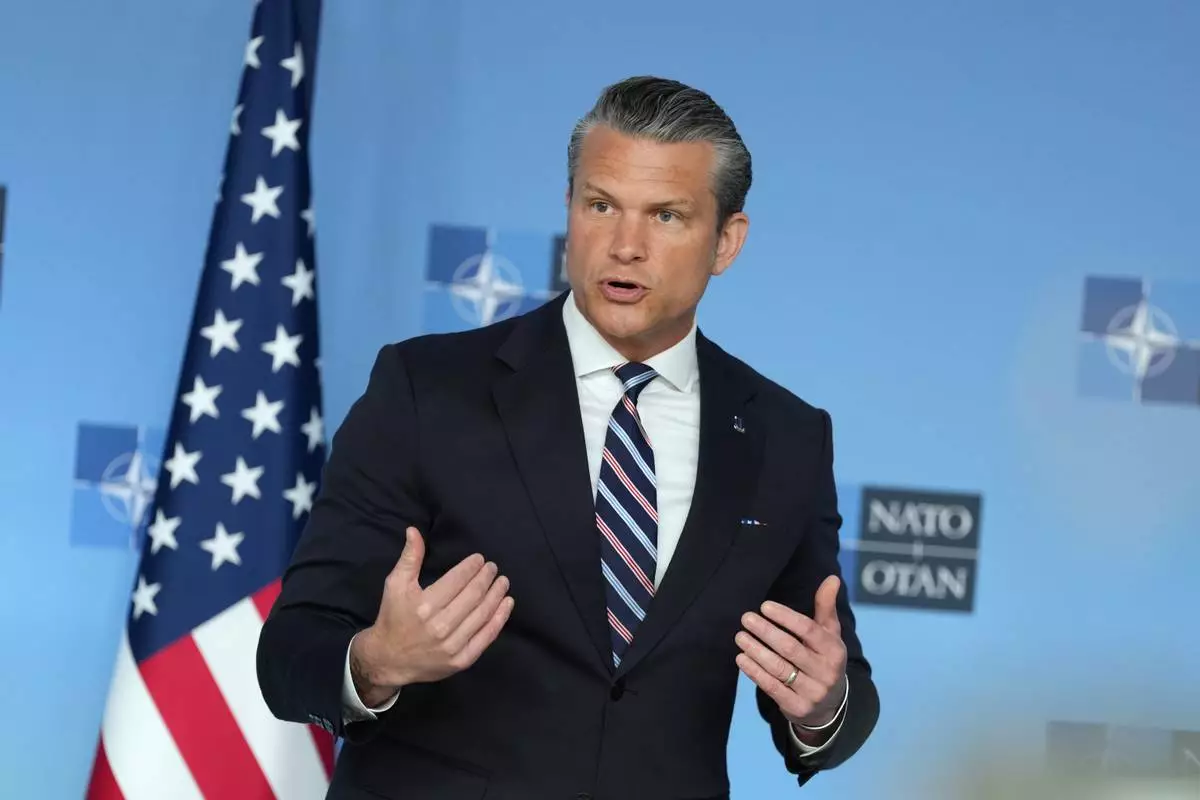
United States Defense Secretary Pete Hegseth speaks during a press statement on arrival for a meeting of NATO defense ministers at NATO headquarters in Brussels, Thursday, June 18, 2026. (AP Photo/Virginia Mayo)