INGLEWOOD, Calif. (AP) — Some teams at this year's World Cup have blamed FIFA's new hydration breaks for killing momentum.
Switzerland used the break to seize it.
Click to Gallery
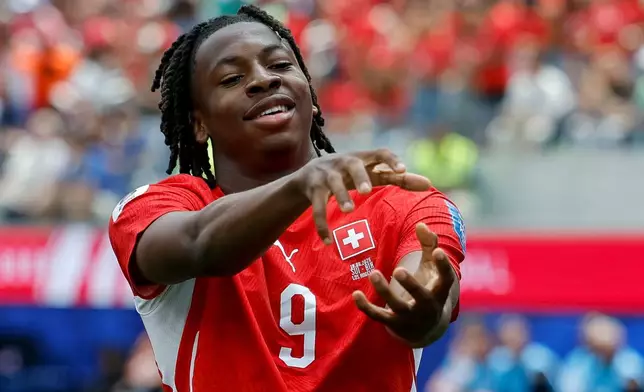
Switzerland's Johan Manzambi celebrates after scoring the opening goal against Bosnia during the World Cup Group B soccer match in Inglewood, Calif., near Los Angeles, Thursday, June 18, 2026. (Peter Klaunzer/Keystone via AP)

Switzerland's Michel Aebischer, left, and Bosnia's Kerim Alajbegovic eye the ball during the World Cup Group B soccer match between Switzerland and Bosnia in Inglewood, Calif., near Los Angeles, Thursday, June 18, 2026. (AP Photo/Mark J. Terrill)
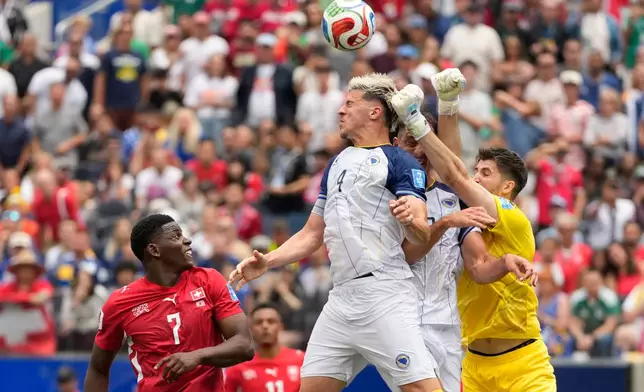
Bosnia goalkeeper Nikola Vasilj, right, clears the ball during the World Cup Group B soccer match between Switzerland and Bosnia in Inglewood, Calif., near Los Angeles, Thursday, June 18, 2026. (AP Photo/Andre Penner)
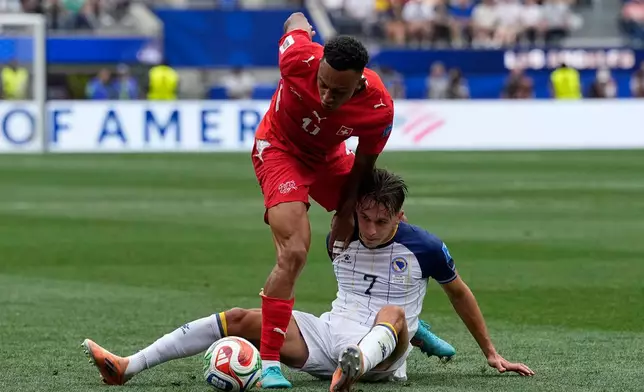
Switzerland's Dan Ndoye (11) battles for the ball with Bosnia's Amar Dedic (7), right, during the World Cup Group B soccer match between Switzerland and Bosnia in Inglewood, Calif, near Los Angeles, Thursday, June 18, 2026. (AP Photo/Gregory Bull)
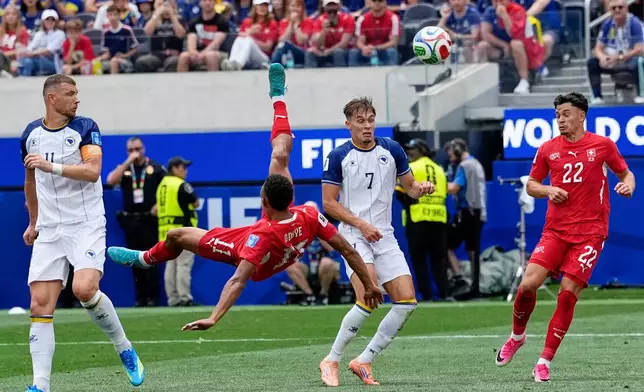
Switzerland's Dan Ndoye (11) attemps an overhead kick during the World Cup Group B soccer match between Switzerland and Bosnia in Inglewood, Calif, near Los Angeles, Thursday, June 18, 2026. (AP Photo/Gregory Bull)
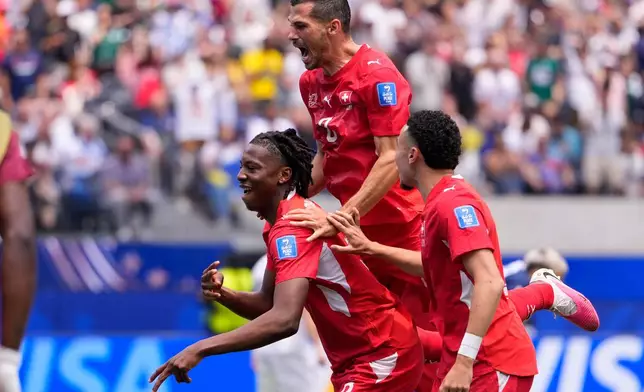
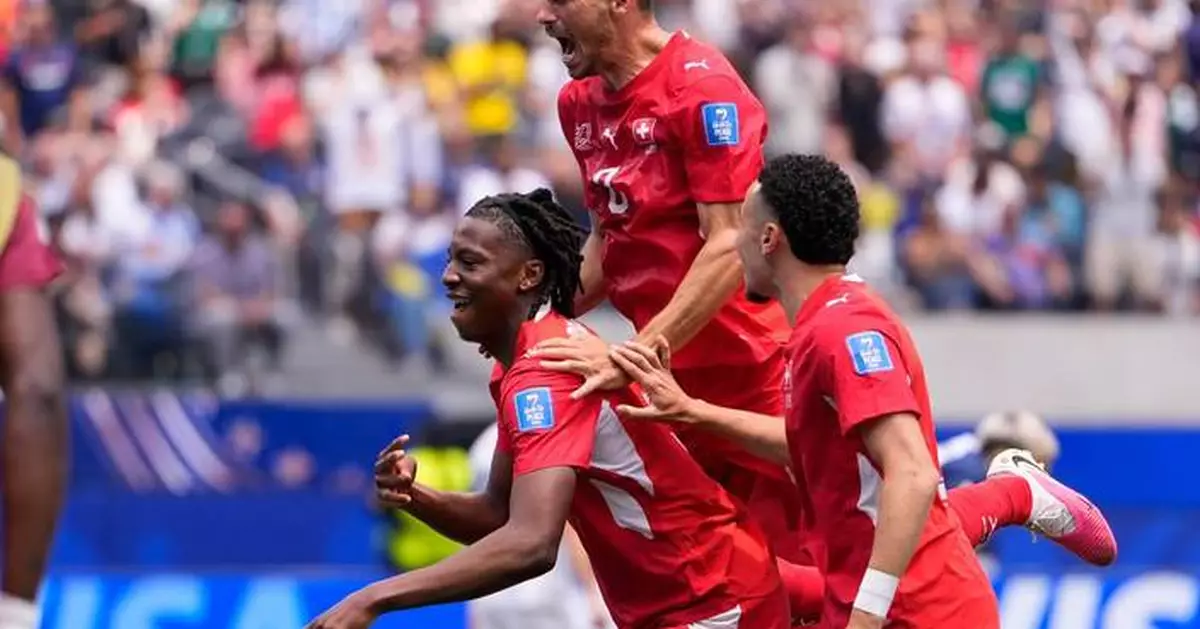
Switzerland's Johan Manzambi, left, celebrates with teammates after scoring the opening goal against Bosnia during the World Cup Group B soccer match in Inglewood, Calif., near Los Angeles, Thursday, June 18, 2026. (AP Photo/Mark J. Terrill)
Coach Murat Yakin said he timed a triple substitution of speedy players for the second-half pause Thursday, betting that plucky Bosnia-Herzegovina couldn't handle an abrupt change of pace in what had been a nervy, scoreless match.
Johan Manzambi and Rubén Vargas made their coach look awfully clever while they led a spectacular barrage of goals that put the Swiss in control of the game and atop their group.
Manzambi scored his first World Cup goal on an outstanding volley in the 74th minute, and Switzerland erupted late for a 4-1 victory over Bosnia.
Despite controlling possession deep into the second half, Switzerland couldn't break through against the Dragons until Yakin used the FIFA-mandated pause to turbo-charge its attack with the 20-year-old Manzambi and the dynamic Vargas. Both substitutes immediately altered the tempo, and both played roles in multiple goals while Bosnia went down to 10 men.
“It was very important that after the second hydration break, we would change a few things, because then the opponent can’t react immediately,” Yakin said through an interpreter. “Maybe that was the edge we had. We brought in very fast players, and our opponent couldn’t run (with them), and it opened up gaps on the edge. That was my strategy. I waited until the break.”
Vargas scored in the 84th minute shortly after Tarik Muharemovic was sent off for a dangerous tackle. Manzambi scored again in the 90th on a pass from Vargas, and captain Granit Xhaka converted from the penalty spot with the final kick of the game in stoppage time.
Switzerland opened the World Cup with a disappointing 1-1 draw with Qatar last week, stoking concern about the team's mental state. The Swiss then struggled to get loose from the Dragons, who were unbeaten in their last nine competitive matches.
Backed by tens of thousands of raucous fans in the Los Angeles area, Bosnia capably hung with Switzerland into the second half — until the hydration break led to a moment of brilliance from Manzambi, a 20-year-old Geneva native who plays for German club Freiburg.
“This is probably the best moment of my career so far,” Manzambi said. “We knew we didn’t start the match in the best way, but we had to be patient. We know we’re a good team, and we showed it.”
Three minutes after Manzambi replaced standout winger Dan Ndoye, he jumped and connected perfectly on Amar Memic’s attempted clearing header. The volley set off a wild celebration in the nervous Swiss sections of SoFi Stadium.
“He’s a boy who learned how to play football on the streets, but on defense he also has a lot of discipline,” Yakin said. “He still needs to learn how to be more structured, but we are making progress. We try to give him a lot of freedom to play, and he handles it very well.”
Substitute Ermin Mahmic scored in second-half injury time for Bosnia, which still has a legitimate chance of reaching the knockout stage of only its second World Cup. Mahmic’s vicious goal in traffic salvaged some good feeling before a decisive showdown with Qatar next week.
“Maybe our start wasn’t that good, but from (first) cooling break until the goal, we were the better team,” Bosnia coach Sergej Barbarez said. “We had two or three excellent chances which should have ended in a goal. ... This is the first match we've lost in a while, and it is hurtful. It's quite painful, but we know that if we win the next game, we have an excellent chance of going forward in the tournament.”
Four minutes after Muharemovic was sent off for taking down striker Breel Embolo one step outside the penalty area, Embolo got the ball from Manzambi and slipped a pass across the front to Vargas for a no-doubt goal.
Xhaka then found Vargas in deep for another pass to Manzambi, who finished with aplomb.
Captain Edin Dzeko started and played 63 minutes for Bosnia, becoming the fourth outfield player to start at a World Cup in his 40s — a group joined by Luka Modric and Cristiano Ronaldo on Wednesday. Barbarez said Dzeko didn't play in the World Cup opener last week because he wasn't fully fit.
AP World Cup: https://apnews.com/FIFA-World-Cup
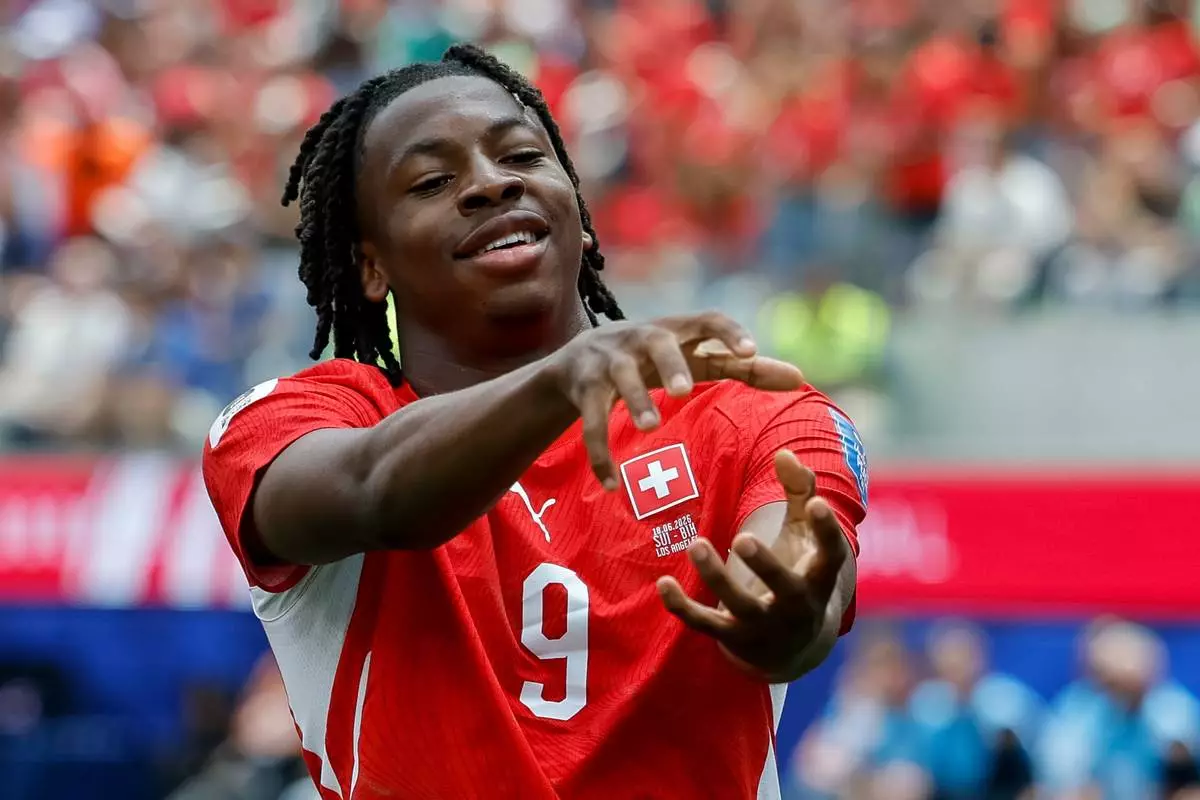
Switzerland's Johan Manzambi celebrates after scoring the opening goal against Bosnia during the World Cup Group B soccer match in Inglewood, Calif., near Los Angeles, Thursday, June 18, 2026. (Peter Klaunzer/Keystone via AP)
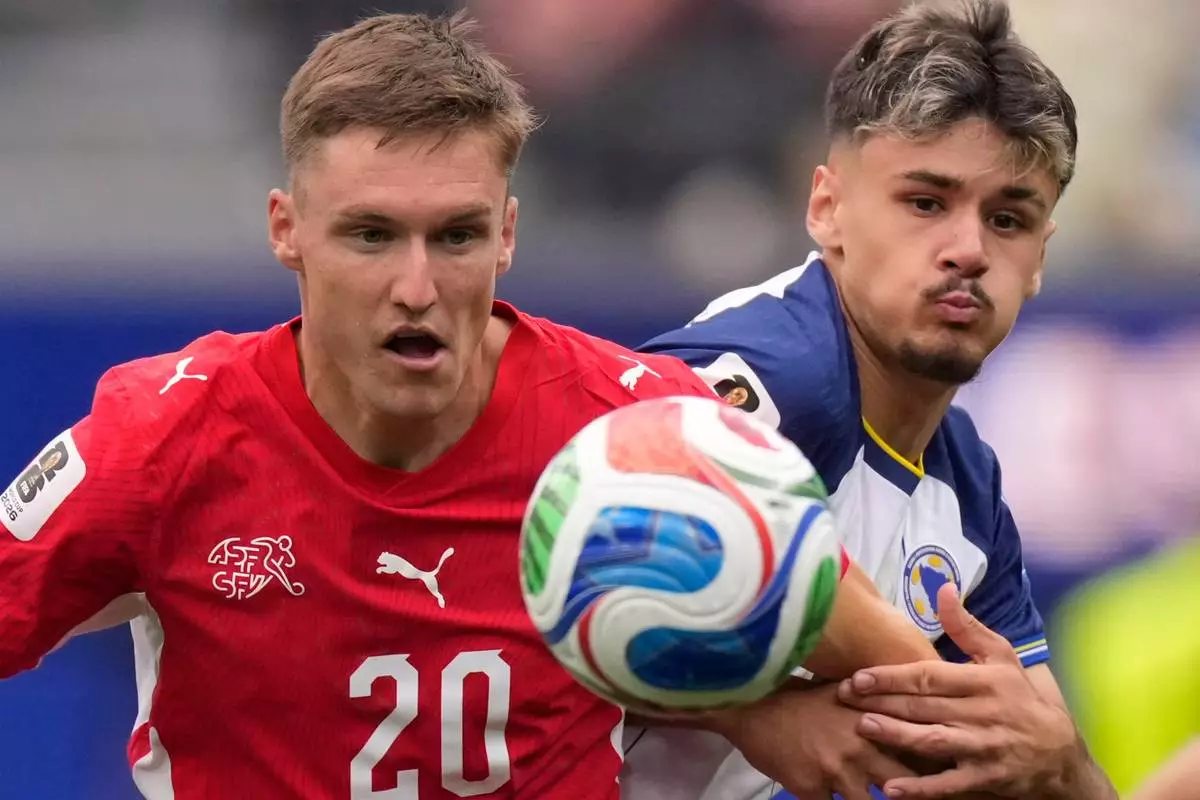
Switzerland's Michel Aebischer, left, and Bosnia's Kerim Alajbegovic eye the ball during the World Cup Group B soccer match between Switzerland and Bosnia in Inglewood, Calif., near Los Angeles, Thursday, June 18, 2026. (AP Photo/Mark J. Terrill)
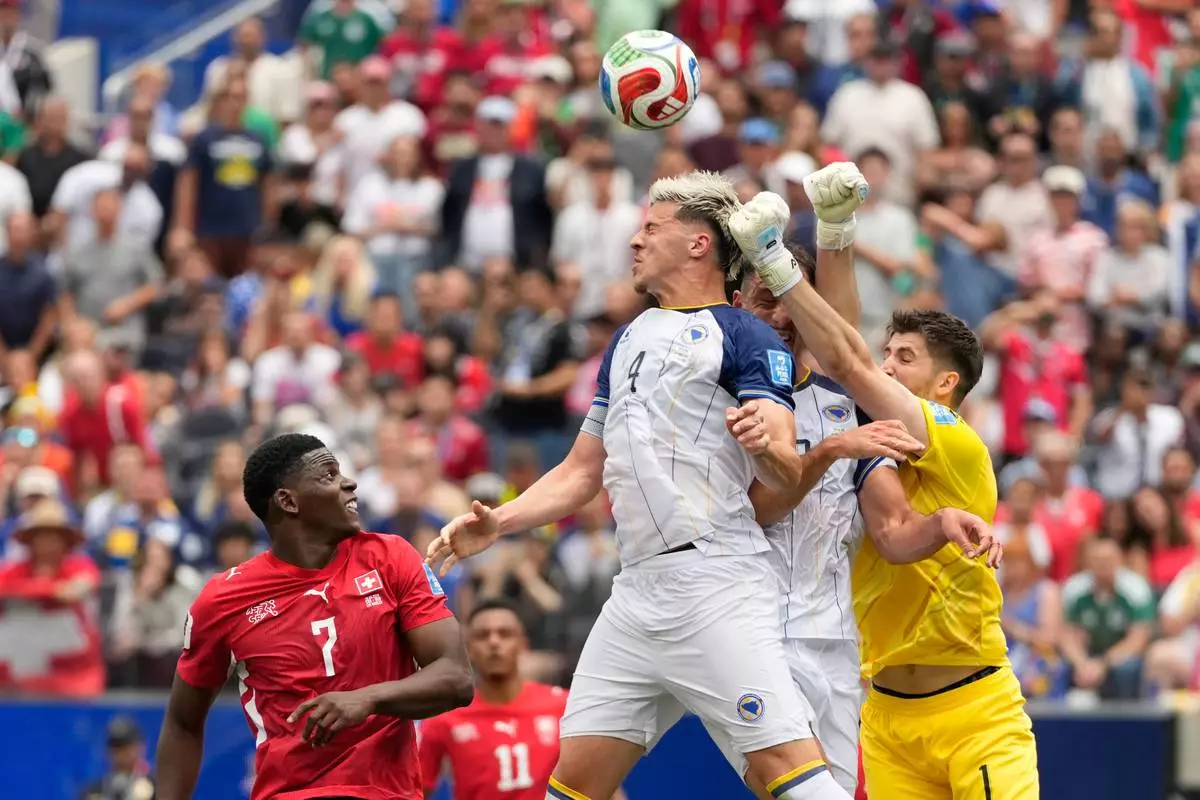
Bosnia goalkeeper Nikola Vasilj, right, clears the ball during the World Cup Group B soccer match between Switzerland and Bosnia in Inglewood, Calif., near Los Angeles, Thursday, June 18, 2026. (AP Photo/Andre Penner)
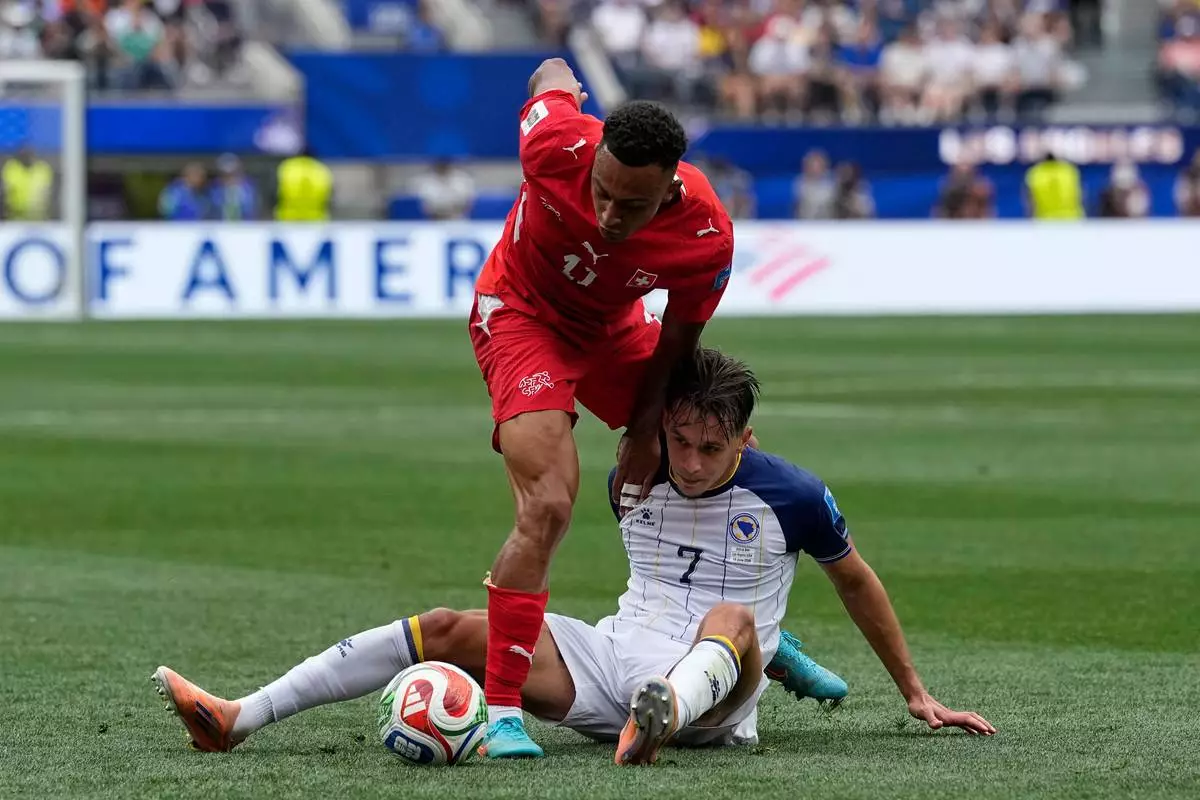
Switzerland's Dan Ndoye (11) battles for the ball with Bosnia's Amar Dedic (7), right, during the World Cup Group B soccer match between Switzerland and Bosnia in Inglewood, Calif, near Los Angeles, Thursday, June 18, 2026. (AP Photo/Gregory Bull)
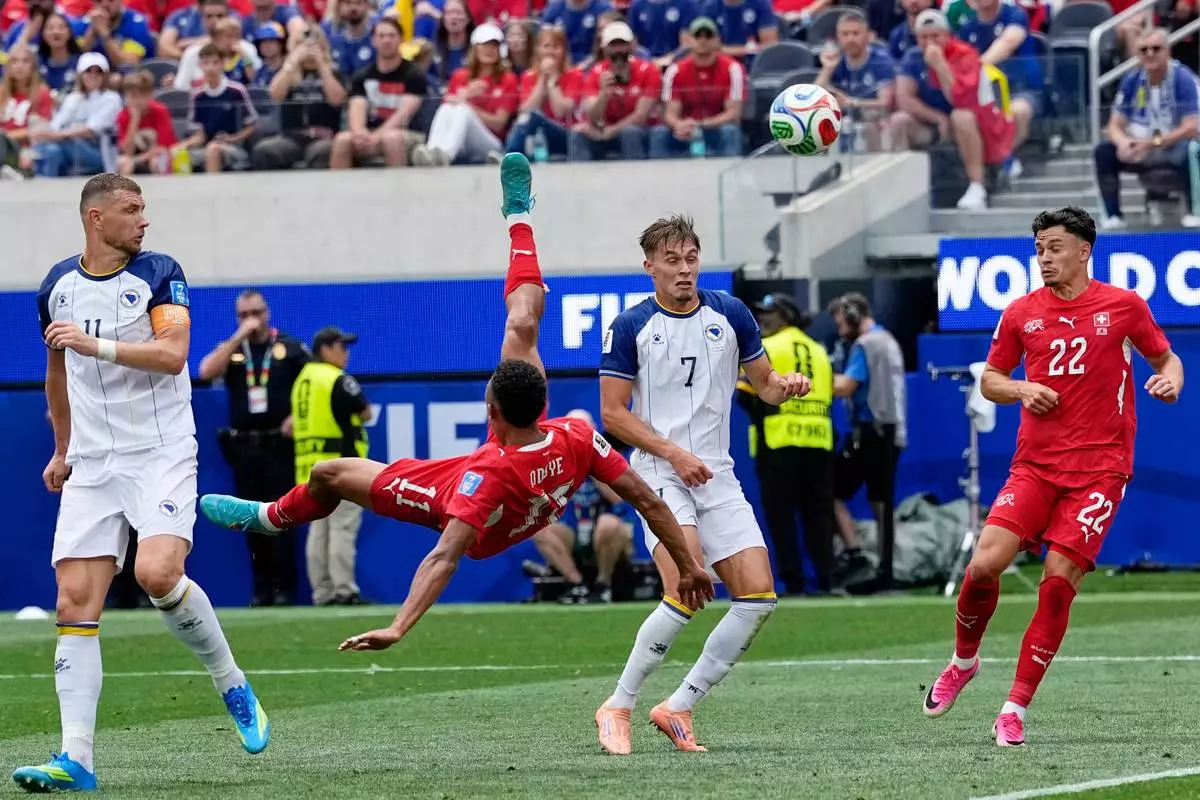
Switzerland's Dan Ndoye (11) attemps an overhead kick during the World Cup Group B soccer match between Switzerland and Bosnia in Inglewood, Calif, near Los Angeles, Thursday, June 18, 2026. (AP Photo/Gregory Bull)
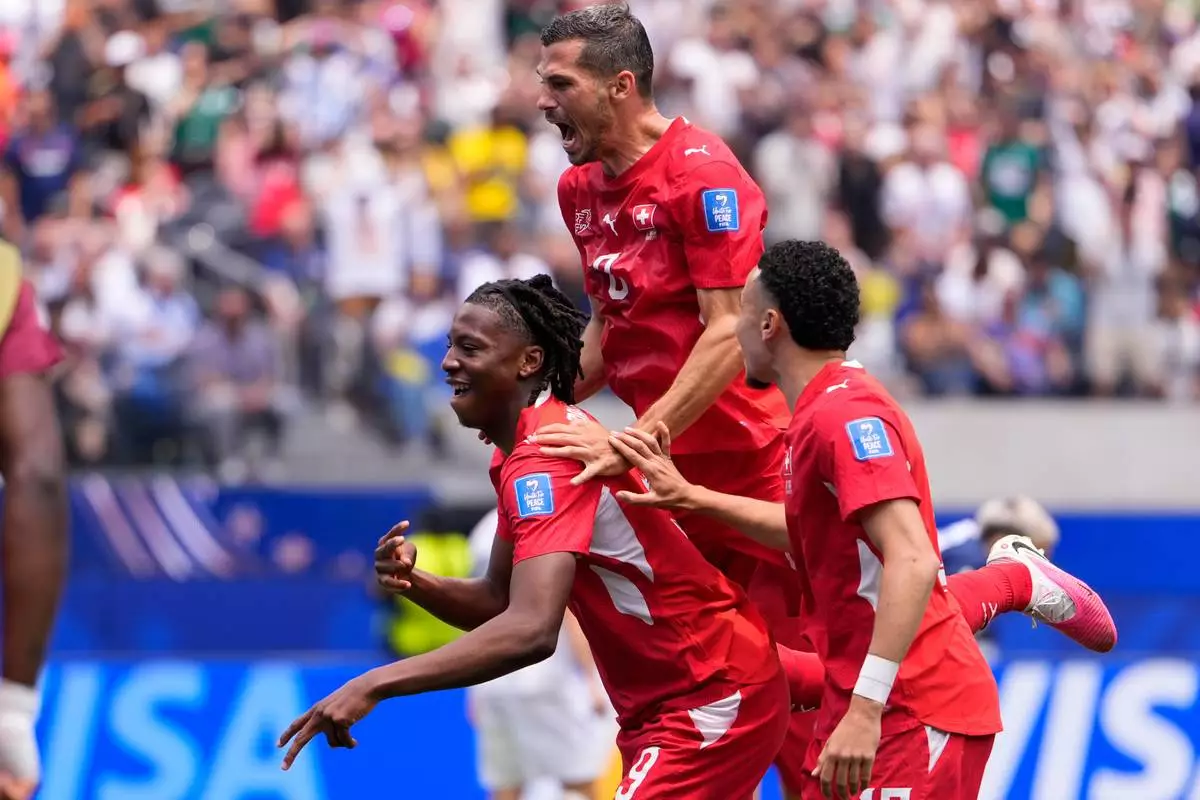
Switzerland's Johan Manzambi, left, celebrates with teammates after scoring the opening goal against Bosnia during the World Cup Group B soccer match in Inglewood, Calif., near Los Angeles, Thursday, June 18, 2026. (AP Photo/Mark J. Terrill)