The partnership between coastal province of Fujian and landlocked Ningxia Hui Autonomous Region has helped to develop a thriving fishery industry on Ningxia's saline-alkali land, serving as a successful example of coordinated development between China's eastern and western regions.
Fujian and Ningxia are marking the 30th anniversary of their pairing-up program, an initiative established in 1996 to boost common development through shared resources and expertise.
In Helan County of Ningxia, a large-scale aquatic products base has been established with Fujian's expertise. What was once barren saline-alkali land unsuitable for traditional crops is now home to thriving seafood farming.
More than 25,000 sea bass are currently being raised in a single greenhouse in the aquatic products base, far from the sea.
Researchers at Jimei University in Fujian played a key role by developing effective methods to adapt Ningxia's saline-alkali water for marine fish farming. By carefully balancing ions, they created optimal water conditions suitable for sea bass.
Apart from water condition, long-distance transportation of fish fry from Fujian to Ningxia -- over 2,000 kilometers -- presented another major challenge.
After extensive tests and trials, the team in Fujian established an effective protocol, including strict control of water temperature, salinity, and fish-to-water ratio, achieving a remarkable 95 percent survival rate.
Supported by Fujian's expertise, Ningxia has leveraged its local advantages to develop fishery industry. The greenhouse system of the base protects the fish from wind, sand, and low temperatures, enabling year-round production.
The collaboration is now focusing on higher-value aquatic species to further boost economic returns. In addition to sea bass, researchers have successfully introduced varieties such as tiger shrimp, vannamei shrimp, yellowtail mullet, and threadfin from Fujian to Ningxia. These efforts aim to further boost industry value and increase local farmers' incomes.
Through 30 years of Fujian-Ningxia collaboration, the two regions have achieved mutual benefit, win-win outcomes and common development.

Fujian-Ningxia partnership drives fishery development in saline-alkali land
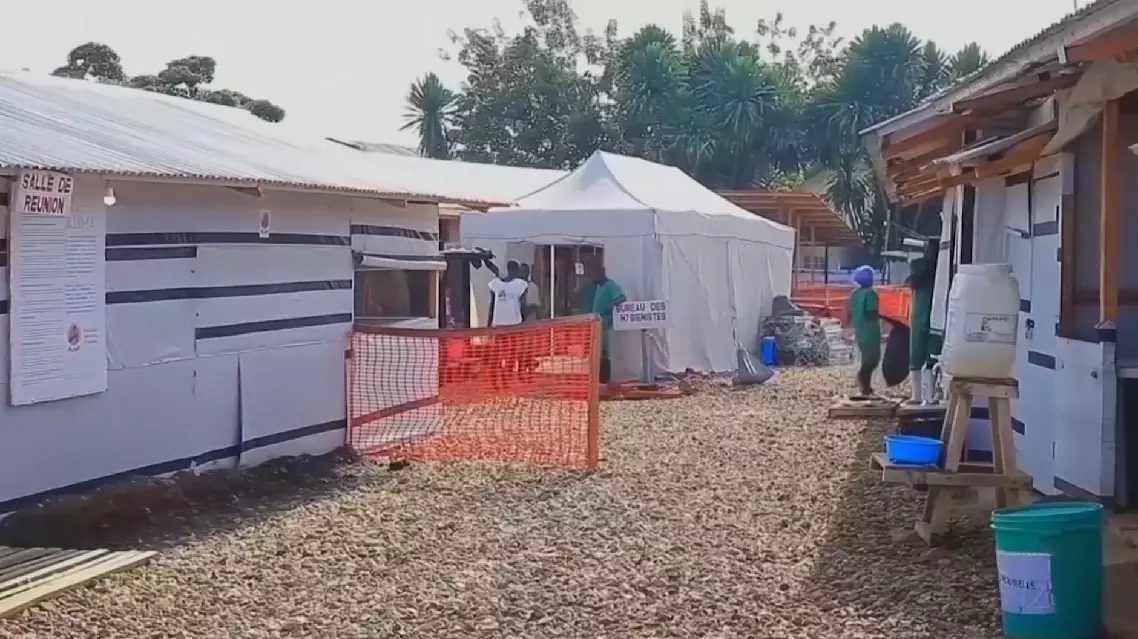
The number of confirmed Ebola cases in the Democratic Republic of the Congo (DR Congo) had risen to 896, including 232 deaths, the country's public health authorities said Thursday.
Twenty-one new confirmed cases, including six deaths, were reported Wednesday in the eastern provinces of Ituri and North Kivu, the health ministry said in its daily update.
The outbreak, caused by the Bundibugyo ebolavirus, has affected 33 health zones across three eastern provinces --Ituri, North Kivu and South Kivu.
Health authorities said 383 patients were either in isolation or hospitalized, while 78 patients had recovered, including 11 newly declared recoveries following negative control tests.
A total of 151 suspected cases, including 35 deaths, were also reported on Wednesday. Authorities said 6,367 contacts were under follow-up across the three provinces, of whom 4,525 were reached during the reporting period, representing a follow-up rate of 71.1 percent.
The report said the number of confirmed cases has continued to rise week by week, indicating ongoing community transmission. It also warned that rapid geographic spread remained possible if public health measures were not implemented swiftly.
The current outbreak, DR Congo's 17th Ebola outbreak, was officially declared on May 15.
The ongoing outbreak of the Bundibugyo strain of Ebola virus originated from a new spillover event from wildlife to humans rather than long-term latent transmission among the population, a joint scientific team from DR Congo and Uganda said on Thursday.
Genetic sequencing of the virus, conducted jointly by the Uganda National Health Laboratories and DR Congo's National Institute of Biomedical Research, confirmed that the current strain differs significantly from the genotypes responsible for the 2007 outbreak in Uganda and the 2012 outbreak in DR Congo.
The findings rule out the possibility that the current epidemic was triggered by a residual virus lurking dormant in human survivors from past outbreaks.
Researchers urged authorities to deepen cross-border epidemic prevention and control between DR Congo and Uganda, saying that cross-border cooperation is essential for tracking the transmission, reinforcing border screenings, and containing the wider spread of the virus.
DR Congo's Ebola cases rise to 896: health authorities