JERUSALEM (AP) — An Israeli man who said he was sexually abused while he was held hostage in the Gaza Strip is hoping to use his voice to help empower victims who have suffered similar assaults, including in conflict zones, he said in remarks ahead of the International Day for the Elimination of Sexual Violence in Conflict.
Guy Gilboa-Dalal, 25, spent two years in captivity in Gaza after Palestinian militants abducted him and 250 others during the Hamas-led attacks in Israel on Oct. 7, 2023.
“I feel like I have a mission to spread to the world, to use my voice and empower other victims of sexual assaults,” he said Sunday in a conversation with Israel's first lady Michal Herzog in Jerusalem. “I want people who have been through those experiences to know that they’re not alone.”
The Associated Press does not typically identify people who say they have been sexually assaulted unless they come forward publicly.
According to the United Nations, conflict-related sexual violence is on the rise worldwide, with cases more than doubling in 2025, as state and non-state actors increasingly use it as a tactic of war, torture and political repression.
In Israel and the Palestinian territories, the use of sexual violence as part of the conflict has become highly politicized since the Oct. 7 attacks and the start of the war in Gaza. Rights groups and the United Nations have investigated and documented cases beginning with allegations of widespread rape during the initial Hamas attacks.
The U.N. also said last month that it has verified multiple incidents of conflict-related sexual violence, "including as a form of torture” perpetrated by Israeli military and security forces against Palestinian men and women in Gaza and the West Bank, charges Israel denies.
This year, for the first time, the U.N. included Israel’s armed and security forces on a list of parties “credibly suspected of committing or being responsible for patterns of rape or other forms of sexual violence in situations of armed conflict.” Hamas had previously been on the list.
In 2024, the U.N.'s special representative on sexual violence in conflict, Pramila Patten, said she “found clear and convincing information” that some hostages were subjected to such abuse, including rape and “sexualized torture.” But in a recent report, the U.N. said it was “not able to verify” public allegations made by former hostages accusing their Palestinian captors of abuse. It blamed the lack of verification on what it said was Israel’s denial for U.N. groups to carry out investigations.
On Sunday, Gilboa-Dalal recounted again the details of the abuse he said he faced and said he was frustrated by the U.N. In a short, separate interview following the conversation with Herzog, Gilboa-Dalal said: “They have no right to say what happened or what didn’t happen, I was there, not them.”
At least six of the released hostages have publicly shared experiences of sexual assault while in captivity. Gilboa-Dalal first spoke of the attacks in an interview with Israeli media last November, about a month after he was released.
Gilboa-Dalal said his abuse took place over two separate assaults, over a year after his captivity began. He said that he froze as it happened and was unable to resist, terrified and physically weakened after spending most of his time in a narrow cell, deep underground, with three other hostages. He said they were forcibly starved or given rotten food, and denied the opportunity to move around or bathe.
In both instances, Gilboa-Dalal said, he was naked and blindfolded. He said the captor threatened to kill him if he ever spoke about what happened, beating him and holding a knife to his throat and a gun to his head.
“He could do whatever he wanted. I was so weak, and he was so strong,” Gilboa-Dalal said. Because he and the other hostages were constantly monitored, he said, he didn’t tell either of them until just before one was released during a temporary ceasefire in Feb. 2025.
Now, he says he is trying to heal and spend time with family. He is also writing a book and an anime script about his experiences.
He said he worries that other sexual abuse victims are likewise isolated and unable to speak about their abuse. “They may think, ‘maybe it’s my fault maybe I could have done something different,’” he said. “But it wasn’t my fault and it wasn’t any of the victims’ fault.”
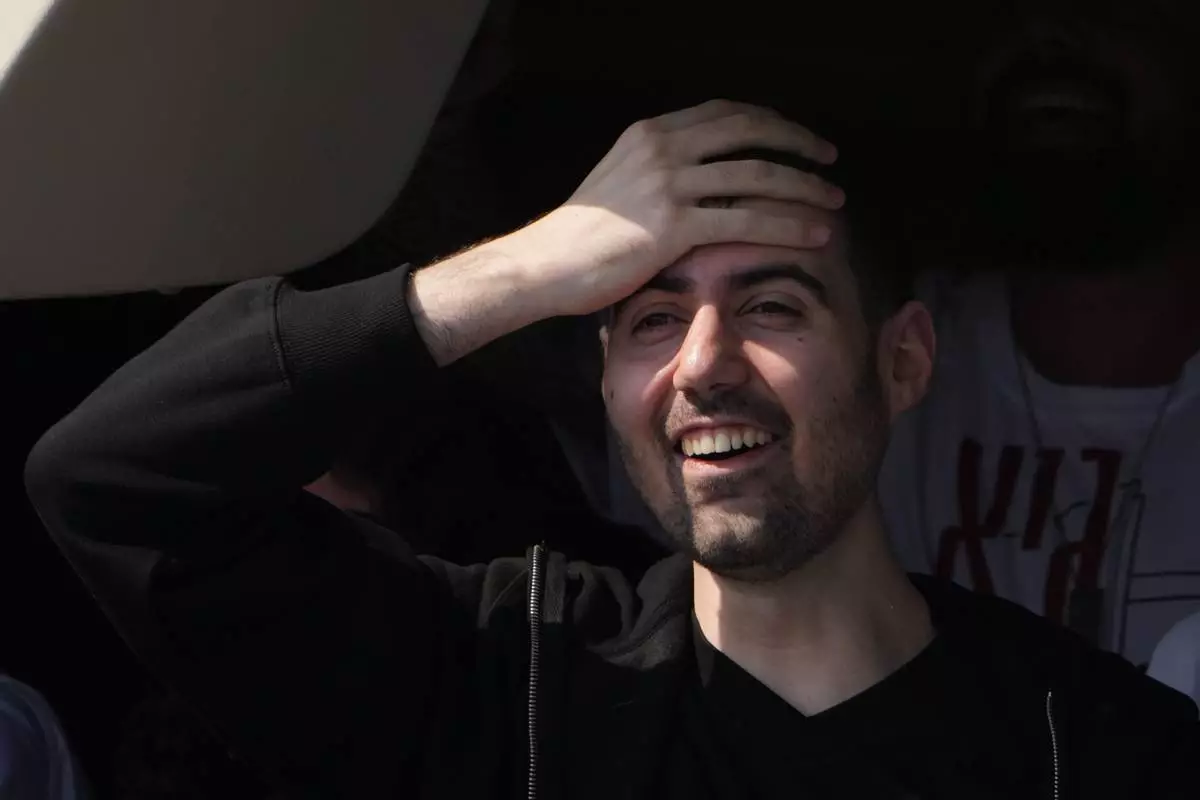
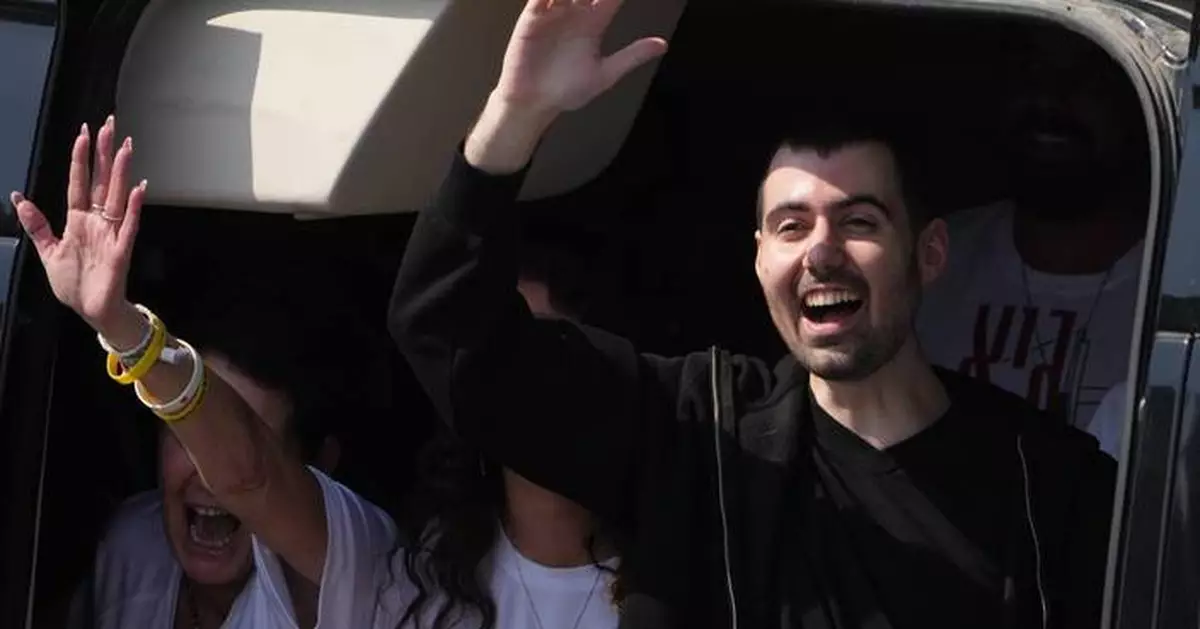
FILE - Freed Israeli hostage Guy Gilboa-Dalal gestures from a van as he arrives at Beilinson hospital in Petah Tikva, Israel, after he was released from Hamas captivity in the Gaza Stripl, Monday, Oct. 13, 2025. (AP Photo/Ariel Schalit, File)
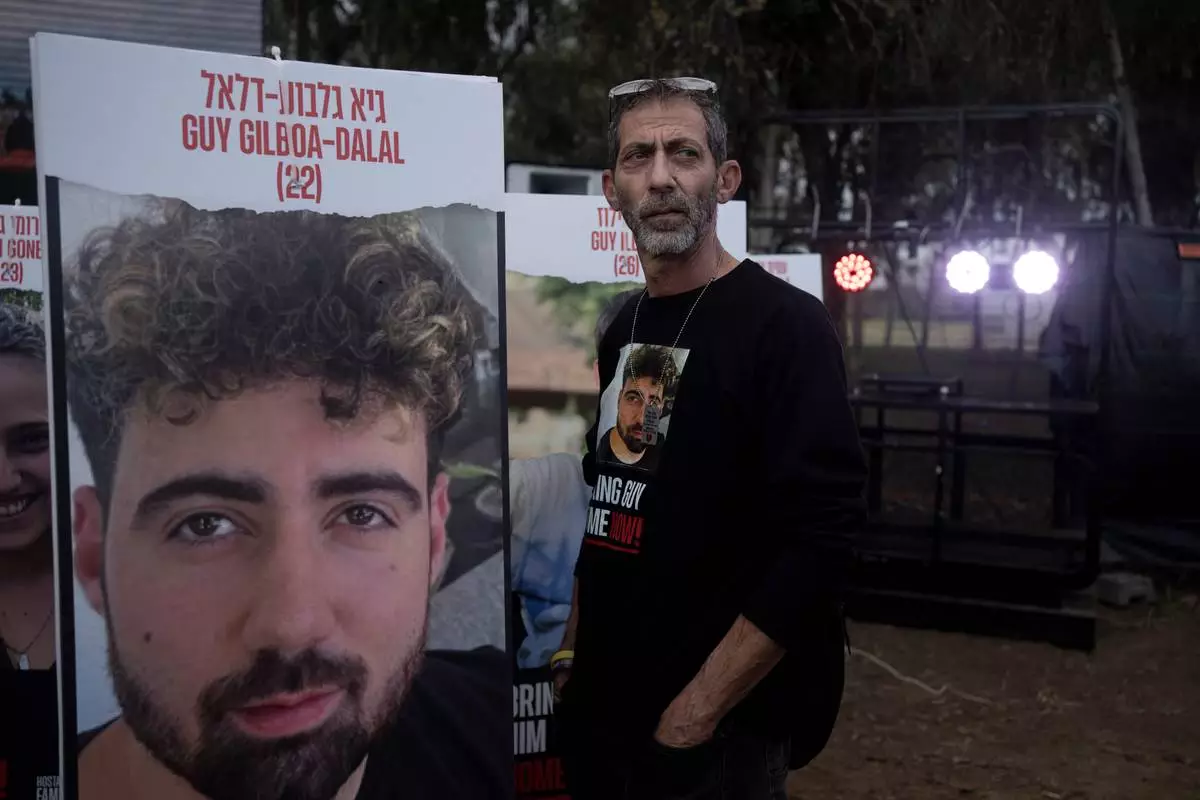
FILE - Ilan Dalal, father of Guy Gilboa-Dalal, who was kidnapped on Oct. 7 in a cross-border attack by Hamas at the Nova music festival, stands next to a photo of his son during a press conference at the site in Re'im, southern Israel, Friday, Jan. 5, 2024. (AP Photo/Maya Alleruzzo, File)
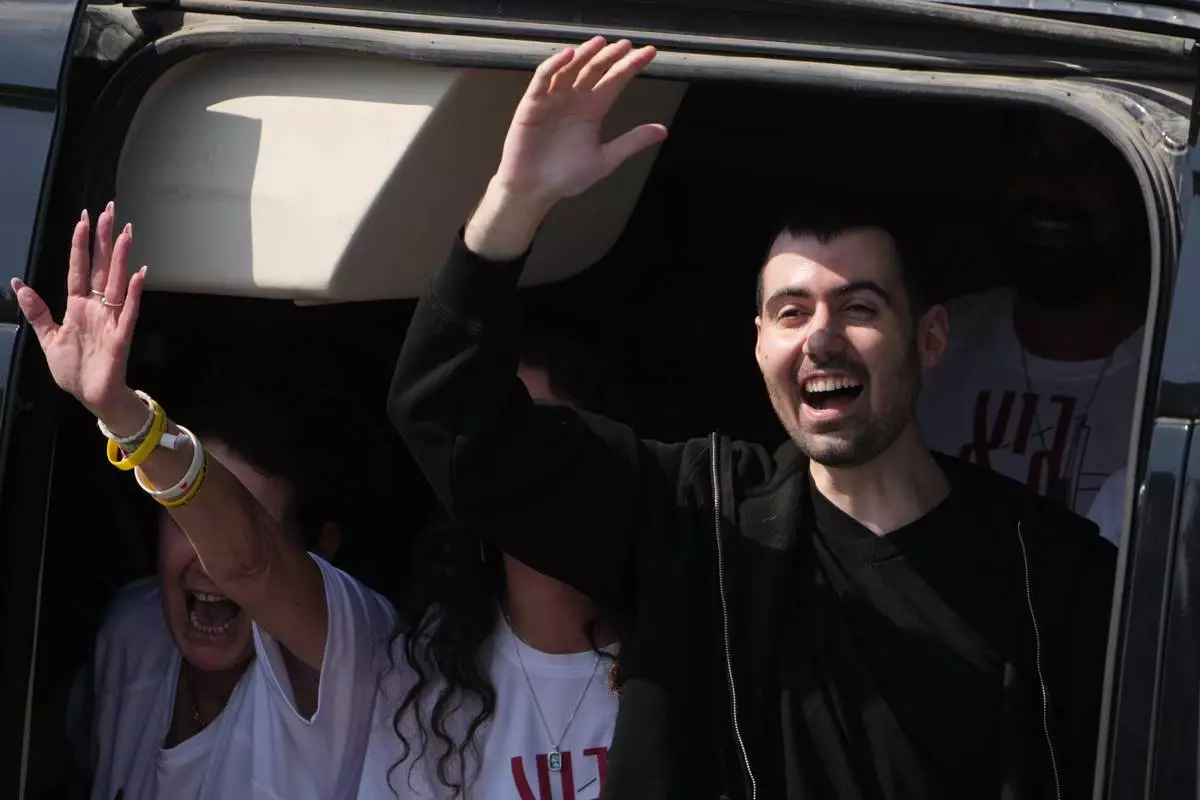
FILE - Freed Israeli hostage Guy Gilboa-Dalal gestures from a van as he arrives at Beilinson hospital in Petah Tikva, Israel, after he was released from Hamas captivity in the Gaza Stripl, Monday, Oct. 13, 2025. (AP Photo/Ariel Schalit, File)
MIAMI (AP) — A photo of Vinícius Júnior celebrating a goal with one fist in the air was mounted near the entrance of the art exhibition, right next to an acrylic piece of a woman’s dreadlocks suspended in air as she heads a soccer ball.
A replica of the FIFA World Cup trophy was encased in glass nearby, surrounded by images, paintings and flags that document generations of African soccer dreams and stories. All of it is part of an exhibition celebrating Africa’s deep connection to soccer during the World Cup.
“This is what art is about," said Alfonso D. Brooks, founder of AfriKin, a foundation showcasing African and diaspora art. “Art has always been a platform to foster peace and understanding and give voice to those that can’t speak for themselves. “This is the necessary part we feel the need to do with AfriKin.”
Brooks — a longtime sound engineer turned art curator — spent about six months putting together the exhibition, titled “Art and the Beautiful Game: Africa on the World Stage,” which opened in Miami ahead of the start of the World Cup. The collection by more than 50 artists from 25 nations traces soccer's role in the continent's history, while celebrating some of the game's most influential figures from the late Pelé to French star Kylian Mbappé.
All 10 African nations competing in the World Cup are represented and celebrated, with special tributes to Cape Verde. The small nation off the western coast of Africa pulled off one of the most stunning upsets of the tournament with a draw against Spain in its World Cup debut. AfriKin plans to hold a ceremony honoring Cape Verde on Saturday night before it faces Uruguay in a group stage match in Miami on Sunday.
With the World Cup bringing tens of thousands of fans to Miami, Brooks and participating artists wanted to carve out a space for the African community to gather and celebrate its culture throughout the tournament.
“Miami is a huge melting pot,” said Tasanee Durrett, a 31-year-old Orlando-based artist. “We have the Latin (residents), we have Haitian and the Caribbean, we have so many different influences. And so now that we have this voice, we have this platform, why not speak to it?”
Brooks was born in the Dutch Caribbean territory of St. Maarten and moved to Miami in 2008. His love for the game stems from its humble roots in Africa, where he remembers young children kicking around soccer balls — or any circular objects they could find — in school corridors, living rooms or concrete streets.
"This is where you get the term ‘the beautiful game,’” he said, “because it required nothing but a beautiful spirit.”
The exhibition reflects that simplicity with windows into the intimacy of those neighborhood pitches, as well as nods to the global scale of the sport, which unites people of different backgrounds, races and languages.
Bamazi Talle, a Columbus-based artist from the West African nation Togo, tells that story through paintings of the calabash, a large, woody gourd that holds deep cultural significance in Africa. The fruit is used in meals or hardened to make bowls and vessels for carrying water and food, but it is also a cultural symbol of community and hospitality.
Talle paints the gourds floating against the flags of nations competing in the World Cup. For him, the history of the fruit coincides with the unifying spirit of the tournament.
“Calabash became one (thing) that united all of us,” Talle said. “And this cup, this World Cup is, I think, this celebration of all of us coming together.”
Durrett, another artist who is also a licensed architect, honors Black women in soccer with a pair of acrylic pieces, including one titled “A Beautiful Game” of the woman head butting the ball.
She began drawing people years ago as a therapeutic outlet and is passionate about highlighting underrepresented communities.
“I hope that they see the stories that are being told through the artists,” said Durrett, who does mostly canvas pieces in one single line. “And I hope they see themselves in these stories.”
Other nations like France, Belgium and England are also included in the exhibition in what Brooks calls “Hidden Africa.” He came up with the term to describe teams that include players of African heritage who were born or developed in European countries.
He hopes to show the African diaspora's links throughout tournament field, while also sparking conversations of identity, immigration and the many factors that can affect a player's choice in what country they represent.
“I’m not just showing a football and putting up some pretty pictures or goals,” Brooks said. “No, we want to have a story that people can actually come in, read and say, ‘Wow, I didn’t know this.’ People must learn from the exhibition.”
AP World Cup coverage: https://apnews.com/hub/fifa-world-cup
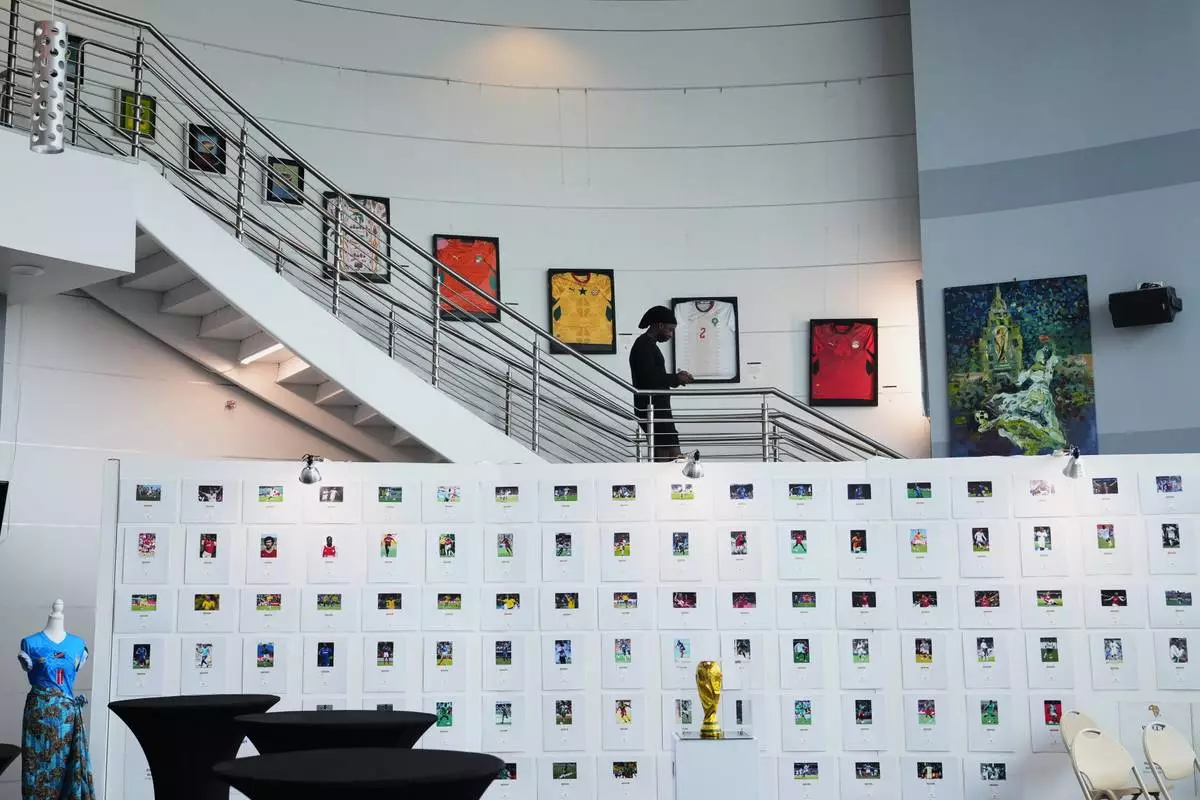
A person walks among artwork displayed at an exhibition, "Art and the Beautiful Game: Africa on the World Stage," on June 1, 2026, in North Miami, Fla. (AP Photo/Lynne Sladky)
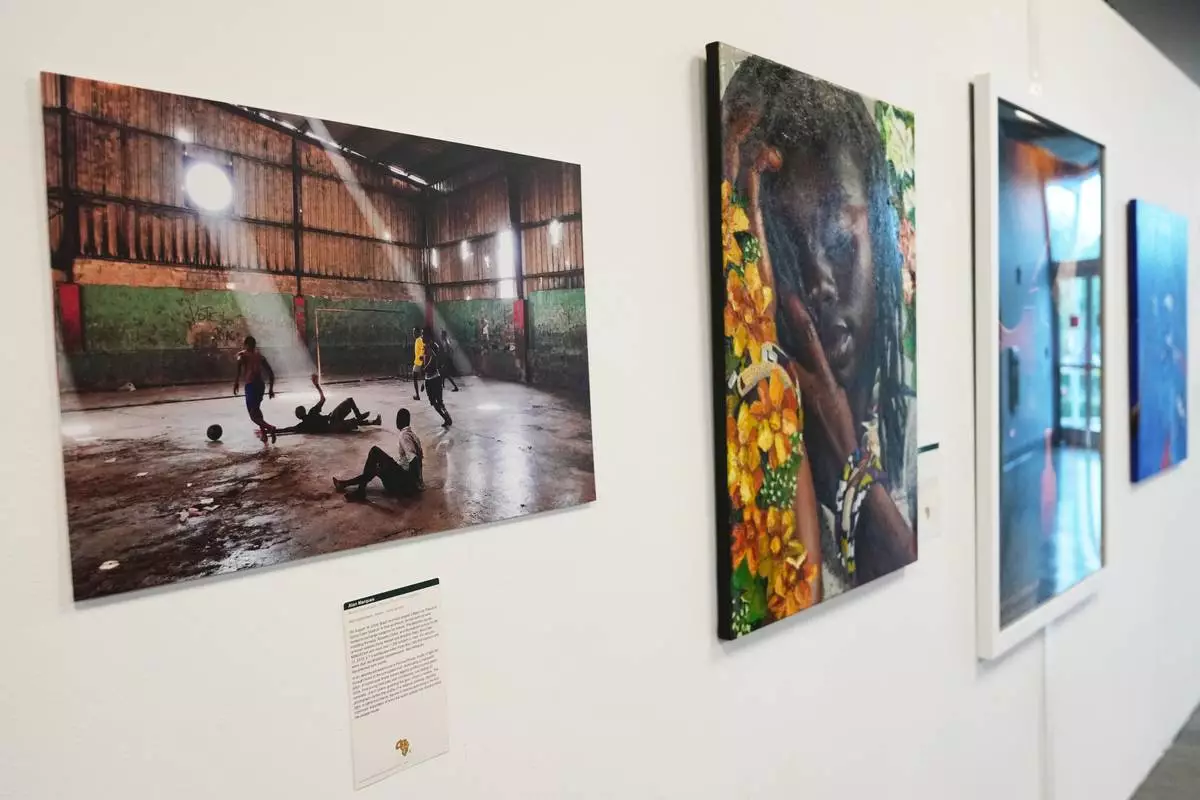
A photograph titled, "Boulos Warehouse," by photographer Alan Marques showing soccer players playing in a warehouse in Haiti is displayed in an exhibition, "Art and the Beautiful Game: Africa on the World Stage," on May 30, 2026, in North Miami, Fla. (AP Photo/Lynne Sladky)
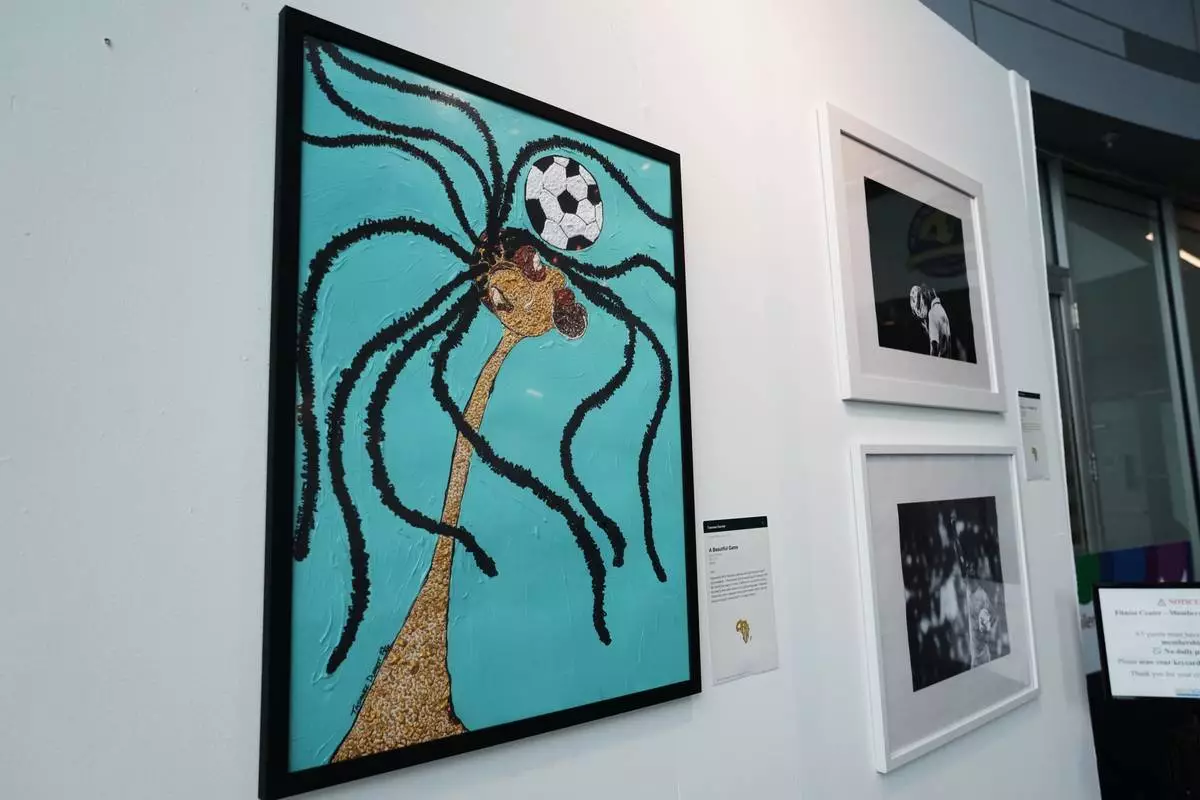
A painting of a woman heading a soccer ball titled, "A Beautiful Game," by artist Tasanee Durrett is displayed at an exhibition, "Art and the Beautiful Game: Africa on the World Stage," on June 1, 2026, in North Miami, Fla. (AP Photo/Lynne Sladky)
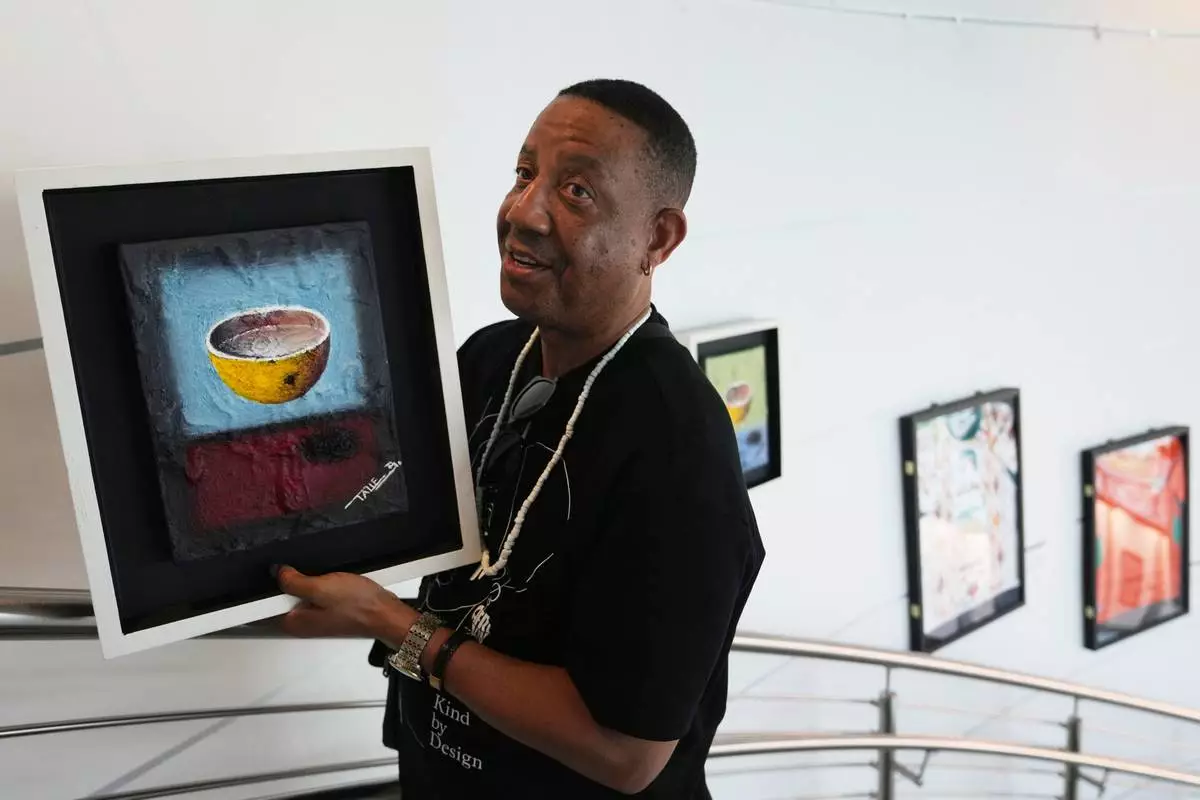
Alfonso D. Brooks, founder of AfriKin, holds a painting of a calabash by artist Bamazi Talle at an exhibition, "Art and the Beautiful Game: Africa on the World Stage," on May 30, 2026, in North Miami, Fla. (AP Photo/Lynne Sladky)
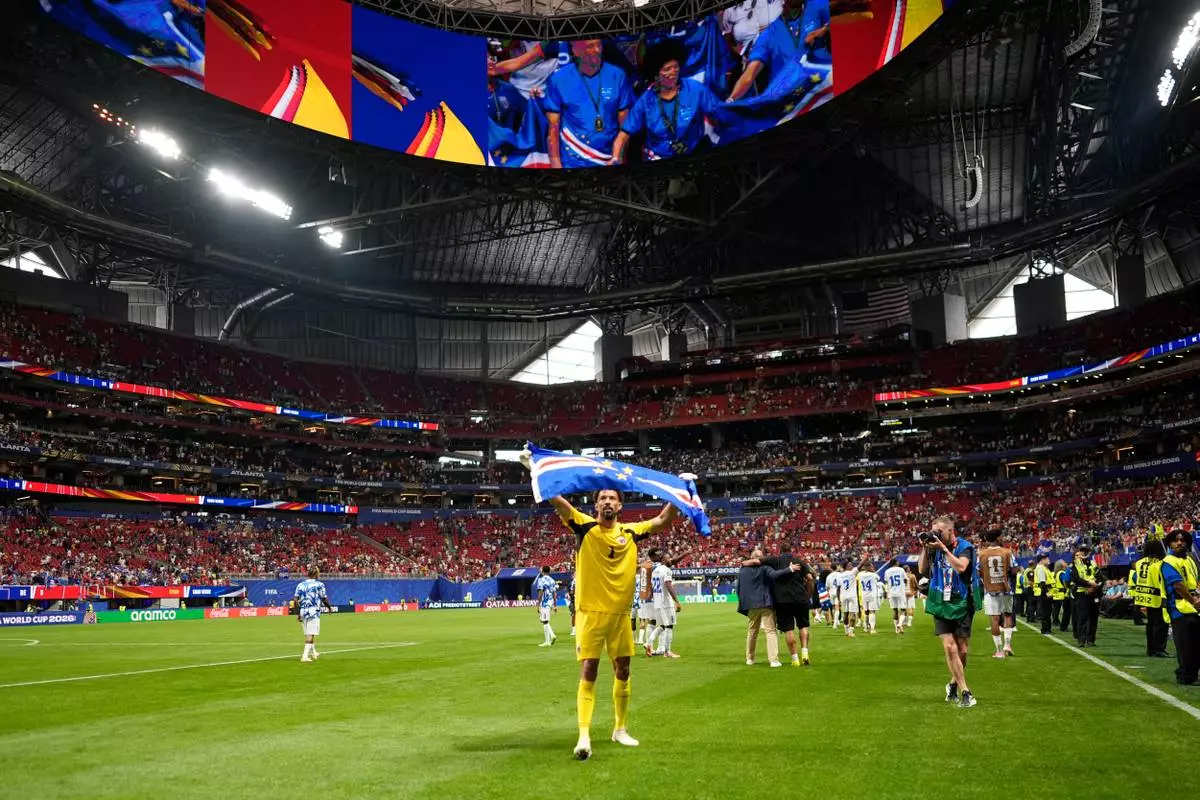
Cape Verde goalkeeper Vozinha celebrates as holds the flag of his country during the World Cup Group H soccer match between Spain and Cape Verde in Atlanta, Monday, June 15, 2026. (AP Photo/Mike Stewart)