Protesters gathered outside the Second Members' Office Building of the House of Representatives in Tokyo on Thursday, voicing strong opposition to the ruling coalition's push to revise Japan's war-renouncing constitution and expand military capabilities.
The protest came as the House of Representatives Commission on the Constitution passed a bill to revise the law on national referendums earlier in the day, clearing a procedural hurdle toward amending the constitution.
The bill was approved with support from the ruling coalition of the Liberal Democratic Party (LDP) and the Japan Innovation Party (JIP) as well as some opposition parties.
At the same commission meeting, representatives from various parties also held a discussion on revising Article 9 of the constitution, the so-called "peace clause" that renounces war and prohibits Japan from maintaining armed forces or otherwise creating the potential for war.
Japanese Prime Minister Sanae Takaichi's government aims to revise the country's three key security documents by the end of the year. Last week, the LDP approved a draft proposal that called for securing necessary funding to transform Japan's defense capabilities within five years.
Although it stopped short of setting a specific defense spending goal, the proposal cited examples of countries targeting defense budgets above 3 percent of GDP, fueling concern over a potential further increase in Japan's defense outlays.
Protesters at Thursday's rally voiced fierce opposition to these moves, viewing them as a dangerous shift toward militarism.
"The increase in defense spending is preparation for war. They are trying to transform the entire economic system into a war economy. This is not about making people's lives better - it's about expanding funds for killing. I firmly oppose it. And today at the constitutional review meeting, they even talked about changing the procedures for constitutional amendment. Some from the Japan Innovation Party went as far as saying there is no problem with Japan possessing nuclear submarines. We can see that Japan is moving step by step toward war. That is why I believe we must amplify our voices of opposition," a protester said in an interview with the China Media Group (CMG).
Another protester expressed concern about the shifting political sentiment that has been taking place since the end of the Second World War.
"At the level of national consciousness, people have long held the belief that 'we absolutely do not want war.' But as the generation born before the war gradually passes away, many politicians born during the postwar period, like Sanae Takaichi, once pushed in a certain direction, are all trying to turn Japan into a country that can wage war," he said.
A third rally participant squarely criticized the Takaichi administration and the steps it has taken toward remilitarization.
"I believe the Takaichi administration's intention to revise the constitution is already clear. This so-called constitutional revision is being pushed for the sake of war. I cannot accept discussions that are premised on war," he told CMG.
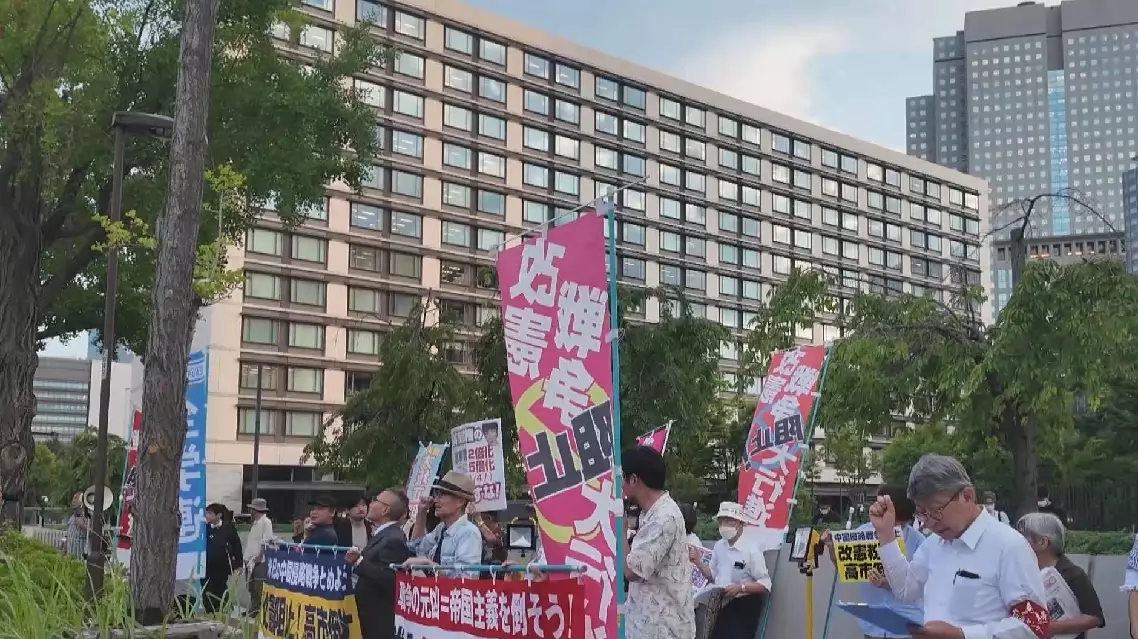
Japanese rally against ruling parties' push for constitutional revision, military expansion