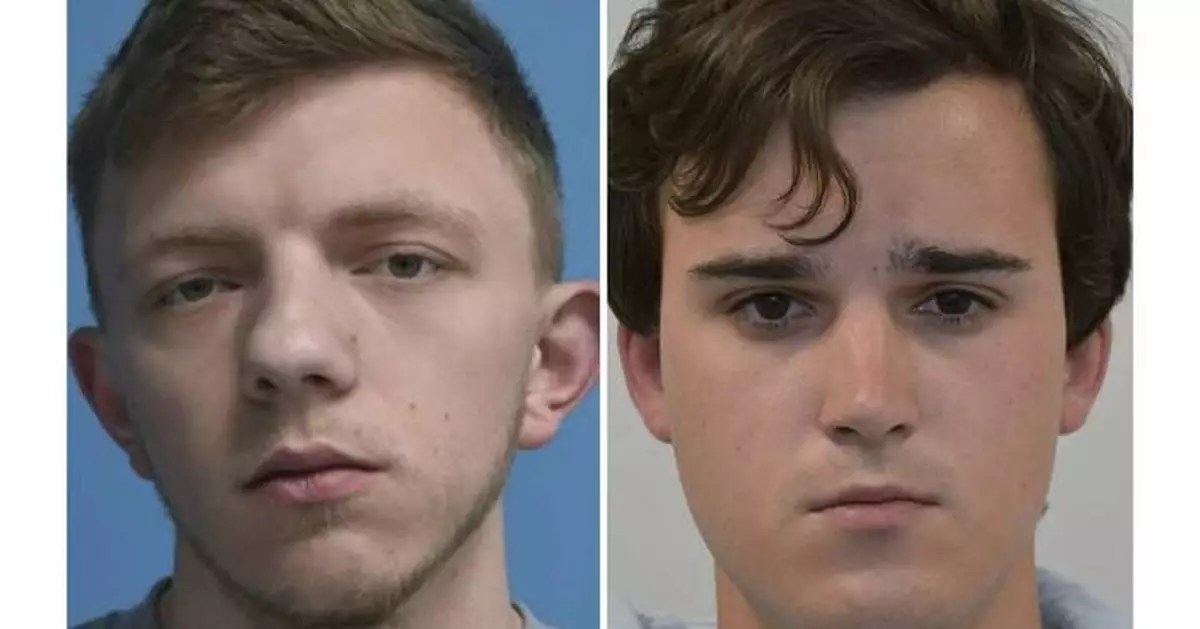
LONDON (AP) — A British court sent two men to prison Friday for setting fire to property linked to British Prime Minister Keir Starmer in a plot orchestrated by a mysterious Russian-speaking figure.
Ukrainian national Roman Lavrynovych, 22, and Stanislav Carpiuc, a 27-year-old Romanian citizen, were imprisoned for 7 years and 2 years, respectively, after being found guilty of conspiracy to damage property by fire.
The men targeted a car and two properties linked to Starmer over three nights in May 2025 on the orders of a Russian-speaking figure going by the name of “El Money,” according to prosecutors. The identity of El Money, who communicated on the messaging app Telegram with Lavrynovych, was never revealed and they were not charged.
Lavrynovych was a “useful idiot, a fool,” who could be manipulated to his handler’s advantage, Judge Neil Garnham Garnham said. The court heard that Carpuic was a middleman tasked with facilitating payment — which never came — and recruiting someone to film the fires.
The plot fits the description of Russian state-backed sabotage, Cmdr. Dominic Murphy has said previously. He oversaw the initial investigation into the fires as head of the counterterrorism team at the Metropolitan Police before retiring in March.
He said evidence gathered by police showed that El Money spoke Russian and is “likely to be in Russia.” El Money’s methods were “very similar” to those known to be used by Russian intelligence services acting in the U.K. Such plots, he said, often have “very senior sign-off.”
Western officials say Russia is carrying out a sabotage campaign against European countries that support Ukraine. The Associated Press has tracked at least 192 attacks across Europe since the 2022 invasion of Ukraine that include arson and cyberattacks as well as attempted assassinations.
When asked by AP in June if Russia is waging a covert war against the West, President Vladimir Putin brushed off the allegations.
Addressing Lavrynovych in the dock, Garnham said he agreed to carry out this “mindless piece of arson for money.”
“You are not a man of great principle. And you were easily bought,” Garnham said. He said that Lavrynovych is a man of “significantly low-level intellectual functioning,” and was therefore vulnerable to manipulation.
He accepted the job from El Money as he had also accepted “other grubby little tasks,” Garnham said.
Lavrynovych’s defense lawyer James Scobie said his client was “low-hanging fruit” used by El Money to deliberately target the prime minister and was prime “fodder for this type of infiltration.” Lavrynovych, he said, had brought shame on his family in Ukraine where his father worked with the military before he died.
The U.K. Home Office called the fires an “abhorrent attack” and said those responsible have been brought to justice. It did not respond to requests for comment about whether the British government planned to attribute the fires to Russia.
Lavrynovych was tasked with setting and filming the fires over several days in May 2025, according to evidence presented during his six-week trial. El Money recruited him online and sent detailed instructions, including the locations of the targets and how to mix flammable liquids from a hardware store.
The attacks did not cause injuries or major damage, but the prime minister’s sister-in-law, Judith Alexander, said she was left “struggling to breathe” after smoke filled her house in the third attack. She and her family were staying at the residence, which had been Starmer’s home before he became prime minister.
Messages recovered from Lavrynovych’s phone showed he discussed other vandalism he conducted for money, such as painting the windshields of cars black and putting up anti-Islam posters in Muslim areas of London.
He was not charged with that activity and it will be investigated, said Cmdr. Helen Flanagan, the current head of the Metropolitan Police’s counterterrorism team.
Counterterrorism police are dealing with more and more crimes, such as arson, which are being directed by anonymous people online promising payment, Flanagan said in a statement after the sentencing.
People who consider carrying out such activity should “think again,” because they could, like Lavrynovych, not get paid and go to jail instead, she said.
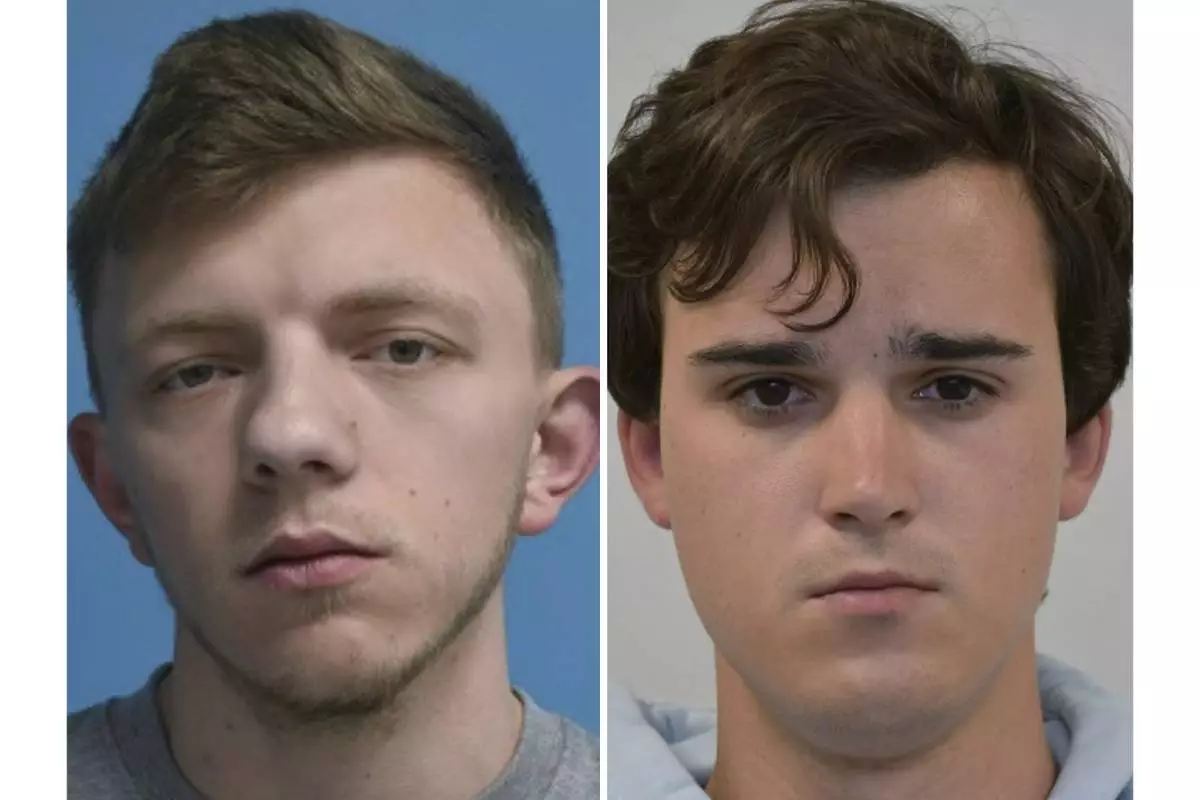
This photo combination of undated photos originally issued on April 29, 2025 by the Metropolitan Police shows Roman Lavrynovych, left, and Stanislav Carpiuc. (Metropolitan Police /PA via AP)
BELGRADE, Serbia (AP) — Long lines of voters formed outside polling stations across Serbia on Sunday for a parliamentary election that is seen as a showdown between the Balkan country's populist leader Aleksandar Vucic and a movement of university students who have led protests against him for almost two years.
Though Serbia's 6.4 million voters get to choose from 18 parties hoping to enter the 250-member Parliament, the election has taken shape as a referendum between Vucic's right-wing Serbian Progressive Party and the youth-backed Students' List.
The main contenders are believed to be polling neck-and-neck, making Sunday's election the most uncertain in recent years. Turnout is expected to be high and could push most smaller parties below the 3% threshold needed to make it into the assembly.
While Vucic has routinely outplayed Serbia's fractured opposition in the past, the leaderless youth movement has proved to be a tough opponent that rattled his firm grip on power in Serbia like no one else could in the past 14 years since his party took office.
A students' victory likely would resonate beyond Serbia as countries across Europe face youth and student protests.
Voters queued at polling places around the country early Sunday, something Ilija Srdanovic, a physician who is the first of 250 candidates for the youth movement, said heralded "record turnout in Serbia’s recent history.”
“I hope that this day will pass in a democratic atmosphere and in peace and that we will legitimately choose a new government in Serbia,” Srdanovic said after voting in the northern Serbian city of Novi Sad.
Opponents of Vucic as well as some independent monitoring groups have warned of potential irregularities in the voting process.
Asked about whether voters should gather outside polling stations in the evening to “guard ballots,” Srdanovic said that “this evening, when we present our results, we will give recommendations what to do next.”
The student movement on its website dubbed the long lines of voters across the country “queues of hope.” In the capital, Belgrade, Vucic stood alongside his wife for over an hour waiting to vote, and was expected to address the media after casting his ballot.
At a polling station in Belgrade, voter Aida Rodic said that Sunday was "a special day for me.”
“I am very excited,” she said. “After 30 years I am really excited.”
Another voter, Jovan Mitrovic, said he hopes that “everything goes peacefully and that everything finishes nicely,” and that "the dawn finally rises in this country after many years.”
Recent elections have been marred by irregularities and the European Union is watching closely the conduct of Sunday's vote in a candidate nation for the bloc's membership.
Both international and local election monitors already have expressed concern about the safety and fairness of an election campaign marked by detentions, near-total government control over the media and reports of surveillance and cyberattacks against activists.
Local elections earlier this year in 10 municipalities in Serbia saw violent attacks on journalists and activists. The previous parliamentary vote in 2023 was followed by opposition protests alleging fraud.
If his SNS party wins the most votes, Vucic will become the prime minister after serving two near-full terms as president. He resigned the presidency last month to lead the campaign.
The populists' popularity has eroded since 16 people were killed two years ago when a concrete canopy collapsed at a train station in Serbia's north, setting off a wave of youth protests that demanded accountability for the disaster and justice for the victims.
The anger reflected widespread accusations of high-level corruption and cronyism. Protesters said that rampant graft led to negligence during renovation work at the Novi Sad station, and eventually to the canopy collapse.
Despite the protests, Vucic retains considerable support among Serbia's voters. Admirers view him as a capable leader who can steer the nation through global uncertainties — the image that was carefully crafted by the mainstream media.
The newly formed Students' List movement differs from any of the political organizations in Serbia. It is shaped by university students but none of them are actually on the list. Instead, the candidates are little-known experts, athletes, farmers and artists.
This approach was meant to counter Vucic's one-man rule and restore a sense of community and solidarity. The “we know how” message during the campaign promised a non-partisan effort to rebuild Serbia's economy and democracy after a change of government.
With their youthful energy, the students have attracted voters who are disillusioned with local politicians. Vilified by pro-government media, students have cycled and walked through the country to reach voters in rural areas — Vucic's traditional strongholds.
Election surveys have come up with varied results while both camps say they are ahead. Some analysts fear postelection instability in case of a close result.
Vucic has said that his side would concede defeat if it lost the vote. But he has also warned that any protests that might erupt to claim fraud in case of his party's triumph would be immediately quashed.
The state election commission is not expected to release the official tally before Monday.
Magda Anastasijevic, the Eastern Europe analyst for the conflict monitor ACLED, said that electoral violence has been on the rise in Serbia recently, and could escalate, "particularly if the results are disputed."
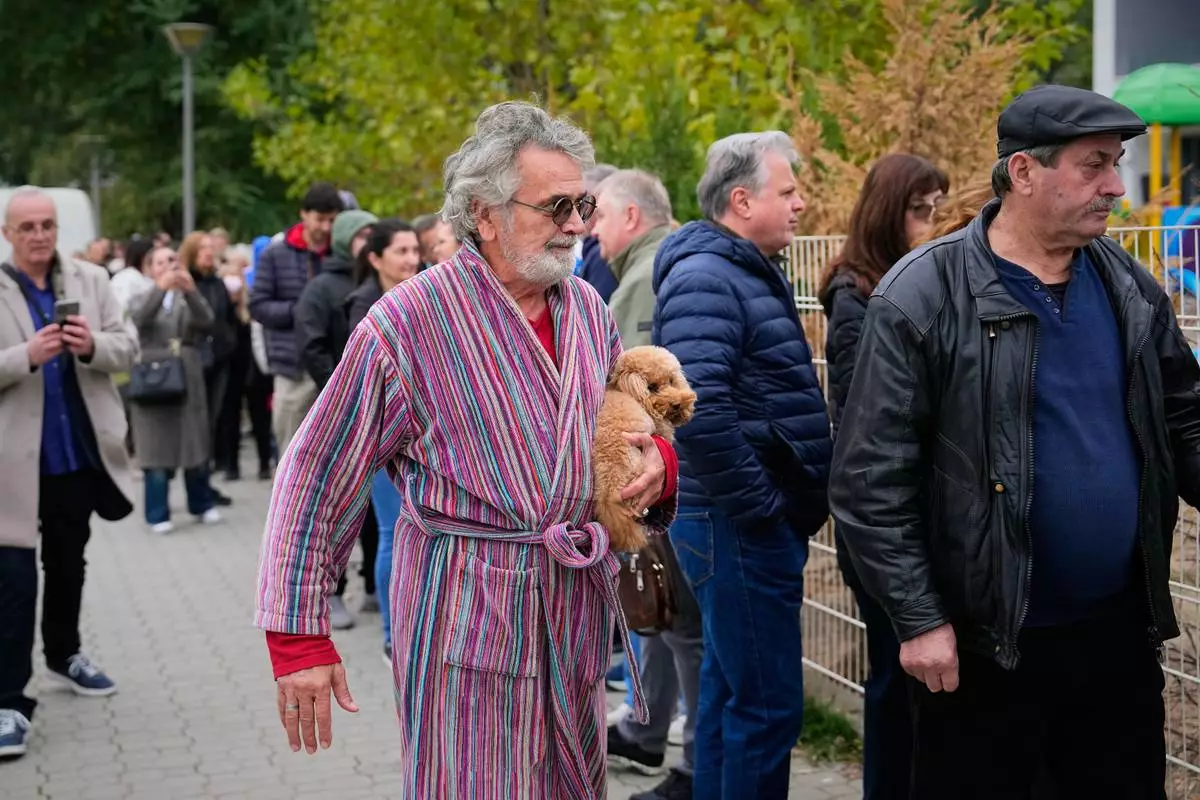
A man holds a dog while arriving at a polling station to vote in a parliamentary election in Belgrade, Serbia, Sunday, Oct. 25, 2026. (AP Photo/Petr David Josek)
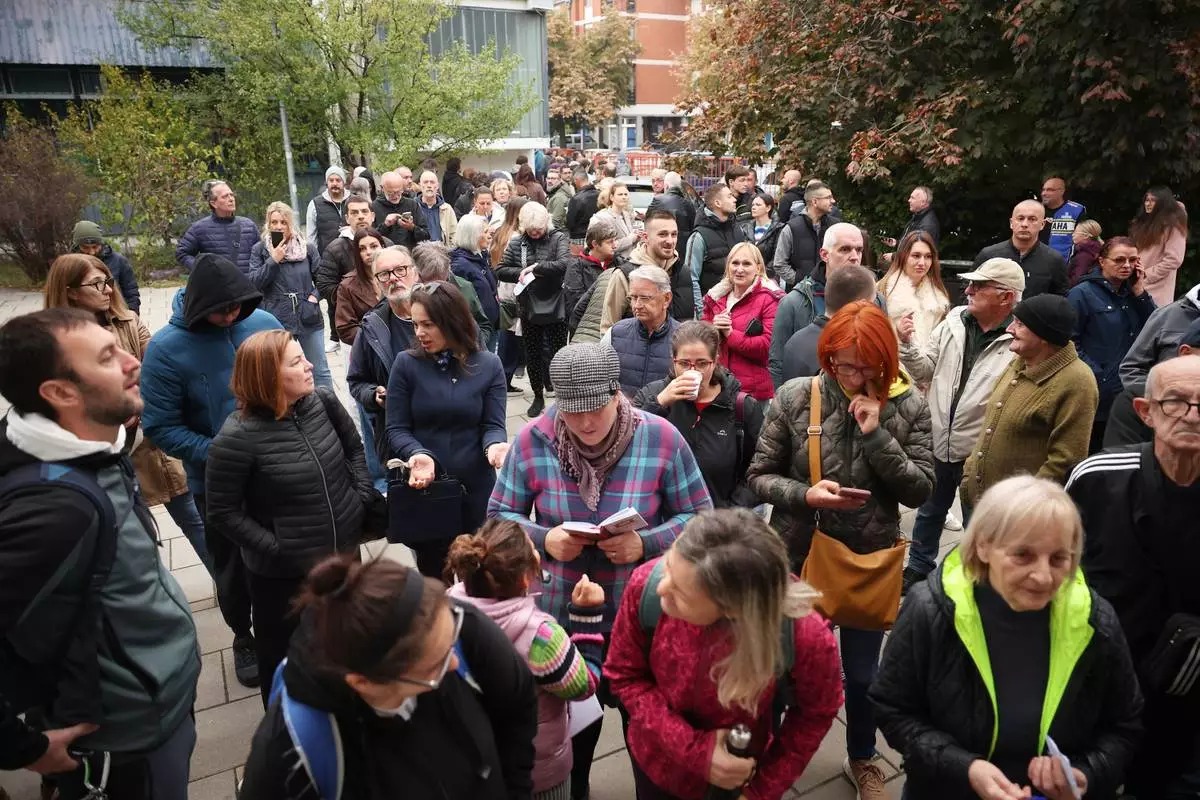
People wait outside a polling station before the start of voting in a parliamentary election in Novi Sad, Serbia, Sunday, Oct. 25, 2026. (AP Photo/Armin Durgut)
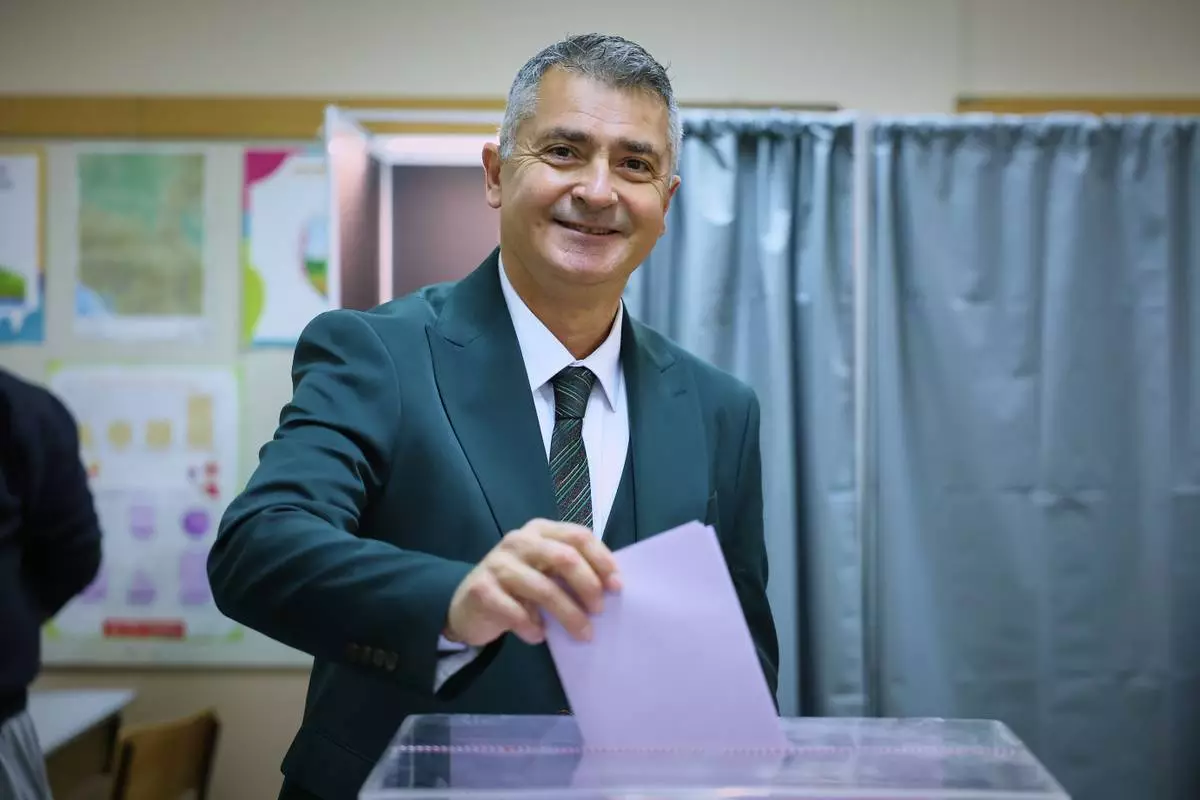
Students' List leader Ilija Srdanovic casts his vote in a parliamentary election in Novi Sad, Serbia, Sunday, Oct. 25, 2026. (AP Photo/Armin Durgut)
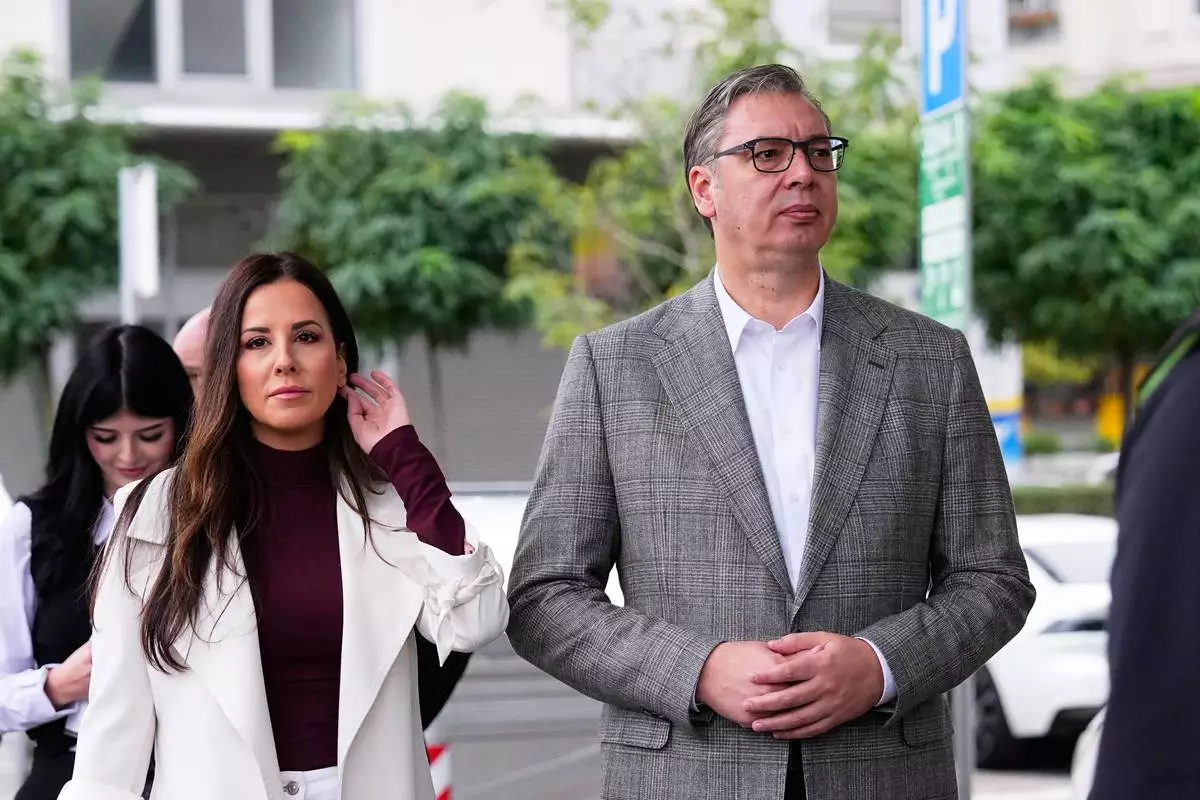
Aleksandar Vucic, leader of the right-wing Serbian Progressive Party (SNS), waits along with his wife Tamara to vote in a parliamentary election in Belgrade, Serbia, Sunday, Oct. 25, 2026. (AP Photo/Petr David Josek)
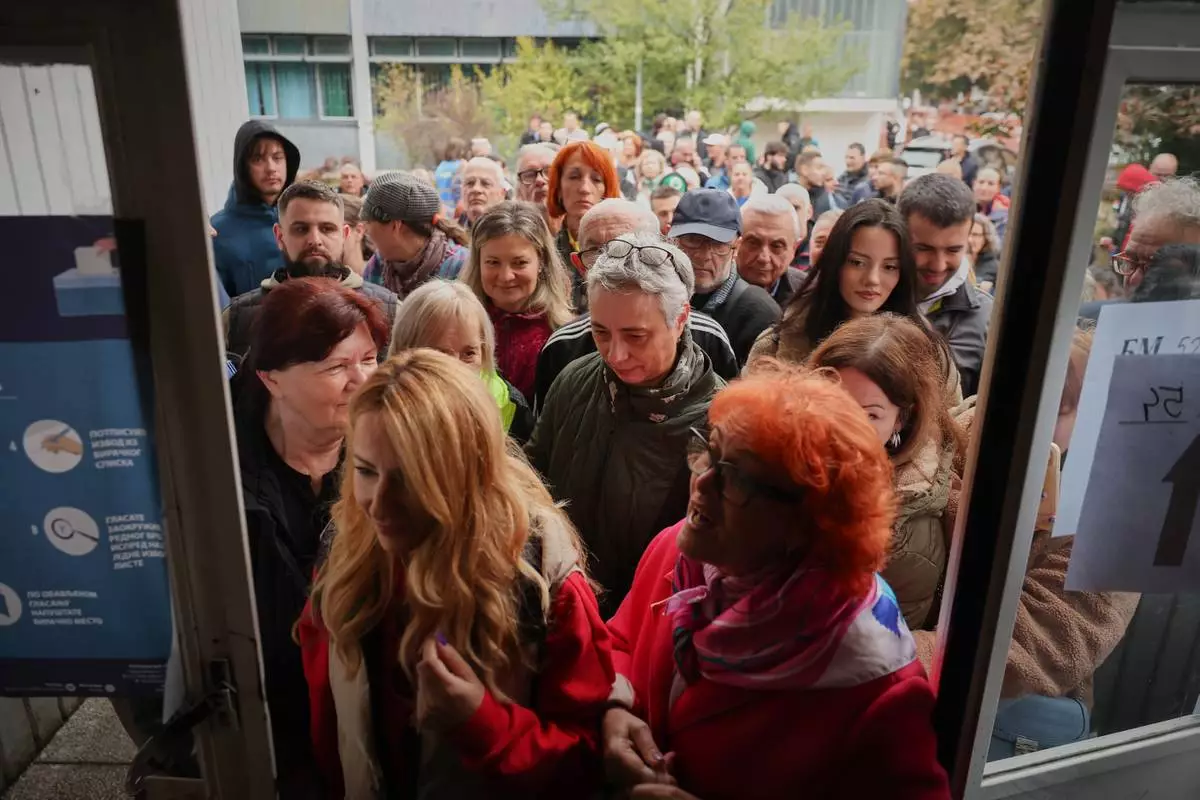
People enter a polling station that just opened its doors to cast their votes in a parliamentary election in Novi Sad, Serbia, Sunday, Oct. 25, 2026. (AP Photo/Armin Durgut)
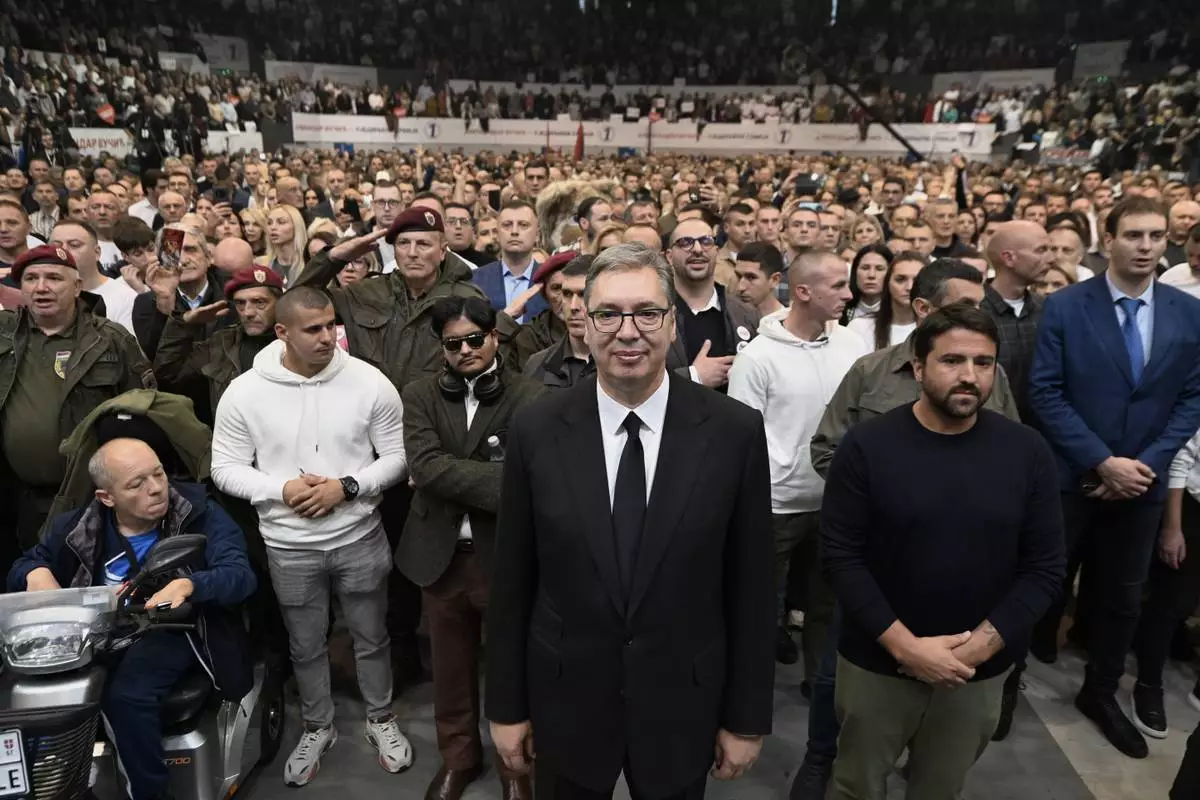
Serbia's populist leader Aleksandar Vucic, center, listens to the Serbian national anthem with supporters during a pre-election rally of his ruling Serbian Progressive Party ahead of the early parliamentary election scheduled for Oct. 25, in Belgrade, Serbia, Thursday, Oct. 22, 2026. (AP Photo)
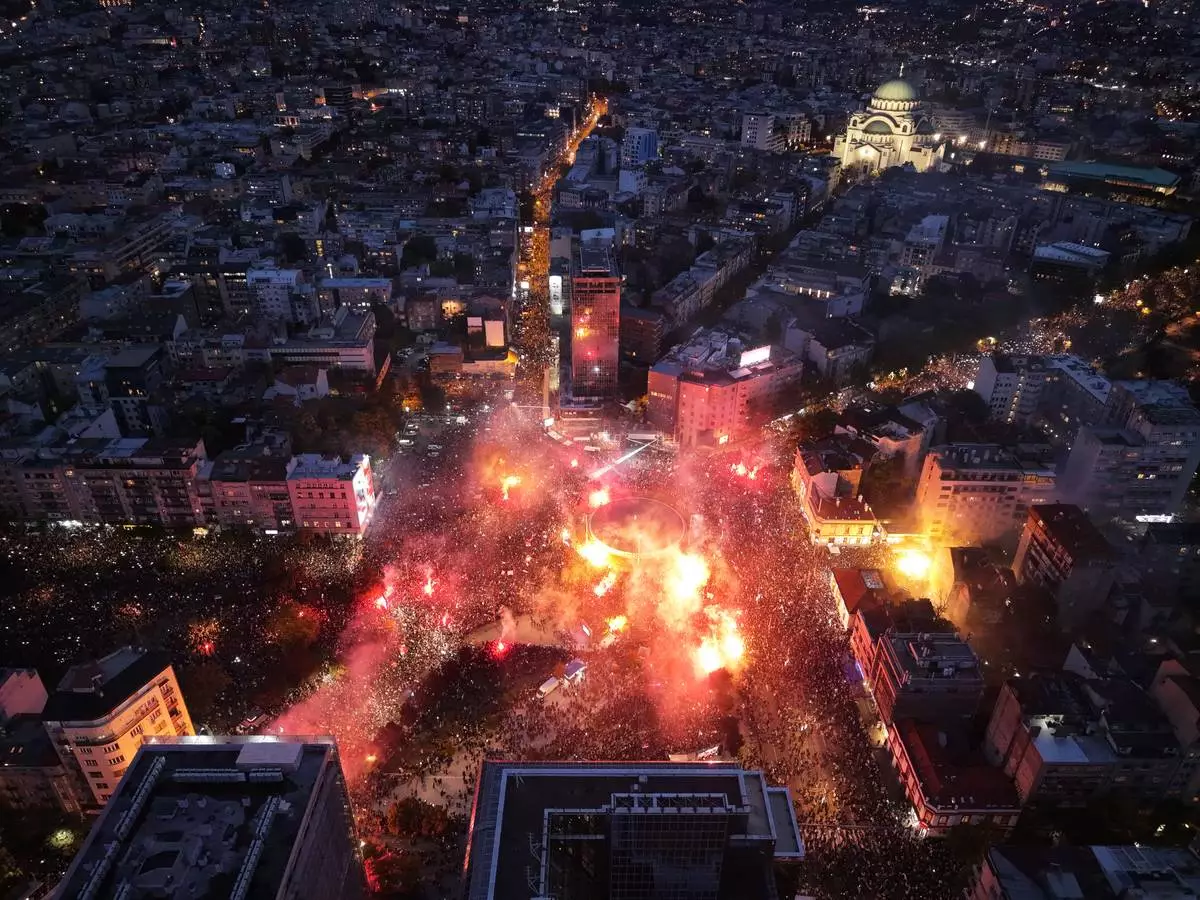
People shine the lights of their mobile phones and light flares during the final "Student List – Students Win" rally ahead of a parliamentary election in Belgrade, Serbia, Thursday, Oct. 22, 2026. (AP Photo/Armin Durgut)
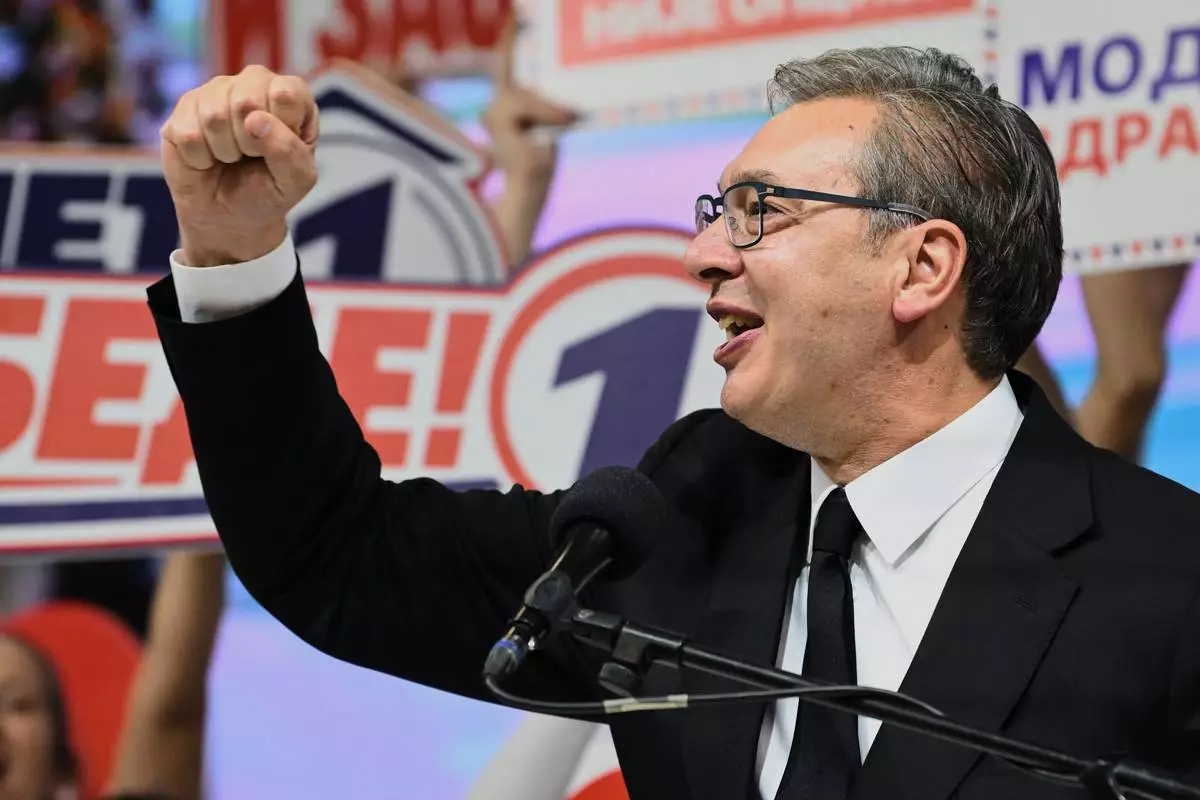
Serbia's populist leader Aleksandar Vucic gestures during a pre-election rally of his ruling Serbian Progressive Party ahead of the early parliamentary election scheduled for Oct. 25, in Belgrade, Serbia, Thursday, Oct. 22, 2026. (AP Photo)
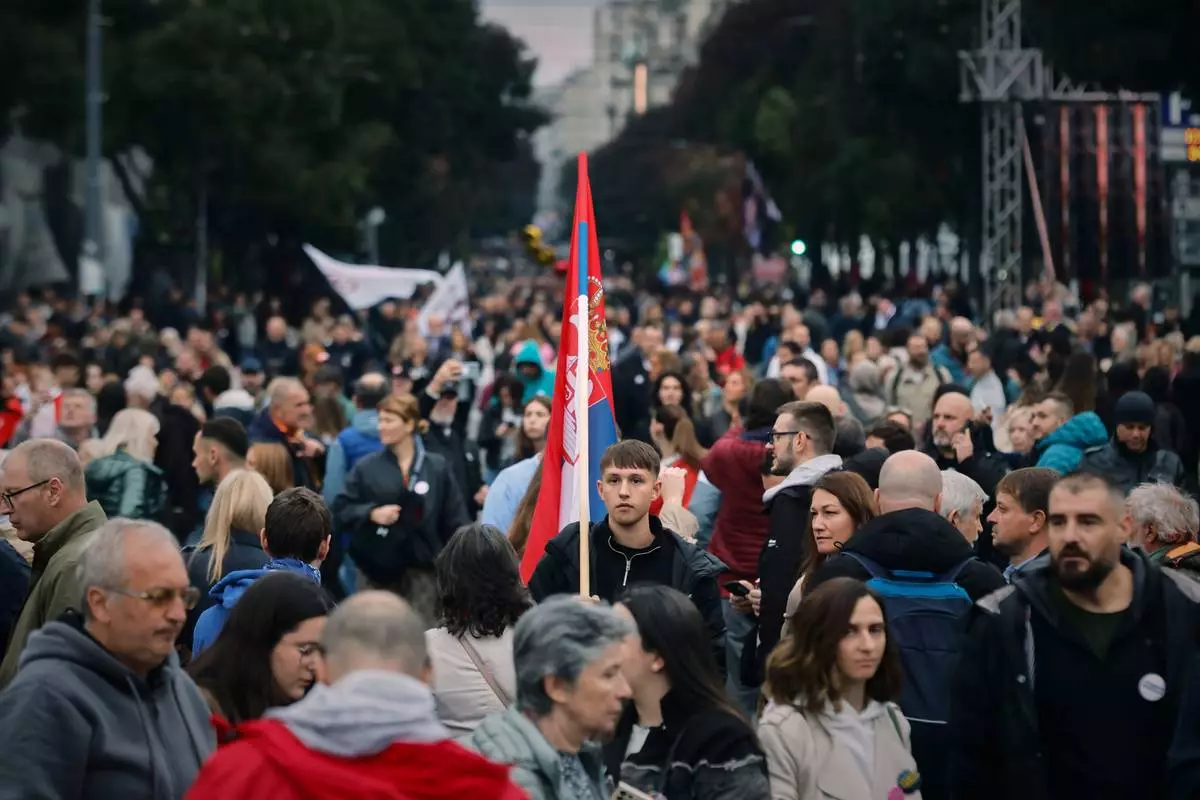
A young man holds a Serbian flag as people gather for the final "Student List – Students Win" rally ahead of a parliamentary election in Belgrade, Serbia, Thursday, Oct. 22, 2026. (AP Photo/Marko Drobnjakovic)