Skip to Content Facebook Feature Image

Iran says it's being treated unfairly. Its World Cup travel schedule isn't unique

News

Iran says it's being treated unfairly. Its World Cup travel schedule isn't unique
News

News

Iran says it's being treated unfairly. Its World Cup travel schedule isn't unique

2026-06-20 05:27 Last Updated At:05:40

Iran's World Cup team says it's unfairly being made to travel to matches the day before games and return immediately after, but that schedule itself isn't uncommon among teams.

So how does it work, with 48 teams criss-crossing 16 cities across three countries? Iran has been forced to comply with what White House FIFA task force head Andrew Giuliani said were previously mandated rules stemming from the war, but those restrictions also align with FIFA guidelines for general team travel.

More Images
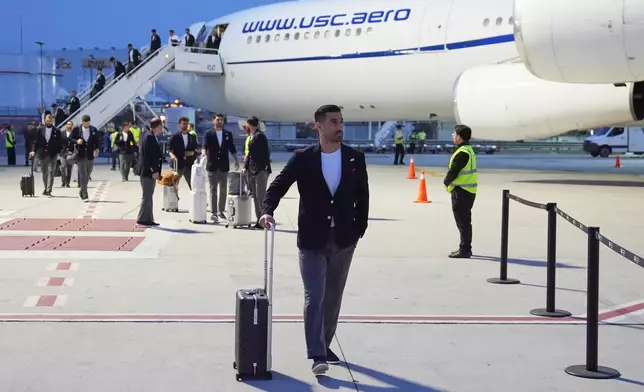
Iran's Ehsan Hajisafi arrives with his teammates for the World Cup soccer tournament in Tijuana, Mexico, Sunday, June 7, 2026. (AP Photo/Gregory Bull)

Iran's Ehsan Hajisafi arrives with his teammates for the World Cup soccer tournament in Tijuana, Mexico, Sunday, June 7, 2026. (AP Photo/Gregory Bull)
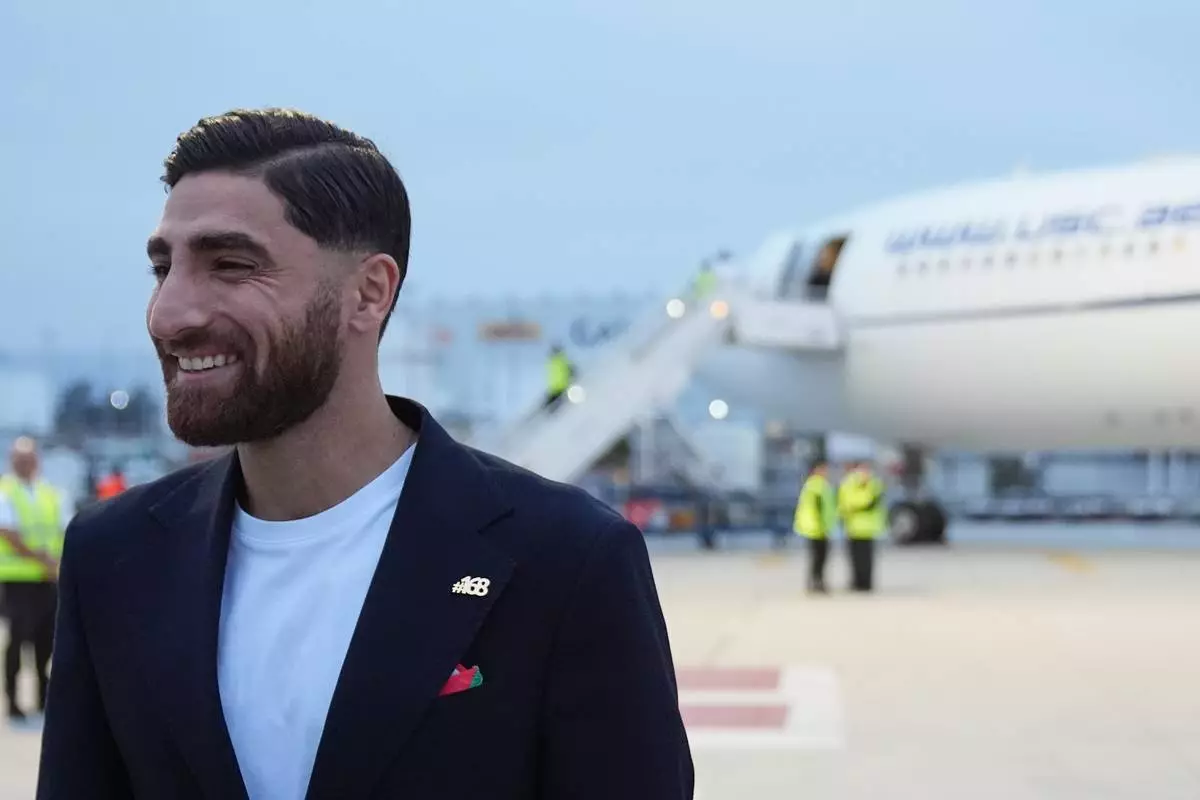
Iran's Alireza Jahanbakhsh smiles as he arrives with his teammates for the World Cup soccer tournament in Tijuana, Mexico, Sunday, June 7, 2026. (AP Photo/Gregory Bull)

Iran's Alireza Jahanbakhsh smiles as he arrives with his teammates for the World Cup soccer tournament in Tijuana, Mexico, Sunday, June 7, 2026. (AP Photo/Gregory Bull)

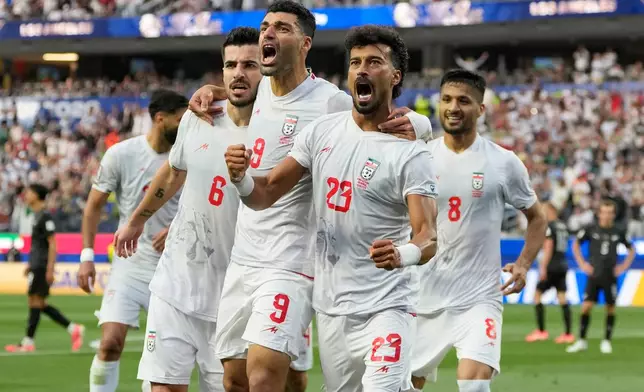
Iran's Ramin Rezaeian (23) celebrates with his teammates after scoring a goal during the World Cup Group G soccer match between Iran and New Zealand in Inglewood, Calif., near Los Angeles, Monday, June 15, 2026. (AP Photo/Andre Penner)
Iran's Ramin Rezaeian (23) celebrates with his teammates after scoring a goal during the World Cup Group G soccer match between Iran and New Zealand in Inglewood, Calif., near Los Angeles, Monday, June 15, 2026. (AP Photo/Andre Penner)

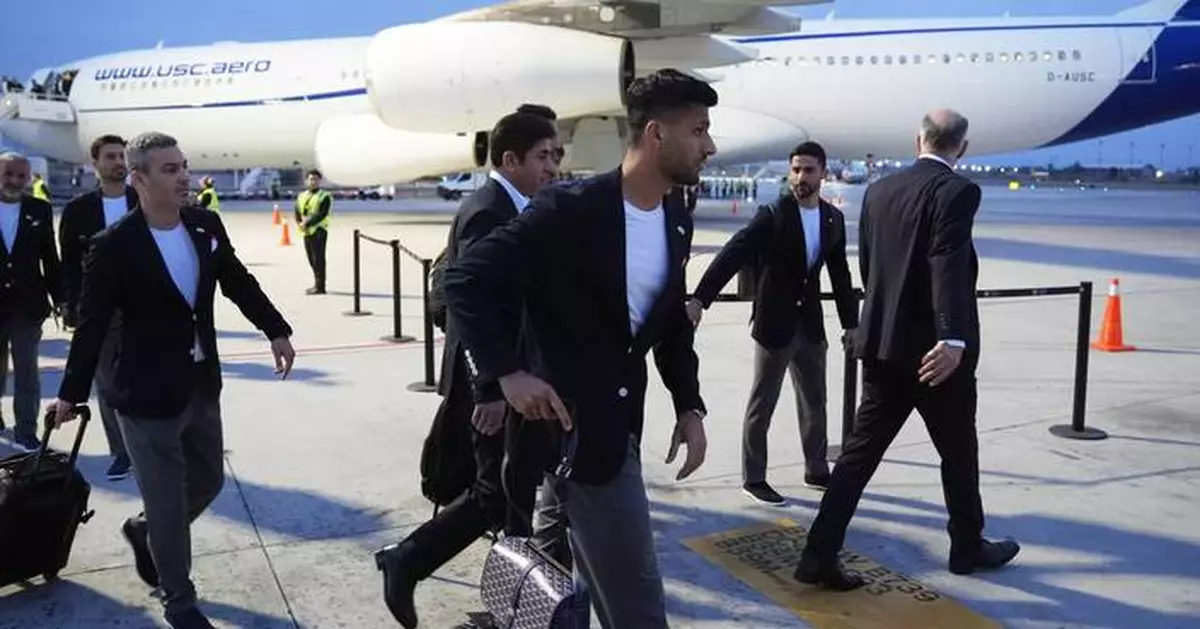
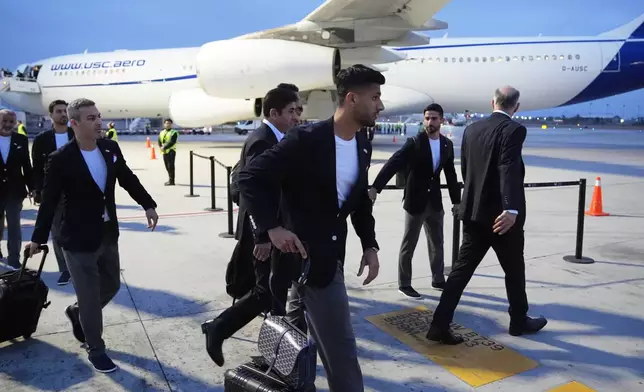
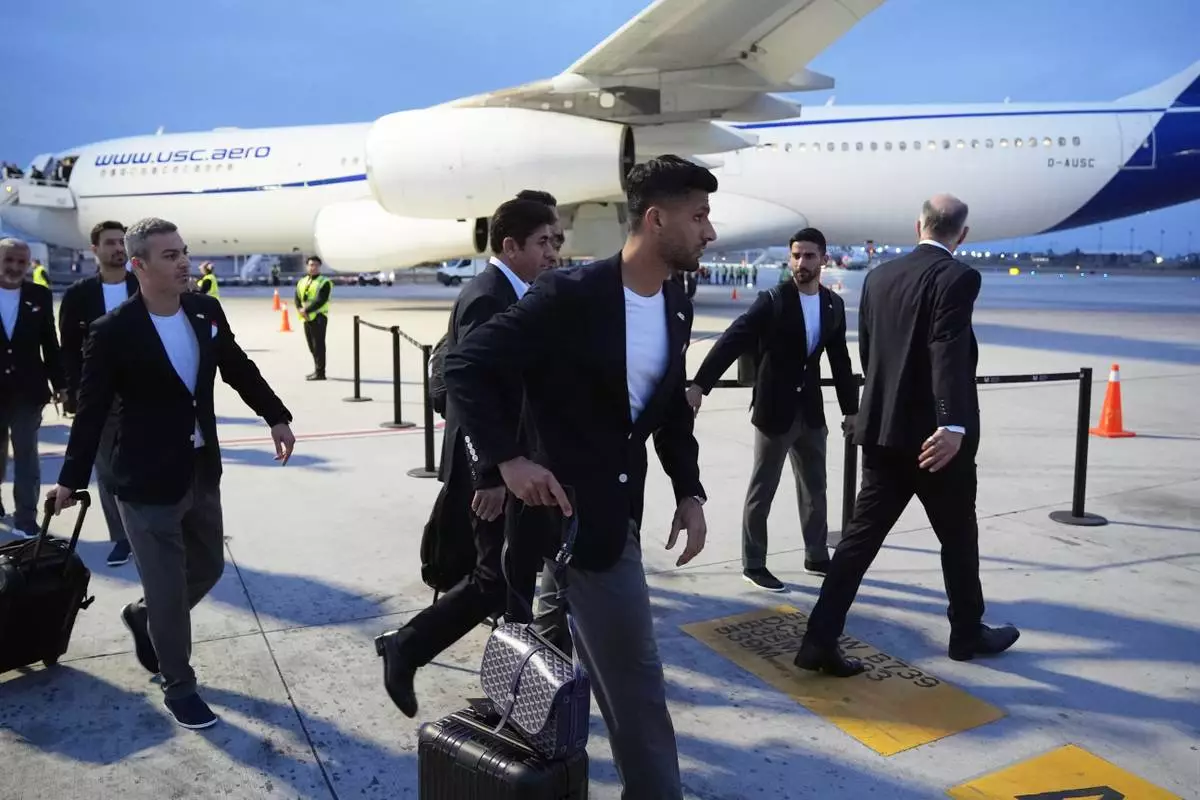
Players for Iran arrive for the World Cup soccer tournament in Tijuana, Mexico, Sunday, June 7, 2026. (AP Photo/Gregory Bull)

Players for Iran arrive for the World Cup soccer tournament in Tijuana, Mexico, Sunday, June 7, 2026. (AP Photo/Gregory Bull)

Team Melli made the 127-mile (204-kilometer) charter flight from Tijuana International Airport to Los Angeles International Airport the day before its opening 2-2 draw against New Zealand on Monday, a typically short trip that team captain Mehdi Taremi said instead took five hours, including security and immigration checks.

Iran returned to Mexico right after the match, which ended about 8 p.m. Pacific. The team had hoped to stave off travel for a day after the game.

The team's request to travel to LA two days before Sunday's match against Belgium was also denied, the federation said late Thursday, adding that it will lodge a complaint with FIFA. In a statement, the federation noted Sunday's earlier kickoff — noon Pacific — and said it believes “such restrictions are inconsistent with the principle of providing equal conditions for all participating teams and may negatively affect teams’ preparation processes.”

“We are the only team that are participating in the World Cup that we are at the host cities just 24 hours and it is not fair,” Iran soccer secretary-general Hedayat Mombeini said through a translator Friday. “All these limitations on us, it has negative effects on our physical and mental things on our players.”

But the Iran team’s travel schedule itself is not unusual for short distances in this tournament. And FIFA's 2026 World Cup regulations state in Article 18.3 that “each team shall travel from its team base camp to the match venue one day before matchday (MD‑1) and in exceptional cases on MD‑2, and shall return to their team base camp after the match (on MD/MD+1).”

The restrictions on the Iran team have not been lifted despite an interim agreement to end the war. Some team officials and support staff have been unable to secure visas to the U.S., and player Mehdi Torabi had to visit the U.S. consulate in Tijuana to get a new visa after the first match.

Many teams have been arriving in host cities the day before their matches. For Friday's group-stage match against Australia, the U.S. made the roughly 980-mile (1,580-kilometer) flight from their base in Orange County, California, to Seattle on Thursday. The team intended to return to its hotel in Laguna Niguel after the match.

Some CONCACAF teams preferred to arrive on the day before games for World Cup qualifiers at Mexico City, where sports performance experts advise players won't have time to acclimatize to the altitude so should get there as close to kickoff as possible.

Bosnia-Herzegovina has the longest group stage travel, at 5,878 miles (9,460 kilometers) in total. The Dragons had a roughly 1,660-mile (2,670-kilometer) flight each way from Salt Lake City to Toronto, 590 miles (950 kilometers) to Los Angeles and 690 miles (1,110 kilometers) to Seattle.

Bosnia's travel is far shorter than the 9,000-mile (14,484-kilometer) trek for the U.S. at the 2014 World Cup in Brazil, the longest among the 32 nations. The Americans went from their base camp in Sao Paulo to Natal, a distance of 1,436 miles (2,311 kilometers), three days before their opener against Ghana. They made the 1,832-mile (2,948-kilometer) trip to Manaus two days before of their game against Portugal and the 1,321-mile (2,126-kilometer) journey to Recife two days in front of their match against Germany.

Four years ago in Qatar, all stadiums were within 31 miles (50 kilometers) of downtown Qatar, enabling for teams to stay in one hotel throughout the tournament.

AP World Cup coverage: https://apnews.com/fifa-world-cup
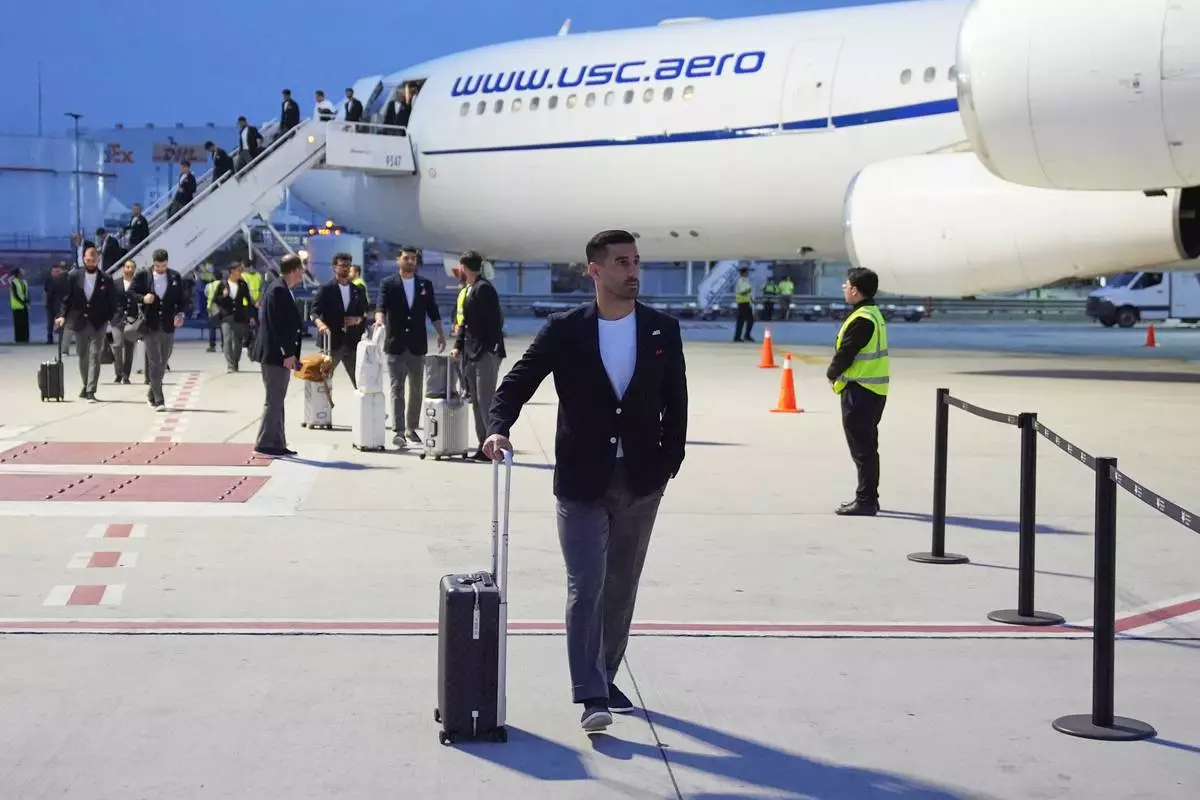
Iran's Ehsan Hajisafi arrives with his teammates for the World Cup soccer tournament in Tijuana, Mexico, Sunday, June 7, 2026. (AP Photo/Gregory Bull)
Iran's Ehsan Hajisafi arrives with his teammates for the World Cup soccer tournament in Tijuana, Mexico, Sunday, June 7, 2026. (AP Photo/Gregory Bull)

Iran's Alireza Jahanbakhsh smiles as he arrives with his teammates for the World Cup soccer tournament in Tijuana, Mexico, Sunday, June 7, 2026. (AP Photo/Gregory Bull)

Iran's Alireza Jahanbakhsh smiles as he arrives with his teammates for the World Cup soccer tournament in Tijuana, Mexico, Sunday, June 7, 2026. (AP Photo/Gregory Bull)

Iran's Ramin Rezaeian (23) celebrates with his teammates after scoring a goal during the World Cup Group G soccer match between Iran and New Zealand in Inglewood, Calif., near Los Angeles, Monday, June 15, 2026. (AP Photo/Andre Penner)
Iran's Ramin Rezaeian (23) celebrates with his teammates after scoring a goal during the World Cup Group G soccer match between Iran and New Zealand in Inglewood, Calif., near Los Angeles, Monday, June 15, 2026. (AP Photo/Andre Penner)

Players for Iran arrive for the World Cup soccer tournament in Tijuana, Mexico, Sunday, June 7, 2026. (AP Photo/Gregory Bull)


Players for Iran arrive for the World Cup soccer tournament in Tijuana, Mexico, Sunday, June 7, 2026. (AP Photo/Gregory Bull)

Horse carriage rides in Central Park are on hold at least until Tuesday, the union representing drivers said, as safety protocols are reviewed in the wake of a death of a young tourist who jumped from a runaway horse carriage.

Alexander Kemp, administrative vice president of Transport Workers Union Local 100, said in a statement Friday that “our hearts go out to the family” of Romanch Mahajan, 18, who died Wednesday after he hit his head while jumping off the four-wheeled carriage as its horse sprinted through the park without the driver.

“Words can’t express the enormity of this tragedy,” Kemp said. “We are taking the first steps towards addressing safety issues.”

Among the safety protocols to be reviewed are how to maintain control of the carriage horses at all times, he said.

Kemp said at a news conference Friday that the union is putting together the new safety training protocols with feedback from the horse carriage operators that will be rolled out next week and that about 200 carriage owners and drivers will be required to follow.

Mahajan is believed to be the first person to die in a horse carriage accident since they were introduced in Central Park more than 150 years ago, according to the labor union representing the industry and the Central Park Conservancy, which manages the 843-acre (341-hectare) park.

Mahajan had traveled from India with his family to celebrate his recent high school graduation when the family decided to take a ride on one of the park’s often photographed, richly decorated carriages, his father told The New York Times.

The carriage driver hopped off to take a photograph of the family near a fountain when the horse suddenly bolted. Romanch’s mother fell out of the carriage, and the teen jumped out in an attempt to save her, according to his father.

The Central Park Conservancy was among those arguing Thursday that the carriage industry should be suspended until more protections can be put in place. Mahajan’s death was the eighth horse-related incident in the park over the past 13 months, the group said.

The conservancy has argued that horses can no longer safely share park roads teeming with joggers, cyclists, pedestrians and motorized scooters, noting that other U.S. cities, including Chicago and San Antonio, have also recently done away with the nostalgic rides.

But carriage industry leaders said the fatal crash underscores the need for better protections, not outright elimination of the quaint attraction that harkens back to a romanticized, bygone New York.

Mayor Zohran Mamdani reiterated his support for ending the industry, saying he’d work with the council, the industry and animal welfare advocates to “deliver a just transition that protects workers while ending horse-drawn carriages in Central Park once and for all.”

Other recent mayors have made similar pronouncements. Mayor Bill de Blasio vowed to shut down the industry “on Day One” in office, only to come up against years of council opposition. Mayor Eric Adams, Mamdani’s predecessor, came out against the industry near the end of his single term.

Kemp said Friday that the union wanted to “do all that we can, collaborating with the City, to improve safety and prevent any accidents from occurring as we move forward.”

The union said it supported increased oversight of drivers including regular checks in the parks and enforcement of protocols that require drivers to be in their seats when passengers get on board, throughout the ride and when they exit. Idle horses should also be tethered.

Animal welfare activists have long said the carriage horses are overworked, can get easily spooked on city streets and live in inadequate stables while their drivers regularly flout city rules. All of those allegations have been denied by the horse and carriage owners, who say the animals are well cared for and the stables are fine.

Police investigate the scene after a Central Park carriage horse bolted away from its driver killing a teenager from India on Wednesday, June 17, 2026 in New York. (WABC-TV via AP)

Police investigate the scene after a Central Park carriage horse bolted away from its driver killing a teenager from India on Wednesday, June 17, 2026 in New York. (WABC-TV via AP)

Recommended Articles