Skip to Content Facebook Feature Image

Cuba pushes through sweeping free-market reforms in biggest economic shift since the revolution

News

Cuba pushes through sweeping free-market reforms in biggest economic shift since the revolution
News

News

Cuba pushes through sweeping free-market reforms in biggest economic shift since the revolution

2026-06-20 06:56 Last Updated At:07:01

HAVANA (AP) — Observers on Friday called Cuba’s new free-market reforms the most sweeping economic overhaul of the island’s communist economy since the Cuban revolution, as the grandson of former President Raúl Castro said in an interview that Cuba must seek to move its economy forward.

The 176 measures aim to further decentralize Cuba’s state-run economy, which has been left gasping by a tightened embargo under President Donald Trump. Under the island’s current economic model, the government largely determines what is produced, who produces it, the prices at which goods are sold and how the country’s resources are allocated.

The plan includes more space for private businesses, imports and exports without state intermediation, free hiring of personnel, authorization for private banks and investment by Cubans abroad. It even permits fast-food chains to establish themselves on the island.

“Elements that for decades were listed as pillars of the revolutionary economy, such as the state monopoly on foreign trade and the centralization of productive forces, have been dismantled,” said Luis Carlos Battista, a Cuban-American political scientist and lawyer who is a doctoral candidate at the University of Salamanca.

Cuban leaders like former President Raúl Castro – who still wields significant power on the island – have sought to push forward more limited reforms of Cuba's economy in the past, but efforts have run into bureaucratic hurdles. In passing the reform, Cuban authorities cautioned that implementation could be slow, and noted measures will not be viable if the U.S. does not lift the energy and financial embargo on the island.

Since January, Cuba has been under a harsh energy and financial embargo imposed by the U.S., effectively blocking Cuba off from fuel, it's main energy source, and deepening the crisis had already been deteriorating for the past five years. Blackouts have lasted up to 20 hours a day and have restricted access to health services, transportation and education.

U.S. President Donald Trump and Secretary of State Marco Rubio acknowledged that they are maintaining a policy of maximum pressure to change the island's political and economic system, which has endured for six decades despite U.S. pressure. They have not ruled out the use of military force.

In an i nterview published Friday, in the United Arab Emirates-based The National, Raul Guillermo Rodriguez Castro, grandson of the revolutionary leader, reiterated that Cuba “doesn't even slightly represent a threat” to the U.S.

Rodriguez Castro said in the video interview that Cuba's government was seeking a “very Cuban” economic model.

“Our country must seek a path to economic development where we must inevitably diversify our economy, diversify the way we do business and diversify the way we do investments,” he said.

Cuban President Miguel Díaz-Canel said that the proposed measures were based on an analysis of the Vietnamese and Chinese models, communist countries with market economies.

What is likely to pose a significant barrier are U.S. sanctions on Cuba, said Lee Schlenker, a research associate at the Quincy Institute in Washington.

“With these new measures, along with others that are likely on the table, they will only have a true effect if complemented with the gradual lifting of U.S. prohibitions and sanctions more broadly,” he said.

Without sanctions being lifted, Schlenker and other analysts said many of the presented measures will be inapplicable, especially due to the limitations and prohibitions imposed on potential investors, who are penalized in the U.S. financial system if they do business with Cuba.

Beyond that, there are a number of other obstacles that could stymie significant reforms, ranging from mistrust from potential investors to what Battista, the Cuban-American analyst called “slow and inefficient” bureaucracy.

Despite these obstacles, the Cuban government faces a short window for obtaining results, said Paolo Spadoni, associate professor in the Department of Social Sciences at Augusta University in Georgia.

“If Cuban leaders hope to survive this unprecedented crisis and the pressure from the United States, they must move quickly with the implementation of reform and the achievement of tangible results,” Spadoni said.

Follow AP’s Latin America and Caribbean coverage at https://apnews.com/hub/latin-america-and-caribbean
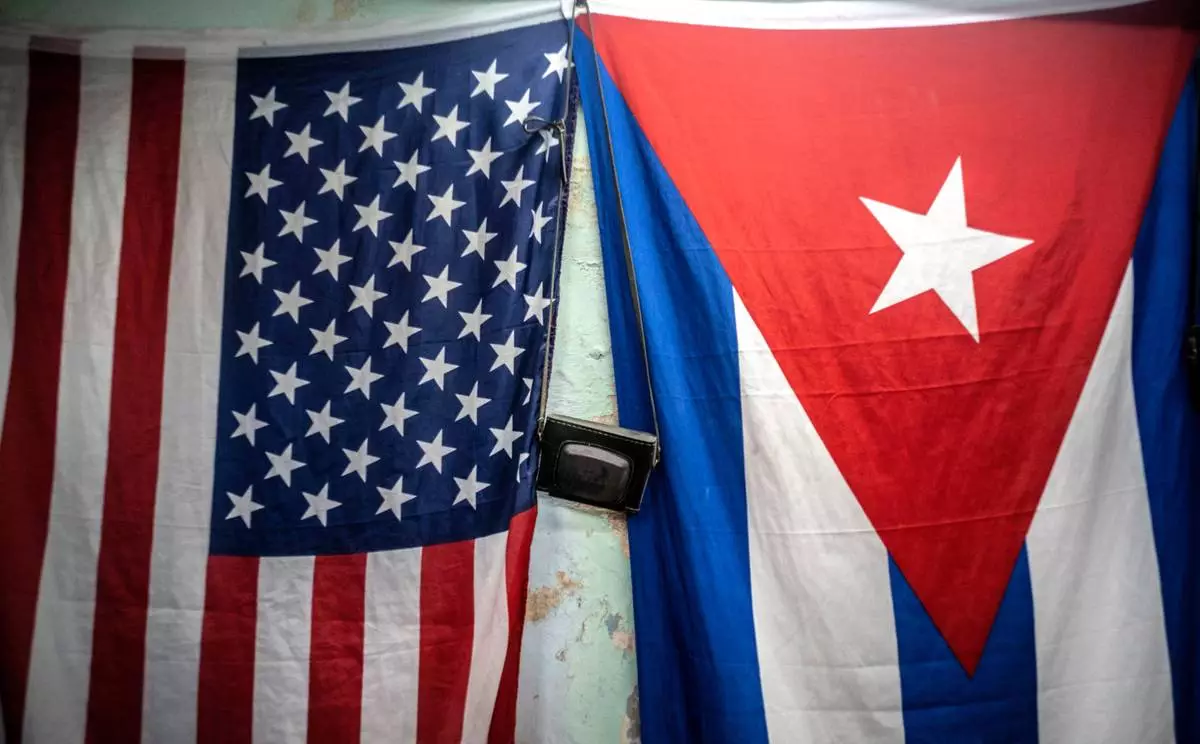
FILE - A U.S. and Cuban flag hangs on a wall in Havana, Cuba, Monday, Jan 11, 2021. (AP Photo/Ramon Espinosa, File)
FILE - A U.S. and Cuban flag hangs on a wall in Havana, Cuba, Monday, Jan 11, 2021. (AP Photo/Ramon Espinosa, File)

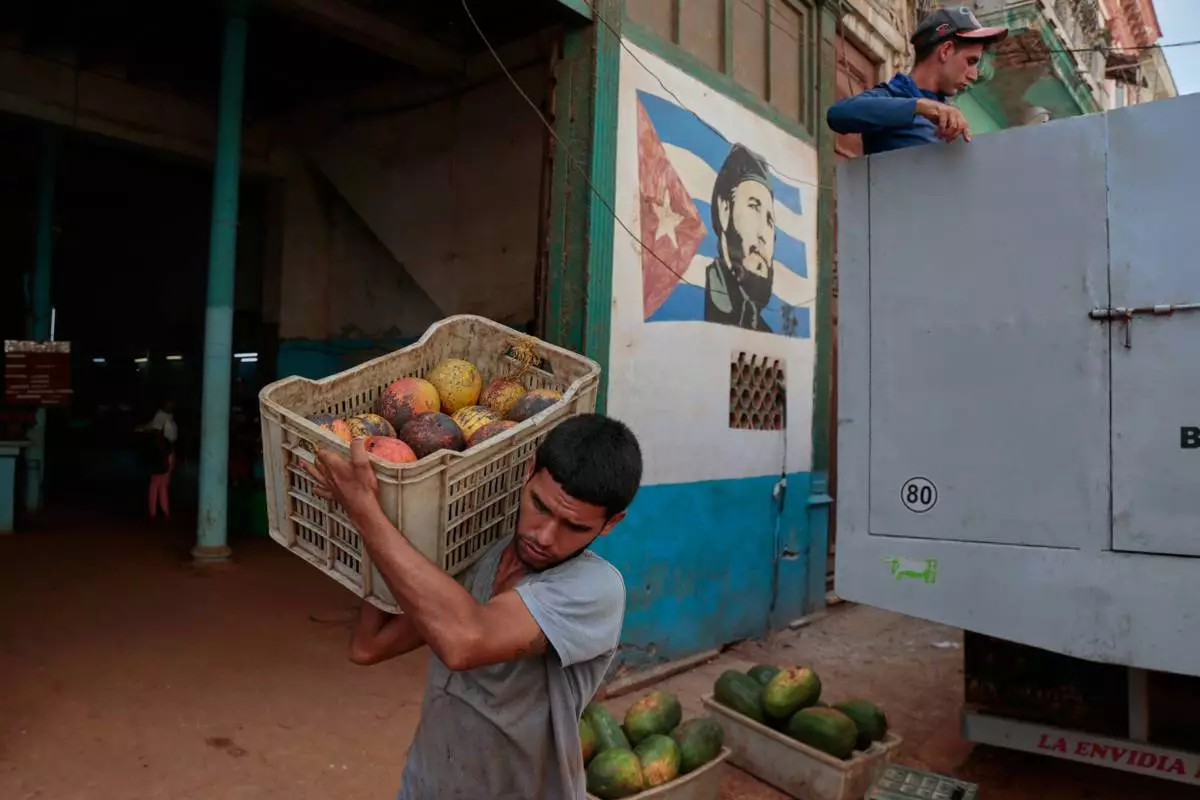
A worker unloads boxes of fruit at a state-run market in Havana, Cuba, Wednesday, June 17, 2026. (AP Photo/Jorje Luis Banos)
A worker unloads boxes of fruit at a state-run market in Havana, Cuba, Wednesday, June 17, 2026. (AP Photo/Jorje Luis Banos)

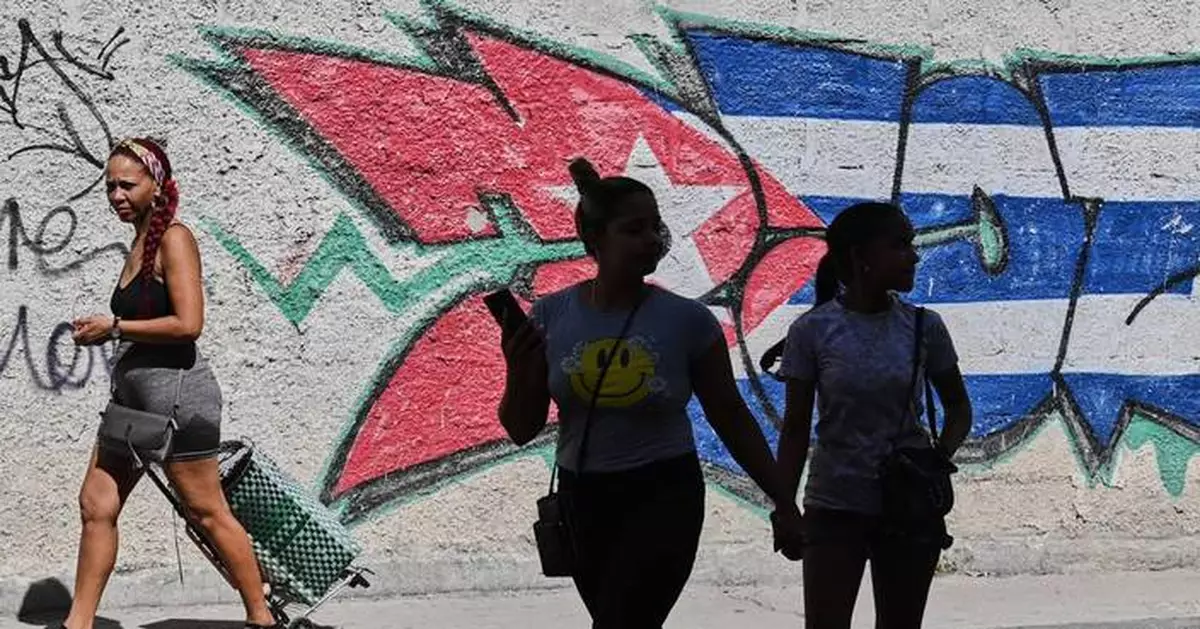
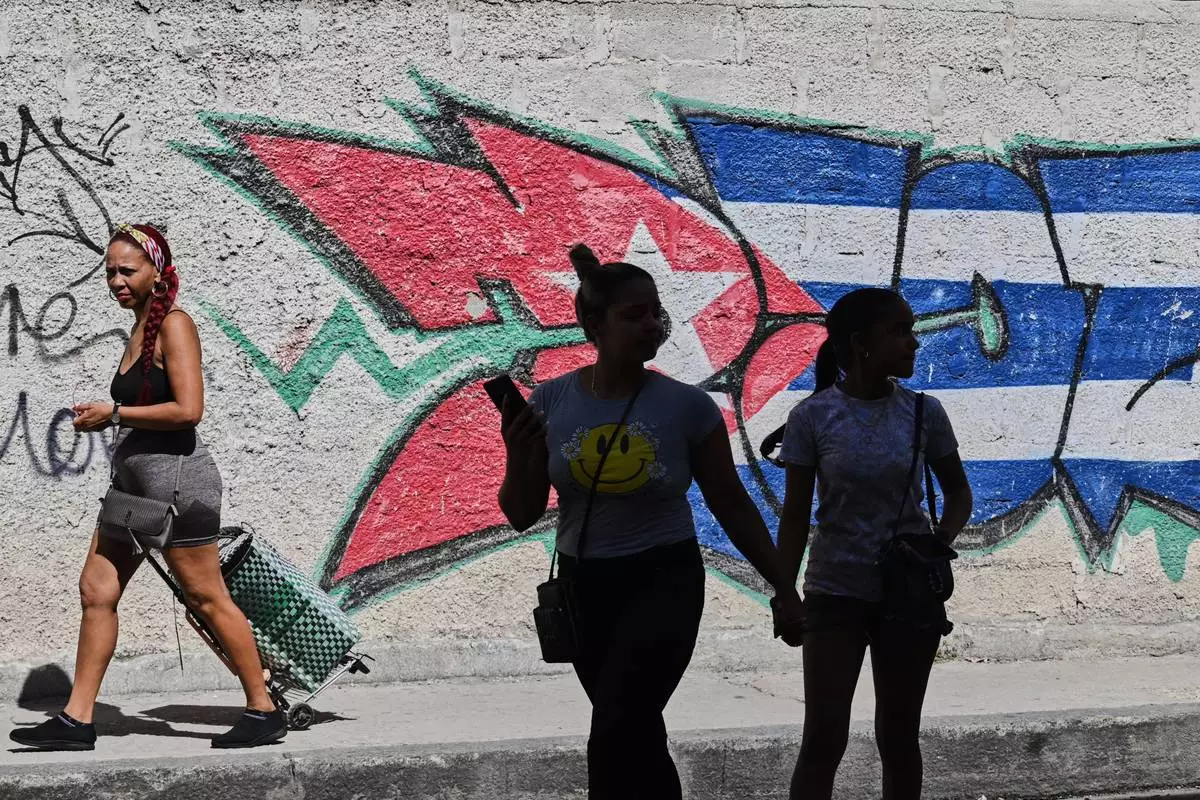
People walk past graffiti in the colors of the Cuban flag in Havana, Cuba, Wednesday, June 17, 2026. (AP Photo/Jorge Luis Banos)

People walk past graffiti in the colors of the Cuban flag in Havana, Cuba, Wednesday, June 17, 2026. (AP Photo/Jorge Luis Banos)
SEATTLE (AP) — Alex Freeman may not have one-upped his famous father yet, but he could be on his way.

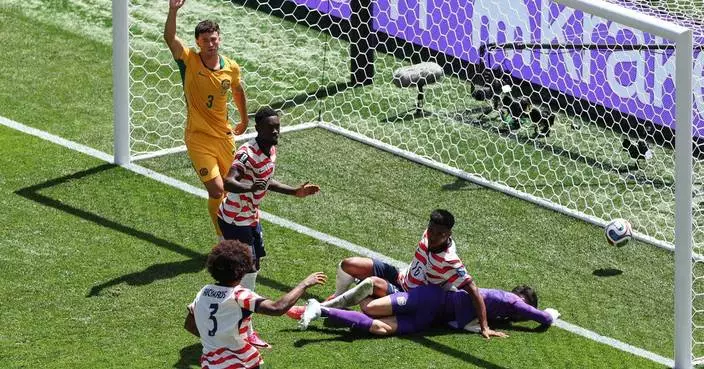
The son of Super Bowl champion wide receiver Antonio Freeman scored on a header for the United States in its 2-0 World Cup win over Australia on Friday. It was the third international goal for Freeman, the Americans' youngest starter at age 21.

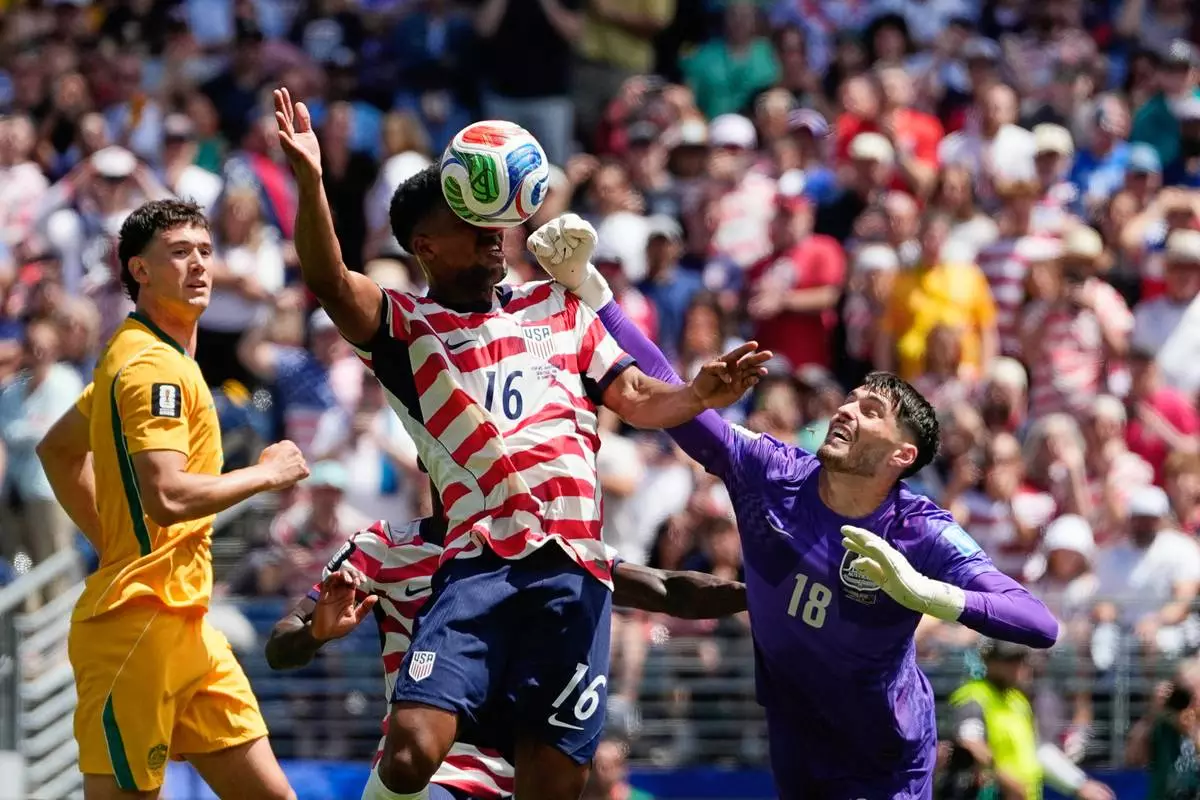
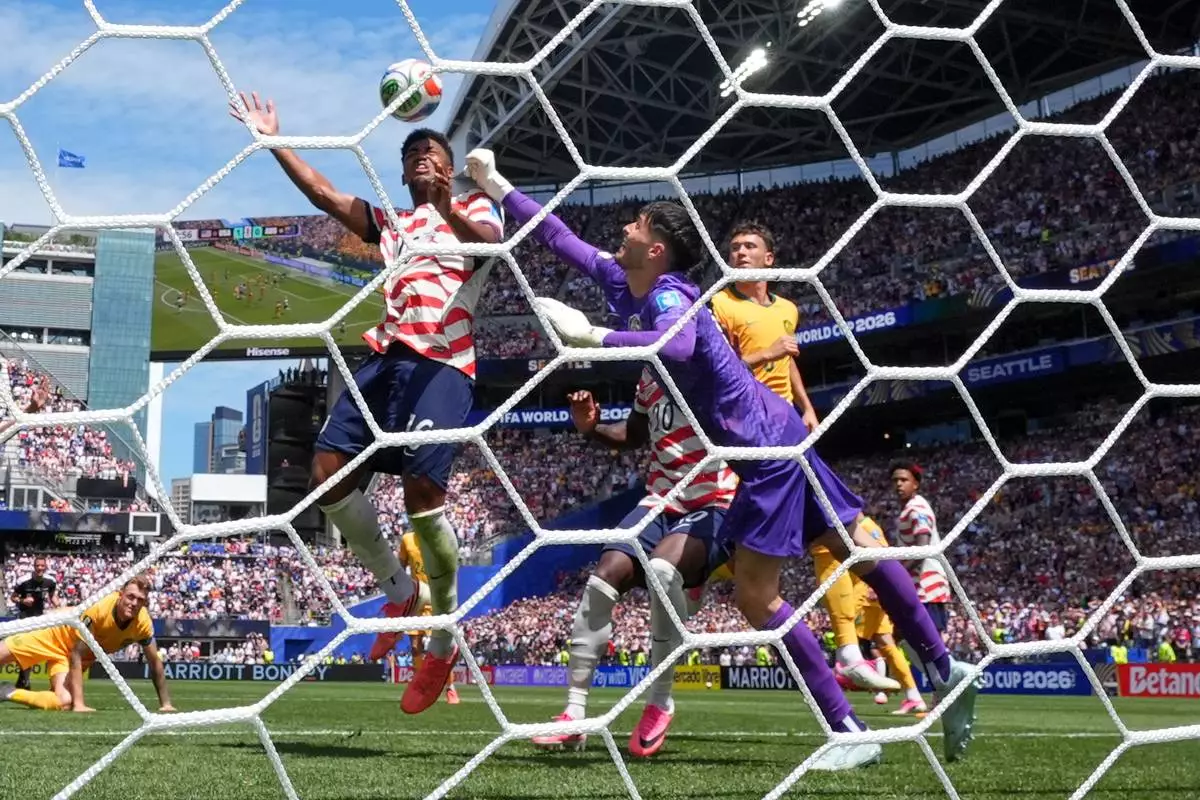
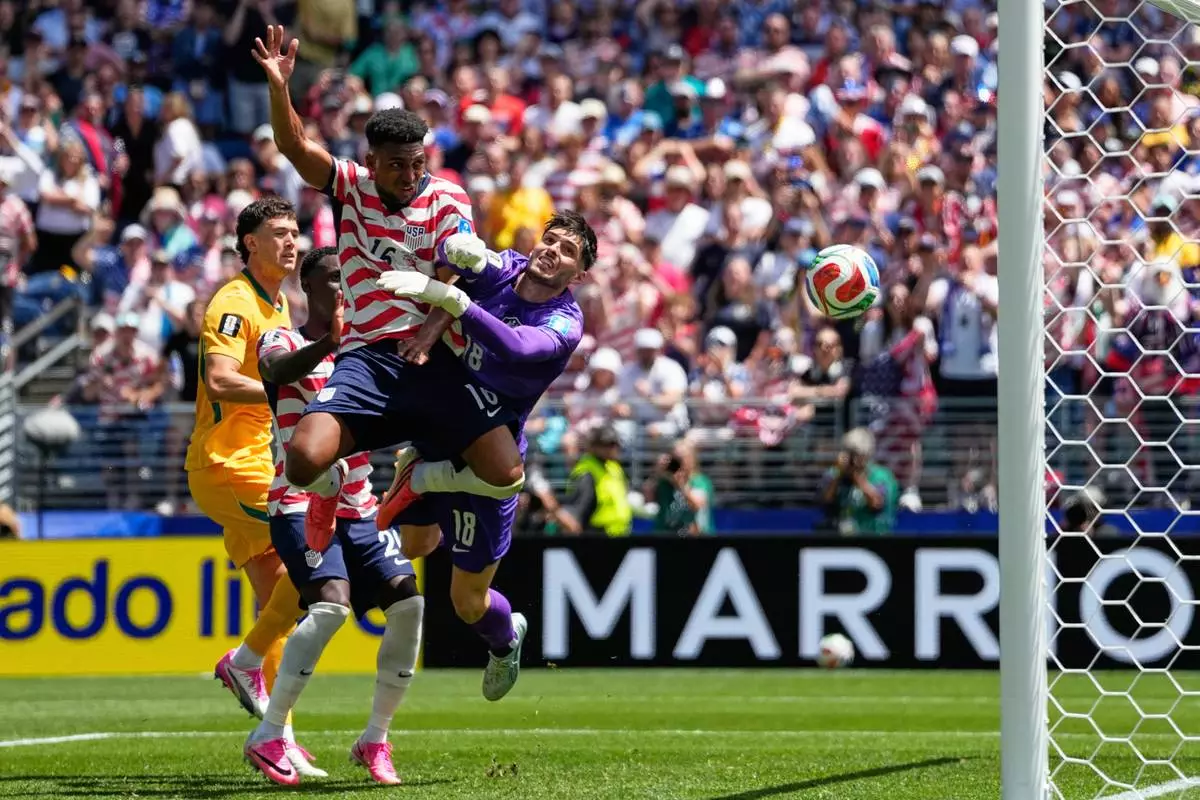
With the U.S. leading 1-0 in the 43rd minute, Antonee Robinson sent a free kick to Sergiño Dest, who fired a shot from just outside the penalty area. The ball deflected off an Australian defender and high into the air, and Freeman leaped — high-pointing the ball, in NFL terms — and headed it past the outstretched arm of goalkeeper Patrick Beach and into the net.

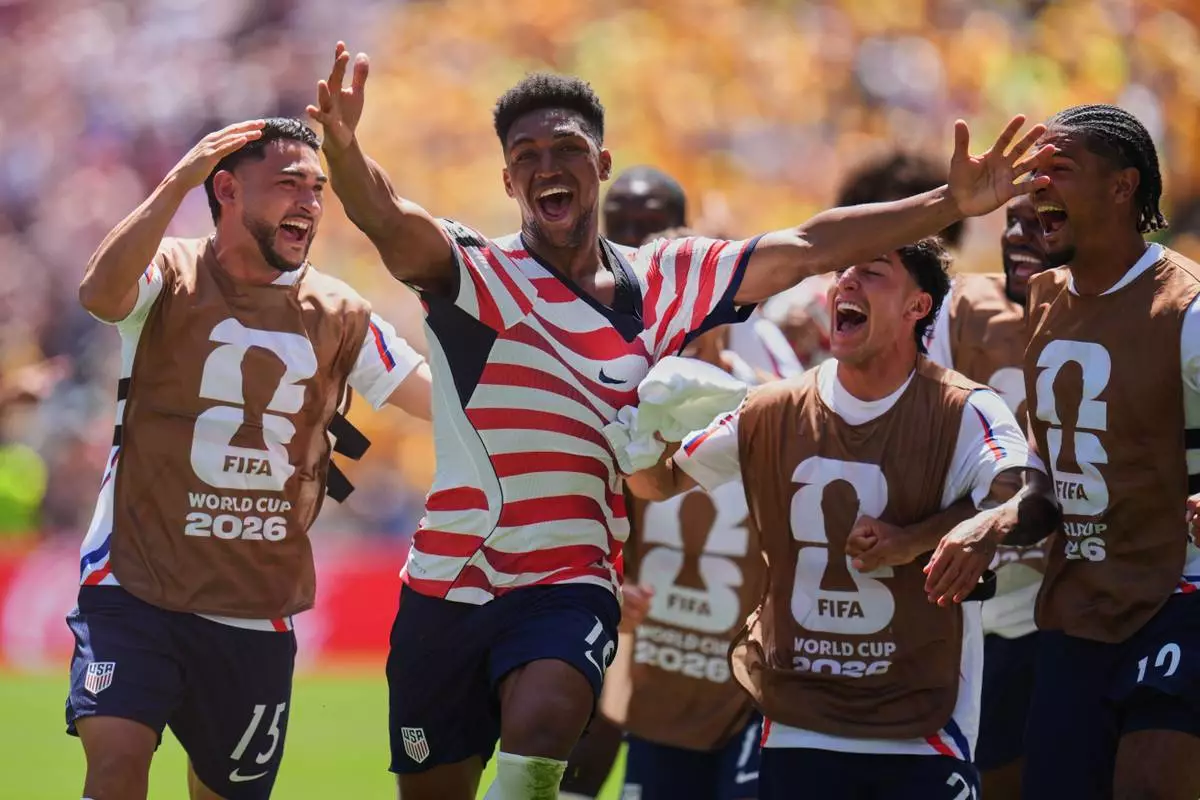
A replay review for offside delayed Freeman's celebration, but the goal was confirmed, and Lumen Field shook as Freeman ran to a corner of the field, surrounded by jubilant teammates.

Freeman called it “a full-circle family moment.”

"For me, it just shows how great the family tree is,” he said. “He can be great but I can be great in my own way as well. I think that just shows how amazing it is to have a dad who’s successful and that can mentor me to be able to be ready for moments like these.”

Antonio Freeman played nine NFL seasons, mostly with the Green Bay Packers as a favorite target of quarterback Brett Favre. They won the Super Bowl together after the 1996 season, with Freeman hauling in an 81-yard touchdown pass from Favre that gave the Packers the lead for good against the New England Patriots.

Antonio Freeman was one of the pioneers of the Packers' signature celebration, the Lambeau Leap. Now his son has a signature jump of his own.

Alex Freeman spent much of the last two years vying for a spot on the U.S. roster. He was a starter for Orlando City of Major League Soccer, but had to battle with more experienced defenders to get selected. A few months before the World Cup, he gambled on himself.

In January, Freeman accepted a move to Villarreal of La Liga, accepting a smaller role than what he enjoyed with Orlando.

Two months earlier, Freeman impressed U.S. coach Mauricio Pochettino in his 13th international appearance, scoring two goals against Uruguay in a 5-1 victory on Nov. 18.

He made an immediate impact in the World Cup, playing all 90 minutes in the U.S. opener against Paraguay. Freeman assisted on Gio Reyna's extra-time goal in the 4-1 victory.

Ben Kule is a student in the University of Georgia’s Carmical Sports Media Institute.

AP World Cup: https://apnews.com/hub/fifa-world-cup

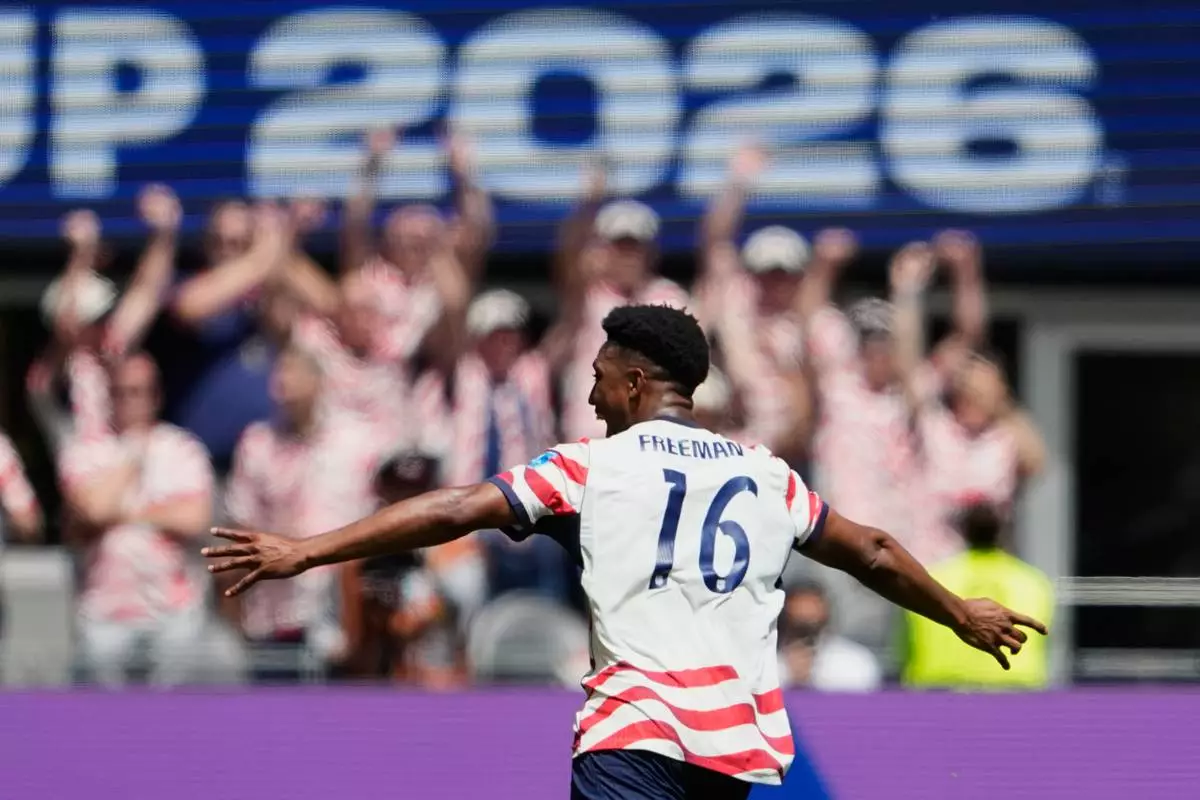
United States' Alex Freeman celebrates after scoring his side's second goal during the World Cup Group D soccer match between the United States and Australia in Seattle, Friday, June 19, 2026. (AP Photo/Lindsey Wasson)

United States' Alex Freeman celebrates after scoring his side's second goal during the World Cup Group D soccer match between the United States and Australia in Seattle, Friday, June 19, 2026. (AP Photo/Lindsey Wasson)

United States' Alex Freeman, center, scores his side's second goal past Australia goalkeeper Patrick Beach during the World Cup Group D soccer match between the United States and Australia in Seattle, Friday, June 19, 2026. (AP Photo/Lindsey Wasson)

United States' Alex Freeman, center, scores his side's second goal past Australia goalkeeper Patrick Beach during the World Cup Group D soccer match between the United States and Australia in Seattle, Friday, June 19, 2026. (AP Photo/Lindsey Wasson)

Australia goalkeeper Patrick Beach fails to stop a goal by United States' Alex Freeman, center, during the World Cup Group D soccer match between the United States and Australia in Seattle, Friday, June 19, 2026. (AP Photo/Lindsey Wasson)

Australia goalkeeper Patrick Beach fails to stop a goal by United States' Alex Freeman, center, during the World Cup Group D soccer match between the United States and Australia in Seattle, Friday, June 19, 2026. (AP Photo/Lindsey Wasson)

United States' Alex Freeman (16) scores their second goal during the World Cup Group D soccer match between the United States and Australia in Seattle, Friday, June 19, 2026. (AP Photo/Lindsey Wasson)

United States' Alex Freeman (16) scores their second goal during the World Cup Group D soccer match between the United States and Australia in Seattle, Friday, June 19, 2026. (AP Photo/Lindsey Wasson)

United States' Alex Freeman (16), second left, celebrates after scoring his side's second goal during the World Cup Group D soccer match between the United States and Australia in Seattle, Friday, June 19, 2026. (AP Photo/Manu Fernandez)

United States' Alex Freeman (16), second left, celebrates after scoring his side's second goal during the World Cup Group D soccer match between the United States and Australia in Seattle, Friday, June 19, 2026. (AP Photo/Manu Fernandez)

Recommended Articles