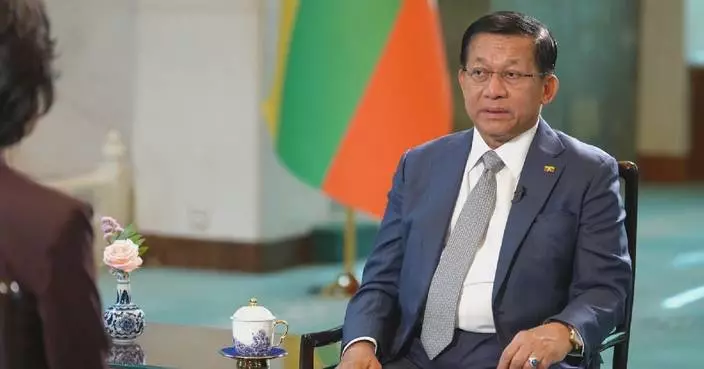
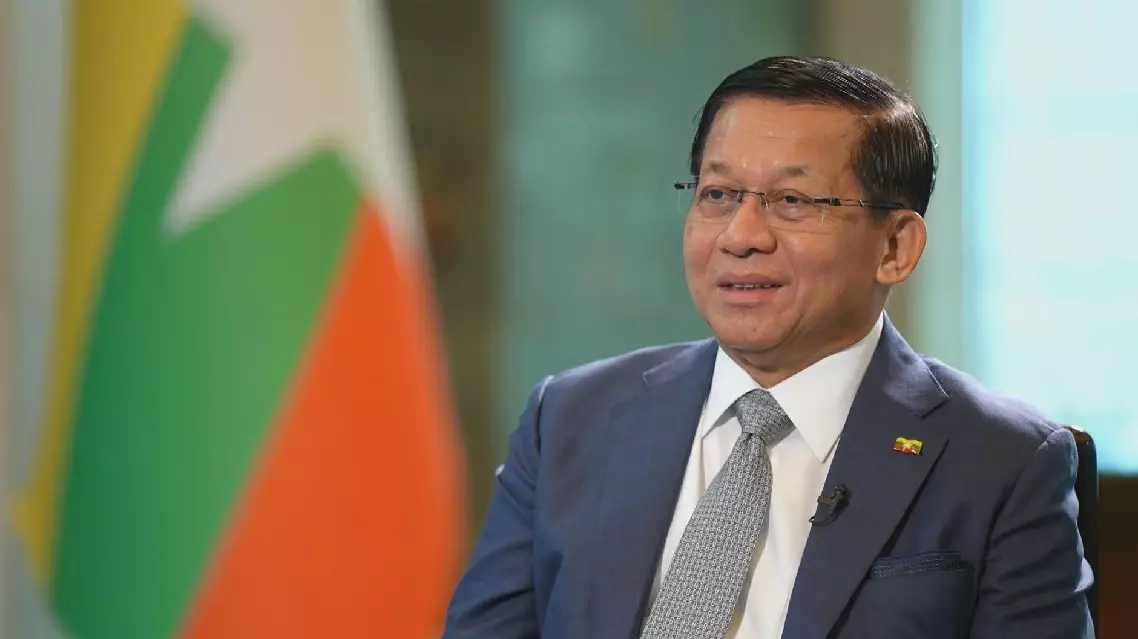
Myanmar President Min Aung Hlaing on Wednesday called on all countries in the world to work closely together to combat online gambling and telecom fraud, and described cybercrime as a growing threat to the people worldwide.
He made the call in an exclusive interview with the China Media Group in Beijing on Wednesday during a five-day state visit to China that concluded on Friday. The visit marked Min Aung Hlaing's 13th to China, and his first since assuming office as Myanmar president.
"Cyber fraud is a severe challenge facing all humanity. People who are driven by greed, who seek speculative gains by chance, or who have developed the bad habit of gambling are very likely to become involved in or take part in cyber fraud," said the president.
Min Aung Hlaing highlighted the need for preventative measures as well as stronger law enforcement.
"In this regard, on the one hand, we need to raise their awareness and provide warning and education. On the other hand, we must rely on legal means to curb such activities," he said.
Regarding cross-border crimes, he called for closer regional cooperation and urged countries worldwide to take concrete actions.
"Myanmar and China should deepen law enforcement cooperation and crack down on illegal border crossings in accordance with the law. Countries around the world also need to formulate and improve related laws and regulations, combat telecom and online fraud, and carry out legal education among their own citizens. People inevitably have all kinds of desires, and it is very difficult to restrain them. This is a real test of one's character, so self-discipline is also needed," he said.
"Of course, the most important thing is still to prohibit such behavior through laws and regulations. This requires countries to work together. Only in this way can telecom fraud be eradicated. Telecom fraud is one of the trickiest challenges and problems in the world, and it can only be solved through cooperation of all countries," said the president.
Global cooperation key to cyber fraud fight: Myanmar president
European Union (EU) leaders had agreed to extend sanctions on Russia for another 12 months, European Commission President Ursula von der Leyen said on Friday.
The decision, made at an EU summit in Brussels, marks the first time that the bloc has renewed its economic sanctions package for a full year.
Previously, the measures had been extended every six months.
The summit also agreed to produce a preliminary deal on a two-trillion-euro (about 2.30 trillion U.S. dollars) long-term budget for 2028-2034 by October, according to a draft statement published on Friday.
However, significant disagreements remained among member states regarding the allocation of funds.
While Germany, the Netherlands and some countries push to slash the bloc's total spend, southern and eastern member states are concerned that funding for sectors such as agriculture will be sacrificed in favor of more defense spending.
Another hotly discussed topic is the Ukraine issue. The country opened negotiations this month on the first cluster of its accession talks with the EU, and von der Leyen said the bloc aims to open negotiations on additional clusters in the near future.
The European Council also adopted joint conclusions on Ukraine endorsed by all 27 EU leaders for the first time since Dec 2024, said European Council President Antonio Costa at a press conference.
He also said he was establishing a diplomatic channel through his office to facilitate direct communication between the EU and Russia, stressing that the bloc must be able to convey its own messages to Moscow rather than rely on others to interpret Russia's positions.
However, some EU leaders remain cautious about the role Costa should play in any future peace negotiations.
German Chancellor Friedrich Merz said that the diplomatic coordination mechanism involving Germany, France and Britain had been established at Ukraine's explicit request, adding that Costa plays an important role in representing the EU, but there is no need for him to "make further decisions right now."
Diplomatic contacts related to a possible ceasefire and peace negotiations between Russia and Ukraine have so far been largely driven by the United States, while European countries have sought a greater role in the process.
The leaders of the EU's 27 member states gathered in Brussels for a two-day summit from June 18 to 19, discussing support for Ukraine, the next Multiannual Financial Framework (MFF), and other key issues.
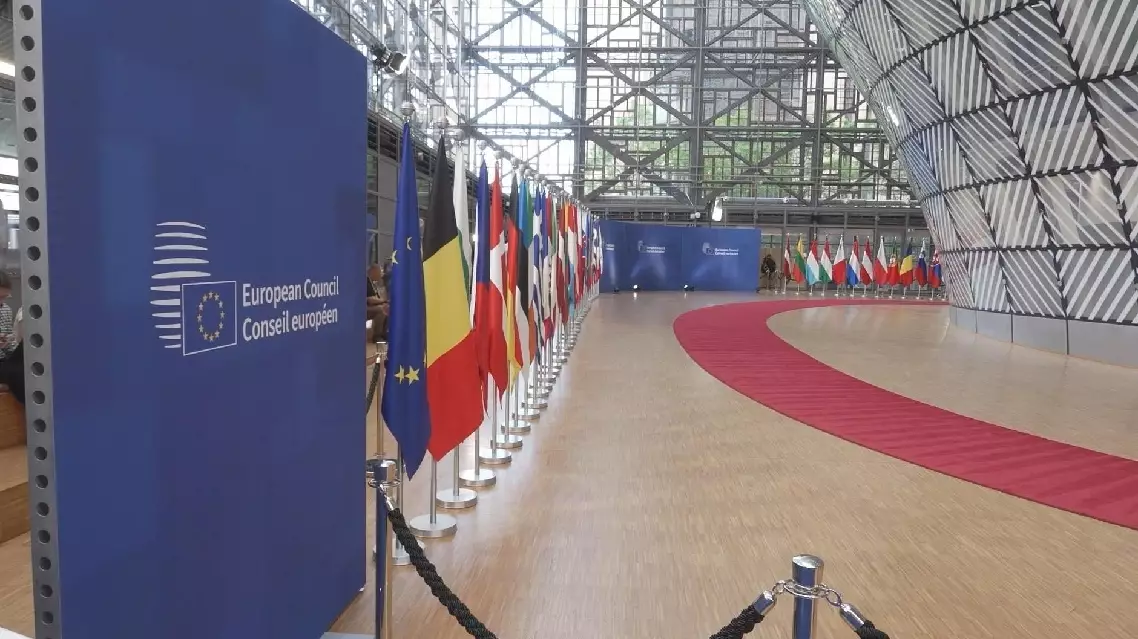
EU leaders agree to extend sanctions on Russia for one year