Aday Mara was a massive presence in Michigan's huge lineup that carried the Wolverines to their first NCAA championship since 1989. He's now a lottery prospect in the NBA draft.
The 7-foot-3, 260-pound center is the headliner among the big men, a position group with a shorter line of top prospects compared to the guards and forwards. The list includes Washington's Hannes Steinbach, Kentucky’s Jayden Quaintance and Houston's Chris Cenac Jr.
Here’s a look at the some of the top big men entering the first round Tuesday night:
STRENGTHS: The junior from Spain projects as a defensive force, leading all players measured at the combine in standing reach (9-9) and ranking second in wingspan (7-6).
Mara averaged 12.1 points, 6.8 rebounds and 2.4 assists while ranking sixth nationally in blocks (2.6) in 23.4 minutes. He shot 66.8% overall, with Synergy charting post-ups as making up 34.8% of his possession usage. He had steady work as the roller in pick-and-roll scenarios and as a cutter, and predictably earned an “Excellent” rating from Synergy for finishing at the rim (97th percentile).
Mara stood out in a Final Four romp against fellow No. 1 seed Arizona with a career-best 26 points on 11-for-16 shooting with nine rebounds and two blocks.
CONCERNS: Mara must improve at the line (56.4%). It's unclear what type of offense he'll offer outside of finishing in the paint, though he did make 3 of 10 3-pointers last season in his first foray beyond the arc.
STRENGTHS: The 6-10, 248-pound freshman from Germany was a steady producer as a scorer (18.5) and rebounder (national-best 11.8).
The work on the glass stands out, with Steinbach having a 24-rebound game against USC and five other games with at least 15 boards. He also had 10 games with at least six offensive rebounds, with putbacks accounting for 17.2% of his possession usage, according to Synergy. His game otherwise leaned on being the roll man in pick-and-rolls, on post-ups and as a cutter.
Steinbach shot 57.7% overall, and he showed some inside-out skills by hitting 18 3s (34%) that could also have him work as a 4-man. He averaged 1.2 blocks with a better than 7-2 wingspan.
CONCERNS: He's not an explosive athlete, which could show in facing opponents with length or defending skilled opponents. He had more turnovers (59) than assists (47) to raise uncertainty about how he can contribute as a complementary playmaker. —
STRENGTHS: Physical tools stand out for the Kentucky sophomore. Quaintance has a strong frame (6-9, 253) and good measurables, including ranking fourth at the combine in wingspan (better than 7-5) and having big hands (tied for combine lead with 11-inch width, tied for second with a 9.5-inch length).
CONCERNS: Health. Quaintance tore his right anterior cruciate ligament in February 2025 while at Arizona State. He returned only to play four games at Kentucky while dealing with lingering issues in that knee.
That leaves a limited evaluation sample. He averaged 9.4 points, 7.9 rebounds and 2.6 blocks in 24 games at Arizona State before the injury. He made his Kentucky debut in December with 10 points and eight rebounds against St. John's, but managed 10 points and 12 rebounds over the next three games and played his final game Jan. 7.
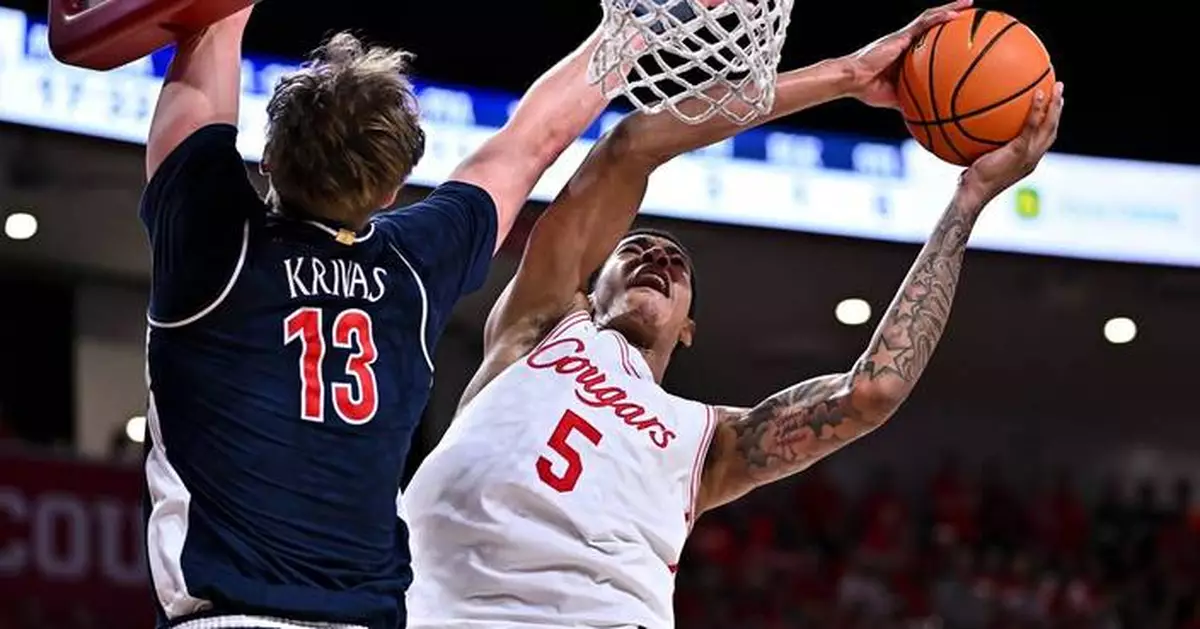
STRENGTHS: The 6-11, 240-pound Houston freshman has rangy skills and intriguing tools. The McDonald’s all-American was MVP of the NBPA Top 100 camp in summer 2024, then started 36 games for Kelvin Sampson's top-10 team where defense, toughness and rebounding is a prerequisite to play.
Cenac was fifth among combine players with a 7-5 wingspan. He led the Cougars in rebounding (7.9) while hitting 30 3-pointers to show inside-out skills.
CONCERNS: He didn't consistently pop, instead settling into a complementary role while averaging 9.5 points. He had three or fewer made baskets in nearly half his games (18 of 37). He didn't get to the line often (58 attempts in 37 games) and shot poorly when he did (62.1%). He also committed more turnovers (33) than assists (27).
— HENRI VEESAAR: The 6-11, 227-pound fourth-year junior from Estonia had a breakout year at North Carolina (17.0 points, 8.7 rebounds). He's a late first-round prospect who runs the floor and fits today’s desired mold of bigs with space-creating range. He made 42.6% on 3s (40 of 94) at UNC and earned an “Excellent” rating from Synergy for his catch-and-shoot jumper, coming after shooting just 31.6% (19 of 60) from behind the arc in two seasons at Arizona.
— TARRIS REED JR.: The 6-10, 264-pound senior was an interior force in UConn's run to the NCAA final. He had career-high averages of 14.7 points, 9.0 rebounds, 2.3 assists and 2.0 blocks — including 31 points and 27 rebounds in the first-round NCAA win against Furman to become the first player since Houston's Elvin Hayes in 1968 to post a 30/25 game in March Madness. The late first-round prospect has a better than 7-4 wingspan.
— ZUBY EJIOFOR: The 6-8, 245-pound senior was a physical presence in St. John's run to the Sweet 16. Ejiofor has a high motor, with 15.4% of his possession usage coming on offensive-rebound putbacks, according to Synergy. His sturdy frame and 7-2 wingspan that offers defensive potential with his ability to tussle in the paint and move his feet to handle switches. The late first-round prospect made 18 of 59 3s (30.5%) to offer at least some potential to step outside.
— UGONNA ONYENSO: The 6-11, 237-pound Virginia senior is an intriguing second-round flier as a rim protector with a nearly 7-5 wingspan. He stood out against top pro prospect Cameron Boozer of Duke, harassing the eventual Associated Press national player of the year into season-low outputs (13 points, 3-of-17 shooting) while blocking four of his shots in the Atlantic Coast Conference Tournament title game. Onyenso's nine blocks in that game pushed him to 21 for the tournament, breaking a record held by former Wake Forest big man and NBA champion Tim Duncan.
AP NBA: https://apnews.com/nba
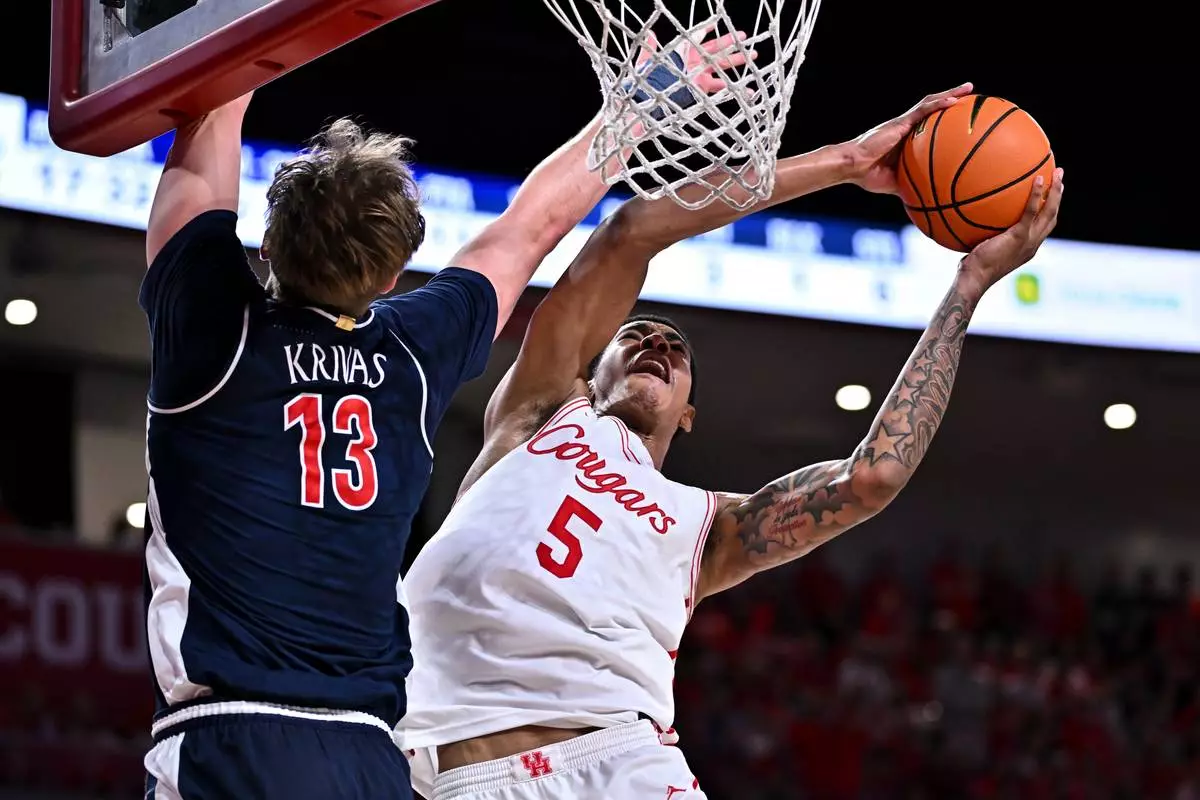
FILE - Houston forward Chris Cenac Jr. (5) shoots the ball as Arizona center Motiejus Krivas (13) defends in the second half of an NCAA college basketball game, Feb. 21, 2026, in Houston. (AP Photo/Maria Lysaker, File)
ROME (AP) — The head of Latin America’s top development bank made a pitch to Pope Leo XIV this week in the face of the Vatican’s call to divest from the mining industry: that the mistakes of the past can be avoided in extracting rare earth minerals to supply a global tech boom.
Ilan Goldfajn, head of the Inter-American Development Bank, met privately with the pope on Friday and asserted the potential of rare earth mining, saying it could be a boon to Latin America provided there are safeguards and value is added locally.
It’s probably not an easy sell. The Vatican for years has taken a firm stand against multinational mining corporations, especially in Latin America and in favor of the Indigenous peoples, whose lands and livelihoods are often ravaged when mining projects come to town.
Goldfajn’s visit, which followed one earlier this year by mining executives, suggests that he recognizes the weight of the pope’s words in the majority-Catholic region, and a desire to sensitize him to the possibility of a better way of doing business. Whether Leo can be swayed is another matter, given his own experience in the region and criticism of the often corrupt deals mining companies ink with governments in the developing world.
Countries have identified dozens of minerals, including copper, cobalt, lithium and nickel, as critical because they are essential for new technologies. The 17 rare earth elements are a subset of them. They’re used in a wide range of products, including smartphones, semiconductors, electric vehicles and jet engines.
“It’s a unique opportunity for the region, but you need to do it in the right way with the standards, the labor conditions, with the environmental conditions, the governance,” Goldfajn said in an interview in Rome on June 18, one day before his meeting.
“We have exactly the tools to do that,” he added, noting the IADB has a roughly $4 billion pipeline of critical mineral projects in the region, mostly in Chile, Argentina and Brazil, and three-quarters of that amount with private companies. He had just delivered a presentation on rare earth minerals at a finance conference, with an eye on potential European investors.
Mining has a checkered, centuries-long history in Latin America, from forced labor and displacement of Indigenous peoples to deforestation, poisoning of waterways and deadly dam collapses. Foreign companies withdrew much of the wealth from the earth without enriching local populations. In colonial times, silver and gold made its way across the ocean to adorn Catholic churches.
Leo, who spent two decades working as a missionary in Peru, would be intimately familiar with the plight of Indigenous peoples in mining areas and the environmental impact of extraction industries on the land. He ministered in Chulucanas, in the archdiocese of Piura, which has huge copper mining projects, and in Trujillo, known for its gold deposits. His final Peruvian posting, Chiclayo, is a big logistical hub for northern Peru’s extraction industries.
“He must have seen both sides: the promise, the future, but also the challenges,” Goldfajn said of Leo’s time in Peru. He noted that Leo held a private audience with a group of top mining executives in January, which he heard from them had been “very constructive.”
But two months later, the Vatican launched a campaign to encourage divestment from mining companies. At a Vatican news conference, top officials held up an ecumenical Christian network, known as the Church and Mining Network, that is active in particular in Latin America. The campaign seeks to encourage local churches to review their investment strategies and divest where needed, and to share information especially with Indigenous groups about the types of extraction occurring on their lands.
Leo is expected to visit Peru in November, including places where he ministered. In each of the three sub-Saharan countries he visited during his April trip to Africa — Cameroon, Angola and Equatorial Guinea — he blasted the "colonization” of Africa’s minerals by mining companies.
It makes sense for people like Goldfajn to try to engage Leo, even if the pope alone won't move investment decisions, Bryan Harris, managing partner at Sabio, a Latin America-focused strategic advisory firm, wrote in an email.
“The decades he spent in Peru give him personal credibility and his messaging on mining sets the tone for how dioceses and parishes across the continent will engage with mining companies and projects,” said Harris, who consults for international mining companies in the region. “These groups are often the basis of local opposition movements to mining, so the Pope has considerable sway on whether relations are confrontational or conciliatory.”
Harris noted that processing of rare earths can be extremely dirty, involving heavy chemical use that can contaminate water resources without close monitoring of companies' sustainability commitments and enforcement by federal regulators.
Leo's predecessor, Pope Francis, a native of Argentina, singled out the toll of mining in his 2015 environmental encyclical “Praised Be,” noting the pollution of underground water systems as a result of runoff, the mercury pollution in gold mining or sulfur dioxide pollution in copper mining.
Francis said it was “essential” for Indigenous communities to be the principal dialogue partners when large projects affecting their land are being considered.
The Vatican didn’t provide any readout of Leo's private audience with Goldfajn. In a separate audience Friday, Leo met with participants in a conference at the Vatican’s environmental educational center named for Francis’ 2015 encyclical. He denounced the profit-at-all cost mentality of those who seek to plunder the earth “at the expense of the most vulnerable and enhances the risk of dehumanization."
There are 75 million tons (82.7 million U.S. tons) of rare earth oxides around the world, more than half in China, and with Brazil home to the second-largest reserves, according to the U.S. Geological Survey’s most recent estimate.
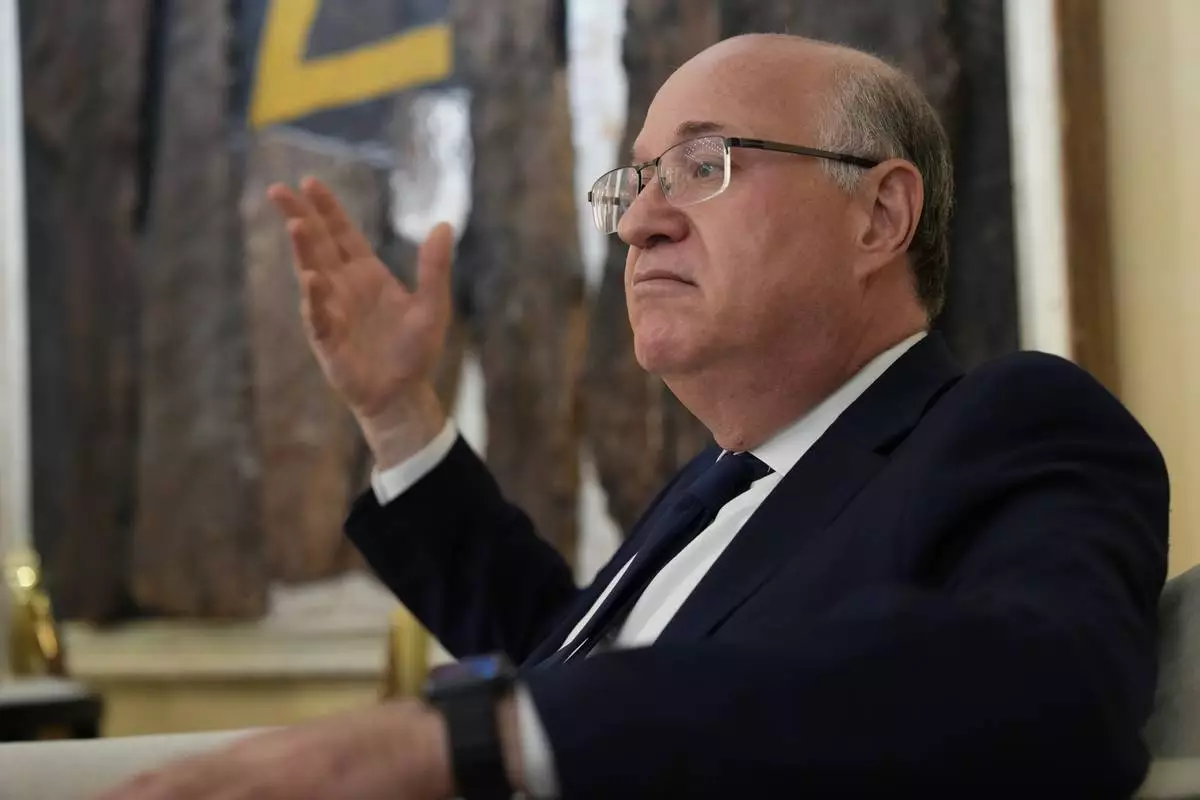
The President of the Inter-American Development Bank Ilan Goldfajn speaks to the Associated Press during an interview in Rome, Thursday, June 18, 2026. (AP Photo/Domenico Stinellis)
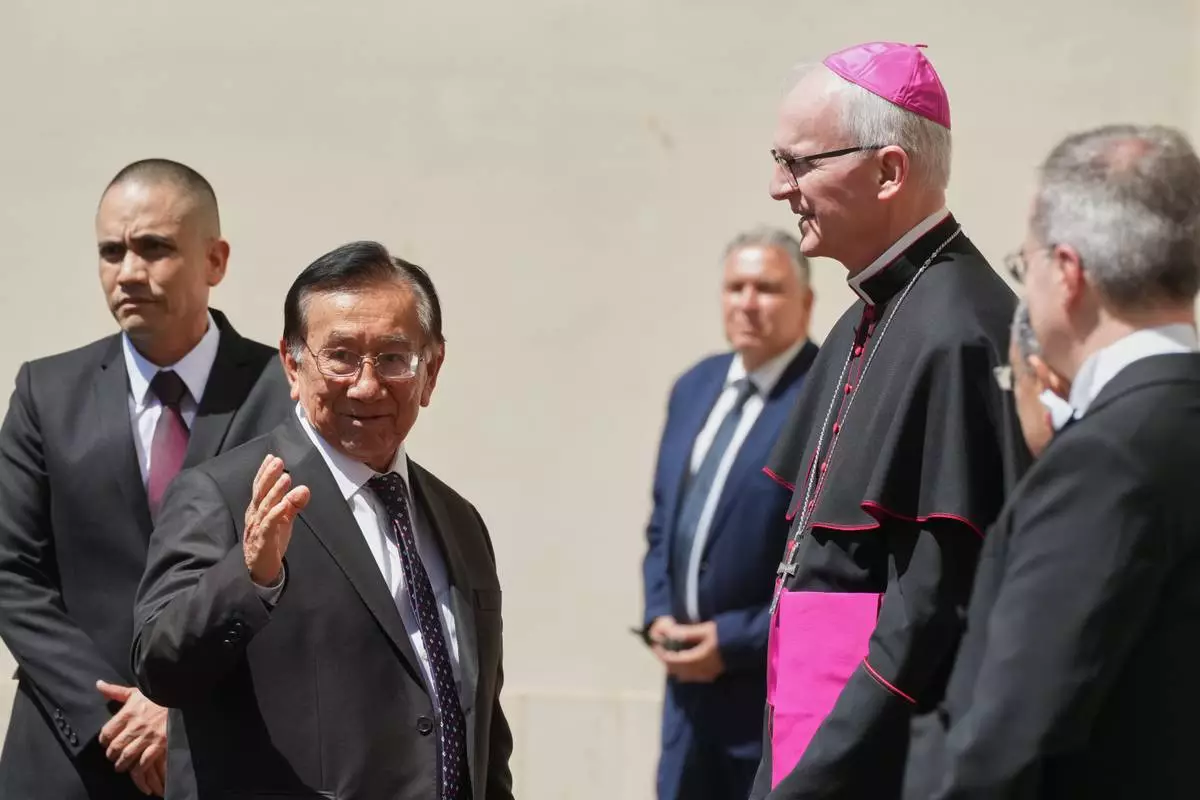
Peru's interim President Jose Maria Balcazar, second left, is welcomed by Archbishop Petar Rajic, Prefect of the Prefecture of the Papal Household, as he arrives in the St. Damasus Courtyard to meet with Pope Leo XIV, at the Vatican, on Thursday, June 18, 2026. (AP Photo/Andrew Medichini)
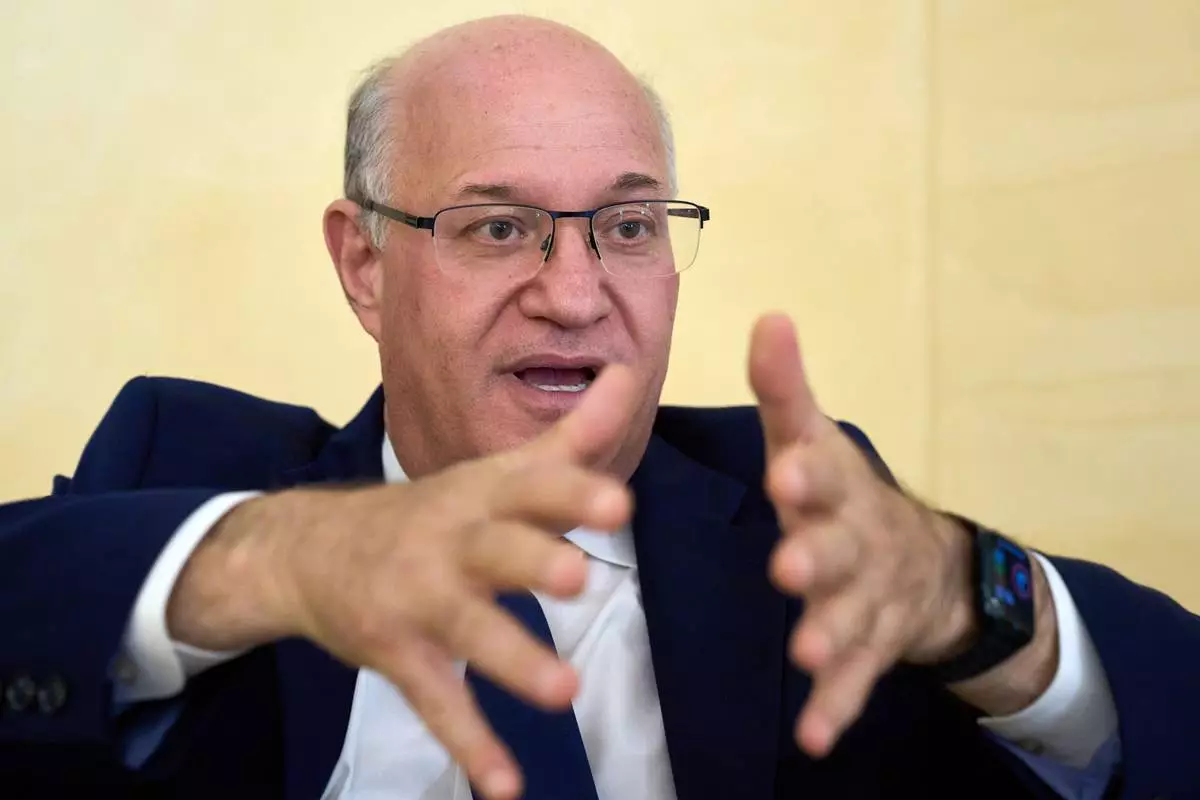
The President of the Inter-American Development Bank Ilan Goldfajn speaks to the Associated Press during an interview in Rome, Thursday, June 18, 2026. (AP Photo/Domenico Stinellis)
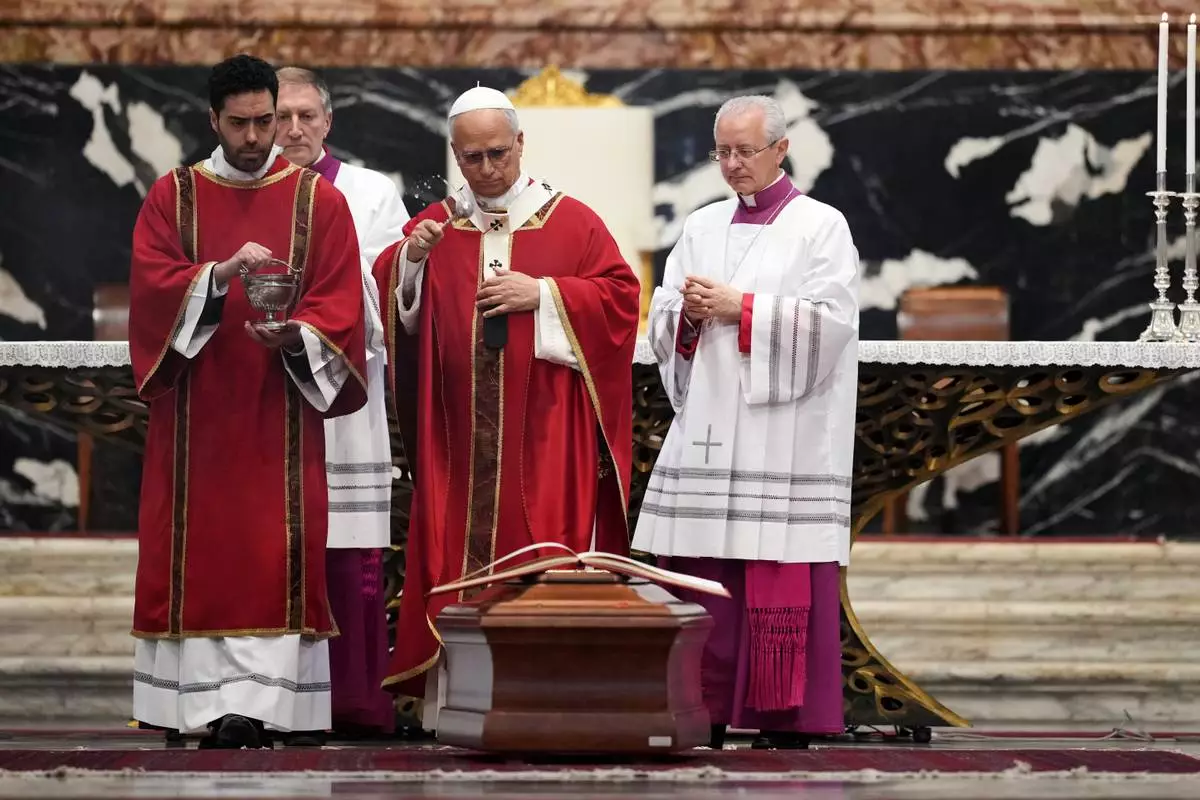
Pope Leo XIV celebrates the funeral service for late Cardinal Camillo Ruini, in St.Peter's Basilica at the Vatican, Thursday, June 18, 2026. (AP Photo/Andrew Medichini)
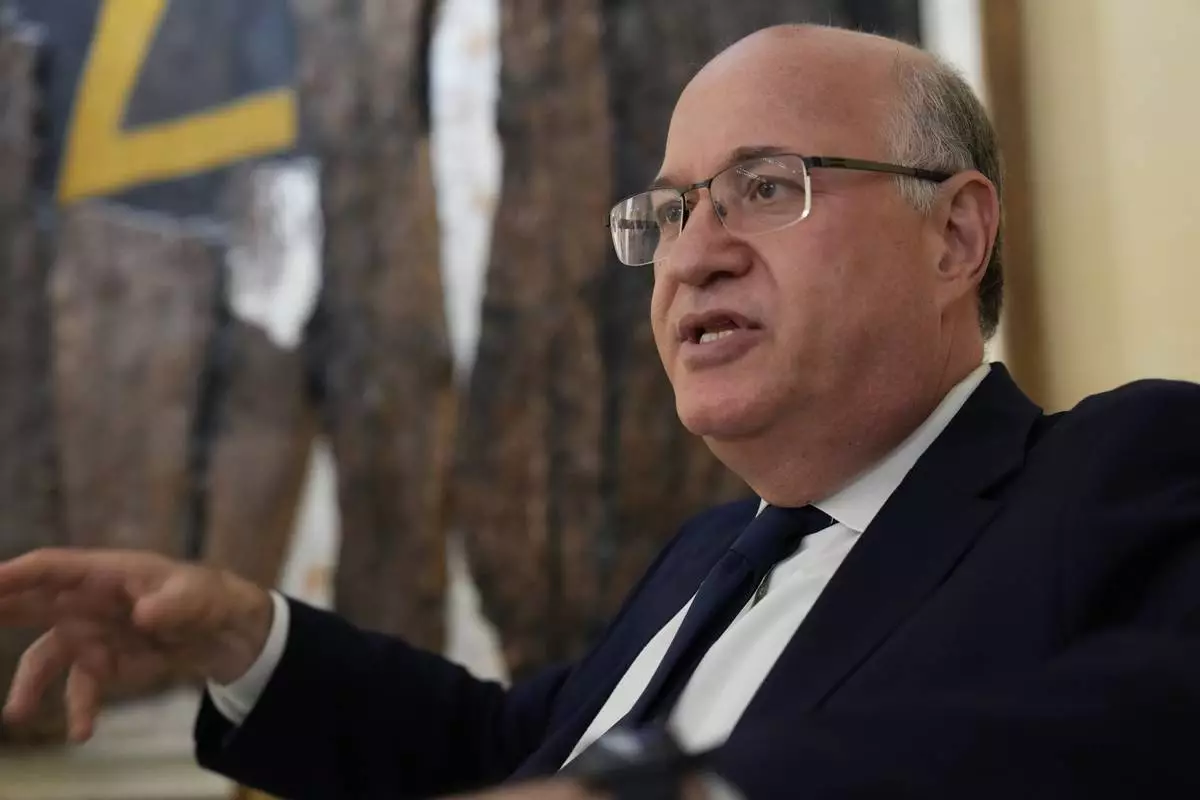
The President of the Inter-American Development Bank Ilan Goldfajn speaks to the Associated Press during an interview in Rome, Thursday, June 18, 2026. (AP Photo/Domenico Stinellis)