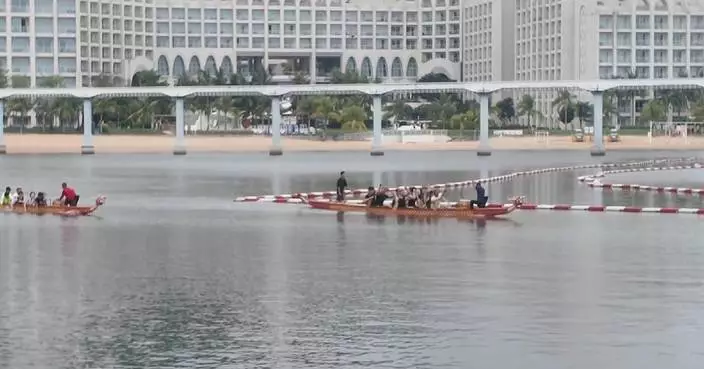
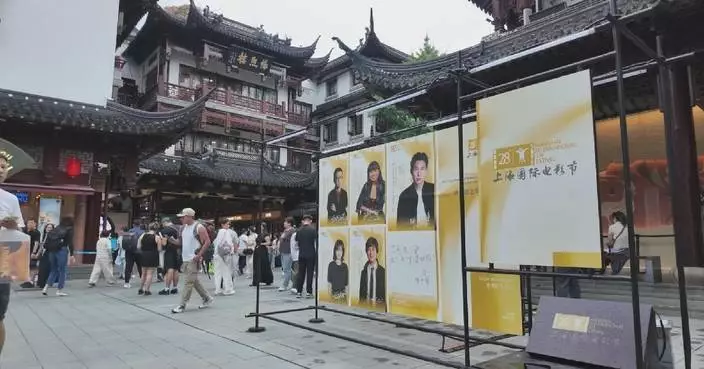
Daniel, a Russian young man who has lived in China for many years, immersed himself in this year's Duanwu Festival customs just like a true local, gaining a deeper and more authentic appreciation for the unique charm where traditional Chinese culture meets contemporary trends.
The Duanwu Festival, also known as Dragon Boat Festival, falls on the fifth day of the fifth month of the Chinese lunar calendar.
For Daniel, this year's Duanwu Festival -- which falls on Friday -- feels a little different. In previous years, he would simply buy ready-made zongzi, the most distinct food for the festival, at a supermarket. But this time, he's set to learn the art of making them from his Chinese mother-in-law.
Before heading to his in-laws' home, he had already stocked up on all the necessary ingredients, along with salted duck eggs and yellow wine. Yet, as he soon discovered, making zongzi is far more than just wrapping rice in leaves -- it's a craft with its own set of rules and techniques. He found himself turning to his mother-in-law for guidance more than once throughout the process.
As one of China's most significant traditional festivals, the Duanwu Festival carries auspicious meanings -- warding off evil spirits and praying for health and well-being. To fully embrace the occasion, people make zongzi, carry fragrant sachets, and tie five-color silk threads around their wrists.
Keen to soak up as much of the festive spirit as possible, Daniel didn't stop at learning how to make zongzi. He also paid a visit to a Duanwu Festival-themed market by the West Lake in Hangzhou, east China's Zhejiang Province.
Strolling past stalls brimming with intricate handicrafts, he struck up conversations with vendors, who shared the stories behind the sachets and the colorful threads. These traditions, he learned, have evolved into something far more than mere rituals -- they are a cultural romance woven into the fabric of everyday life in China.
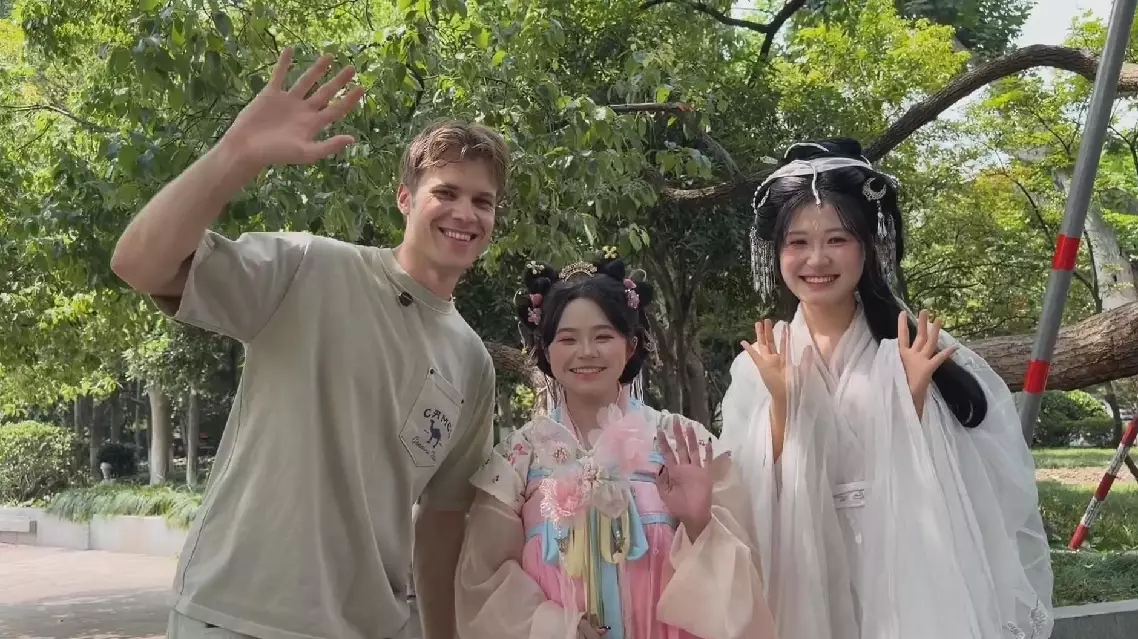
Russian young man experiences Chinese heritage in Duanwu Festival