LAWRENCE, Kan. (AP) — It is difficult to pinpoint exactly when Algeria felt at home in the small college town home to the University of Kansas.
Might have been when 500 people showed up at the airport to welcome its national team for the World Cup. Or when players for The Fennecs saw the giant Algerian flag that local artist Stan Herd had crafted of mulch and sand. Or maybe when members of the school's marching band took the time to learn "Kassaman,” the anthem of the north African nation.
“Respect,” Algeria captain and Manchester City player Riyad Mahrez told the people of Lawrence, shortly before Lionel Messi scored a hat trick and Argentina beat them 3-0 last week to start the tournament, “and thank you so much for the welcome.”
Yet the feel-good story of a town and a team comes at a complex time for Algeria. More than 5,000 miles from the World Cup, human rights advocates say, authorities have been cracking down on protests, social media and other forms of public dissent.
That includes the detention of French journalist Christophe Gleizes on what critics call trumped-up charges of “advocacy of terrorism.”
It is but another example of how politics and sports often intersect on the world's biggest stages.
“He is a soccer journalist and nothing but a soccer journalist,” Gleizes’ parents, Sylvie and Francis Godard, said in a statement. “This never-ending situation is devastating for us. We once again appeal to President (Abdelmadjid) Tebboune to grant clemency so that Christophe may regain his freedom, his family and his job as a sports journalist, as soon as possible."
Algeria is one of four countries whose home base is in the Kansas City area, albeit 40 miles west of the metro. But while Argentina, the Netherlands and England have been treated as if they were family by the smallest host city for the World Cup, the bond struck between Algeria and Lawrence has been something else entirely.
Players shot hoops at Allen Fieldhouse, the historic home of the Jayhawks. They tossed footballs at Memorial Stadium. Signs posted in Arabic around town encourage the Algerian players, who in turn spend their free time kicking balls around with local youths.
“The more we learned of the challenges Algerians faced to get here, the stronger our commitment became to show how welcoming our city could be,” said Ruth DeWitt, the director of community relations for city's convention and visitors bureau.
“They quickly became our home team,” DeWitt said. “Businesses have Algerian flags, banners and merchandise in windows. Schools and summer camps have done projects learning about Algeria, organizations have made welcome videos and our arts programs have created public displays that focus on soccer and the international connections between people.”
Just as the Algerian players have left their mark on Lawrence, so too have the locals left a mark on them.
“That first evening, seeing the fans waiting outside our hotel, it gave me goosebumps,” Algeria coach Vladimir Petkovic said, “and it filled me with a source of pride. Then we had that opening training session as well, and we saw that there was so many U.S. citizens that had scarves for us. They showed so much support. And they really wanted to celebrate this moment.”
As the World Cup was about to start, though, it was FIFA president Gianni Infantino himself who cast a spotlight on Gleizes, calling for the Algerian authorities to pardon him. The French writer has been detained since 2024 as part of a controversial seven-year sentence for “glorifying terrorism” and “possessing propaganda harmful to national interests."
FIFA granted Gleizes a media credential for the tournament and has symbolically left a seat open for him.
“I've invited his parents to a game,” Infantino said, “but I hope — I really hope — that in a great act of humanity, he will be given grace, the presidential grace, and can even join us here for the World Cup. But for the time he's not here, his seat is here for him.”
Gleizes was detained while investigating the death of an Algerian soccer player, Albert Ebosse. His appeal was rejected in December in a case Reporters Without Borders has called “unfounded and outrageous," and which critics say is an example of the way the Tebboune administration has muzzled the media, public activists and political debate.
Even while detained, Gleizes has been trying to do his job. During a recent news conference, Vincent Duluc of the daily L'Equipe told French coach Didier Deschamps that he was asking a question on his behalf about hydration breaks during the World Cup.
“Well,” Deschamps said, "as it regards Christophe, I had the opportunity during the final of the French Cup to meet his parents, and I hope for him and his family that he will be here as soon as possible, and be in a position to ask his questions himself.”
Far from the courtrooms, prison cells and politics of Algeria, its national team — led by Mahrez, Rayan Ait-Nouri and Mohamed Amoura — will take the pitch once again Monday for a crucial Group J game against Jordan in Santa Clara, California.
It has been nearly a week since Les Fennecs lost to Argentina inside Arrowhead Stadium, not far from their Lawrence base. And even though 32 of the 48 teams in the World Cup will advance to the knockout phase, there is suddenly intense pressure to win.
Algeria has qualified for the tournament five times but has never advanced past the round of 16.
It did not qualify at all for the past two World Cups.
“To tell the truth,” Petkovic said, “we are used to having hundreds of thousands of (our) fans right behind us, and that's what is great about Algerian football. They not only get behind us, they put up with us, so many people. Some of the fans are very critical but they are still very happy and proud to get behind their nation and country.”
That sounds a lot like some folks in eastern Kansas, who have chosen to adopt Algeria for the duration of the World Cup.
“I hope that all the neutrals do cheer on Algeria,” Petkovic said, “because it's been a wonderful feeling. We've had a great helping hand. Even in our open training session, they really gave us some positive vibes, not only the Algerian people but also locals from the United States living in this area. We'll try to give them something back.”
AP World Cup coverage: https://apnews.com/hub/fifa-world-cup
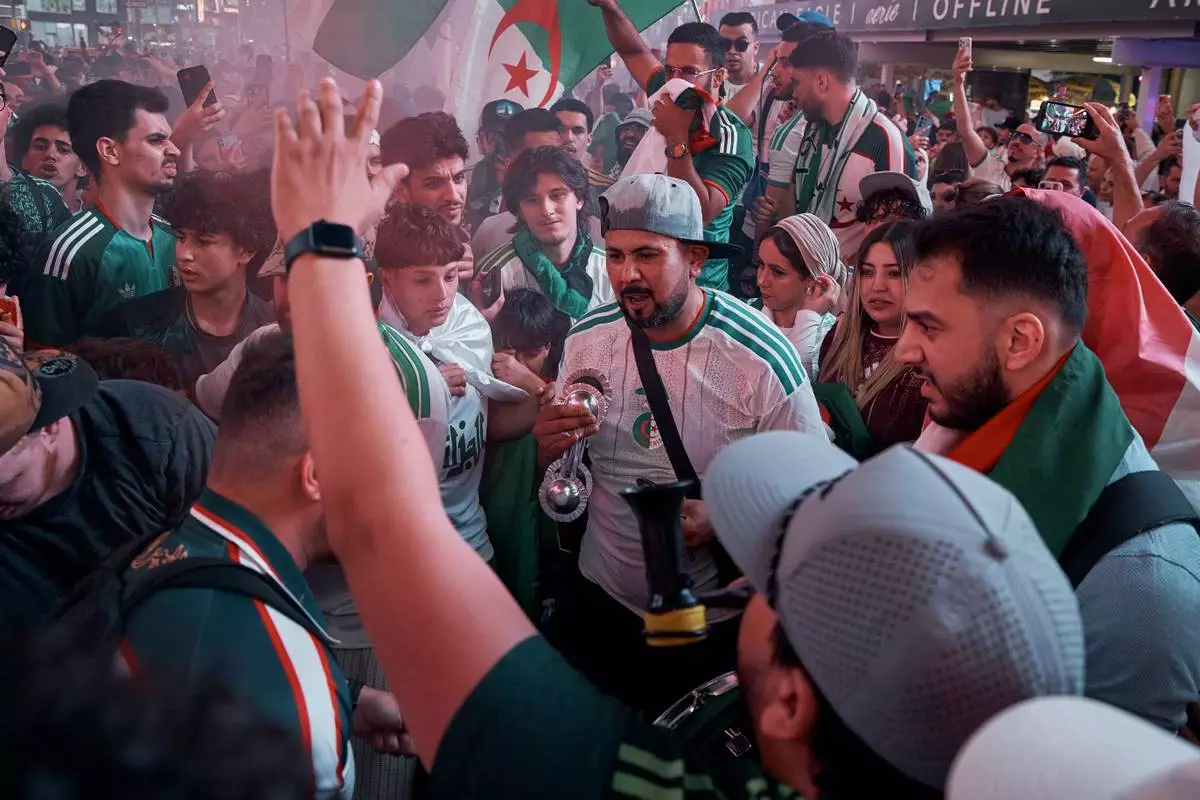
Algerian fans take part in a pre-match rally in support of the Algerian national soccer team in Times Square, Monday, June 15, 2026, in New York. (AP Photo/Andres Kudacki)
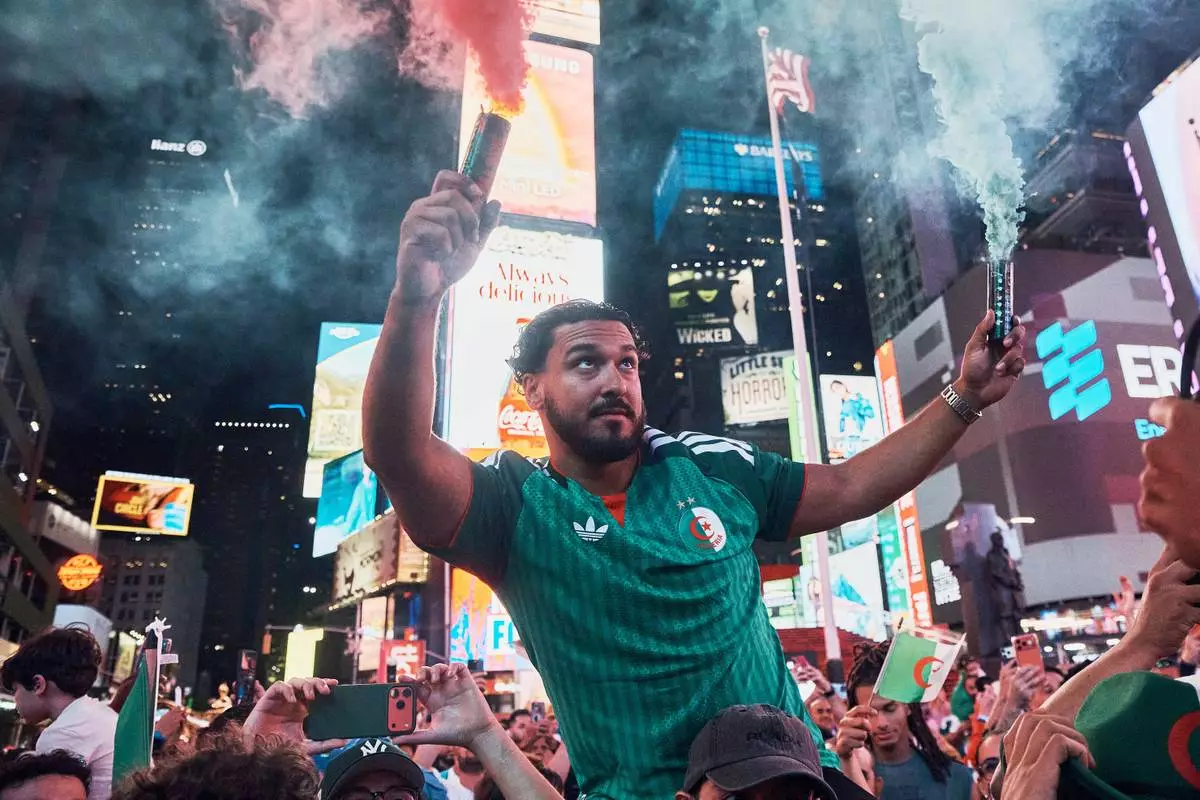
Algerian fans take part in a pre-match rally in support of the Algerian national soccer team in Times Square, Monday, June 15, 2026, in New York. (AP Photo/Andres Kudacki)
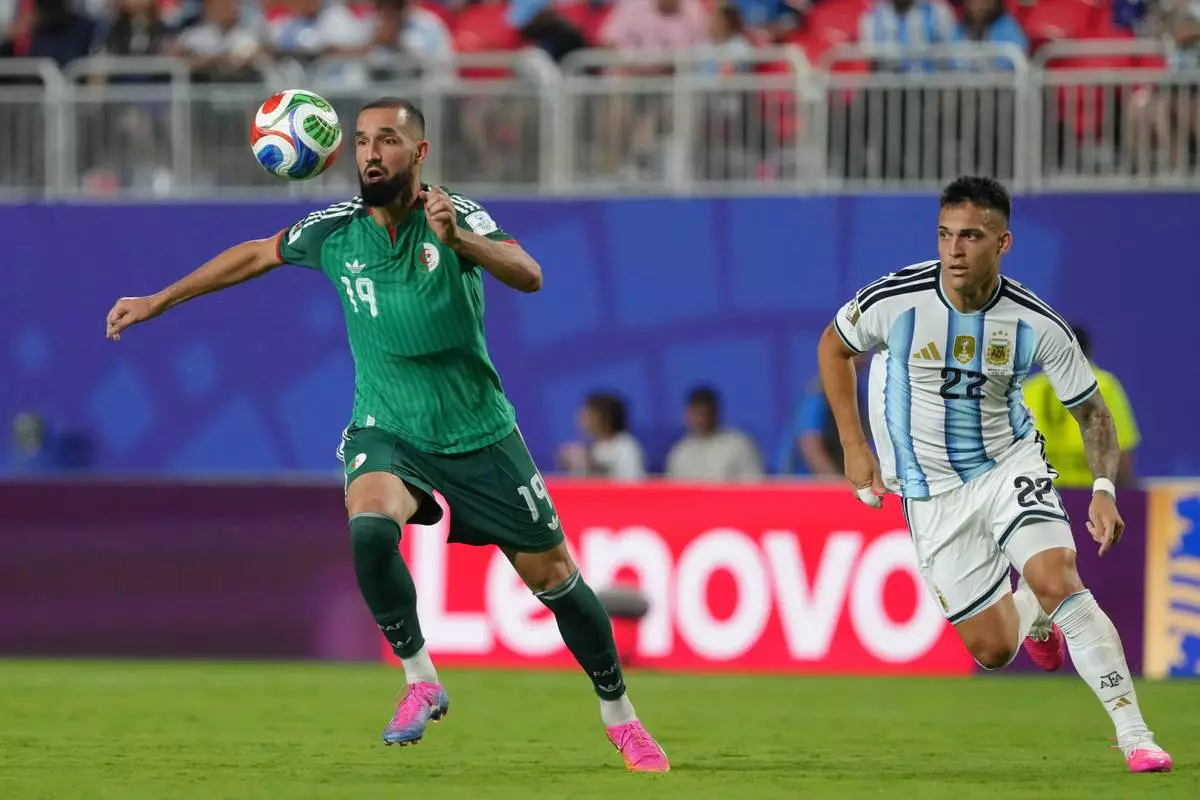
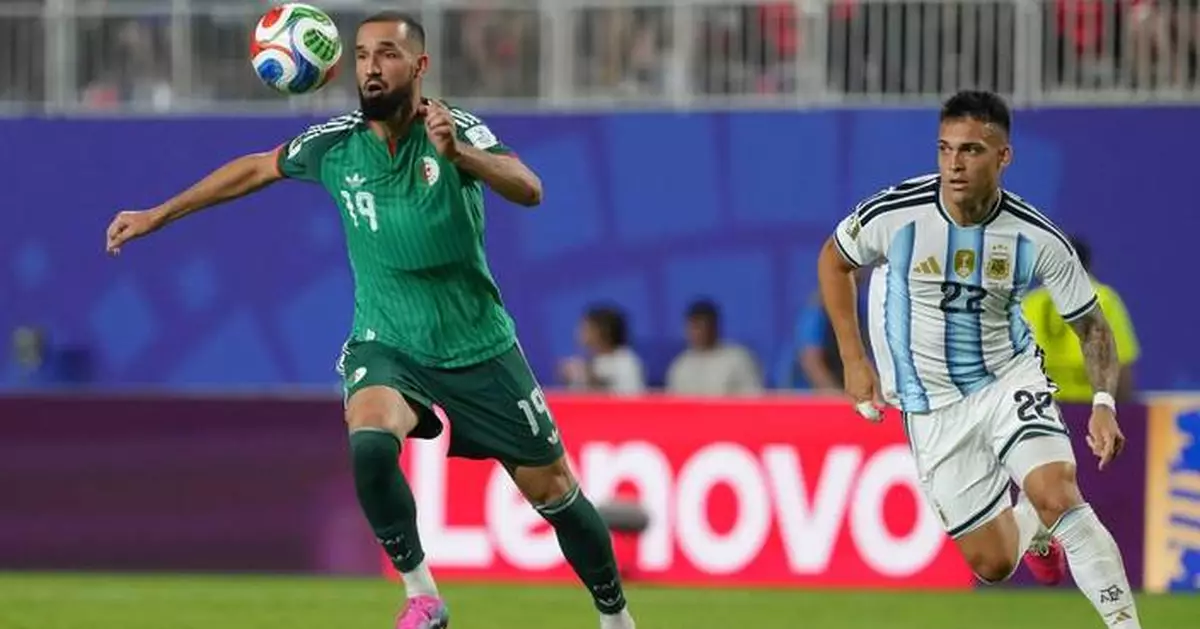
Algeria's Nabil Bentaleb (19) plays the ball against Argentina's Lautaro Martinez (22) during the World Cup Group J soccer match between Argentina and Algeria in Kansas City, Mo., Tuesday, June 16, 2026. (AP Photo/Ed Zurga)
U.S. President Donald Trump continued to threaten Iran on Sunday even as talks began in Switzerland between his vice president and Iranian officials on next steps in the interim agreement signed last week to end the war.
The U.S. team is led by Vice President JD Vance and includes Jared Kushner and Steve Witkoff. The Iranian negotiators are led by Parliament Speaker Mohammad Bagher Qalibaf and Foreign Minister Abbas Araghchi. Pakistan and Qatar are mediators.
On the eve of talks, Tehran said it closed the Strait of Hormuz again over Israel’s ongoing military campaign in Lebanon against the Iranian-backed Hezbollah militant group. The interim deal is meant to stop fighting on all fronts, including Lebanon. Iran has said talks must first address that issue.
The U.S. says shipping traffic on the crucial waterway continues, and Trump has threatened to impose American tolls in the strait if a final deal with Iran isn’t reached in 60 days. Other issues include unfreezing billions of dollars in Iranian assets and addressing the heart of tensions: Iran's nuclear program.
Here is the latest:
Israel’s military says residents of the north near the border with Lebanon will be able to move around freely with no restrictions as of Monday morning. For months, residents have faced restrictions because of the threat of attack by the Iranian-backed Hezbollah militant group in southern Lebanon.
The military did not say what led to its decision Sunday, but it has noted that a fragile ceasefire is in place. Its announcement came as the U.S. and Iran meet in Switzerland on their interim deal to end the war. Iran has insisted they must address Israel’s attacks in Lebanon first.
Still, Israeli Prime Minister Benjamin Netanyahu says Israeli forces will remain in southern Lebanon.
Israel’s military says it killed an Islamic Jihad militant commander who took 12-year-old Yagil Yaakov hostage during the Oct. 7, 2023, Hamas-led attack on southern Israel that sparked the war in Gaza.
The military said it killed Zaki Youssef Mahmoud Abu Mustafa on Friday in a strike in southern Gaza. It accused him of trying to rebuild the Islamic Jihad militant group in violation of the ceasefire.
Nasser hospital confirmed that he was killed in a strike in Muwasi that wounded five other people, including four children.
Iran’s state-run IRNA news agency suggested that talks have “entered a difficult phase” after what it described as an “insulting” statement by Trump. It did not specify the statement. Trump made multiple provocative warnings to Iran on Sunday, including to “hit Iran very hard again.”
An official with knowledge of the talks told The Associated Press that the Iranian delegation remains engaged in the talks and has not indicated to mediators any intention to leave. The official requested anonymity due to the sensitivity of the talks.
— Victoria Eastwood in Cairo
Hezbollah leader Naim Kassem said in a televised speech that the militant group will not accept any ceasefire deal that grants Israel “freedom of action” within Lebanon or does not result in a complete withdrawal of Israeli forces from southern Lebanon.
“There are no ‘security zones,’ for Israel,” Kassem said, using Israel’s term.
He also said Hezbollah will comply with a ceasefire “if it happens,” but “we will not accept any violation.” The Iranian-backed Hezbollah is not part of the talks between Israel and Lebanon that will continue Tuesday in Washington.
Uneasy calm has settled over Lebanon, with no Israeli strikes reported overnight or Sunday after days of heavy fighting.
The U.S. ambassador to Israel is playing down recent differences between President Donald Trump and Israeli Prime Minister Benjamin Netanyahu.
Mike Huckabee said in a speech in Jerusalem that despite Trump’s sometimes blunt language about the Israeli leader, the two still have a close relationship and the president remains deeply committed to Israel’s well-being.
“The one thing that I’ve always heard him say – always -- and that I’ve always watched him do, is that America has an unbreakable bond with the state of Israel,” Huckabee told the JNS International Policy Summit. “And I trust that he means what he says.”
Trump in a telephone interview with Fox News has said that Iranian President Masoud Pezeshkian had “better watch his mouth.” The broadcaster also quoted Trump as saying Pezeshkian had “better shape up or we’ll take over the rest of the country.”
Not long after that, Iran's lead negotiator Mohammad Bagher Qalibaf posted on X that “We do not regard American threats as amounting to anything. They would do better to be careful about their statements.”
Pezeshkian earlier Sunday said that “what is certain is that we will never back down from the right to enrich uranium, and the other side is also forced to accept it,” according to state media.
Speaking at a memorial service for his late brother, Yonatan, Prime Minister Benjamin Netanyahu said Israel will "remain in the security buffer zone in southern Lebanon for as long as necessary.” He was referring to an area up to 10 kilometers (six miles) from the border that Israel has occupied.
Netanyahu has made similar comments in the face of Iranian and U.S. calls for a halt to Israeli military operations in Lebanon against the Iranian-backed Hezbollah. He spoke Sunday as U.S. and Iranian officials began negotiations in Switzerland.
Netanyahu also reiterated his claim that he “will not allow Iran to arm itself with nuclear weapons."
Iranian state television says the Iranian and Qatari delegations are having discussions after about 80 minutes of four-way negotiations including the U.S. and Pakistan.
Israeli President Isaac Herzog told Fox News that a peace agreement between Israel and Lebanon cannot be reached if Iran is “trying to squeeze themselves into this conflict” via the Iranian-backed Hezbollah militant group.
Herzog's position is largely ceremonial. He said Israel and Lebanon will hold another round of talks in Washington on Tuesday. Hezbollah is not a party to the talks.
Iran wants any agreement with the U.S. to include peace on all fronts including Lebanon. It has said Lebanon will be a focus in today’s talks in Switzerland.
Iranian President Masoud Pezeshkian has expressed concern that some Iranians could openly protest again. He said in a speech reported by semiofficial news outlets that “what I fear is that we may fail to satisfy the people, and that they may come out into the streets to protest," which could affect the country's unity during negotiations with the U.S.
Iran saw nationwide protests weeks before the war began as unrest over the weak economy turned into anti-government anger. Thousands of people were killed in the crackdown that followed, the bloodiest since Iran’s 1979 Islamic Revolution. For a while, the U.S. and Israel mentioned regime change in Iran among their war goals.
U.S. Energy Secretary Chris Wright says 67 ships went through the Strait of Hormuz in the last 24 hours, similar to traffic before the war began in terms of oil and oil products.
Iran’s joint military command on Saturday said it had closed the strait over Israel’s military campaign in Lebanon against the Iranian-backed Hezbollah militant group. The U.S. disputed that announcement.
Wright also told Fox News that Iran has not yet “demined” the strait’s central shipping channel, but the U.S. has opened a separate channel to the south and has been escorting ships through it.
Wright acknowledged that some commercial shippers still have safety concerns.
Israel’s military issued a statement around the time that direct talks began. Its chief of staff, Lt. Gen. Eyal Zamir, was speaking from southern Lebanon. He said “the ceasefire that has been declared is fragile, and we must maintain a high level of readiness for the renewal of combat operations.”
He said the military continues to defend against the Iranian-backed Hezbollah and its efforts to rebuild.
The last time that Vance met directly with senior Iranian officials for such talks was in early April, days after a ceasefire took effect in the war. Those talks in Pakistan's capital of Islamabad ended after 21 hours without reaching an agreement. Again, Vance was meeting with lead negotiator Qalibaf.
It's now after 4 p.m. in Switzerland.
Both Iran and the White House say four-way talks have begun in Switzerland. Vance is meeting with Iranian officials.
Trump hopes to get the agreement signed last week back on track. Israel's ongoing military campaign in Lebanon against the Iranian-backed Hezbollah militant group threatens progress on implementation.
Iran says its main focus in these talks is the situation in Lebanon. Israel says it must defend itself from Hezbollah. But the U.S. side wants to get Iran locked into negotiations over its nuclear program, which has long been at the heart of tensions.
Trump has warned in a post on social media that Iran needs to stop Hezbollah from “causing trouble.”
"If they don’t, we’ll hit Iran very hard again, just like we did last week, only harder!!!” Trump wrote from Camp David, where he is spending the weekend.
The U.S. vice president spoke as officials were gathering for the start of the U.S.-Iran talks on Sunday.
“The question before us now is how much more can we accomplish together? Can we turn over a new leaf?” Vance said in brief comments ahead of the talks, dubbed the “Lake Lucerne Summit.”
“Can we change relations in the Middle East permanently, or do we go back to doing things the old way, which is not our preference, but is certainly very much something that can happen,” Vance added.
It was not clear if the Iranians were present during Vance's remarks.
The Israeli military says it killed two militants who were involved in helping transfer up to half a billion dollars to Hamas. The military says the two — Hussein Qadra and Mohammed Farra, who worked with Hamas and the militant group Palestinian Islamic Jihad — were killed in a strike last week.
It said on Sunday that the men oversaw a network of couriers and money exchange spots in both Gaza and Turkey that funneled money towards Hamas militants and infrastructure.
Both men were killed on Wednesday and buried on Thursday, according to their families. Farra’s family said his father, mother and sister were killed in an Israeli strike earlier in the war.
The conflict in Gaza is not part of the U.S-Iran talks underway in Switzerland.
Pakistan’s Prime Minister Shehbaz Sharif has separately met with JD Vance and with the Iranian delegation at the Bürgenstock Resort near Lucerne in Switzerland where the high-level talks are taking place.
Islamabad says Pakistan’s army chief, Field Marshal Asim Munir, accompanied Sharif at the meetings. It did not provide further details.
Sharif has repeatedly said Munir played a key role in brokering the memorandum of understanding between the U.S. and Iran.
A video released by Sharif’s office shows him warmly embracing Qalibaf, Iran's parliament speaker, and Araghchi, Iran's foreign minister, as Munir looks on.
Rafael Grossi, chief of the U.N. nuclear watchdog — the International Atomic Energy Agency — met with Swiss Foreign Minister Ignazio Cassis on the sidelines of the gathering at the picturesque mountainside resort near Lake Lucerne on Sunday morning.
The agency had monitored the 2015 nuclear deal negotiated between the U.S. and Iran under the Obama administration.
Trump in 2018 withdrew the U.S. from that agreement.
Iran's Foreign Ministry spokesman Esmail Baghaei says Tehran will mainly focus during the talks on Sunday on the ongoing fighting in Lebanon.
Tehran insists that the deal’s implementation start with a cessation of all fighting — including between Israel and Hezbollah.
Baghaei said the U.S. “has been unable or unwilling” to hold Israel to the ceasefire.
Iran will meet in the morning with Pakistani and Qatari mediators, and in the afternoon, there will be a four-way meeting including the U.S. negotiating team. There is currently only one day of negotiations planned, Baghaei told the state news agency.
“The implementation of any document is more important than its signing,” Baghaei also said Sunday.
Iran’s president has said that Iran will maintain its right to a nuclear program.
“What is certain is that we will never back down from the right to enrich uranium, and the other side is also forced to accept it,” Masoud Pezeshkian said on Sunday, according to state media.
As the U.S.-Iran talks were to kick off in Switzerland, a ceasefire appears to be holding in Lebanon, a lull that came after another day of heavy fighting.
Since the ceasefire, Israeli strikes on Friday and Saturday killed 97 people, including eight women and four children, Lebanese officials said. Five Israeli soldiers were also killed.
Israel says it targeted Hezbollah infrastructure on Saturday, including a tunnel network in the southern Lebanese town of Kfar Tebnit.
But by Sunday morning, residents in southern Lebanon reported a lull in Israeli strikes. There also were no reports of Hezbollah fire from the Israeli side.
Israel’s military has received instructions to uphold the ceasefire, and said it is only acting defensively, according to an Israeli military official who spoke on condition of anonymity in line with military guidelines.
—Melanie Lidman in Tel Aviv, Israel
Pakistani Prime Minister Shehbaz Sharif and army chief Field Marshal Asim Munir are also in Switzerland for the high-level U.S.-Iran talks, the prime minister's office said without providing further details.
The technical-level talks at Bürgenstock Resort near the Swiss city of Lucerne are being held after Sharif dispatched his special envoy, Interior Minister Mohsin Naqvi, to Tehran to persuade Iranian authorities to send a delegation to Switzerland. The meeting was originally scheduled for Friday but was delayed because of concerns raised by Iran.
Naqvi later informed Islamabad that Iran was willing to attend the talks. Pakistan subsequently conveyed the development to Washington.
The strait has emerged as a key focus, with Iran’s joint military command saying on Saturday that it was closed again because of the U.S. “clear breach of its commitments” by failing to end the war. The interim deal is meant to stop fighting on all fronts, including in Lebanon where Israeli forces are battling the militant Hezbollah group.
The U.S. disputed Iran’s announcement, with the U.S. Central Command saying that traffic continues to flow and that 55 merchant ships transited on Saturday with more than 17 million barrels of oil.
Ships began transiting after the interim U.S.-Iran agreement was signed last week. The U.S. lifted its blockade of Iran’s ports and now allows Tehran to sell its oil freely — terms that have left some in U.S. Congress asking whether the war was worth it.
The interim deal signed by Trump and Iranian President Masoud Pezeshkian gives negotiators 60 days to reach a nuclear agreement, but the time can be extended.
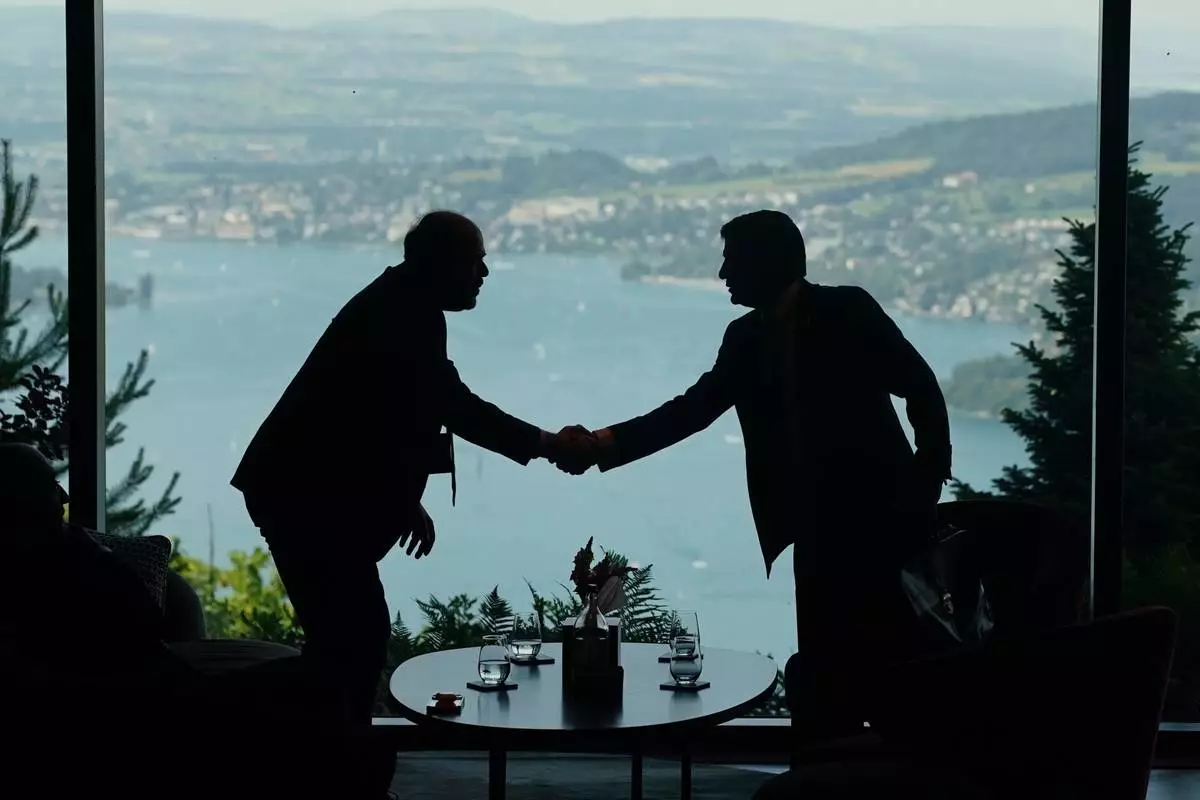
Delegation staff members meet in the lobby on the first day of a quadrilateral meeting between the U.S., Iran, Pakistan, and Qatar at the Buergenstock Resort Lake Lucerne, near Stansstad, Switzerland, Sunday, June 21, 2026. (Nathan Howard/Pool Photo via AP)
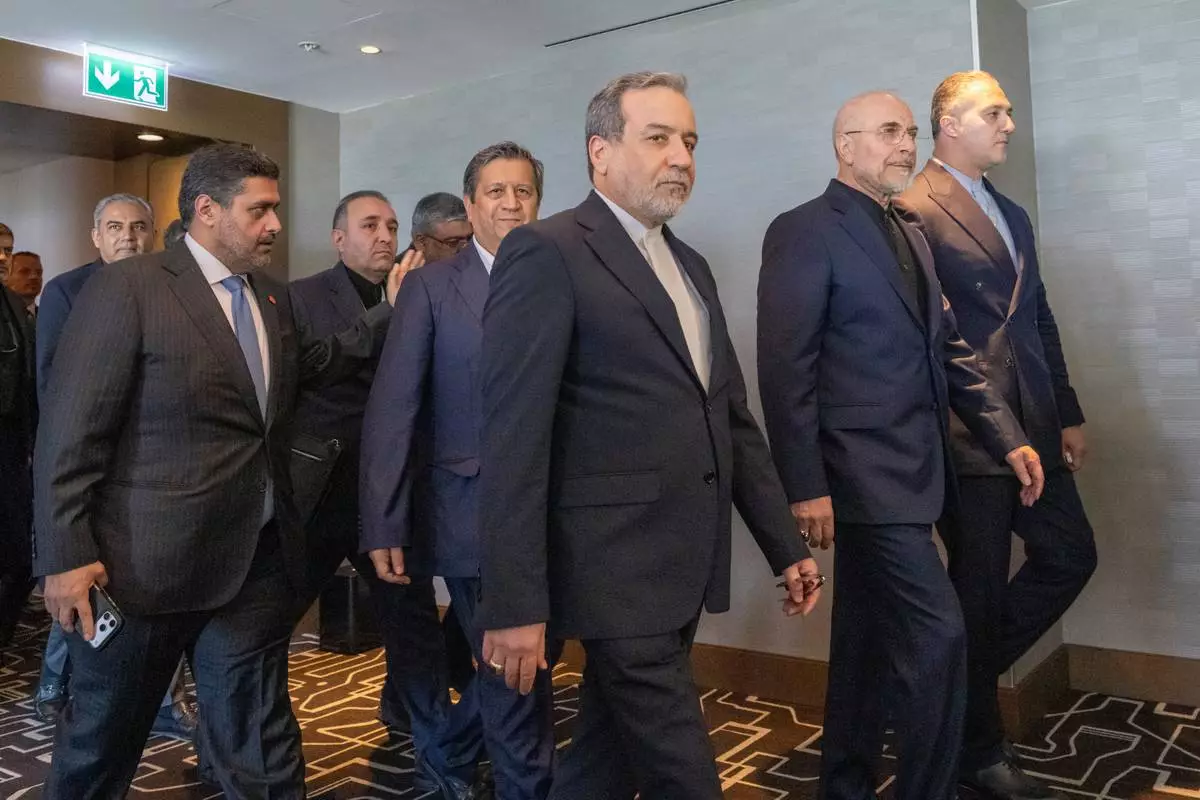
Minister of Foreign Affairs of Iran, Seyyed Abbas Araghchi, 3rd from right, and Speaker of the Islamic Parliament of Iran, Mohammed Bagher Ghalibaf, 2nd from right, with the Delegation of Iran at the Lake Lucerne Summit at the Buergenstock resort in Obbuergen, near Lucerne, Switzerland, Sunday, June 21, 2026. (Urs Flueeler, Pool Photo via AP)
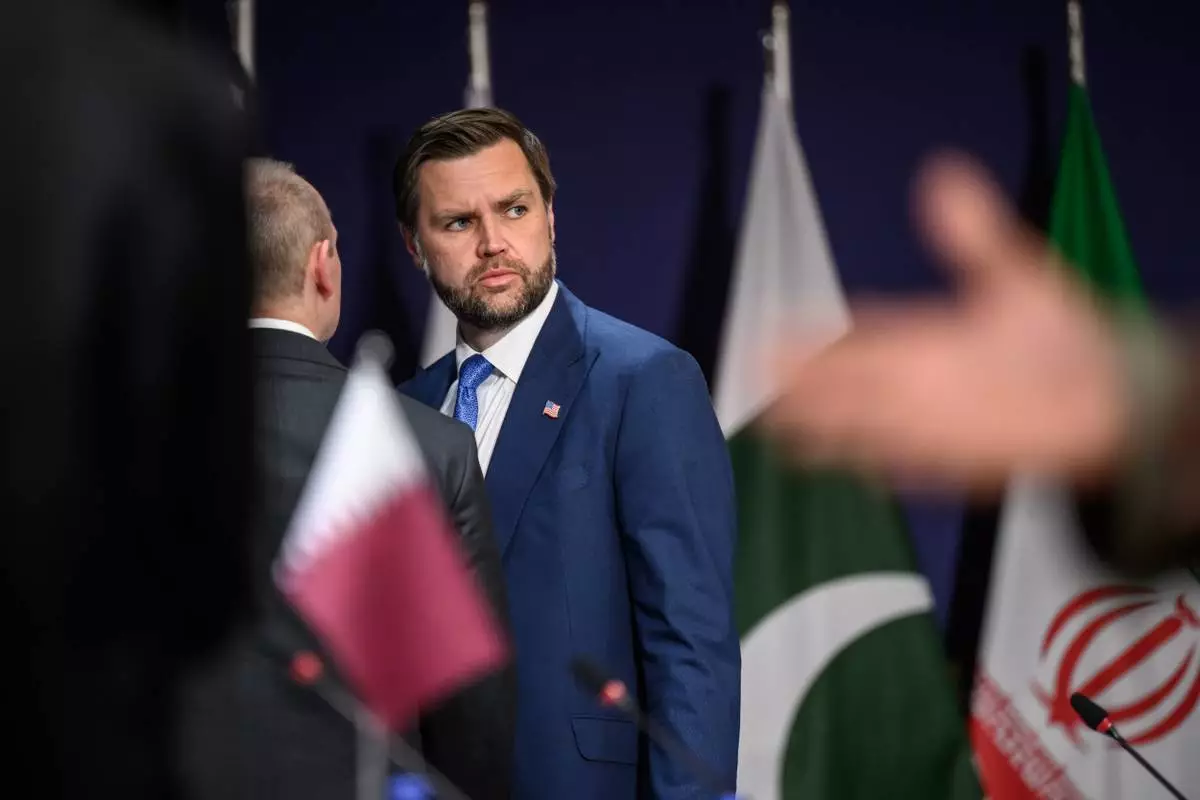
US Vice President JD Vance prior to a quadrilateral meeting between the United States, Iran, Pakistan and Qatar at the Burgenstock luxury hotel complex overlooking Lake Lucerne, Switzerland, Sunday June 21, 2026. (Fabrice Coffrini/Keystone via AP)
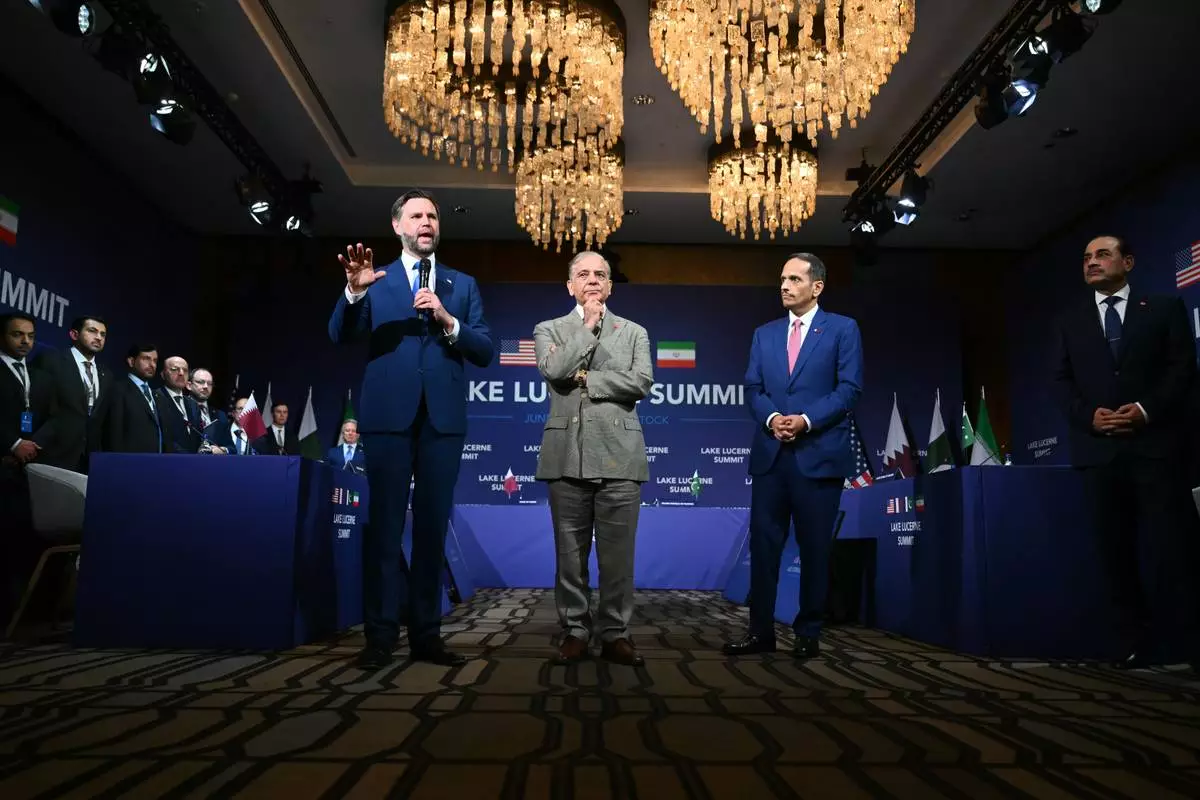
From left, US Vice President JD Vance speaks next to Pakistan's Prime Minister Shehbaz Sharif, Qatar's Prime Minister Sheikh Mohammed bin Abdulrahman bin Jassim al-Thani and Pakistan's Chief of Army Staff Field Marshal Asim Munir during a quadrilateral meeting between the United States, Iran, Pakistan and Qatar at the Burgenstock luxury hotel complex overlooking Lake Lucerne, Switzerland, Sunday June 21, 2026. (Fabrice Coffrini/Keystone via AP)
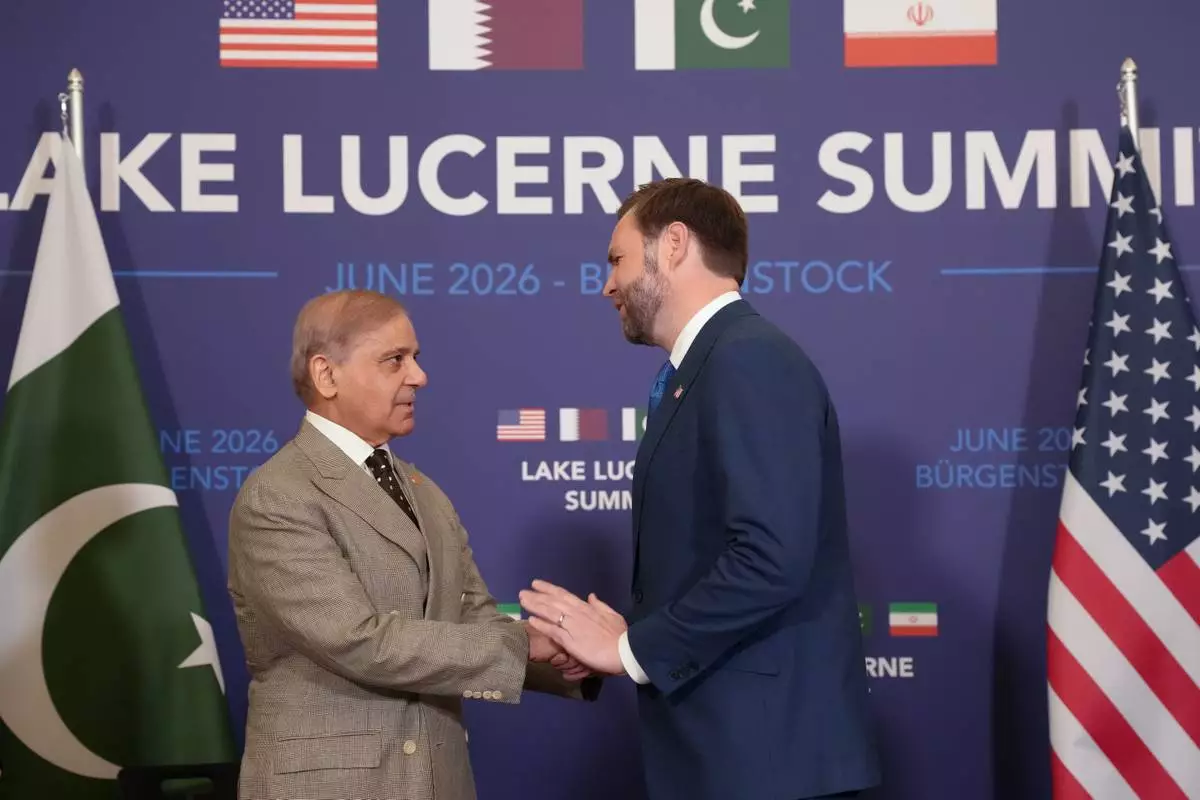
U.S. Vice President JD Vance, right, meets with Pakistan's Prime Minister Shehbaz Sharif, during high-level talks aimed at advancing a deal to end the Middle East conflict, at the Bürgenstock Resort in Obbuergen, near Lucerne, in Switzerland, Sunday, June 21, 2026. (Nathan Howard/Pool Photo via AP)
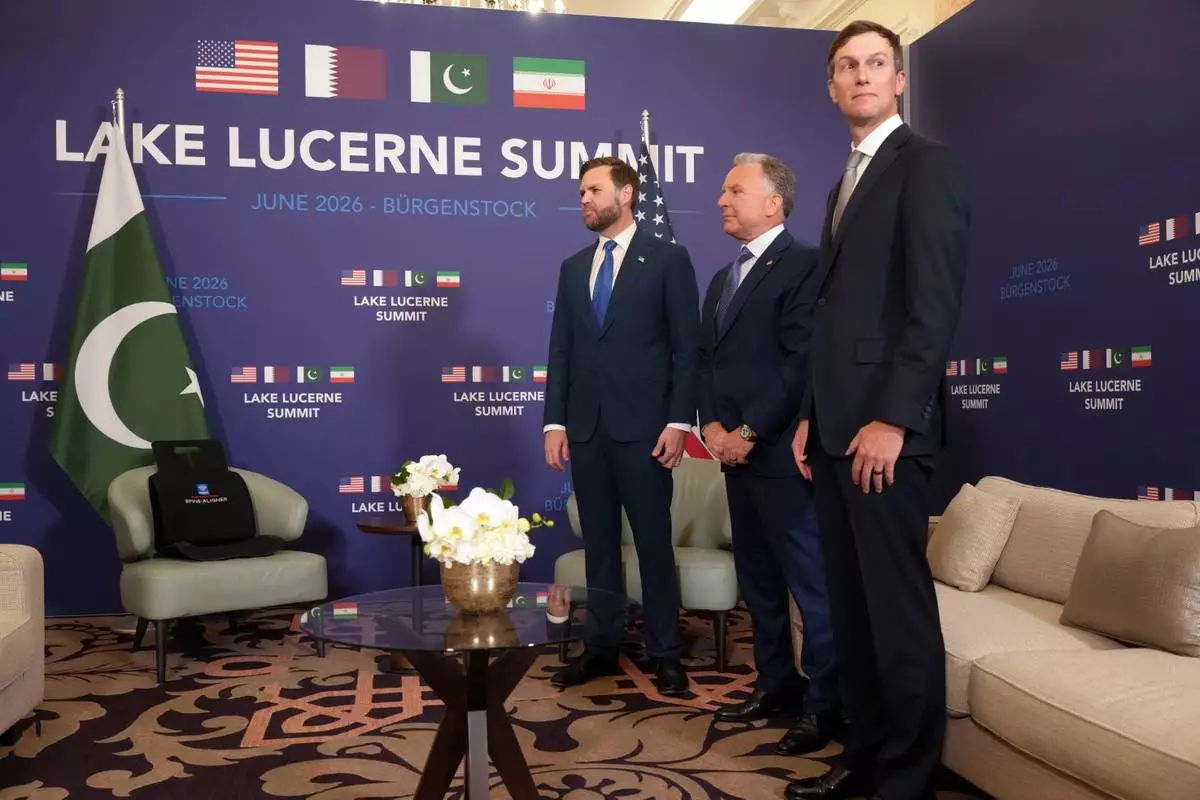
U.S. Vice President JD Vance waits, alongside U.S. President Donald Trump's envoys Steve Witkoff, second right, and Jared Kushner, right, to meet with Pakistan's Prime Minister Shehbaz Sharif for high-level talks aimed at advancing a deal to end the Middle East conflict, at the Bürgenstock Resort in Obbuergen, near Lucerne, in Switzerland, Sunday, June 21, 2026. (Nathan Howard/Pool Photo via AP)
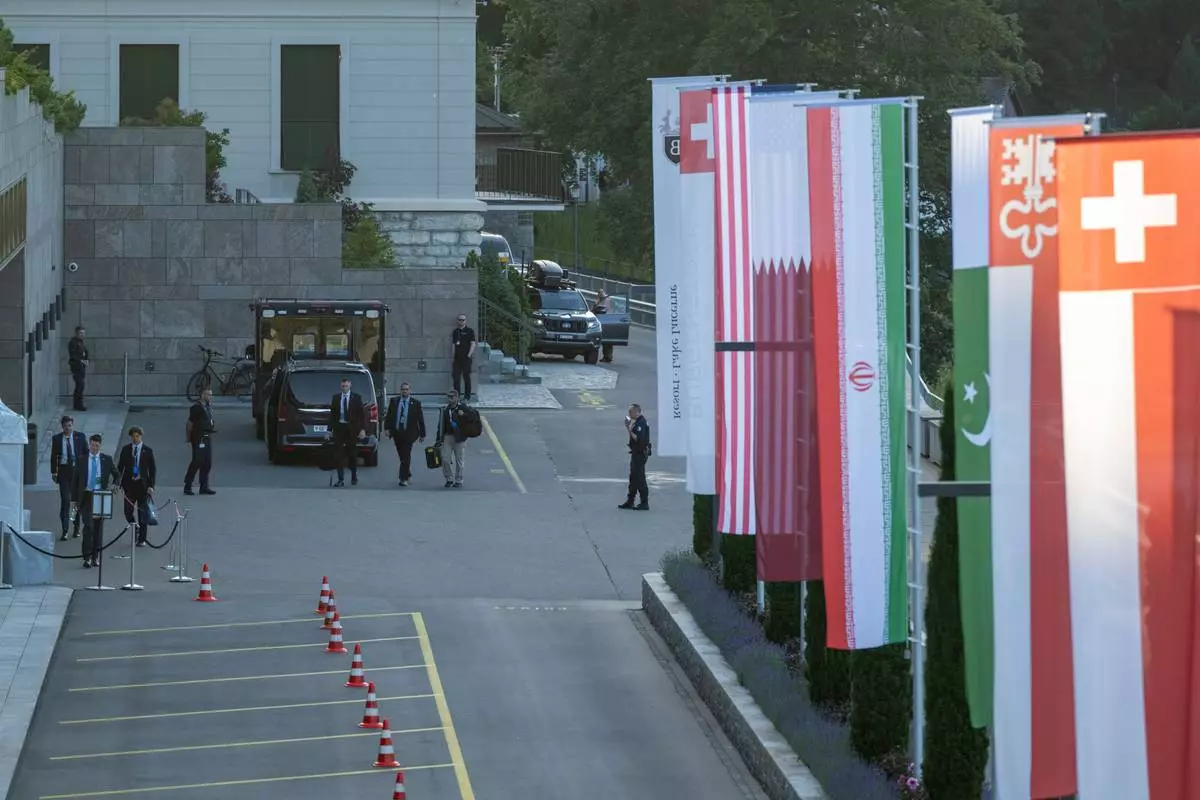
Flags of the U.S., Qatar, Iran, Pakistan, Nidwalden and Switzerland, from left, are seen at the Buergenstock resort in Obbuergen, near Lucerne, Switzerland, Sunday, June 21, 2026. (Urs Flueeler/Keystone Pool via AP)
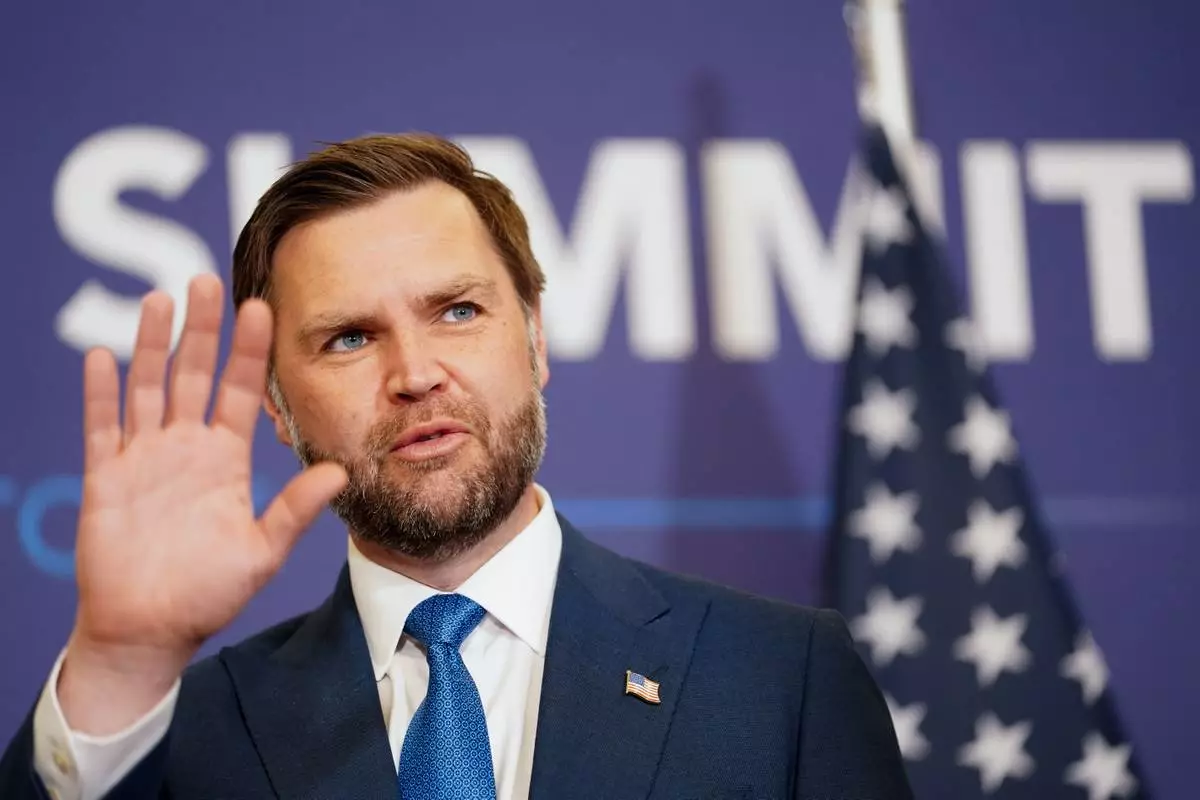
U.S. Vice President JD Vance, gestures as he meets with Pakistan's Prime Minister Shehbaz Sharif, during high-level talks aimed at advancing a deal to end the Middle East conflict, at the Bürgenstock Resort in Obbuergen, near Lucerne, in Switzerland, Sunday, June 21, 2026. (Nathan Howard/Pool Photo via AP)
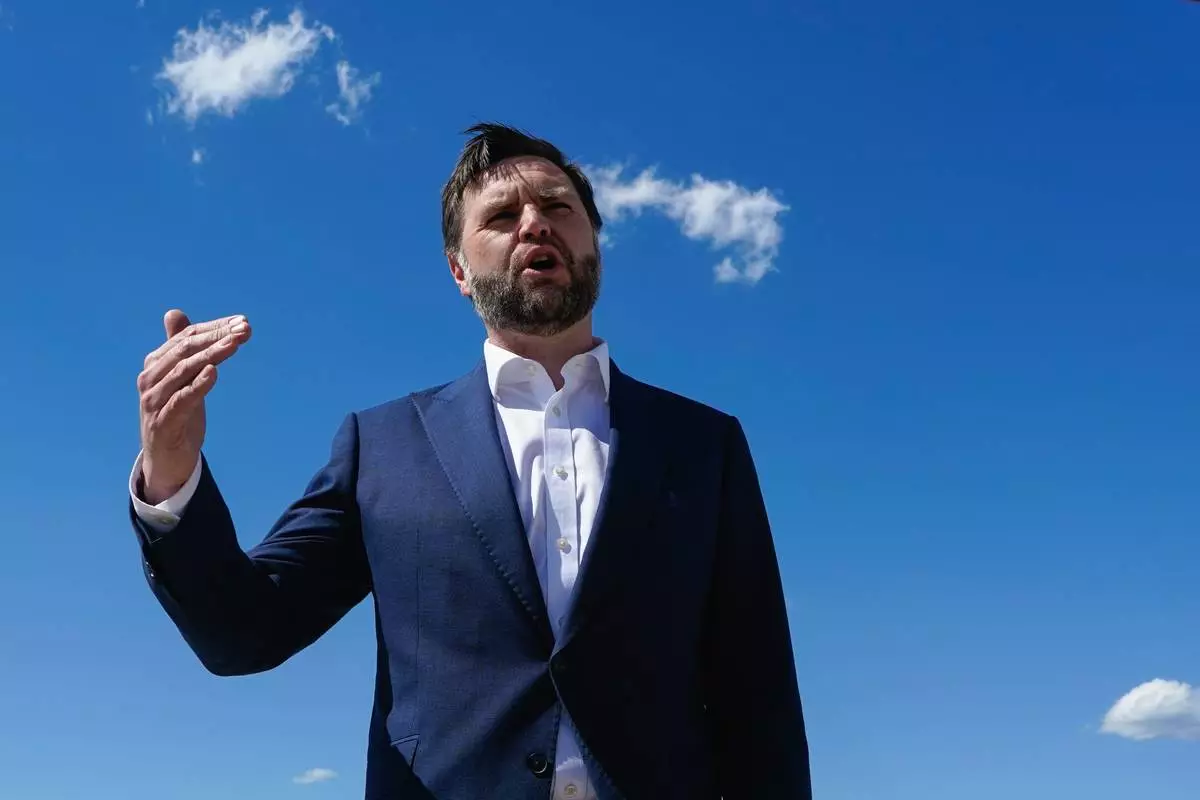
Vice President JD Vance speaks to reporters at Joint Base Andrews, Md., Saturday, June 20, 2026, en route to Switzerland. (Elizabeth Frantz/Pool Photo via AP)
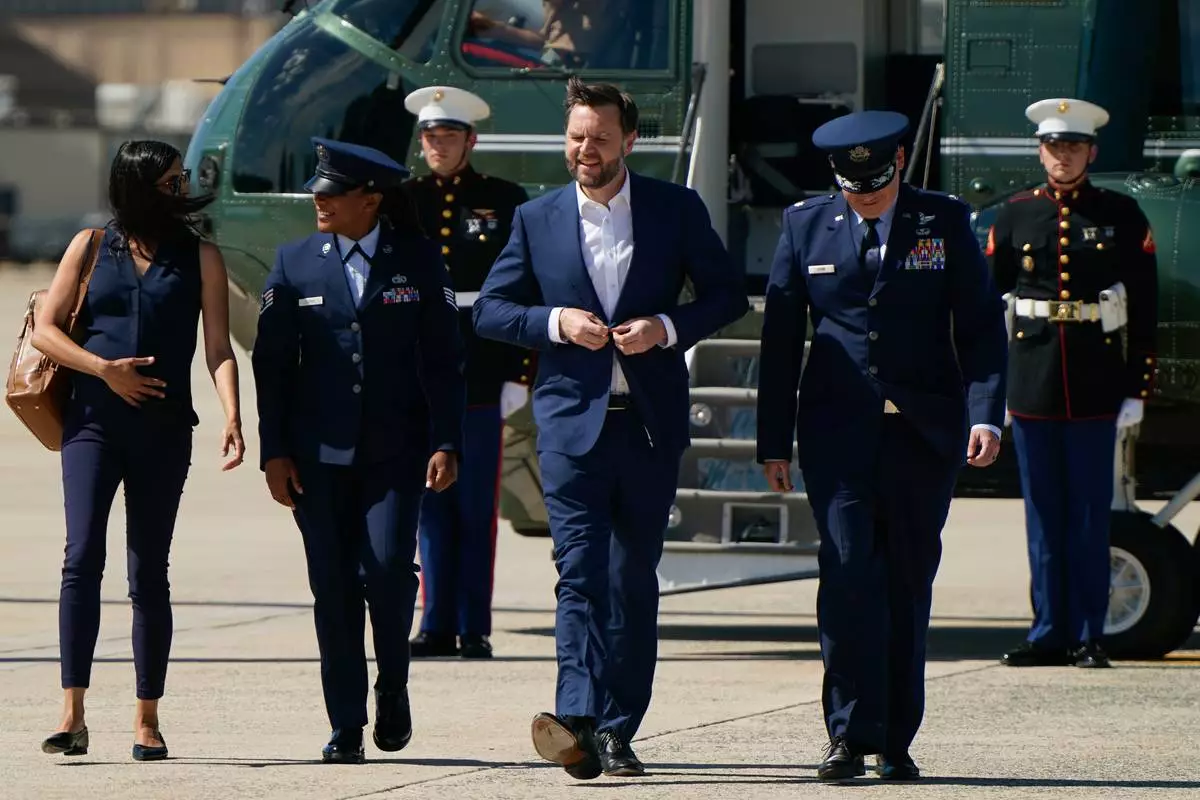
Vice President JD Vance, center, and second lady Usha Vance, left, walk from Marine Two as they arrive at Joint Base Andrews, Md., Saturday, June 20, 2026, en route to Switzerland. (Elizabeth Frantz/Pool Photo via AP)
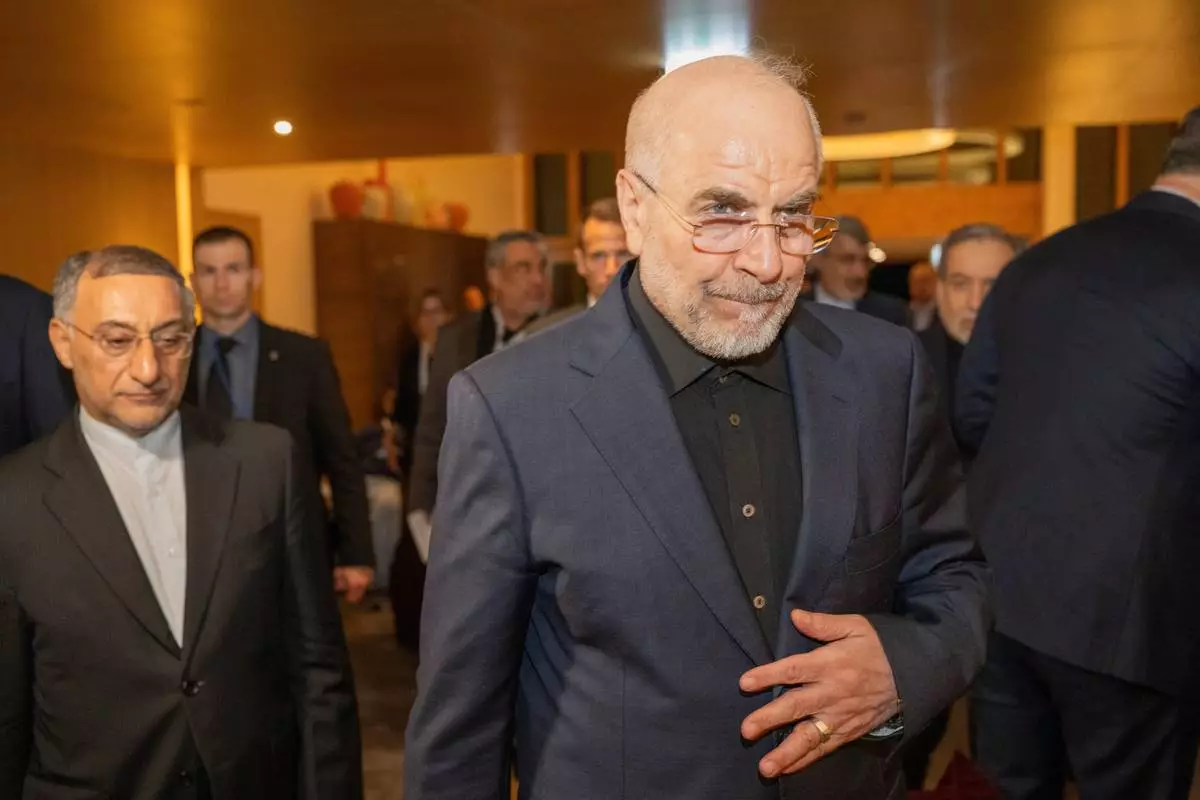
Speaker of the Islamic Parliament of Iran Mohammed Bagher Ghalibaf, center, arrives at the Buergenstock resort in Obbuergen, near Lucerne, Switzerland, early Sunday, June 21, 2026. (Urs Flueeler/Keystone, Pool via AP)
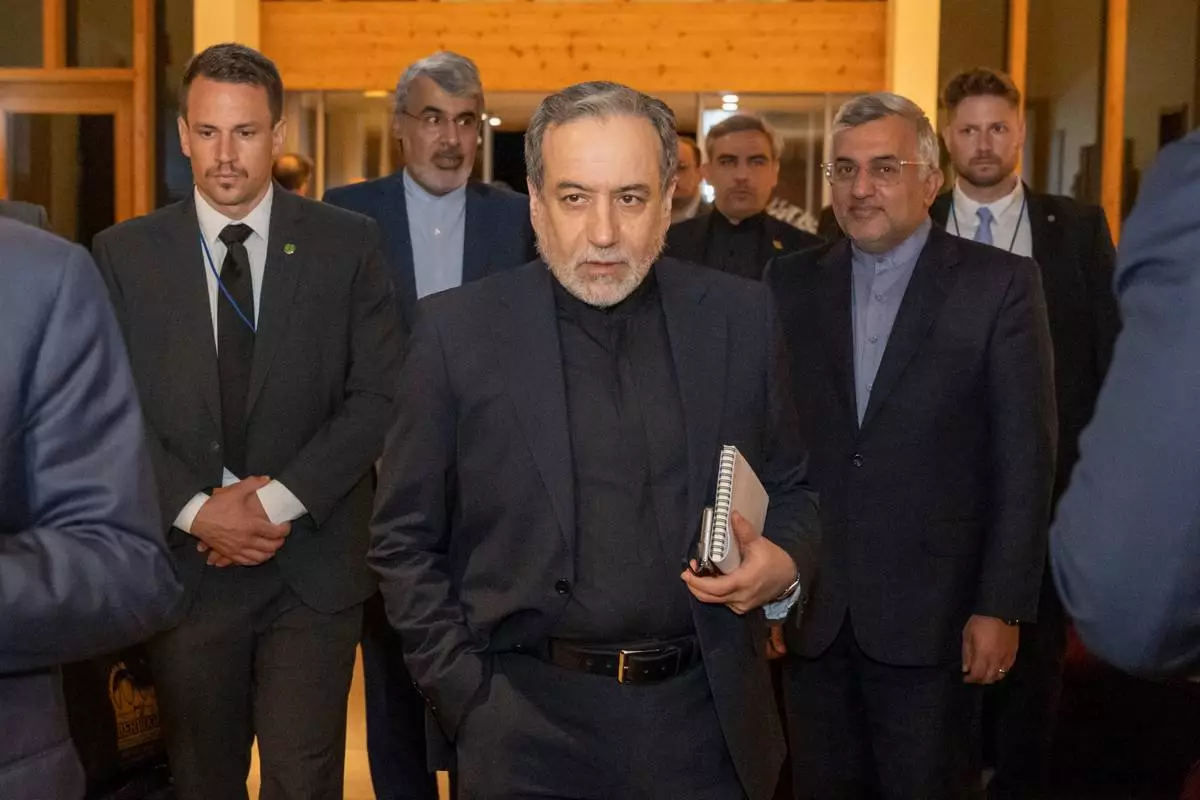
Iranian Foreign Minister Seyyed Abbas Araghchi, center, arrives at the Buergenstock resort in Obbuergen, near Lucerne, Switzerland, early Sunday, June 21, 2026. (Urs Flueeler/Keystone, Pool via AP)
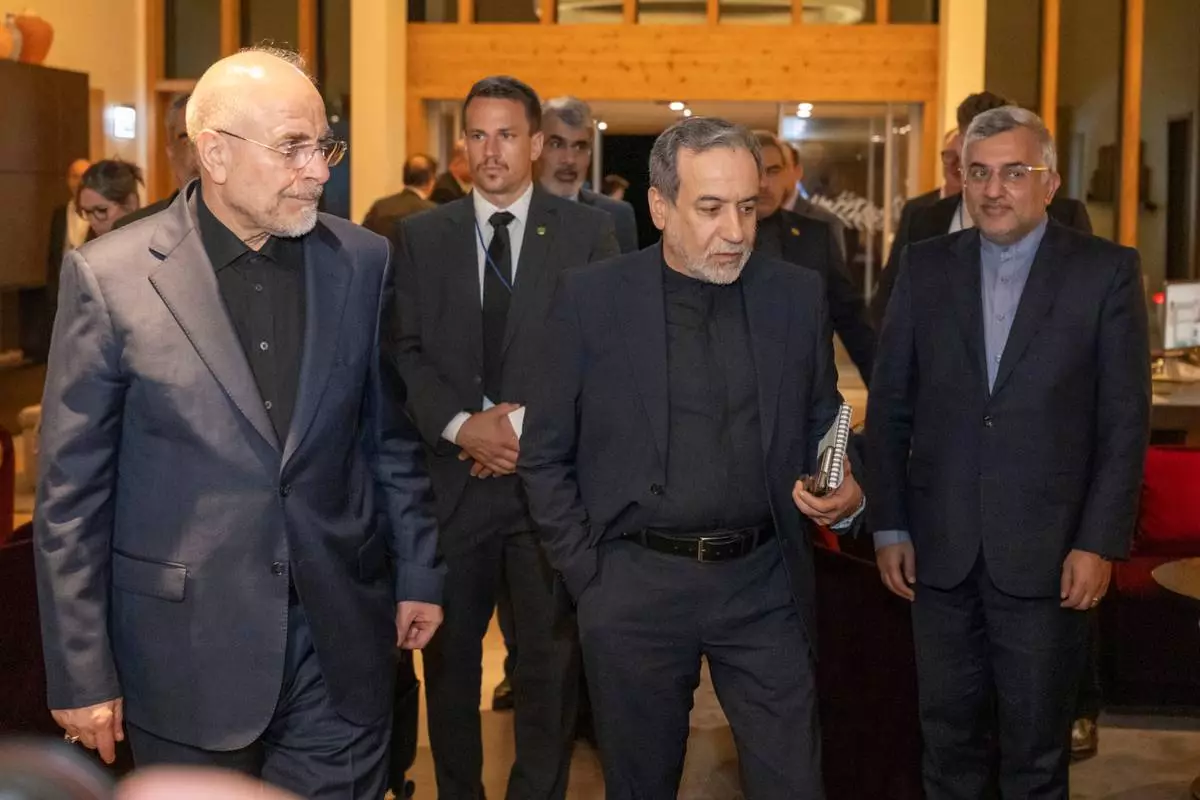
Iranian Foreign Minister Seyyed Abbas Araghchi, center, and Speaker of the Islamic Parliament of Iran Mohammed Bagher Ghalibaf, left, arrive at the Buergenstock resort in Obbuergen, near Lucerne, Switzerland, early Sunday, June 21, 2026. (Urs Flueeler/Keystone, Pool via AP)