Iran said on Sunday that the Israel-Hezbollah conflict in Lebanon was at the top of the agenda in ongoing talks with the United States, as U.S. President Donald Trump threatened fresh strikes on Iran and a 20-percent toll on oil passing through the Strait of Hormuz.
Seyyed Mehdi Tabatabaei, deputy for communications at Iranian president's office, said ending Israel's military operations in Lebanon would be the top priority for Iran's negotiating delegation in the next phase of its diplomatic work.
Tabatabaei wrote on social media that unconditional implementation of the first clause of the memorandum of understanding (MoU) reached between Iran and the United States was crucial to ensuring the agreement's smooth progress.
He said the credibility of the entire MoU would be affected if Israel continued its military operations in Lebanon.
The first clause of the official text of the MoU recently released by the U.S. and Iran states that both sides and their allies declare the immediate and permanent termination of military operations on all fronts, including in Lebanon, and undertake from now on not to initiate any war or any military operation against each other, and to refrain from the threat or use of force against each other, and ensure the territorial integrity and sovereignty of Lebanon.
The final deal will confirm the permanent termination of the war on all fronts, including in Lebanon, as well as other provisions of the clause.
Speaking at a national conference on monetary and banking policies in Tehran on Sunday, Iranian President Masoud Pezeshkian reiterated that Iran would not give up its right to enrich uranium and stressed that Tehran had "clearly stated that it will not build an atomic bomb."
Pezeshkian said the United States wanted to ensure that Iran would not build nuclear weapons, while Iran had long had no intention of doing so. "But one thing is clear: Iran will never give up its right to enrich uranium, and the United States will have to accept that," he said.
The president said that the terms of the MoU between Iran and the United States were generally beneficial to the Iranian people and that with the start of talks between the two countries, 6 billion U.S. dollars in Iranian funds held in Qatar would be unfrozen and returned to Iran.
Iran's Central Bank Governor Abdolnaser Hemmati participated in the negotiations to clarify investment areas for the funds.
Pezeshkian said Iran's supreme leader had authorized the government to continue advancing negotiations with the United States, adding that all Iranians must unite to build the country together. He warned that some individuals and political forces did not want the situation to return to calm and were seeking to undermine Iran's internal unity, stressing the need for vigilance to prevent division and infighting.
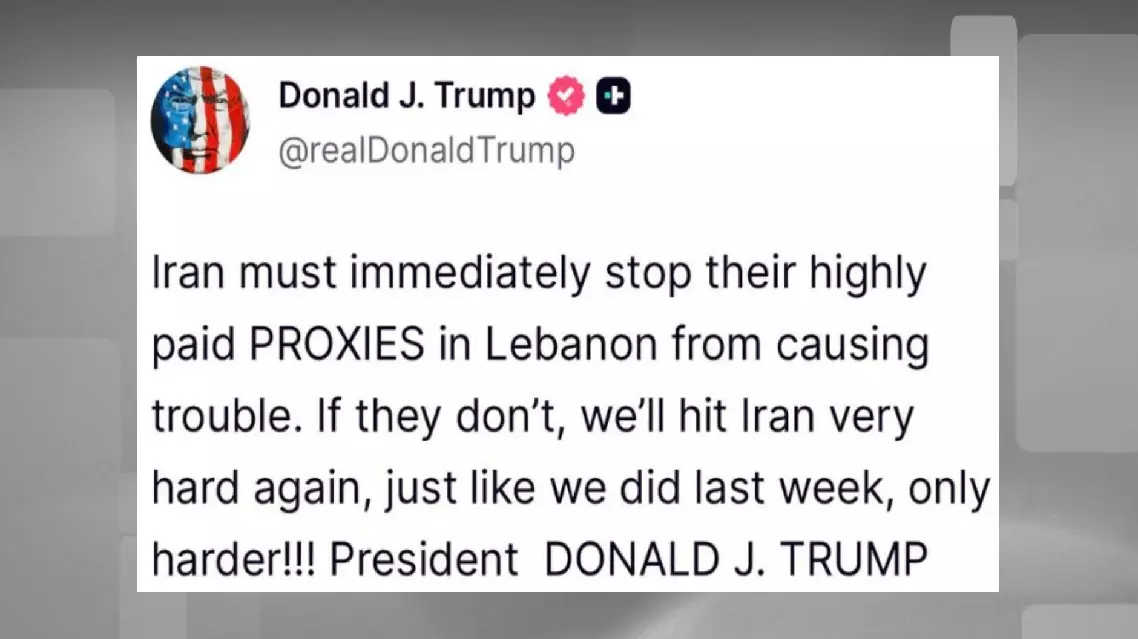
Also on Sunday, Trump warned that Iran might face more intense strikes if it did not stop Hezbollah "from causing trouble."
"Iran must immediately stop their highly paid PROXIES in Lebanon from causing trouble," Trump wrote on his platform, Truth Social. "If they don't, we'll hit Iran very hard again, just like we did last week, only harder."
In a media interview on the day, Trump said the United States "may take over the strait if we have to."
"You close it, and you won't have a country," Trump said he told Iranian officials overnight. The U.S. president did not identify the Iranians he said he had spoken with.
If talks with Iran fail, Washington would collect a 20-percent toll on oil transiting the crucial global energy waterway, he said.
Trump stressed that the U.S.-Iran MoU only extended the ceasefire, not constituted a final agreement, adding that he has multiple options if Iran doesn't make serious commitments at the negotiating table.
In response to Pezeshkian's statement that Iran would not relinquish its right to enrich uranium, Trump warned that he "better watch his mouth."
Iran says ending Israel-Lebanon conflict tops talks; Trump threatens new strikes, tolls on Hormuz