The European Council's decision not to mention China in its June 18-19 conclusions on the cause of the European Union's declining competitiveness was a deliberate "strategic choice," a former EU lawmaker told China Global Television Network (CGTN).
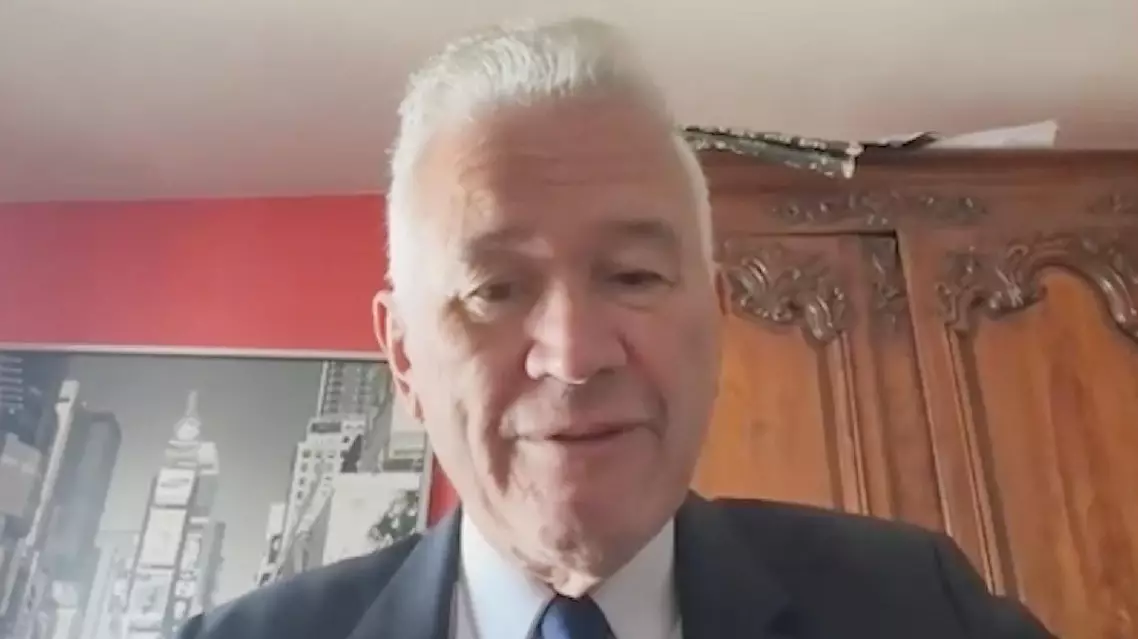
While China was not explicitly named in the European Council's conclusions, several of the issues discussed by EU leaders directly affect ties between Brussels and Beijing, according to Herve Juvin, a former member of the European Parliament -- the EU's directly elected law-making body.
In an interview with the CGTN, Juvin said the EU's declining competitiveness was rooted in its own deindustrialization policies and financial choices, not in Chinese competition. He argued that the EU's future industrial revival depends on partnerships with the world's most competitive players -- which in sectors such as electric vehicles, robotics, artificial intelligence, pharmaceuticals and renewable energy are increasingly Chinese companies.
"Europe has become less competitive than it was. It has abandoned parts of its industry. To put it bluntly, it will only rebuild its industry through win-win partnerships with the most competitive industries in the countries where they are the strongest. This means that in electric vehicles, robotics, artificial intelligence, pharmaceuticals and renewable energy, the European Union has every interest in cooperating with the most competitive players -- which, in many ways, have become Chinese companies," said Juvin.
Turning to the political significance of the EU's decision not to single out China in its official conclusions, Juvin described the omission as a calculated move with multiple strategic implications.
"Not naming China, as many expected, is a strategic choice. First, because naming China would have meant naming the United States -- and probably other countries that, in absolutely strategic sectors, have created a form of dependency for European states, particularly in European defense. The second point that seems important to me is that this absence of naming the main competitor likely signals a gap between the European administration -- particularly the European Commission -- and a number of European nations. After German Chancellor [Friedrich] Merz's visit to China, it became clear that many German companies are seeking by all means to develop their relations with China's most competitive industries. This was also one of the takeaways from French President Emmanuel Macron's visit to Beijing," he said.
Juvin went on to reject the notion that the EU should view China as its primary strategic adversary, arguing that such an approach would be counterproductive.
"There is no point in singling out China alone as the EU's main strategic rival, or even adversary, in global competition. I am glad that the word 'overcapacity' -- which makes no economic sense -- was avoided in the final communique. I am also glad that no one was named, because on many issues, particularly strategic dependence, it was clearly the United States that should have been targeted. The reality, I repeat, is that the EU would regain its competitiveness by working with the best -- by partnering with the most innovative companies and by forming objective, rational partnerships with those that can bring it the most. I know that in many sectors - maritime industries, environmental protection, life sciences and artificial intelligence - it is by working with Chinese companies, with a view to rational and objective cooperation that benefits both sides, that the EU will be able to regain its competitiveness," he said.
The European Council is the EU institution that defines the general political direction and priorities of the European Union, while the European Commission is the executive arm of the 27-nation EU.
EU will only regain competitiveness by cooperating with Chinese companies: former EU lawmaker