VANCOUVER, British Columbia (AP) — Egypt’s players danced on the field while their red-clad fans celebrated in the stands. The Pharaohs finally got their first World Cup win.
Mohamed Salah scored the go-ahead goal and Egypt went on to defeat New Zealand 3-1 on Sunday night.
Click to Gallery
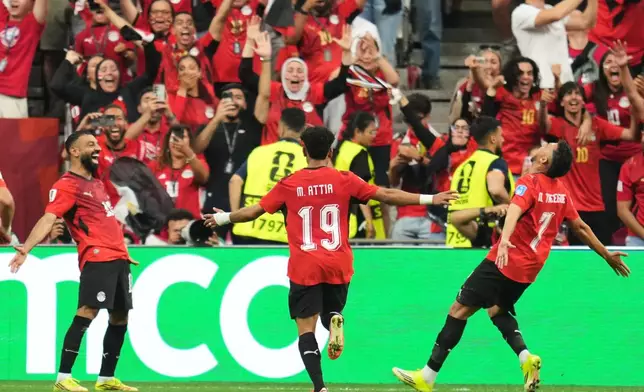
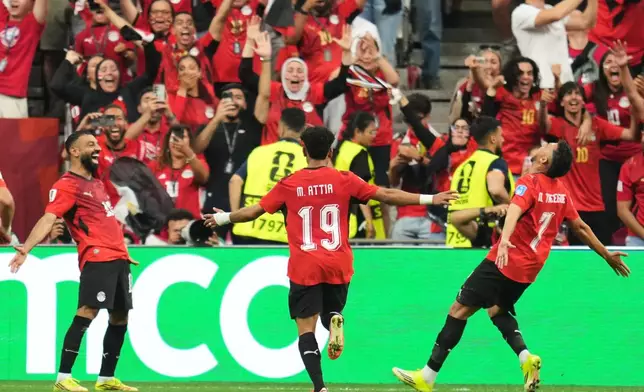
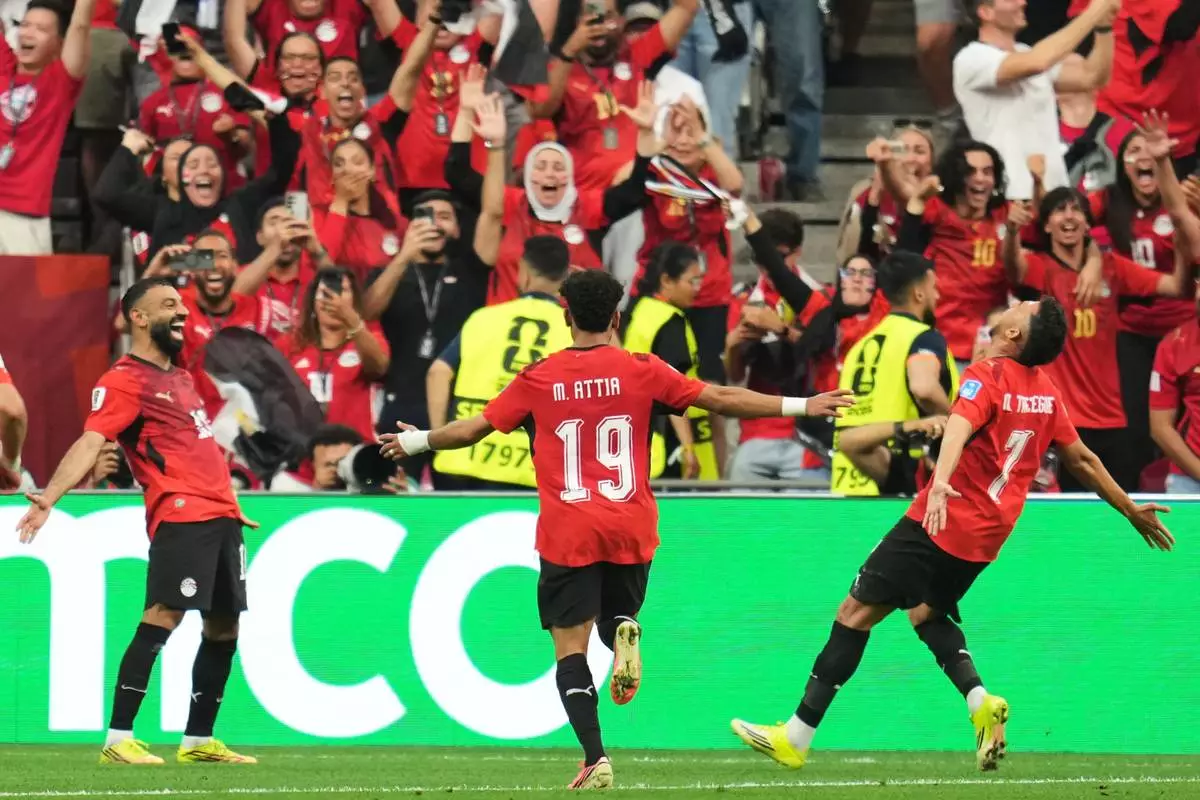
Egypt's Trezeguet (7) celebrates with Mohamed Salah (10) and Marawan Attia (19) after scoring his side's third goal during the World Cup Group G soccer match between New Zealand and Egypt in Vancouver, British Columbia, Sunday, June 21, 2026. (AP Photo/Abbie Parr)
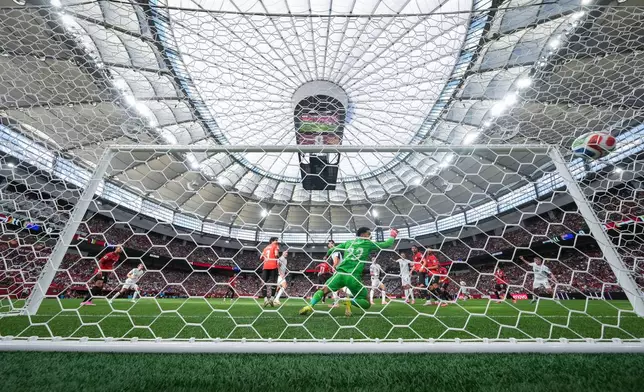
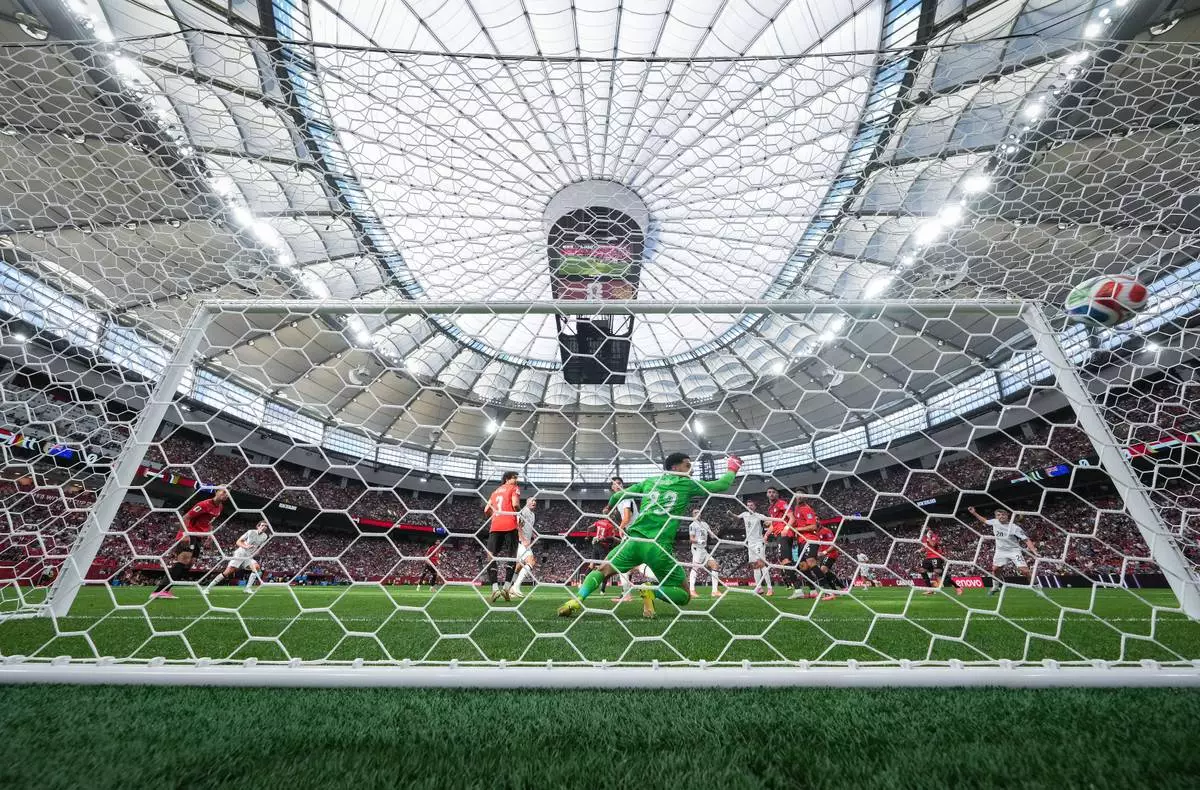
Egypt goalkeeper Mostafa Shoubir (23) allows a goal to New Zealand's Finn Surman, not seen, during the first half of the World Cup Group G soccer match in Vancouver, British Columbia, Sunday, June 21, 2026. (Darryl Dyck/The Canadian Press via AP)
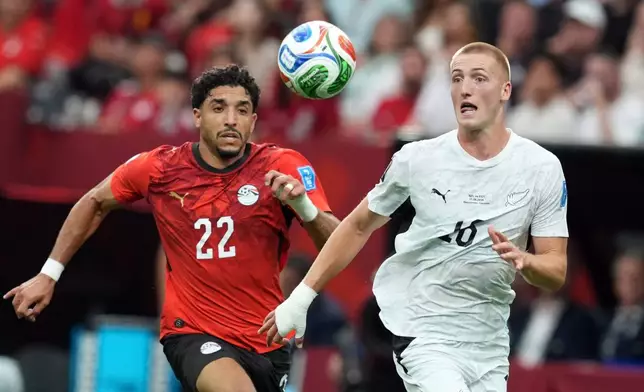
Egypt's Omar Marmoush (22) and New Zealand's Finn Surman, right, vie for the ball during the first half of a World Cup Group G soccer match in Vancouver, British Columbia, Sunday, June 21, 2026. (Ethan Cairns/The Canadian Press via AP)
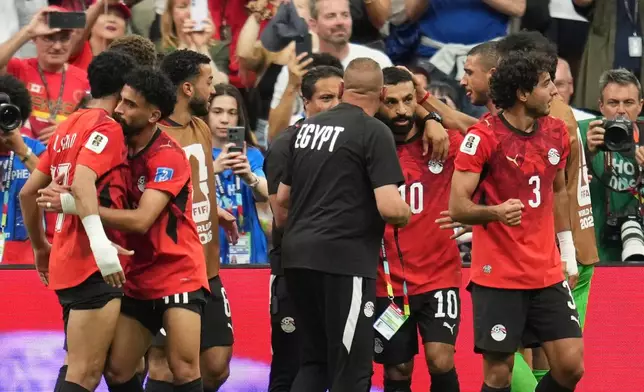
Egypt players celebrate after Mohamed Salah (10) scored his side's second goal during the World Cup Group G soccer match between New Zealand and Egypt in Vancouver, British Columbia, Sunday, June 21, 2026. (AP Photo/Abbie Parr)
Egypt's Trezeguet (7) celebrates with Mohamed Salah (10) and Marawan Attia (19) after scoring his side's third goal during the World Cup Group G soccer match between New Zealand and Egypt in Vancouver, British Columbia, Sunday, June 21, 2026. (AP Photo/Abbie Parr)
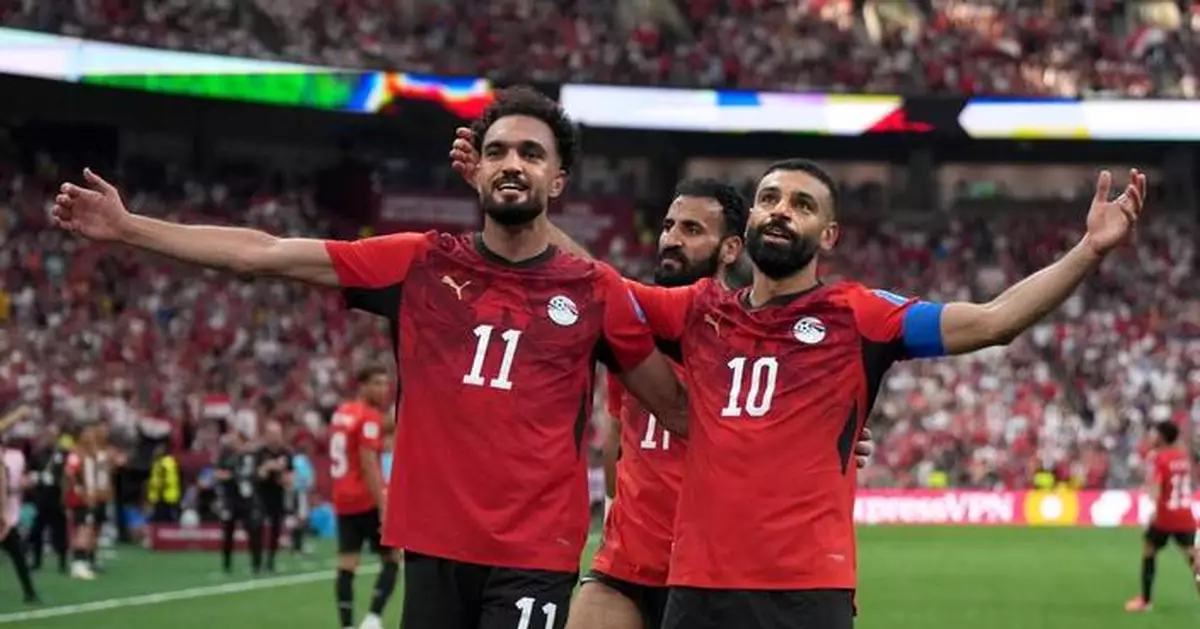
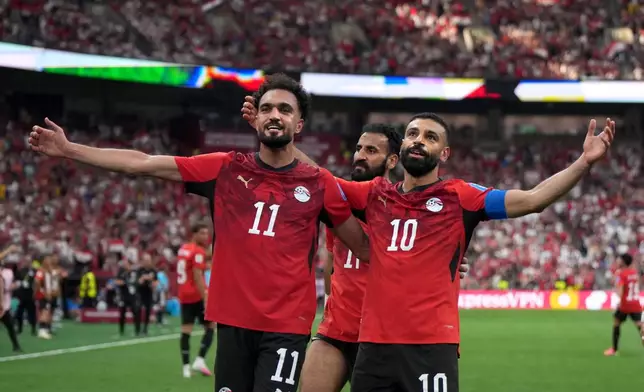
Egypt's Mohamed Salah (10) celebrates his goal with teammate Mostafa Ziko (11) during the World Cup Group G soccer match in Vancouver, British Columbia, Sunday, June 21, 2026. (Darryl Dyck/The Canadian Press via AP)
He celebrated his 68th international goal by pumping his fist before he was mobbed by his teammates in the 67th minute. When he was subbed off in the 85th he was treated to a standing ovation by the sellout crowd at BC Place Vancouver.
When it was over, coach Hossam Hassan and an assistant grabbed an Egyptian flag and ran around the field waving it aloft. The fans cheered and sang long after the final whistle.
“I always give my best to the national team," Salah said. “Today I think is a very special day, with our first win in the World Cup.”
Egypt moved to the top of the standings in Group G with the win, but was not yet assured of a spot in the knockout round. The Pharaohs will play a deciding game against Iran on Friday in Seattle, needing at least a draw to advance.
Egypt is making its fourth World Cup appearance after missing the field in Qatar four years ago. Salah scored a pair of goals in the 2018 World Cup in Russia.
Finn Surman put New Zealand in front in the 15th minute with a flying header off a corner kick delivered by Instagram sensation Tim Payne. It was the third international goal for the 6-foot-3 defender who plays for the Portland Timbers in MLS.
Omar Marmoush dropped a free kick off to Salah in the 35th minute but it went just wide and bent into the side netting and Egypt went into the half down 1-0.
“In between the first and the second half, we said it’s a no-go, we are not going to leave this pitch unless we claim the victory for ourselves, unless we make everyone proud and happy,” Hassan said. “I told them, I told the players, I am not willing to withdraw, I am not willing to go two steps back.”
Egypt turned up the pressure coming out of the half and Mostafa Zico broke through with the equalizer, finding space between Surman and Payne for a header that goalkeeper Max Crocombe got a hand on but couldn’t stop in the 58th minute. Zico celebrated by gesturing for the fans in the crowd to cheer.
Salah took a back-heel pass from Zico for his goal, which puts him just one away from tying his coach for the national team's all-time scoring lead. Trezeguet's diving header wrapped up scoring for Egypt in the 82nd.
Egypt’s Hamdy Fathy was subbed off late in the first half after an apparent injury away from the ball. He was replaced by Ramy Rabia.
In the opener against Belgium, Emam Ashour scored the early goal for Egypt but then Romelu Lukaku subbed into the match and caused chaos in the box, resulting in an own goal for a 1-1 draw.
New Zealand twice took the lead against Iran in their group opener, only to cede it for a 2-2 draw in the end. Elijah Just scored both goals for the All Whites.
New Zealand returns to Vancouver on Friday to face Belgium. The All Whites are still looking for their first World Cup win. But they have not been eliminated yet.
“You just have to believe and be positive,” said veteran Chris Wood. “We're still one win away. We can still go in, beat Belgium and go through. I'm not going to lie, it's going to be very tough.”
Iran and Belgium played to a scoreless draw earlier in the day in Inglewood, California, giving both teams two straight draws at the tournament.
AP World Cup: https://apnews.com/fifa-world-cup
Egypt's Trezeguet (7) celebrates with Mohamed Salah (10) and Marawan Attia (19) after scoring his side's third goal during the World Cup Group G soccer match between New Zealand and Egypt in Vancouver, British Columbia, Sunday, June 21, 2026. (AP Photo/Abbie Parr)
Egypt goalkeeper Mostafa Shoubir (23) allows a goal to New Zealand's Finn Surman, not seen, during the first half of the World Cup Group G soccer match in Vancouver, British Columbia, Sunday, June 21, 2026. (Darryl Dyck/The Canadian Press via AP)
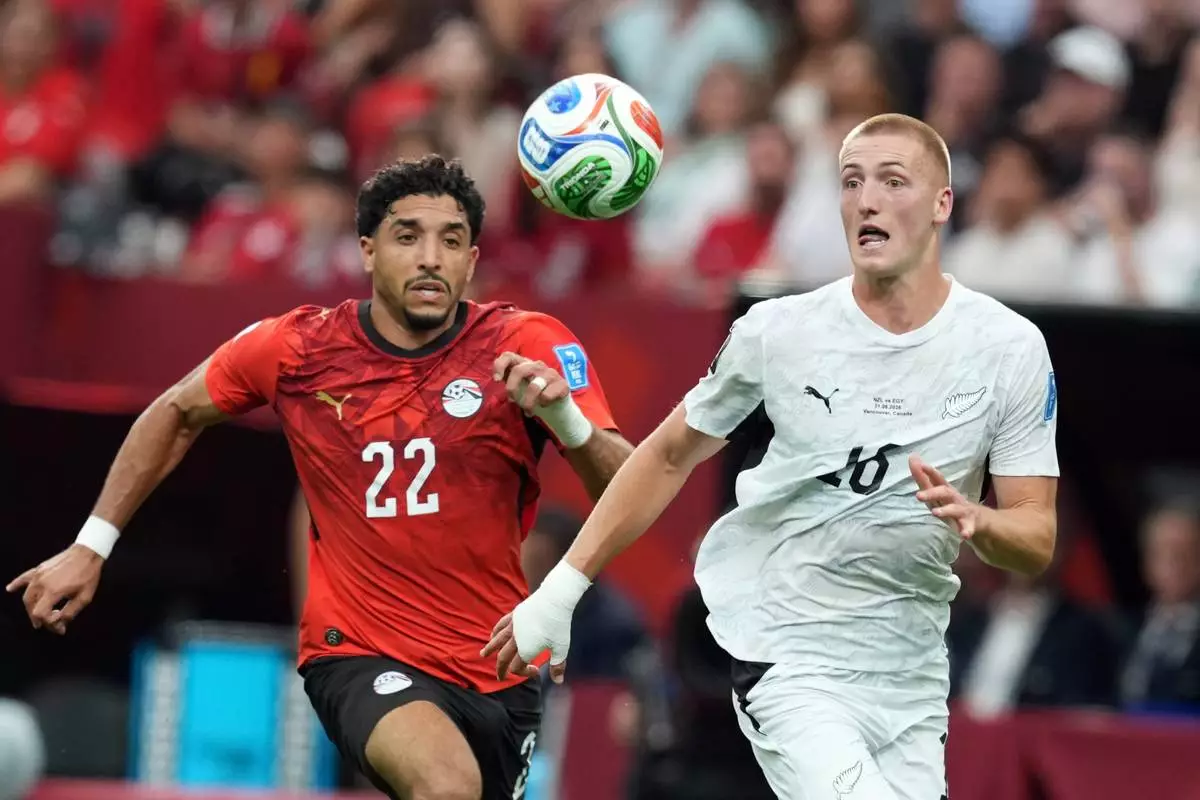
Egypt's Omar Marmoush (22) and New Zealand's Finn Surman, right, vie for the ball during the first half of a World Cup Group G soccer match in Vancouver, British Columbia, Sunday, June 21, 2026. (Ethan Cairns/The Canadian Press via AP)
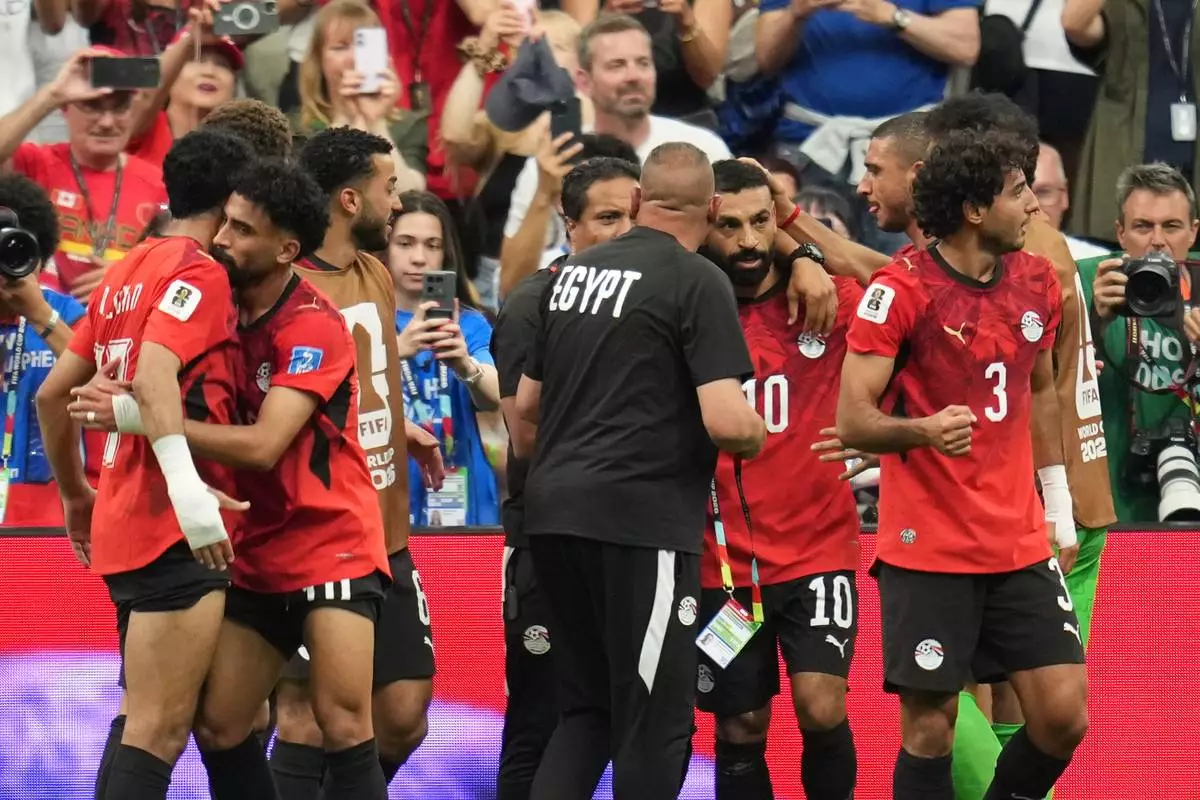
Egypt players celebrate after Mohamed Salah (10) scored his side's second goal during the World Cup Group G soccer match between New Zealand and Egypt in Vancouver, British Columbia, Sunday, June 21, 2026. (AP Photo/Abbie Parr)
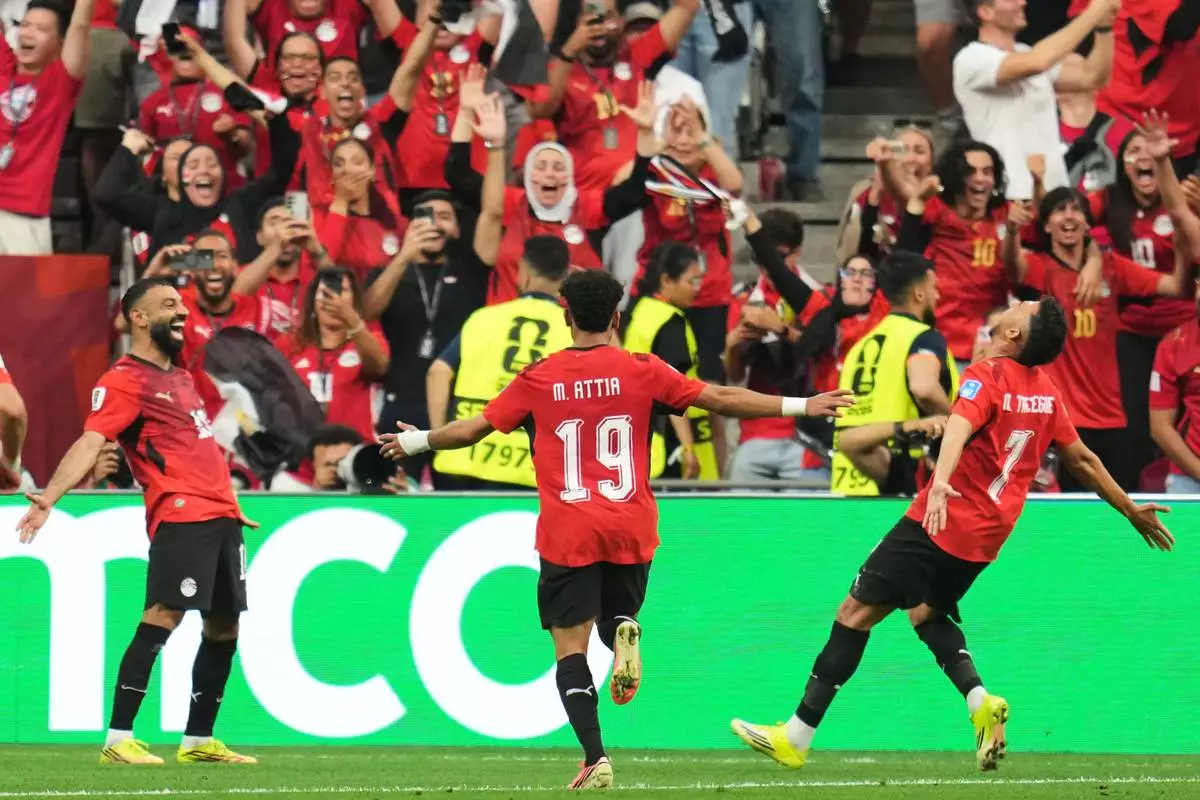
Egypt's Trezeguet (7) celebrates with Mohamed Salah (10) and Marawan Attia (19) after scoring his side's third goal during the World Cup Group G soccer match between New Zealand and Egypt in Vancouver, British Columbia, Sunday, June 21, 2026. (AP Photo/Abbie Parr)
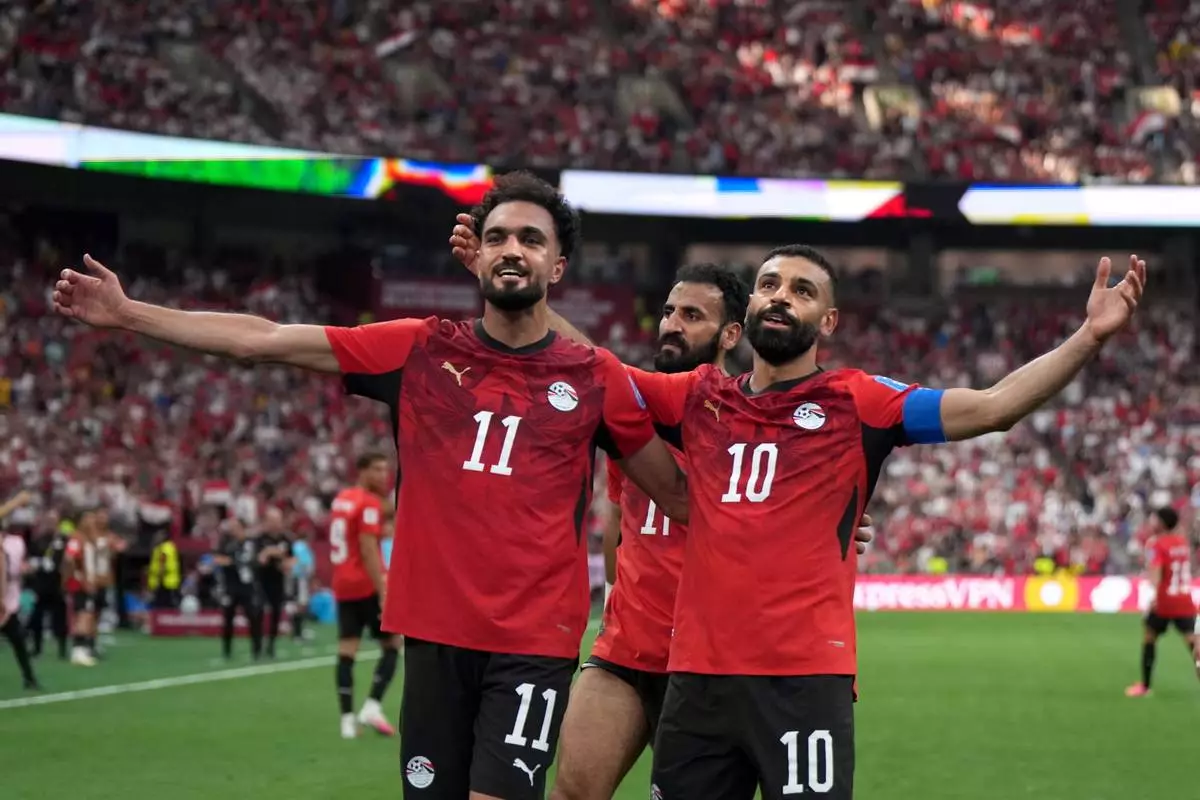
Egypt's Mohamed Salah (10) celebrates his goal with teammate Mostafa Ziko (11) during the World Cup Group G soccer match in Vancouver, British Columbia, Sunday, June 21, 2026. (Darryl Dyck/The Canadian Press via AP)
DES MOINES, Iowa (AP) — After Ashley Hinson dropped off her boys at school earlier this month, she saw the initials “DJT” flash on her phone.
“'Ashley, it's your favorite president,'” Iowa's Republican nominee for U.S. Senate recently recounted to an audience of her supporters. “That's how he introduced himself.”
She had had a more forceful message about communicating with President Donald Trump on the debate stage with her Democratic opponent, Josh Turek, as she tried to win over undecided voters.
“I’ll be President Trump’s ally when it is important for Iowa, but I will push back on him,” promised Hinson, who currently serves in the U.S. House. “He knows this.”
Although many Republicans are walking a political tightrope in this year's midterm elections, Hinson's balancing act is more challenging than most. Iowans have been hamstrung by manufacturing job losses, health care clinic closures and shrunken farm profits since Trump returned to the White House, but Hinson also is relying on the president's loyalists to show up for her.
On Thursday, Hinson took the stage before Trump came on, at a rally in Sioux City, which is in Iowa's conservative northwest corner. The visit to safe territory is geared toward boosting turnout even as it ties her more tightly to an unpopular president.
To hundreds of Trump's supporters, Hinson played up her relationship with the president.
“I’m not sure, frankly, that he’s always happy when we’re talking because I ask him for a lot of things for Iowa when we’re on the phone,” she said. “And that’s exactly what you would expect me to do, right? As your next United States senator.”
On stage, Trump quickly cast Turek as a “woke, far-left radical" and called on Iowans to reject him. He said if Democrats win in the midterms, that would be the “start of something very bad, very dark, very horrible for our country."
“I'm asking you to do me a very big favor," Trump said. “I'm asking you to pretend that I'm running.”
Trump is expected to visit the other side of the state on Nov. 1.
Turek, a state lawmaker, was in Sioux City for a campaign event Tuesday and told reporters he was happy for Trump to visit to see how his tariffs and the Iran war have “hurt Iowa more than any other state.” Although Turek says he's willing to work with Trump on issues like immigration, he calls Hinson a rubber stamp for the president's bad policies.
When Hinson kicked off her campaign last year, she touted Trump’s endorsement and said she was running to be Trump’s “top ally” in the Senate. Almost a year later, Hinson instead says she wants to be “Iowa’s best bipartisan fighter."
The message has crystallized since the summer, with more examples of Hinson vocalizing positions at odds with the president. Recent polling from late September and early October suggests it could work as she carves out about 1 in 10 voters who disapprove of the president even as she continues to secure overwhelming support from those who approve of Trump.
In August, she said Trump’s plan to increase beef imports from foreign countries in an attempt to lower prices was "a bad idea” that would hurt Iowa farmers.
Last month, two of Hinson's Iowa colleagues in the House broke with the White House and voted against Trump's ability to continue the war with Iran without congressional approval.
Hinson didn’t, but she said later the war has gotten too costly for Americans and called for Trump to bring the conflict to a “successful and immediate end.”
More recently, Hinson criticized Trump’s decision to ease sanctions on Russia in exchange for diesel fuel. She said Tuesday that the U.S. needs to make sure “dictators aren’t allowed to win wars.”
“I think the president and I share the goal of lowering costs for working families and for people who are using diesel,” she told reporters after a campaign event. “I, again, just don’t think we need to be making any deals with Russia.”
Hinson said she hadn’t talked with the president about the issue.
“Maybe I’ll have a chance to come have a conversation with him at the rally," she added.
Hinson isn't the only one pitching bipartisanship. So is Turek. In fact, he's the only Iowa candidate seeking federal office who explicitly mentions Trump in general election television advertisements, according to an Associated Press analysis of AdImpact data.
In one, Turek is behind the wheel speaking directly to a camera about Interstate 35, which “connects Iowa to the southern border and the broken immigration system that both parties have failed to fix." He says: “In the U.S. Senate, I’ll work with anyone to fix it, including President Trump, to secure the border, stop the flow of drugs into Iowa.”
Turek has pushed back on the president’s policies, including tariffs and the war in Iran, as the catalysts of high costs that are hurting Iowans, but his message on working with the president on immigration and other select issues stands out from other Democrats. Republicans say he's just pretending to be a moderate to get elected.
Mazie Stilwell, executive director of the progressive organization Progress Iowa, said Turek's message on immigration targets a bloc of voters on an issue that's particularly important to them but doesn't overshadow his otherwise disciplined focus on the high costs facing Iowans.
Trump’s visit to the state Thursday, she added, is “a terrific reminder of the disaster that he has been and his administration has been for our bottom line, for everyday Iowans who are trying to make ends meet.”
Iowa is no stranger to competitive Senate races even though Trump won the state by double digits in the last presidential election.
Ad spending on broadcast and cable television has already surpassed $200 million this cycle, AdImpact shows. But in today’s dollars, the total ad spending in the 2020 Senate race was even higher.
Republicans have spent slightly more for Hinson than Democrats for Turek. That was the opposite in 2020, when Democrats spent nearly $30 million more than the GOP did in their unsuccessful effort to unseat Sen. Joni Ernst.
Iowa Republican activist Kelley Koch has been concerned that complacency will dampen turnout from conservatives, even those who are loyal to the president.
"They say, ‘Why are you all hyped up about the midterms, Kelley, Trump will take care of everything,'” Koch said.
It’s an assumption she’s working to counteract, and she expects “the Trump effect” from his visits will help protect Republican majorities in the House and Senate.
And while Koch supports Hinson, she doesn’t like it when she talks about pushing back on Trump.
“Right now,” Koch said, “we had better unite around our president.”
Associated Press reporter Aaron Kessler in Washington contributed.
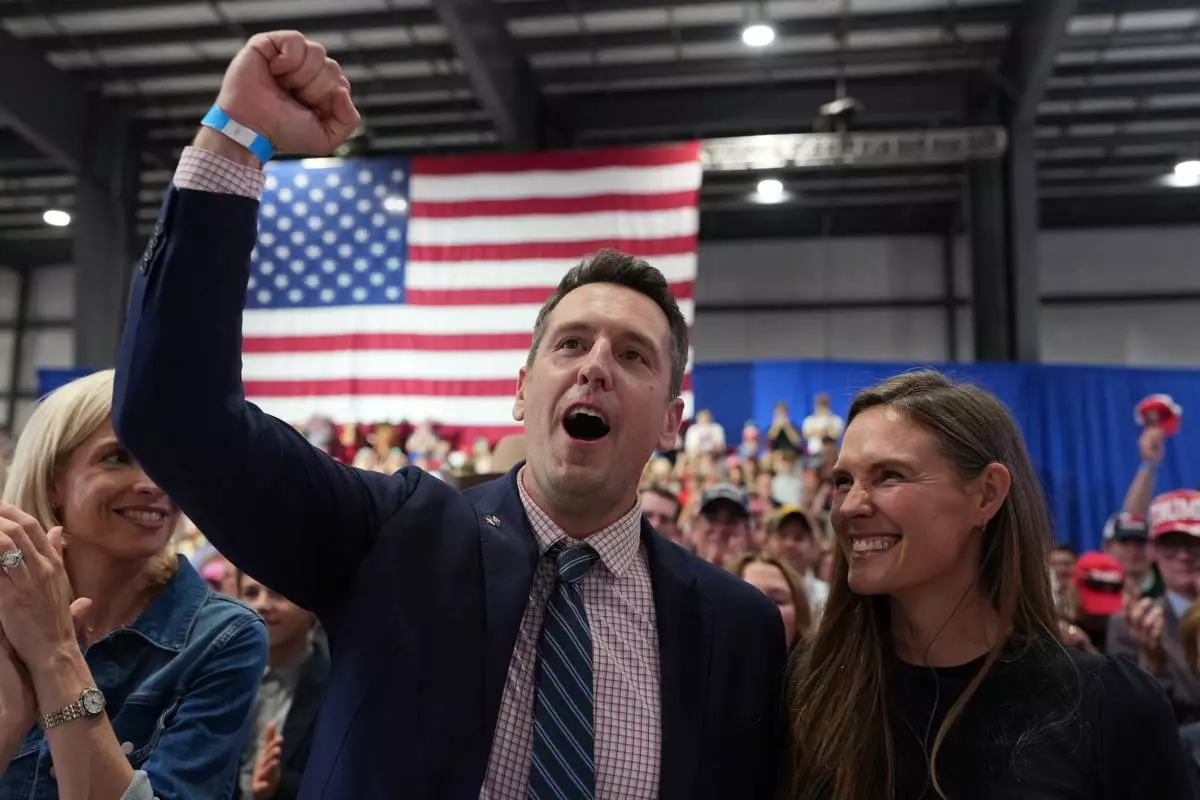
Iowa gubernatorial candidate Zach Lahn gestures as President Donald Trump arrives at a campaign rally at Sioux Gateway Airport, Thursday, Oct. 22, 2026, in Sioux City, Iowa. (AP Photo/Alex Brandon)
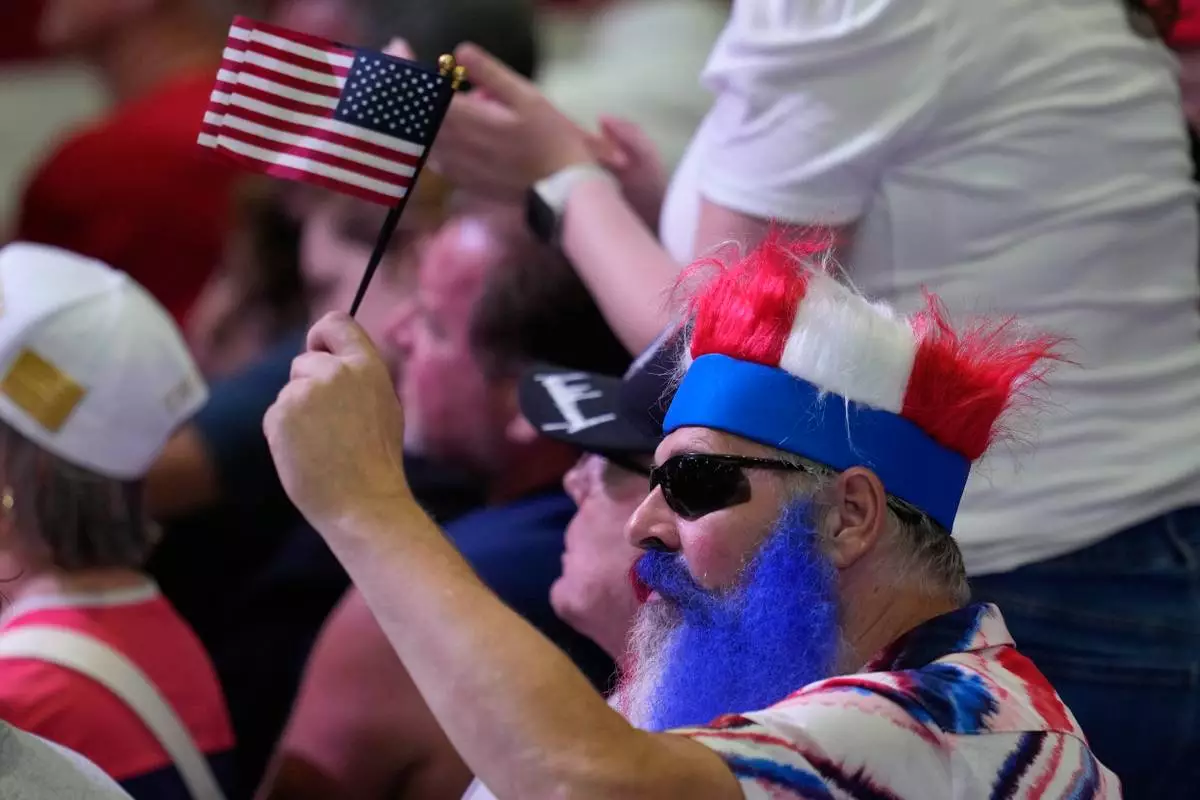
People listen as President Donald Trump speaks during a campaign rally at the Sioux Gateway Airport, Thursday, Oct. 22, 2026, in Sioux City, Iowa. (AP Photo/Charlie Neibergall)
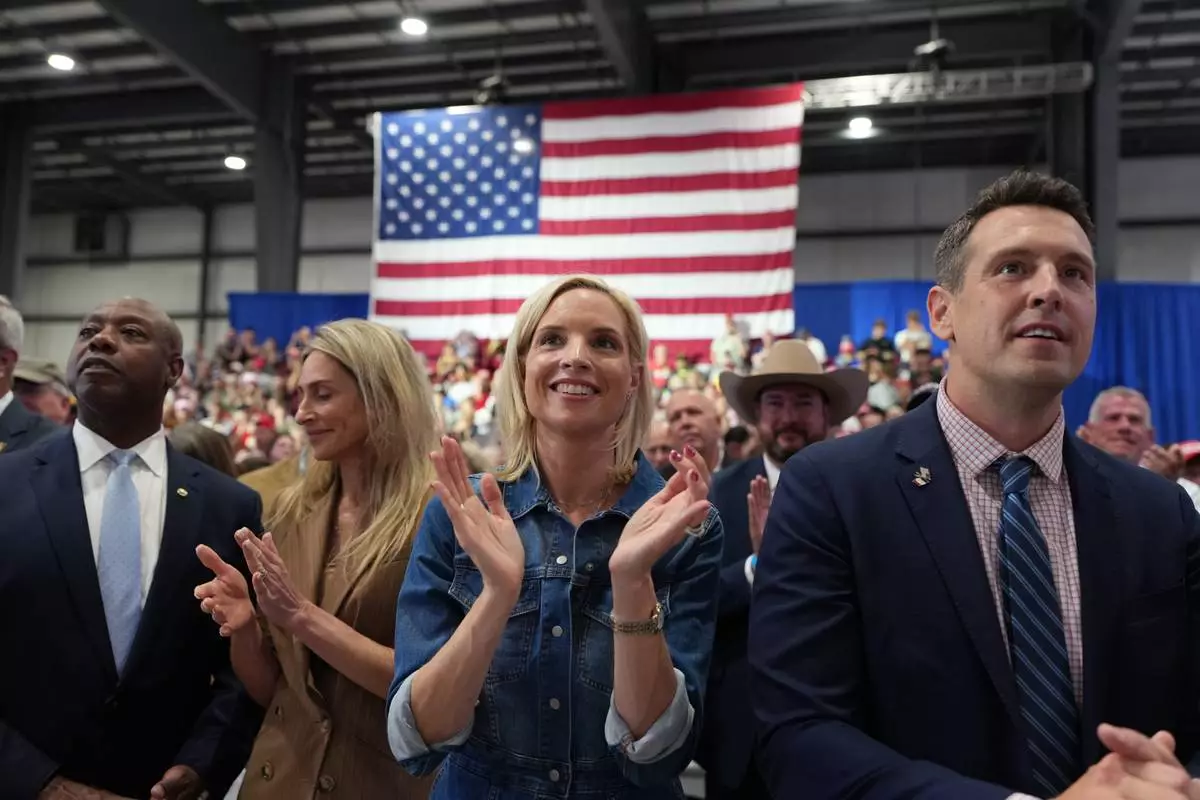
Sen. Tim Scott, R-S.C., left, Iowa gubernatorial candidate Zach Lahn, right, and Iowa U.S. Senate candidate Rep. Ashley Hinson, R-Iowa, second from right, listen as President Donald Trump speaks at a campaign rally at Sioux Gateway Airport, Thursday, Oct. 22, 2026, in Sioux City, Iowa. (AP Photo/Alex Brandon)
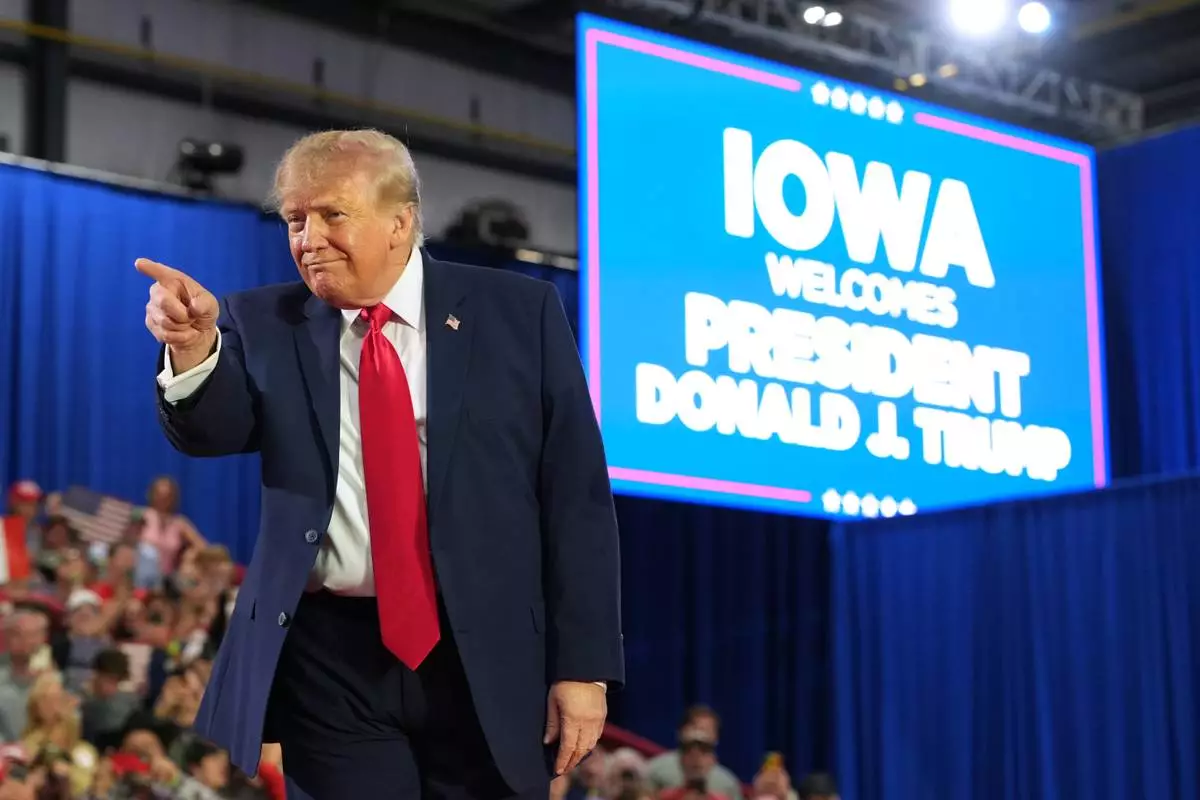
President Donald Trump arrives at a campaign rally at Sioux Gateway Airport, Thursday, Oct. 22, 2026, in Sioux City, Iowa. (AP Photo/Alex Brandon)
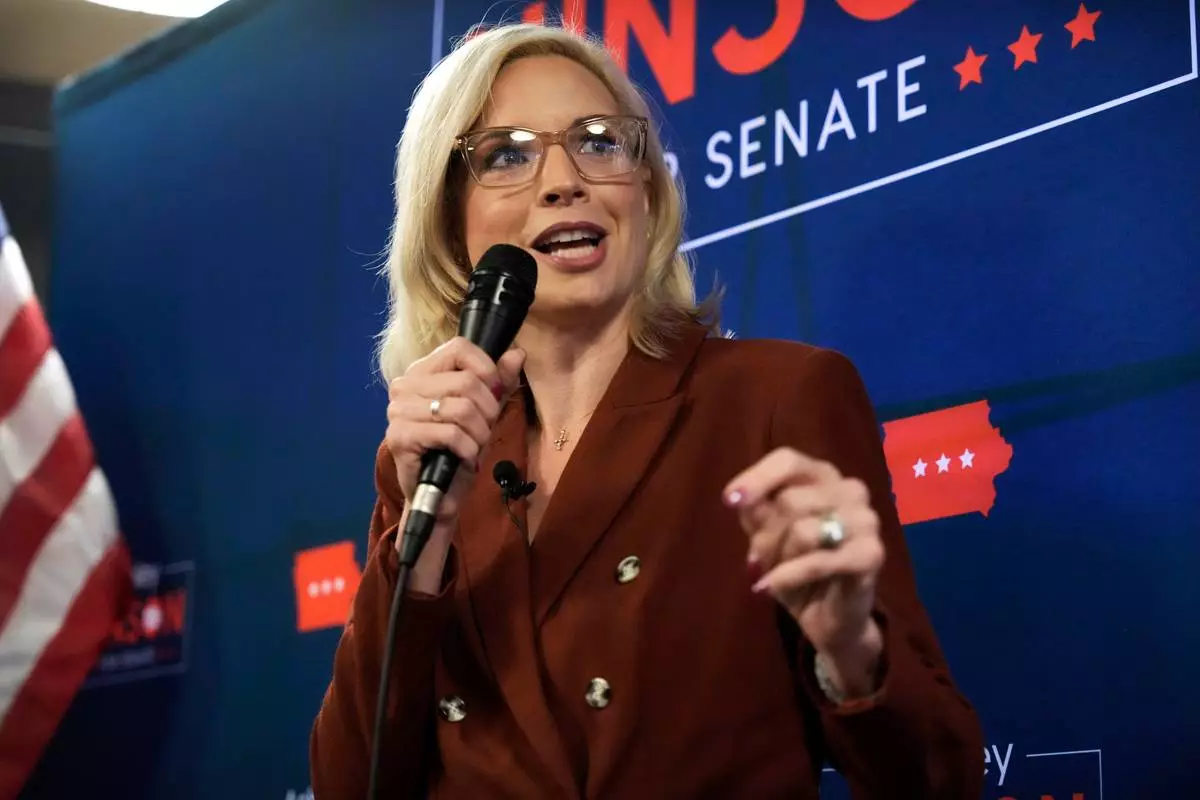
Republican nominee for U.S. Senate Rep. Ashley Hinson, R-Iowa, speaks to supporters, Thursday, Oct. 15, 2026, in Ankeny, Iowa. (AP Photo/Charlie Neibergall)