Skip to Content Facebook Feature Image

Israeli strikes leave Lebanon's ancient coastal city of Tyre shaken

News

Israeli strikes leave Lebanon's ancient coastal city of Tyre shaken
News

News

Israeli strikes leave Lebanon's ancient coastal city of Tyre shaken

2026-06-22 14:07 Last Updated At:14:21

TYRE, Lebanon (AP) — The dust has barely settled in Tyre after weeks of Israeli airstrikes on the ancient city along Lebanon 's Mediterranean coast.

Despite the relative calm, life remains largely at a standstill.

More Images
A man stands behind shattered windows at Jabal Amel Hospital, which was heavily damaged in Israeli strikes that hit nearby buildings earlier this month, in the southern port city of Tyre, Lebanon, Thursday, June 18, 2026. (AP Photo/Hassan Ammar)
A man stands behind shattered windows at Jabal Amel Hospital, which was heavily damaged in Israeli strikes that hit nearby buildings earlier this month, in the southern port city of Tyre, Lebanon, Thursday, June 18, 2026. (AP Photo/Hassan Ammar)

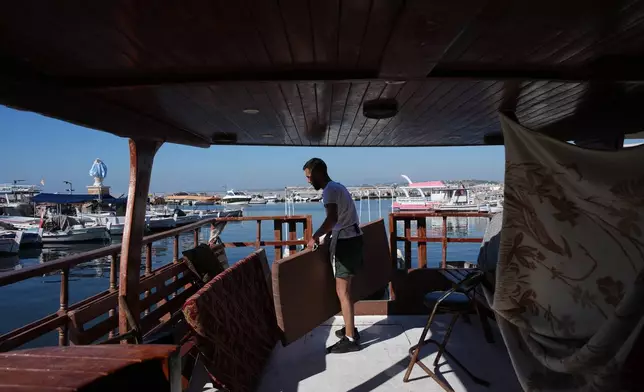
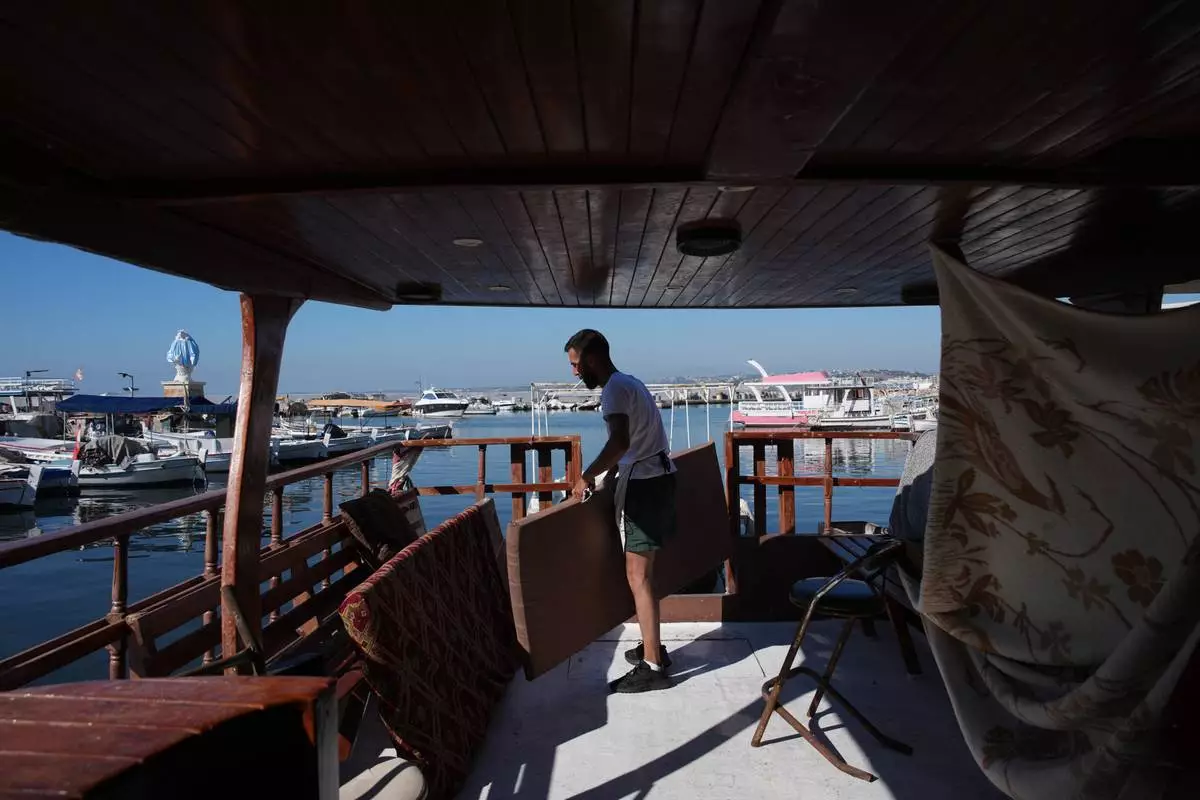
With the statue of Our Lady of the Seas visible in the background, Ali Bazzi, 31, who was displaced from his home in the village of Toura during the war between Israel and Hezbollah, arranges cushions aboard a small boat where he has been living in the southern port city of Tyre, Lebanon, Saturday, June 20, 2026. (AP Photo/Hassan Ammar)
With the statue of Our Lady of the Seas visible in the background, Ali Bazzi, 31, who was displaced from his home in the village of Toura during the war between Israel and Hezbollah, arranges cushions aboard a small boat where he has been living in the southern port city of Tyre, Lebanon, Saturday, June 20, 2026. (AP Photo/Hassan Ammar)

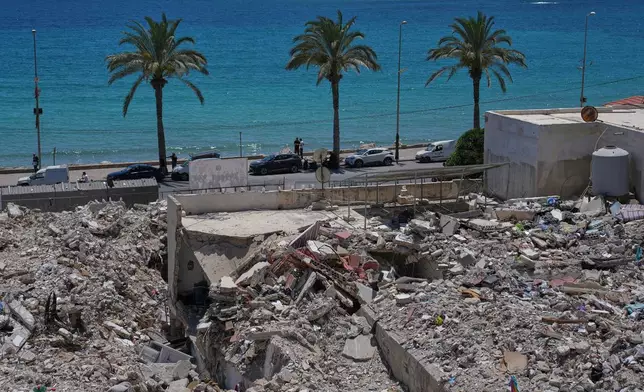
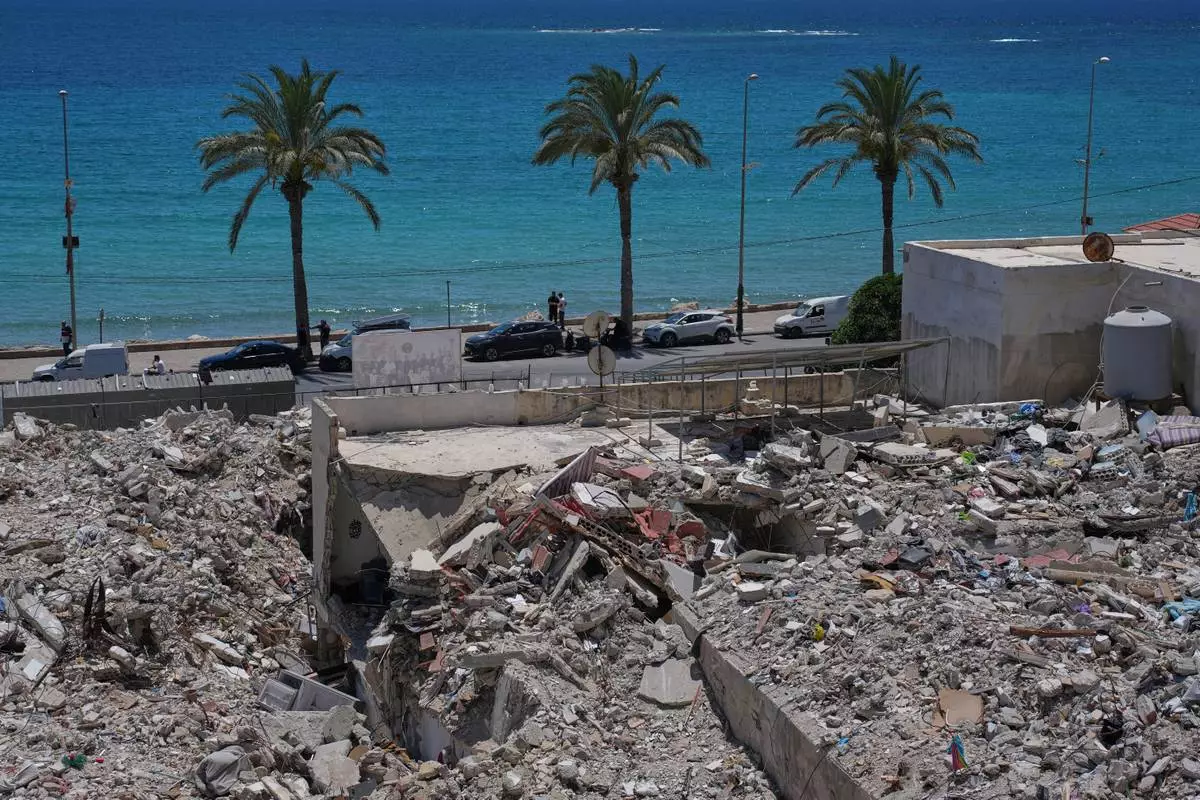
A general view shows rubble from buildings destroyed in Israeli strikes along the waterfront in the southern port city of Tyre, Lebanon, Friday, June 19, 2026. (AP Photo/Hassan Ammar)
A general view shows rubble from buildings destroyed in Israeli strikes along the waterfront in the southern port city of Tyre, Lebanon, Friday, June 19, 2026. (AP Photo/Hassan Ammar)

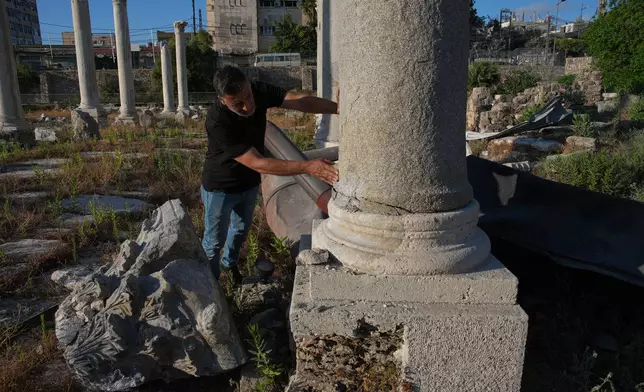
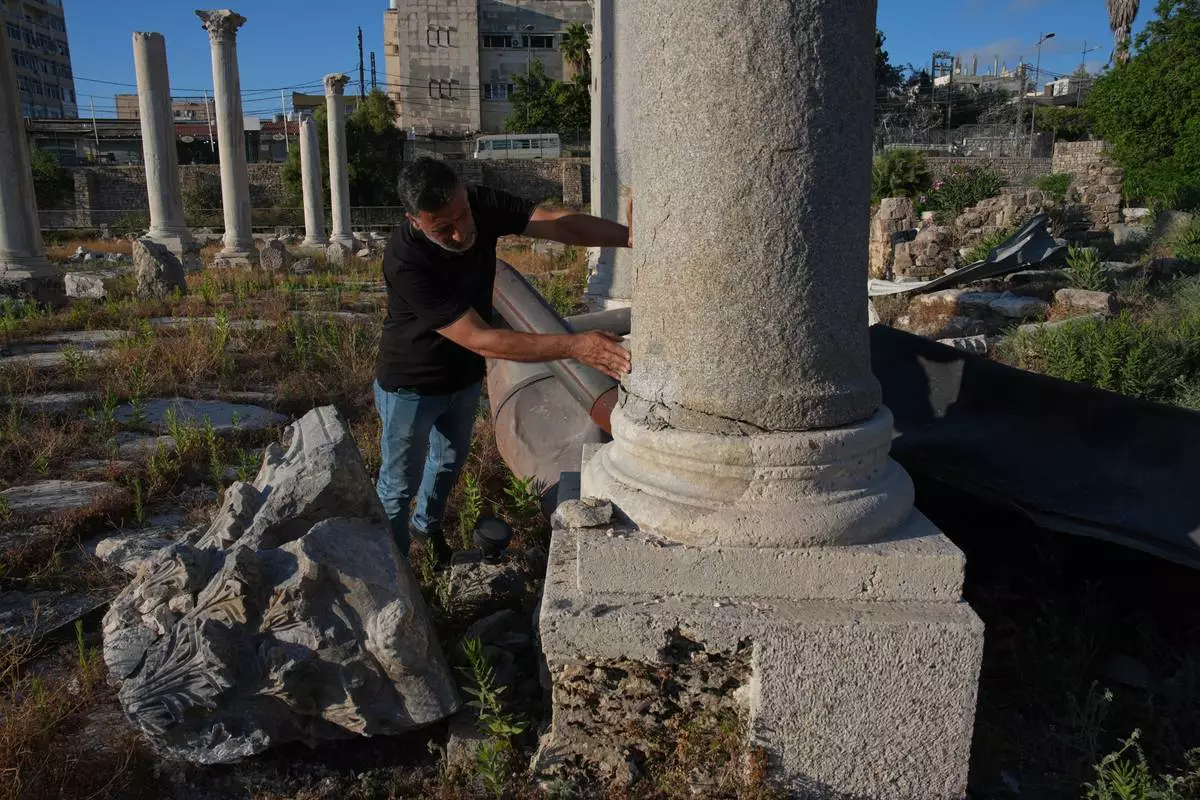
Adnan Istanbuli, an employee at the Directorate General of Antiquities, inspects a Roman-era column after part of its capital was knocked off and fell to the ground at an archaeological site lightly damaged in an Israeli strike nearby last week, in the southern port city of Tyre, Lebanon, Thursday, June 18, 2026. (AP Photo/Hassan Ammar)
Adnan Istanbuli, an employee at the Directorate General of Antiquities, inspects a Roman-era column after part of its capital was knocked off and fell to the ground at an archaeological site lightly damaged in an Israeli strike nearby last week, in the southern port city of Tyre, Lebanon, Thursday, June 18, 2026. (AP Photo/Hassan Ammar)

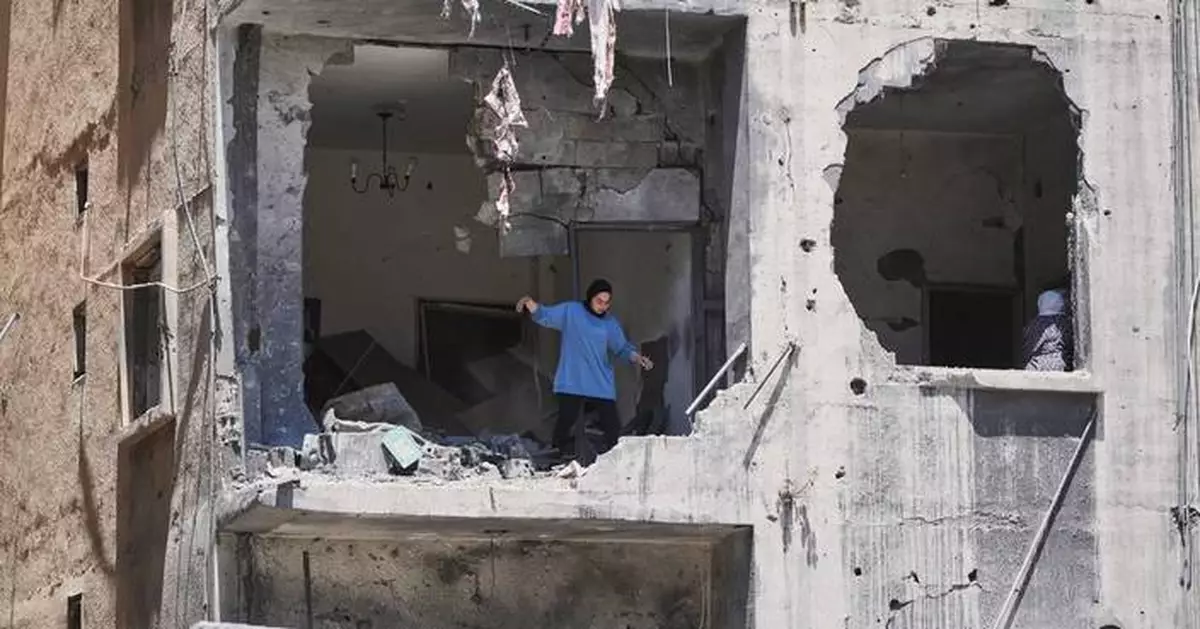
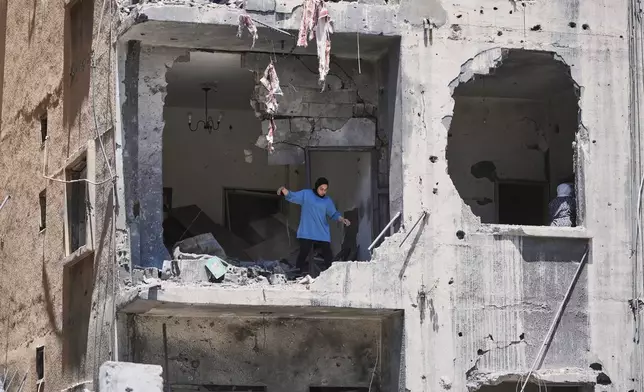
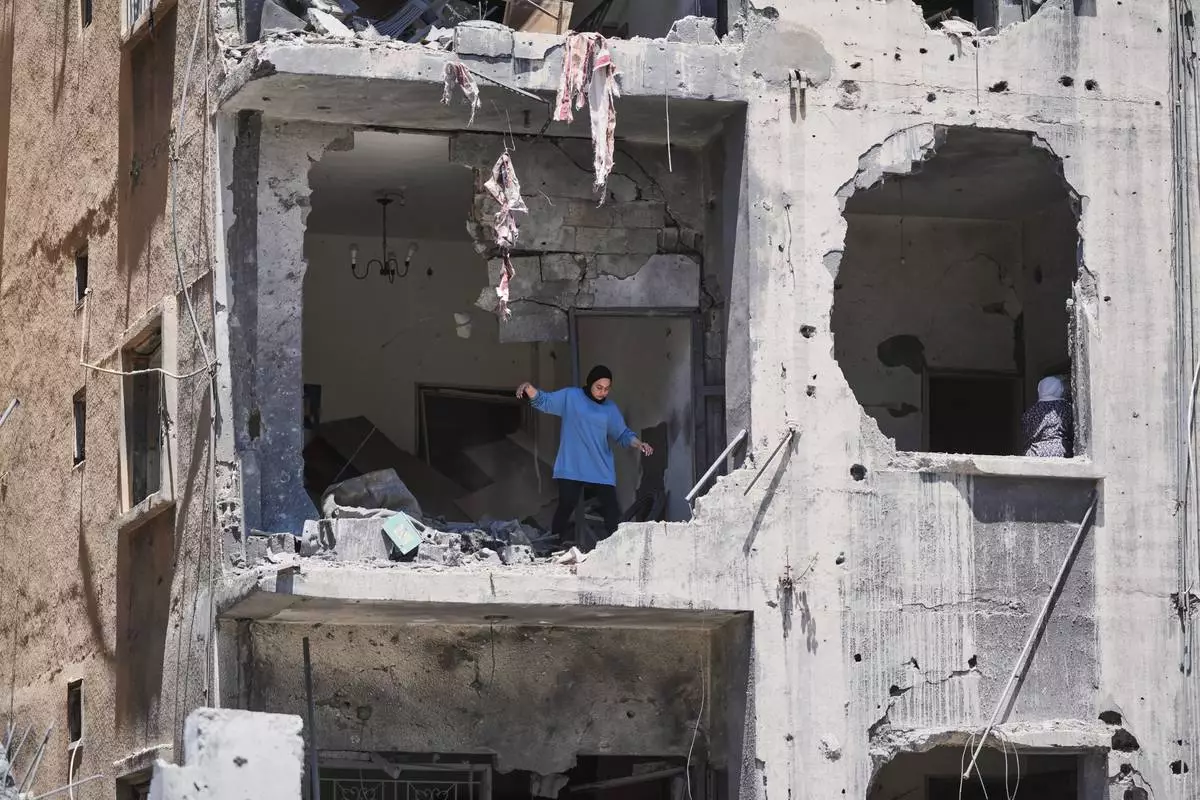
A woman walks through her apartment damaged in Israeli strikes in the southern port city of Tyre, Lebanon, Thursday, June 18, 2026. (AP Photo/Hassan Ammar)

A woman walks through her apartment damaged in Israeli strikes in the southern port city of Tyre, Lebanon, Thursday, June 18, 2026. (AP Photo/Hassan Ammar)

A new ceasefire between Israel and the Iranian-backed Hezbollah militant group is in effect. But previous ceasefires have broken down. Uncertainty and fear linger, even as the U.S. and Iran meet for talks in Switzerland that Lebanese residents hope will bring calm to their troubled country.

Over 4,000 people in Lebanon have been killed in Israeli strikes since the latest Israel-Hezbollah war began in March, two days after the Iran war began, when Hezbollah fired at Israel. The group has also clashed with Israeli troops making their deepest incursion into southern Lebanon in over a quarter century.

Large swaths of southern Lebanon have been left in ruins, including Tyre.

During the summer, Lebanon’s fourth largest city is usually filled with tourists lounging on its beaches, walking through its Roman ruins, eating freshly caught seafood at picturesque restaurants or taking boat tours.

Now, tables at the few restaurants that haven’t closed are empty. Parking lots that are usually packed with beachgoers' vehicles are filled with displaced people living in tents. Fishermen and mariners say they can’t sail far from port for fear of being targeted.

“Every day they tell us there’s a truce or ceasefire. Where is this truce? We can’t see it,” said Ali Bazzi, 31, who lives alone on a tour boat that belongs to family friends. His home in Toura, several kilometers away, was destroyed by an Israeli strike.

Like many who have fled to Tyre from surrounding areas, he doesn’t dare return until he sees long-term calm.

For months, Bazzi has been sleeping on a mattress on the deck, and selling sandwiches at a small stand a few steps away to earn money.

Israel in early June warned the entirety of Tyre to leave before it launched intense airstrikes across the city, saying it was targeting Hezbollah.

But Bazzi stayed. He recalled the emptied, ghostly city and the cries of women and children as Israeli strikes began. And he said he woke one night to the sound of a drone hovering over the port and worried it had come for him.

Even as the new ceasefire appeared to be largely holding, Tyre residents still pause anxiously when they hear Israeli jets overhead.

It seems at least one building has been reduced to rubble on every street. Others remain standing with several floors blown off.

Pictures of those killed, including paramedics, families, and Hezbollah militants, are posted as memorials on the ruins of buildings and dashboards of parked cars.

The city's iconic heritage sites are not unscathed.

Several buildings next to the remains of a 2nd century citadel were struck. Debris knocked the crowns off some Roman columns and damaged stones on the Roman road that have existed for thousands of years. Employees hope the damage to the UNESCO World Heritage site can be repaired.

“We’re waiting for a committee to come and inspect it,” said Adnan Istanbuli, an employee at the Lebanese Directorate General of Antiquities. “The city of Tyre is 5,000 years old, and what happened to it is huge."

Just south of the city, the shoreline in Mansouri, a well-known wildlife preserve for sea turtles and other animals, is now inaccessible after Israeli strikes. Mona Khalil, a well-known environmentalist who lived along that shore, died Friday from her wounds, weeks after a strike hit her home.

One of Tyre’s largest hospitals is repairing some of its units that were destroyed when an Israeli airstrike struck a building across the street.

Doctors at the Jabal Amel Hospital have lived through multiple wars over the past few decades but said this one is different. In the past, they felt relatively safe as long as they were in the hospital. This time, the Israeli strikes occurred nearby and without warning.

Doors and windows were blown off. Staff rushed to treat wounded patients and colleagues. Thick smoke filled the hospital.

“We used to be scared, but we’re a lot more scared now,” said intensive care unit nurse Khadeeja Yousef, whose unit overlooks the hospital parking lot, now reduced to rubble and charred cars.

Cardiologist Mohammad Nassar's private clinic across the street was hit. Now he rummages through the debris, looking for hundreds of books he had collected for over three decades.

“I don’t care about any heart monitoring machines or anything else, but the books are dear to my heart,” he said.

People in Tyre are constantly reminded that prospects for long-term stability are unclear as negotiations continue between Israel and Lebanon in Washington, with Hezbollah playing no role and resisting efforts to disarm it.

Large swaths of land just south of the city are under Israeli control, stretching to the United Nations-mandated Blue Line that separates the countries. In recent days, smoke from distant Israeli artillery fire was visible from Tyre's shoreline.

And on a distant hilltop, an Israeli flag could be seen.

Associated Press journalist Malak Harb in Tyre, Lebanon, contributed to this report.

A man stands behind shattered windows at Jabal Amel Hospital, which was heavily damaged in Israeli strikes that hit nearby buildings earlier this month, in the southern port city of Tyre, Lebanon, Thursday, June 18, 2026. (AP Photo/Hassan Ammar)
A man stands behind shattered windows at Jabal Amel Hospital, which was heavily damaged in Israeli strikes that hit nearby buildings earlier this month, in the southern port city of Tyre, Lebanon, Thursday, June 18, 2026. (AP Photo/Hassan Ammar)

With the statue of Our Lady of the Seas visible in the background, Ali Bazzi, 31, who was displaced from his home in the village of Toura during the war between Israel and Hezbollah, arranges cushions aboard a small boat where he has been living in the southern port city of Tyre, Lebanon, Saturday, June 20, 2026. (AP Photo/Hassan Ammar)
With the statue of Our Lady of the Seas visible in the background, Ali Bazzi, 31, who was displaced from his home in the village of Toura during the war between Israel and Hezbollah, arranges cushions aboard a small boat where he has been living in the southern port city of Tyre, Lebanon, Saturday, June 20, 2026. (AP Photo/Hassan Ammar)

A general view shows rubble from buildings destroyed in Israeli strikes along the waterfront in the southern port city of Tyre, Lebanon, Friday, June 19, 2026. (AP Photo/Hassan Ammar)
A general view shows rubble from buildings destroyed in Israeli strikes along the waterfront in the southern port city of Tyre, Lebanon, Friday, June 19, 2026. (AP Photo/Hassan Ammar)

Adnan Istanbuli, an employee at the Directorate General of Antiquities, inspects a Roman-era column after part of its capital was knocked off and fell to the ground at an archaeological site lightly damaged in an Israeli strike nearby last week, in the southern port city of Tyre, Lebanon, Thursday, June 18, 2026. (AP Photo/Hassan Ammar)
Adnan Istanbuli, an employee at the Directorate General of Antiquities, inspects a Roman-era column after part of its capital was knocked off and fell to the ground at an archaeological site lightly damaged in an Israeli strike nearby last week, in the southern port city of Tyre, Lebanon, Thursday, June 18, 2026. (AP Photo/Hassan Ammar)

A woman walks through her apartment damaged in Israeli strikes in the southern port city of Tyre, Lebanon, Thursday, June 18, 2026. (AP Photo/Hassan Ammar)


A woman walks through her apartment damaged in Israeli strikes in the southern port city of Tyre, Lebanon, Thursday, June 18, 2026. (AP Photo/Hassan Ammar)

HONG KONG (AP) — The war in Iran has helped reshape the global electric vehicle market, giving Chinese automakers an opening across the developing world as soaring fuel prices push drivers towards electric vehicles, even as charging infrastructure lags behind a wave of imports.

The blockade of the Strait of Hormuz disrupted shipping of about a fifth of the world’s crude oil and liquified natural gas, first hitting Asia — the main destination for the fuels — followed by Africa.

This shock accelerated a trend that was already spreading across the developing world. In April, global exports of Chinese EVs hit a record $9.4 billion, according to an analysis by think tank Ember of Chinese customs data. Shipments surged to countries such as Australia, Brazil and regions like Southeast Asia and East Africa.

China exported about 435,000 passenger EVs and plug-in hybrids in May, more than double from a year earlier, according to the Chinese Association of Automobile Manufacturers.

As fuel costs rise, more drivers are switching to EVs to save money, while governments from Laos to Ethiopia are embracing electrification to curb oil imports and reduce costs of fuel subsidies.

But faster EV adoption is outpacing the expansion of charging networks. Governments and state-owned utilities in Africa are taking a leading role in building them — a model analysts say could help other emerging markets, like Asia, speed the shift away from fossil fuels.

When a nation lacks sufficient charging infrastructure and EV fleet size, it is a “classic chicken-and-egg problem” regarding what comes first, said Paul Gong, head of UBS bank’s China automotive industry research.

“At that stage, government support for infrastructure could help accelerate adoption,” he said.

Across the developing world, drivers are looking beyond the gas pump.

In Southeast Asia, imports of Chinese EVs have surged in Thailand, Laos and the Philippines. In May, Laos banned the import of fuel-powered vehicles for the rest of 2026 to cut oil import costs and encourage the EV shift.

Africa imported around 44,000 Chinese EVs in 2025, a 130% jump from the year before, according to Chinese Commerce Ministry data.

Across Asia and Africa, transport is one of the largest household expenses.

Limited public transit, long commutes and a reliance on private vehicles make families vulnerable to volatile fuel prices. In South Africa, transportation accounts for nearly a fifth of household spending, according to a 2024 study by Stellenbosch University in South Africa's Western Cape province.

So, as fuel prices surge, global interest in EVs has been growing, said Mark Wakefield, with the consultancy AlixPartners.

One in four new cars sold worldwide last year were electric, according to the International Energy Agency.

Global electric car sales are expected to grow further in 2026 and reach 23 million, making up nearly 30% of all cars sold worldwide, according to the IEA’s latest EV outlook.

“In the next five years, we will accelerate (our) overseas expansion,” said Jerry Gan, CEO of Geely Auto, one of China's biggest automakers, at a company event in March as the auto group makes inroad into regions like Southeast Asia including selling EVs.

Chinese automakers supplied around 60% of electric cars sold globally, the IEA said. They have also been targeting Europe, Africa and Latin America.

In Vietnam, automaker VinFast also logged stronger sales. Demand from Southeast Asia helped drive a 42% year-on-year increase in the company's January-March quarterly revenue.

On most mornings, Nguyen Thien Bao threads his VinFast electric motorbike through the jammed traffic of Vietnam’s capital Hanoi — ferrying passengers and deliveries. The EV bike has sharply cut his expenses as fuel prices rise.

“Before, so much of my income went into fuel,” he said. “Now, I can actually save some money.”

But while EV imports are booming, charging infrastructure is still lagging even as installations have accelerated.

Thailand, for instance, has around 4,600 public charging locations to serve more than 424,000 battery EVs and plug-in hybrids, according to the Electric Vehicle Association of Thailand — around one for every 92 vehicles. The country currently has roughly 12,000 public chargers, the IEA said.

Chitsanupong Nuamnorm's solution is to keep his gasoline-fueled Mazda 2 for weekend trips, although the Chinese-made MG4 EV he bought on Feb. 27 — the day before the Iran war began — is saving him a lot of money.

Yutthana Samranwong, a 54-year-old driver in Thailand’s northern Phitsanulok province, says booking online for public charging ports to keep his MG4 EV running is a gamble.

“It's a bit of a headache,” said Samranwong, who sometimes works with the Grab ride-hailing and delivery service.

In Bangkok, strained charging networks are prompting some drivers to consider returning to fuel-powered cars.

In Malaysia, public fast chargers were up more than 70% in 2025, according to the IEA, after the government rolled out incentives to including a tax break for operators of charging points that meet certain investment criteria.

Indonesia has more than 4,500 public charging stations set up the state-owned power utility PLN, the IEA said.

Ethiopia, which has banned non-EV imports, had only around a dozen charging stations as of mid-2025, and the government estimates it needs more than 1,170 stations to meet rising demand. In the capital Addis Ababa, 40 stations are under construction, according to the state electricity utility.

“In developing markets, affordability can accelerate the shift, but the pace of adoption will still depend heavily on infrastructure, power reliability and use case,” said Chris Liu, with the technology research and advisory group Omdia.

In Indonesia, more than 4,500 public chargers have been deployed by its state-owned power utility PLN, the IEA said.

African countries also are increasingly turning to state-owned utilities to build EV charging networks, betting public investment can solve one of the biggest obstacles to electric vehicle adoption.

“Utilities are recognizing that electric mobility will become a meaningful source of future electricity demand,” said Ndia Magadagela, co-founder and CEO of Everlectric, a South African commercial EV leasing company.

There are around 2,000 public EV charging stations in Africa, with South Africa accounting for the largest share.

State-controlled utility Kenya Power plans to build 44 charging stations within the next year.

But building networks of charging stations is difficult in developing markets, according to Omdia's Liu, who said grid connections and maintenance are key issues.

While BYD, for example, is expanding its ultrafast EV charging network in places like Europe, large Chinese automakers typically may have relatively little incentive to build networks outside China, he said.

State-owned utilities, therefore, can play a larger role in this, according to Liu, since they are closely tied to a country’s grid planning, electricity pricing and distribution capacity.

“You need charging infrastructure to support an even larger fleet size,” said Gong, the auto analyst from UBS.

Olingo reported from Nairobi, Kenya, and Delgado reported from Bangkok. Associated Press writer Aniruddha Ghosal contributed to this report.

The Associated Press’ climate and environmental coverage receives financial support from multiple private foundations. The AP is solely responsible for all content. Find AP’s standards for working with philanthropies, a list of supporters and funded coverage areas at AP.org.

FILE - Aerial view of new vehicles waiting for shipment to overseas market at a port in Shanghai, China, May 9, 2026. (Chinatopix via AP, File)

FILE - Aerial view of new vehicles waiting for shipment to overseas market at a port in Shanghai, China, May 9, 2026. (Chinatopix via AP, File)

A driver plugs in her Chinese-made MG electric vehicle to charge at a parking lot in Bangkok, Thailand on June 4, 2026. (AP Photo/Anton L. Delgado)

A driver plugs in her Chinese-made MG electric vehicle to charge at a parking lot in Bangkok, Thailand on June 4, 2026. (AP Photo/Anton L. Delgado)

Chanakan Sa-Nguanslip waits for her Chinese-made electric vehicle to charge at a gas station in Kanchanaburi, Thailand on May 30, 2026. (AP Photo/Anton L. Delgado)

Chanakan Sa-Nguanslip waits for her Chinese-made electric vehicle to charge at a gas station in Kanchanaburi, Thailand on May 30, 2026. (AP Photo/Anton L. Delgado)

Khatawut Junsongsaeng, a charging station manager, walks past two Chinese-made electric vehicles at a parking lot in Bangkok, Thailand on June 4, 2026. (AP Photo/Anton L. Delgado)

Khatawut Junsongsaeng, a charging station manager, walks past two Chinese-made electric vehicles at a parking lot in Bangkok, Thailand on June 4, 2026. (AP Photo/Anton L. Delgado)

A motorcyclist fills his tank in front of an electric vehicle charging terminal at a gas station in Thailand's Nakorn Pathom province on May 28, 2026. (AP Photo/Anton L. Delgado)

A motorcyclist fills his tank in front of an electric vehicle charging terminal at a gas station in Thailand's Nakorn Pathom province on May 28, 2026. (AP Photo/Anton L. Delgado)

Recommended Articles