Former Wimbledon champion Marketa Vondrousova was suspended for four years on Monday for refusing an anti-doping test.
The Czech cited “mental stress” and fear when the testing agent “rang my door late at night without properly identifying themselves.”
The International Tennis Integrity Agency made the announcement, saying Vondrousova refused a test in December and the maximum four-year ban for a routine first offense was reached by an independent tribunal following a hearing this month.
Vondrousova became Wimbledon’s first unseeded female champion when she beat Ons Jabeur in the 2023 final. She reached a career-high ranking of No. 6 that year. She also reached the French Open final in 2019, losing to Ash Barty.
The 26-year-old Vondrousova detailed her reaction to the missed test in an Instagram post in April.
“It is very tough for me to talk about this, but I want to be transparent with you about my mental health,” Vondrousova said. “The recent doping control incident happened because I reached a breaking point after months of physical and mental stress.”
The ITIA said Vondrousova “did not submit a sample when notified by a Doping Control Officer during an out-of-competition test attempt at her home at around 8 p.m. on 3 December 2025” and that she instead signed a refusal form.
Vondrousova was represented by Los Angeles-based lawyer Howard Jacobs, a specialist in doping rules cases. Jacobs helped two-time Grand Slam singles champion Simona Halep win an appeal case in 2024 at the Court of Arbitration for Sport against a four-year ban for doping.
Vondrousova becomes the latest high-profile tennis player involved in a doping case after Halep, Jannik Sinner and Iga Swiatek.
Sinner accepted a three-month ban in a settlement with the World Anti-Doping Agency at the start of last year and Swiatek accepted a one-month suspension at the end of 2024.
Halep, Sinner and Swiatek each proved they were not entirely responsible for their positive tests.
“We recognize this is a significant ban,” ITIA CEO Karen Moorhouse said. “You can’t have an anti-doping system where a player is in a better place by refusing to take a test than they would by taking a test and testing positive. So that feeds into the structure of the doping rules that provides for a starting point in the four-year ban for refusing to take a test.”
Vondrousova’s ban expires June 21, 2030. She can appeal the decision to the Switzerland-based CAS.
During a hearing before the tribunal, Vondrousova presented explanations that stress and poor mental health affected her decision making, in addition to concerns for her safety because she claimed the tester did not identity herself.
The tribunal also took testimony from the doping control officer and concluded the evidence offered “no compelling justification” for the test refusal.
Tennis players and other pro athletes are required by anti-doping rules to specify where they will be available for a one-hour period each day to give samples for testing.
The female testing agent showed up at Vondrousova’s home outside the assigned hour that the player signed up for that day — in a surprise test. Athletes are required to submit for testing if they are located for a surprise test outside their assigned hour. If they are not found when a tester shows up outside assigned hours, there is no sanction.
“Unpredictable testing is an essential tool to protect clean sport,” Moorhouse said. “The independent tribunal ultimately supported that principle. This case is an important reminder that players can be tested at any time, in any place, and that refusal comes with significant risk.”
The ITIA would not say if any inconsistencies were found in Vondrousova's previous anti-doping history.
“We wouldn’t disclose that,” said Nicole Sapstead, the ITIA's senior director of anti-doping, adding: “We look at all things like that.”
Vondrousova, ranked 122, hasn't played since January.
Wimbledon starts next week.
AP Sports Writer Graham Dunbar in Geneva contributed to this report.
AP tennis: https://apnews.com/hub/tennis

FILE - Marketa Vondrousova, of the Czech Republic, reacts after defeating Jasmine Paolini, of Italy, during the third round of the U.S. Open tennis championships, Friday, Aug. 29, 2025, in New York. (AP Photo/Seth Wenig, file)

FILE - Czech Republic's Marketa Vondrousova celebrates with the trophy after beating Tunisia's Ons Jabeur to win the final of the women's singles on day thirteen of the Wimbledon tennis championships in London, Saturday, July 15, 2023. (AP Photo/Alberto Pezzali, file)
ALBUQUERQUE, N.M. (AP) — Jim Mustian reported and co-wrote an Associated Press story that revealed the U.S. Drug Enforcement Administration permitted hundreds of thousands of fentanyl pills to be distributed in New Mexico as part of an effort to build bigger federal prosecutions.
Mustian, along with AP journalist Joshua Goodman, reviewed hundreds of internal DEA records and interviewed current and former agents, including a whistleblower who claims his agency gambled with public safety and violated U.S. Justice Department rules about seizing the dangerous synthetic opioid. The White House last year designated fentanyl as a “ weapon of mass destruction.”
This is an interview of Mustian by Del Quentin Wilber, who edited the story.
Goodman, my AP colleague, first spotted the whistleblower complaint accusing the DEA of allowing fentanyl to hit the streets of New Mexico. The report was sent to the White House in September but escaped media attention at the time.
As government records often go, it was heavily redacted to shield not only the whistleblower’s identity but the amount of fentanyl that was not seized.
There was a critical oversight in the government’s redactions. I noticed that the whistleblower’s name ended in an “l” — a single letter that, for some reason, was missed by the black marker.
I sent a flurry of messages on LinkedIn to DEA agents whose named ended in “l” and had worked in Albuquerque. One afternoon in March, I was at my desk when I received a response from an agent who connected me to the whistleblower, David Howell. A couple weeks later I flew to New Mexico and met with Howell.
The simple answer: the sheer potency and lethality of fentanyl. In its “One Pill Can Kill” campaign, the DEA warns that just a couple of milligrams — an amount that would fit on the tip of a pencil — is enough to kill the average adult. Nowadays with fentanyl, we’re usually talking about counterfeit pills designed to mimic name-brand painkillers. The pills are almost always manufactured by cartels in Mexican labs and contain an unknown amount of fentanyl.
Our reporting highlighted the example of a 2023 fentanyl shipment that DEA agents monitored — but did not seize — at an Albuquerque mobile home park. Agents gathered such detailed intelligence that they wrote in their investigative report that 74,000 pills had been delivered. Howell told me that decision, which came as fatal overdoses hit their peak around the country, was akin to “providing one fentanyl pill to each person at a football stadium.”
Federal officials defended the decision to not seize the drugs.
Alex Uballez, the U.S. attorney in Albuquerque at the time, acknowledged that authorities sometimes “walk" drugs in the name of catching an ultimately “bigger fish” — an approach he said saves more lives than attempting to interdict every shipment.
The DEA said in a statement that “public descriptions suggesting that DEA knowingly permitted fentanyl to reach communities are false and fundamentally mischaracterize the facts.” Spokesperson Amanda Wozniak wrote in an email that “the investigative decisions at issue were lawful, reasonable under the circumstances and consistent with Department guidance.”
This story highlights the enormous gulf between what law enforcement does with taxpayer resources and what the public knows — or is supposed to know — about those activities. That’s true even in something as consequential as the drug war. Federal agents enjoy enormous discretion and make decisions every day that affect public safety.
In many instances, the government asks us to simply trust it’s doing the right thing. Indeed, the records we uncovered would not have been released under the Freedom of Information Act. These records and interviews with Howell revealed the complexity of these investigations that we rarely see. Even as Howell’s complaint was raising serious concerns about allowing fentanyl to reach drug users, DOJ rewrote its non-public rules to afford law enforcement more discretion in deciding whether to seize the deadly painkiller.
Howell, a 19-year veteran of DEA, filed a formal whistleblower in late 2023 with the Office of Special Counsel, a government agency that protects whistleblowers. He submitted DEA reports, emails and text messages, including one in which colleagues discussed a 100,000-pill transaction they witnessed but chose not to stop.
The OSC was initially so concerned that it found a “substantial likelihood of wrongdoing” and took the unusual step of asking the Justice Department to investigate.
The Justice Department’s Office of Professional Responsibility, a kind of internal affairs office, found in 2024 that the DEA and U.S. attorney’s office had made reasonable decisions in deciding to allow drugs to go unseized and that their inaction posed no “specific danger to public health.”
Howell and other critics said internal investigators overlooked the question of whether DEA permitted massive amounts of fentanyl to hit the streets.
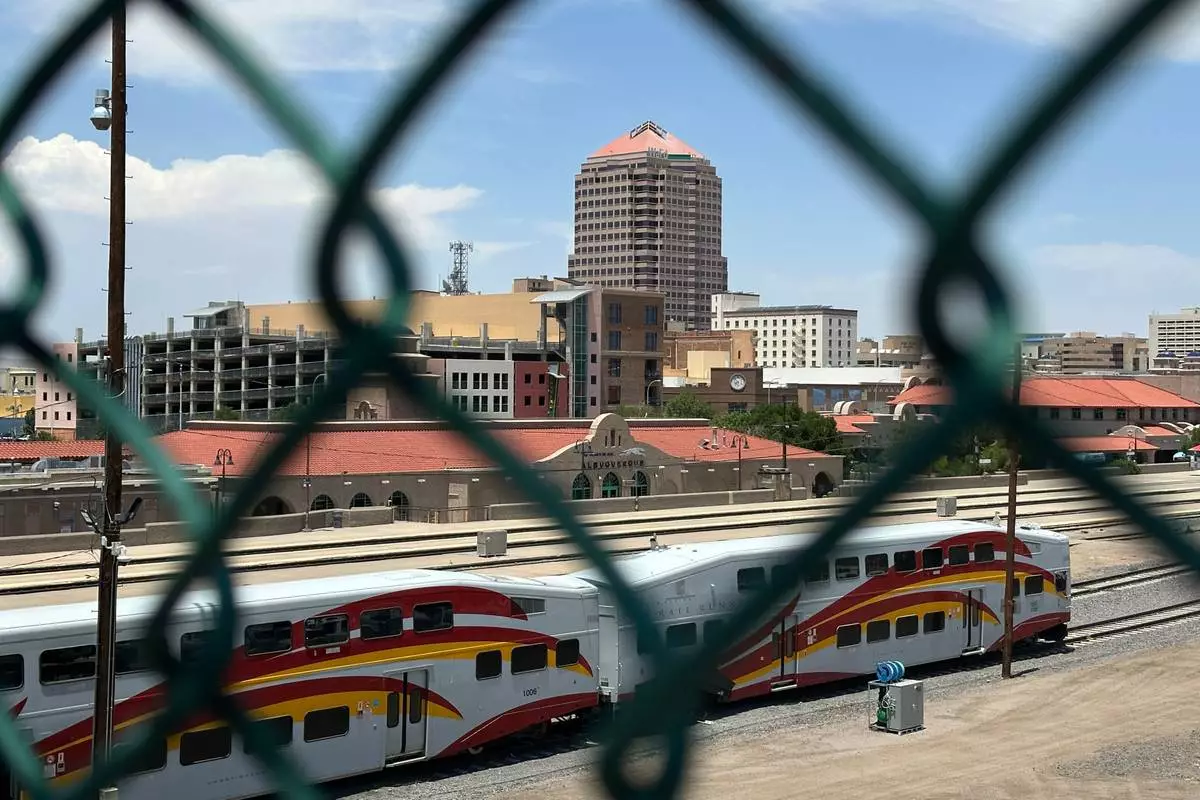
The tallest building in downtown Albuquerque, N.M., which houses the U.S. attorney's office, is seen beyond a chain link fence on Friday, June 12, 2026. (AP Photo/Susan Montoya Bryan)
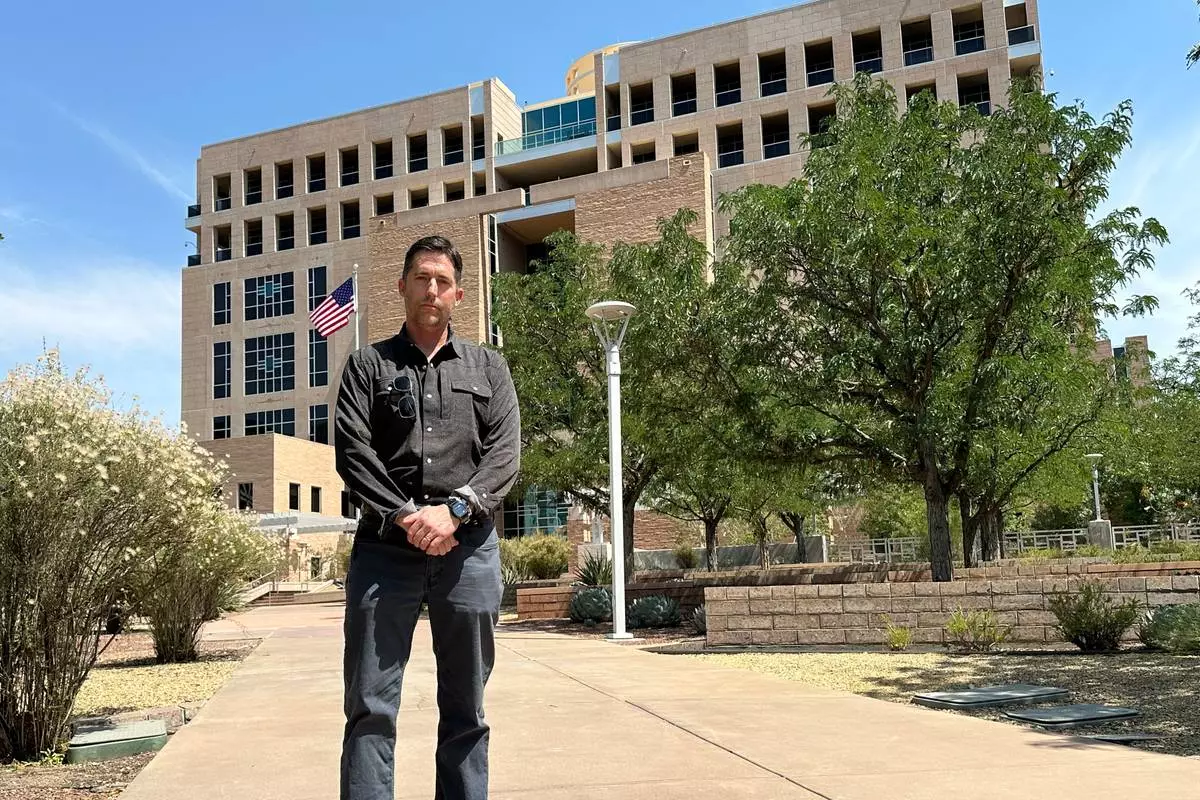
DEA Special Agent David Howell, who filed a whistleblower complaint, stands outside the U.S. district courthouse in Albuquerque, N.M., on Friday, June 12, 2026. (AP Photo/Susan Montoya Bryan)
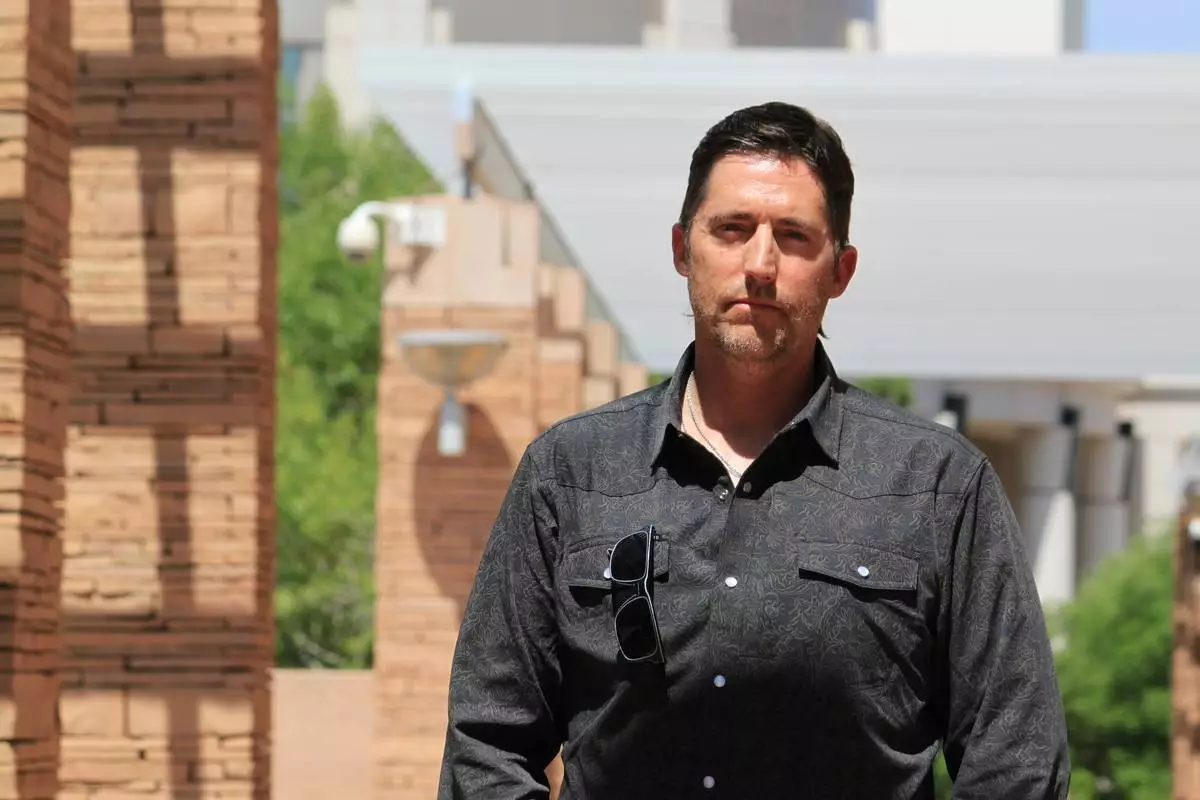
DEA Special Agent David Howell, who filed a whistleblower complaint, poses for a portrait outside the U.S. district courthouse in Albuquerque, N.M., on Friday, June 12, 2026. (AP Photo/Susan Montoya Bryan)
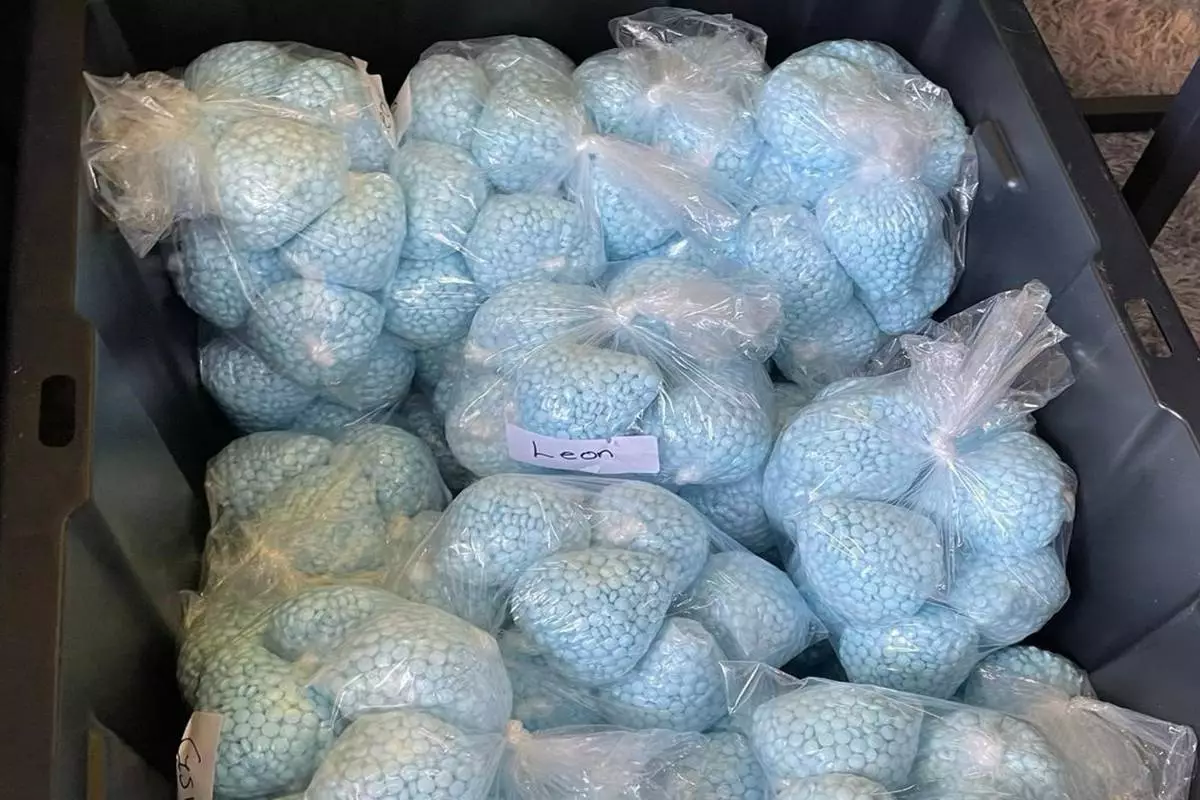
This photo provided by the U.S. Drug Enforcement Administration shows pills containing fentanyl which were seized by the DEA in New Mexico, on April 28, 2025. (DEA via AP)