The U.S. government is opposing a plan to auction dozens of artifacts salvaged from the remains of the Titanic, adding another page to the ship's storied history.
More than a century after the disaster, the Titanic remains a source of endless fascination. Here's a timeline of the ship's history, from its maiden voyage to the battle over its artifacts:
April 10, 1912 — Following more than two years of construction, the Titanic launches from Southampton, England. After stops in France and Ireland, 2,200 people are on board for the trip to New York City.
April 14, 1912 — Despite repeated ice warnings in the northern reaches of the Atlantic Ocean, the Titanic strikes an iceberg just before midnight off the coast of Newfoundland, Canada.
April 15, 1912 — In just a matter of hours, the Titanic sinks to the ocean floor, killing about 1,500 passengers and crew.
Sept. 1, 1985 — A team of French and American researchers discover the Titanic's final resting place some 2.3 miles (3.7 kilometers) below the ocean's surface. They're able to verify that the ship had split in half.
July 1986 — Researchers use a submarine to reach the Titanic, becoming the first people to directly view the ship in 74 years. They make 11 dives, capturing images and video of the wreckage. No artifacts are removed.
October 1986 — The U.S. establishes a law designed to set guidelines for explorations at the Titanic site and to protect the artifacts. But the law does not slow excursions to the ship or stop the removal of artifacts.
July 1987 — Titanic Ventures, an American company, works with a French research institute to retrieve the first items from the ship, including dishes used by passengers. Over the next months, 1,800 artifacts are collected. The group agreed not to sell the artifacts and keep the collection together.
May 1993 — Titanic Ventures, the group involved with the 1987 expedition, sells its salvage rights to RMS Titanic Inc. A month later, RMS Titanic recovers 800 artifacts from the wreckage. The items retrieved included personal belongings, such as a watch and suitcases, and items from the ship, such as dishes. There were some surprising finds, including a set of bagpipes and sheet music.
June 1994 — A U.S. federal court grants RMS Titanic exclusive rights to the wreckage. The ruling, though, says the company can't be considered the sole owner of the artifacts.
March 1999 — A U.S. appeals court rules that RMS Titanic can't stop other companies from venturing to or photographing the site of the Titanic.
February 2000 — The world's largest display of artifacts from the Titanic opens in Chicago. Some museums reject the exhibition, objecting to the plundering of archaeological sites.
August 2011 — A U.S. federal court gives RMS Titanic title to thousands of artifacts it salvaged between 1993 and 2004. One of the agreed upon conditions is that the company will keep the collection intact and won't sell any items individually.
May 2017 — The U.S. implements an international treaty that requires anyone under U.S. jurisdiction to obtain permission from the National Oceanic and Atmospheric Administration before doing any research or salvage work that disturbs the wreck site.
June 18, 2023 — The experimental submersible Titan implodes during a voyage to the Titanic, killing five people. Among those who died were French underwater explorer Paul-Henri Nargeolet, director of underwater research for RMS Titanic.
August 2023 — The U.S. government moves to stop RMS Titanic from a planned expedition to recover items of historical interest from the Titanic, citing federal law and an international agreement.
July 2024 — RMS Titanic makes its first expedition to the Titanic since 2010 to analyze the wreckage and remaining artifacts.
January 2025 — The U.S. drops its litigation against RMS Titanic because it says the company no longer has dive plans to the shipwreck that could break federal law.
March 2026 — In court filings, RMS Titanic reveals a proposal to auction 100 lots of artifacts removed from the wreckage in 1987. While most details about the sale are sealed, the company indicates it plans a global tour of the items.
June 2026 -- A judge orders court documents unsealed that show the U.S. and NOAA opposing the sale of those Titanic artifacts.
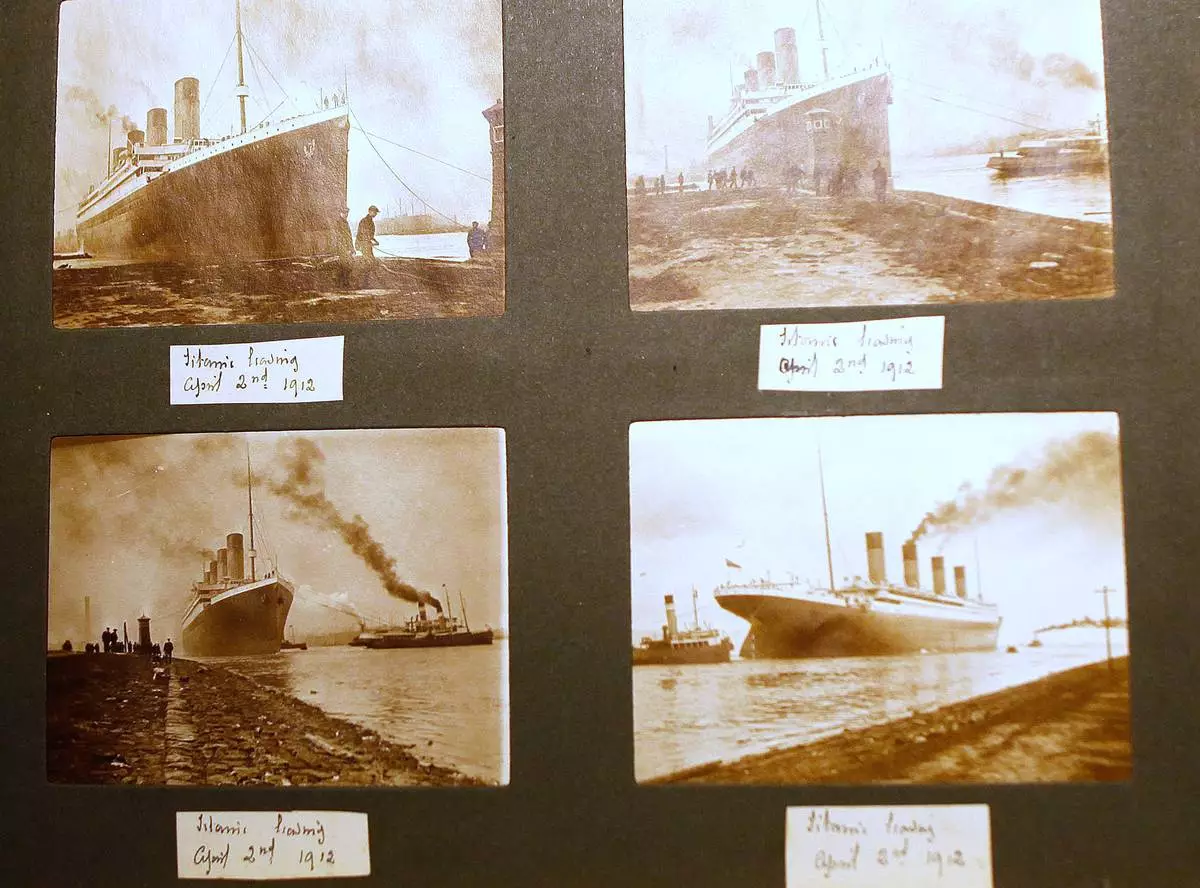
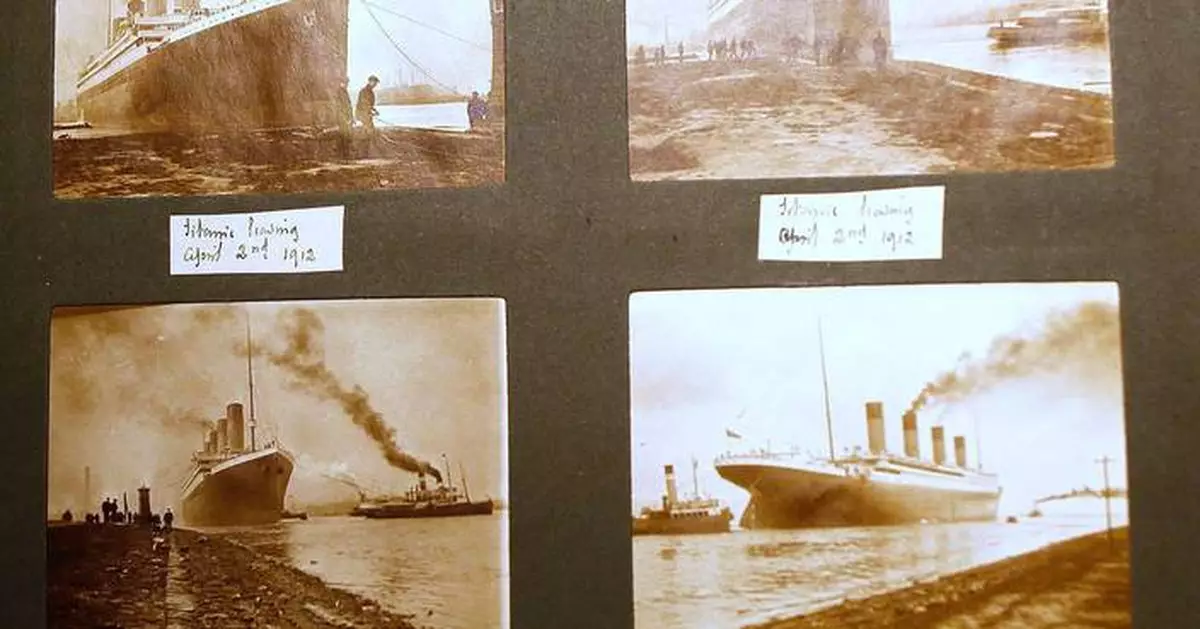
FILE - Photographs of the Titanic are displayed in a family album at the Transport museum in Belfast, Northern Ireland, Tuesday, Oct. 14, 2014. (AP Photo/Peter Morrison, File)
SAN DIEGO--(BUSINESS WIRE)--Jun 22, 2026--
General Atomics (GA) announced today it has been awarded a $20 million California Competes Tax Credit from the state of California through the Governor’s Office of Business and Economic Development (GO-Biz). The award will support the company’s proposal to design and develop a Blanket Component Test Facility (BCTF) in San Diego.
This press release features multimedia. View the full release here: https://www.businesswire.com/news/home/20260622185374/en/
The proposed state-of-the-art facility would be dedicated to testing full-scale fusion blanket components, an essential system that lines the inside of a fusion vessel, captures energy and produces tritium, a fuel needed to sustain fusion reactions. The work would address a major scientific and engineering challenge on the path to the world’s first commercial fusion power plant.
For GA and San Diego, the BCTF would serve as a focal point for scientists and engineers from the public and private sectors to validate blanket designs and develop other critical technologies. The project would also support a growing workforce and further strengthen the region’s role as a fusion innovation hub focused on helping the industry move toward commercialization.
“We are grateful for this award and energized by what it means for the future of fusion in San Diego,” said Anantha Krishnan, senior vice president of the General Atomics Energy Group. “This support will aid General Atomics’ continued investment in the research and capabilities needed to move fusion closer to realization, while strengthening our clean energy future. Facilities like the BCTF are where fusion research begins moving closer to real-world energy, and we are proud to help lead that work in California.”
The California Competes Tax Credit is a statewide income tax credit designed to help businesses grow in California and create quality, full-time jobs. Administered by GO-Biz and approved by the California Competes Tax Credit Committee, the program supports high-value employers that drive investment, strengthen the economy and provide good wages and benefits.
“Through the California Competes Tax Credit, we are doubling down on the ingenuity and innovation that will define the future. By further investing in the fusion sector, we are helping ensure California remains a global leader in both the industries of today and the transformative technologies of tomorrow,” said Dee Dee Myers, senior advisor to Gov. Newsom and director of GO-Biz.
General Atomics first announced earlier this month that it is currently pursuing concept designs for a BCTF in collaboration with the U.S. Department of Energy. The initiative is part of a public-private partnership that includes Idaho National Laboratory, UC San Diego and other key collaborators across industry and academia.
Fusion is the same process that powers the sun. Instead of splitting atoms, as traditional nuclear power does, fusion combines light atomic nuclei to release large amounts of clean energy without long-lived radioactive waste. Researchers believe fusion could provide virtually limitless, carbon-free electricity to help meet growing global energy demand.
General Atomics helped pioneer fusion research in the United States, establishing its program in 1957. Since then, the company has played a leading role in international fusion research, advancing plasma physics, high-field magnets and precision engineering.
GA also operates the DIII-D National Fusion Facility on behalf of DOE. Located in San Diego, DIII-D is the nation’s largest magnetic fusion user facility and testbed. The region is also home to the Fusion Data Science and Digital Engineering Center, major academic programs at UC San Diego and San Diego State University, and a growing network of private-sector and government collaborators.
California’s growing fusion ecosystem was strengthened last year by Senate Bill 80, which created the California Fusion Research and Development Innovation Initiative, the first state program of its kind focused on accelerating fusion technology development and commercialization. The state also expanded support for fusion technologies through SB 86, which extended the Sales and Use Tax Exclusion Program to fusion technologies. SB 925, currently pending in the California Legislature, would establish a state strategic plan and regulatory roadmap for fusion. Ongoing efforts by the city of San Diego and the San Diego Regional Economic Development Corporation also continue to highlight the region’s potential as a center for fusion innovation and advanced manufacturing.
“Fusion has always required bold science, sustained commitment and a shared belief in what is possible,” Krishnan said. “With growing support from federal, state and local leaders, I am more optimistic than ever about the future of fusion energy and the role California, San Diego and GA can play in helping move this industry forward. Together, we are closer than ever to turning decades of research into a new source of clean energy that could benefit generations to come.”
For more information about General Atomics’ energy research and technologies, visit https://www.ga.com/about/energy-group.
About General Atomics
Since the dawn of the atomic age, General Atomics innovations have advanced the state of the art across the full spectrum of science and technology from nuclear energy and defense to medicine and high-performance computing. Behind a talented global team of scientists, engineers, and professionals, GA’s unique experience and capabilities continue to deliver safe, sustainable, economical, and innovative solutions to meet growing global demands.
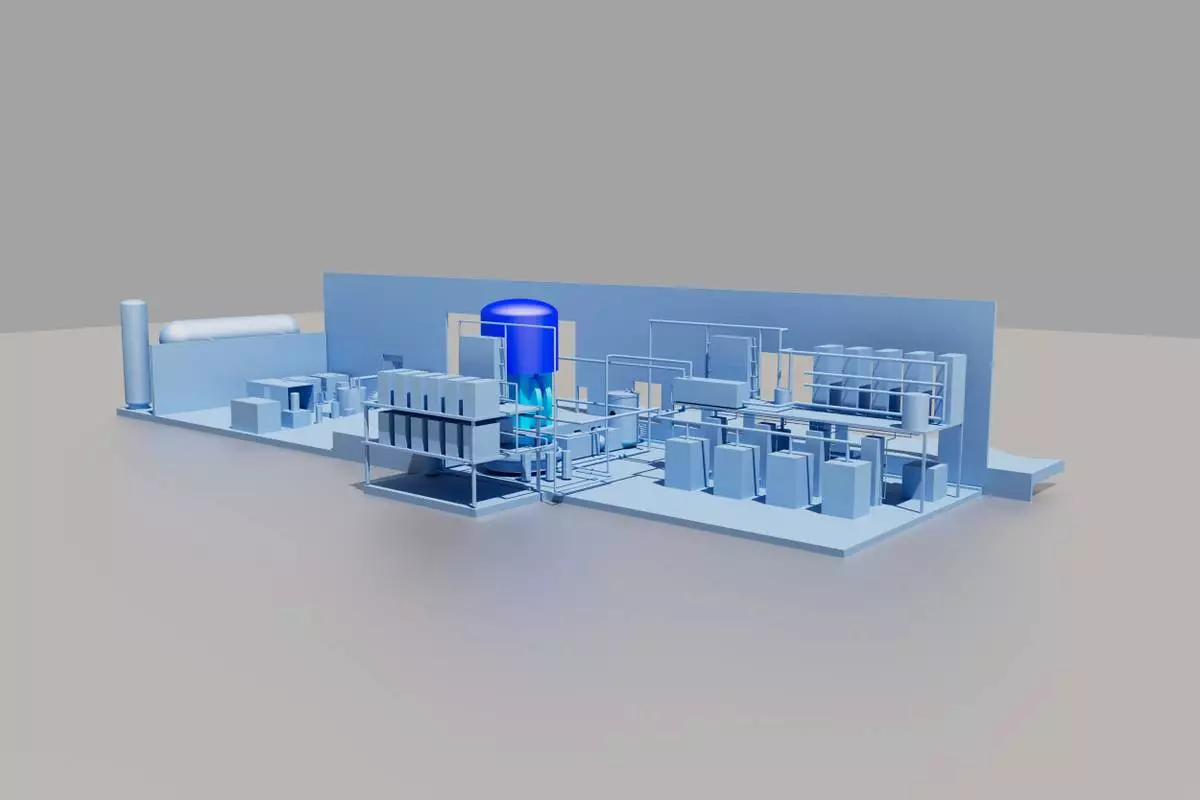
Conceptual design of a potential Blanket Component Test Facility in San Diego, utilizing General Atomics existing Magnetic Technology Center Facility. (Credit: General Atomics)
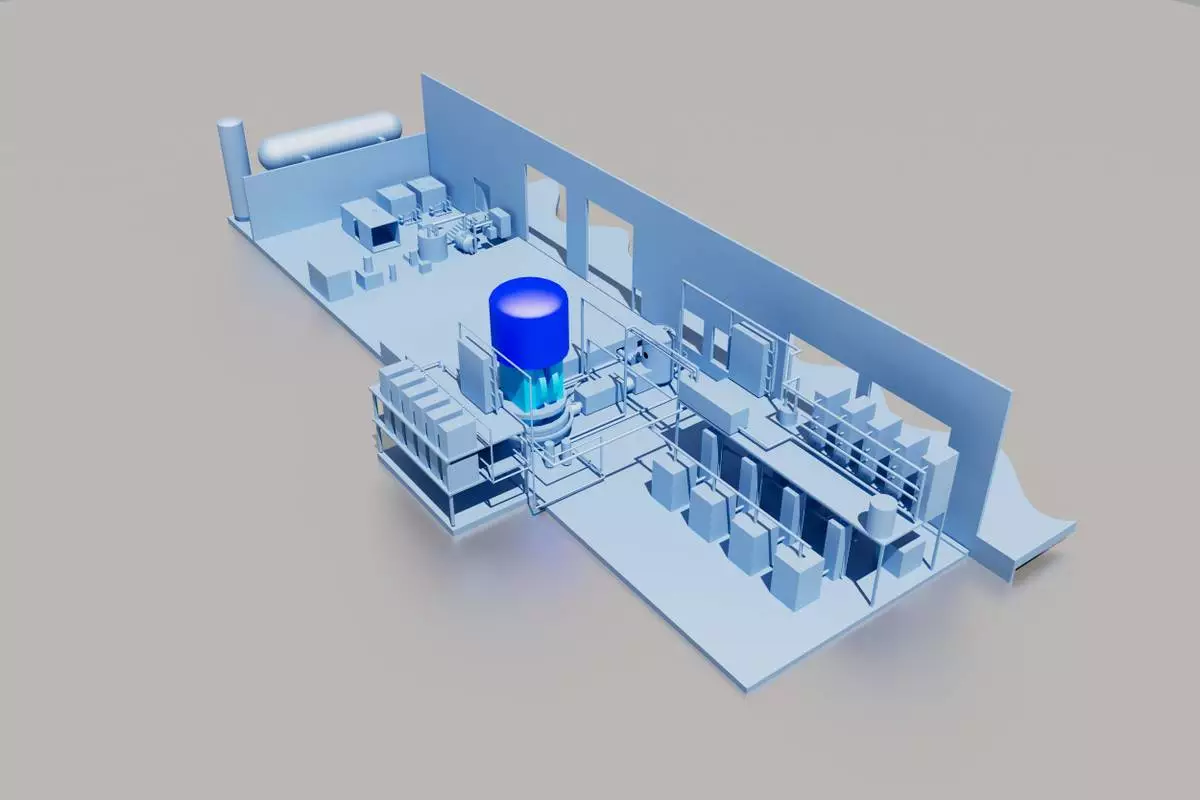
Conceptual design of a potential Blanket Component Test Facility in San Diego, utilizing General Atomics existing Magnetic Technology Center Facility. (Credit: General Atomics)