Iranian and U.S. negotiators moved into technical discussions on Monday in central Switzerland after the first round of talks between high-level officials from the United States and Iran ended with encouraging progress, said mediators.
According to a joint statement issued Monday by mediators Pakistan and Qatar, the parties to the first session of high-level talks under the Memorandum of Understanding (MoU) agreed to establish a high-level committee to provide political oversight of the mediation process.
The committee agreed on a roadmap toward reaching a final deal within 60 days to end their more than 100-day war, laying the foundation for the immediate start of further technical talks.
The parties also agreed to create a de-confliction cell involving the parties and Lebanon, with the support of the mediators, to ensure compliance with the termination of military operations in Lebanon, in line with the MoU.
Iranian Foreign Ministry spokesman Esmaeil Baghaei confirmed Monday that technical negotiations between Iran and the United States had begun in Switzerland.
Speaking to the official IRNA news agency, Baghaei said Iran's delegation was led by Deputy Foreign Minister for Legal and International Affairs Kazem Gharibabadi.
Commenting on Sunday's talks, Baghaei said in a post on X on Monday that executive mechanisms had been envisaged to monitor implementation of the recently signed Islamabad MoU, with technical-level discussions set to continue.
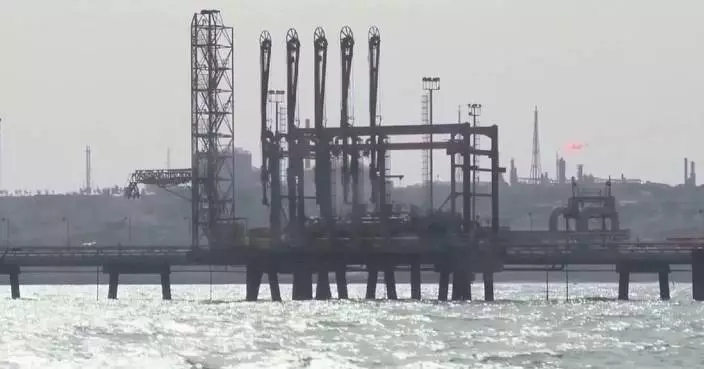
He listed the topics discussed as the establishment of a multi-party mechanism to end hostilities in Lebanon, Iran's oil and petrochemical exports, and the release of Iran's frozen assets.
In response to the outcomes, Iranian President Masoud Pezeshkian said Monday that Iran has engaged in the negotiations with dignity and confidence, "without offering any concessions."
Iran would not back down if the other side ignored its rights during the negotiations, Pezeshkian said, pointing to the U.S. stepping back on issues related to Lebanon in response to Iran's position during the talks.
The first round of high-stakes indirect talks between Iran and the United States concluded early Monday after 18 hours of negotiations at the Swiss resort of Burgenstock. The teams, led by U.S. Vice President JD Vance and Iranian Parliament Speaker Mohammad Bagher Ghalibaf, opened talks on Sunday.
The U.S. vice president said on Monday that the mediated talks with Iranian negotiators had "laid a very good foundation for a successful final deal" after the first session of U.S.-Iran talks on implementing the interim peace deal between the two sides concluded.
He said the Strait of Hormuz was open and that crude oil and natural gas were flowing through.
"We wanted to build a mechanism for keeping the Strait of Hormuz open. It is open," Vance said.
Gas prices and oil prices came down, millions and millions of barrels of crude and natural gas are flowing through the Strait of Hormuz that weren't flowing before, he added.
Regarding nuclear issues, Vance said that the Iranians have agreed to invite the International Atomic Energy Agency (IAEA) inspectors back into their country.
Calling this "a major milestone," Vance said it is the first step in permanently denuclearizing or permanently ending a nuclear weapons program in Iran, and a visit by IAEA inspectors to Iran can be as early as this week.
Vance also said the U.S. has established a mechanism for "deconfliction for the regional ceasefire" in Lebanon, which has already been yielding results.
The past 24 hours in Lebanon have been among the quietest periods in recent times, while the preceding 24 hours were also relatively stable, Vance noted.
Pakistani Prime Minister Shehbaz Sharif hailed the outcome on X, saying the talks in Switzerland had "led to encouraging progress."
The outcomes include "agreement on a roadmap toward a final deal within 60 days, the establishment of a High-Level Committee to provide political oversight, and the commencement of further technical talks," said Shehbaz.
Qatari Prime Minister and Foreign Minister Mohammed bin Abdulrahman bin Jassim Al Thani said Qatar’s overriding priority remained de-escalating regional tensions and restoring calm and stability as swiftly as possible.
He stressed that all parties must remain committed to resolving differences through diplomatic means and preventing the crisis from escalating further. While warning that "external circumstances may affect the negotiations," he said the mediators had seen a clear willingness from both sides to reach a settlement.
Mohammed emphasized that any escalation anywhere in the Middle East, whether in Lebanon or elsewhere, could have an impact on the negotiation process.

US-Iran technical discussions begin as first round of talks end with encouraging progress

US-Iran technical discussions begin as first round of talks end with encouraging progress