WASHINGTON (AP) — Curtis Mead and Luis Garcia Jr. homered, Foster Griffin pitched 7 1/3 strong innings and the Nationals beat the Phillies 4-1 on Monday night in the opener of a four-game series between the division rivals.
Dylan Crews, James Wood and Keibert Ruiz each had a double and a single for Washington, which had lost three of four.
Click to Gallery
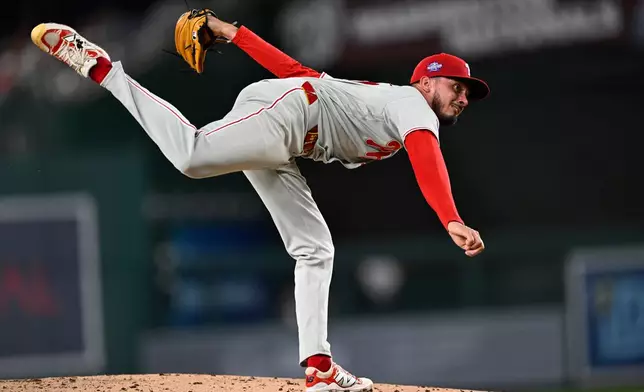
Philadelphia Phillies pitcher Alan Rangel follows through during the second inning of a baseball game against the Washington Nationals, Monday, June 22, 2026, in Washington. (AP Photo/John McDonnell)
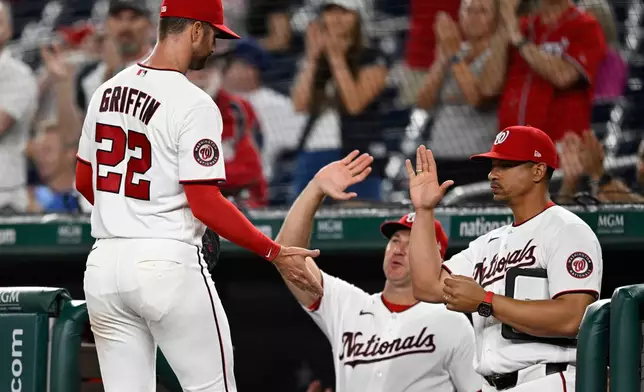
Washington Nationals starting pitcher Foster Griffin is greeted at the dugout after being taken out the game during the 8th inning of a baseball game against the Philadelphia Phillies, Monday, June 22, 2026, in Washington. (AP Photo/John McDonnell)
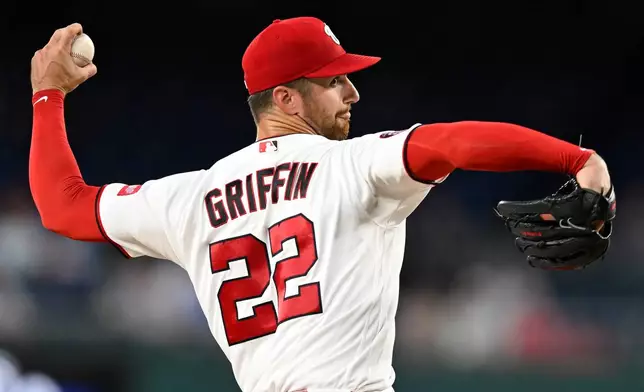
Washington Nationals staring pitcher Foster Griffin throws during the second inning of a baseball game against the Philadelphia Phillies, Monday, June 22, 2026, in Washington. (AP Photo/John McDonnell)
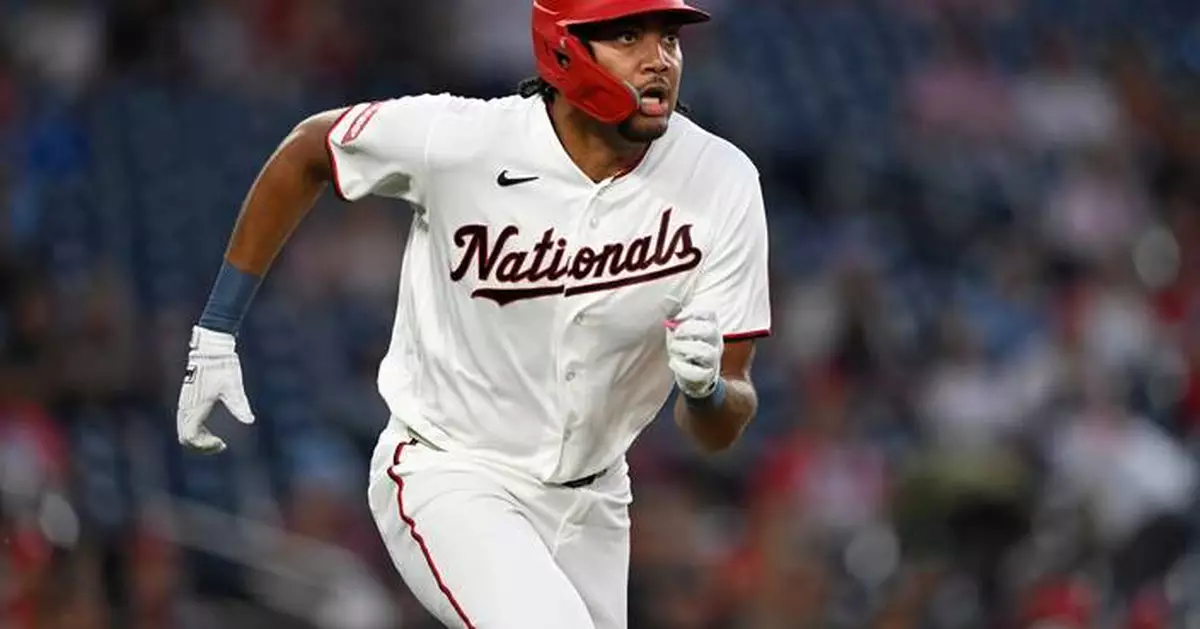
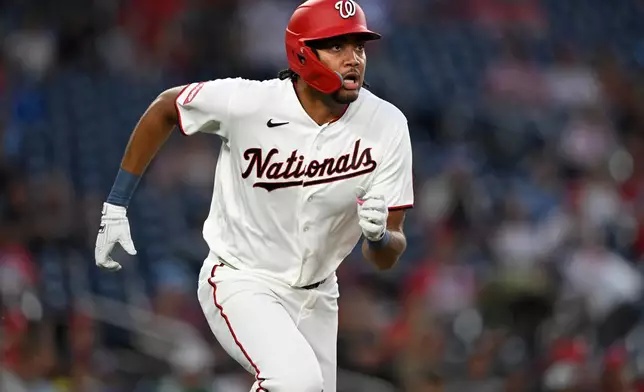
Washington Nationals' James Wood runs after hitting a double during the first inning of a baseball game against the Philadelphia Phillies, Monday, June 22, 2026, in Washington. (AP Photo/John McDonnell) CORRECTION: Wood hit a double not a single.
Griffin (8-2) gave up a run on four hits and struck out nine without a walk. He has gone five or more innings and allowed one earned run in each of his past four starts.
Clayton Beeter pitched the ninth for his sixth save.
Brandon Marsh homered for Philadelphia, which had won two straight and four of six.
The start of the game was delayed one hour and 32 minutes by rain.
Kyle Schwarber and Bryce Harper, who went a combined 12 for 17 over their past two games with six homers (four by Schwarber) went 2 for 8 with Harper singling twice.
Washington’s CJ Abrams saw his home run streak end at three games. Nasim Nuñez singled twice and has hit safely in eight straight games and reached base safely in a career-high 14 straight.
Marsh's homer in the seventh pulled the Phillies within 2-1, but Wood singled and Mead followed with a two-run shot in the bottom half.
Wood doubled leading off the first against opener Tim Mayza and scored on a single by Crews.
Garcia homered off Alan Rangel with one out in the second to make it 2-0.
Mayza (2-2) allowed one run in one inning and bulk reliever Rangel, recalled from Triple-A Lehigh Valley, allowed a run on five hits over five innings.
Philadelphia’s Jesús Luzardo (6-4, 4.20 ERA) pitches the second game of the series, while the Nationals will start Zack Littell (6-6, 5.45).
AP MLB: https://apnews.com/hub/mlb

Philadelphia Phillies pitcher Alan Rangel follows through during the second inning of a baseball game against the Washington Nationals, Monday, June 22, 2026, in Washington. (AP Photo/John McDonnell)
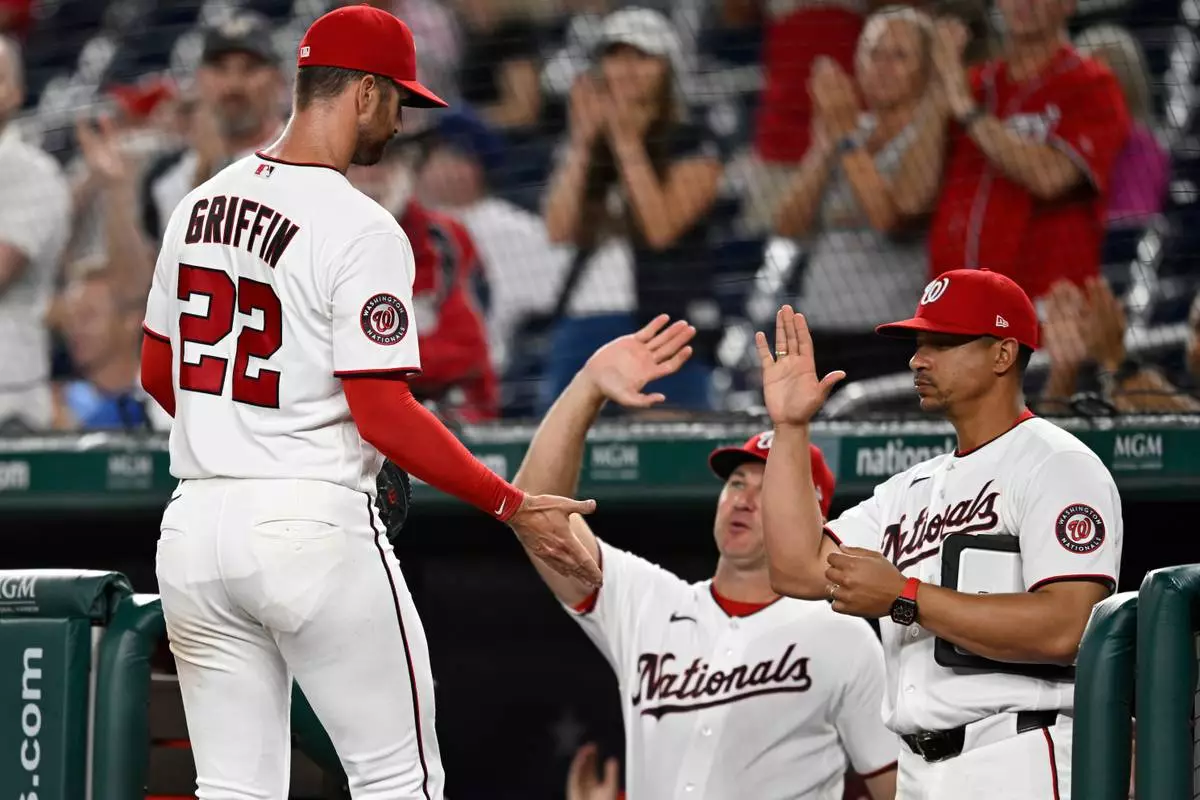
Washington Nationals starting pitcher Foster Griffin is greeted at the dugout after being taken out the game during the 8th inning of a baseball game against the Philadelphia Phillies, Monday, June 22, 2026, in Washington. (AP Photo/John McDonnell)
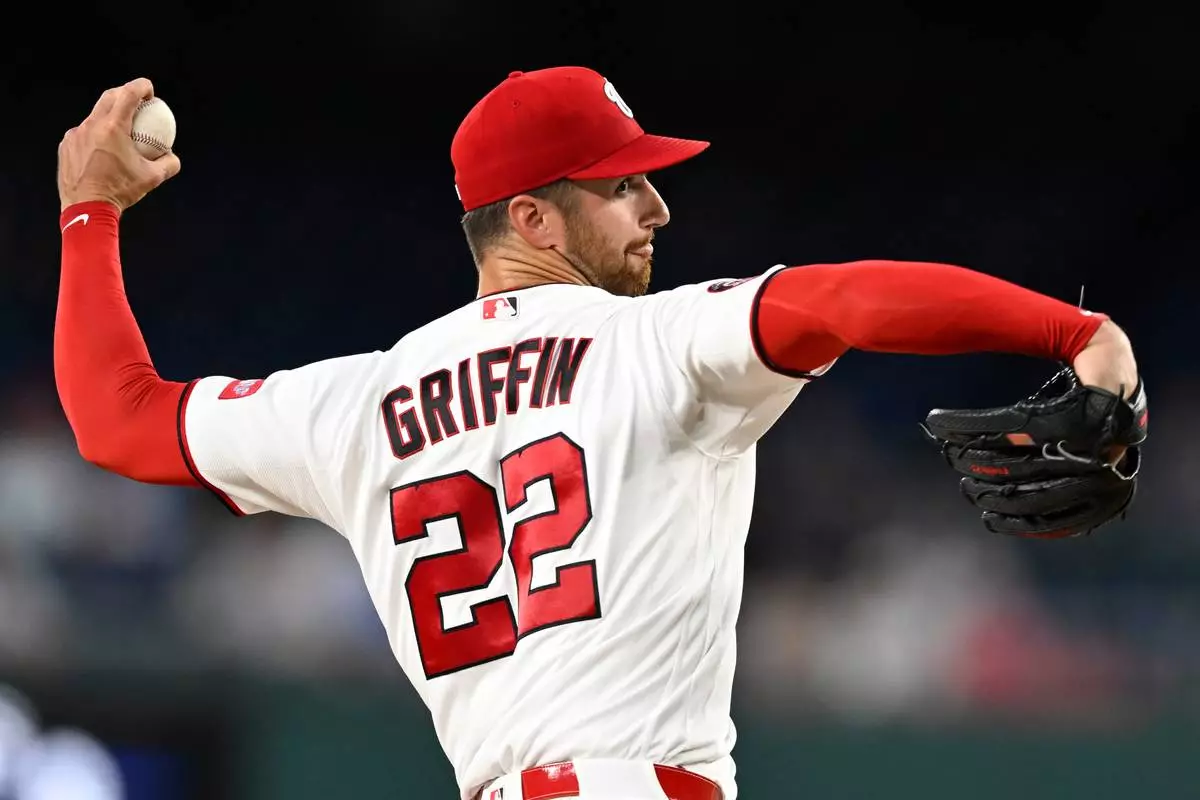
Washington Nationals staring pitcher Foster Griffin throws during the second inning of a baseball game against the Philadelphia Phillies, Monday, June 22, 2026, in Washington. (AP Photo/John McDonnell)
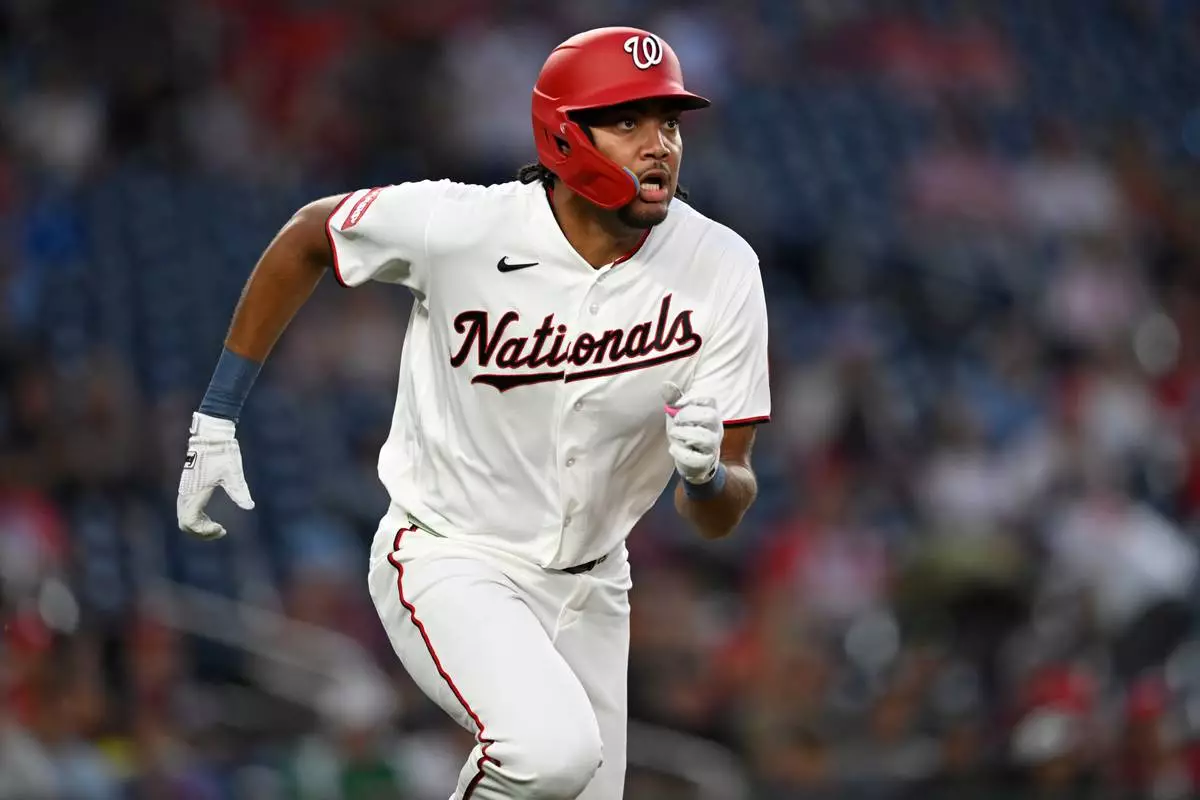
Washington Nationals' James Wood runs after hitting a double during the first inning of a baseball game against the Philadelphia Phillies, Monday, June 22, 2026, in Washington. (AP Photo/John McDonnell) CORRECTION: Wood hit a double not a single.
WASHINGTON (AP) — A federal judge on Monday ruled that a recently revamped version of a federal tool central to the Trump administration’s efforts to nationalize elections can no longer be used.
U.S. District Court Judge Sparkle L. Sooknanan sided with advocacy groups that argued the recent upgrades to the program, called Systematic Alien Verification for Entitlements, or SAVE, aggregated Americans’ sensitive personal data in a way that could result in voters being wrongly purged from voter rolls.
“All in all, the federal government has knowingly trampled on the privacy rights of American citizens in a manner that threatens the sacred right to vote,” Sooknanan said in an order explaining the decision. “This Court cannot stand idly by while that happens.”
She said Congress had expressly prohibited the government from centralizing Americans’ personal identifying information and that the federal agencies that created the SAVE program “knew that the database violates those statutory protections.”
The decision is a major legal setback for President Donald Trump in his efforts to use federal agencies to encourage a nationwide crackdown on having noncitizens illegally on state voter rolls. The modified SAVE system, which critics had referred to as an unlawful centralized federal database of voter information, had been a key pillar of the second election executive order the Republican president signed earlier this year. The ruling leaves its future uncertain.
“It’s amazing how hard the Left will fight to stop us from solving problems they insist do not exist,” James Percival, general counsel at the Department of Homeland Security, said of the ruling in a social media post.
DHS referred to his post as its comment on the ruling. The Department of Justice said in an emailed statement that it would “continue to aggressively defend President Trump’s immigration enforcement agenda and DHS’s use of the SAVE system to verify citizenship.”
The executive order seeking to create a national voter list is among numerous steps Trump has taken during his second term to try to overhaul the way elections are run. He also has tried to force voters to provide documentary proof of citizenship to register to vote, ban mail ballots from counting if they are received after Election Day and prohibit the Postal Service from mailing ballots to people not on an approved list of voters. Most of those steps have been blocked by various courts, in part because the Constitution gives states and Congress the authority to set election rules, but provides no such power to the president.
Voting by noncitizens is already illegal and punishable as a potential felony that could lead to deportation. It also is rare, accounting for just a tiny fraction of those on state voter rolls,
The SAVE program was created under an immigration law mandating that DHS help federal, state and local agencies prevent government benefits from going to noncitizens. At least 25 states used it to check their voter rolls since April 2025, after the Trump administration significantly expanded its search abilities. Since then, at least 67 million registrations have been scanned through the program, but critics worry it could end up purging valid voters from the rolls.
Anthony Nel was one of those whose registrations were wrongly flagged. The South Africa native became a U.S. citizen more than a decade ago but had his voter registration in Denton, Texas, north of Dallas, canceled temporarily last year after Texas ran its voter file through SAVE. The check wrongly identified him as a potential noncitizen.
“I hope others can see this fight and not take their right to vote for granted,” he said in a text message.
The plaintiffs, including the League of Women Voters, the Electronic Privacy Information Center and five unnamed U.S. citizens, had alleged the revamped SAVE program violated Americans’ privacy and voting rights. The groups also alleged the Trump administration violated federal privacy laws by ignoring transparency requirements about the changes to the system.
“The agencies were scrambling to comply with an Executive Order aimed at reshaping federal elections, which directed them to create a system for mass voter verification,” the judge wrote. “So they haphazardly combined and repurposed the private information of millions of Americans, including citizenship data that they knew to be unreliable.”
Plaintiffs attorney Nikhel Sus told the court during the October hearing that naturalized citizens face a greater risk of unlawfully being purged from voter rolls.
“They are uniquely vulnerable to errors in the database,” said Sus, an attorney for Citizens for Responsibility and Ethics in Washington.
Sus said Monday he sees Sooknanan’s ruling as an “across the board victory” and noted the plaintiffs were pleased the judge’s ruling reinforced their argument that the federal government doesn’t have implied authority to freely share sensitive data across agencies.
Mark Johnson, who teaches at the University of Kansas law school and regularly pursues lawsuits over election laws, said “it couldn’t be more clear” that the SAVE program violates federal privacy laws.
He said an executive order from Trump cannot override a federal law.
“It’s an illegal idea. Plus it’s a bad idea,” he said.
During the 2024 presidential campaign, as Trump pushed false claims of widespread noncitizen voting, Republican secretaries of state began requesting improvements to the SAVE system to make it more efficient for catching noncitizens on their rolls. One limitation was that the system had been able to check just a single individual at a time.
DHS, Citizenship and Immigration Services, and Elon Musk’s Department of Government Efficiency delivered on those requests in 2025, according to public announcements. They made SAVE free for election officials, allowed agencies to search voters by the thousands and began permitting queries using names, birthdays and Social Security numbers, as opposed to requiring DHS-issued identification numbers.
Several secretaries of state have said the SAVE overhaul improved its value as one of multiple tools they use to assess voter citizenship. But in her ruling, Judge Sooknanan said the plaintiffs had shown that the updated system had indeed been identifying some lawful voters as noncitizens and that states using it “are actively removing United States citizens from voter rolls based on inaccurate information.”
Swenson reported from New York. Associated Press writer John Hanna in Topeka, Kansas, contributed to this report.
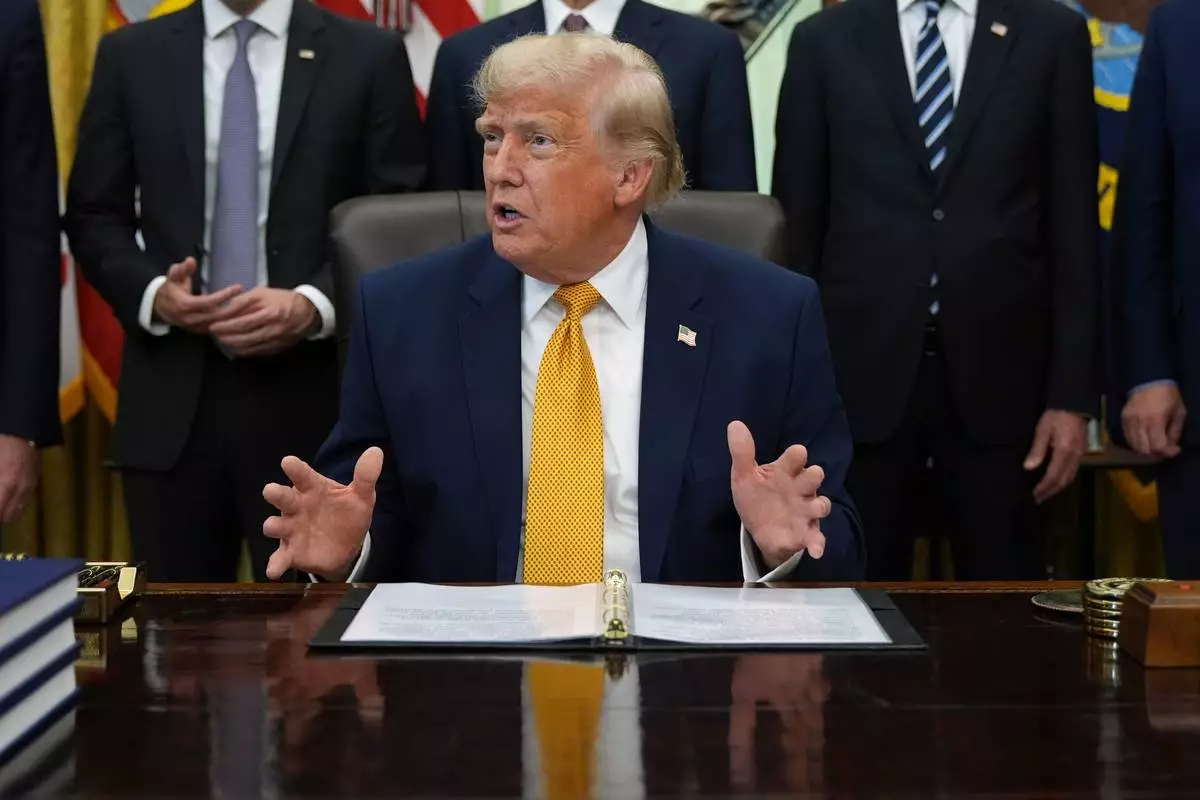
President Donald Trump speaks in the Oval Office of the White House during an executive order signing about quantum computing, Monday, June 22, 2026, in Washington. (AP Photo/Jacquelyn Martin)
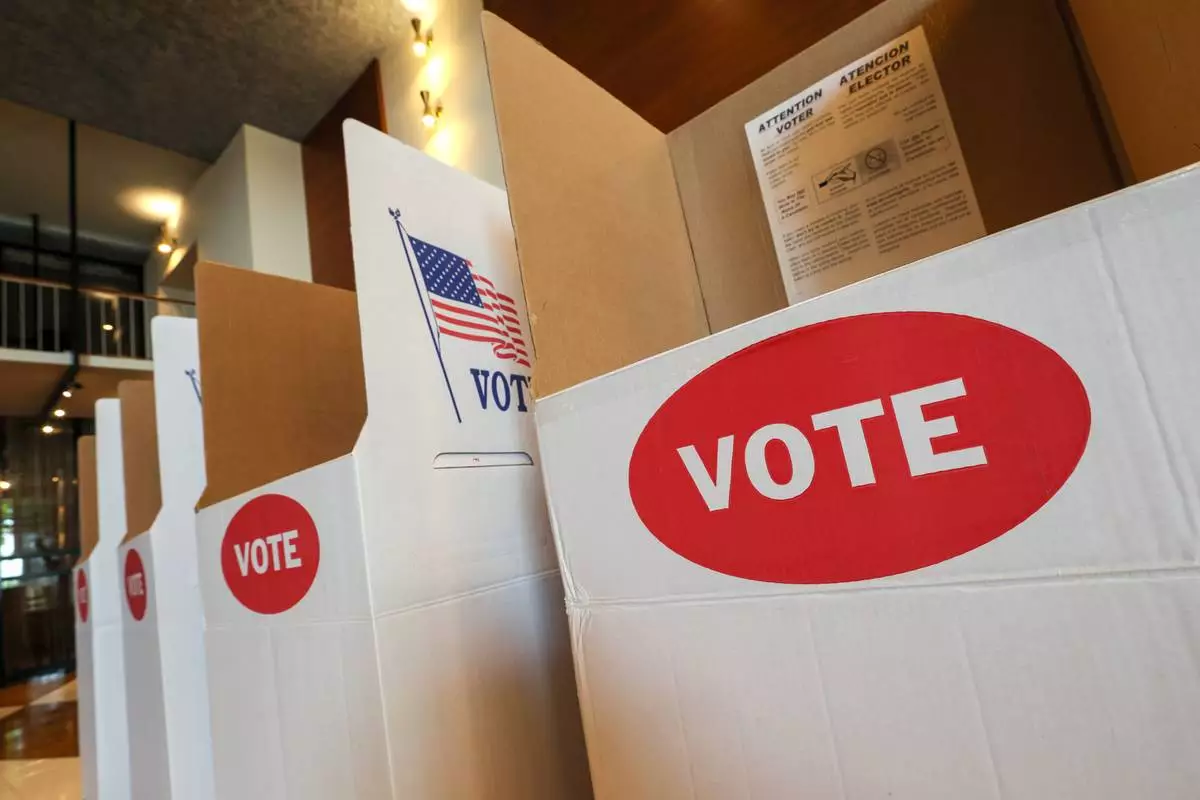
Voting booths are set up at a polling location inside St. Luke's Methodist Church, Tuesday, June 16, 2026, in Oklahoma City. (AP Photo/Nate Billings)