An integrated acquisition, transmission, and distribution pipeline delivered seamless real-time coverage nationwide
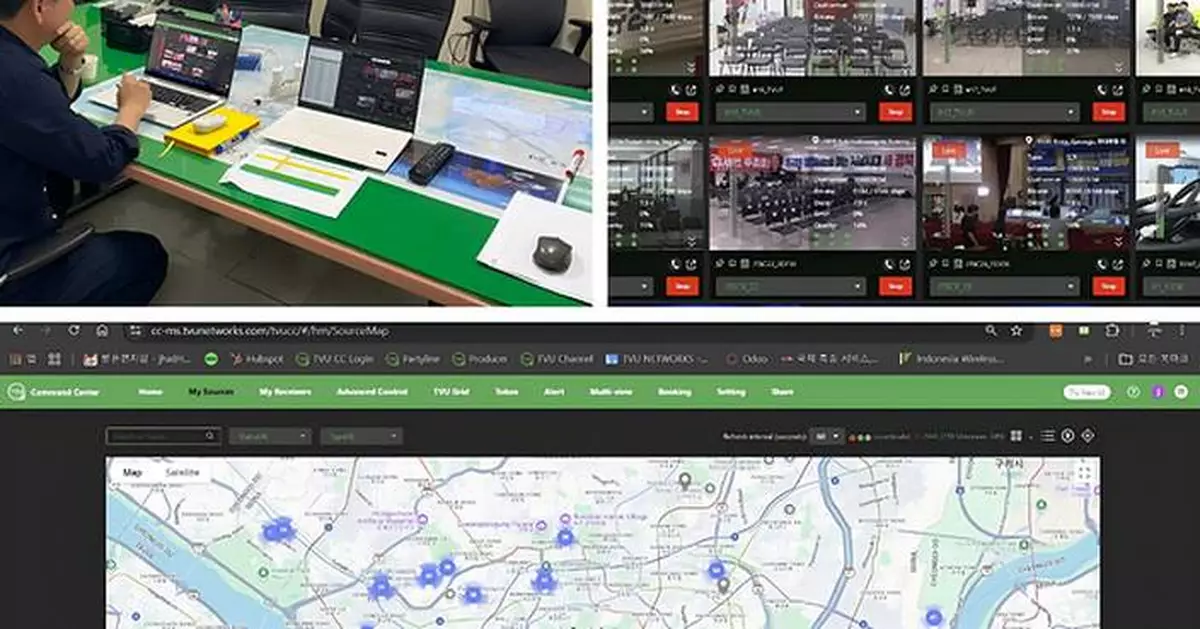
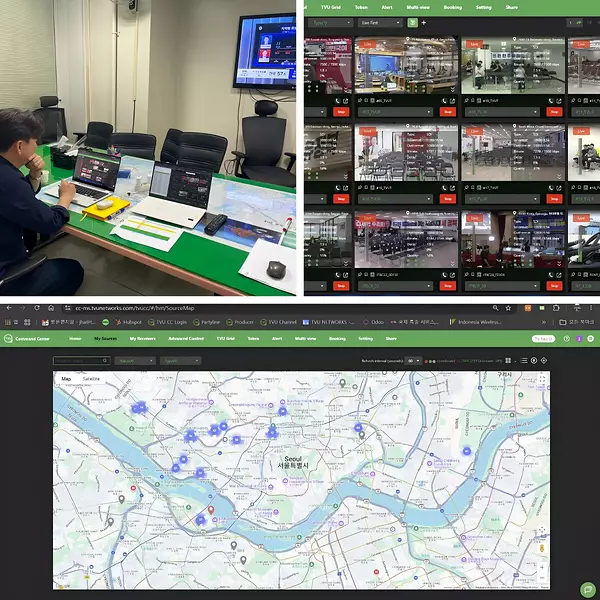
CUPERTINO, Calif., June 23, 2026 /PRNewswire/ -- On June 3, 2026, South Korea held its 9th local elections, with more than 44 million voters nationwide casting ballots—one of the country's largest national elections in recent years. To support real-time media coverage of this major political event, TVU Networks deployed a fully integrated, three-part solution—TVU One live broadcast backpacks, the TVU Anywhere mobile broadcasting app, and the TVU Grid IP routing and distribution system—forming a complete technical pipeline spanning on-site acquisition, mobile transmission, and multi-point distribution.
On election day, more than 200 TVU One backpacks were in active use across the country, from Seoul to Jeju Island, covering polling stations, vote-counting centers, and the campaign headquarters of each party's candidates. Of these, 50 units were supplied through TVU's rental fleet, with the remainder drawn from broadcasters' own inventories—a clear reflection of how widely TVU One has been adopted by South Korea's media organizations. Built on next-generation ISX multi-network bonding technology, TVU One can aggregate up to 12 simultaneous network connections, while its adaptive algorithm dynamically reallocates bandwidth across links. Combined with intelligent HEVC encoding and FEC error correction, it maintained stable, low-latency, high-bandwidth transmission even in the congested network conditions around polling and counting sites.
To cover dispersed polling locations and on-the-street interviews, frontline reporters were equipped with mobile devices running the TVU Anywhere app, which aggregates cellular and WiFi signals to turn an ordinary smartphone into a professional broadcasting terminal. Its dual-camera mode allowed reporters to use a phone's front and rear cameras simultaneously, presenting both the reporter and the interviewee in picture-in-picture or split-screen views and adding richer visual dimension to the coverage.
All field signals were transmitted in real time to each broadcaster's Seoul studio center, where—after live switching and graphics packaging—the final program was distributed via TVU Grid to stations nationwide and to overseas partner media, achieving ultra-low-latency synchronized delivery without relying on traditional satellite or dedicated fiber links. TVU has supported live coverage of South Korea's national elections many times; with this proven product combination once again deployed in the field, TVU continues to provide reliable technical assurance for media organizations covering major news events.
** This press release is distributed by PR Newswire through automated distribution system, for which the client assumes full responsibility. **
TVU's Multi-Solution Approach Powers Live Coverage of South Korea's 2026 Local Elections
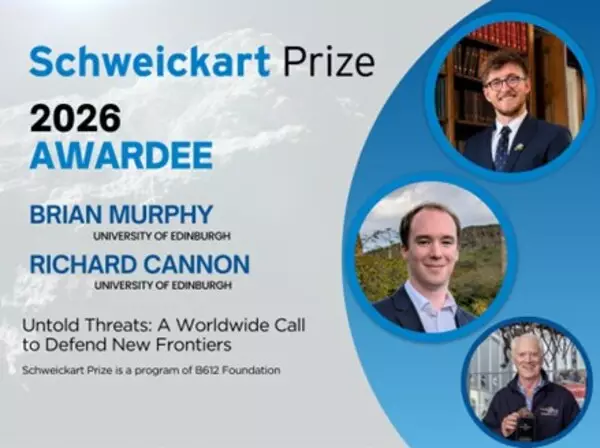
University of Edinburgh Researchers Brian P. Murphy and Richard E. Cannon Recognized for Proposal to Expand Planetary Defense to Humanity's New Frontiers
SAN FRANCISCO, June 23, 2026 /PRNewswire/ -- B612 Foundation announced the recipient of the annual Schweickart Prize. This year's honor goes to a proposal calling for planetary defense to extend beyond Earth's surface, encompassing the rapidly expanding network of critical infrastructure throughout cislunar space. The Prize, a program of B612, recognizes original student proposals seeking to advance humanity's understanding of and preparedness for asteroid impacts.
"Rusty Schweickart taught us that planetary defense is ultimately an act of stewardship," said Danica Remy, President of B612 and co-founder of Asteroid Day. "This year's winning proposal challenges us to think beyond protecting life and assets on the surface of the Earth and to consider how we safeguard the infrastructure and communities humanity will depend on throughout the Earth-Moon system. It is exactly the kind of bold, forward-looking thinking the Schweickart Prize was created to encourage."
"As human activity and vital interests rapidly expand into regions beyond the protective shield of our atmosphere, the number of passing objects capable of causing serious damage to both life and critical infrastructure increases dramatically. Our Schweickart Prize winners this year have called for a comprehensive and systematic examination of this emerging reality," said Rusty Schweickart, Apollo 9 astronaut and co-founder emeritus of B612 Foundation.
The winning proposal, Untold Threats: A Worldwide Call to Defend New Frontiers, was developed by Brian P. Murphy and Richard E. Cannon of the University of Edinburgh. Their work highlights emerging threats posed by meteoroid storms, ejecta from asteroid deflection and mining operations, lunar impacts, and other hazards that could jeopardize the rapidly expanding ecosystem of satellites, communications systems, lunar infrastructure, and future space-based industries.
The proposal calls for establishing an International Commission on Space Infrastructure Resilience (ICSIR) to investigate these risks and develop recommendations for the United Nations Committee on the Peaceful Uses of Outer Space. Ultimately, the authors envision creating a permanent international coordinating body, termed WARDEN (Warning-network for Asset Resilience from Dusts, Ejecta, and NEOs), to complement existing planetary defense organizations and coordinate the protection of humanity's assets beyond Earth.
"As civilization becomes increasingly dependent on infrastructure in Earth orbit and cislunar space, we believe planetary defense must evolve accordingly," said Brian Murphy, who co-authored the proposal with Richard Cannon. "Our work seeks to ensure that humanity's future expansion into space remains safe, sustainable, and resilient. We are deeply honored to receive the Schweickart Prize and hope this proposal sparks broader international conversations about protecting these new frontiers."
The winning proposal will be presented publicly today, June 23, via a live online event open to the press and the public, where the authors will share their work. Registration is available at schweickartprize.org.
Honorable Mentions: B612 also extends its recognition to the other proposals that demonstrated merit and innovative thinking in addressing critical aspects of planetary defense. This year's honorable mentions include:
Like Streaks Passing in the Night: A Novel One-Tracklet Earth Impactor Detection Pipeline for LSST, Ian Chow (University of Washington)
The Incremental Benefits of Eccentric Collisions in Asteroid Kinetic Deflection Missions, Kinthong Lee (Tsinghua University)
Project Pathfinder, Finn McGeever, James Beioley, Jack Campbell, Yogesh Andiyappan, Sergio Sanoja Hernandez, Pau Costa Aura (Cranfield University)
The official presentation of the physical museum-quality prize and the $10,000 award will take place at a public ceremony at Lowell Observatory on June 27, coinciding with Asteroid Day Arizona activities. Rusty Schweickart, joined by fellow astronauts Nicole Stott, Dr. Ed Lu, Steve Smith, and Anousheh Ansari, science communicator Scott Manley, and Amanda Bosh, executive director of Lowell Observatory, will present the prize in person.
The public is invited to join the celebration and participate in Asteroid Day activities taking place throughout the weekend at Lowell Observatory and Meteor Crater.
The School of Physics and Astronomy at the University of Edinburgh will organize a celebration event later this year to recognize the award and the team.
Further details on the winning proposal can be found at SchweickartPrize.org. Event information for Asteroid Day Arizona is available at asteroiddayaz.com.
About the Schweickart Prize: The Schweickart Prize, a program of B612, is an annual award that fosters a new generation of leaders in planetary defense and encourages ideas to help protect Earth from potential asteroid impacts. The prize is named after Russell "Rusty" Schweickart, Apollo 9 astronaut, co-founder of the Association of Space Explorers, and co-founder of B612. The Prize is co-chaired by Randy Schweickart and Rusty B. Schweickart. For more information, visit Schweickartprize.org. The founding sponsors who have funded the Schweickart Prize program include Anousheh Ansari, Barringer Crater Company, Future Ventures, Geoffrey Notkin, Jurvetson Family Foundation, Meteor Crater Enterprises, Randy Schweickart and Michelle Heng, and Rusty B. Schweickart and Joanne Keys.
About B612 Foundation: A United States-based nonprofit, founded in 2002, develops tools and technologies to understand, map, and navigate our solar system and protect our planet from asteroid impacts through its Asteroid Institute program and supporting educational programs, including Asteroid Day and the Schweickart Prize. Founding Circle and Asteroid Circle members, as well as individual donors from 46 countries, support the work financially. For more information, visit B612foundation.org or follow on social: Twitter, Facebook, LinkedIn or Bluesky.
** This press release is distributed by PR Newswire through automated distribution system, for which the client assumes full responsibility. **
B612 Foundation Announces 2026 Winner of the Schweickart Prize