2026 Population Census in progress - C&SD appeals for active participation of sampled households
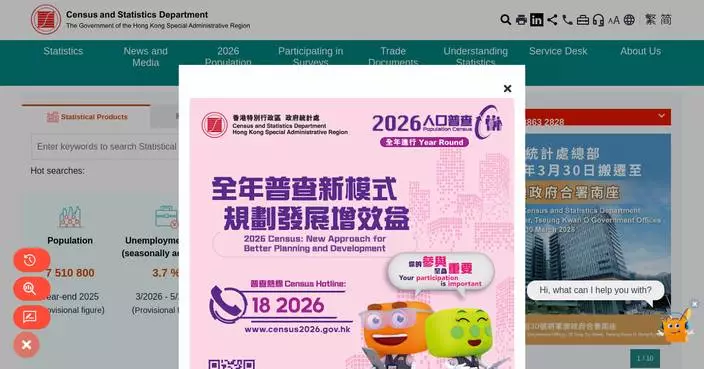
The Census and Statistics Department (C&SD) is conducting the 2026 Population Census in full swing, which operates throughout the year until December 31, 2026. Around 10% of households in Hong Kong are sampled for the 2026 Population Census. To date, over 160 000 households have completed the Census questionnaire. The C&SD expresses gratitude for their support and appeals for active participation of households yet to respond or to be sampled.
The Census helps to obtain up-to-date information on the demographic and socio-economic characteristics of the population of Hong Kong and on its geographical distribution. It provides vital statistical information to the Government for planning and development. Information collected in the Census will be kept in strict confidence.
Sampled households (including owner-occupiers or tenants) who have received the notification letters in purple envelopes are encouraged to complete the online questionnaire at oq.census2026.gov.hk or conduct a telephone interview by calling the Census Hotline 18 2026. Census officers will also visit households with outstanding response and assist them in completing the questionnaire during 9 am and 10 pm from Monday to Friday (except public holidays). When visiting households, census officers will wear a grey vest uniform, and carry an Enumerator Identity Card and a Census Officer Certificate of Identity issued by the C&SD for identification purposes.
Some households having completed the Census questionnaire will be selected in the second half of 2026 to follow up on possible changes of the information as at mid-year. Separate notification letters will be issued to the households concerned. In addition, if the information provided by households has changed in the mid-year, they should call the Census Hotline 18 2026 to provide the latest information.
The C&SD reminds that households will not be required to provide information on their HKID card, bank accounts or credit cards in the Census. The caller ID "18 2026" or SMS sender ID "#C&SD" will be displayed when the C&SD calls or sends SMS messages to households in Hong Kong. The C&SD will not ask respondents to submit password in any telephone call, email or SMS message, and will not embed hyperlinks in emails or SMS messages unless requested by respondents. To report suspected deception cases or verify the identity of census officers, members of the public should call the Census Hotline 18 2026.
The Census is conducted under Section 9 of the Census and Statistics Ordinance (Cap. 316). All persons specified are obliged to provide the required information. It is an offence if any persons contravene the legal requirement for completing the Census questionnaire.
The summary results for the 2026 Population Census will be released in August 2027.
For enquiries about the 2026 Population Census, please call the Census Hotline 18 2026 or visit the thematic webpage of the 2026 Population Census (www.census2026.gov.hk). The Census Hotline operates from 9 am to 10 pm from Monday to Friday (except public holidays) throughout the data collection period.
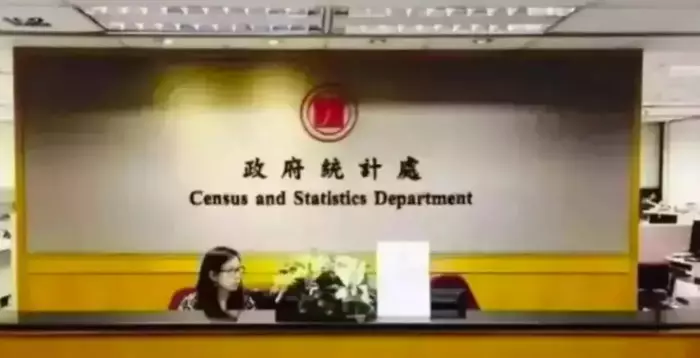
The Census and Statistics Department, Photo source: reference image
CHP investigates confirmed Mpox case
The Centre for Health Protection (CHP) of the Department of Health (DH) said today (June 23) that it is investigating a confirmed Mpox (also known as Monkeypox) case, and strongly urged high-risk target groups to receive Mpox vaccinations. Meanwhile, the public is advised to be vigilant and avoid close physical contact with individuals suspected of contracting Mpox.
The case involves a 44-year-old male. He developed a fever, pain and discharge in his lower body on June 11, followed by a rash on his face and trunk on June 17. During this period, the patient attended private clinics and a hospital on multiple occasions. On June 21, he attended a private hospital and was admitted for isolation treatment. He is currently in stable condition.
According to information provided by the patient, he has not been vaccinated against Mpox. During the incubation period, he had no travel history and had high-risk exposure at his home. No epidemiological linkages between this case and confirmed Mpox cases recorded in Hong Kong earlier could be identified so far. The CHP is continuing its epidemiological investigation of the case, will endeavour to contact individuals who had high-risk contact with the patient and will report the case to the World Health Organization.
Since 2022, Hong Kong has recorded a total of 92 Mpox cases (74 local cases and 18 imported cases), including the above-mentioned case. All patients were males. Epidemiological investigations revealed that most cases had high-risk sexual behaviour, including having sex with strangers or having sex without wearing condoms.
The Mpox vaccine can prevent infection and severe disease. The DH provides Mpox vaccination services for highrisk groups. The following high-risk target groups are eligible for Mpox vaccinations on a voluntary basis:
- individuals with high-risk sexual practices, e.g. having multiple sexual partners, sex workers, or having a history of sexually transmitted infection within the past 12 months;
- healthcare workersresponsible forcaring forpatients with confirmed Mpox;
- laboratory personnel working with zoonotic pox viruses; and
- animal care personnel with high risk of exposure in caseof Mpox occurrences in animals in Hong Kong.
High-risk target groups can receive Mpox walk-in vaccinations at any of the DH's Social Hygiene Service Clinics (SocHS) (namely Chai Wan SocHS, Wan Chai Male SocHS, Wan Chai Female SocHS, Yau Ma Tei Male SocHS, Yau Ma Tei Female SocHS, Yung Fung Shee SocHS, Fanling SocHS and Tuen Mun SocHS) and the DH's Yau Ma Tei Integrated Treatment Centre, without prior appointments.
Meanwhile, the DH's Kowloon Bay Integrated Treatment Centre and the Hospital Authority's Special Medical Clinics at Queen Elizabeth Hospital and Princess Margaret Hospital also provide Mpox vaccination services for their clients.
Mpox is not transmitted through respiratory droplets or aerosols in general, and transmission would not occur through social contact. The CHP reminds the public, especially those at higher risks of exposure, to take precautions and avoid close physical contact with persons or animals suspected of being infected. They should seek medical attention as soon as possible if they experience relevant symptoms, including rash, fever, chills, swollen lymph nodes, exhaustion, muscle pain, and severe headaches. They should not engage in activities with others that may involve contact with skin rash or body fluids.
For more details, please visit the CHP's page onMpoxandMpox Vaccination Programme.
Source: AI-found images