LONDON--(BUSINESS WIRE)--Jun 23, 2026--
Omdia’s latest research shows that the global smartphone market is undergoing a structural shift as rising component costs and geopolitical uncertainty push leading manufacturers to move away from low-cost, high-volume strategies and prioritize premium, high-value portfolios.
This press release features multimedia. View the full release here: https://www.businesswire.com/news/home/20260623523762/en/
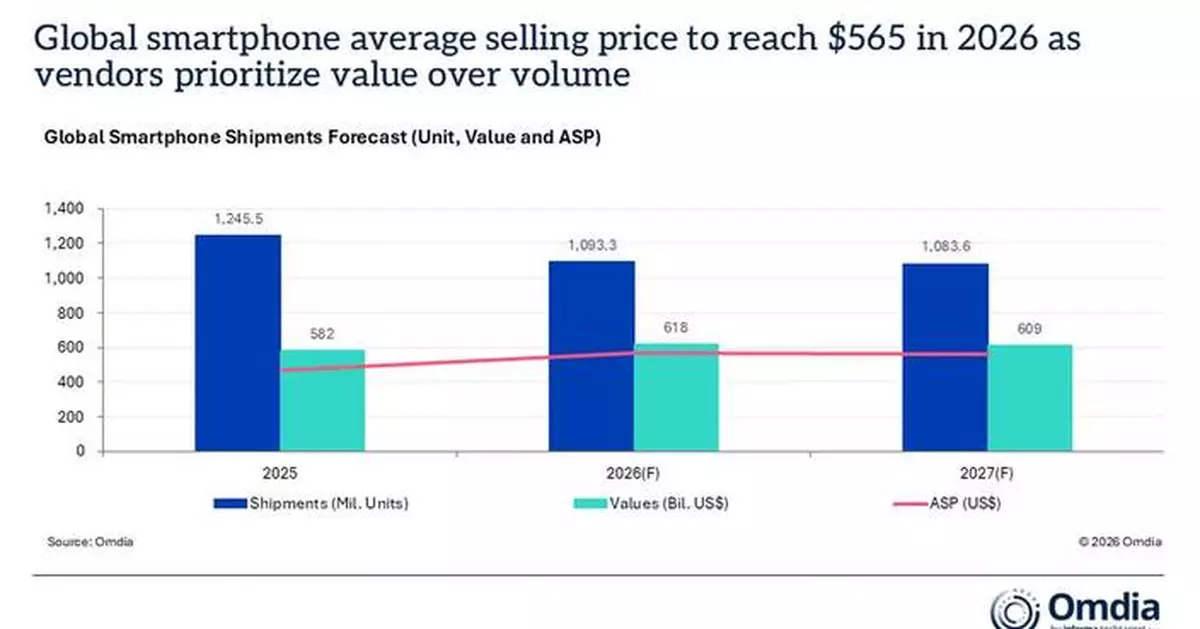
According to Omdia’s global smartphone forecast, total global smartphone shipments are forecast to contract by 12.2% year-on-year (YoY) in 2026, dropping to 1,093 million units. This represents a decline of 152 million units compared with 2025. Despite this shipment contraction, total market value is projected to grow by 6.1% YoY over the same period.
A historic surge in average selling prices
This divergence between shipment volume and market value is being fueled by a sharp rise in retail pricing. The global smartphone average selling price (ASP) is forecast to increase from $467 in 2025 to $565 in 2026. This 21% jump – equivalent to $98 – marks an all-time high in both growth rate and dollar value for the industry.
This pricing surge reflects severe margin pressures across the supply chain. Average DRAM and NAND flash memory prices rose by more than 80% quarter-on-quarter in 1Q26, with further increases already seen in 2Q26. While memory price hikes are expected to slow to single-digit growth rates in the second half of the year, component costs will remain structurally elevated, forcing vendors to pass some of these costs onto consumers.
“The smartphone industry is currently going through a period of significant disruption, as vendors work to manage short-term component cost pressures as effectively as possible,” said Jusy Hong, Senior Research Manager at Omdia. “Some vendors are gaining early-mover advantages by increasing component inventories to minimize the impact of future price hikes. Once the DRAM and NAND pricing starts to stabilize and plateau at a new level, the market is expected to enter a phase of stabilization, where the focus will shift back to other strategic priorities. This transition is expected towards the second half of 2027.”
“Many industry players will be waiting for the readjustment phase, when component prices start to move downwards. At this stage, vendors with leaner structures will be better positioned to benefit from price declines, and excess inventory could become a major hurdle. The transition to a readjustment phase is currently anticipated in early 2028, driven by expected increases in supply capacity. Short-term ease could arrive earlier, depending on how AI datacenter demand develops,” added Hong.
Strategic Pivot and Regional Impact
To protect margin, global vendors are actively scaling back their low-end product lines and increasing production shares for mid-to-high-end smartphones in their portfolios.
This strategic pivot will impact regions differently:
“Vendors are also increasingly relying on wider business models and portfolios to strengthen operational resilience. Vendors and regions with a high dependence on budget smartphones as their primary customer engagement will be particularly exposed. The strongest position will be held by vendors that can capture additional high-value and high-margin streams from each user. This will typically include cross-selling other ecosystem devices, upselling services and subscriptions that increase the lifetime user value, and expanding opportunities to monetize the installed base,” said Runar Bjorhovde, Omdia Principal Analyst for smartphones.
Long-Term Outlook and Delayed Recovery
Omdia forecasts that the global smartphone market contraction will extend into 2027, although the shipment decline is forecast to slow significantly to 0.9%. Even as memory prices are projected to begin correcting in 2027, the baseline cost of manufacturing sub-$100 smartphones is expected to remain too high to support significant decreases in end-user pricing.
Meaningful volume recovery for the industry is therefore expected to begin in 2028. Looking ahead, top global smartphone vendors are expected to remain highly conservative about expanding entry-level lineups. The ultra-low-end smartphone segment is projected to shift away from major global brands and towards smaller, local and regional manufacturers.
ABOUT OMDIA
Omdia, part of TechTarget, Inc. d/b/a Informa TechTarget (Nasdaq: TTGT), is a technology research and advisory group. Our deep knowledge of tech markets, grounded in real conversations with industry leaders and hundreds of thousands of data points, make our market intelligence our clients’ strategic advantage. From R&D to ROI, we identify the greatest opportunities and move the industry forward.
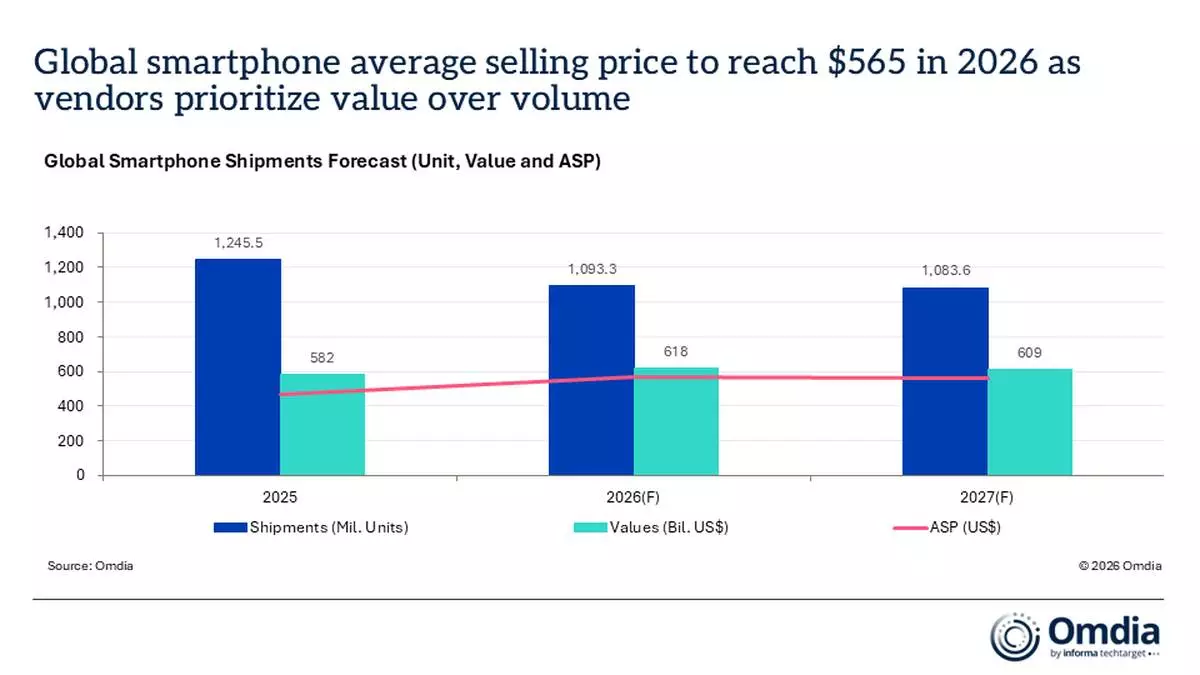
Global Smartphone Shipments Forecast (Unit, Value and ASP)
ISLAMABAD (AP) — Iran’s president was traveling to Pakistan on Tuesday for talks with officials who have been mediating negotiations between Tehran and Washington on a permanent end to the war in the Middle East even as discrepancies were emerging on what had been agreed so far.
President Masoud Pezeshkian’s visit to Islamabad comes as technical teams were working on details of the deal, following high-level negotiations in Switzerland on Monday led by US Vice President JD Vance and Iran’s parliamentary speaker, Mohammad Bagher Qalibaf.
In Tehran, Iran's capital, Foreign Ministry spokesperson Esmail Baghaei told reporters that no visits have been scheduled for the U.N. watchdog — the International Atomic Energy Agency — to see Iranian nuclear sites bombed by the United States last year. Vance had previously said the negotiations in Switzerland won an agreement for IAEA to inspect the sites.
The IAEA has been in and out of Iran since Israel’s 12-day war against Iran in 2025, but has not been granted access to the bombed enrichment sites targeted by the U.S. in that war.
Security was tight in the area of Islamabad where the Iranian president was to meet with President Asif Ali Zardari and Prime Minister Shehbaz Sharif. It's Pezeshkian's first visit since the conflict started with the U.S. and Israeli attack on Iran on Feb. 28.
Pezeshkian and Sharif were to hold joint news conference after their discussions.
In the initial talks, marking the start of a 60-day diplomatic process that seeks to reach a permanent deal to end the Iran war, Iran and the U.S. agreed to create a “de-confliction cell” to address the fighting in Lebanon between Israel and the Iranian-backed Hezbollah militia group. The U.S. said negotiators also discussed “mechanisms” to ensure the Strait of Hormuz, a key waterway for the transit of oil that Iran had effectively blocked during the war, remains open.
Ahead of his meetings in Pakistan, Pezeshkian cautioned that “the effectiveness of the talks depends on full commitment to the agreed obligations and their precise implementation.”
“Progress on this path will be measured by practical adherence to accepted responsibilities,” he wrote on X. “Statements outside the agreed text do not help advance the negotiations.”
Iran suggested the ongoing technical talks in Switzerland have led to the creation of specific negotiation groups, which include those focused on sanctions relief, nuclear issues, reconstruction and monitoring, according to a the state-run IRNA news agency.
The report quoted Kazem Gharibabadi, a deputy foreign minister leading the technical talks, saying that the countries involved also formed a contact mechanism over ships moving through the Strait of Hormuz and over the fighting in Lebanon between Israel and Hezbollah.
It remains unclear whether the de-confliction cell being created will be enough to stop fighting between the Lebanese militant group Hezbollah and Israel, which occupies part of Lebanon and insists it must maintain a free hand to attack militants launching attacks into northern Israel.
Following the high-level talks in Switzerland, Vance had said if Iranian financial assets were unfrozen they would be used to buy American-grown food.
Vance said that the U.S. and Qatar would have approval over the process, but if Iranian money becomes accessible as sanctions are lifted, it “would actually go to buy American soy, American corn and American wheat for the benefit of the Iranian people.”
However, Iran has no current demand for U.S. crops and Baghaei said on Tuesday that Tehran’s decisions on what to import would be based upon “prices and quality.”
“It is interesting that the philosophy and goal of the war, which was the destruction of the Iranian civilization and the collapse of Iran, has become enriching American farmers,” Baghaei said at the news conference in Tehran.
Iran’s ambassador in Geneva, Ali Bahreini, also questioned Vance’s contention that the U.S. and Qatar would have to approve how Iran uses unfrozen funds.
“Iran is the only country who decides what to do with those assets,” he told reporters.
Mediators Pakistan and Qatar said the cell would include the Lebanese government and would “ensure the adherence of the termination of military operations in Lebanon,” but Israeli Prime Minister Benjamin Netanyahu raised new questions late on Monday, saying his military still has “full freedom of action to thwart any direct or emerging threat to them or to the residents of the north.”
Neither Israel nor Hezbollah are signatories to the U.S.-Iran deal, and Netanyahu has vowed to keep his forces in southern Lebanon until any threat to Israel is eliminated. Hezbollah has refused to halt attacks unless Israel commits to withdrawing.
When asked about Netanyahu’s comments, U.S. President Donald Trump later said “we’re going to take a look at it,” adding that he wouldn’t say what action he would take but that the situation would “get solved.”
“I’m a problem solver, I get problems solved real fast, including with Bibi,” he said, using a nickname for Netanyahu.
At the moment, the renewed ceasefire in Lebanon, brokered on Saturday, appears to be holding with no new Israeli or Hezbollah strikes reported overnight.
Lebanon and Israel planned another round of direct talks in Washington on Tuesday, which are expected to focus on developing a plan for an Israeli withdrawal.
Rising reported from Bangkok and Gambrell from Dubai, United Arab Emirates. Associated Press writers Abby Sewell in Beirut, Jamey Keaten in Geneva and Nasser Karimi in Tehran, Iran, contributed to this report.
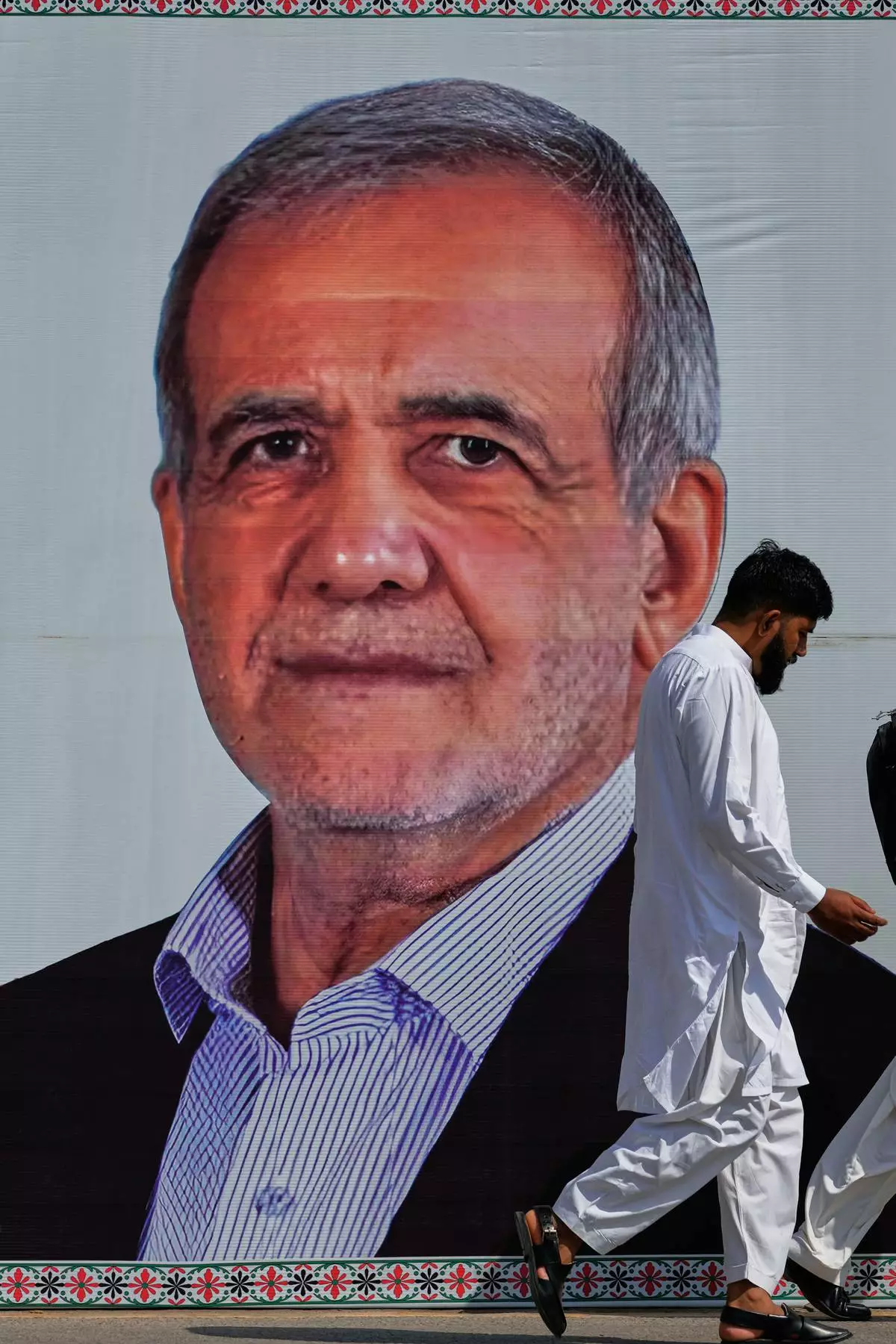
A man walks past a welcoming billboard featuring Iranian President Masoud Pezeshkian along a roadside in Islamabad, Pakistan, Tuesday, June 23, 2026. (AP Photo/Anjum Naveed)
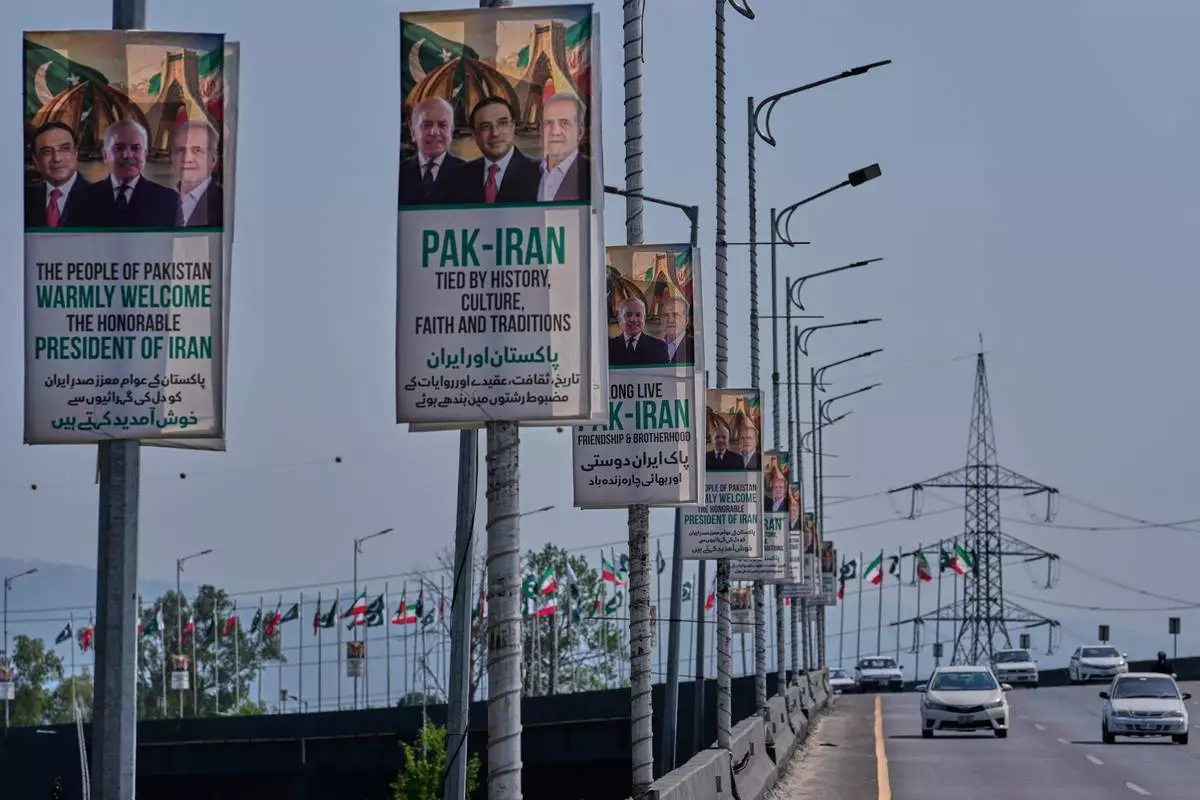
Vehicles drives past welcoming billboards featuring Iranian President Masoud Pezeshkian, right, with Pakistan President Asif Ali Zardari, center, and Shehbaz Sharif alongside an overhead bridge in Islamabad, Pakistan, Tuesday, June 23, 2026. (AP Photo/Anjum Naveed)
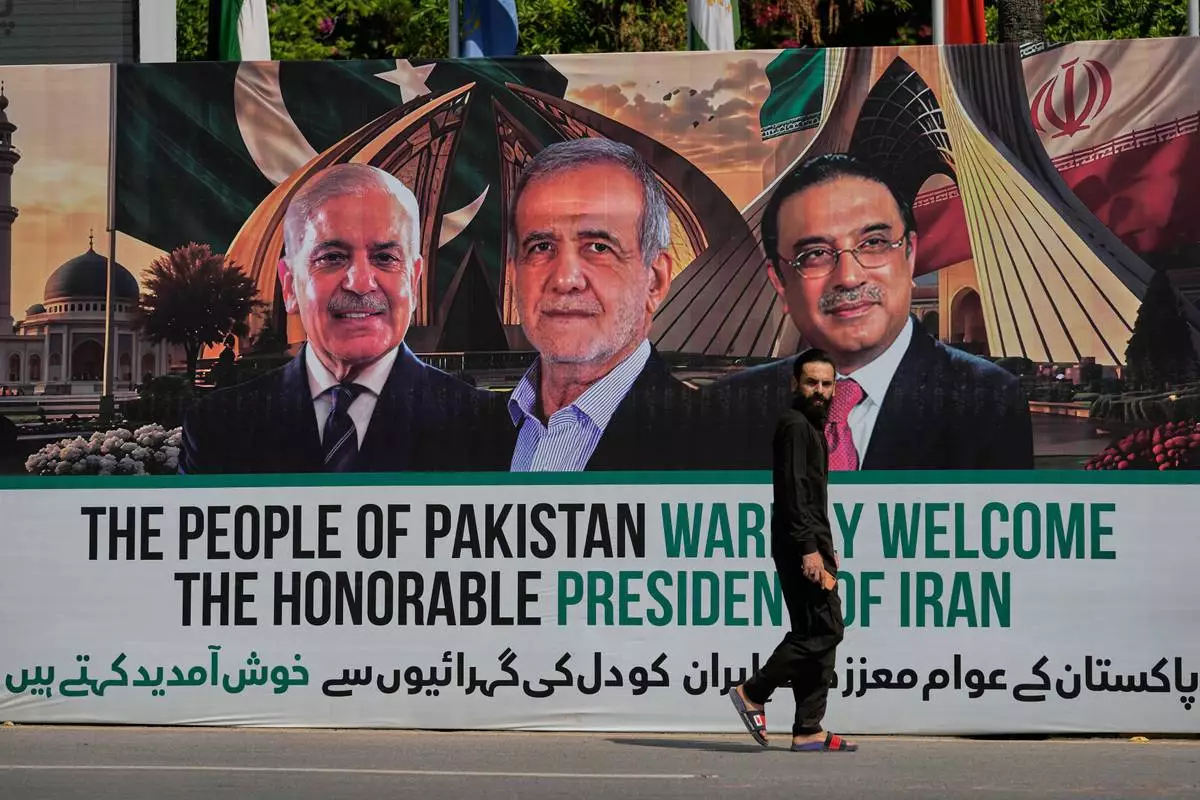
A man walks past a welcoming billboard featuring Iranian President Masoud Pezeshkian, center, with Pakistan President Asif Ali Zardari, right, and Shehbaz Sharif along a roadside in Islamabad, Pakistan, Tuesday, June 23, 2026. (AP Photo/Anjum Naveed)
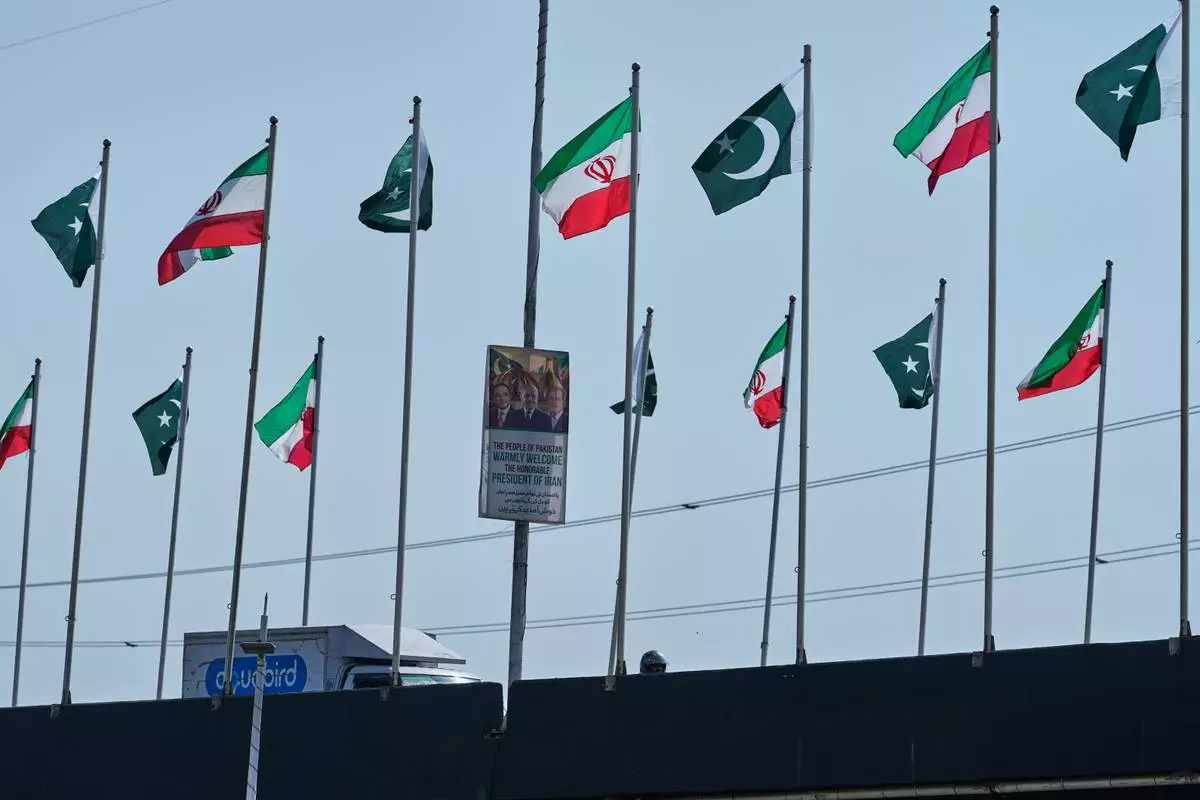
The welcoming billboard, featuring Iranian President Masoud Pezeshkian, right, with Pakistan President Asif Ali Zardari, center, and Prime Minister Shehbaz Sharif, is displayed alongside of an overhead bridge, in Islamabad, Pakistan, Tuesday, June 23, 2026. (AP Photo/Anjum Naveed)
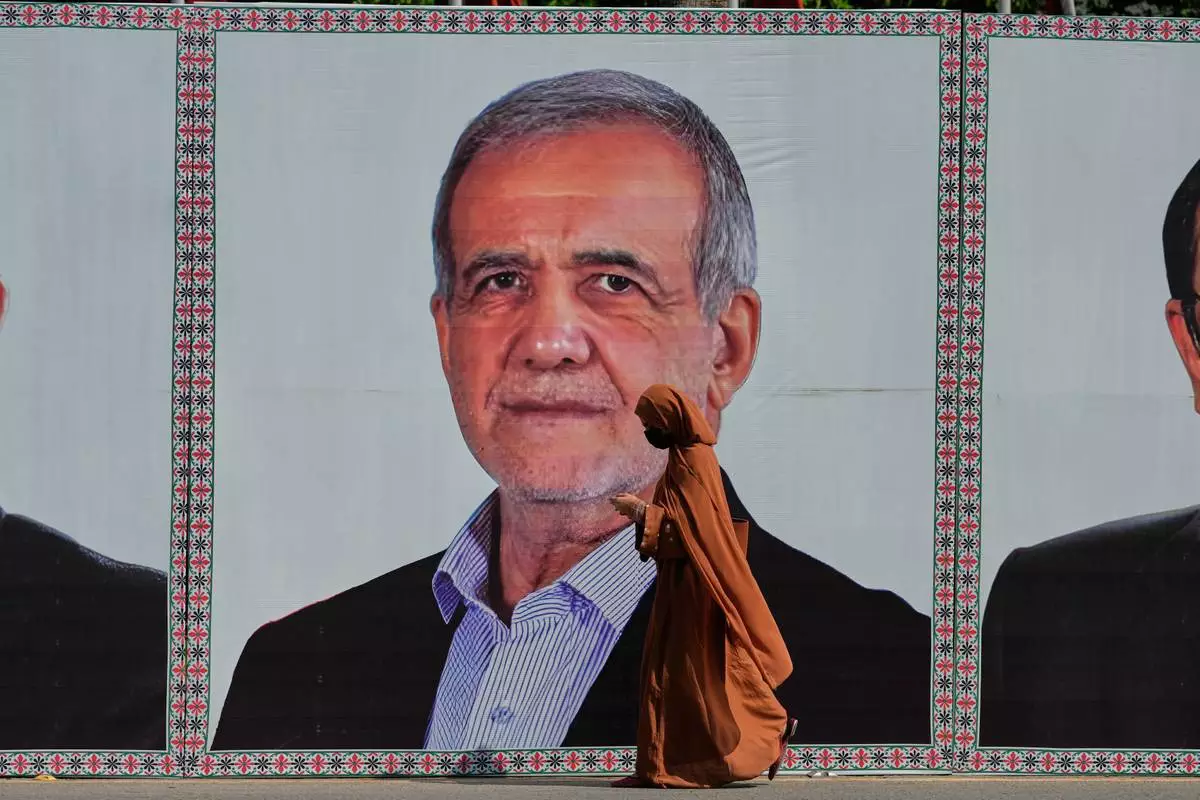
A woman walks past a welcoming billboard featuring Iranian President Masoud Pezeshkian along a roadside in Islamabad, Pakistan, Tuesday, June 23, 2026. (AP Photo/Anjum Naveed)