The U.S. is easing its restrictions on Iran's World Cup team, allowing the squad to travel into the country two days before its next match, the U.S. Department of Homeland Security said Tuesday.
The team will still be required to leave after Friday's match in Seattle, a department spokesperson said. A spokesperson for the Iran Football Federation confirmed that the team will leave its base camp in Tijuana, Mexico, on Wednesday for Seattle.
“This was planned on our end,” Andrew Giuliani, the executive director of the White House FIFA Task Force, told The Associated Press. “We were going to look at how the first two movements went, and if they went smoothly, we would extend the extra day in light of the longer travel time.”
The policy change was first reported by NBC News and comes as officials from both countries negotiate over how to end the war in Iran.
Iran's squad has complained about the travel restrictions levied on the team, and the challenges it has faced since the outbreak of war. Iran originally sought to move its group stage matches to Mexico, with whom it has diplomatic ties. The team’s base camp was relocated from Tucson, Arizona, to Tijuana. Several team officials and members of the support staff have been barred from traveling into the U.S. with the team.
For the first two matches, in Los Angeles, the team was not permitted to travel until the day before, which Iran coach Amir Ghalenoei repeatedly said put the team at a disadvantage. The team had less than 24 hours on the ground before its noon match Sunday. “Right now we need recovery more than anything,” Ghalenoei said through a translator after the 0-0 draw against Belgium. “The conditions have been extremely hard for us.”
It's not uncommon for teams to travel a day before the match, and it's in line with FIFA regulations, which state that “each team shall travel from its team base camp to the match venue one day before matchday (MD‑1) and in exceptional cases on MD‑2, and shall return to their team base camp after the match (on MD/MD+1).”
But Iran had asked for more time to acclimate to host cities and recover after matches, especially for the 1,200-mile (1,930-kilometer) trip to Seattle. The team has scheduled a Thursday training at the University of Washington.
“We don’t ask for much. We just ask for the same procedure as for all the other 47 teams,” Iran national team player Alireza Jahanbakhsh said Sunday. “Hopefully we can bring everyone who is involved and help us with us.”
The Iran team has also said it experienced difficulties entering and exiting the U.S. each time it made the 127-mile (204-kilometer) flight between Tijuana and Los Angeles. The typically short trip took five hours the day before its first match against New Zealand, team captain Mehdi Taremi said.
Hours before Sunday's match against Belgium, U.S. Homeland Security Markwayne Mullin told Fox News the Iranians had “tried to get somebody in yesterday” who had direct ties to Iran’s Revolutionary Guard. In a statement, the soccer federation vociferously pushed back, calling the claim “an outright and undeniable lie.”
It's unclear whether Iran's upcoming opponent, Egypt, will also be allowed to arrive in Seattle two days early. After its 3-1 victory against New Zealand in Vancouver Sunday, Egypt asked to fly directly to Seattle. FIFA denied that request, citing a lack of security resources to accommodate the last-minute demand. Egypt returned to its base camp in Spokane, Washington, a 45-minute flight from Seattle.
Egypt's national team did not immediately respond to a request for comment.
AP Sports Writer John Marshall contributed reporting. AP World Cup coverage: https://apnews.com/hub/fifa-world-cup

Iran players react at the end of the World Cup Group G soccer match between Belgium and Iran in Inglewood, Calif., near Los Angeles, Sunday, June 21, 2026. (AP Photo/Gregory Bull)

Iran goalkeeper Alireza Beiranvand (1) makes a save from Belgium's Maxim De Cuyper (5) during the World Cup Group G soccer match between Belgium and Iran in Inglewood, Calif., near Los Angeles, Sunday, June 21, 2026. (AP Photo/Mark J. Terrill)
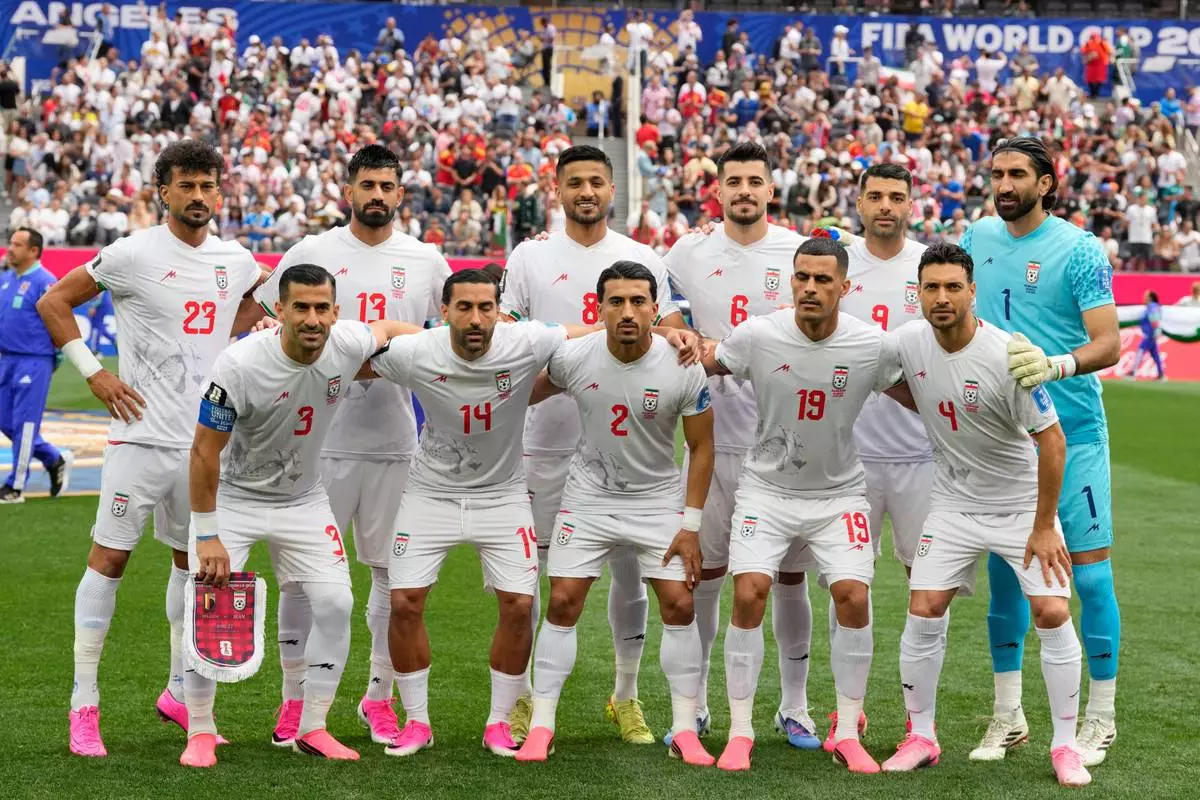
Iran team pose for a group photo prior to the World Cup Group G soccer match between Belgium and Iran in Inglewood, Calif., near Los Angeles, Sunday, June 21, 2026. (AP Photo/Andre Penner)
WASHINGTON (AP) — The Trump administration is providing $17.5 billion to speed the development of 10 new large nuclear reactors to meet the skyrocketing power demand from massive data centers.
Energy Secretary Chris Wright cited “tremendous interest” among developers of data centers that would buy the power, as well as utilities and energy companies. The nuclear plants could begin construction by 2030 and become operational in the mid-2030s, Wright and other officials said Tuesday.
“This is the start,” Wright said on a call with reporters. “We’re going to move with the players that are ready to stand up and move quickly. Once that supply chain is up and running, do we think there will be dozens of these built going forward? I’d be very surprised if there were not.”
Most U.S. nuclear power plants were built between 1970 and 1990. Only two new large reactors have been built from scratch in the United States in recent decades. Those two reactors, at Georgia Power Co.’s Plant Vogtle, were completed years late and billions of dollars over budget. The 10 new reactors will use the same design, Westinghouse’s AP1000.
Wright said the Plant Vogtle project struggled because of bad planning, supply chain problems and the COVID-19 pandemic. But, he said, the reactor design is “robust and sound.”
“By building in volume and at multiple locations, we think we will create and stand up a large supply chain and build a lot of construction expertise,” Wright said. “We expect the timing and cost of these plants to well outperform what was done on Vogtle.”
Seven utilities and energy companies signed letters of intent that identified sites, the Energy Department said. The agency plans to pick five, which would host two reactors at each site. The federal financing would be used to purchase nuclear components with long lead times, and are not construction loans.
The department declined to name the utilities involved or the states they are in, calling it premature until the selections are made. It did not give a timeline for making those selections.
President Donald Trump set a goal of quadrupling domestic production of nuclear power within the next 25 years, and he has signed executive orders to speed development. The administration is working to advance new nuclear technologies, such as small modular nuclear reactors.
Dan Sumner, president and chief executive officer of Westinghouse, said industrialized nuclear power needs to be built at fleet scale, in order for the United States to lead in artificial intelligence, advanced manufacturing and the industries that will define the next century.
Critics of building more nuclear reactors say they’re too expensive and riskier than other low-carbon energy sources. Several states restrict or ban new nuclear power plant construction.
Travis Fisher, director of energy and environmental policy studies at the libertarian Cato Institute think tank, said the Energy Department has the authority to issue these loan guarantees, but he doesn't think the executive branch should be so heavily involved in the electricity sector.
If the past is any indication, the next administration will use similar authorities to favor a different set of energy resources, he added. "Remove the state barriers and the federal favoritism and let companies build the power plants that pass the market test,” Fisher wrote in an e-mail Tuesday.
Data centers used 4% to 5% of the nation's total electricity in 2024, a share that could nearly triple by 2028, according to government estimates. Some analysts predict nationwide electricity use to rise as much as 20% in the next decade, with data centers a big reason.
The Energy Department said the loans could speed up the development of these 10 reactors by up to three years and lower construction costs. Its goal is for all 10 to be under construction by 2030, to start providing power in the mid-2030s.
The utilities and Westinghouse will be expected to contribute up to $5 billion in equity in total across the five, two-reactors projects. Wright said his department provides up to $17.5 billion in loans, or $3.5 billion per project, in debt to pair with the equity. He said it's “very, very low risk to the American taxpayers.”
McDermott reported from Providence, R.I.
The Associated Press’ climate and environmental coverage receives financial support from multiple private foundations. AP is solely responsible for all content. Find AP’s standards for working with philanthropies, a list of supporters and funded coverage areas at AP.org.
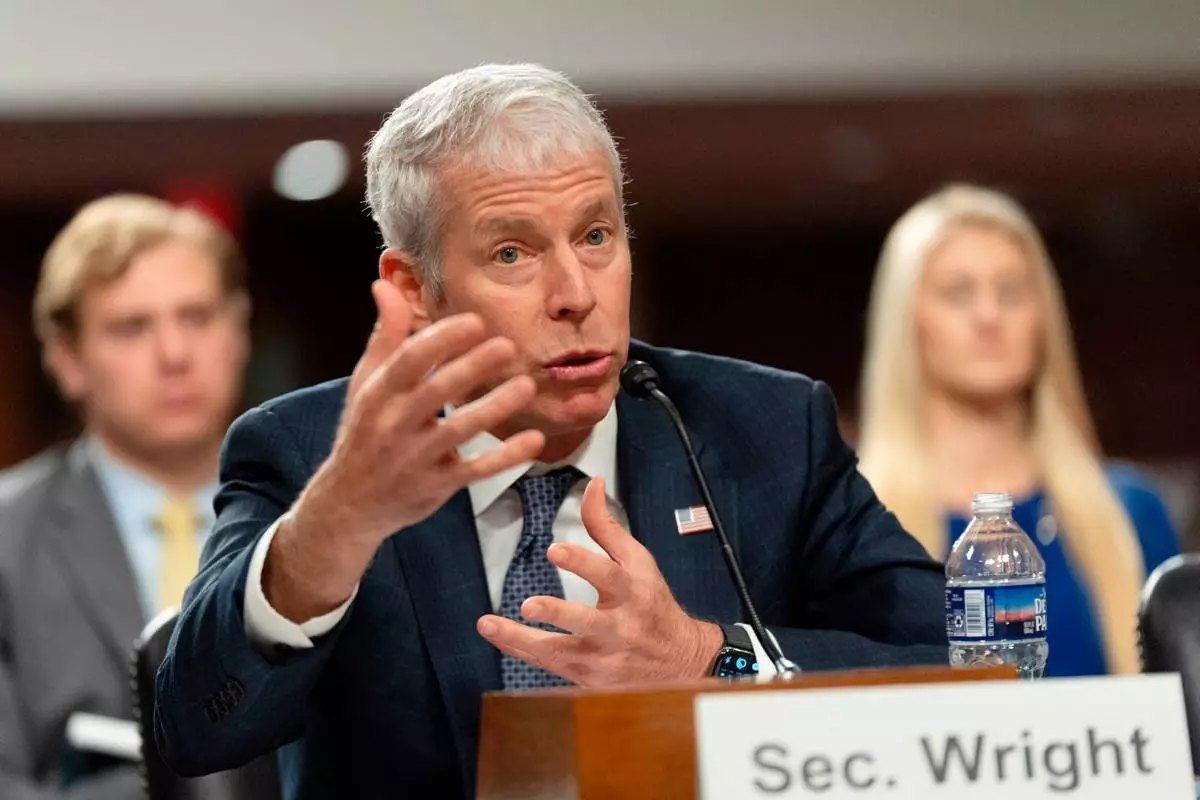
FILE - Energy Secretary Chris Wright testifies before the Senate Armed Services Committee hearing on the budget request for the Energy Department on Capitol Hill, May 13, 2026, in Washington. (AP Photo/Manuel Balce Ceneta, File)
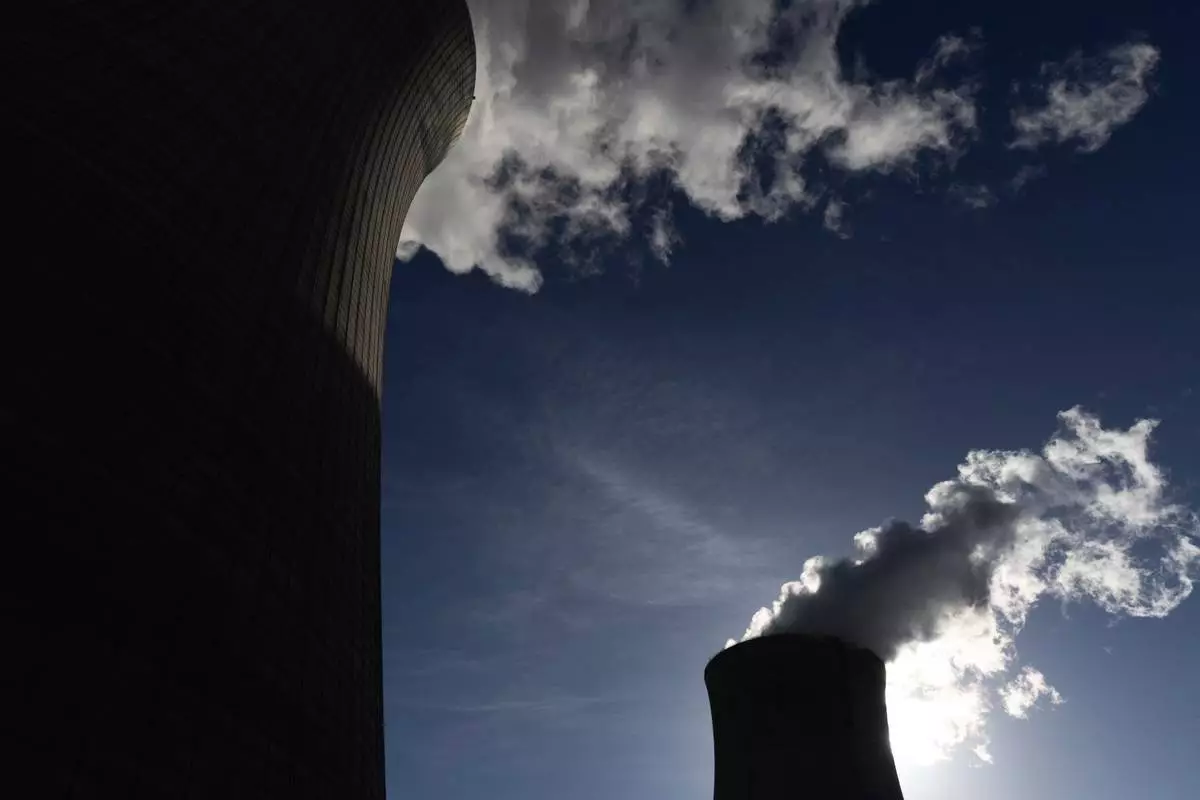
FILE - The cooling towers for units 4, left, and 3, right, are seen at Plant Vogtle, operated by Georgia Power Co., in east Georgia's Burke County near Waynesboro, Ga., on May 29, 2024. (Arvin Temkar/Atlanta Journal-Constitution via AP, File)