WASHINGTON (AP) — Duane Mitchell has big plans for the United States’ 250th anniversary.
Mitchell, a 78-year-old veteran in Montana, plans to take a red, white and blue 1954 Chevrolet pickup that he restored and drive it in local parades for the Fourth of July. In honor of the country’s milestone anniversary, he bought a decorative eagle to mount on the back of the truck, accompanied by American flags.
“I’ll be driving my pickup,” he said, referring to his role in the parades. “Usually we freeze a whole bunch of candy, and I have a couple of kids from down the block who get in the back and throw candy out. Everybody loves it.”
Mitchell isn't the only one looking forward to this year's festivities. About 4 in 10 U.S. adults feel “proud” about the country's 250th anniversary, according to a new survey from The Associated Press-NORC Center for Public Affairs Research. Roughly 3 in 10 say “excited” describes their emotions. The milestone will be marked with events across the country, and President Donald Trump has planned several for the nation’s capital, including a fair on Washington’s National Mall.
But as the celebrations begin, many Americans also feel indifferent or conflicted about celebrating the country. Other Gallup polling shows that most Americans now feel the signers of the Declaration of Independence would be disappointed with how the U.S. has turned out, a substantial increase from 25 years ago.
Most Republicans say that “proud” or “excited” describes how they are feeling about the United States’ 250th anniversary. About 7 in 10 Republicans say pride describes their emotions, compared to about 3 in 10 independents and roughly 2 in 10 Democrats.
Older Americans — those ages 60 and older — are also mostly feeling proud, with about 6 in 10 saying this describes how they feel about the nation’s anniversary.
Mitchell, the Montana veteran, wants the country to be “celebrating it to the maximum.” As a Vietnam War veteran who was drafted into the war, he wants Americans to remember the men and women who have given their lives to protect the freedoms they have today.
“It was a sacrifice,” Mitchell said, referring to his service. “The most important thing about the celebration is understanding that freedom is not free, and it never will be free, so you need to celebrate that.”
About half of Republicans, 54%, say they feel excited about the country’s anniversary.
As the country marks 250 years of independence, most Americans believe the country has succeeded in achieving its founding ideals, according to new Gallup polling. About 7 in 10 U.S. adults say that America has succeeded “a great deal” or “a fair amount” in achieving the ideals for which the country was founded. That view is shared by a majority of Democrats, independents and Republicans — though Republicans are especially likely to say the country has succeeded.
More Democrats and young people say “conflicted” or “indifferent” describes their feelings about America 250.
About 4 in 10 Democrats and roughly 3 in 10 adults under 30 say “conflicted” describes their feelings “extremely” or “very” well. About 3 in 10 in each case feel “indifferent.”
Laura Davis, a 44-year-old in Chicago who identifies as a progressive liberal, has struggled with what she describes as the “American declarations of grandiosity” this year, including Trump's White House ballroom construction and the repainting of the Lincoln Memorial Reflecting Pool. She believes that money could be better spent on Americans in need, as well as international aid, and she worries the country's reputation is being damaged by the Trump administration's actions.
“It doesn't mean we can't celebrate the things that do make America a unique and in some ways exceptional place to be,” she said. “But I think it's more nuanced than that, and I hope that doesn't get lost in the celebration.”
About 8 in 10 Americans say the signers of the Declaration of Independence would be disappointed with how the country has turned out, according to a new Gallup poll. Only about 2 in 10 say the signers would be pleased. That’s down significantly from 1999 — the first time the question was asked — when 55% believed they would be disappointed and 44% said they would be pleased.
Sydney Crispin, a 39-year-old Democrat in Maine, believes the country's “incredible” foundation is worth celebrating. Still, she is conflicted by what she sees as a decline in people's ability to have respectful discourse, something she believes is at the heart of America's identity. She hopes communities find ways to celebrate the remarkable parts of America this Fourth of July while still reflecting on its areas for improvement.
Just under half, 44%, of U.S. adults plan to celebrate the country’s 250th anniversary by spending time with friends or family, according to a recent Gallup-With Honor poll. About 3 in 10 U.S. adults say they plan to watch coverage of America 250 events on television or social media.
More than half of adults ages 65 and older plan to celebrate with friends or family, while nearly half plan to watch coverage of the event on television or social media. Adults under 30 are more likely to say they are not planning to celebrate at all.
The Gallup-With Honor poll found about 2 in 10 U.S. adults plan to participate in a neighborhood or community event, while approximately 1 in 10 say they will be attending an official America 250 event.
Lyle Nelson, a 67-year-old in Idaho, said he plans to maintain his tradition of watching the annual Macy’s firework show at home.
Nelson — who agrees with a lot of what Trump has done in office — remarked that even though Trump was disappointed that he did not get reelected in 2020, he might be pleased that he's the one in the White House during this historic event.
“I wonder if he’s thankful that he gets to be president during the 250th anniversary,” Nelson said. “I think he'll be excited for that.”
The AP-NORC poll of 2,596 adults was conducted April 16-20 using a sample drawn from NORC’s probability-based AmeriSpeak Panel, which is designed to be representative of the U.S. population. The margin of sampling error for adults overall is plus or minus 2.6 percentage points.
The Gallup-With Honor poll of 3,199 adults was conducted May 12-22 using a sample drawn from Gallup's probability-based panel. The margin of sampling error for adults overall is plus or minus 2.1 percentage points. The separate Gallup poll of 1,001 adults was conducted May 1-17 using a sample drawn from Gallup’s probability-based panel. The margin of sampling error for adults overall is plus or minus 4.0 percentage points.

The ferris wheel on the National Mall is lit as preparation continues for the Great American State Fair on the National Mall, Sunday, June 21, 2026, in Washington. (AP Photo/Jon Elswick
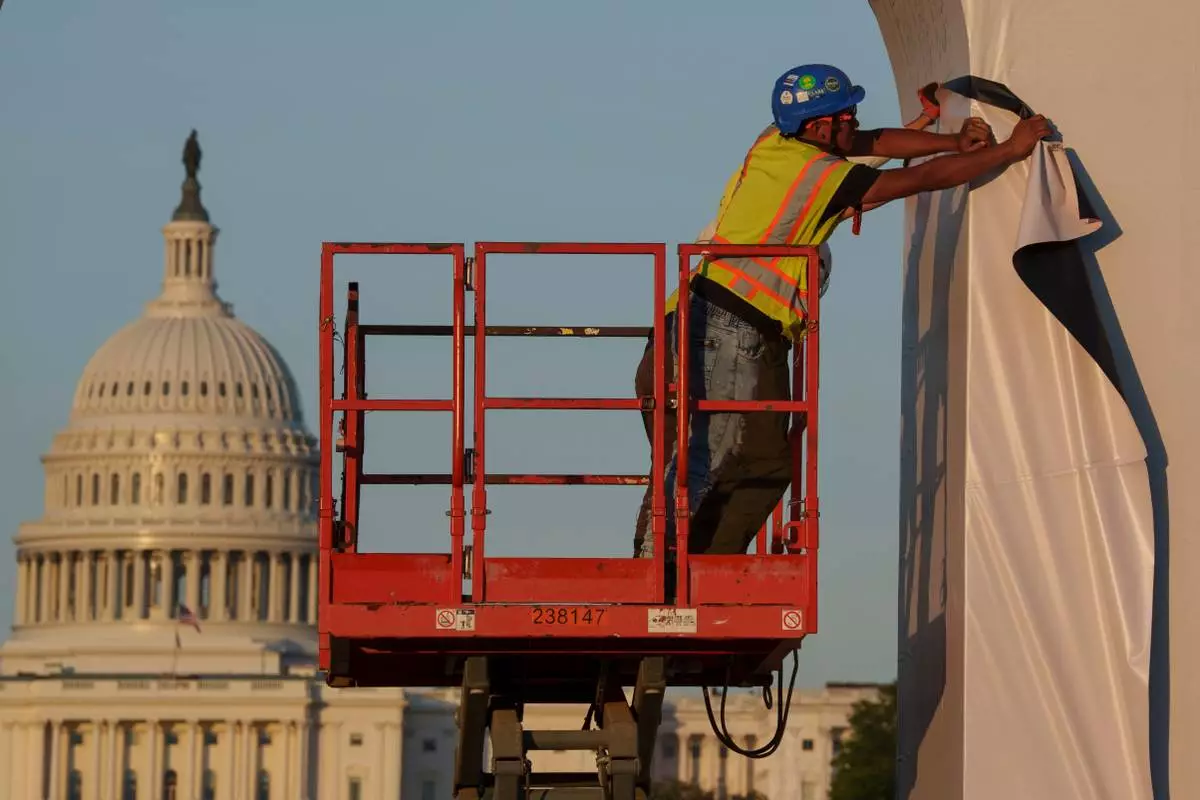
Preparation continues for the Great American State Fair on the National Mall, Sunday, June 21, 2026, in Washington. (AP Photo/Jon Elswick

A Ferris wheel is seen on the National Mall for the 250 Anniversary celebration, Tuesday, June 23, 2026, in Washington. (AP Photo/Manuel Balce Ceneta)
TIJUANA, Mexico (AP) — Vivianne Petit Frere's brightly painted Haitian restaurant sits blocks from the towering U.S. border wall in Tijuana.
Called Lakou Lakay, the name in Haitian creole means “home," and it reflects her family’s deepening roots in their adopted homeland where her granddaughter was born two years ago, automatically making her a Mexican citizen.
Like the United States, Mexico extends citizenship to children born within its borders.
President Donald Trump insists the U.S. is the only nation to do so as he seeks to deny birthright citizenship for children whose parents are living in the country illegally or have temporary legal status.
The U.S. Supreme Court is expected to weigh in soon on the constitutionality of his birthright citizenship order. Trump signed it on Jan. 20, 2025, the first day of his second term, amid his Republican administration’s broad immigration crackdown.
In April, Trump posted on Truth Social: “We are the only Country in the World STUPID enough to allow ‘Birthright’ Citizenship!”
In fact, about three dozen countries, mostly in the Americas, guarantee automatic citizenship to children born on their territory — among them, Canada, Honduras, Brazil, Argentina, Venezuela and of course, Mexico.
Petit Frere fled Haiti in 2019. She traveled from Brazil and walked through the Panamanian jungle to Mexico chasing the so-called American Dream with the intention of crossing the border and settling with relatives in Florida. But she soon learned that was an illusion, while Mexico opened its doors.
Her restaurant's name symbolizes in her Haitian culture a shared space affording a sense of belonging. On the walls she has framed signs in Spanish, English and Creole that make clear it is more than an eatery offering tasty traditional Haitian dishes, such as fish with plantains, and rice and beans.
“Every dish tells a story, every detail connects cultures,” one sign says. “We aim to promote an authentic cultural exchanges between two peoples with similar historical roots yet where Haitian identity proudly blossoms on Mexican soil.”
In just over five years in Tijuana, Petit Frere has established a thriving business, become fluent in Spanish and is getting a degree in social work.
And she welcomed the first generation Mexican in her family, her granddaughter, Alexca.
There are no figures on how many children born to noncitizens have received Mexican birthright citizenship. Tens of thousands of Haitians are living in Mexico. In 2021, when Mexico saw a significant increase in Haitian migration, at least 10 percent of arriving Haitian women were pregnant, according to the United Nations’ International Organization for Migration.
In the U.S., birthright citizenship was enshrined after the Civil War through the 14th Amendment to the Constitution, in part to ensure former slaves would be citizens.
The right was expanded to immigrants' children in the late 1800s when the Supreme Court ruled nearly anyone born in the U.S. — no matter their parents’ legal status — has citizenship.
The practice, many legal historians believe, dates to the 1600s and 1700s, with European rulers encouraging migration to the expanding American colonies. Those colonists, though, wanted any of their children born overseas to retain European citizenship.
So even as the colonial boundaries shifted "you're a citizen as long as you're born within the domain of the king, of the monarch,” said César Cuauhtémoc García Hernández, a law professor at Ohio State University. “But the legal tie between the home country in Europe and the settlers remained strong through the promise of birthright citizenship.”
In 2007, the Dominican Electoral Council officially ordered the denial of citizenship to all children born to parents without legal status.
Six years later, a Dominican court applied it retroactively to 1929.
Over a decade later, as many as 130,000 people remained stateless despite passage of a law in 2014 to correct the court decision after it drew strong international condemnation, according to the Center for Migration Studies of New York. The law now impacts the next generation, which remains vulnerable to deportation.
Petit Frere was born in French Saint Martin, a Caribbean island that does not offer automatic birthright citizenship. She and her mom, who is Haitian, were deported to Haiti when she was 6.
Petit Frere left Haiti seeking a better life. She was dismayed to discover when her teenage daughter left Haiti to be reunited with her in Tijuana three years later, she was nearly five months pregnant. She had been a teen mother herself and had hoped for a different path for her daughter.
But Alexca, a bubbly toddler who giggles and runs about, has conquered her grandmother's heart. Petit Frere said she's grateful her granddaughter was born in Mexico rather than Haiti, where surging gang violence has left more than 1 in 10 homeless.
A Mexican passport would also make travel easier. Traveling with a Haitian passport is considered extremely difficult, with few nations allowing holders to visit visa free.
“As a Mexican citizen, she will have more opportunities,” Petit Frere said.
That's also true for her three nieces who were born in Brazil and made automatic citizens there, she said.
Petit Frere said she and her daughter had permanent residency in Mexico before her granddaughter was born. But other parents in Tijuana's Haitian community did not. Mexico allows the parents of children with birthright citizenship to become permanent residents.
“There are a lot of children in Tijuana who are 6, 7, 8 years old now who are Mexican and their parents who are Haitian did not have legal status but now have become permanent residents because their children were born here," she said.
Petit Frere has started the paperwork to become a Mexican citizen, which would make it easier to expand her business, she said.
Petit Frere also is a community organizer with the Haitian Bridge Alliance, advocating for the Haitian migrant community. She said she hopes to pursue another degree in international migration, possibly through a U.S. university.
“The children of immigrants are proving to be the most outstanding in the world,” she said. Trump's efforts to limit birthright citizenship “could just be out of jealousy."
Associated Press writer Tim Sullivan in Minneapolis contributed to this report.
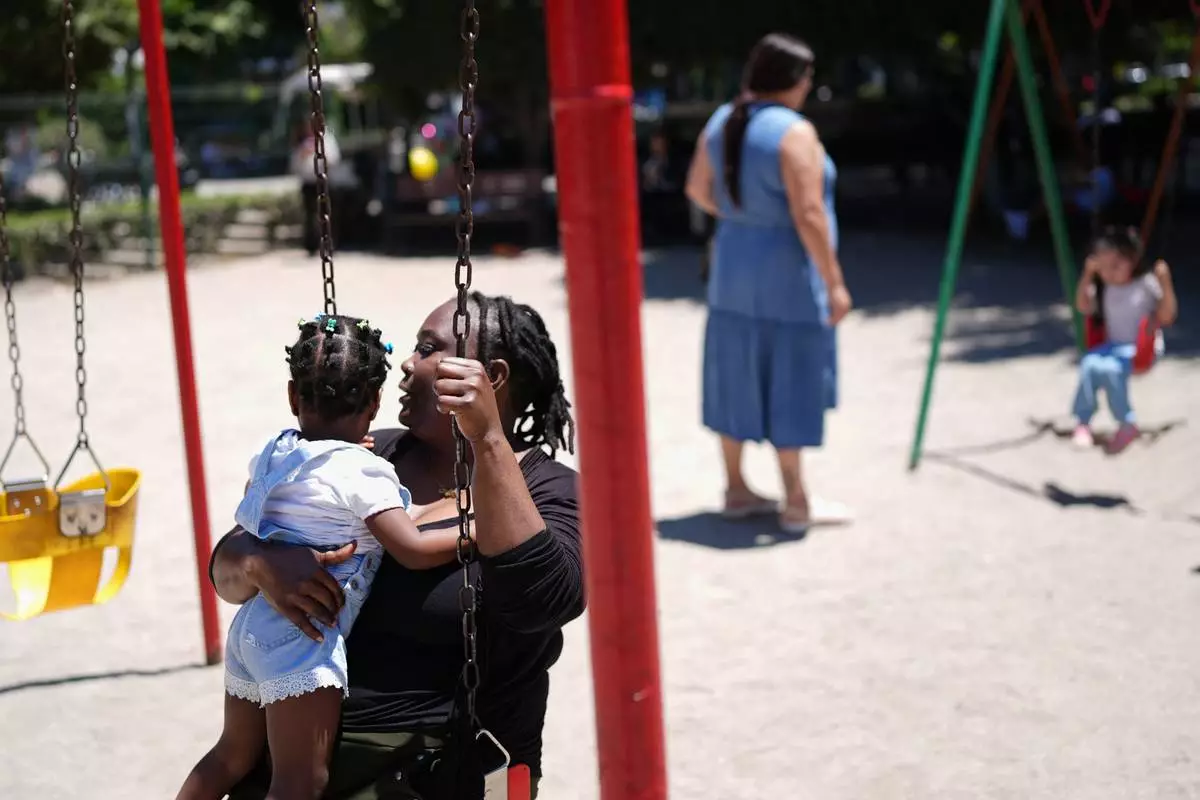
Vivianne Petit Frere holds her granddaughter Alexca as she swings with her at a playground, June 22, 2026, in Tijuana, Mexico. (AP Photo/Gregory Bull)
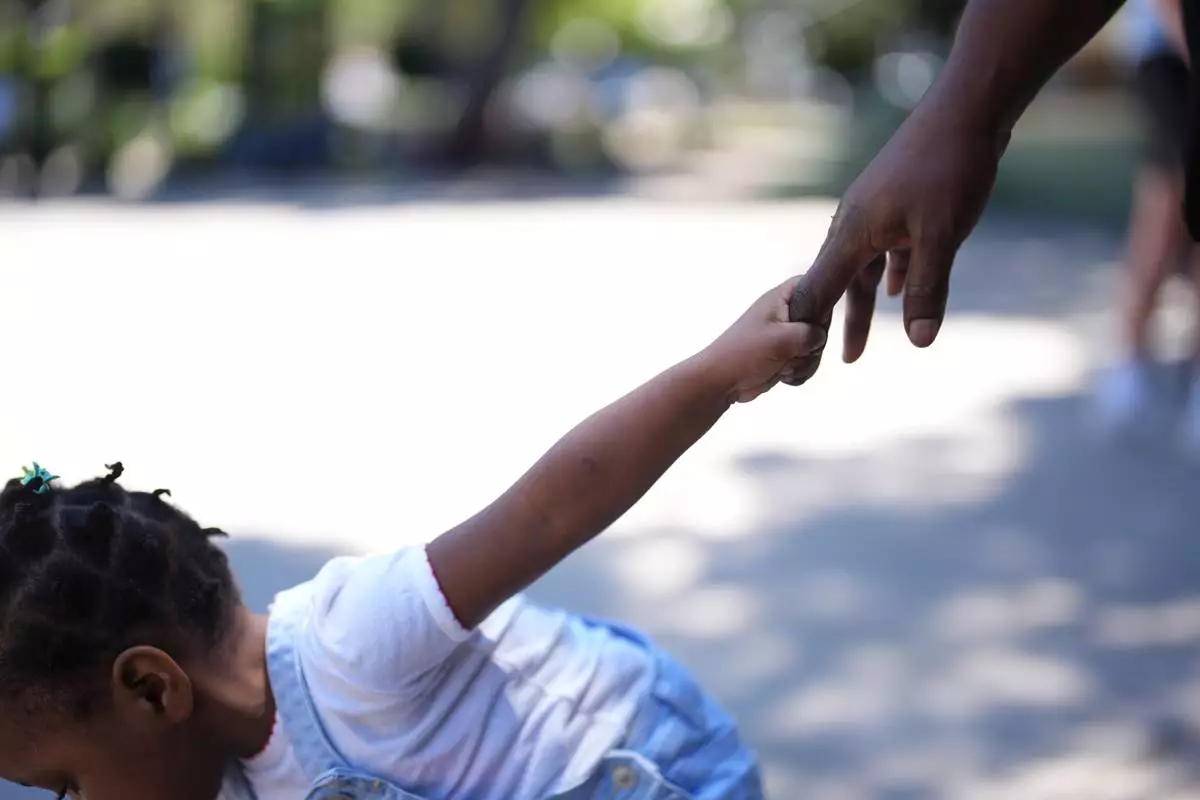
Vivianne Petit Frere holds the hand of her granddaughter Alexca at a park, June 22, 2026, in Tijuana, Mexico. (AP Photo/Gregory Bull)
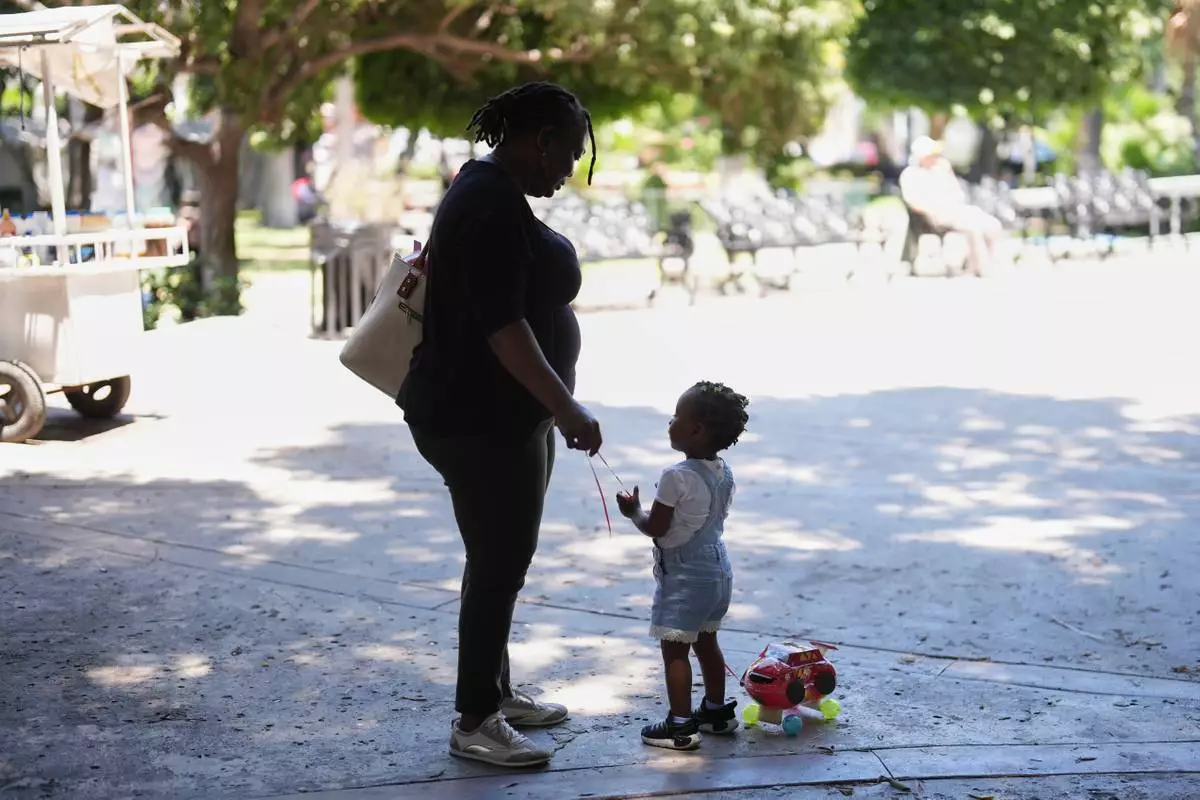
Vivianne Petit Frere talks with granddaughter Alexca at a park, June 22, 2026, in Tijuana, Mexico. (AP Photo/Gregory Bull)
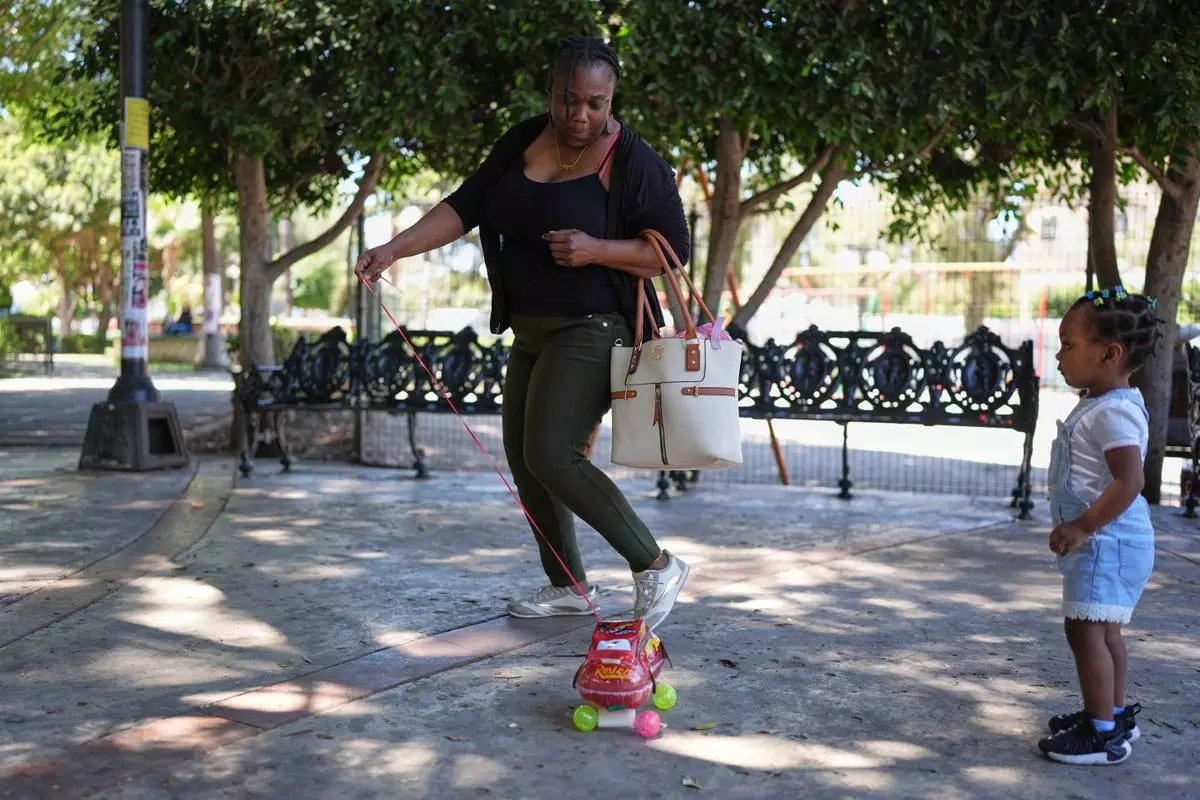
Vivianne Petit Frere plays with granddaughter Alexca at a park, June 22, 2026, in Tijuana, Mexico. (AP Photo/Gregory Bull)
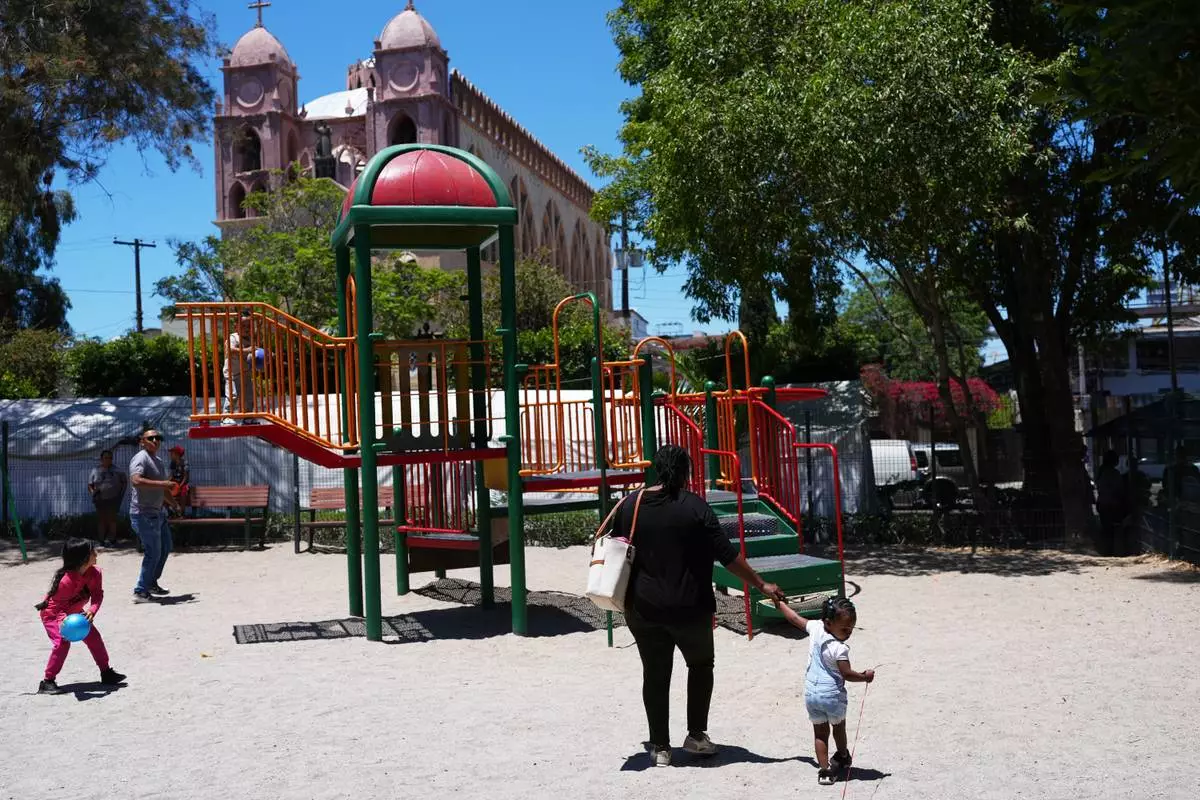
Vivianne Petit Frere walks with her granddaughter Alexca at a playground, June 22, 2026, in Tijuana, Mexico. (AP Photo/Gregory Bull)
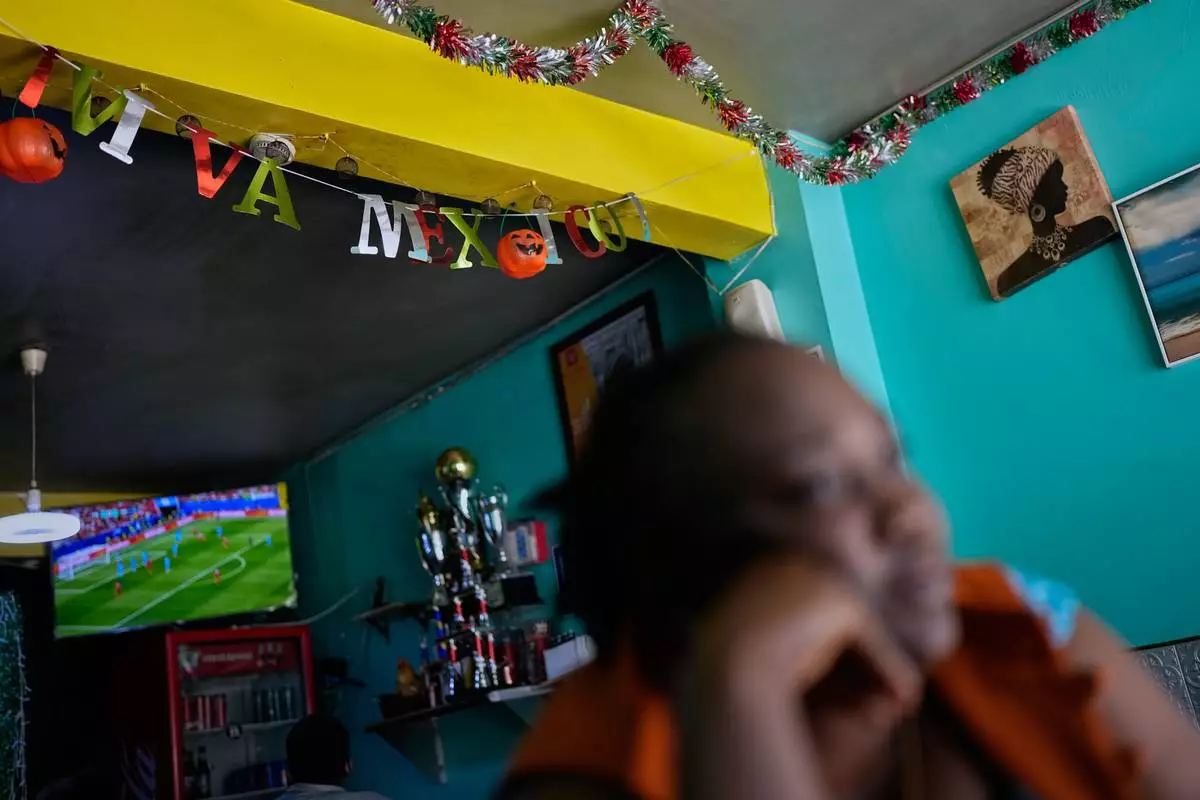
Vivianne Petit Frere looks on below a "viva Mexico" sign at her Haitian food restaurant, Lakou Lakay, June 17, 2026, in Tijuana, Mexico. (AP Photo/Gregory Bull)