PITTSBURGH--(BUSINESS WIRE)--Jun 24, 2026--
Carnegie Mellon University is leading a multi-university team that has secured an award of up to $39.3 million from the Advanced Research Projects Agency for Health (ARPA-H) to develop a wearable monitoring system to better identify fetal distress and its cause, enabling a safer labor and delivery experience for mothers and babies. The system, called OMEGA, or Optical, Mechanical, and Electrical Global Assessment of fetal hypoxia, aims to replace 50-year old, indirect, unreliable fetal heart rate monitoring technology with a unified, real-time assessment of fetal oxygen delivery and adaptive capacity. The project is under ARPA-H’s Making Obstetric Care Smart program, which is led by ARPA-H Program Manager Kate Arnold, M.D., MBA.
This press release features multimedia. View the full release here: https://www.businesswire.com/news/home/20260624524685/en/
The standard of care for determining whether a baby is in distress during labor and delivery, contraction and fetal heart rate monitoring, remains largely unchanged from the 1970s. While changes in a baby’s heart rate can indicate potential problems, they fail to provide critical information like whether a fetus is receiving enough oxygen. In the United States, Cesarean deliveries account for roughly one-third of all births, and many are performed out of concern for possible fetal distress. Without direct information about oxygen levels, clinical decision-making during labor often relies on incomplete data.
“When a fetus is suspected to be hypoxic, care teams may have to act quickly without knowing the underlying cause,” said Jana Kainerstorfer, Professor of Biomedical Engineering at Carnegie Mellon and Principal Investigator of OMEGA. “The ability to directly measure a lack of oxygen to the fetus, and identify the cause, will have significant implications for obstetric care by enabling safer deliveries for all.”
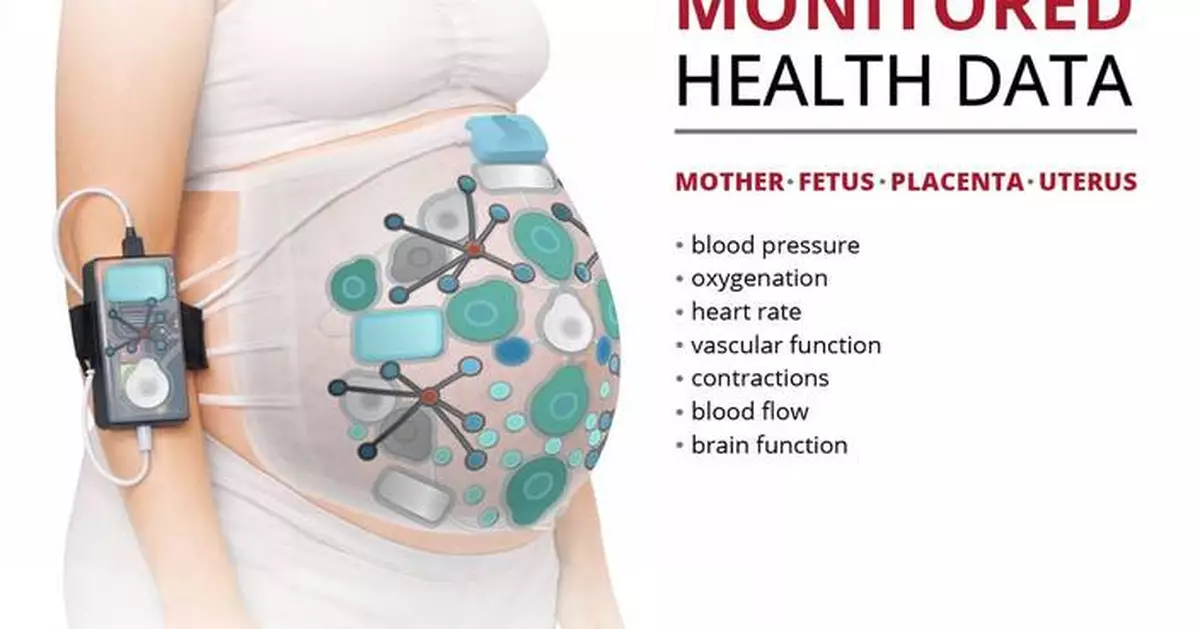
To pinpoint why fetal hypoxia occurs during labor, OMEGA is looking at the whole system, not just the fetus in isolation. OMEGA will integrate several noninvasive sensors to measure contributing factors from the mother, the placenta and uterus, and the fetus. This systems-level, mechanism-based solution aligns with the complexity of maternal-–fetal physiology, enabling clinicians to understand not only whether a fetus is distressed but why.
Although the application is new, the work fits closely with Kainerstorfer’s broader research in biomedical optics, which focuses on noninvasive ways to measure oxygenation and blood flow deep within tissue. Her lab has previously developed optical approaches for monitoring brain physiology and fetal health.
“At the core, I’m interested in how oxygen, and the lack of it, affects the brain at all stages of life,” concluded Kainerstorfer. “From a technology standpoint, the question is always the same, how do you measure physiology deep inside tissue you can’t directly access? Standard fetal monitoring has not fundamentally changed in decades. If we can provide clinicians with better information about fetal oxygenation, that would be a meaningful step forward for maternal and fetal care.”
The OMEGA project team is co-led by Tiffany Ko, PhD, a research scientist with Children’s Hospital of Philadelphia (CHOP)’s Resuscitation Science Center. The team of nine partner institutions also includes UPMC Magee Womens Hospital, University of Pittsburgh, University of Notre Dame, Washington University, St. Louis, University of Pennsylvania, the Institute of Photonic Sciences in Barcelona, Spain, and Tyndall National Institute in Cork, Ireland.
“This project is a chance to close the gap between what clinicians need – reliable, real-time clarity – and what current monitoring can provide,” said Ko. “Our team is focused on methods that are rigorous, interpretable, and built for the realities of the delivery room. We believe this work can directly improve outcomes for mothers and babies, and CHOP's commitment to children and families makes that mission deeply meaningful to us.”
The United States has the highest rate of maternal and infant morbidity and mortality of any wealthy country, despite spending more per capita on maternal care. The World Health Organization reports that C-section rates greater than 15% do not decrease mortality. If proven effective, OMEGA’s innovative approach could potentially reduce the C-section rate in the U.S., improve maternal and fetal health outcomes, and save millions of dollars in health care costs and hospital litigation.
"Pregnancy is a natural physiological process, and, also, medically speaking it represents a significant stressor to the mother and fetus," said Hyagriv Simhan, MD, OB/GYN and Executive Vice Chair, Obstetrical Services at UPMC Magee-Womens Hospital and Professor of Ob/Gyn/RS [AH2] at the University of Pittsburgh. "Clinicians often have to make difficult decisions with incomplete and unreliable data during childbirth. Partnering with Carnegie Mellon University and other institutions around the world on project OMEGA is a promising step toward technology and AI insights that will revolutionize the labor and delivery room and make pregnancy safer for mothers and babies.”
About the College of Engineering: The College of Engineering at Carnegie Mellon University is a top-ranked engineering college that is known for our intentional focus on cross-disciplinary collaboration in research. The College is well-known for working on problems of both scientific and practical importance. Our “maker” culture is ingrained in all that we do, leading to novel approaches and transformative results. Our acclaimed faculty have a focus on innovation management and engineering to yield transformative results that will drive the intellectual and economic vitality of our community, nation, and world. The project is supported by the Engineering Research Accelerator.
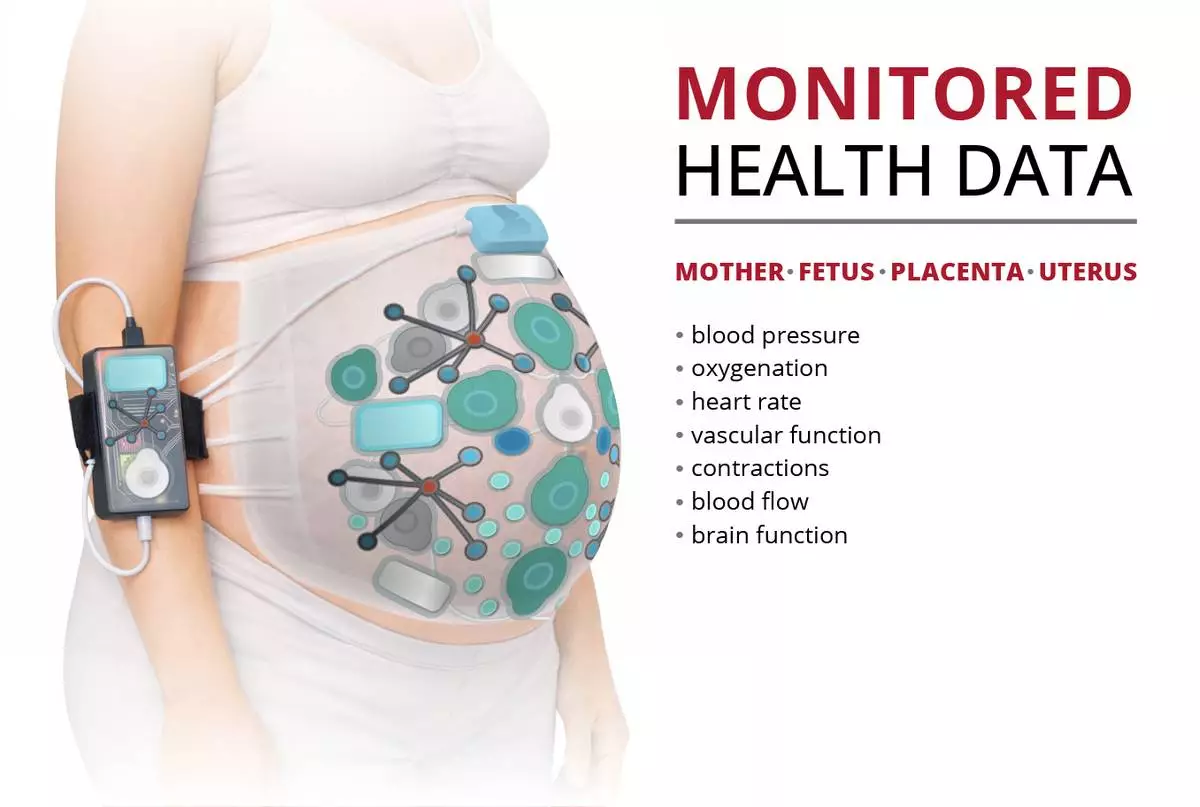
Carnegie Mellon University is leading a multi-university team that has secured an award of up to $39.3 million from the Advanced Research Projects Agency for Health (ARPA-H) to develop a wearable monitoring system to better identify fetal distress and its cause, enabling a safer labor and delivery experience for mothers and babies.
LONDON (AP) — Large parts of western Europe were baking Wednesday as a “heat dome” brought extreme conditions that many forecasters warned could present a risk to life.
A day after France recorded its hottest-ever day, the U.K. was set to see its highest ever June temperature, prompting the national weather forecaster to issue a "red heat health” alert for much of central and southern England, as well as Wales.
This is only the second such warning ever issued by U.K. authorities following July 2022, when temperatures exceeded 40 degrees C (104 F) for the first time ever. The temperature is set to fall short of 40 degrees C on Wednesday but could breach that level — not long ago considered as unimaginable — on Thursday.
“Red warnings are reserved for the most severe events and we’re expecting severe and significant impacts from this heat wave, with health impacts likely for many, even beyond those who are normally more vulnerable to the heat,” said Mark Sidaway, deputy chief forecaster for the U.K. Met Office.
Authorities in France, Italy and Spain have also issued warnings about the risks of extreme heat for tens of millions of people.
Records are being broken across Europe, seemingly every year, and authorities are struggling to adapt their societies to the realities of the new heat environment. Many of the buildings, work places and transport networks just aren’t fit for purpose as human-caused climate change leads to increasingly extreme weather. U.N. climate agency projections say the next five years are likely to shatter more heat records.
“Heatwaves are becoming more frequent, longer and hotter with climate change, as a direct result of the fossil fuels we are releasing as a society,” said Hayley Fowler, a professor at the Centre for Climate and Environmental Resilience at Newcastle University in the northeast of England. “We can expect to have to cope with more and more of these types of events in the years to come.”
France has borne much of the brunt of the current heatwave. On Tuesday, the average of temperatures measured at 30 weather stations was 29.8 C (85.6 F), the latest in a series of never-before-registered highs heaped on Europe’s largest country.
Unsurprisingly, many of the country's major attractions, including the Eiffel Tower and the Louvre museum in Paris have restricted visiting hours while schools and transportation schedules were upended.
Some schools in England have also closed due to the heat and many train services have been canceled, with passengers urged to avoid nonessential travel in areas covered by the red warning.
Network Rail, which operates Britain’s railroad network, warned of “significant disruption” across England and Wales as it imposes speed restrictions to minimize the risk from heat-related issues such as buckled tracks and sagging overhead electric wires.
Eurostar, which connects the U.K. to continental Europe under the English Channel, said it canceled four trains planned between London and Paris on Wednesday and Thursday “due to expected adverse weather."
Italy’s Health Ministry issued “red alerts” for 16 cities on Wednesday with major cities such as Rome, Milan, Florence and Turin affected. The “bollino rosso” red alert signals emergency conditions that can affect not only vulnerable people but also healthy adults.
Temperatures could reach highs of 41 C (105 F) in Florence and 38 C (104 F) in Milan, while Rome and Naples are forecast to remain below 36 C (96.8 F).
Italy has been roasting in high temperatures for days. Fashion journalists sweated through runway shows in Milan’s fashion capital earlier this week. Many fashionistas who were on hand to see the menswear offerings for Spring-Summer 2027 snapped up battery operated fans with misters in subway kiosks.
One designer, Philipp Plein, had to change his venue just four hours before the show due to an air conditioning malfunction, while others provided hand-held fans, misters and even big umbrellas as protection against the sun and heat for outdoor shows.
Designers broadly agreed that a well-dressed man still wears a suit. The challenge was how to survive the heat. The response was ventilation, with dress shirts left unbuttoned or, in some cases, simply done away with.
Even the British decided it was too hot for unneeded layers of clothing. Male journalists covering the U.K.'s tradition-bound Parliament will be allowed to remove their jackets in the press gallery of the House of Commons on Wednesday.
Britain’s heat advisory remains in effect through Thursday, with overnight temperatures remaining well above average.
“If you think it’s hot already, well, we ain’t seen nothing yet,” Met Office meteorologist Alex Burkill said on Wednesday morning.
One remedy being touted comes via soccer's World Cup, which is currently taking place in the U.S., Canada and Mexico. The European Trade Union Confederation said employers should take inspiration from the cooling breaks used at the World Cup to grant all workers paid breaks and help keep them safe during heat waves.
“Builders, fruit pickers, or bus drivers need much longer than three minutes to recover, but it is a good example of how work can be adapted to a changing climate," said ETUC General Secretary Esther Lynch.
“Taking a break in high temperatures is a common-sense precaution, but too many employers are refusing to put these and other necessary measures in place or even discuss them with trade unions, leading to a rising number of avoidable deaths in European workplaces,” she added.
Jill Lawless in London, Colleen Barry in Milan, Samuel Petrequin in Paris and Giada Zampano in Rome contributed.
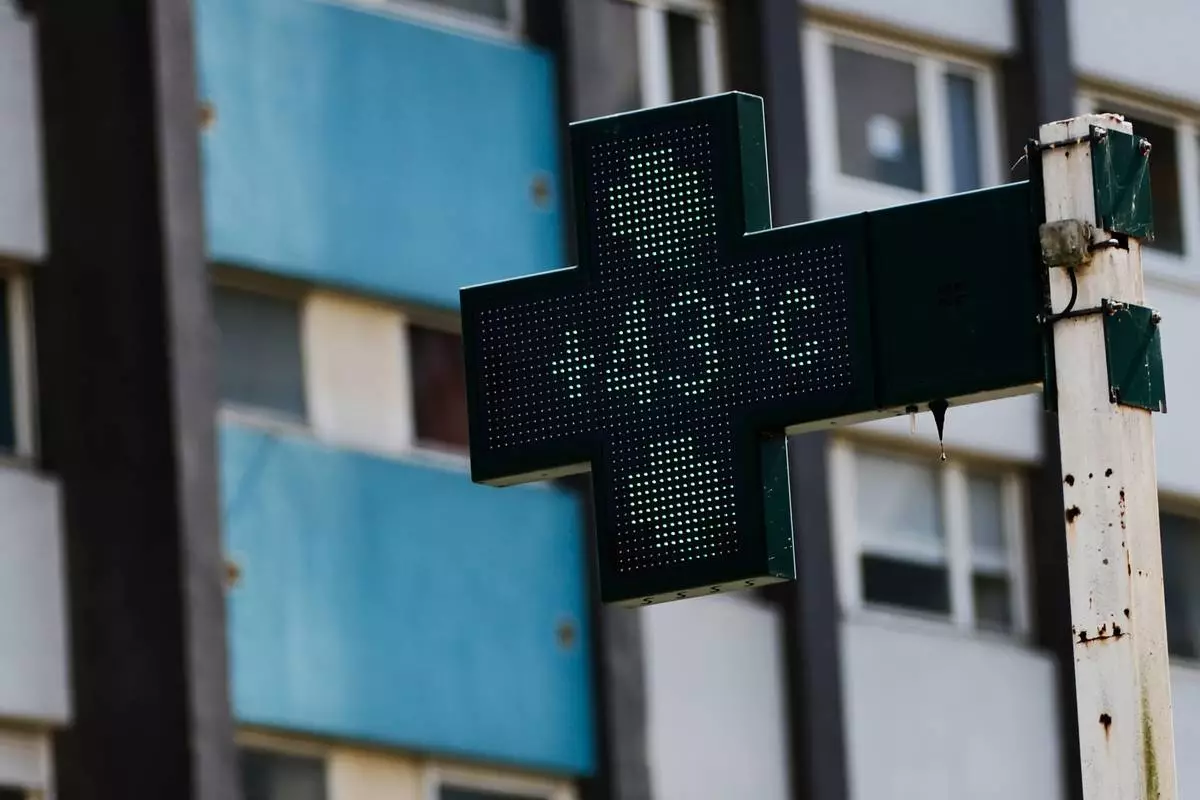
A drugstore sign shows the temperature 43 degrees Celsius (109,4 degrees Fahrenheit) in Rennes, western France, Monday, June 22, 2026. (AP Photo/Jeremias Gonzalez)

Parisians bath in the Canal Saint-Martin in Paris, as the national weather service, Meteo France, placed 54 departments, about half the country, under a red heat wave alert, Tuesday, June 23, 2026. (AP Photo/Christophe Ena )

A man runs over a bridge in Frankfurt, Germany, Wednesday, June 24, 2026. (AP Photo/Michael Probst)

Faithful shelter for the hot sun as they wait for Pope Leo's XIV weekly general audience in St. Peter's Square at The Vatican, Wednesday, June 24, 2026. (AP Photo/Alessandra Tarantino)

A faithful cools off as they wait for Pope Leo's XIV weekly general audience in St. Peter's Square at The Vatican, Wednesday, June 24, 2026. (AP Photo/Alessandra Tarantino)