Many American companies are continuing to expand presence and investment in China, confident in the country's market potential, complete supply chains, and innovation capacity.
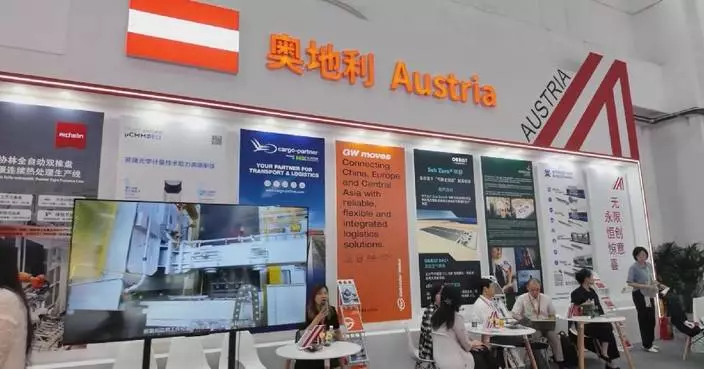
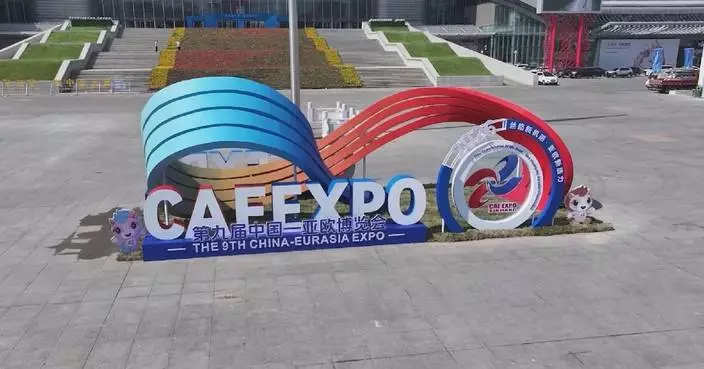
At the ongoing Fourth China International Supply Chain Expo (CISCE) in Beijing, U.S. companies and institutions have remained the largest group of foreign exhibitors for the fourth consecutive year.
Among them, U.S. coffee giant Starbucks is working with farmers to ensure complete supply chain sustainability.
Guo Yixuan, barista with Starbucks China, introduced to visitors at the expo a special rose latte, featuring a handcrafted floral extract naturally pressed from 20 double-petal roses sourced from Pingyin, east China's Shandong Province.
"This drink was launched last year, but due to its high praise, it sold out in less than a week. This year, we heard the voice of our customers and connected with flower farmers. We pick nearly 600 million roses from them every year and extract rose dew, and connect with about 2,400 flower farmers in the chain," she said.
China's higher-level opening-up gives American companies access to a fair and competitive market environment, but that is not the only attraction of the Chinese market.
U.S. fast-food chain McDonald's has set out an ambitious plan, aiming to expand to 10,000 outlets in China by 2028.
"We adhere to long-term development and mutual benefit with our supplier partners. Today, McDonald's has been operating in China for 40 years, with over 50 percent of our partners having worked with us for more than 10 years, and over 10 percent of our partners having worked with us for more than 30 years," said Shi Yun, chief supply chain officer at McDonald's China.
China's complete and full-equipped supply chains secure U.S. firms' confidence here.
A U.S.-China Business Council survey in June noted about 95 percent of respondents from U.S. companies consider China very important for them to stay globally competitive.
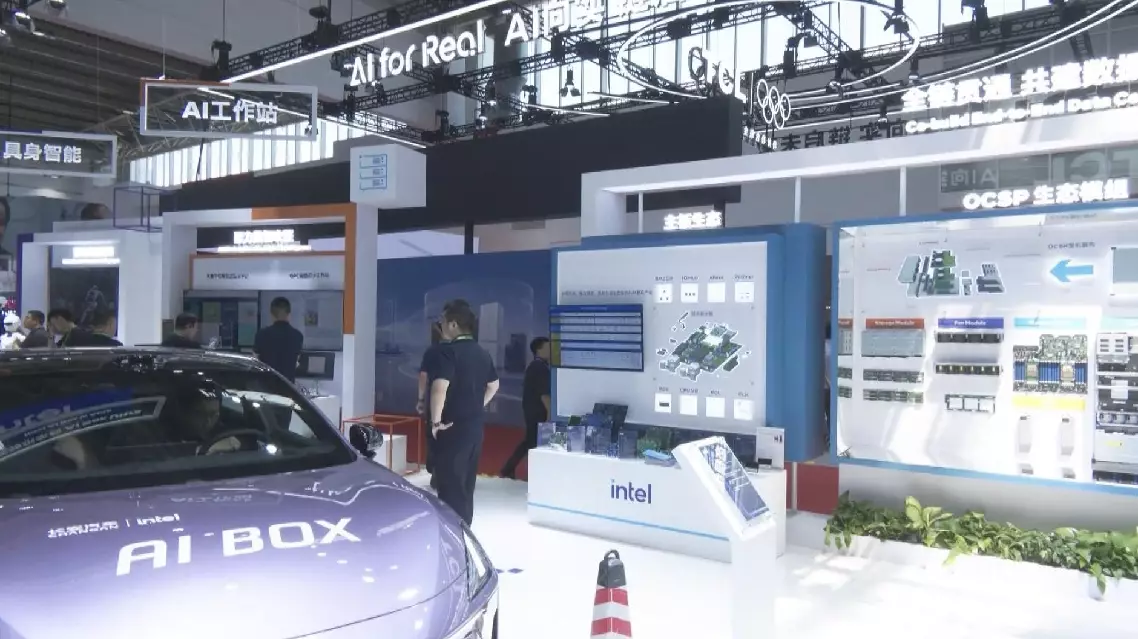
"I think there's a lot of dynamism and a lot of innovation happening in China. If you look at our partners on the wall, we have a lot of collaboration with them, bringing new programs, new products to the market that help everyday citizens. So whether it's our AI home in the box or whether it's this fabulous car, we're really trying to address the needs of everyday citizens. Again, working with our partners to bring new applications, new products to the market," said Sarah Kemp, vice president of U.S. tech company Intel.
A growing number of U.S. companies have expanded AI-driven investment strategies in China, reflecting not only the broader shift toward AI adoption, but also the increasing importance of the Chinese market.
The fourth China International Supply Chain Expo, running from June 22 to 26, has brought together 676 companies and institutions from home and abroad.
U.S. companies double down on China to build win-win supply chain