Skip to Content Facebook Feature Image

US says chemical maker Chemours to pay $450M to settle 'forever chemicals' case

News

US says chemical maker Chemours to pay $450M to settle 'forever chemicals' case
News

News

US says chemical maker Chemours to pay $450M to settle 'forever chemicals' case

2026-06-25 00:02 Last Updated At:00:10

WASHINGTON (AP) — The Trump administration on Wednesday reached a multi-state settlement with chemical giant Chemours Co. over years-long, illegal discharges of synthetic “forever chemicals” used to make products resistant to water, grease and stains. The settlement is the first by the federal government to resolve enforcement claims against a manufacturer of harmful chemicals known as PFAS.

Under the agreement, filed in federal court in West Virginia, Chemours will pay a civil penalty of $22.5 million for alleged violations and spend $90 million over 15 years to mitigate PFAS discharges in three states: West Virginia, North Carolina and New Jersey.

More Images
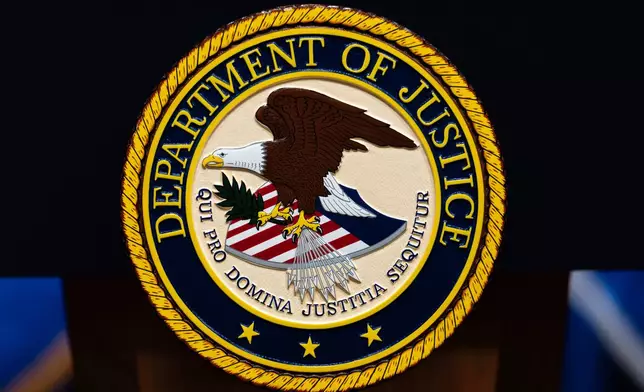
FILE - The U.S. Department of Justice logo is seen on a podium before a news conference, May 4, 2026, in Washington. (AP Photo/Julia Demaree Nikhinson, File)
FILE - The U.S. Department of Justice logo is seen on a podium before a news conference, May 4, 2026, in Washington. (AP Photo/Julia Demaree Nikhinson, File)

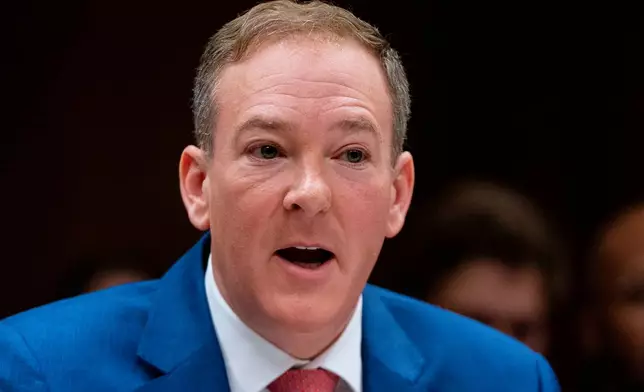
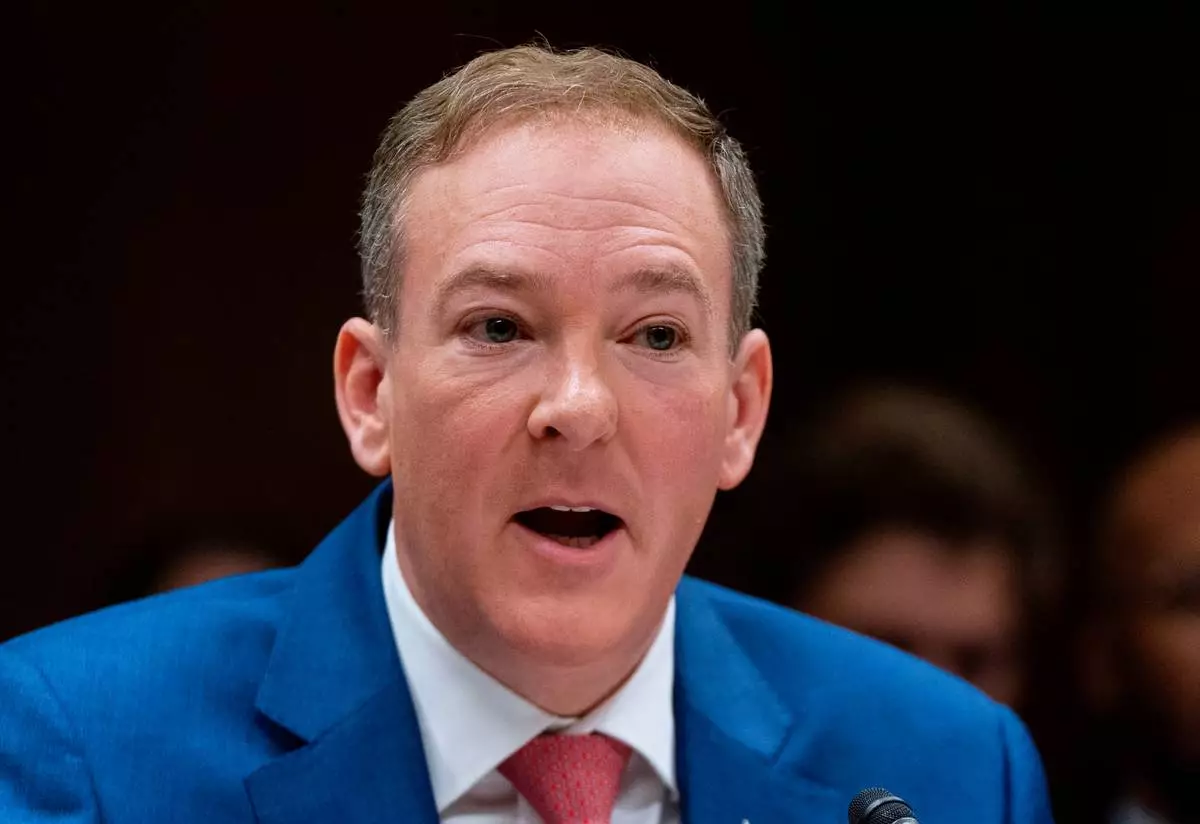
FILE - Environmental Protection Agency administrator Lee Zeldin, testifies to the Senate Appropriations subcommittee on Interior, Environment and related agencies, on Capitol Hill, May 13, 2026, in Washington. (AP Photo/Manuel Balce Ceneta, File)
FILE - Environmental Protection Agency administrator Lee Zeldin, testifies to the Senate Appropriations subcommittee on Interior, Environment and related agencies, on Capitol Hill, May 13, 2026, in Washington. (AP Photo/Manuel Balce Ceneta, File)

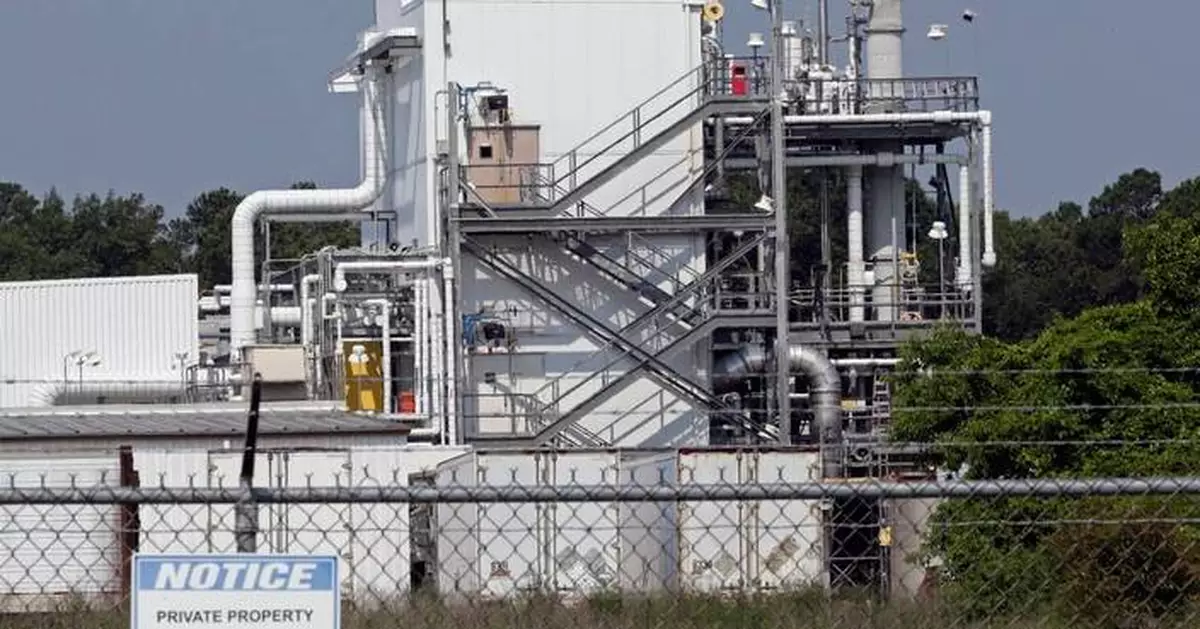
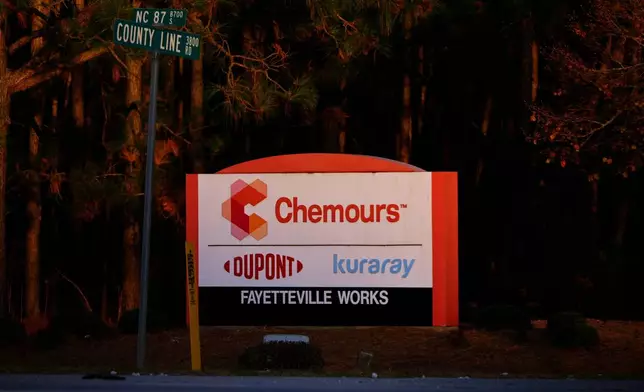
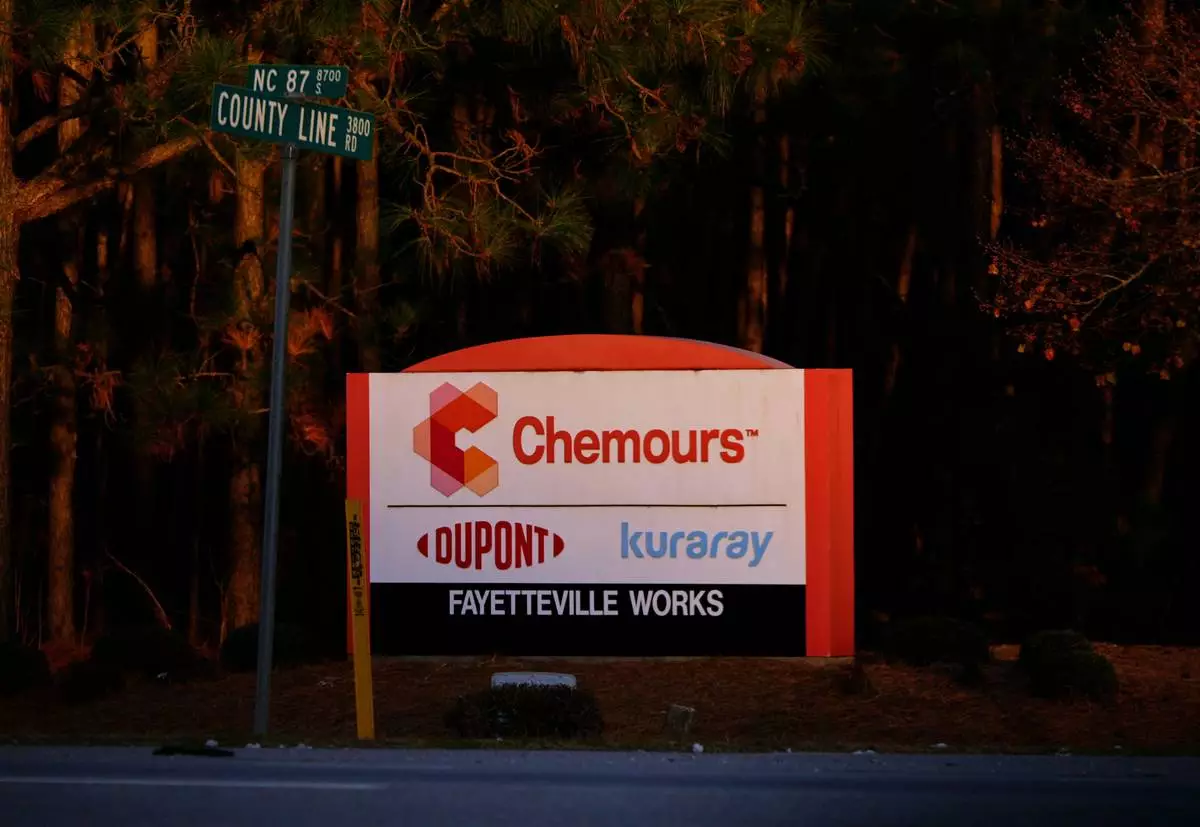
FILE - A sign is displayed at the entrance of Chemours Company, Fayetteville Works in White Oak, N.C., Dec. 9, 2025. (AP Photo/Carolyn Kaster, File)
FILE - A sign is displayed at the entrance of Chemours Company, Fayetteville Works in White Oak, N.C., Dec. 9, 2025. (AP Photo/Carolyn Kaster, File)

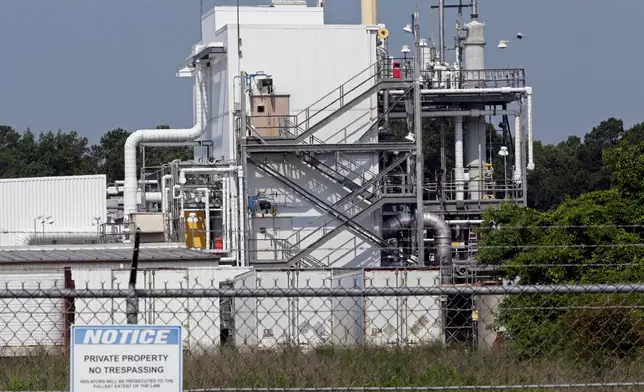
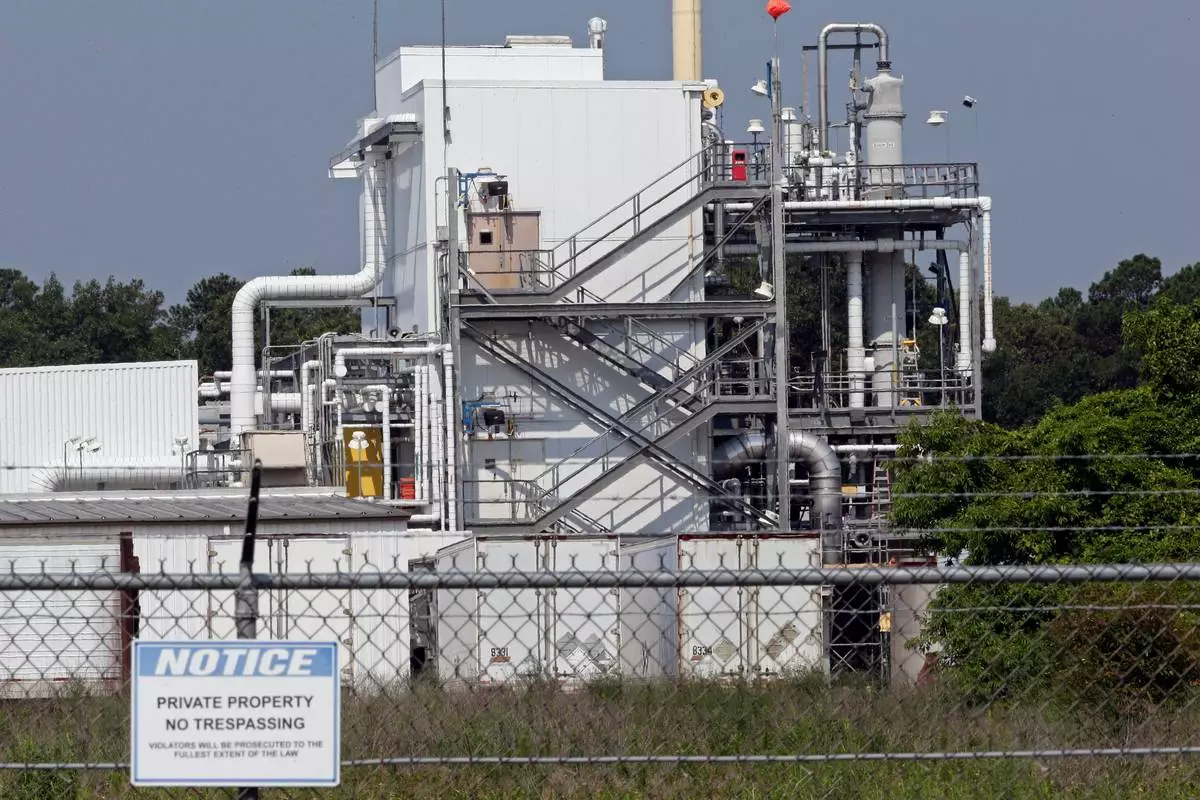
FILE - The Chemours Company's PPA facility at the Fayetteville Works plant near Fayetteville, N.C., June 15, 2018. (AP Photo/Gerry Broome, File)

FILE - The Chemours Company's PPA facility at the Fayetteville Works plant near Fayetteville, N.C., June 15, 2018. (AP Photo/Gerry Broome, File)

Chemours, a spin-off of chemical maker DuPont, also agreed to install PFAS pollution controls for and surface water discharges and air emissions at a West Virginia facility at an estimated cost of $60 million, supply clean drinking water to communities near its West Virginia and New Jersey sites at an estimated cost of $280 million; and implement controls to reduce releases of PFAS and other toxic chemicals from its facility in North Carolina, based on a pending independent assessment.

Combined, the penalties and relief programs are estimated to cost at least $450 million, the Justice Department said.

The settlement allows Chemours to continue manufacturing PFAS for commercial and military applications while preventing future contamination and protecting communities from existing pollution, said Adam Gustafson, principal deputy assistant Attorney General for the Environment and Natural Resources Division.

“The Trump administration recognizes the important role of Chemours for it commercial and military obligations,'' Gustafson said in an interview. “The settlement protects public health while preserving that important balance.”

The settlement against a major PFAS manufacturer “delivers on the Trump administration’s promise to make polluters pay and stop PFAS contamination at the source,” said Jeffrey Hall, assistant EPA administrator for enforcement and compliance assurance.

The agreement will greatly reduce PFAS contamination of water, land and air and even begin to mitigate past harm, Hall said. “This settlement brings Chemours into compliance with the law and holds it fully accountable,” he said.

In a statement Wednesday, Chemours said it has already begun planning and implementing operational improvements at its facilities and will take steps to mitigate future emissions and enhance existing programs.

"This settlement provides Chemours with greater clarity on future compliance requirements and actions to support long-term responsible manufacturing,'' spokeswoman Jess Loizeaux said.

The settlement comes as the Trump administration is expected to propose softening Biden-era limits on “forever chemicals” in drinking water, while delaying but keeping tough standards for two common types of the substance.

The proposal will start the formal process of rolling back parts of the first-ever limits on PFAS in drinking water finalized during former President Joe Biden’s administration. Officials at the time found they increased the risk of cardiovascular disease, certain cancers and babies being born with low birth weight.

The agency is committed to addressing Per- and Polyfluoroalkyl substances (PFAS) in drinking water while following the law and ensuring that regulatory compliance is achievable for drinking water systems, EPA Administrator Lee Zeldin said.

The settlement determined that facilities Chemours operates in the three states have discharged PFAS into the Ohio River, Cape Fear River and Delaware River, respectively, in violation of permits required by the Clean Water Act and state laws. Chemours also violated legal requirements under the federal Toxic Substances Control Act at all three facilities.

As a result of the alleged violations, people living near the facilities were exposed to illegal PFAS, officials said. PFAS are widely used and found around the world, with scientific studies showing that exposure to some PFAS in the environment may be linked to harmful health effects in humans and animals.

The violations continued for over a decade, the Justice Department said. The facilities were previously owned for many decades by DuPont. The settlement announced Wednesday does not resolve DuPont’s liability for past PFAS violations, officials said.

A federal judge last year ordered Chemours to stop discharging unlawful levels of cancer-causing chemicals into the Ohio River from the company’s Washington Works plant in West Virginia. The pollutants endanger the environment, aquatic life and human health, U.S. District Judge Joseph Goodwin wrote in the August 2025 order.

The West Virginia Rivers Coalition had asked Goodwin to require the company to immediately comply with its permit limits after violating them for more than five years.

DuPont, Chemours and another company, Corteva, agreed to pay New Jersey up to $2 billion last year to settle environmental claims stemming from PFAS. The federal settlement does not affect the state case.

North Carolina Attorney General Jeff Jackson called the settlement “an insult to the people of eastern North Carolina.”

His state is “ground zero for GenX contamination, but this deal does practically nothing to clean up our water,” said Jackson, a Democrat. GenX is a trade name for a synthetic chemical developed as an alternative to PFAS but which has raised significant health and environmental concerns in its own right.

“Chemours made this mess, and Chemours should clean it up," Jackson said in a statement.

The federal consent decree calls for 14 specific treatment systems to reduce PFAS in wastewater, stormwater and groundwater from the West Virginia plant. Chemours will test drinking water near the West Virginia and New Jersey sites and provide treated or alternative clean water.
FILE - The U.S. Department of Justice logo is seen on a podium before a news conference, May 4, 2026, in Washington. (AP Photo/Julia Demaree Nikhinson, File)
FILE - The U.S. Department of Justice logo is seen on a podium before a news conference, May 4, 2026, in Washington. (AP Photo/Julia Demaree Nikhinson, File)

FILE - Environmental Protection Agency administrator Lee Zeldin, testifies to the Senate Appropriations subcommittee on Interior, Environment and related agencies, on Capitol Hill, May 13, 2026, in Washington. (AP Photo/Manuel Balce Ceneta, File)
FILE - Environmental Protection Agency administrator Lee Zeldin, testifies to the Senate Appropriations subcommittee on Interior, Environment and related agencies, on Capitol Hill, May 13, 2026, in Washington. (AP Photo/Manuel Balce Ceneta, File)

FILE - A sign is displayed at the entrance of Chemours Company, Fayetteville Works in White Oak, N.C., Dec. 9, 2025. (AP Photo/Carolyn Kaster, File)
FILE - A sign is displayed at the entrance of Chemours Company, Fayetteville Works in White Oak, N.C., Dec. 9, 2025. (AP Photo/Carolyn Kaster, File)

FILE - The Chemours Company's PPA facility at the Fayetteville Works plant near Fayetteville, N.C., June 15, 2018. (AP Photo/Gerry Broome, File)

FILE - The Chemours Company's PPA facility at the Fayetteville Works plant near Fayetteville, N.C., June 15, 2018. (AP Photo/Gerry Broome, File)
NEW YORK (AP) — Stocks rose on Wall Street Wednesday as falling bond yields and lower oil prices helped ease pressure on the market.

The S&P 500 climbed 0.6%. The Dow Jones Industrial Average added 486 points, or 0.9%, as of 11:58 a.m. Eastern. The Nasdaq composite rose 0.7%.

Technology stocks were gaining ground after two days of losses that weighed on the market. That helped push indexes higher as gains broadened out to other sectors, including retailers and industrial companies.

Apple rose 1.7%, Amazon jumped 3.3% and Caterpillar rose 1.8%.

Nvidia rose 0.5% following a 4.1% drop on Tuesday. Micron Technology, which reports its latest results later Wednesday, fell 0.8% following its 13.2% plunge on Tuesday.

Google's parent company Alphabet rose 1.2%. The company is replacing Verizon in the Dow on Monday. Alphabet will become the fifth Magnificent 7 company to join the index. The others are Apple, Amazon, Microsoft and Nvidia.

Big Tech companies, especially those focused on artificial intelligence, have pricey values that give them more sway over the market's broader direction. That was the case on Tuesday when sharp losses for a few valuable tech companies pulled the market lower.

Oil prices continued slipping as the U.S. and Iran negotiate a possible end to their war. Brent crude, the international standard, fell 3.6% to $74 a barrel. It has been trading below $80 in recent days but is still above the roughly $70 per barrel it was trading at in late February before the war began. U.S. crude prices fell 3.9% to $70.37 a barrel.

Oil companies lagged the market. Exxon Mobil fell 2.8% and Chevron lost 2.9%.

Some of the bigger winners on Wall Street included homebuilders following approval of legislation beneficial to the industry. KB Home surged 16.8% and D.R. Horton jumped 7.3%.

Treasury yields mostly fell, removing more pressure from stocks. The yield on the 10-year Treasury fell to 4.40% from 4.50% late Tuesday. The yield on the 2-year Treasury eased to 4.15% from 4.16%.

Treasury yields are still elevated from earlier in the year, especially the 2-year Treasury, which more closely tracks anticipated action from the Federal Reserve. The central bank has signaled that it is considering raising its benchmark interest rate by the end of the year. Wall Street is forecasting at least one hike to interest rates by December, according to data from CME Group.

The Fed is worried about stubborn inflation, which had been rising throughout the year as tariffs raised the costs for a wide range of goods. A shock to energy prices because of the U.S. war with Iran worsened inflation. Gasoline prices surged and shipping costs rose. The impact is expected to linger even as oil and gasoline prices fall.

The central bank will get a fresh update on inflation Thursday, when its preferred measure for prices is released. Economists expect the Personal Consumption Expenditures price index, or PCE, to show that prices rose 4.1% in May. That would be the highest level in three years.

“Thursday’s PCE is set to take on greater importance for markets, especially since Federal Reserve Chair (Kevin) Warsh was emphatic in last week’s meeting about the central bank’s desire to achieve price stability,” wrote Rick Gardner, chief investment officer at RGA Investments, in a research note.

Gold prices fell 2.9%, and at one point slipped below $4,000 an ounce. Gold was above $5,000 an ounce earlier in the year. The precious metal is often seen as a barometer of the appetite for risk among investors, with more buying at times of increased anxiety and more selling as anxiety eases.

Markets were mixed in Europe and Asia.

AP Business Writers Chan Ho-him and Matt Ott contributed to this report.

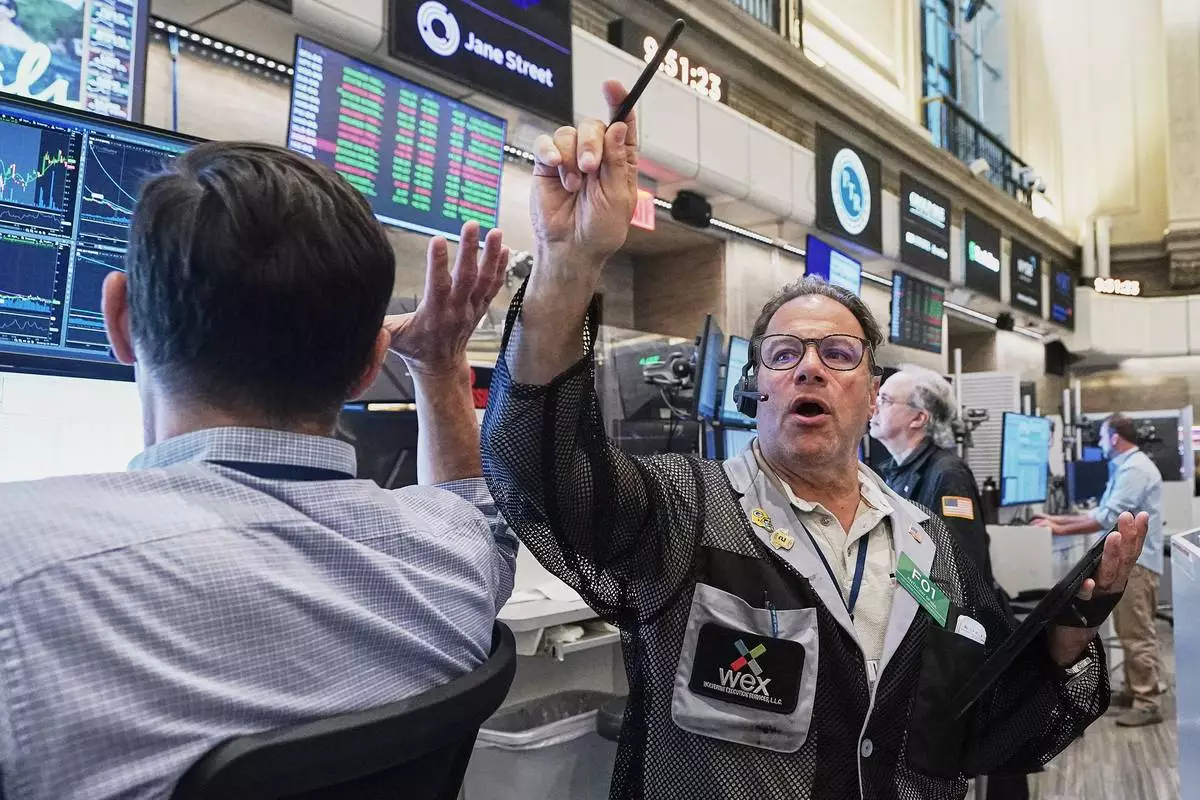
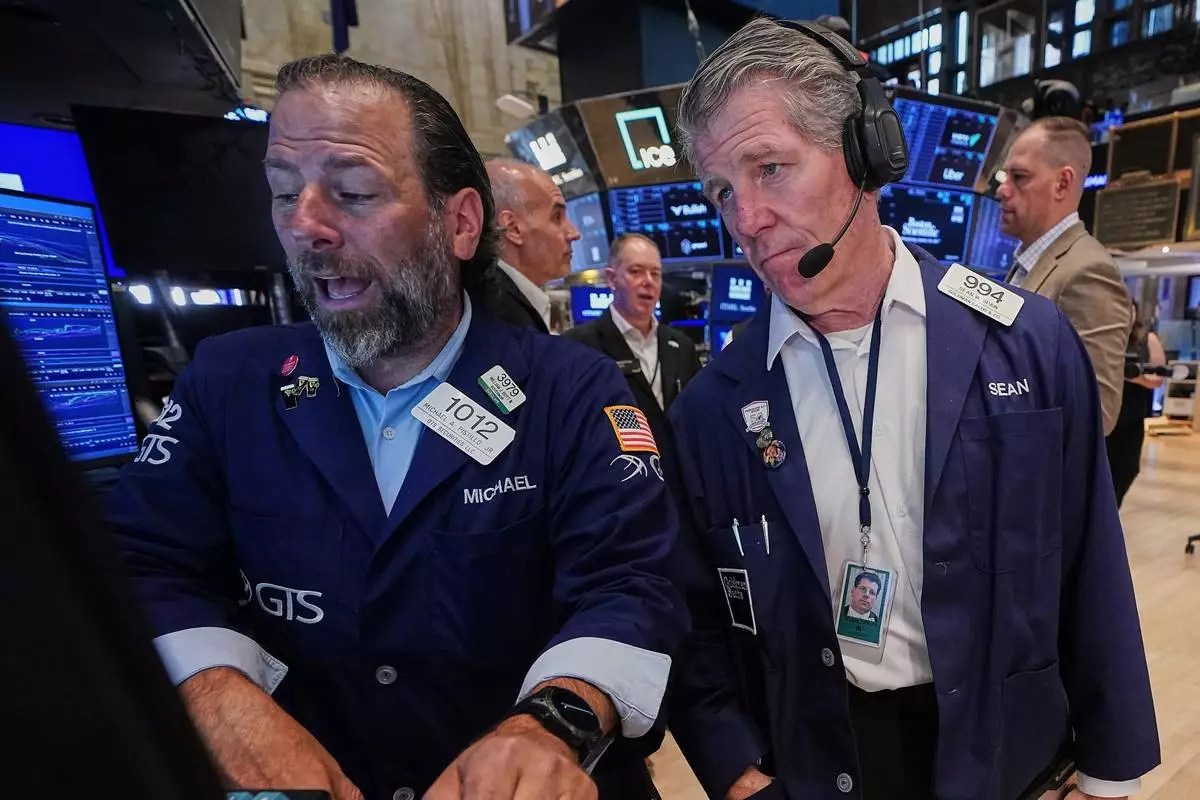
Specialist Michael Pistillo, left, and trader Sean Spain work on the floor of the New York Stock Exchange, Tuesday, June 16, 2026. (AP Photo/Richard Drew)

Specialist Michael Pistillo, left, and trader Sean Spain work on the floor of the New York Stock Exchange, Tuesday, June 16, 2026. (AP Photo/Richard Drew)

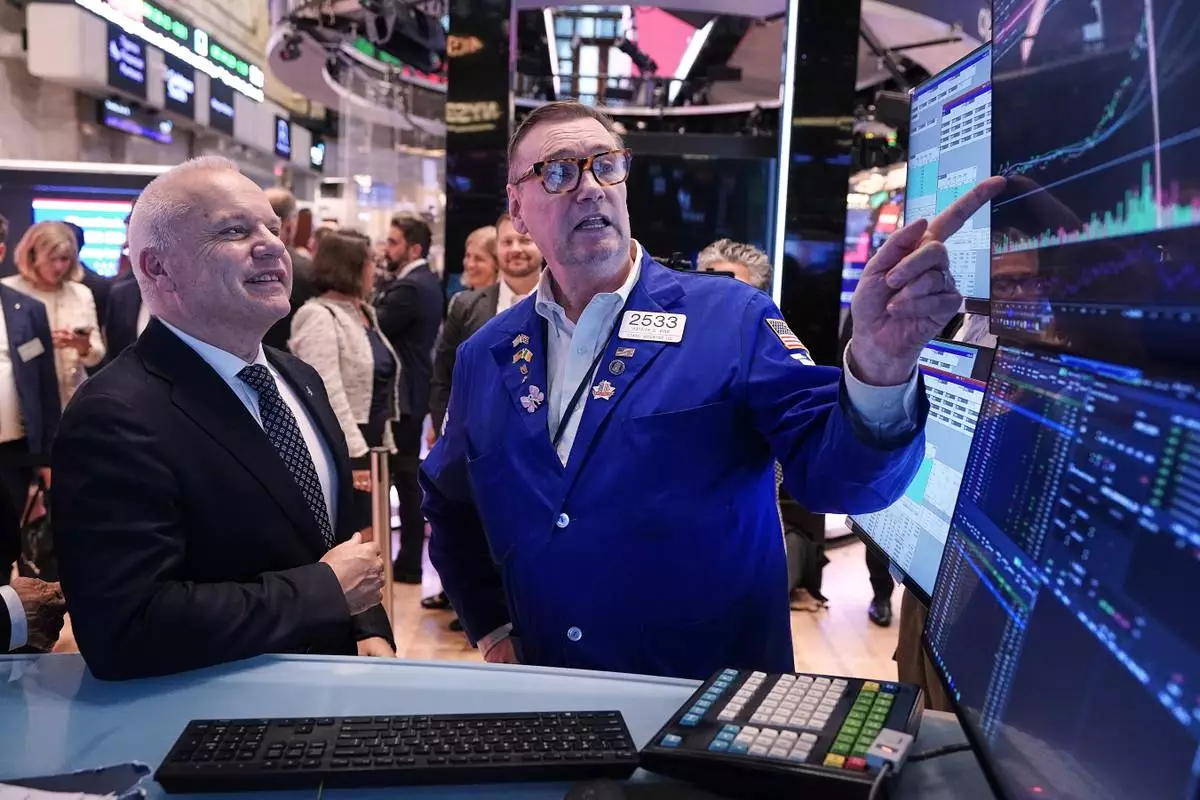
Anders Opedal, President and CEO of Norway's Equinor, left, meets with specialist Patrick King on the floor of the New York Stock Exchange, after he rang the closing bell, Tuesday, June 16, 2026. (AP Photo/Richard Drew)

Anders Opedal, President and CEO of Norway's Equinor, left, meets with specialist Patrick King on the floor of the New York Stock Exchange, after he rang the closing bell, Tuesday, June 16, 2026. (AP Photo/Richard Drew)

Options trader Anthony Spina, center, works on the floor of the New York Stock Exchange, Tuesday, June 16, 2026. (AP Photo/Richard Drew)

Options trader Anthony Spina, center, works on the floor of the New York Stock Exchange, Tuesday, June 16, 2026. (AP Photo/Richard Drew)

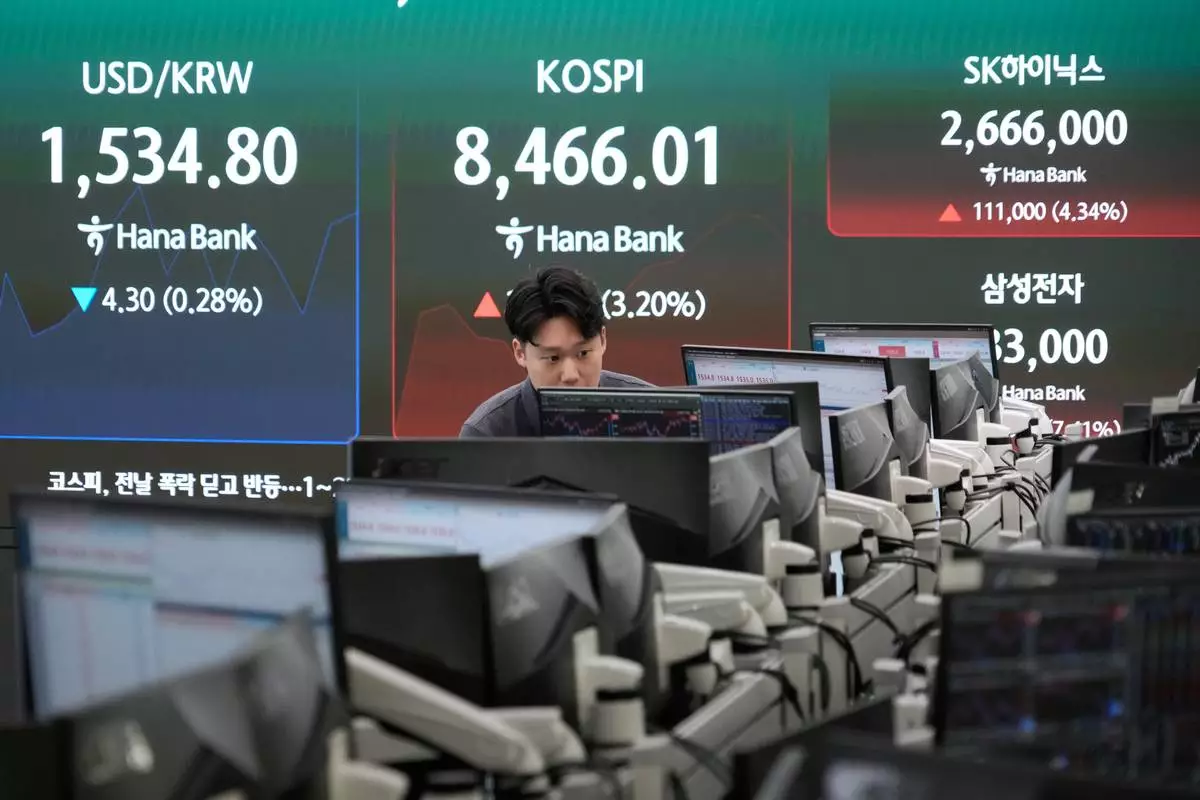
A currency trader watches monitors near a screen showing the Korea Composite Stock Price Index (KOSPI) and the foreign exchange rate between U.S. dollar and South Korean won at the foreign exchange dealing room of the Hana Bank headquarters in Seoul, South Korea, Wednesday, June 24, 2026. (AP Photo/Ahn Young-joon)

A currency trader watches monitors near a screen showing the Korea Composite Stock Price Index (KOSPI) and the foreign exchange rate between U.S. dollar and South Korean won at the foreign exchange dealing room of the Hana Bank headquarters in Seoul, South Korea, Wednesday, June 24, 2026. (AP Photo/Ahn Young-joon)

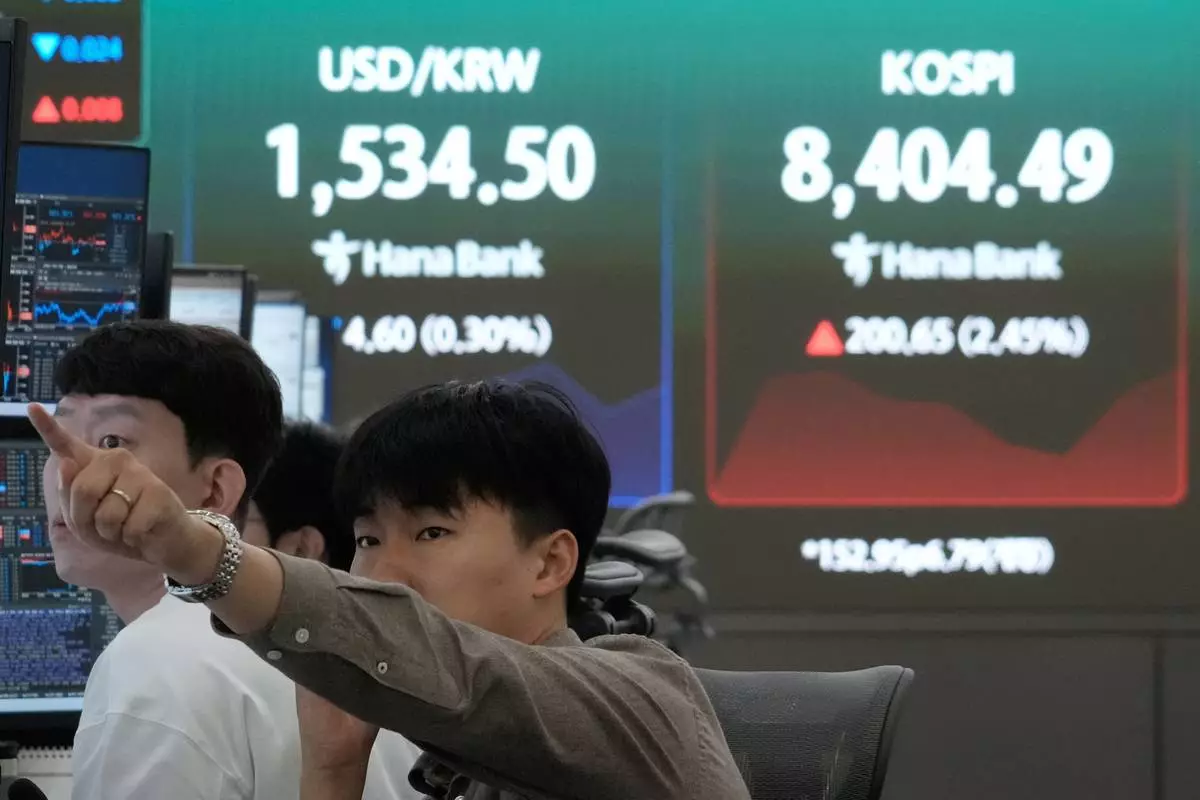
Currency traders work near a screen showing the Korea Composite Stock Price Index (KOSPI) at the foreign exchange dealing room of the Hana Bank headquarters in Seoul, South Korea, Wednesday, June 24, 2026. (AP Photo/Ahn Young-joon)

Currency traders work near a screen showing the Korea Composite Stock Price Index (KOSPI) at the foreign exchange dealing room of the Hana Bank headquarters in Seoul, South Korea, Wednesday, June 24, 2026. (AP Photo/Ahn Young-joon)

A currency trader watches monitors near a screen showing the Korea Composite Stock Price Index (KOSPI) and the foreign exchange rate between U.S. dollar and South Korean won at the foreign exchange dealing room of the Hana Bank headquarters in Seoul, South Korea, Wednesday, June 24, 2026. (AP Photo/Ahn Young-joon)

A currency trader watches monitors near a screen showing the Korea Composite Stock Price Index (KOSPI) and the foreign exchange rate between U.S. dollar and South Korean won at the foreign exchange dealing room of the Hana Bank headquarters in Seoul, South Korea, Wednesday, June 24, 2026. (AP Photo/Ahn Young-joon)

Currency traders work near a screen showing the Korea Composite Stock Price Index (KOSPI) and the foreign exchange rate between U.S. dollar and South Korean won at the foreign exchange dealing room of the Hana Bank headquarters in Seoul, South Korea, Wednesday, June 24, 2026. (AP Photo/Ahn Young-joon)

Currency traders work near a screen showing the Korea Composite Stock Price Index (KOSPI) and the foreign exchange rate between U.S. dollar and South Korean won at the foreign exchange dealing room of the Hana Bank headquarters in Seoul, South Korea, Wednesday, June 24, 2026. (AP Photo/Ahn Young-joon)

Recommended Articles