TOKYO (AP) — A powerful earthquake struck off Japan’s northern coast on Thursday, but the country’s meteorological agency said there was no danger of a tsunami.
The quake had a magnitude of 7.2 and occurred off the eastern coast of Iwate, upgraded from an initial reading of 6.9, the Japan Meteorological Agency said. The quake had a depth of about 50 kilometers (30 miles), it said. JMA The U.S. Geological Survey also reported a magnitude of 6.9.
The rattling occurred in an area where strong earthquakes have repeatedly been reported in recent months, including one that triggered a weeklong mega-quake caution advisory in December.
The quake, which struck Japan’s northeastern region during Thursday’s morning rush hour, also mildly shook Tokyo. There were no immediate reports of injuries or damage, according to top government spokesperson Minoru Kihara.
Prime Minister Sanae Takaichi told reporters in Tokyo that her government’s emergency team is “putting people’s lives first,” while assessing information and preparing for relief operations, if needed. She urged residents in the affected regions to use caution against possible aftershocks.
Tomoko Nagane, a primary school principal in the town of Hashikami in Aomori prefecture, told NHK that she was driving when the quake alert went off and that she felt moderate sideway shaking. Children already gathered at the school were safe, she said, though some were crying in fear. Classes were canceled for the day and children have all returned home safely, Nagane said.
Footage on Japan's NHK public television quoted its journalists from a number of strongly-hit towns, including Sendai and Morioka, saying they felt the shaking for a couple of minutes but have not seen any damage. Footage showed people commuting as usual.
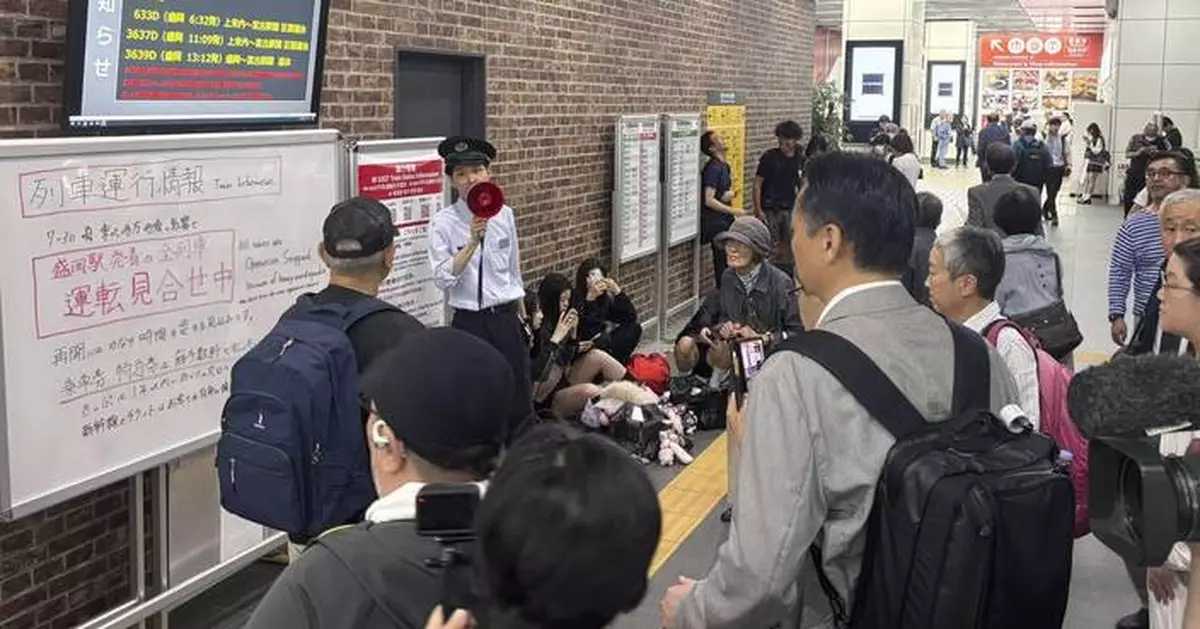
The East Japan Railway Co., which operates trains in northeastern regions, said some bullet trains and other local lines have been suspended for safety checks.
Nuclear power plants and facilities, including the Fukushima Daiichi plant which was damaged by the 2011 massive quake and tsunami, and a spent fuel reprocessing plant in Aomori, have not reported any abnormalities from Thursday's earthquake, Kihara said.
Japan, which sits on what is known as the Pacific Ring of Fire, is one of the world’s most earthquake-prone areas.
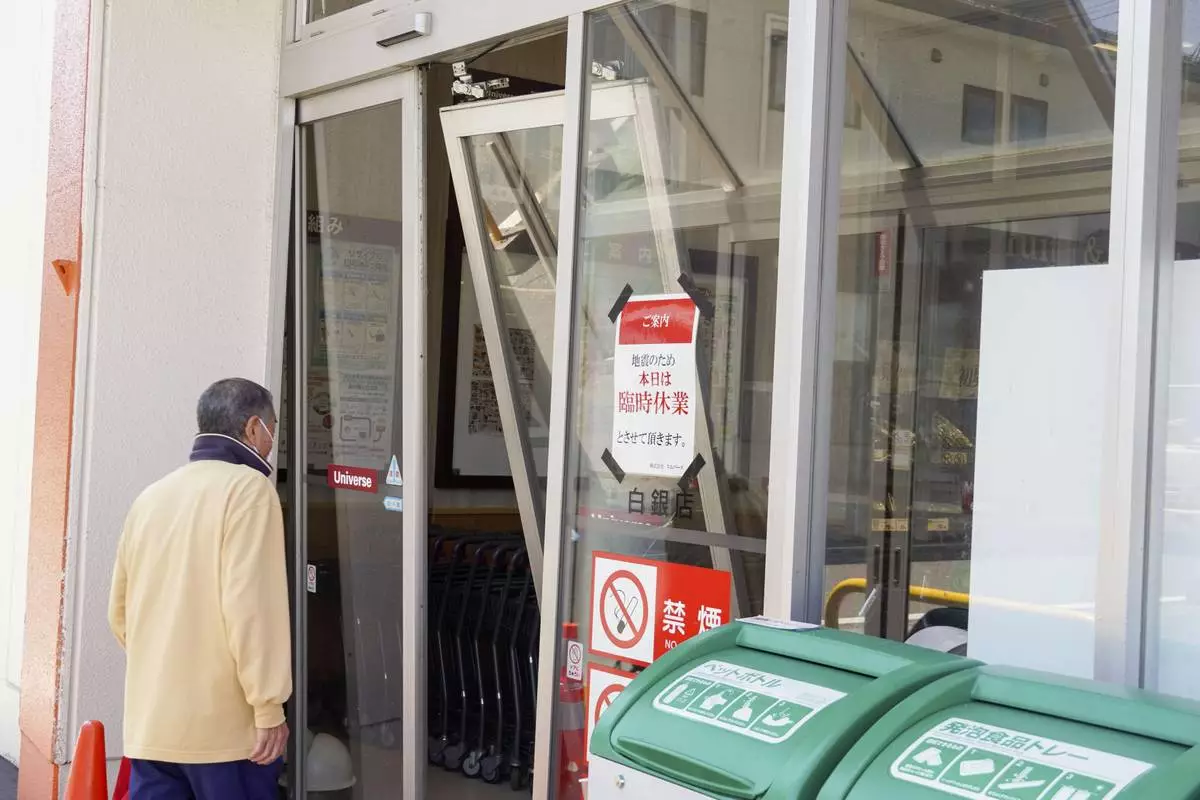
The automatic door is seen damaged due to an earthquake at a supermarket in Hachinohe, Aomori prefecture northern Japan, Thursday, June 25, 2026. (Kyodo News via AP)
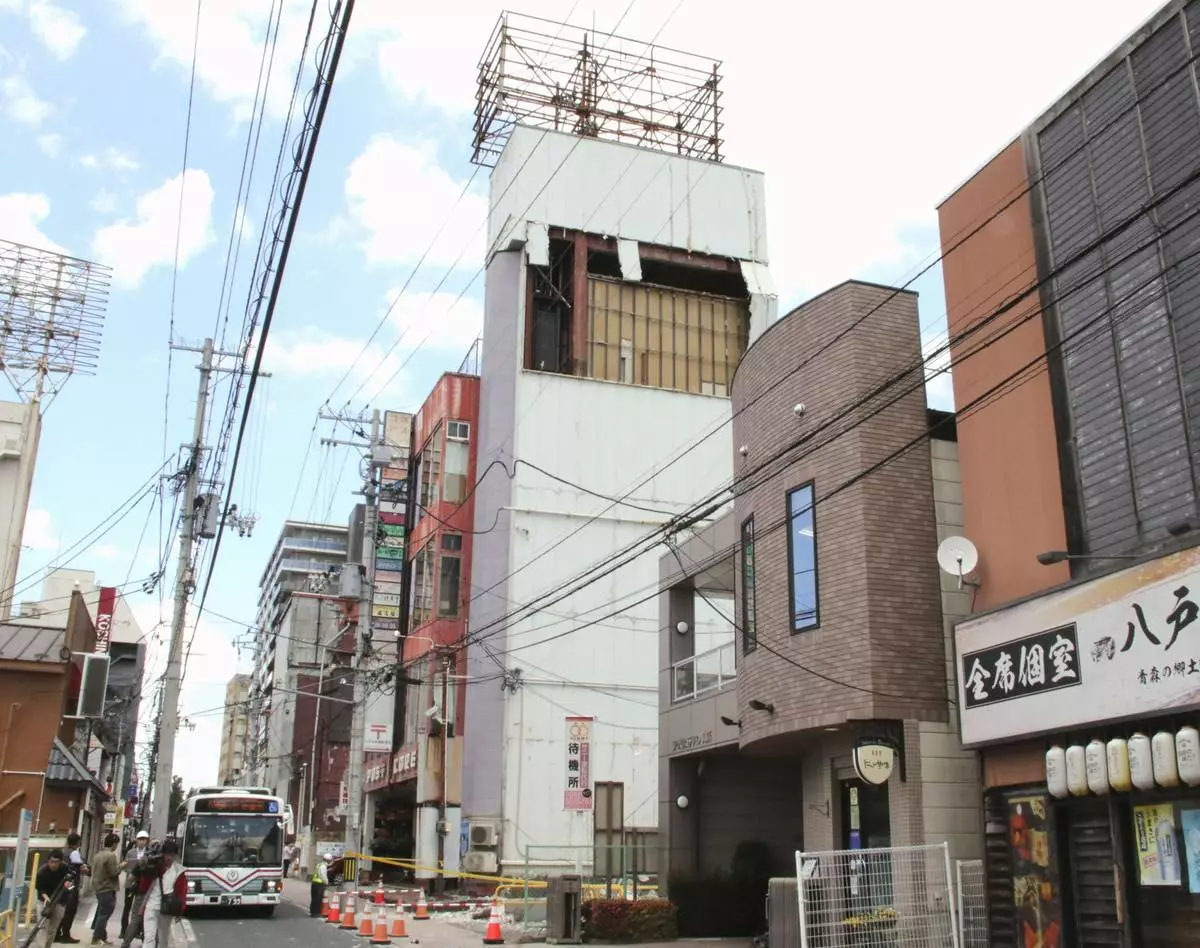
The wall of a building is seen partly damaged following an earthquake in Hachinohe, Aomori prefecture northern Japan, Thursday, June 25, 2026. (Kyodo News via AP)
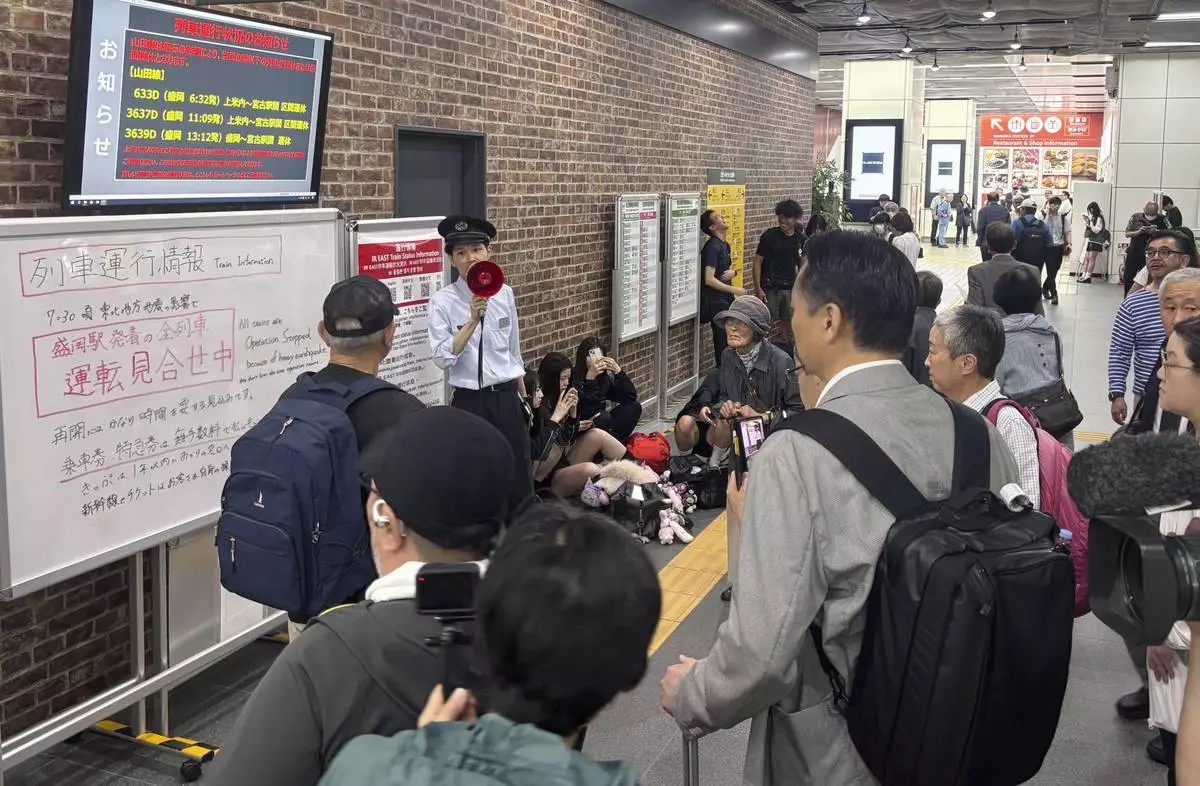
A station clerk of the East Japan Railway Co., provides an update about train services which were suspended due to an earthquake at JR Morioka station in Morioka, northern Japan, Thursday, June 25, 2026. (Kyodo News via AP) CORRECTION: Corrects month to June, instead of July.
WASHINGTON (AP) — Senate Republicans who were berated by President Donald Trump on Wednesday over opposition to his war in Iran held a late-night vote to try to appease him, voting down a war powers resolution a day after a similar measure passed.
Trump harangued GOP senators face to face earlier in the day for allowing a vote to block his war in Iran on Tuesday, further escalating a feud that has diverted GOP efforts to focus on election-year affordability issues and brought much of the chamber’s business to a halt. He exchanged particularly harsh words with Louisiana Sen. Bill Cassidy, one of four Republicans who had voted with Democrats on the measure.
Hours later, though, Cassidy received a personal briefing on the war at the White House from Vice President JD Vance and envoy Steve Witkoff and returned to the Capitol to vote against a separate war powers resolution. Kentucky Sen. Rand Paul, a Republican who has repeatedly voted with Democrats to halt the war, voted present this time “to give the President more space and leverage to negotiate a lasting peace,” he said on X. The measure failed 47-50-1.
“I want to thank Vice President Vance and Special Envoy Witkoff for the thorough briefing this afternoon on Iran. I appreciate the quick invitation to the White House to address many of my concerns,” said Cassidy, who lost reelection last month after Trump endorsed his opponent, in a post on X.
It's unclear whether the move will be enough to appease Trump, who had called the Republicans “losers" for voting against his war and had called Cassidy a “lunatic” at the lunch after their tense exchange. But the vote was a clear signal to the president from Republican senators who still want to placate him, despite increasing tensions in recent weeks and his decision Wednesday morning to reverse himself and delay signing a housing bill that received overwhelming bipartisan support.
Senate Majority Leader John Thune, R-S.D., and a small group of his Senate GOP colleagues called Trump after the vote. Thune said the president was “pleased with the outcome."
Trump later thanked Thune in a social media post and noted that Cassidy and Paul had switched their votes. “This vote puts Iran on notice!” he wrote.
Invited by Florida Sen. Rick Scott to speak at a GOP luncheon in the Capitol, Trump had signaled ahead of time that he would use the closed-door meeting to push senators to pass his proof-of-citizenship voting bill. But the conversation was more focused on Tuesday’s vote on war powers, a mostly symbolic measure that allows Congress to rebuke the administration’s military actions. The House had passed its own version of the resolution earlier this month.
Most Republicans stayed quiet. But Cassidy, who lost reelection in his primary last month after Trump endorsed an opponent, stood up and defended his vote.
“I stood and said, ‘You have not told the American people what’s going on,’” Cassidy told reporters after the meeting. “This was supposed to last four weeks, it’s lasted four months. Our original objectives have not been achieved.”
The two men “went back and forth,” Cassidy said, and he “matched his tone and volume." Cassidy said that he eventually de-escalated, but he did not want to be bullied.
“I am voting for war powers until I get a briefing,” he said afterward.
Trump repeatedly told Cassidy to sit down, according to a person familiar with the private meeting who was not authorized to discuss it. At one point, the president called the senator a “lunatic."
Publicly, Trump said afterward that they had “a really great meeting." But he hinted at the discord.
“We like everyone in the room," Trump told reporters on his way out. "I don’t like a few people, but that’s OK.”
The luncheon capped weeks of friction between Trump and Senate Republicans and added a new layer of frustration as Tuesday's vote was the first time the Senate had adopted a war powers resolution on the Iran war. Trump made clear he was in no mood to compromise before it even started, calling off a scheduled signing ceremony on a housing bill that passed both chambers overwhelmingly this week and that GOP lawmakers were touting as an election-year achievement.
Republican senators were eager for a conciliatory meeting with the president after escalating tensions in recent weeks. But Trump upended their plans when he declared on social media just beforehand that he wouldn't sign the legislation until they send him the SAVE America Act, his bill to require proof of citizenship for all voters.
North Carolina Sen. Thom Tillis said he doesn't know why Trump is holding the housing bill “hostage” for the voting bill that “will never pass in this Congress.”
“It makes no sense to me,” Tillis said as he walked into the luncheon.
Thune said the housing legislation, which aims to lower costs, is “an affordability issue,” and that ”eventually I hope he finds a way to sign it.”
It's unclear if Trump might veto the legislation or if the late Wednesday night vote will change his outlook. But by rejecting a public bill signing, Republicans worry that Trump is indicating a level of indifference to voters’ affordability concerns heading into November’s midterm elections.
Trump's move on the housing bill is his latest reversal after weeks of being at odds with Senate Republicans.
Trump has blocked the Senate from confirming one of his own nominees, asked them to fund parts of his White House ballroom project despite opposition and forced them to defend the Iran war even as they question the strategy and endgame.
Trump has also helped whittle down his own support in the Senate after endorsing primary challengers to two GOP incumbents who were previously reliable votes for his agenda — Cassidy and Texas Sen. John Cornyn. Both men have become more critical of Trump since losing reelection.
“If we’re going to win the midterm elections, we need to get on the same page,” Cornyn said ahead of the meeting. “We’re not on the same page now, and that I think is dangerous.”
Trump has pressed Republicans for months to kill the Senate filibuster and focus on the proof-of-citizenship voting bill, even though Thune has repeatedly told him that neither has the votes.
While Thune remains popular in his conference and cordial with the president, he has spent much of his time lately telling Trump what he doesn’t want to hear. Thune said Tuesday that while Trump and some in their conference want to see the voting bill pass, “it’s just not realistic.”
Thune devoted weeks of floor time to the voting bill earlier this year and has said he supports it. But he has repeatedly said there aren’t enough votes to scrap the filibuster that triggers a 60-vote threshold to pass most bills in the 53-47 Senate. And Democrats are uniformly opposed to the bill.
“I think people at some point have to come to grips with that,” Thune said.
Associated Press writers Josh Boak and Kevin Freking contributed to this report.
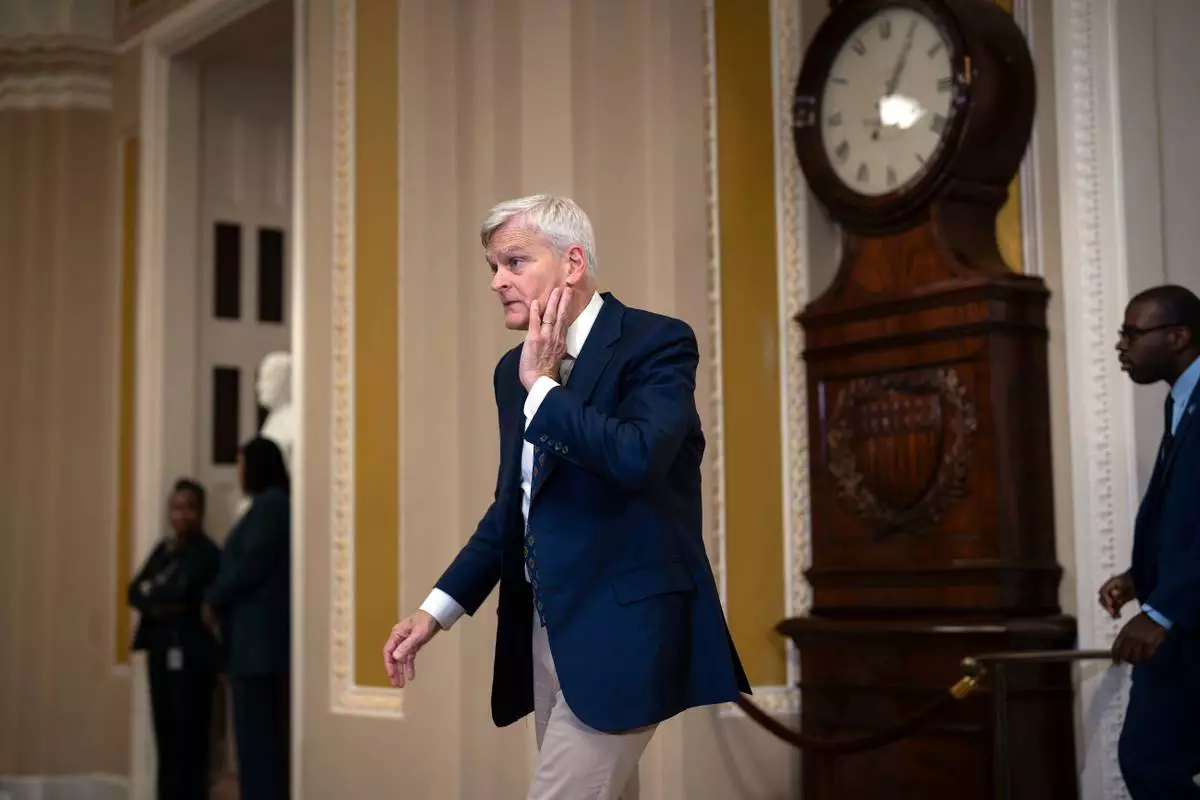
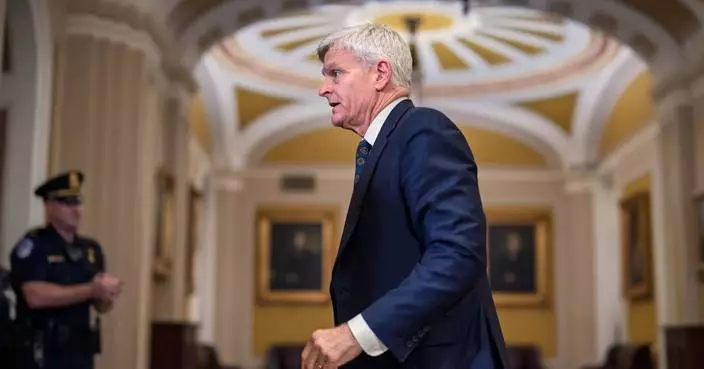
Sen. Bill Cassidy, R-La., leaves a closed-door meeting with President Donald Trump and Republican senators, at the Capitol in Washington, Wednesday, June 24, 2026. (AP Photo/J. Scott Applewhite)
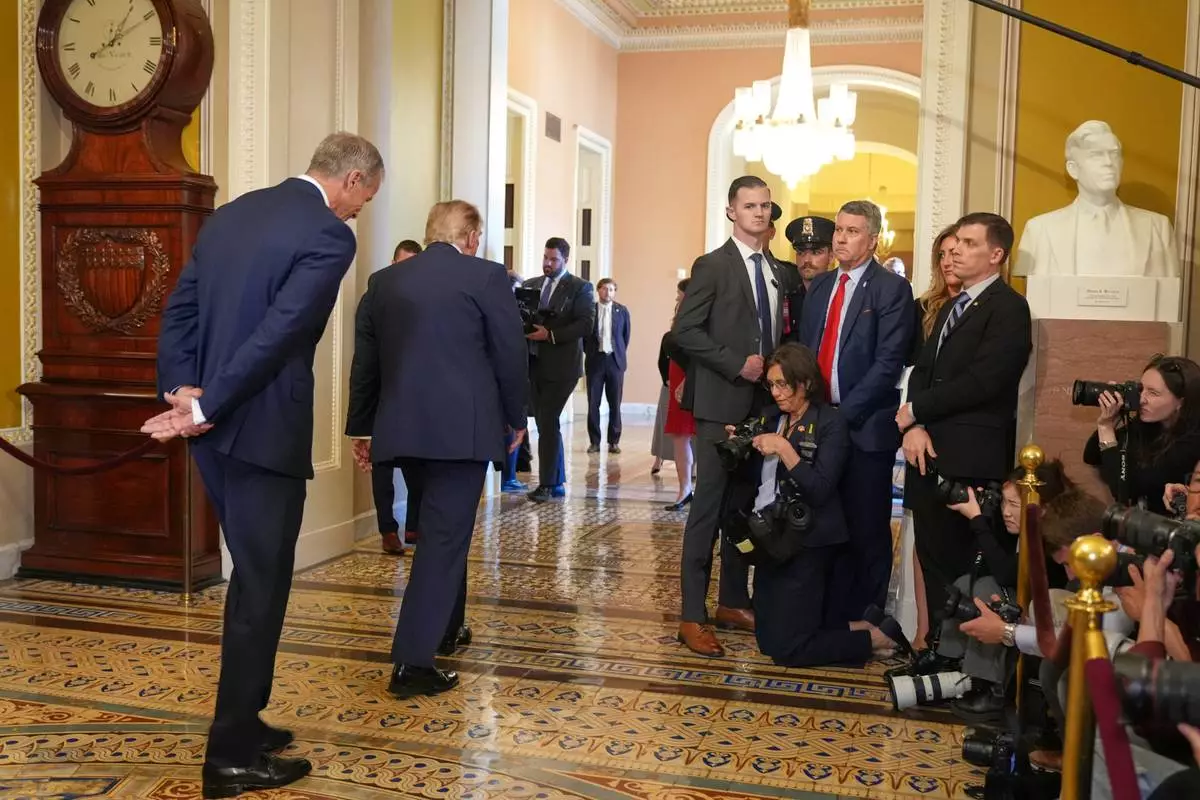
President Donald Trump walks away after speaking to reporters with Senate Majority Leader John Thune, R-S.D., at the Ohio Clock on Capitol Hill, Wednesday, June 24, 2026, in Washington. (AP Photo/Jacquelyn Martin)
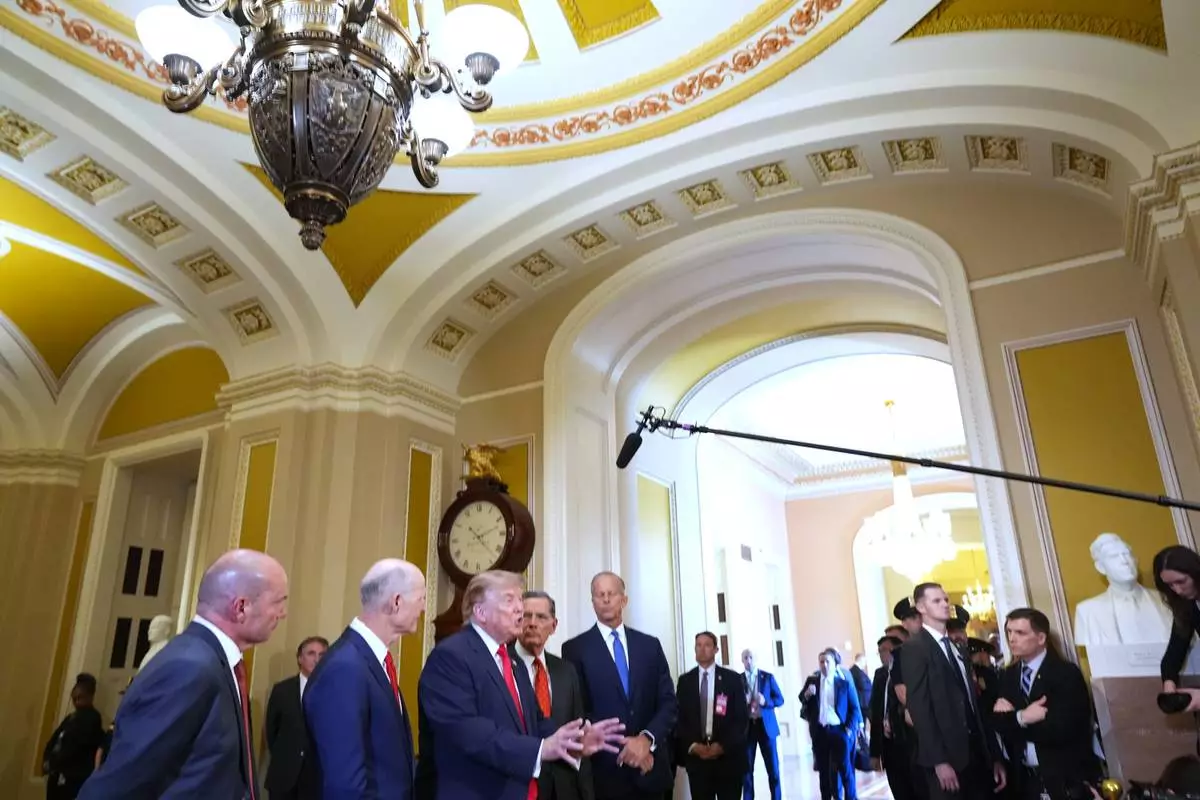
President Donald Trump speaks with reporters after meeting with Senate Republicans on Capitol Hill, Wednesday, June 24, 2026, in Washington. (AP Photo/Jacquelyn Martin)
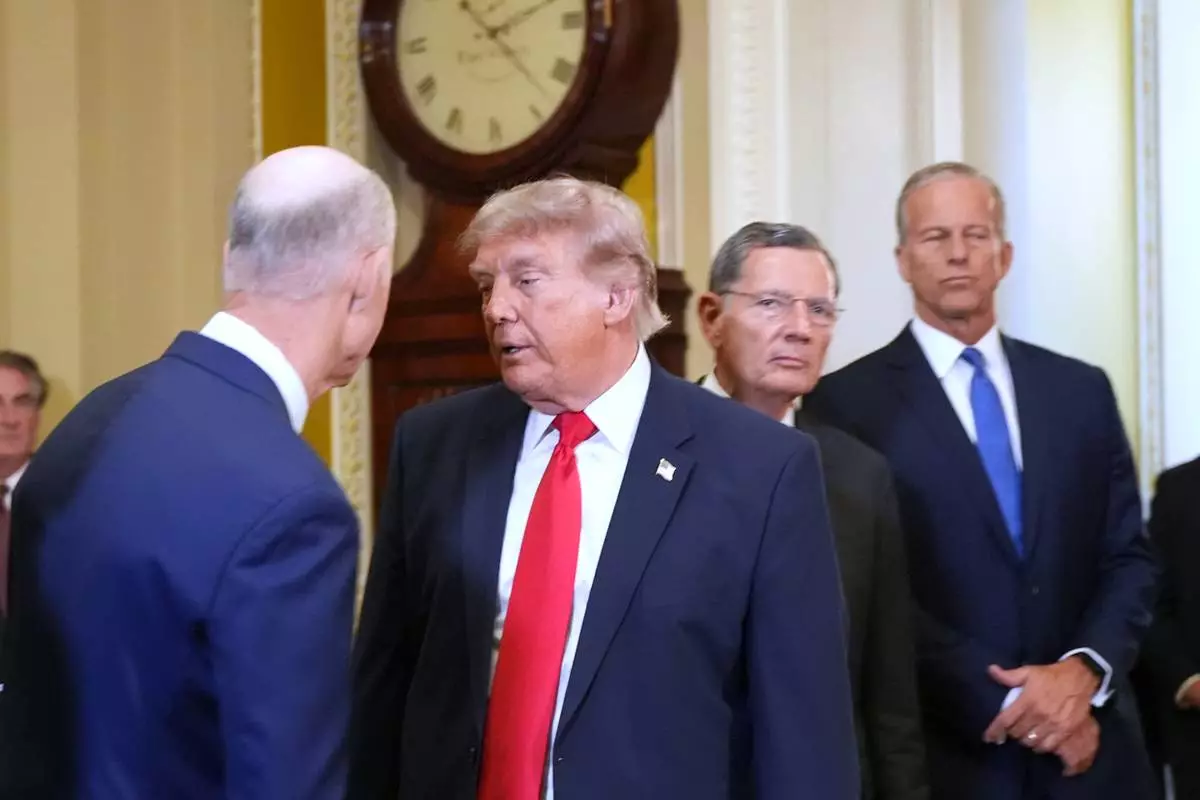
President Donald Trump turns to depart after speaking with reporters as Sen. Rick Scott, R-Fla., from left, Sen. John Barrasso, R-Wyo., and Senate Majority Leader John Thune, R-S.D., listen on Capitol Hill, Wednesday, June 24, 2026, in Washington. (AP Photo/Jacquelyn Martin)
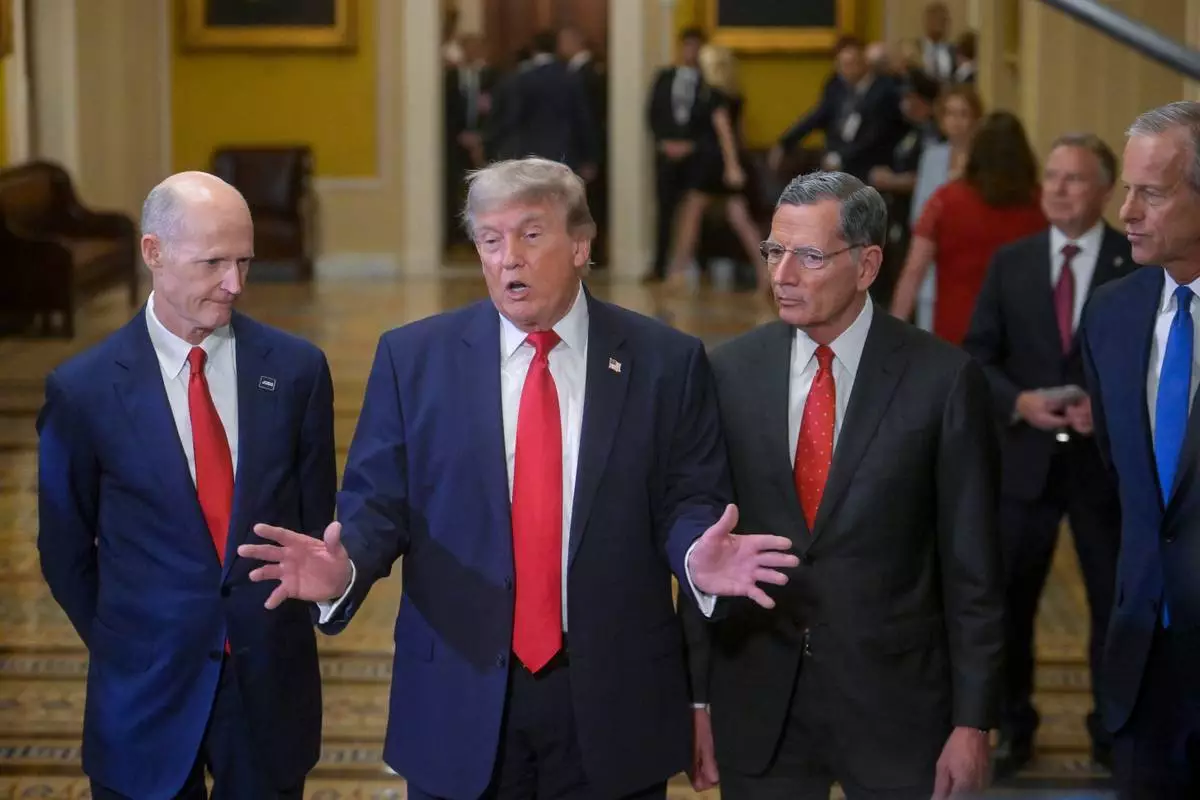
President Donald Trump is joined by from left: Sen. Rick Scott, R-Fla., Sen. John Barrasso, R-Wyo., and Senate Majority Leader John Thune, of S.D., as he departs the Senate Steering Committee Lunch at the U.S. Capitol, Wednesday, June 24, 2026, in Washington. (AP Photo/Rod Lamkey, Jr.)
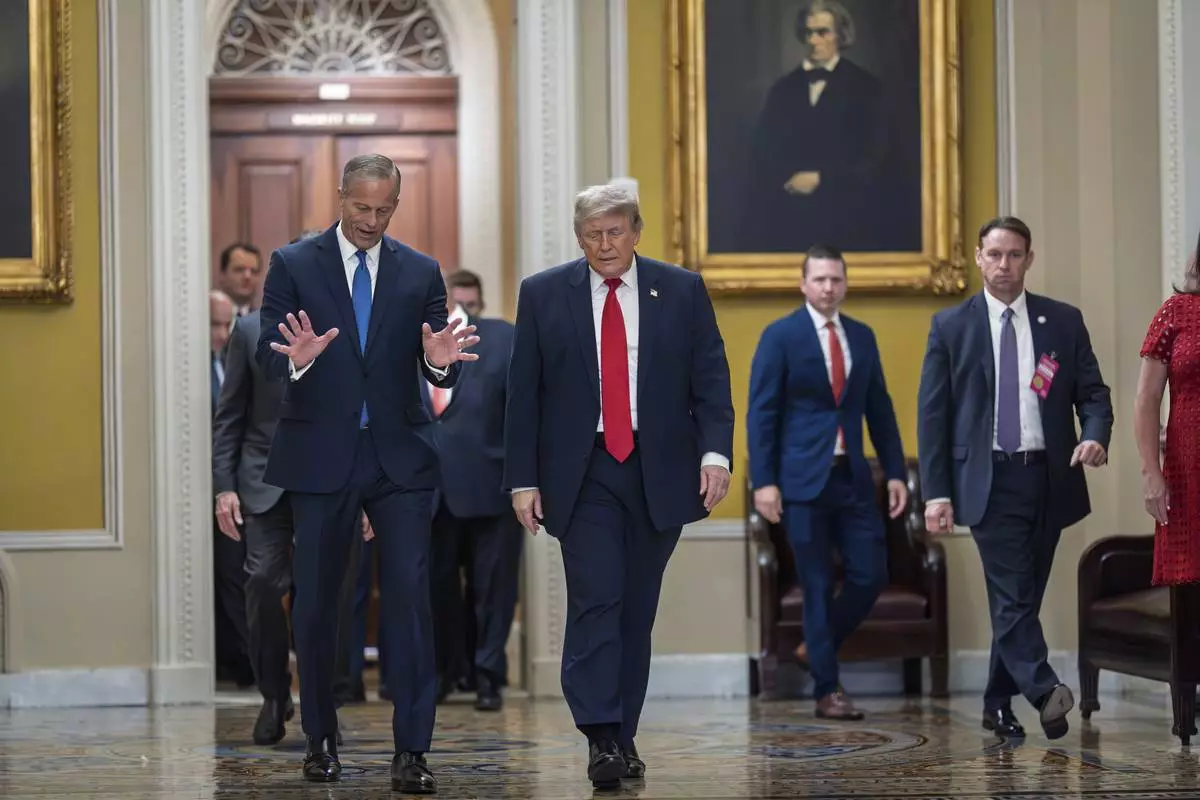
President Donald Trump, escorted by Senate Majority Leader John Thune, R-S.D., heads to a meeting with Senate Republicans at the Capitol in Washington, Wednesday, June 24, 2026. (AP Photo/J. Scott Applewhite)
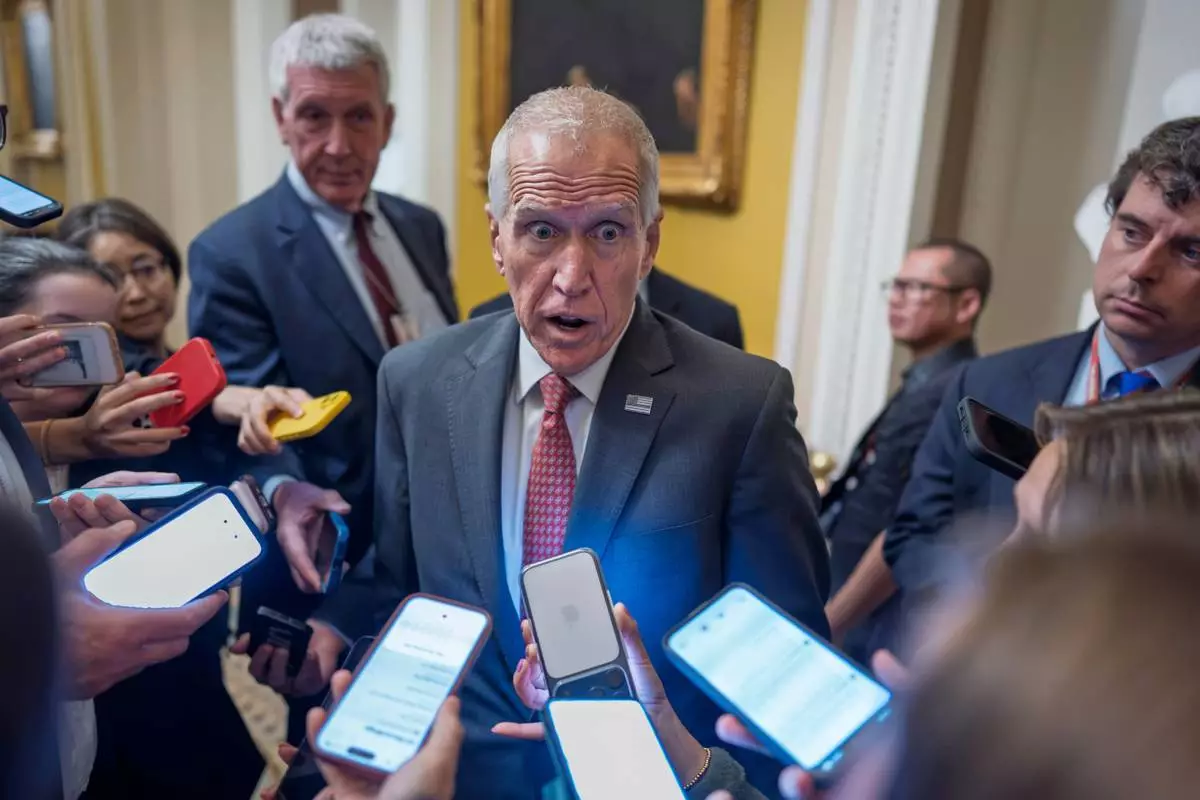
Sen. Thom Tillis, R-N.C., speaks to reporters as Republican senators arrive for a closed-door lunch at the Capitol in Washington, Tuesday, June 23, 2026, to prepare for a meeting with President Donald Trump Wednesday. (AP Photo/J. Scott Applewhite)
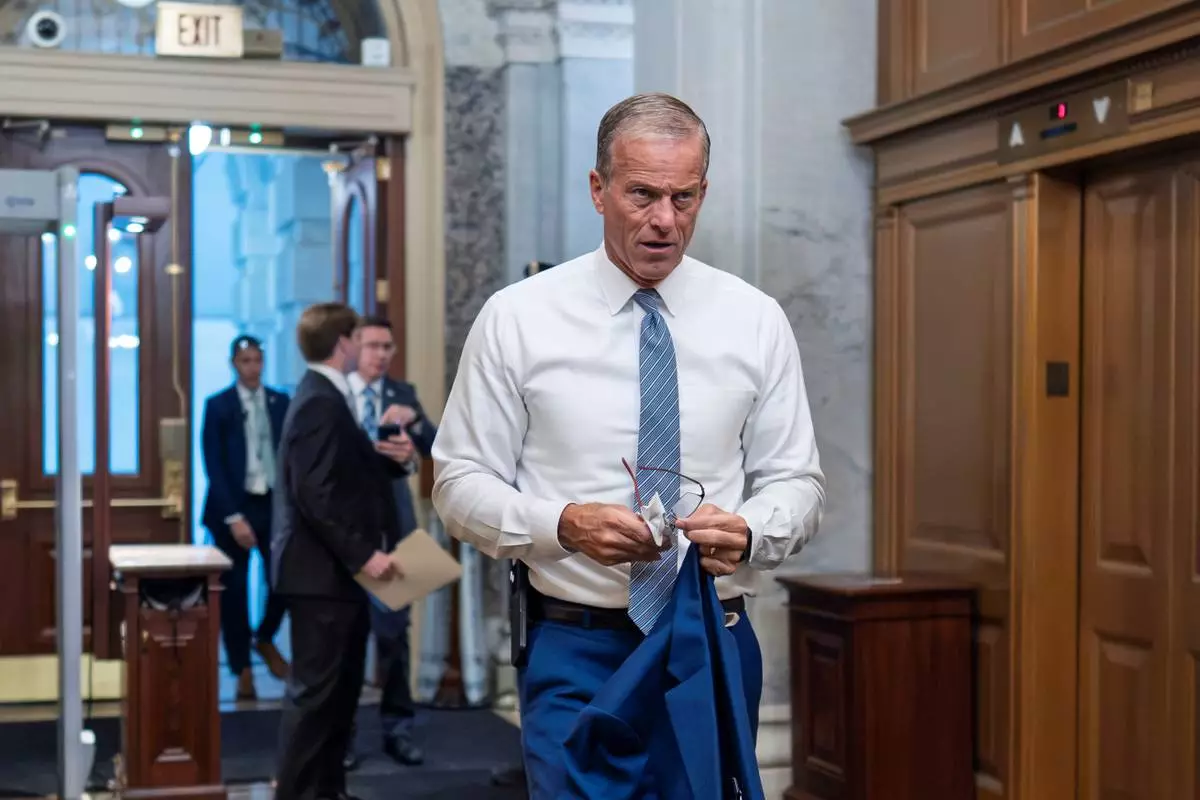
Senate Majority Leader John Thune, R-S.D., arrives at the Capitol in Washington, Tuesday, June 23, 2026, as he prepares for a meeting with President Donald Trump. (AP Photo/J. Scott Applewhite)