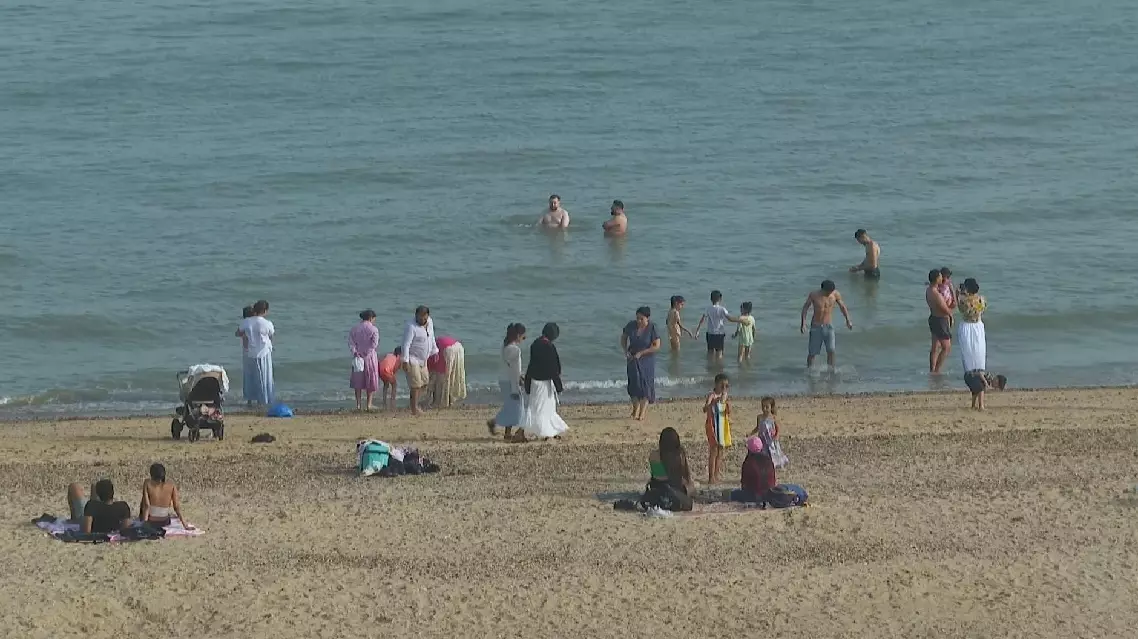
Britain recorded its hottest June on record this week as temperatures hit 36.1 degrees Celsius in southern England, amid a heatwave sweeping across Western Europe that has claimed dozens of lives and disrupted daily life.
Public health experts warned the extreme heat poses risks not only to the elderly and vulnerable but also to healthy people. Last year, about 1,500 people in the UK died of heat-related causes, and that number is expected to rise significantly this summer.
The Royal National Lifeboat Institution urged caution near the sea after 18 people lost their lives in drowning accidents in the heatwave last month, citing the danger of sudden temperature shocks when moving from hot land to cold seawater.
Businesses in the beach town of Clacton-on-Sea reported mixed fortunes. Even as heat makes life uncomfortable, seaside restaurants, bars, and cafes said the hot weather had boosted tourism.
"We've actually enjoyed the heat. We're a seaside town, so we rely on hot weather. It brings the tourists out to Clacton. And it's been quite a challenge actually, as we've been quite busy," said Jason Smedley, a restaurant owner.
Operators did however note the difficulty of keeping staff cool in sweltering kitchens.
"It is hot. I mean, we've brought fans in. We've got air con, but we've got a charcoal grill, so it does get hot in there," Victoria Hart, a neighboring restaurant owner.
Experts also warned of hazards linked to vehicles and pets. At an outside temperature of 40 degrees Celsius, cars can become lethal, with dashboard surfaces hot enough to cause burns, and pavement temperatures can reach 70 degrees Celsius, endangering dogs walked during the day.
Scientists say extreme heatwaves, once rare in Britain, are expected to become more frequent, longer-lasting and more deadly in the years ahead.
UK records hottest June as heatwave grips Europe
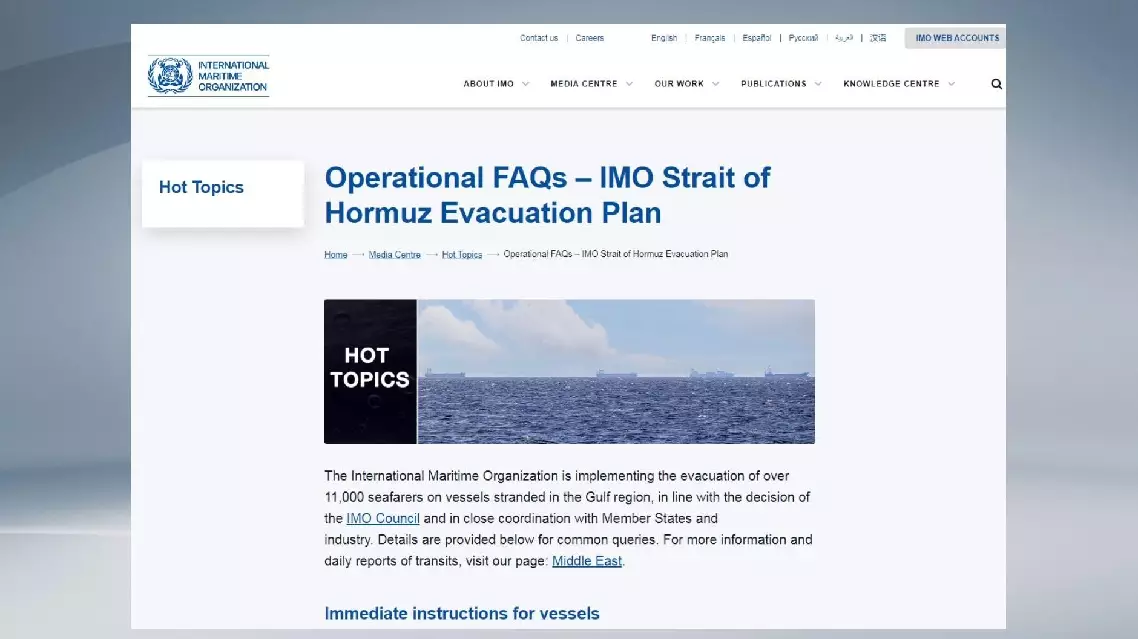
The International Maritime Organization (IMO) on Wednesday released the operational details of a large-scale evacuation plan for seafarers stranded around the Strait of Hormuz, as the closure of the strait has left around 1,200 cargo ships stranded with goods worth 125 billion U.S. dollars.
According to the IMO, more than 11,000 seafarers remain stranded in the Gulf region.
Under the plan, vessels are required to remain in their current positions and await instructions rather than moving independently toward the strait or designated waiting areas. The organization said the measure is intended to prevent congestion and reduce risks associated with mines and degraded navigation conditions.
The United Kingdom Maritime Trade Operations (UKMTO) Center and the Maritime Information Cooperation and Awareness Center will contact vessels directly, and instruct them to proceed to designated waiting areas.
After conducting their own independent risk assessment, vessels are free to choose either the southern or northern route to leave the Strait, according to the IMO.
The evacuation scheme establishes two temporary transit routes through the Strait of Hormuz. One runs through Iranian waters, while the other passes through waters coordinated by Oman and the United States.
The IMO said traffic management and navigational coordination would be handled by coastal states, while the UN agency oversees the overall framework and phased implementation.
Meanwhile, insurance firm Allianz Commercial on Wednesday published its Safety and Shipping Review for 2026, highlighting that the conflict in the Middle East paralyzed the Strait of Hormuz, a critical global oil trade route.
As of June 15, around 1,150 cargo-carrying ships with an estimated vessel and cargo value of 125 billion U.S. dollars were operating within Gulf waters after the closure of the Hormuz Strait, the report said.
Marine insurers have supported the shipping industry throughout the conflict with continuity of insurance cover, albeit at increased hull and cargo premiums. However, for shipowners, the issue has been more about the risk to the crew and the vessel of transiting a conflict zone, rather than insurance considerations, according to the report.
Even if the relevant ceasefire can be maintained and lead to the reopening of the Strait of Hormuz, it will still take time for shipping operations to return to normal, the report said.
Thomas Lillelund, CEO of Allianz Commercial, said the shipping industry is transitioning toward a new equilibrium defined by higher volatility and uncertainty, which will necessitate a greater strategic emphasis on resilience over pure cost efficiency.
Strait of Hormuz evacuation plan detailed as 1,200 cargo ships stranded