Skip to Content Facebook Feature Image

InnoCaption Recognized for Artificial Intelligence Innovation in 2026 AI Breakthrough Awards Program

Business

InnoCaption Recognized for Artificial Intelligence Innovation in 2026 AI Breakthrough Awards Program
Business

Business

InnoCaption Recognized for Artificial Intelligence Innovation in 2026 AI Breakthrough Awards Program

2026-06-25 20:01 Last Updated At:20:11

IRVINE, Calif.--(BUSINESS WIRE)--Jun 25, 2026--

InnoCaption, a leader in accessible telecommunications since 2016, today announced that it has been selected as winner of the “Text to Speech Solution of the Year” award in the ninth annual AI Breakthrough Awards program conducted by AI Breakthrough, a leading market intelligence organization that recognizes the top companies, technologies and products in the global Artificial Intelligence (AI) market today.

This press release features multimedia. View the full release here: https://www.businesswire.com/news/home/20260625142707/en/

InnoCaption is an FCC-certified mobile app that makes phone calls easy and accessible for people with hearing loss or speech disabilities. InnoCaption was the first captioned phone service provider to offer fully automated AI captioning, and with the recent integration of text-to-speech (TTS) to better serve users who prefer typing to communicate, they discovered another powerful use case for AI: a groundbreaking TTS feature called AI Refine.

Typing full sentences during phone calls can be difficult, making it hard to stay in the moment. With AI Refine, users can type a few words and get complete, polished responses with a tap. (For example, the word “reschedule” might become “I need to reschedule my appointment.”) Responses are tailored to the context of the conversation, and they can be voiced aloud right away or edited by the user first. This predictive capability significantly improves the flow of calls.

Other TTS features released by InnoCaption last year include:

Together, these features solve for the inefficiency of traditional TTS options, empowering InnoCaption users who have difficulty speaking or being understood on calls to communicate with greater ease and confidence.

“We are pleased to accept this award from AI Breakthrough,” said Joseph Lee, Founder and co-CEO of InnoCaption. “We are committed to breaking down communication barriers, and these new AI-powered text-to-speech features are the latest step in making every conversation more authentic and accessible for our users.”

For nearly a decade, the AI Breakthrough Awards have researched, analyzed and recognized the most important advances in artificial intelligence, and this year's field is the strongest yet. Thousands of nominations from over 20 countries poured in across categories including Agentic AI, Generative AI, Computer Vision, AIOps, Robotics, Natural Language Processing and industry-specific AI applications — underscoring the explosive global growth of AI and its importance as the defining technology of our time.

“Everyone has the right to be heard and understood, and InnoCaption’s TTS solution gives individuals with speech disabilities the power to communicate seamlessly on phone calls,” said Steve Johansson, managing director, AI Breakthrough. “It’s an inspiring example of the role that artificial intelligence can play in making everyday life easier.”

InnoCaption is available on iOS, Android, and the web.

About AI Breakthrough

Part of Tech Breakthrough, a leading market intelligence and recognition platform for global technology innovation and leadership, the AI Breakthrough Awards program is devoted to honoring excellence in Artificial Intelligence technologies, services, companies and products. The AI Breakthrough Awards provide public recognition for the achievements of AI companies and products in categories including Agentic AI, Machine Learning, Generative AI, Robotics, AI Hardware, Computer Vision and more.

For more information, visit AIBreakthroughAwards.com.

About InnoCaption

InnoCaption is an accessibility technology company dedicated to helping people break down barriers to telecommunication in their everyday lives. Available on iOS, Android, and the web, our apps provide best-in-class call captioning to Deaf and Hard of Hearing individuals, as well as advanced text-to-speech features for those who don’t voice for themselves. Because we are FCC-certified and funded through the Telecommunications Relay Service fund, our service is free for eligible users.

Founded in 2007, InnoCaption is based in Irvine, California. Visit www.innocaption.com to learn more.
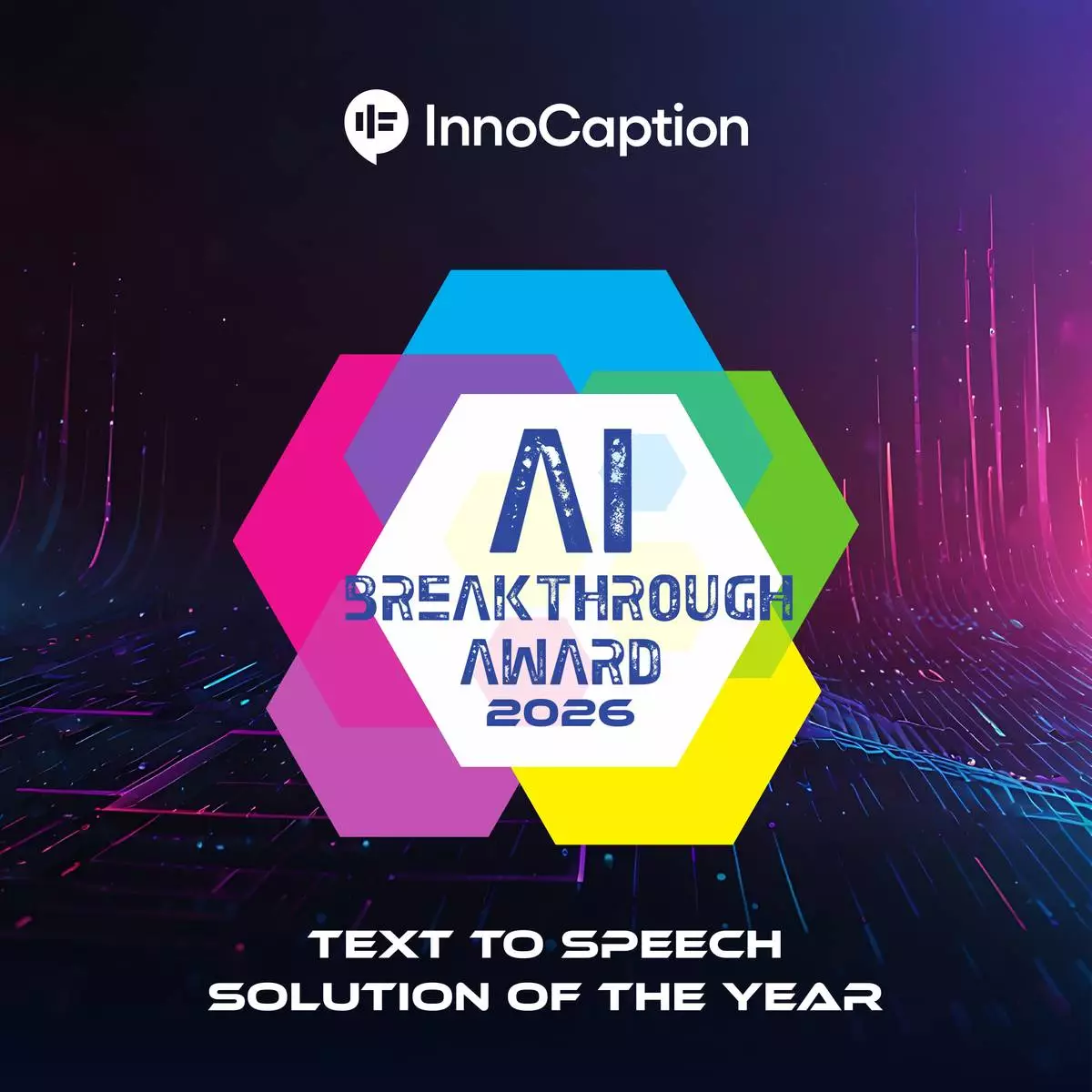
InnoCaption has been named the winner of the 2026 AI Breakthrough Award for Text-to-Speech Solution of the Year, recognizing its AI-powered text-to-speech innovations that make phone calls more accessible for people with hearing loss and speech disabilities.


InnoCaption has been named the winner of the 2026 AI Breakthrough Award for Text-to-Speech Solution of the Year, recognizing its AI-powered text-to-speech innovations that make phone calls more accessible for people with hearing loss and speech disabilities.

WASHINGTON (AP) — The Supreme Court cleared the way Thursday for the Trump administration to potentially revive an immigration policy once used to turn back migrants seeking asylum at the U.S.-Mexico border.

The justices, in a 6-3 decision, overturned a lower court order blocking the practice that limited the number of people who could apply for asylum each day, first under the Obama administration and then expanded during President Donald Trump’s first term.

Advocates said the tactic created a humanitarian crisis as thousands of people settled in unsafe makeshift shelters to await their turn. The Trump administration said it was necessary to deal with an increase of asylum seekers at the border.

The policy isn't in place now, though authorities have imposed other restrictions on asylum seekers.

The administration argued that metering is a critical tool that’s been used by presidents of both parties and should stay available. Federal attorneys say people turned away at the border could come back later, though lines were thousands of people long when the policy was in place before.

The case is one of several immigration suits is considering this term, including Trump’s push to end restrict birthright citizenship and his administration’s effort to strip legal temporary protections for migrants fleeing instability and armed conflict.

Under federal law, migrants who arrive in the U.S. must be able to apply for asylum and be screened for fear of persecution in their home countries.

The Justice Department argued that people stopped by authorities haven’t arrived in the country, so immigration agents don’t have to let them apply.

The court's conservative majority agreed. “A guest does not arrive in a house when he knocks on the front door,” Justice Samuel Alito wrote.

But attorneys for people seeking asylum say the law has long meant anyone arriving at a port of entry should be screened, and blocking arrivals disregards the nation’s ideals.

Justice Sonia Sotomayor dissented from the bench, saying that the majority’s opinion “regrettably and tragically extinguishes the light of the torch of the Statue of Liberty.”

In an unusual exchange, Alito voiced a response after she finished speaking. He expressed surprised that she'd read her dissent out loud and defended his opinion by pointing out that the policy had been used during two presidential administrations. “I won’t add anything more to that,” Alito said.

Metering was first used under President Barack Obama when large numbers of Haitians appeared at the main crossing to San Diego from Tijuana, Mexico. It was expanded to all border crossings from Mexico during Trump’s first term in the White House.

It ended in 2020 when the government introduced greater restrictions during the coronavirus pandemic, and President Joe Biden formally rescinded it in 2021.

The same year, a California-based federal judge found that metering violated the asylum seekers rights and the law requiring screening. A divided appeals court panel affirmed the ruling but nearly half of judges on the full San Francisco-based court voted to rehear it, a strong signal that might have caught the attention of the Supreme Court.

U.S. law allows people seeking refuge to apply for asylum once they are on American soil, regardless of whether they came legally. To qualify for asylum, they must show a fear of persecution in their homeland for specific reasons, like race, religion, nationality, membership in a particular social group or political opinion.

People who are eventually granted asylum can’t be deported. They can legally work, bring in immediate family, apply for legal residency and seek citizenship.

Associated Press writer Fatima Hussein contributed to this report.

FILE - Linda Joseph holds a candle during a vigil at the Little Haiti Cultural Complex after a federal judge blocked the Trump administration from ending temporary immigration status, or TPS, for Haitians, Tuesday, Feb. 3, 2026, in North Miami. (AP Photo/Lynne Sladky, File)

FILE - Linda Joseph holds a candle during a vigil at the Little Haiti Cultural Complex after a federal judge blocked the Trump administration from ending temporary immigration status, or TPS, for Haitians, Tuesday, Feb. 3, 2026, in North Miami. (AP Photo/Lynne Sladky, File)

FILE - The U.S. Supreme Court is photographed, June 8, 2026, in Washington. (AP Photo/Mariam Zuhaib, File)

FILE - The U.S. Supreme Court is photographed, June 8, 2026, in Washington. (AP Photo/Mariam Zuhaib, File)

Recommended Articles