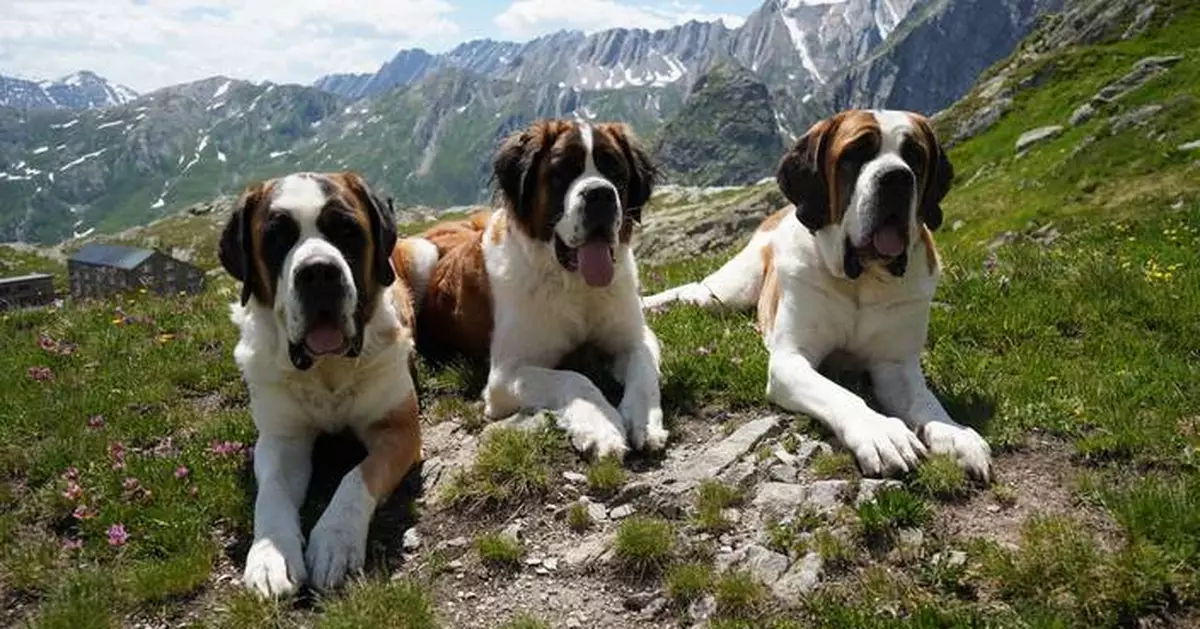
BOURG-SAINT-PIERRE, Switzerland (AP) — At the Great St. Bernard Pass high in the Swiss Alps, the eponymous dogs still walk the same mountain paths their ancestors patrolled for hundreds of years to find travelers buried beneath the snow.
Down in the valley, a living museum honoring the Swiss national dog's history — and its future — is marking its first year.
More than 130,000 people have visited Barryland, the world's only space dedicated to St. Bernards, since it opened last summer in Martigny, Switzerland, after outgrowing a much smaller space. Tourists can watch live grooming and physiotherapy sessions, explore the mountain pass with augmented reality technology and learn more about the dogs.
“We have a lot of demand and interest for this breed and this whole history and patrimony,” said Barryland director Mélanie Glassey-Roth. “So we decided to create a new park, a big one.”
At 2,469 meters (8,100 feet) above sea level on the Swiss-Italian border, the Great St. Bernard Pass is one of the country’s highest and most treacherous.
Since the mid-17th century, large mountain dogs have been kept on the pass. They arrived as guard dogs, became companions, and gradually evolved into something the Alpine world had never seen before: Animals with an extraordinary instinct for locating hikers lost in snow and fog.
The breed's name stems from the Great St. Bernard Hospice, which was founded in 1050 by Bernard de Montjoux, the archdeacon of Aosta and future saint, to provide refuge for pilgrims and merchants crossing the dangerous pass. The dogs became central to that mission, and by the early 19th century they had a reputation that was carried across Europe by soldiers of Napoleon Bonaparte following his army's own crossing of the route.
Barry the First, the most celebrated dog, is traditionally credited with saving more than 40 lives when he was at the hospice between 1800 and 1812. At the Barry Foundation, the steward for the breeding program, there is always a male dog called Barry.
Currently, the foundation's 21 keepers care for 32 dogs. Roughly 20 pedigree puppies are born annually. These dogs, as well as other St. Bernards, no longer do mountain rescues because they’re too big to be transported by helicopter. Smaller breeds like Australian shepherds are used instead, though a number of St. Bernards are kept on the pass to keep the tradition alive.
The foundation's dogs typically eat about 10 metric tons (22,046 pounds) of dry food each year and spend their summers gamboling in the remnants of snow in the mountains before heading 40 kilometers (25 miles) down winding roads back to the kennel in Barryland.
“We get to see them born, and we get to see them grow up, and then become mothers, and we get to accompany them through all those different challenges in life,” keeper Alexandra Piatti said. “We are their guide, so we can help them with socialization and educate them, and really be by their side for their whole lives.”
In 2025 alone, the foundation says its dogs completed 609 jobs by visiting hospitals, care homes, schools and prisons across Switzerland.
Keeper Déborah Dini balances the weight of the breed's history with affection for the dogs in her charge.
“We perpetuate the tradition,” she said. “We take care of them. We love them.”
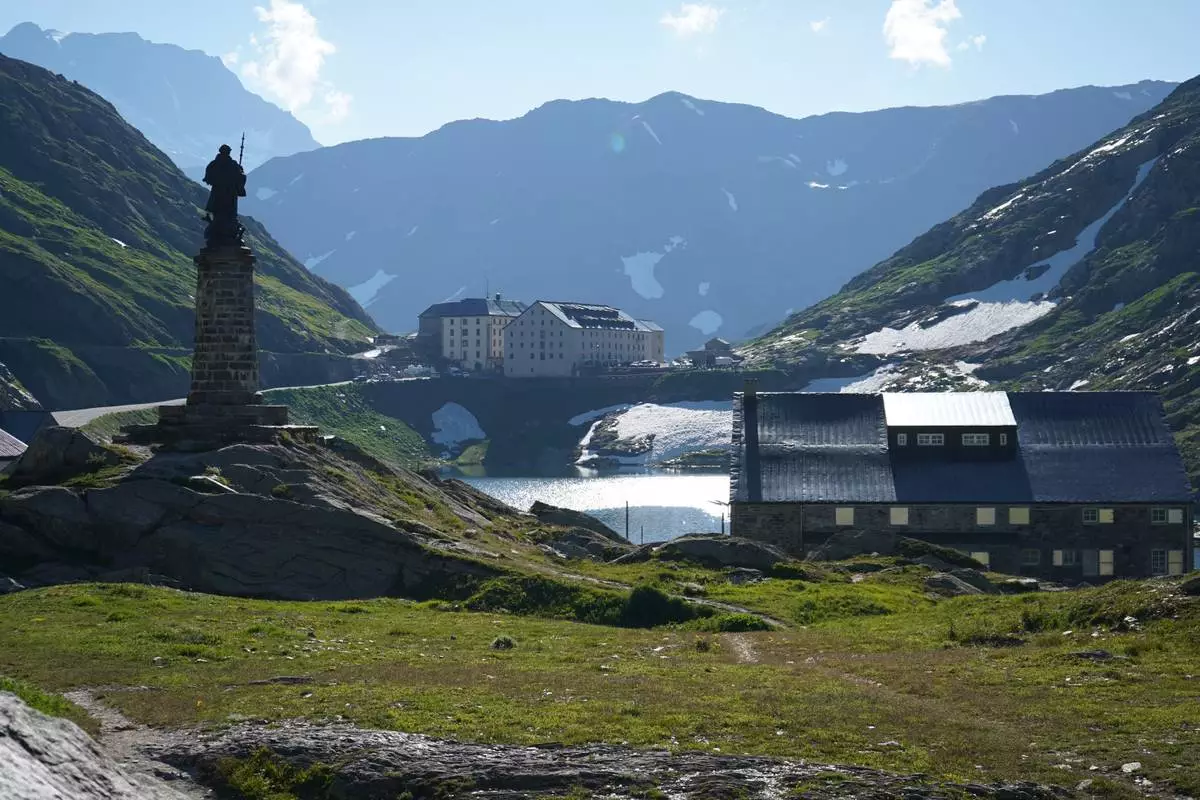
The Statue of St. Bernard and the Great Saint Bernard Lake with the Grand St. Bernard hospice are pictured in Saint-Rhemy, Italy, Tuesday, June 23, 2026. (AP Photo/Jez Fielder)
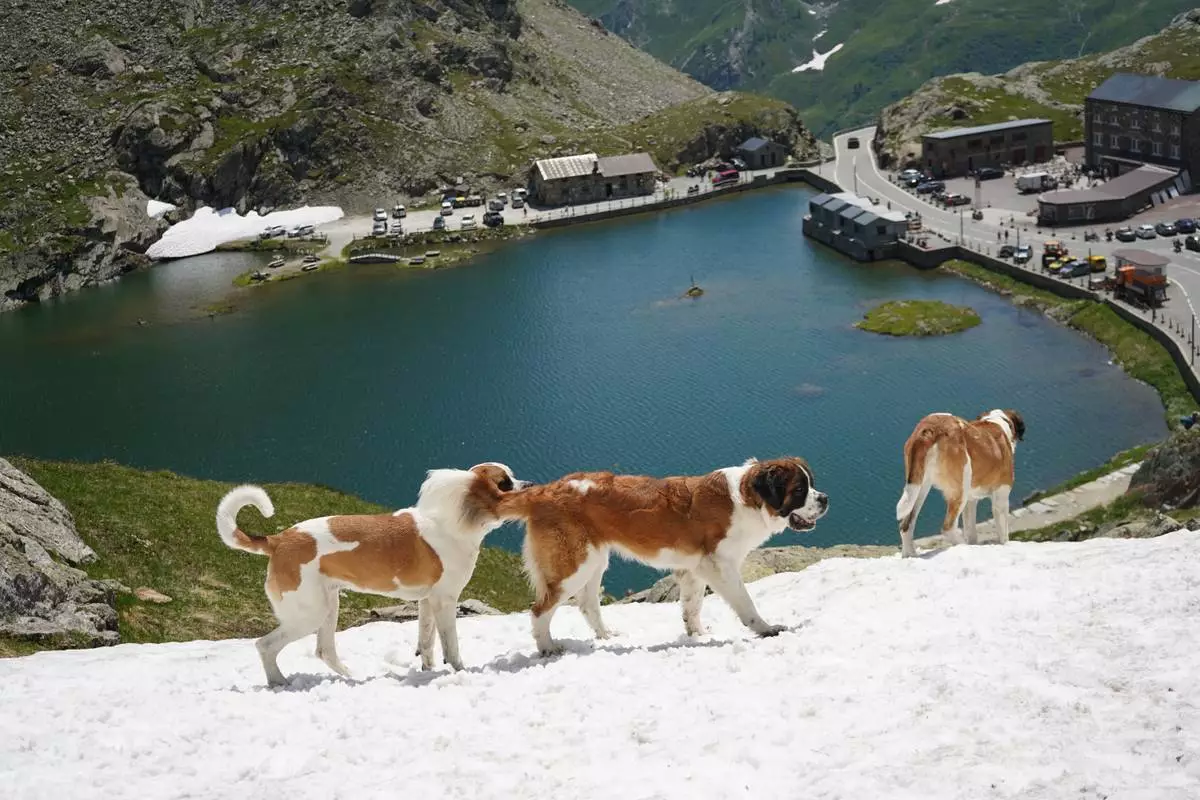
St. Bernard dogs from the Barry foundation run in the hills at the St. Bernard Pass, Switzerland, Monday, June 22, 2026. (AP Photo/Jez Fielder)
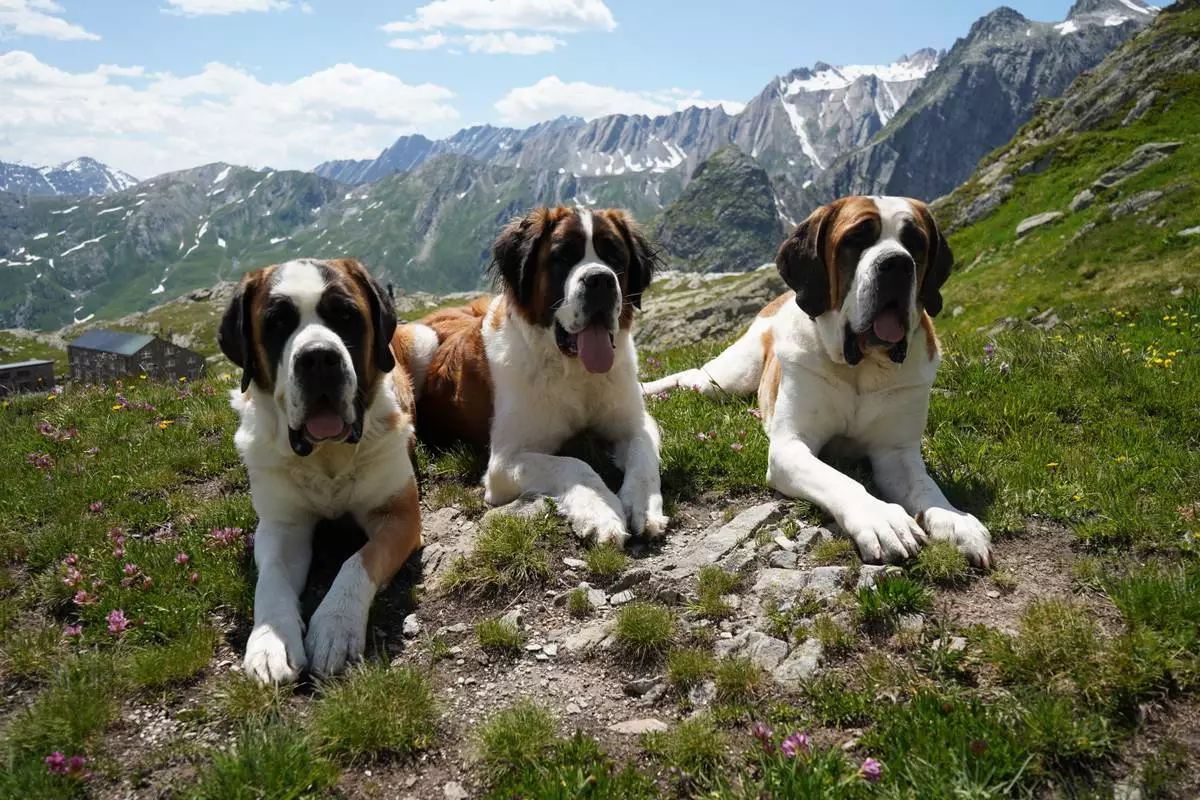
St. Bernard dogs from the Barry foundation lie in the hills at the St. Bernard Pass, Switzerland, Monday, June 22, 2026. (AP Photo/Jez Fielder)
LA GUAIRA, Venezuela (AP) — In cities across northern Venezuela, neighbors helped each other dig through rubble to search for loved ones on Thursday after back-to-back earthquakes that officials say killed more than 230 people and left thousands injured the night before.
The official death toll rose to around 235 late Thursday, with at least 4,300 people injured, Venezuela Health Minister Carlos Alvarado told state media. The number of casualties is expected to climb with thousands reported missing and frantic rescue efforts continuing.
The 7.2- and 7.5-magnitude earthquakes that struck Wednesday evening was among the strongest in Venezuela in more than a century and was felt throughout the region.
The injured were pulled out covered in dust and blood, among them children and animals. Venezuelan state TV showed dramatic images of rescues, including a woman who was trapped under a cement slab with only a bare foot poking out before rescuers slid her out alive. But few government search teams were initially seen outside Caracas.
The coastal region of La Guaira, north of the capital Caracas, suffered some of the heaviest damage and casualties. The country’s main airport is there and was closed due to damage, complicating aid efforts.
Many were stunned Thursday morning as they saw buildings reduced to skeletons, furniture hanging out of windows and helicopters circling overhead. Buildings were flattened and streets cracked open.
Families posted missing-person flyers with photos of loved ones while others shared handwritten lists of names as they searched. Venezuelans abroad struggled to make contact with relatives due to interrupted phone service in the country.
In downtown Caracas, hundreds spent the night huddled in parks, parking lots and other open spaces.
Mother of three Dayana Delgado asked where the heavy machinery was that government officials had promised and said residents were the ones digging through crumpled buildings.
“I want to know where my child is, if he’s trapped or in a shelter,” she said of her missing 8-year-old son.
One mother sobbed and collapsed in grief as the bodies of her 3- and 10-year-old children were wrapped in blankets and carried away. Others screamed the names of the missing. Some stood in silent shock.
Venezuelan authorities said they were diverting rescue teams from other parts of the country to La Guaira, which is no stranger to natural disasters: a 1999 mudslide killed thousands and is considered one of the country’s worst natural disasters.
In La Guaira, Cristian Carreño stared at his charred apartment building tilting precariously to one side.
“I lost everything,” he said. “There are people still inside, I imagine, that couldn’t get out. It’s incredibly devastating.”
Retired schoolteacher Juan Alberto Mendaño climbed through wreckage in La Guaira and past a dead body when he spotted a woman who was trapped and signaling with her hand for help.
“May God rescue her as quickly as possible,” Mendaño said. “When we heard the scream, there was nothing we could do.”
The natural disaster is the latest challenge for acting President Delcy Rodríguez, the former vice president who took office in January after Maduro’s capture. Venezuela has been facing economic disarray for more than a decade, and many people reject the legitimacy of the political movement Rodríguez represents.
Rodríguez declared a state of emergency in an address to the nation late Wednesday. She said the government was creating a $200 million reconstruction fund for damaged hospitals and homes.
She appealed to businesses Thursday to make heavy construction equipment available for rescue operations.
“We hope to rescue as many living people as possible,” Rodríguez said.
While Venezuela sits near multiple fault lines, its position straddling the South American and Caribbean plates makes strong earthquakes much less common than in other parts of Latin America.
The U.S. Geological Survey said both earthquakes were centered near Moron on the Caribbean coast, about 170 kilometers (105 miles) west of Caracas.
The one-two punch of the quakes, combined with the shallow seismic movements, amplified the destruction, said Marcos Ferreira, a geophysicist and researcher at the Geological Survey of Brazil.
“It is as if I am screaming and then someone starts screaming, too. That amplifies the vibration and adds to the potential hazard,” Ferreira said.
Shortly after United Nations officials in Venezuela called on the government to lift social media restrictions so people can get potentially life-saving information, Venezuelans in the country were able to access X. The site had been blocked by Maduro since August 2024 in an attempt to suppress the exchange of information among those who rejected his claim of victory in the July presidential election.
Leaders from Mexico, Qatar, Brazil, Spain, Portugal, Canada vowed to send aid. A number of shipments were already on the way Thursday.
U.S. Secretary of State Marco Rubio, who spoke to Rodríguez following the quake, said the United States was immediately deploying assistance, though he acknowledged the closure of Venezuela’s main airport created logistical challenges.
“We have a whole-of-government response. It’ll be big; it’ll be fast; and it’ll be effective,” Rubio said.
Rescue teams from Mexico, El Salvador and the Dominican Republic arrived in Venezuela on Thursday, along with an aid flight from Mexico.
“No country is prepared to provide the response that’s needed. That’s what neighboring countries are there for,” Dominican Air Force Major Carlos Olivares said.
The Venezuelan diaspora also was helping. In Ecuador, Félix Rodríguez said his store was receiving donations from his fellow Venezuelans as well as Ecuadorians.
“My business is always ready for whatever Venezuela needs,” he said.
Gabby Graham said she regularly sends money from Spokane, Washington, to Venezuela using a peer-to-peer payment to a local business that gives cash to her family. But since the earthquakes they can't locate the business owner and she is unable to share funds for food, water, medication and toiletries.
“I think it hasn’t been easy for them for years. Just now it’s just even worse because it’s about finding these things,” Graham said.
Janetsky reported from Mexico City. Associated Press journalists Gabriela Molina in Quito, Ecuador, Regina Garcia Cano in Bogota, Colombia, Mauricio Savarese in Sao Paulo, Anna-Catherine Brigida and India Grant in Mexico City, Danica Coto in San Juan, Puerto Rico, Clara Preve in Buenos Aires, Alexandra Olson in New York, Julie Watson in San Diego and Hallie Golden in Seattle contributed to this report.
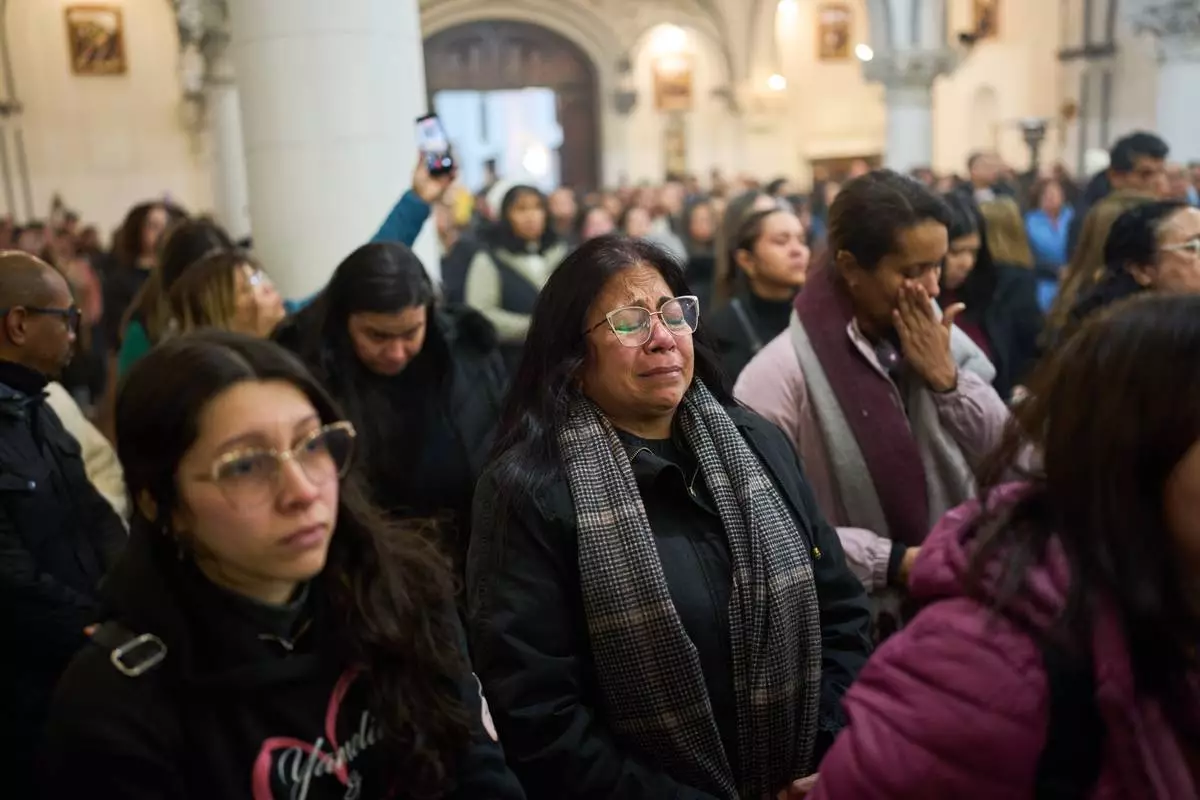
People attend a mass to honor the victims of the earthquakes in Venezuela, in Buenos Aires, Argentina, Thursday, June 25, 2026. (AP Photo/Rodrigo Abd)
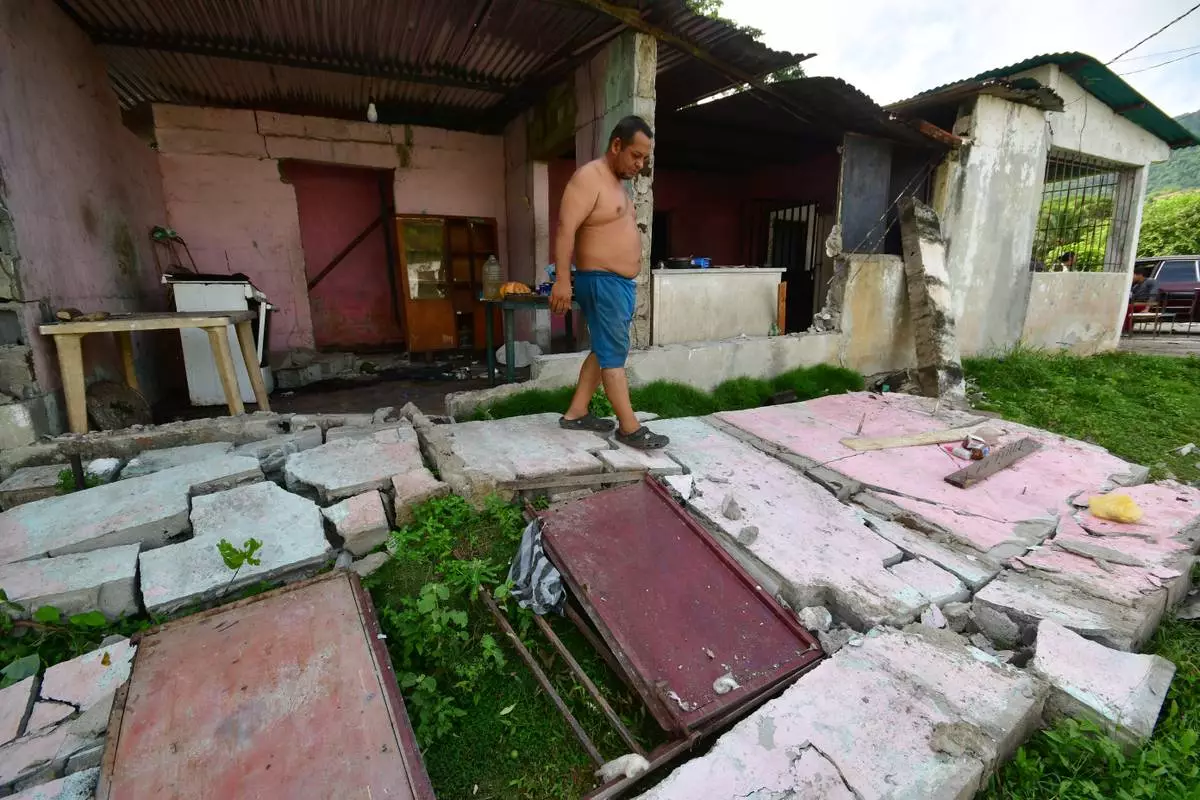
A man walks over the fallen walls of his home in Moron, near the epicenter of two earthquakes that struck Venezuela the day before, Thursday, June 25, 2026. (AP Photo/Jacinto Oliveros)
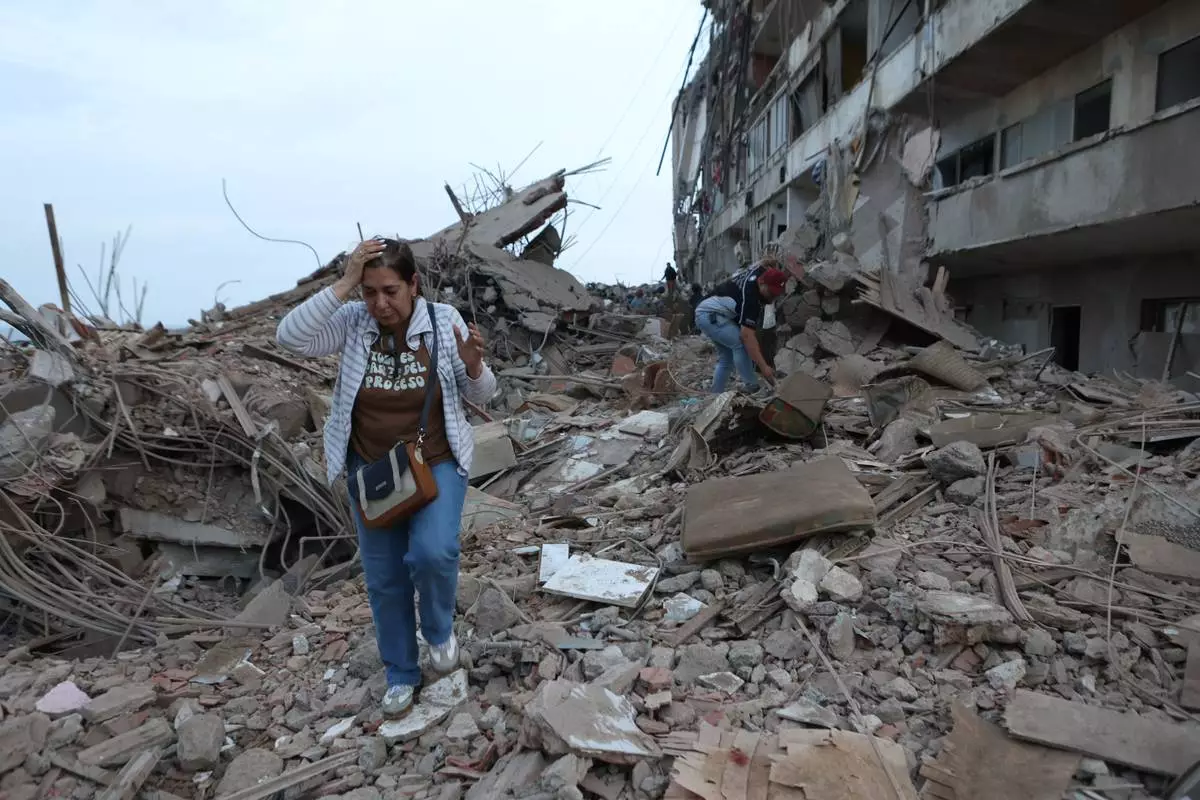
Residents walk among the rubble of building damaged in earthquakes the previous day in Catia La Mar, Venezuela, Thursday, June 25, 2026. (AP Photo/Pedro Mattey)
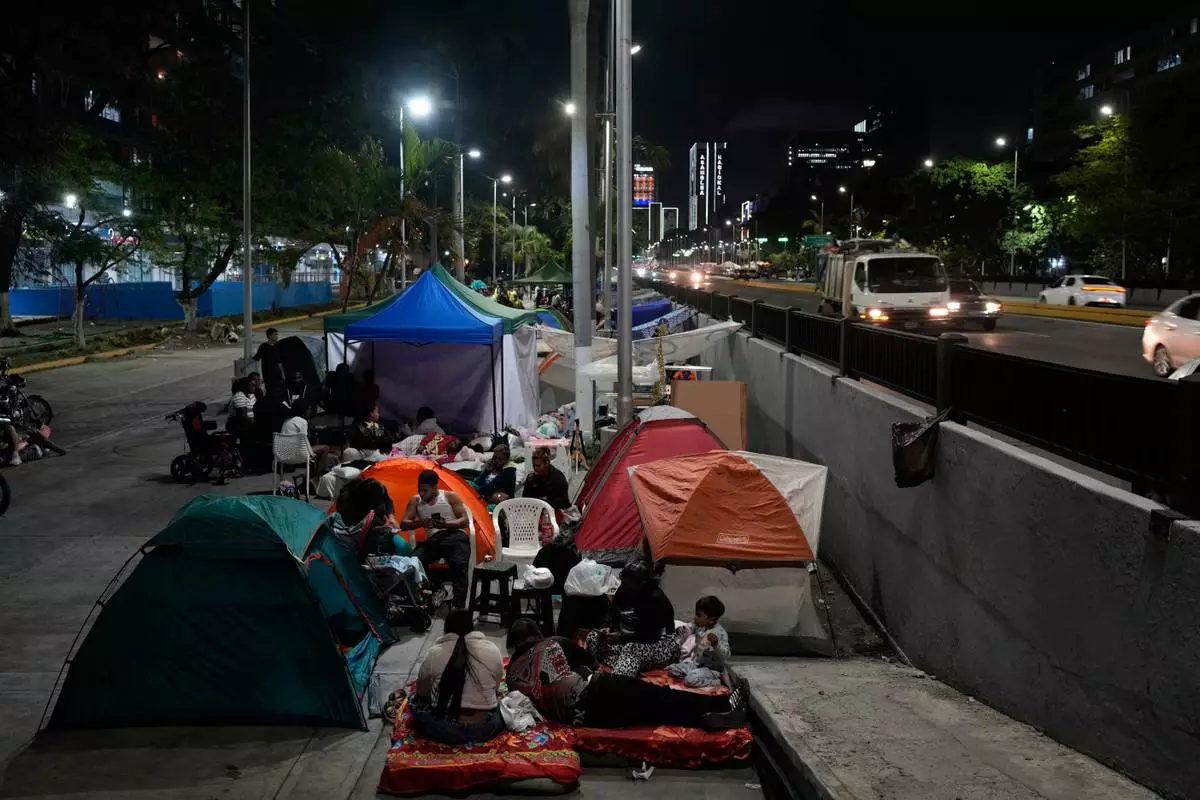
People camp in the street the night after the earthquake struck Caracas, Venezuela, Thursday, June 25, 2026. (AP Photo/Ariana Cubillos)
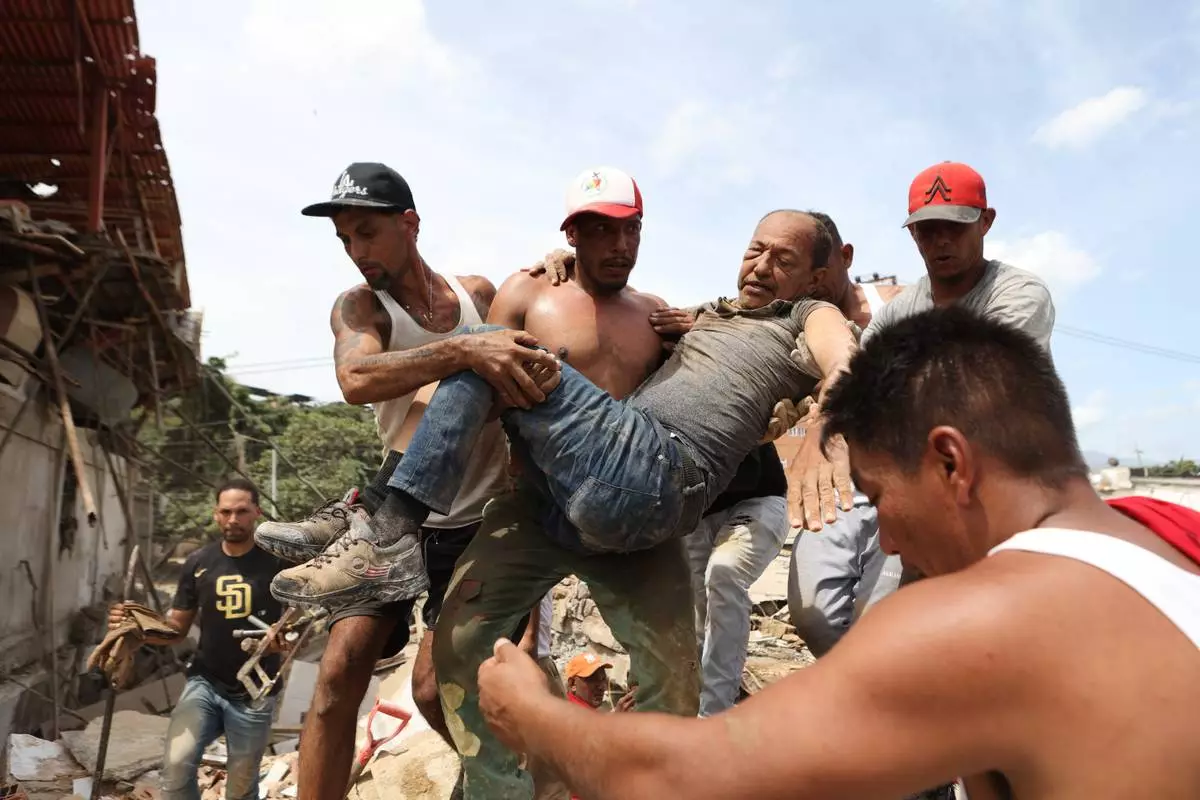
Neighbors carry a man rescued from the rubble of a collapsed building the day after earthquakes struck La Guaira, Venezuela, Thursday, June 25, 2026. (AP Photo/Pedro Mattey)