An eastern Idaho prosecutor says misdemeanor drug charges against Olympic gold medalist skier Bode Miller will be dismissed despite there having been probable cause to arrest him.
Miller, 48, was arrested June 6 in Fremont County, which borders Montana and Wyoming, and charged with possessing psilocybin mushrooms. He pleaded not guilty last week and said his friend who was with him had a small amount of drugs he didn't know about.
County Prosecutor Lindsey Blake said in a statement provided to The Associated Press on Friday that her office will be dismissing the drug possession and drug paraphernalia charges against Miller.
“Although the deputy had sufficient probable cause to arrest Mr. Miller at the beginning of June, we recently received information which resulted in our office determining it is in the interest of justice to dismiss Mr. Miller’s misdemeanor charges,” she said. "I will not be discussing the specifics of this recent information due to it being related to another active case.”
Blake did not provide details on the other active case. Online court records related to Miller's case list another man who was charged with the same crimes.
Miller's lawyer, Jeromy Stafford, did not immediately return phone and email messages Friday. He told media outlets earlier this week that Miller did not have any drugs on his person when he was arrested.
In an Instagram post on Wednesday, Miller said he was pulled over after accelerating to pass a vehicle on a highway. He said his friend had a small amount of cannabis and a cannabis pipe, which Miller said he didn't know about.
“We fully cooperated with the officer,” he said. "I am hopeful the misdemeanor charges will be dropped once the facts are reviewed.”
In a probable cause statement, Fremont County Sheriff's Deputy Jacob Hurt wrote that he found Miller with a white dispensary bag containing 4.1 grams of the psychedelic mushrooms.
The 48-year-old Miller took a gambler’s approach to ski racing. His high-risk, high-reward style resulted in six Olympic medals, including gold in the super-combined at the 2010 Vancouver Games, and numerous crashes.
His last major race was at the 2015 world championships in Beaver Creek, Colorado, when a bad wipeout knocked him out of the super-G. He later underwent surgery to fix a torn right hamstring tendon caused when his ski sliced him. He said in late 2017 that he was retired for good.
Miller won 33 World Cup races and a pair of World Cup overall titles. He also captured four gold medals at world championships.

FILE - USA men's ski team member and six-time Olympic medalist Bode Miller participates in a news conference at the alpine skiing world championships Feb. 2, 2015, in Beaver Creek, Colo. (AP Photo/Brennan Linsley, File)

FILE - United States' Bode Miller makes a jump during men's downhill combined training at the Sochi 2014 Winter Olympics, Feb. 13, 2014, in Krasnaya Polyana, Russia. (AP Photo/Luca Bruno, File)
NEW YORK (AP) — Most of the U.S. stock market is rising Friday after oil prices fell back to where they were before the war with Iran, but drops for AI stocks are keeping the market in check.
The S&P 500 was virtually unchanged after recovering from an early loss of 0.9%. The index at the heart of many 401(k) accounts is still on track for its second losing week in the last 13, largely because of drops for stocks swept up in the mania around artificial-intelligence technology.
The Dow Jones Industrial Average was up 39 points, or 0.1%, as of 10:45 a.m. Eastern time, and the Nasdaq composite was down 0.2%.
Stocks got a boost as the price of Brent crude oil, the international standard, dropped 3.9% to $72.53. That's basically where it was the day before the United States and Israel attacked Iran, which eventually led to the closure of the Strait of Hormuz and the curtailment of oil shipments worldwide.
The easier oil prices helped stocks of companies with big fuel bills, and United Airlines climbed 1.7%.
Health care stocks, meanwhile, were some of the strongest forces pushing upward on the market after a committee of the European Medicines Agency recommended several medicines for approval and the extension for another dozen of their therapeutic indications. That included one for Eli Lilly, whose stock jumped 6.3%.
Besides Lilly, roughly two out of every three stocks within the S&P 500 were rising. But more drops for AI stocks were overshadowing them.
After soaring to tremendous heights and leading the market for years, AI stocks been under pressure recently because of worries their profits can’t possibly keep pace with the tremendous rallies for their stock prices. And those drops have an outsized effect because AI stocks have grown into Wall Street’s largest and most influential, giving movements for their stock prices more weight on indexes than others.
Micron Technology's drop of 4.1% was one of the heaviest weights on the market, for example. The maker of memory for computers has been a big winner this year, with its stock roughly quadrupling, because the AI boom has created a surge of demand for its products.
But investors saw the downside of that surge Thursday, when Apple said it had to raise prices on many of its products by significant percentages to make up for the increases in memory prices. The worry is that such higher prices could ultimately lead to lower demand.
Highlighting the roller-coaster ride that AI stocks have been on, SpaceX dipped 0.8% below $152 and toward the lowest level since its ballyhooed debut on Wall Street earlier this month.
After initially selling its stock at $135 apiece, SpaceX's stock price briefly soared above $225 within its first few days of trading. Besides rockets, Elon Musk's company also owns the xAI artificial-intelligence business.
The day's largest loss in the S&P 500 was a 21.1% drop for Onsemi, which said it agreed to buy Synaptics in an all-stock deal valued at roughly $7 billion.
In the bond market, Treasury yields eased with oil prices. The yield on the 10-year Treasury fell to 4.37% from 4.40% late Thursday.
High yields in bond markets worldwide caused by worries about inflation have been threatening to slow economies, and they have already sent rates higher for mortgages and other kinds of loans. High yields also hurt prices for investments, particularly those seen as the most expensive. That raises the pressure on AI winners.
Asian stock markets began Friday with sharp drops because of losses for AI winners.
In Japan, a 12.5% plunge for Softbank Group Corp helped pull the Nikkei 225 down by 4.2%. The company is a major investor in OpenAI, the maker of AI chatbot ChatGPT, and a report in The New York Times suggested OpenAI is considering delaying an initial public offering of its stock to next year from the second half of this year.
Such an IPO would give OpenAI the chance to raise more cash to spend on data centers, as well as the opportunity for early investors like Softbank to cash out some of their holdings. But the recent stumbles for SpaceX’s stock and for AI stocks broadly may be a signal of less appetite for big AI stocks among investors.
In South Korea, SK Hynix fell 8.4%, and Samsung Electronics sank 5.3%. That helped pull the Kospi 5.8% lower and trim its gain for the year so far to 99.6%.
AP Business Writers Matt Ott and Elaine Kurtenbach contributed.
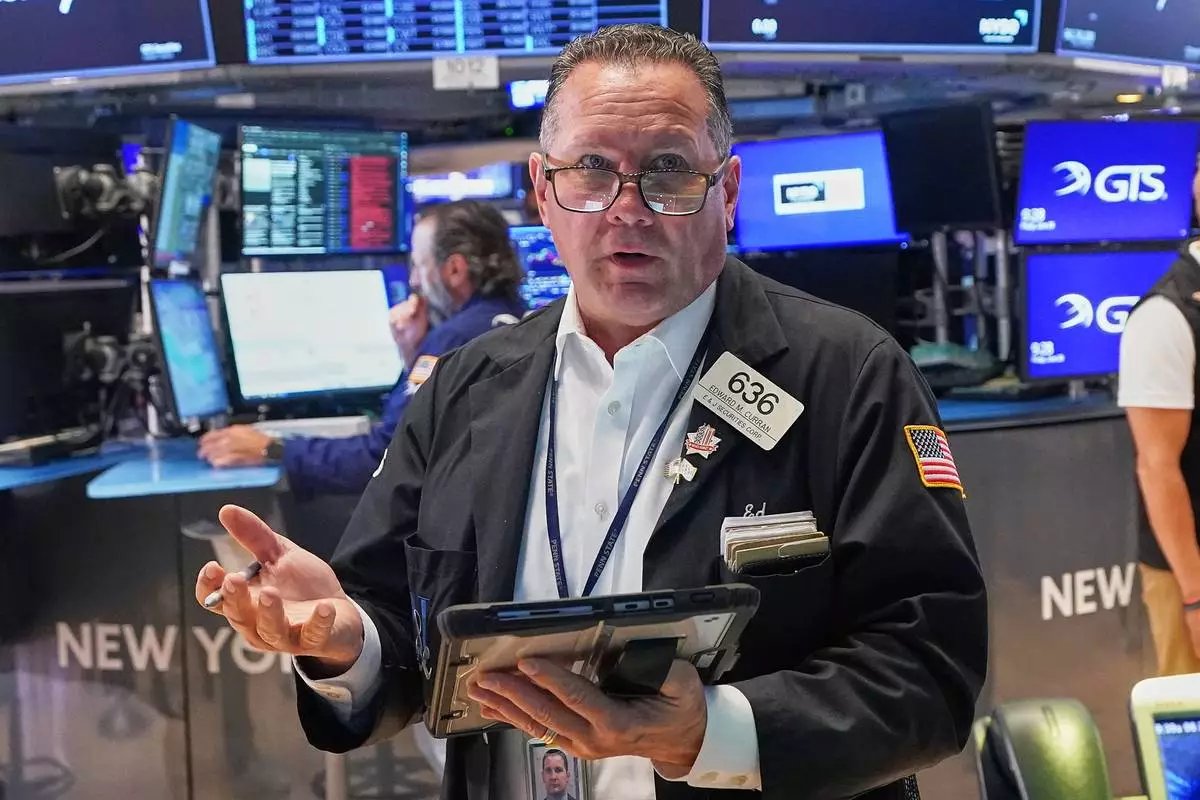
Trader Edward Curran works on the floor of the New York Stock Exchange, Friday, June 26, 2026. (AP Photo/Richard Drew)
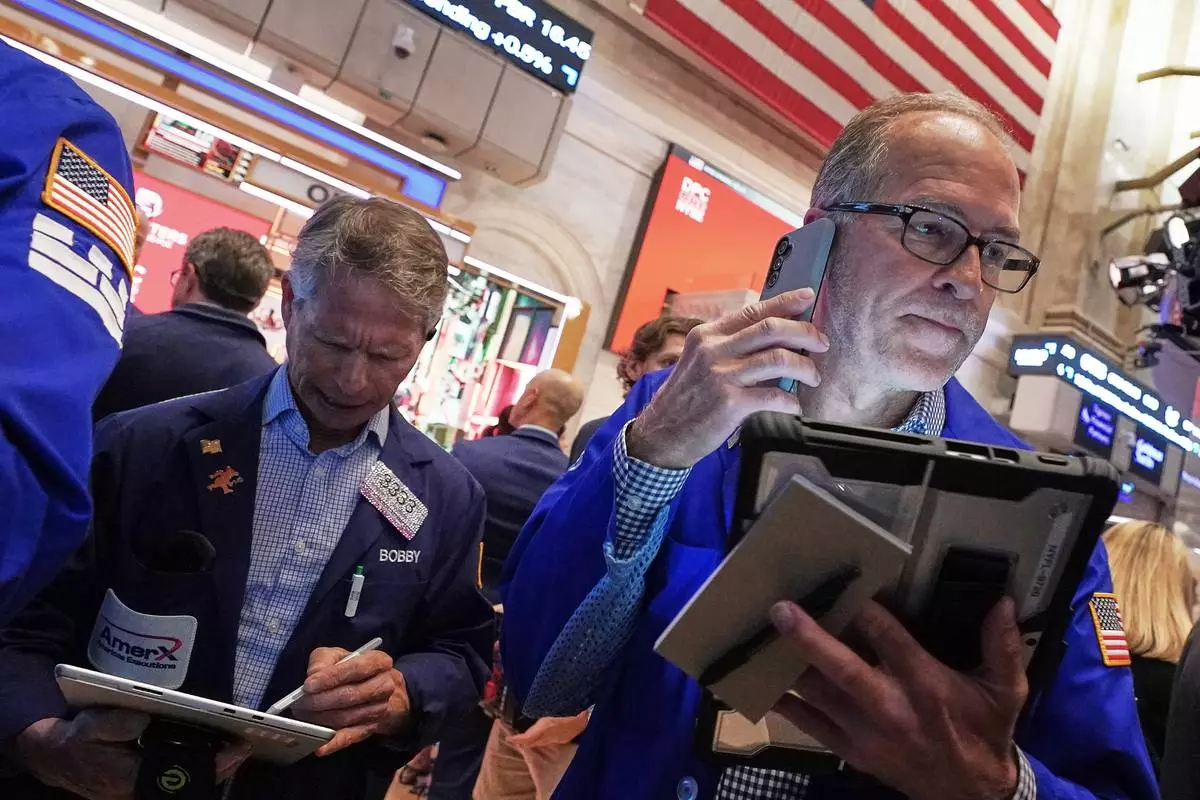
Traders Robert Charmak, left, and Mark Puetzer work on the floor of the New York Stock Exchange, Thursday, June 25, 2026. (AP Photo/Richard Drew)
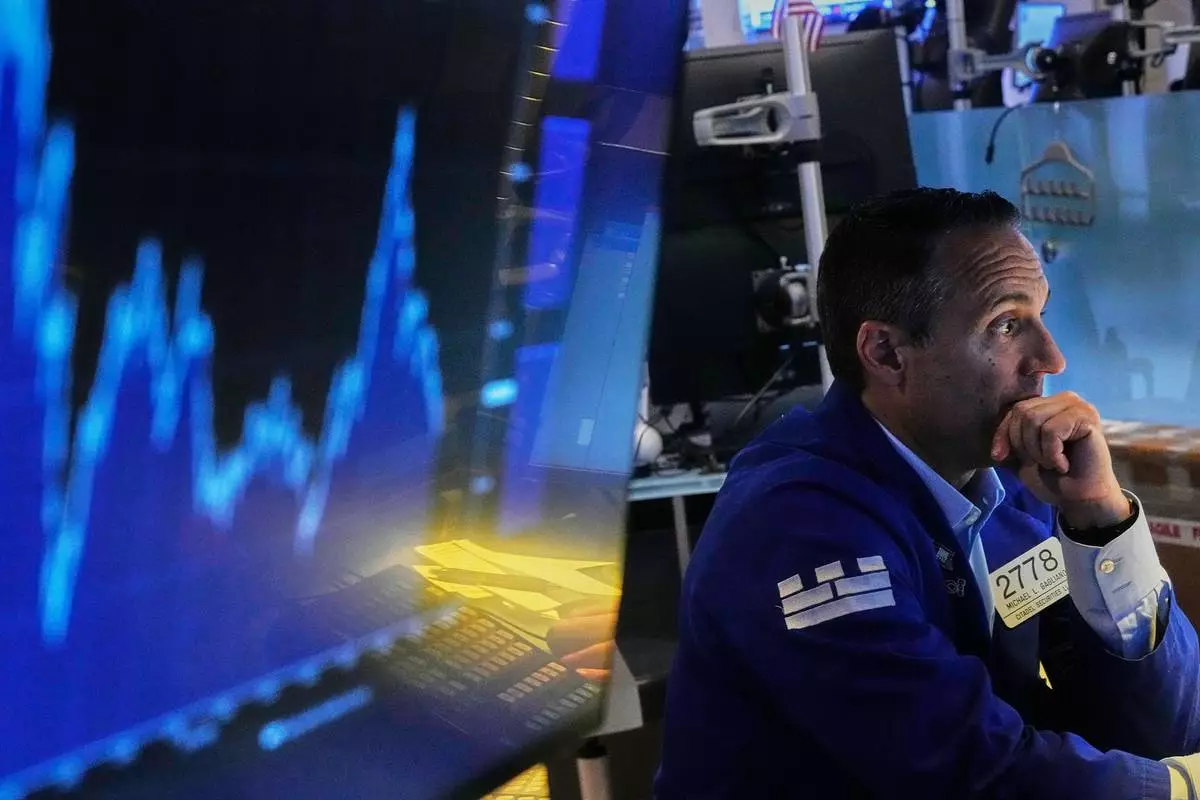
Specialist Michael Gagliano works at his post on the floor of the New York Stock Exchange, Thursday, June 25, 2026. (AP Photo/Richard Drew)
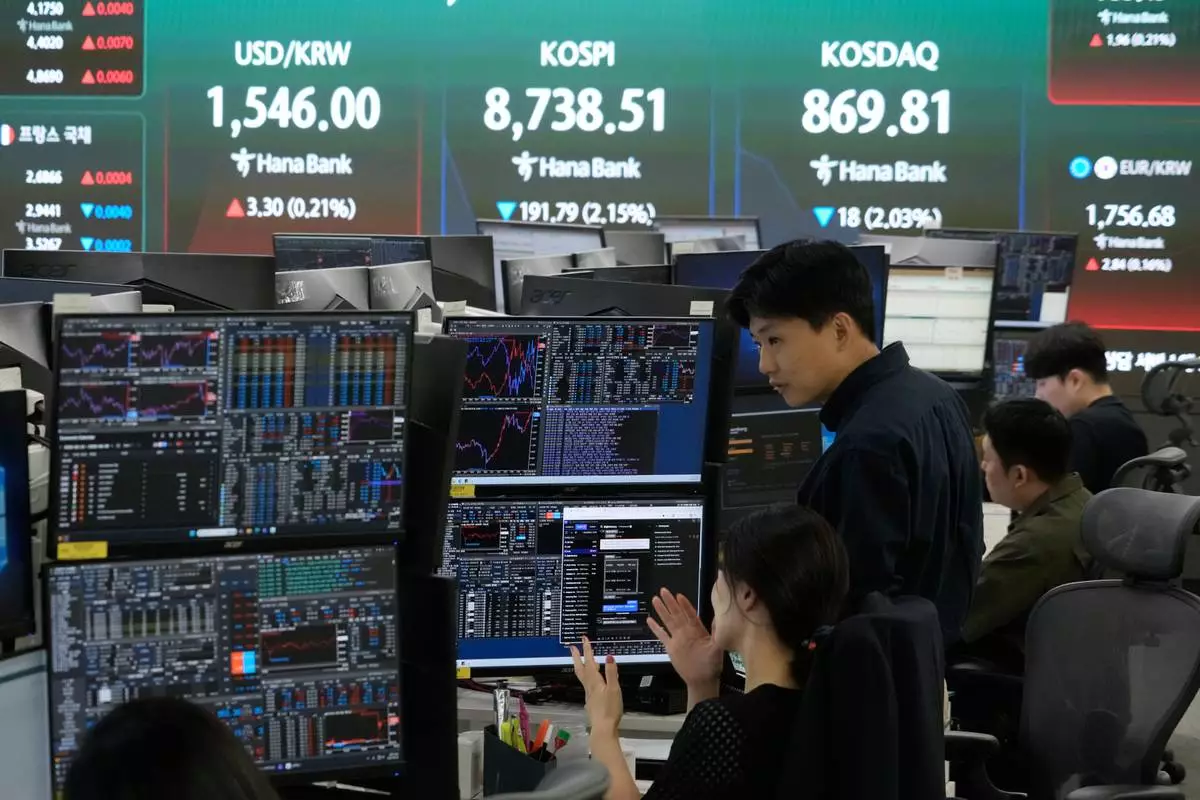
Currency traders work near a screen showing the Korea Composite Stock Price Index (KOSPI) and the foreign exchange rate between U.S. dollar and South Korean won at the foreign exchange dealing room of the Hana Bank headquarters in Seoul, South Korea, Friday, June 26, 2026. (AP Photo/Ahn Young-joon)
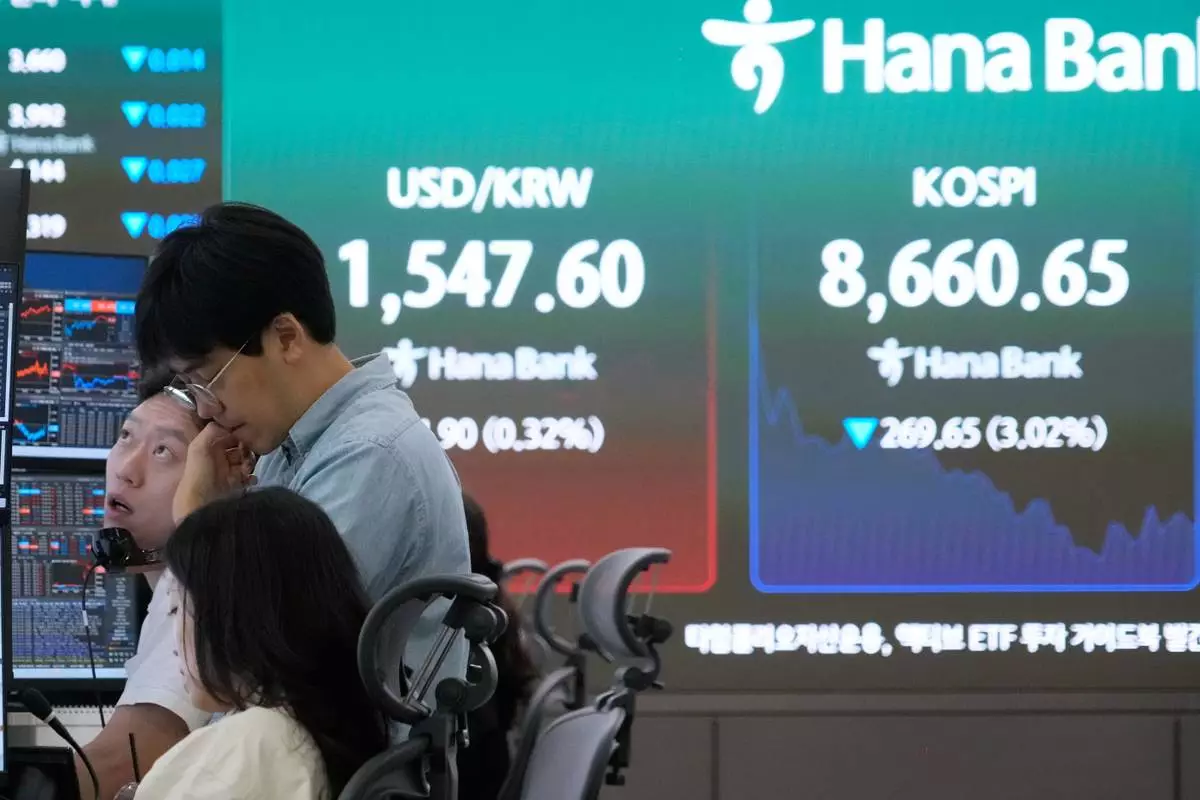
Currency traders work near a screen showing the Korea Composite Stock Price Index (KOSPI) and the foreign exchange rate between U.S. dollar and South Korean won at the foreign exchange dealing room of the Hana Bank headquarters in Seoul, South Korea, Friday, June 26, 2026. (AP Photo/Ahn Young-joon)
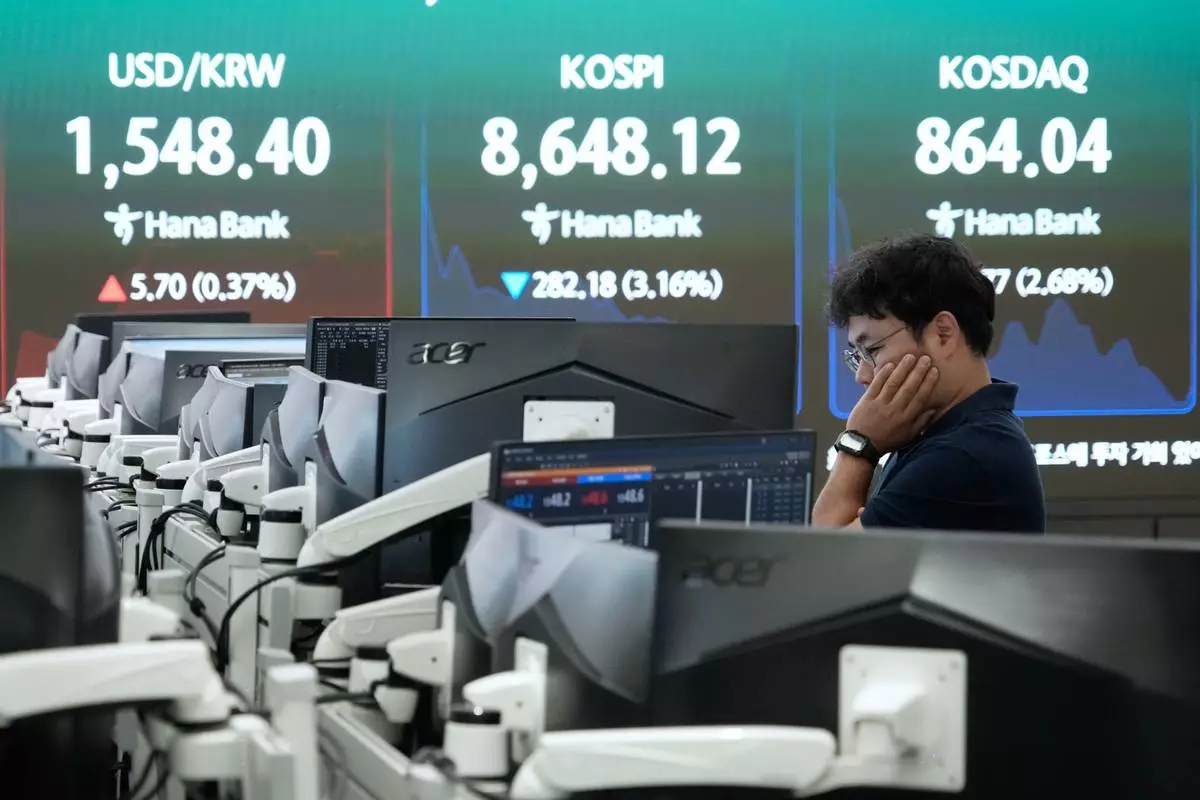
A currency trader watches monitors near a screen showing the Korea Composite Stock Price Index (KOSPI) and the foreign exchange rate between U.S. dollar and South Korean won at the foreign exchange dealing room of the Hana Bank headquarters in Seoul, South Korea, Friday, June 26, 2026. (AP Photo/Ahn Young-joon)
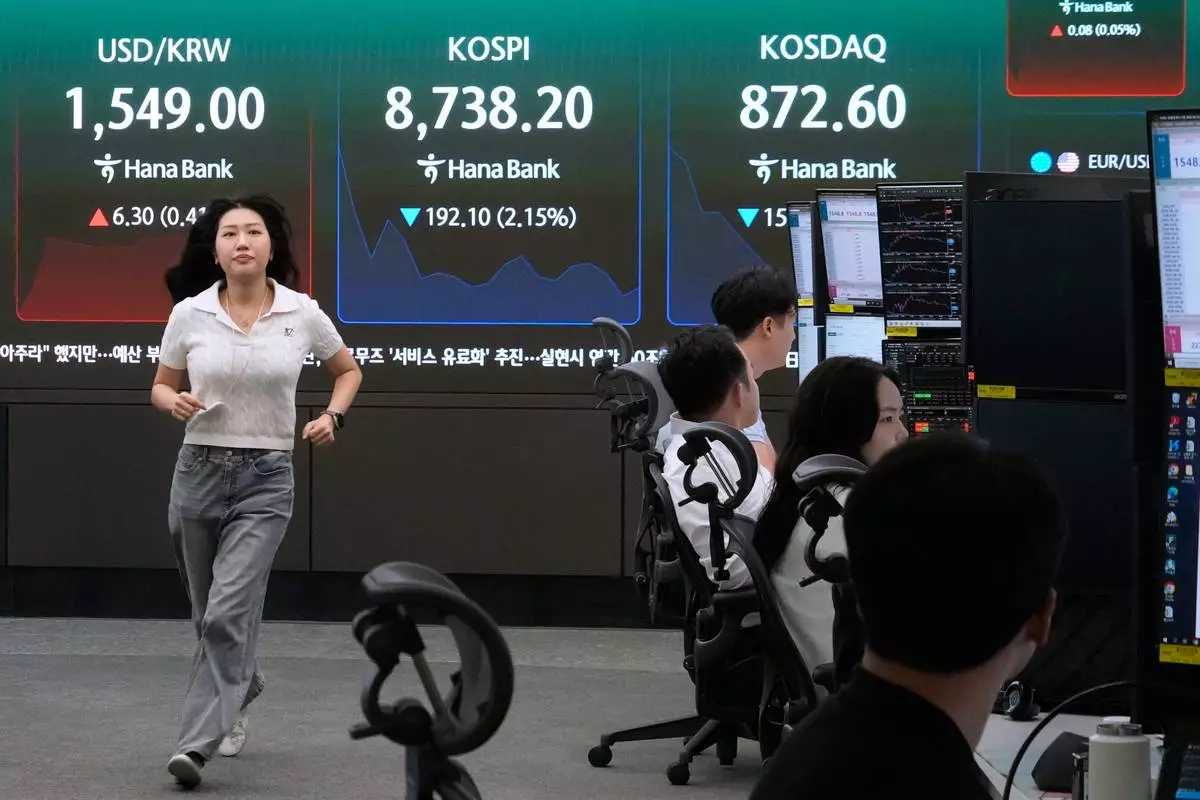
A currency trader passes by a screen showing the Korea Composite Stock Price Index (KOSPI) and the foreign exchange rate between U.S. dollar and South Korean won at the foreign exchange dealing room of the Hana Bank headquarters in Seoul, South Korea, Friday, June 26, 2026. (AP Photo/Ahn Young-joon)