Utah restricted fireworks and declared a state of emergency Friday ahead of July Fourth celebrations as the United States' largest wildfire expanded its reach across more tinder-dry forest as crews rush to fight new blazes in the arid state.
The National Weather Service issued a rare “Particularly Dangerous Situation” warning as dry, windy conditions provided fuel for more fires across the western U.S.
Click to Gallery
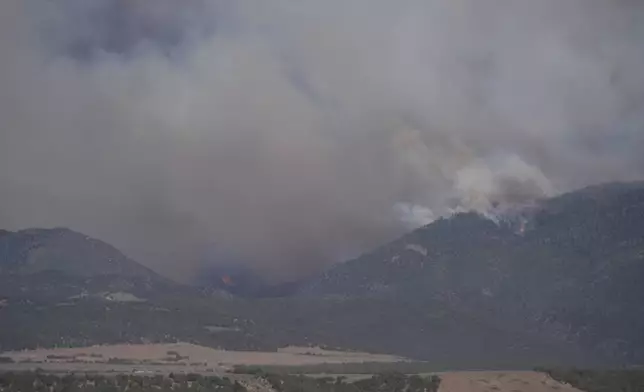
Smoke rises from the Cottonwood Fire near Beaver, Uta, on Friday, June 26, 2026. (AP Photo/Ty ONeil)
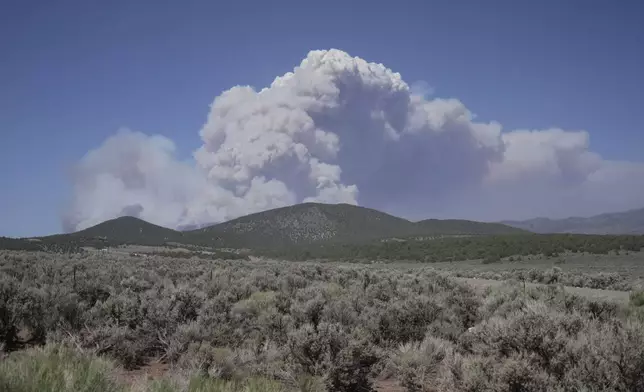
A plume of smoke rises from the Cottonwood Fire, Friday, June 26, 2026, near Beaver, Utah. (AP Photo/Ty ONeil)
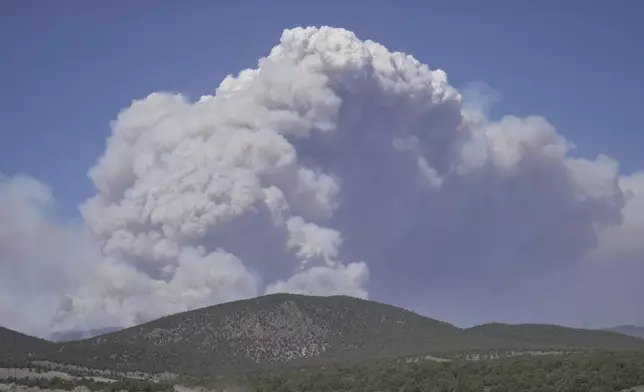
A plume of smoke rises from the Cottonwood Fire, Friday, June 26, 2026, near Beaver, Utah. (AP Photo/Ty ONeil)
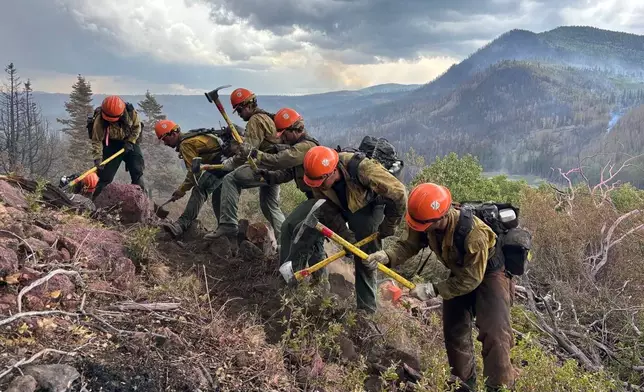
This undated image provided by the U.S. Forest Service Friday, June 26, 2026, shows firefighters responding to the Cottonwood Fire on Wednesday, June 24, 2026, above Birch Lake, near Beaver, Utah. (Mike McMillan/U.S. Forest Service via AP)
The Cottonwood Fire in a sparsely populated area of southern Utah started Monday. It ballooned to more than 112 square miles (290 square kilometers) by Friday, burning unchecked as strong winds grounded air support, forestry officials said. One of six large wildfires burning in Utah, it severely damaged the Eagle Point ski resort in Beaver County, forcing mandatory evacuations.
“We have the 35 miles-per-hour (56 km/h) sustained winds that they predicted, and we definitely have the 45 miles-per-hour (72 km/h) gusts,” said Alyssa Mason, a spokesperson assigned to the fire. “So there has been a great increase in the fire activity. We are seeing extreme fire behavior out there with some crown runs and definitely some spotting.”
The smoke has been pushing to the east and northeast, meaning air quality at popular vacation spots like Zion and Bryce Canyon national parks — located far south of the flames — hasn’t been significantly affected beyond some haze in the Bryce area. Still, visitors to Bryce have posted videos on social media showing the giant plume in the distance.
The smoke could be seen for hundreds of miles, all the way to Colorado, as authorities put roughly 1,300 residents in the towns of Marysvale, Junction and Circleville on notice that they should be prepared to leave if conditions worsen and the fire pushes further. In Marysvale, ash fell from the sky and thick smoke blocked the sun on Friday, making the sky dark as night.
State forester Jamie Barnes had said Thursday that it's like nothing seen in recent memory. She said fires are spreading farther and faster “under conditions that defy historical expectations.”
Bruce Brown, 76, accompanied the sheriff on Thursday to find that his cabin and others in the area were gone. He found a burned out moonscape with power poles tipped over along the canyon.
Alyssa Olsen, 27, said her family’s cabin also burned. It was the last place they gathered for family photos with her grandmother before she died of cancer. Her brother was planning to get married there in two months.
“That stuff you can’t just build back,” Olsen said.
Gov. Spencer Cox set the temporary fireworks restrictions through July 5 as the nation prepares to celebrate its 250th anniversary, saying “this year is different.”
The weather service in Salt Lake City, for the first time in the office's history, issued a “ Particularly Dangerous Situation ” warning for five Utah counties, including the area of the Cottonwood Fire. The rare alert was first used to warn of tornado conditions. A red flag warning also was issued for most of the state.
“Prepare now for rapid fire growth,” it said.
A similar “dangerous situation” warning had been issued for the 2025 Palisades Fire in Los Angeles. A federal judge declared a mistrial Friday in the arson case against Jonathan Rinderknecht, the man accused of sparking that fire. The jury said it couldn't agree on a verdict.
While the Cottonwood Fire's cause was unknown, Cox’s order noted that humans have been the cause of most fires in the state so far this year.
The governor’s order gives Barnes power to restrict or prohibit fireworks displays in Utah’s cities and towns, instead of leaving those decisions to the communities.
With extreme fire conditions persisting, Rocky Mountain Power issued a public safety power shut-off watch/warning for areas of central, southern and eastern Utah through the weekend.
Crews also were battling the Iron Fire southwest of Salt Lake City. The flames on Thursday forced the temporary evacuation of Eureka, population 1,000.
Red flag warnings, which mean conditions such as low humidity, warm temperatures and strong winds can create an extreme wildfire risk, were in effect Friday and stretched from Idaho to southern Arizona and New Mexico.
The warnings extended into Saturday, with forecasters predicting winds of 25 to 35 miles an hour (40 km/h to 56 km/h) and very low humidity levels. The worst conditions were expected from northern Arizona into central and southern Utah.
Much of Utah already is experiencing severe to extreme drought, while parts of Colorado, Arizona and New Mexico are experiencing severe drought, according to the U.S. Drought Monitor.
Tim Brown, a research professor and director of the Western Regional Climate Center, said the potential for extreme fire behavior will remain as long as it's hot, dry and windy.
“I would not be surprised to see a lot of restrictions come out as we get closer to the July Fourth weekend,” he said. “People really need to be aware of their surroundings if they’re going to be out in the forested campground areas and grassland areas.”
Even in Florida, where there have been multiple brush fires, authorities are urging people to skip the personal fireworks and instead leave the pyrotechnics to professionals putting on carefully planned shows.
In Utah, federal land managers have closed public lands near the Cottonwood Fire as a precaution, and in New Mexico, forest officials closed campgrounds and trails near a wildfire burning in the Jemez Mountains.
Nationally, nearly 3 million acres have burned since the start of the year, pushing the U.S. ahead of the 10-year average. The National Interagency Fire Center said firefighters are making progress on containing fires from Alaska to Florida.
Associated Press reporter Sudhin Thanawala contributed to this story.
This story has been corrected; the state forester's first name is spelled Jamie, not Jaime.
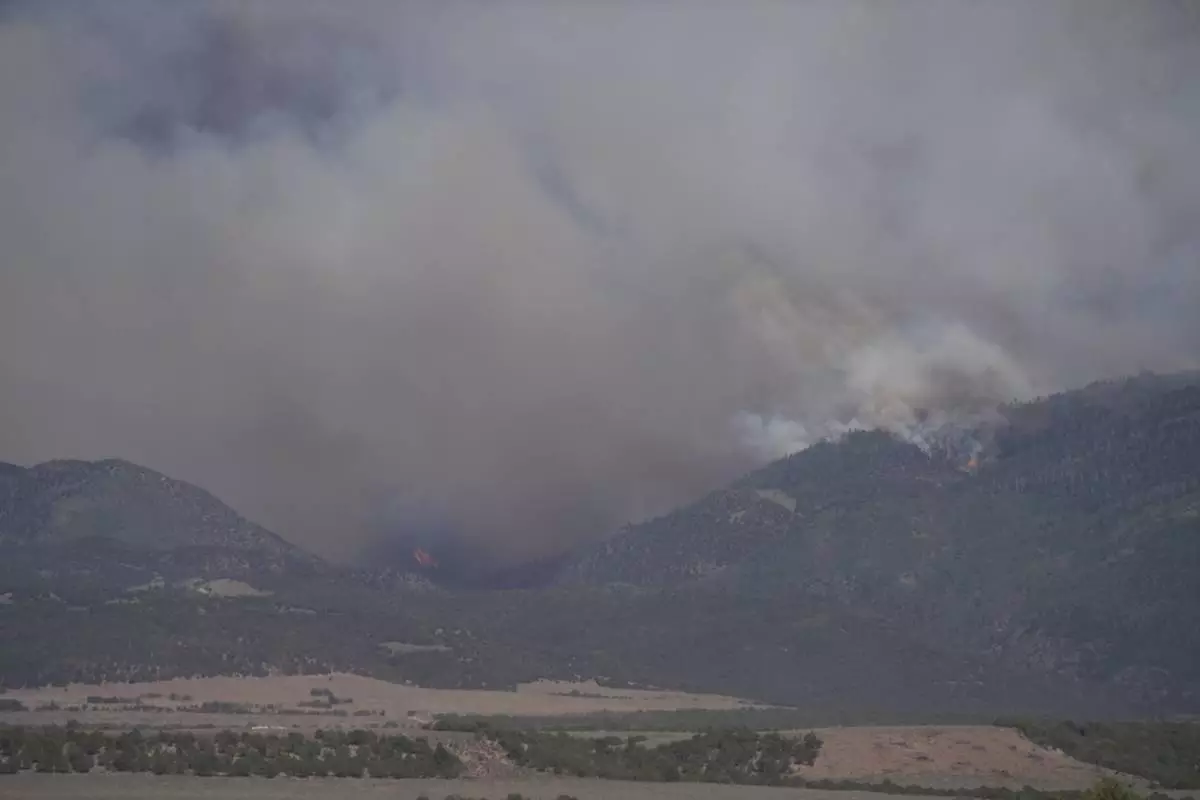
Smoke rises from the Cottonwood Fire near Beaver, Uta, on Friday, June 26, 2026. (AP Photo/Ty ONeil)
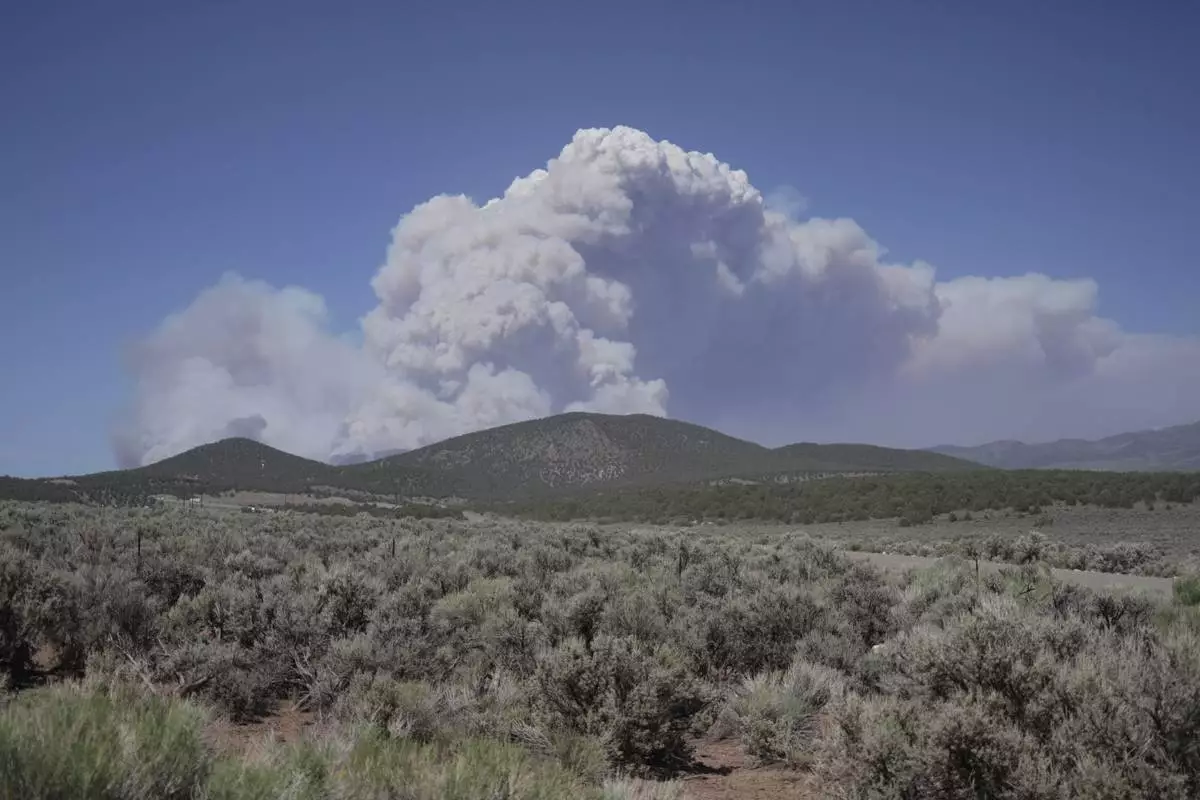
A plume of smoke rises from the Cottonwood Fire, Friday, June 26, 2026, near Beaver, Utah. (AP Photo/Ty ONeil)
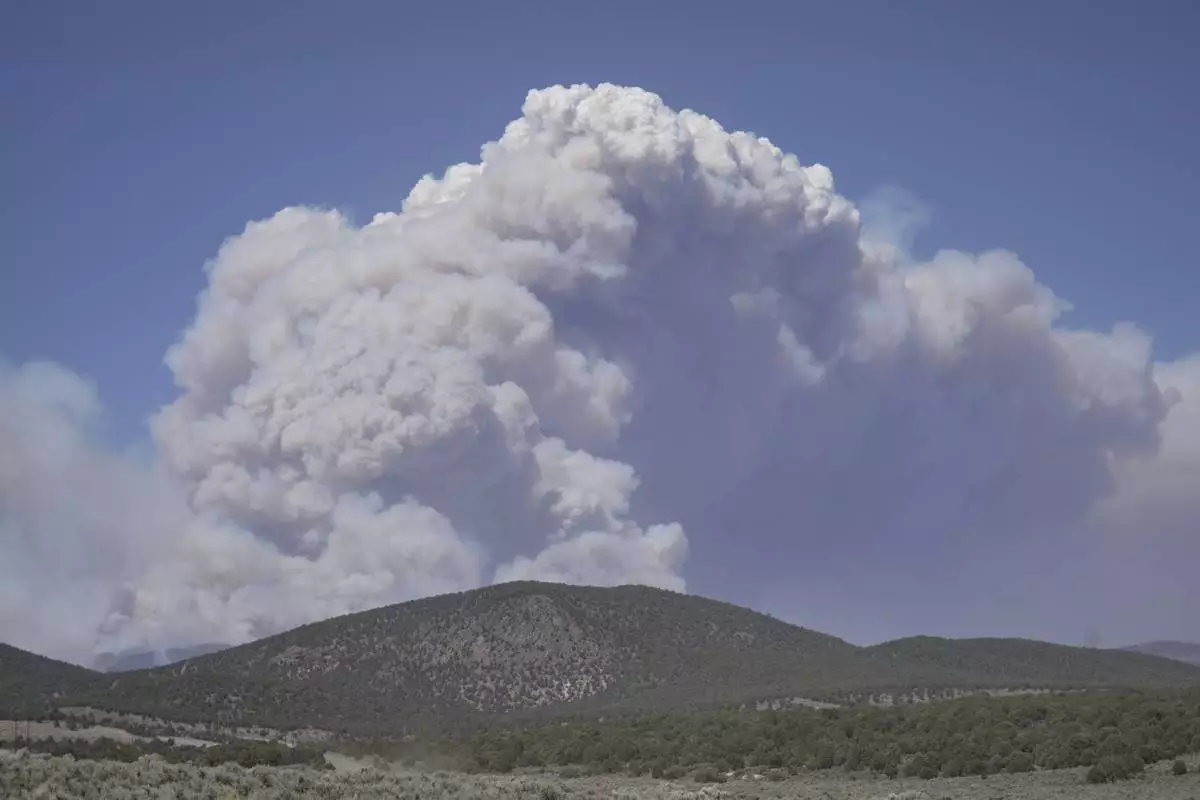
A plume of smoke rises from the Cottonwood Fire, Friday, June 26, 2026, near Beaver, Utah. (AP Photo/Ty ONeil)
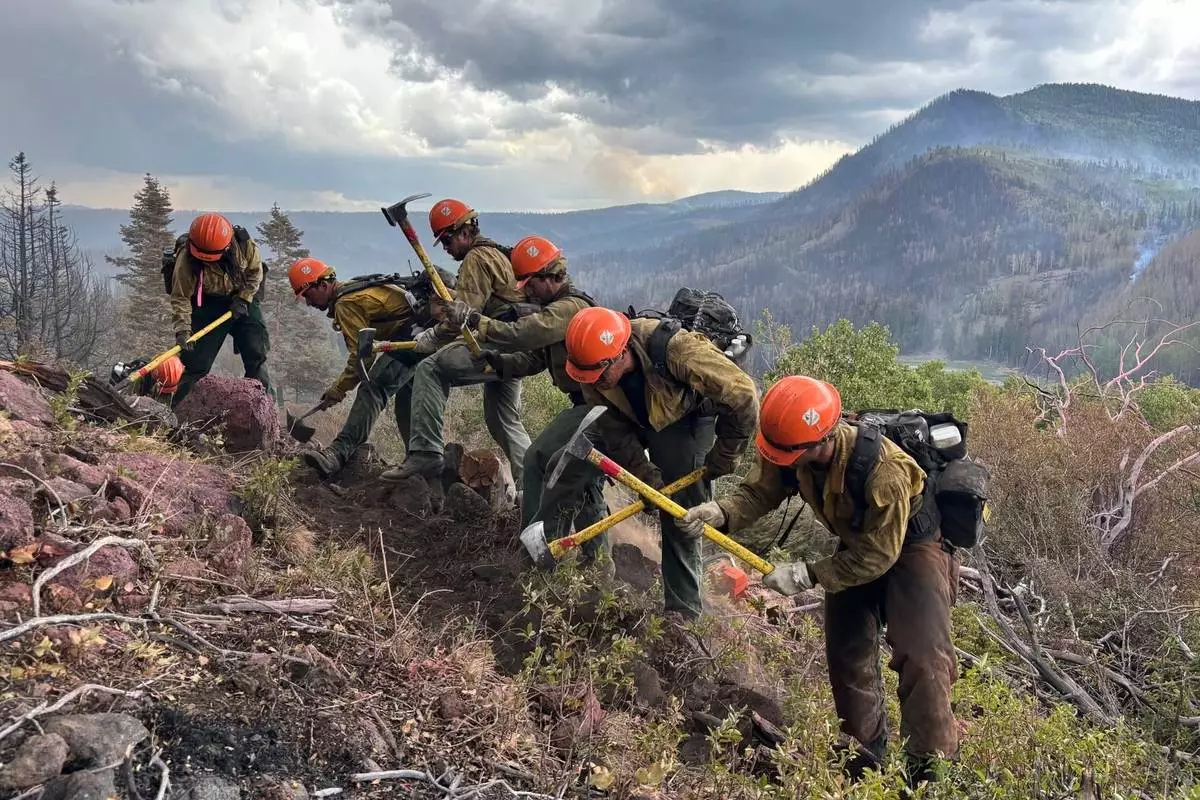
This undated image provided by the U.S. Forest Service Friday, June 26, 2026, shows firefighters responding to the Cottonwood Fire on Wednesday, June 24, 2026, above Birch Lake, near Beaver, Utah. (Mike McMillan/U.S. Forest Service via AP)
WASHINGTON (AP) — Airlines across the U.S. worked to recover from the longest nationwide ground stop in 25 years that canceled thousands of flights Saturday, stranded hundreds of thousands of passengers, spread ripple effects around the world, and forced pro and college sports teams to scramble for alternate transportation.
New technology being added to the nation’s air traffic control system overloaded antiquated equipment and caused “intermittent” communications and radar gaps, leading to the flight shutdown of more than four hours, Trump administration officials said.
Airports were slowly returning to normal, Secretary of Transportation Sean Duffy said, with planes taking flight and landing. But the effects could be felt for days. Officials say the system will likely return to normal in time to handle the Thanksgiving travel rush.
The nationwide stop was the first since January 2023, when another key Federal Aviation Administration computer system that sends notices to pilots malfunctioned, and the second since the Sept. 11, 2001, attacks.
Andrew Charlton, an aviation consultant, said Friday's stoppage affected about a quarter of the 45,000 flights in the U.S. each day.
“The knock-on effect of that is incredible,” said Charlton, managing director of Aviation Advocacy. “The aircraft doesn’t just fly from A to B and back to B and then stop. It then moves onto C and then over to E and around and around and around. It is, of course, exacerbated if you’re talking about long-haul flights, international flights over the Atlantic or over the Pacific.”
At airports, passengers stared at screens showing delays or rushed to find buses or trains to their destinations.
Emily Brown and her 14-year-old daughter waited more than four hours Friday at the Dallas airport for their flight to Columbus, Ohio, before giving up. They were traveling to surprise her daughter’s best friend. Instead, she had to settle for phoning the friend through tears in the airport, Brown said.
“She saved up her money to buy her own ticket, and she’s planned this whole weekend,” Brown said. “Now we’re not sure when we’re gonna be able to go.”
A cheerful Southwest Airlines gate agent greeted passengers at Dallas Love Field at dawn Saturday with, “Good morning, good morning,” then repeatedly said all flights were full and asked passengers to have boarding passes ready to expedite the process and help keep flights moving.
Sports teams scheduled to play this weekend adjusted game start times, searched for hotel rooms, rescheduled flights and chartered buses.
Auburn University's football team opted to take a bus to Mississippi State, and the Saturday start time was pushed back from noon ET to 4:15 p.m. Other universities affected by the stoppage included Baylor, Washington, Kansas State, Minnesota and No. 19 Ole Miss, which did not plan to fly until Saturday morning for its game against Oklahoma.
FlightAware, a website that tracks flights, said more than 4,100 flights had been canceled. Cirium, a similar site, put that number above 3,200 flights.
Corbyn Wascher's flight was on the tarmac at the Charlotte, N.C., airport for four hours Friday on his way home to Moline, Illinois, from a conference in Miami. The 37-year-old high school teacher paid $100 to take an Uber to a hotel 25 minutes from the airport after he was unable to find a flight until Saturday afternoon to Chicago.
At London’s Heathrow Airport, several flights to and from the U.S. were listed as delayed or canceled Saturday.
“While U.S. flights have resumed, there may be some follow-on disruption as airlines work to rebook affected passengers and get all services back to normal,” said Tim Johnson, consumer director at the U.K. Civil Aviation Authority.
Secretary of Homeland Security Markwayne Mullin told reporters at the White House that no one was in any danger as more than 3,000 flights in the air at the time of the grounding order landed safely.
Duffy blamed Congress for failing to approve more funding for new technology, while downplaying the fact that trying to implement new fixes overtaxed the system. He suggested more disruptions might occur.
“We didn’t think we would have this kind of outage. We did,” he said. “We were able to review what went wrong, and then reboot the system and go. But, you will have more of these.”
Duffy said the failure involved old equipment and was not linked to the FAA’s new AI-powered system, which the agency is rolling out to help predict problems in the sky.
The problem was due to updating a system that can never shut down, Charlton said.
“What you’re watching here is trying to change the tires of your car when the car’s going at 80 miles an hour down the expressway, because nothing stops in aviation,” Charlton said. “It’s a 24/7 operation. And to make changes on the fly, if you’ll pardon that pun, is incredibly complex and dangerous.”
The FAA already replaced thousands of old copper wires with fiber optic lines and upgraded hundreds of radio systems as part of the overhaul that began last year after Congress approved $12.5 billion in funding. Duffy and the White House are pushing for $30 billion more to complete the work.
The problem appeared similar to a regional air traffic control communication outage in September that snarled hundreds of flights across the Northeast, although that disruption was linked to a construction crew cutting a fiber optic line. Aging equipment was also blamed for brief radar outages last year that disrupted Newark airport.
Aviation safety expert Steve Arroyo said the difference this time was the nationwide scale of the disruption, which left controllers unable to reliably talk to pilots.
“If you don’t have that ability, whether it’s because the old wires that they have are just run down or for whatever reason, you’ve got to stop airplanes on the ground and not put them in the air, where you’re going to risk not being able to communicate with them,” said Arroyo, a former United Airlines pilot.
It differed from the one after 9/11 because planes were not being told to land immediately and pilots likely were able to communicate with ground controllers at airports, Arroyo said.
Funk reported from Omaha, Nebraska, and Golden from Seattle. Associated Press journalists David Keyton in Berlin; Stephen Hawkins in Dallas; Mead Gruver in Fort Collins, Colorado; Jessica Hill in Las Vegas; Ali Swenson in Chicago; Alex Veiga and Jaimie Ding in Los Angeles; Seung Min Kim and Aamer Madhani in Washington; Hannah Schoenbaum in Salt Lake City; and Brian Melley in London contributed to this report.
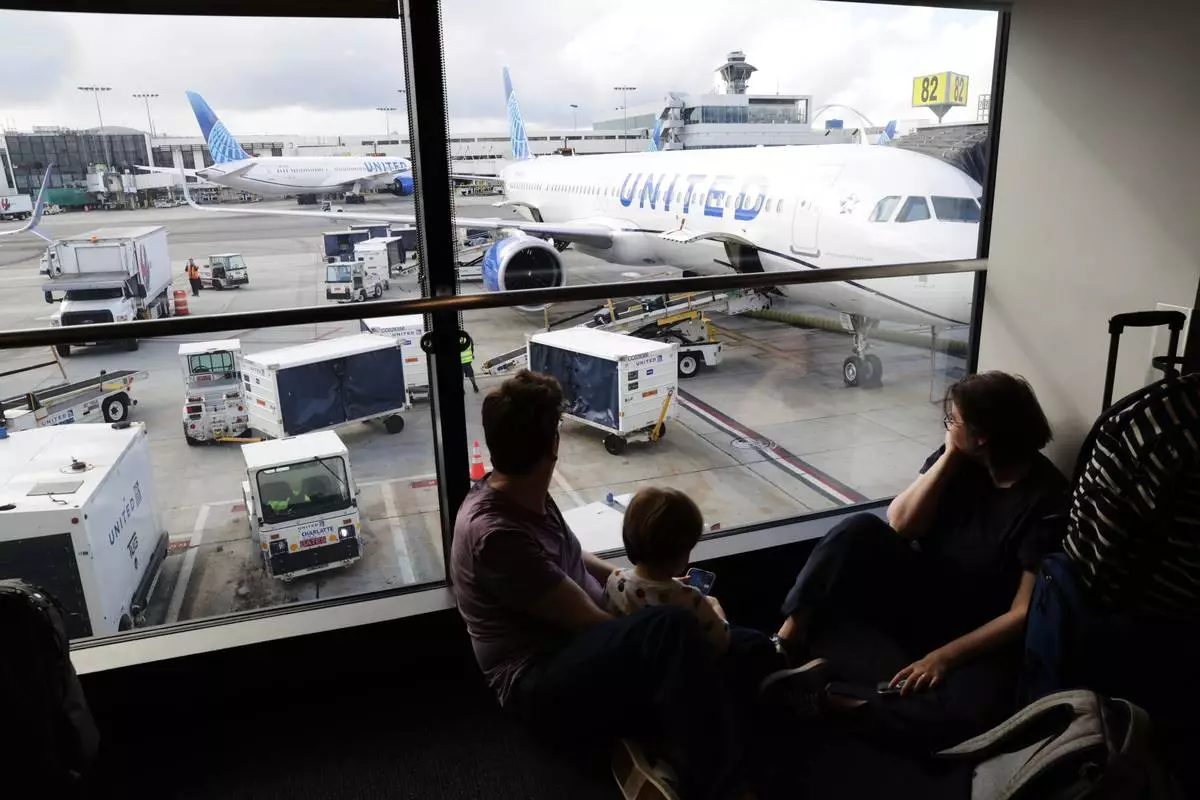
Passenger watch as workers unload luggage from a United plane as flights are delayed at Los Angeles International Airport Friday, Nov. 13, 2026, in Los Angeles. (AP Photo/Ethan Swope)
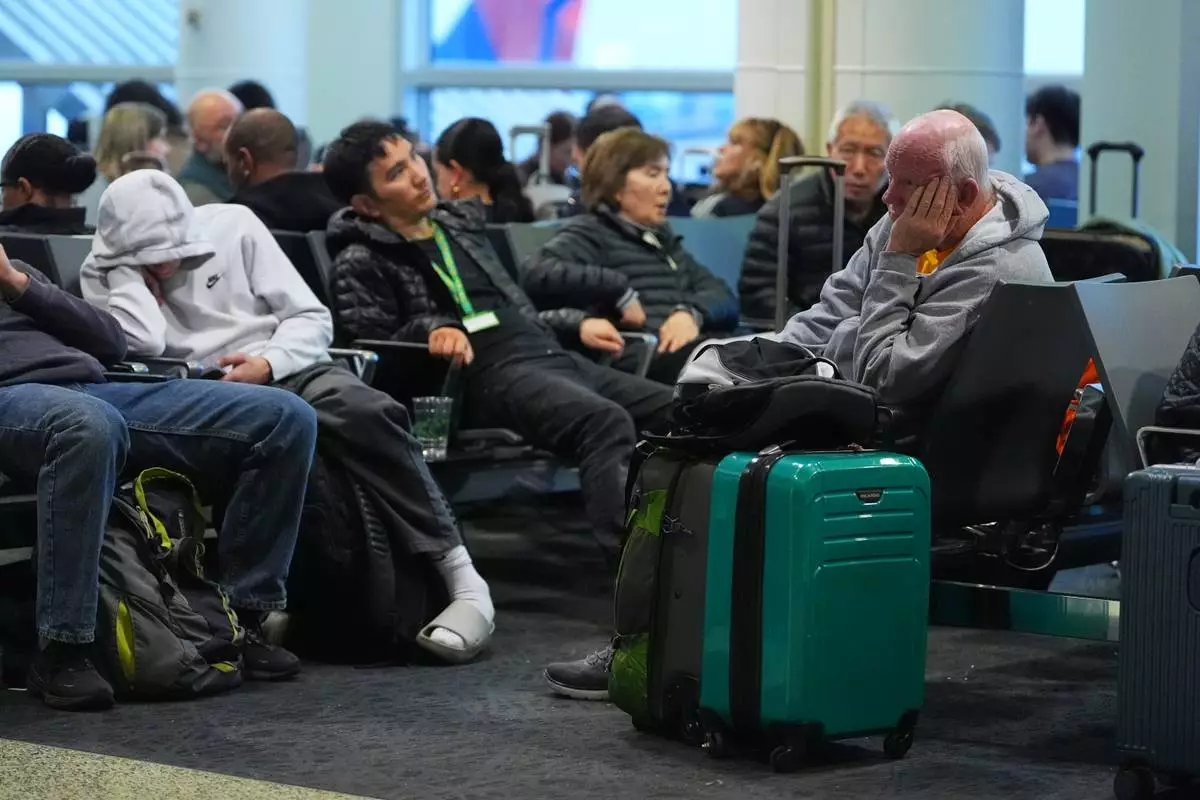
Passengers wait as flights are delayed inside a terminal at Seattle-Tacoma International Airport on Friday, Nov. 13, 2026, in Seattle. (AP Photo/Lindsey Wasson)
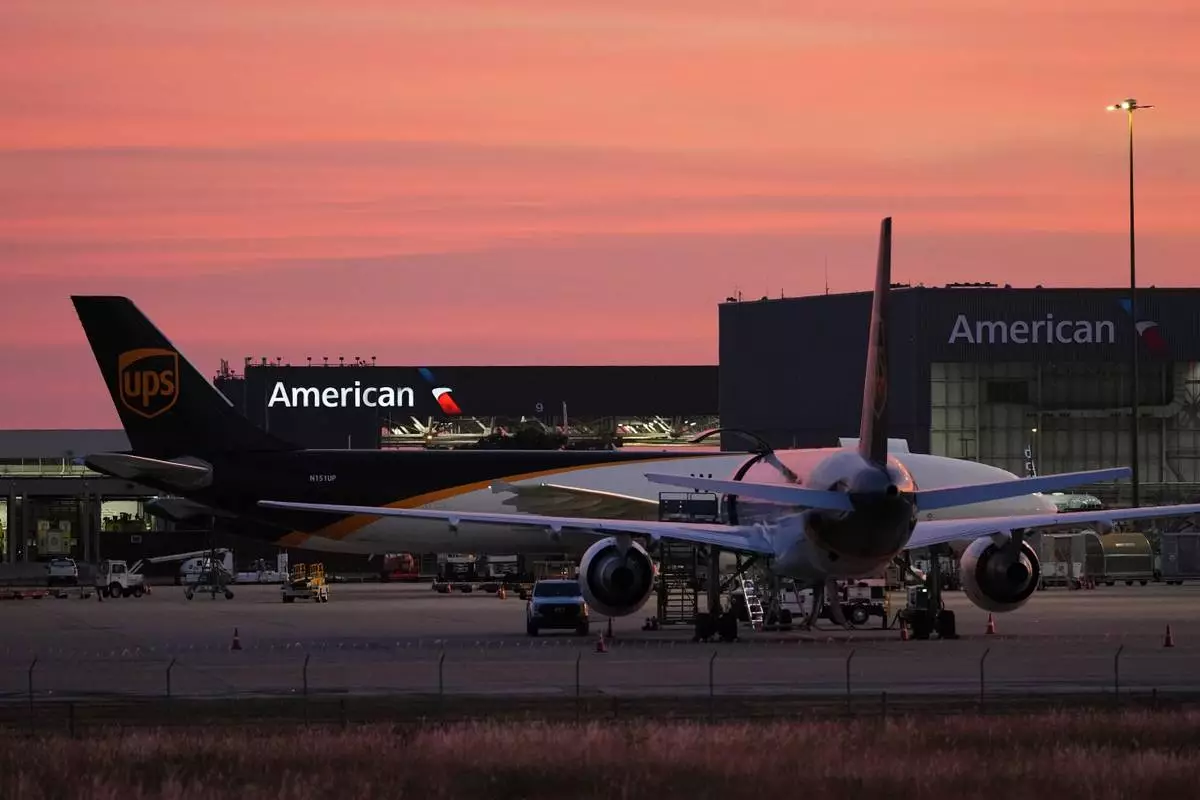
The sun sets over Dallas Fort Worth International Airport in DFW Airport, Texas, Friday, Nov. 13, 2026, after the Federal Aviation Administration grounded flights nationwide. (AP Photo/Tony Gutierrez)
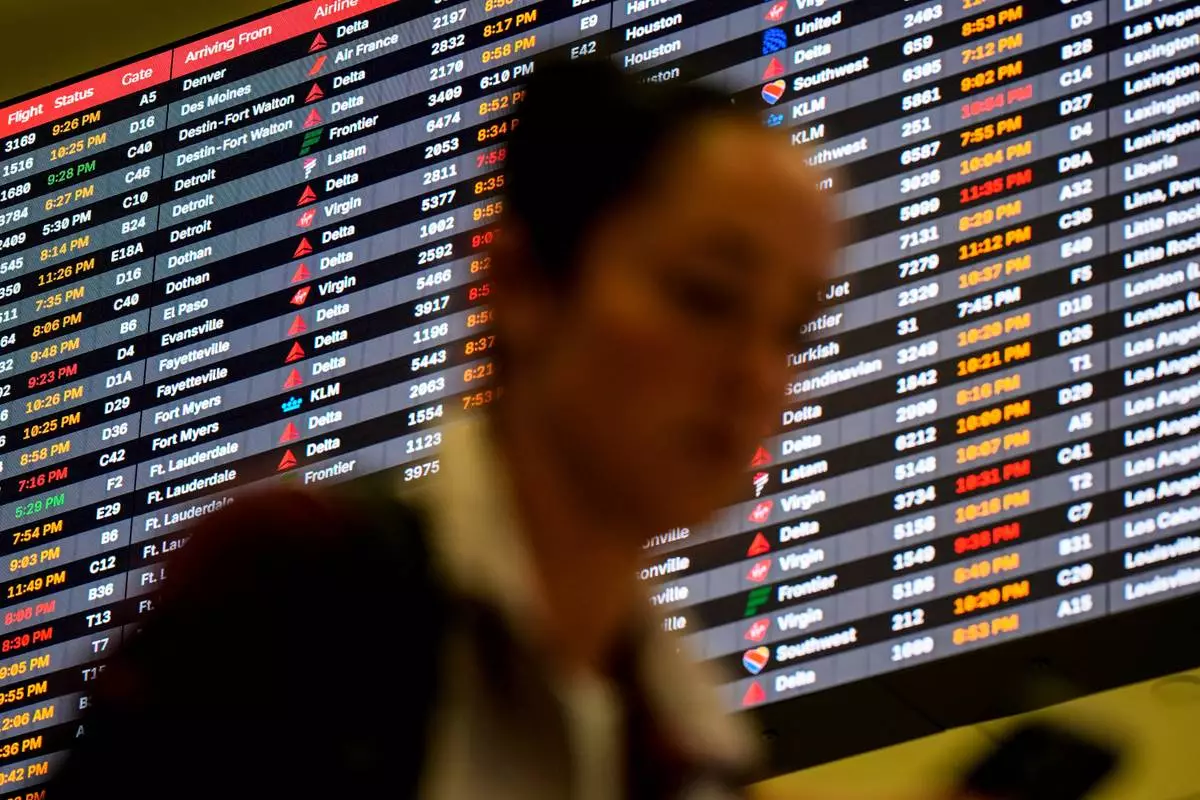
A passenger moves through Hartsfield-Jackson Atlanta International airport as all flights are canceled or delayed, Friday, Nov. 13, 2026, in Atlanta. (AP Photo/Mike Stewart)
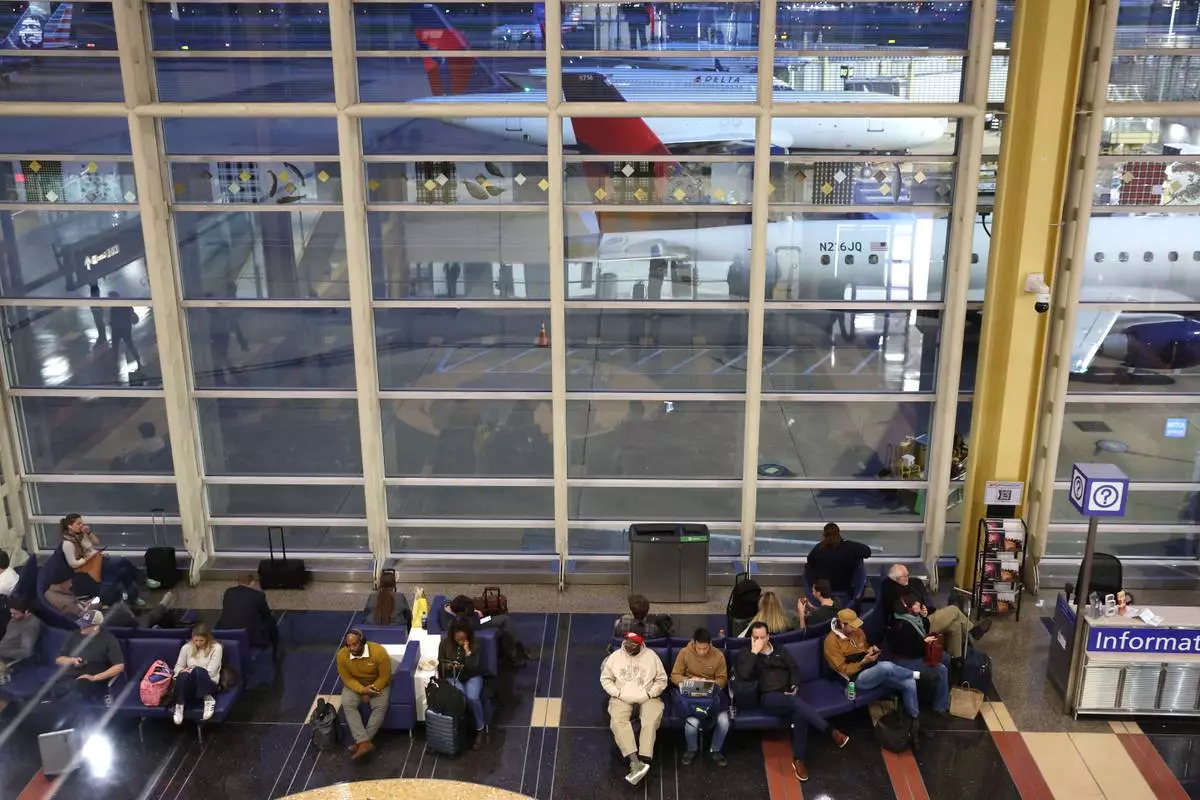
People wait at a terminal at Ronald Reagan Washington National Airport, Friday, Nov. 13, 2026, in Arlington, Va., after the FAA issued a nationwide ground stop. (AP Photo/Tom Brenner)
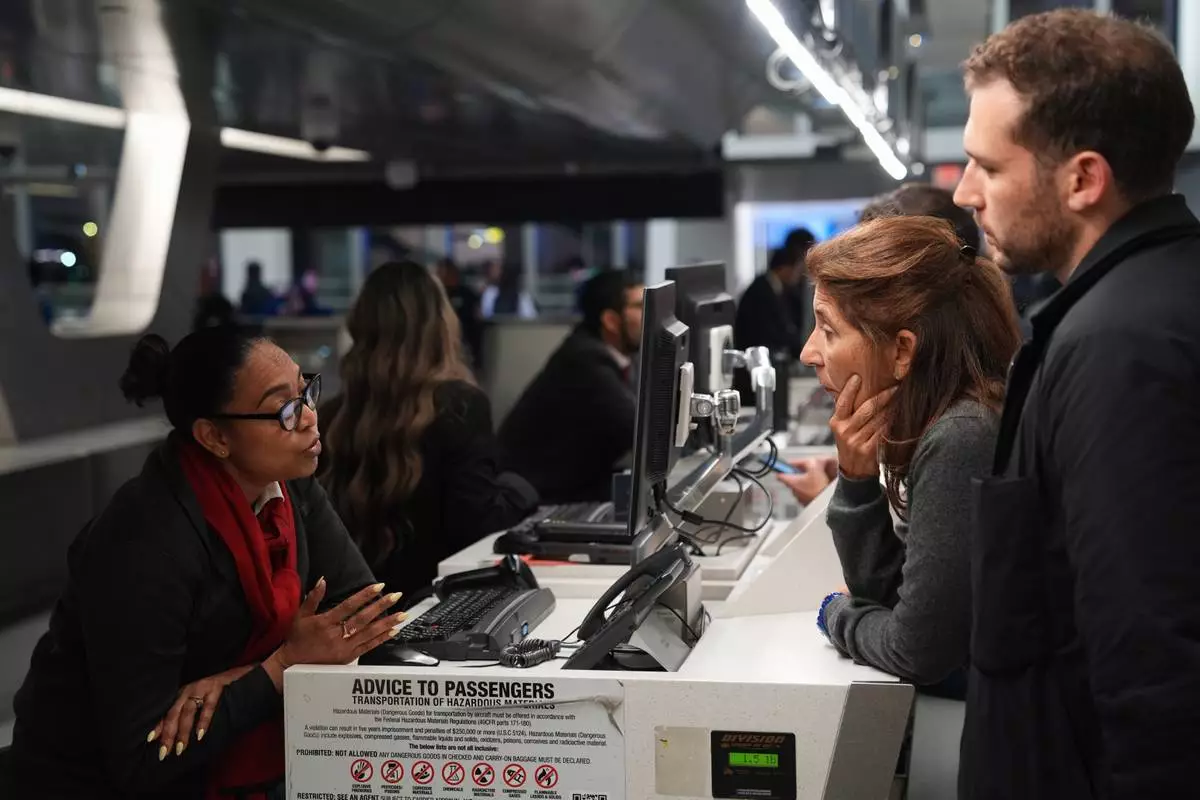
An agent helps travelers at a ticketing desk at LaGuardia Airport in New York, Friday, Nov. 13, 2026, after the Federal Aviation Administration grounded flights nationwide. (AP Photo/Ryan Murphy)