Skip to Content Facebook Feature Image

Global green transition solutions take center stage at China supply chain expo

China

China

China

Global green transition solutions take center stage at China supply chain expo

2026-06-27 08:08 Last Updated At:06-29 13:44

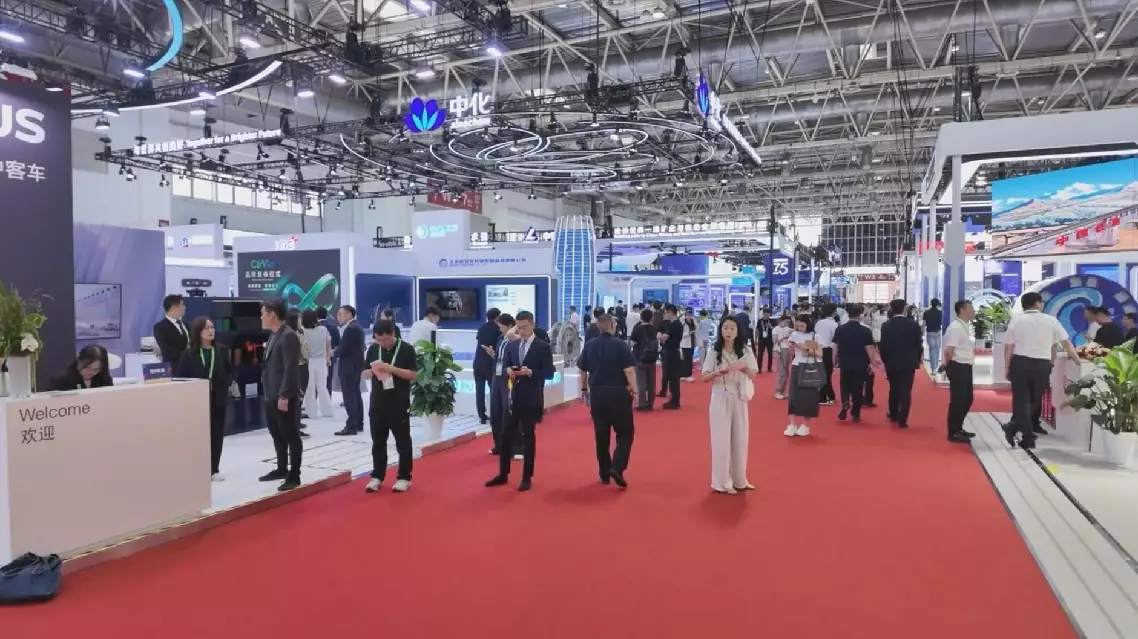
AI-powered factories and wind-assisted cargo ships were among the solutions on display at the 4th China International Supply Chain Expo (CISCE), highlighting how innovation is shaping the global green transformation.

The event, which ran from Monday to Friday, featured supply chain exhibitions in digital technology, advanced manufacturing, green agriculture, healthy life, smart vehicle and clean energy, as well as a supply chain service zone.

At the booth of leading solar manufacturer TCL Zhonghuan, a domestically developed AI large model is lifting both crystal pulling efficiency and stability by 20 percent. Trained on massive volumes of historical production data, the system continuously optimizes process parameters, directly boosting green energy output, according to officials.

"We built a vision-enabled AI large model. Trained on historical production data, it continuously optimizes product and process parameters to boost line performance and stability," said Shi Peng, senior manager of informatization of TCL Zhonghuan.

Beyond individual enterprises, the expo highlighted that China's industrial ecosystem is becoming a testbed and launchpad for global low-carbon solutions.

Maersk, the Danish shipping giant, presented an AI-powered logistics planning system first developed in China and now being rolled out worldwide. The tool enables customers to optimize container loading, cutting costs while shrinking carbon footprints.

"This is actually a local innovation in China and then now become global. So, this systems allow customers, for example, to optimize the loading of their containers, improving cost efficiency while lowering carbon emissions," said Silvia Ding, president of Maersk Greater China.

According to Ding, the AI system slashes container planning time from weeks to mere hours, significantly improving supply chain fluidity.

Meanwhile, Airbus, joining the Expo for the second year, displayed a specialized green-powered cargo vessel designed to transport aircraft components.

"Why I put this here is because this vessel has its unique shape with these six columns of rotor sails. This can take advantage of the wind energy. In the real operation, it can reduce as much as 50 percent of carbon emissions," said George Xu, CEO of Airbus China.

As the world's first national-level exhibition focusing on supply chains, the CISCE is an internationally shared public good. First held in 2023, the expo has contributed to building more secure, stable, open and inclusive global industrial and supply chains.
Global green transition solutions take center stage at China supply chain expo

Global green transition solutions take center stage at China supply chain expo

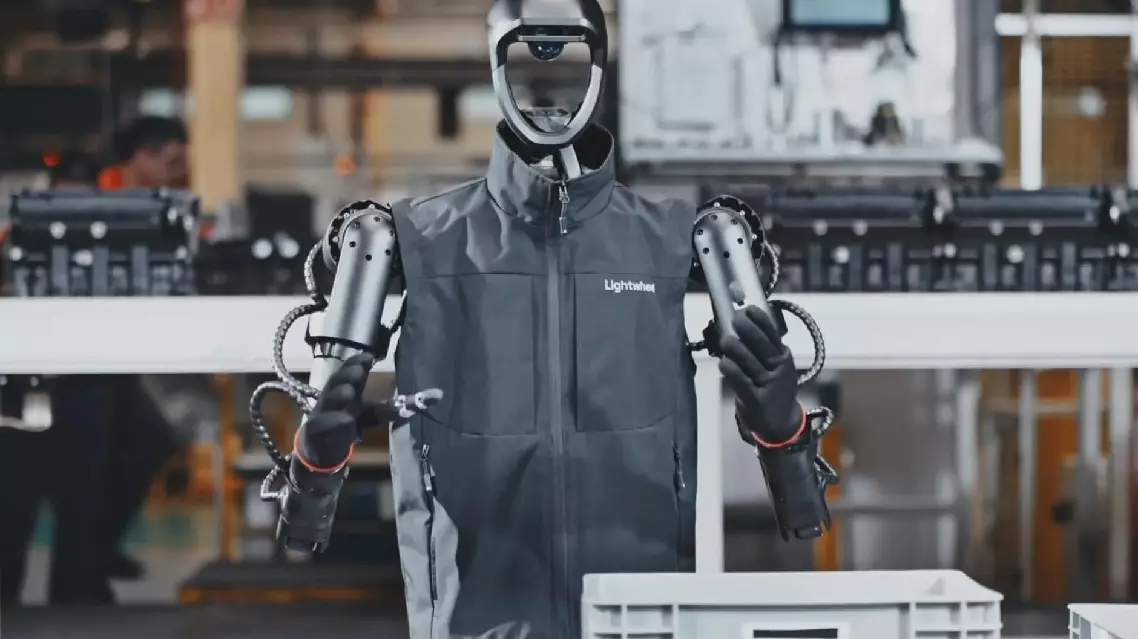
Embodied artificial intelligence (AI) has emerged as a major highlight at the ongoing 2026 China International Fair for Trade in Services (CIFTIS), with humanoid robots and related technologies showcasing advances across the industry's full industrial chain -- from whole-machine motion and underlying control systems to data collection and training.

More than 130 companies and institutions are exhibiting in the telecommunications, computer and information services exhibition hall at this year's CIFTIS, where the full industrial chain of embodied AI is on display.

Humanoid robots are among the key attractions, demonstrating technologies covering whole-machine movement, underlying control and data collection.

One humanoid robot on display is equipped with a domestically-developed electronic architecture platform for robots. The architecture is designed to meet functional and safety requirements across a range of applications, including daily life, industrial production and healthcare.

"With the enhanced security functions of the electronic architecture, we can effectively prevent cyberattacks or damage caused by viruses, ensuring that our robots can carry out their designated tasks in a secure state," said Li Ping, a representative of an exhibiting company.

Difficulties and high costs in collecting and calibrating data have long been the challenges hindering the development of the embodied AI industry.

An exhibitor specializing in data services for embodied robots has developed a simulation training system that can highly replicate real-world physical environments.

The system allows robots to undergo repeated training and trial-and-error in virtual settings, significantly reducing training costs for embodied intelligence companies.

The company has so far made more than 100,000 hours of human behavior datasets freely available worldwide, covering 15,000 different scenarios.

"We hope this can help small and medium enterprises in China's embodied AI industry, as well as research institutions, conduct training more quickly and lower the barriers to accessing data. Meanwhile, we are also promoting the standardization of data products and hope to process the data to a high-quality standardized level, so that the same dataset can be reused by multiple teams," said Dong Xiaochao, a representative of the exhibiting company.

The five-day CIFTIS opened on Wednesday, drawing participants from 90 countries, regions and international organizations, with over 1,800 companies showcasing their service products on-site.

Humanoid robots showcase advances in embodied AI at CIFTIS

Humanoid robots showcase advances in embodied AI at CIFTIS

Recommended Articles