The economy, inflation and how those forces could impact the lives of Americans were front and center over the past week. Trips to the grocery store or gas station are more painful than they were last year, and rising costs are impacting the decisions of both households and businesses.
Here’s a snapshot of prominent economic data and news that occurred over the past week and what it potentially means for you.
The Federal Reserve’s preferred inflation gauge rose to a new three-year high in May as gas prices peaked, a sign rising costs could pose political problems for President Donald Trump and his political party as midterm elections near.
Consumer prices rose 4.1% in May from a year earlier, the Commerce Department said Thursday, the largest annual increase since April 2023. On a monthly basis, inflation was 0.4% last month, matching April’s increase and down from 0.7% in March.
The increase was largely driven by more expensive gas, as well as pricier semiconductors and other computer equipment that are in high demand for the AI buildout.
Apple announced an increase in prices for Macs and iPads, citing a memory chip shortage brought on by the artificial intelligence boom.
The company called the demand spike an “unprecedented challenge” for the consumer electronics industry.
“We have never seen a component price increase this much, this quickly,” the company said in a written statement.
The new, entry-level MacBook Neo will now cost $699, up from $599. The 512 gigabyte MacBook Air now costs $1,299, up from $1,099. The one terabyte MacBook Pro is $1,999, up from $1,699. The 128 gigabyte iPad Air is now $749, up from $599, while the 256 gigabyte iPad Pro Wifi is now $1,199, up from $999.
The U.S. economy expanded at a solid and unexpected 2.1% annual pace from January through March, the Commerce Department reported Thursday in its final estimate of first-quarter growth.
The growth in gross domestic product — the nation’s output of goods and services — marked a rebound from a sluggish 0.5% in the last three months of 2025 when a 43-day federal government shutdown weighed on the economy. Thursday’s numbers were an upgrade from Commerce’s previous first-quarter estimate of 1.6% growth.
Business investment surged, likely due to an investment boom in artificial intelligence. But consumer spending, which accounts for around 70% of U.S. economic activity, fell sharply from fourth-quarter 2025 and from Commerce’s previous estimate in a sign that consumers may be cutting back in the face of higher gasoline prices caused by the war with Iran.
The average long-term U.S. mortgage rate edged higher this week, staying close to 6.5%, where it’s been the last six weeks.
The benchmark 30-year fixed rate mortgage rate rose to 6.49% from 6.47% last week, mortgage buyer Freddie Mac said Thursday. One year ago, the average rate was 6.77%.
When mortgage rates rise they can add hundreds of dollars a month in costs for borrowers, reducing their purchasing power.
Borrowing costs on 15-year fixed-rate mortgages, often sought by borrowers refinancing a home loan, also rose this week. That average rate ticked up to 5.84% from 5.81% last week. A year ago, it was at 5.89%, Freddie Mac said.
Fewer Americans applied for jobless aid last week as layoffs remain low despite economic headwinds that are creating uncertainty for businesses.
U.S. applications for unemployment benefits in the week ending June 20 fell by 12,000 to 215,000, the Labor Department reported Thursday. That’s fewer than the 225,000 new applications forecast by analysts surveyed by the data firm FactSet.
Weekly filings for unemployment benefits are considered representative of U.S. layoffs and are close to a real-time indicator of the health of the job market.
US markets rose on the final day of trading during the week after oil prices eased back to where they were before the war with Iran, but drops for AI stocks kept the market in check.
The S&P 500 had its second losing week in the last 13, largely because of a retreat in the tech sector, particularly artificial-intelligence companies and related technology.
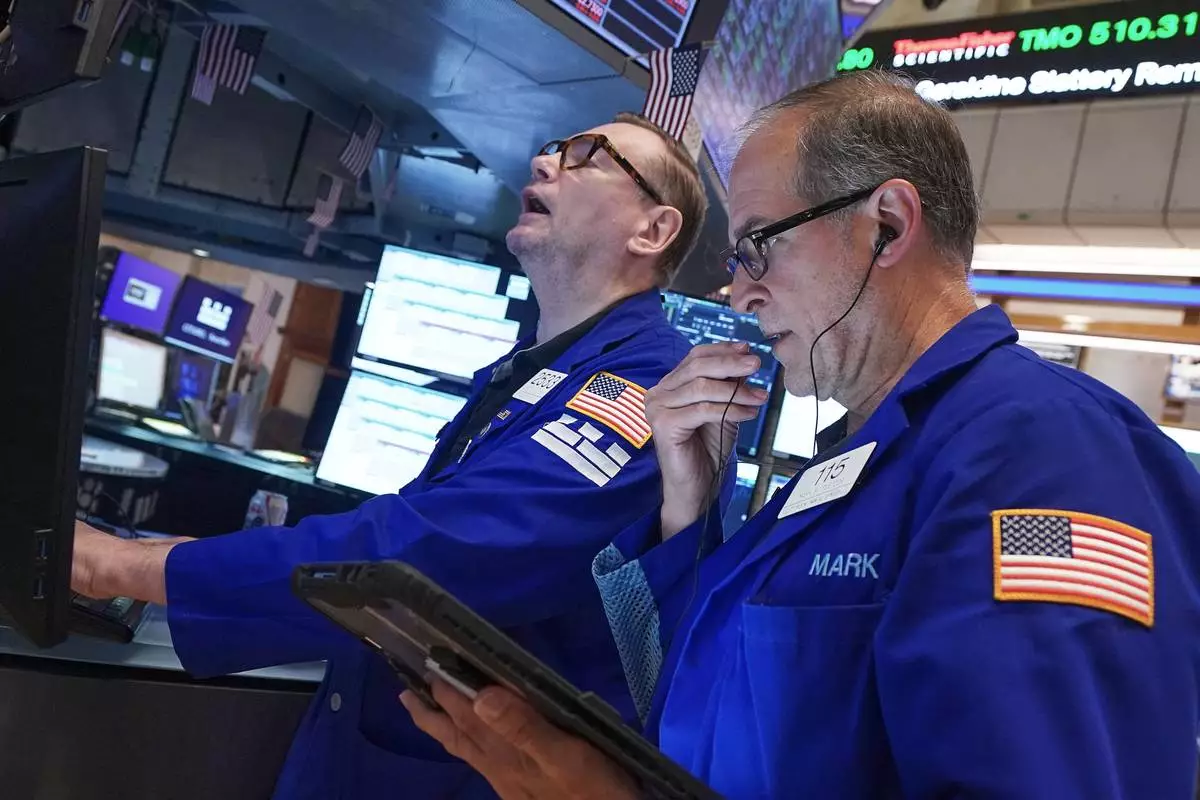
Specialist Patrick King, left, and trader Mark Puetzer work on the floor of the New York Stock Exchange, Friday, June 26, 2026. (AP Photo/Richard Drew)
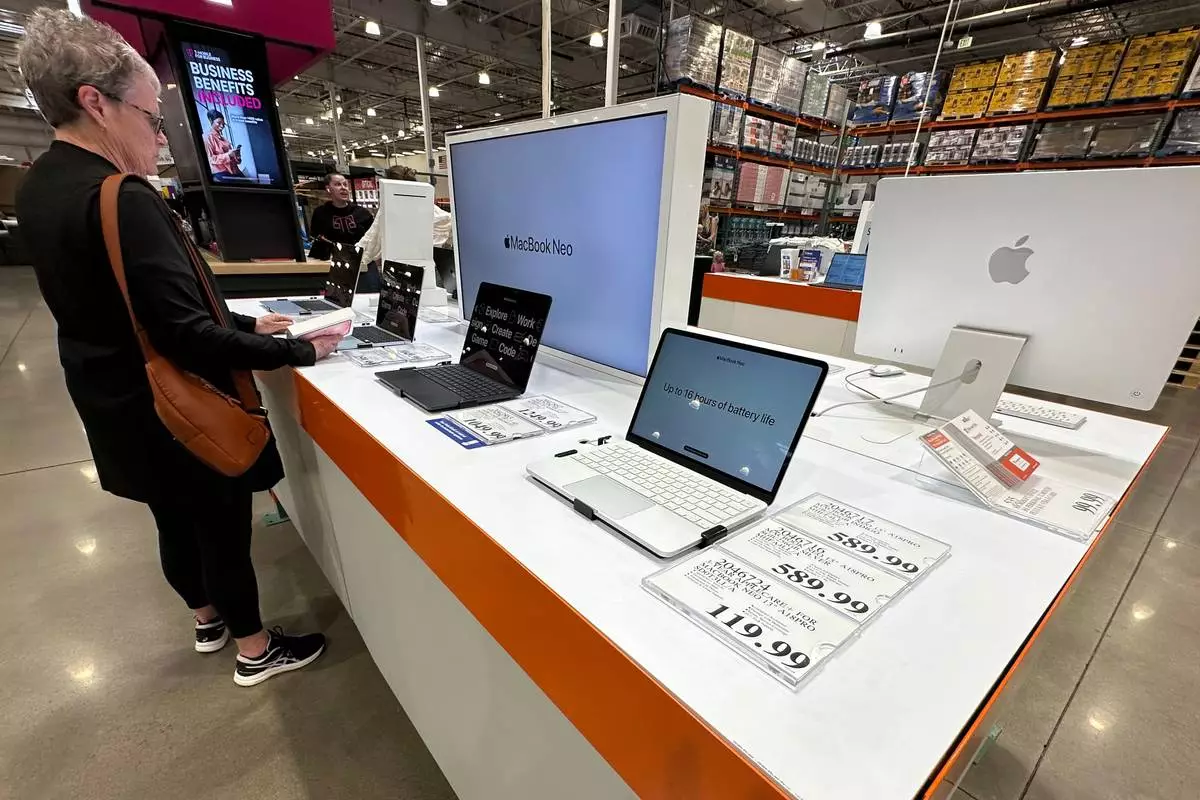
FILE - A shopper looks over Apple MacBook laptops on display in a Costco warehouse on June 2, 2026, in Sheridan, Colo. (AP Photo/David Zalubowski, File)

An electronic billboard with an image of President Donald Trump reads "I love the inflation." - Donald J. Trump June 10, 2026," is seen near I-74 in Cincinnati, Tuesday, June 16, 2026. (AP Photo/Carolyn Kaster)

LA GUAIRA, Venezuela (AP) — The situation has grown more desperate by the hour in Venezuela as people dig through the rubble of collapsed homes and apartment buildings three days after the devastating one-two punch of 7.2 and 7.5-magnitude earthquakes, knowing time is running out to find survivors.
Authorities announced Friday night that they would block access to La Guaira, the epicenter of the destruction, as chaos and traffic were hampering search efforts. Officials said anyone who wants to enter would now have to seek official permits, but provided few details of who would be allowed in. More than 14,000 members of the military and police are patrolling the area, Acting President Delcy Rodríguez said on state television Saturday.
Venezuelans took the search for missing loved ones into their own hands, citing a scarcity of government rescuers, as the human toll of Wednesday's quakes climbed to at least 920 dead and more than 51,000 missing. People reported seeing few state rescue teams in the hardest-hit areas, despite authorities projecting an image of a robust government response.
Aid agencies consider the first 48 to 72 hours to be a crucial time frame to retrieve people alive, though that can be extended if they have access to food and water.
“Each person saved is a miracle,” said Jorge Rodríguez, president of the National Assembly. “We are not going to hide absolutely anything about the magnitude of this tragedy."
In the state of La Guaira, just north of the capital, Caracas, Nazareth Jiménez sobbed into a loved one's shoulder as she watched neighbors use hammers and power tools to try to cut through slabs of concrete in a building reduced to a mountain of debris. She was wracked with anxiety as she waited to see if her siblings, nephews, nieces and friends would emerge alive.
“My God, how are we going to get them out of there?” Jiménez murmured.
“We're making a call for help to the government and countries across the world,” she said, pleading for machinery capable of moving collapsed structures. “There are still people alive in there.”
Government forces distributed food and water to survivors in La Guaira, and Rodríguez said her government was mounting a full response during these “critical hours for rescuing people alive.”
The disaster poses a huge challenge for Rodríguez, the former vice president who took office in January after the capture and removal of then-President Nicolás Maduro by the United States. Venezuela has been facing economic disarray for more than a decade, and many people reject the legitimacy of the political movement Rodríguez represents.
The number of dead was expected to climb, and people reported tens of thousands of missing on independent digital databases. Those figures likely included people who have been incommunicado due to the lack of cellphone signals, and some reports may be duplicates.
The number of injured was more than 3,300 as of midday Friday, and authorities said they rescued 243.
The International Organization for Migration said up to 6.76 million people could be affected, some 2 million of them in Caracas alone. The destruction was amplified by the quick succession of shallow quakes, experts said.
Loyce Pace, the International Red Cross’ regional director for the Americas, said “people are still terrified to reenter what were their homes.”
Indeed, many continued to sleep on the street.
Omar Reyes said around 20 family members died.
“I’ve been left alone in this life,” Reyes said, walking through the rubble where two of his children were buried.
In the city of Maiquetia, people lined up outside stores and pharmacies that served them one by one behind closed doors. At one point a woman in a crowd threw herself to the ground to protect a package of diapers with her body, desperate to keep it.
Traffic and throngs of motorcyclists at times disrupted search efforts. Mexican soldiers and volunteers repeatedly asked for silence to try to hear signs of life under the rubble, but bikers — civilian and uniformed — continued to honk horns and rev engines to the first responders' frustration.
Some people began to carry off basic goods such as toilet paper and food from stores in Catia La Mar, adjacent to the country’s main airport. Others swarmed a civilian pickup truck that was giving out bread and water, until a soldier intervened. The parking lot of a pharmacy turned into a makeshift shelter with tarps, hammocks and tents.
A few miles away, Yuleidy Cadenas, 28, stood across the street from a collapsed public housing building, hoping her son, mother and brother would be pulled out alive.
She fled barefoot from another building as it collapsed Wednesday and found her mother’s 12-floor apartment tower had pancaked.
“I got on top of the rubble and told them to yell back, and nobody did, not my brother, nor my son or my mother,” Cadenas said.
Venezuelan authorities said Friday that 861 volunteers from Mexico, the U.S., El Salvador, Switzerland, Colombia and beyond were in the country, and more were coming from elsewhere.
Acting President Rodríguez said she spoke to U.S. President Donald Trump and Secretary of State Marco Rubio on Friday and they reaffirmed their commitment to send rescue teams and aid equipment.
Janetsky reported from Mexico City. Associated Press journalists Clara Preve in Buenos Aires, Argentina, and Dánica Coto in San Juan, Puerto Rico, contributed.
People search through donated clothing at a gymnasium serving as a shelter three days after earthquakes struck La Guaira, Venezuela, Saturday, June 27, 2026. (AP Photo/Fernando Vergara)
Ezequiel Frontado looks at covered bodies while searching for missing relatives three days after earthquakes struck Catia La Mar, Venezuela, Saturday, June 27, 2026. (AP Photo/Fernando Vergara)
Rescue workers search through the rubble three days after earthquakes struck Catia La Mar, Venezuela, Saturday, June 27, 2026. (AP Photo/Fernando Vergara)
Rescue workers look for survivors three days after an earthquake struck in Catia La Mar, Venezuela, Saturday, June 27, 2026. (AP Photo/Matias Delacroix)
Residents and rescue workers search through the rubble two days after an earthquake struck in La Guaira, Venezuela, Friday, June 26, 2026. (AP Photo/Matias Delacroix)
Residents pull a body from the rubble two days after earthquakes struck La Guaira, Venezuela, Friday, June 26, 2026. (AP Photo/Ariana Cubillos)
Rescue workers place Daniel Cordero on a stretcher after pulling him from the rubble two days after an earthquake struck Catia la Mar, Venezuela, Friday, June 26, 2026. (AP Photo/Fernando Vergara)
Residents walks through the rubble two days after earthquakes struck Catia La Mar, Venezuela, Friday, June 26, 2026. (AP Photo/Fernando Vergara)
Residents and rescue workers search through the rubble two days after an earthquake struck La Guaira, Venezuela, Friday, June 26, 2026. (AP Photo/Juan Pablo Arraez)